Hello, welcome to Roundtable, where we serve up piping hot debates on the issues that sizzle in China and beyond.
I'm Yohang Lin. The world's first expo dedicated to supplying chains is back.
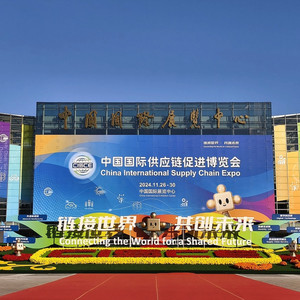
The second China International Supplying Chain Expo opens its doors in Beijing, showcasing cutting -edge technologies and global collaborations.
With innovations from smart vehicles to green agriculture, let's explore how this event is shaping the future of global trade.
For this episode, I'm joined by Yushun and Steve Hathor Lee.
Now grab your virtual compass and follow us to the heart of the discussion.
Think supplying chains are boring?
Think again! At Beijing's second CISCE, everything from futuristic vehicles to sustainable hotpot seasonings is on display, providing that even logistics can be exciting.
I know the topic as well as the intro might confuse some people since the supply chain industry is not something that we see every day in our daily life.
So let's explain exactly what is a supply chain or a supplying chain industry.
So the supply chain industry actually encompasses the process, systems and organizations that involved in producing and distributing goods, basically everything that before you get your products in your hand.
It starts with sourcing raw materials and extends through manufacturing, packaging, warehousing and delivery to the final consumer.
The industry involves various players, you know, including manufacturers, logistics providers, retailers and suppliers.
It's everything that happens to the product that you buy before you buy the product.
That's the supply chain.
And it starts from the very, very beginning.
It ensures that we get the stuff that we get when we shop online or when we go to the Mards.
Now that's the supply chain.
But what we don't often hear as well is a supply chain expo.
We talk about expos a lot on this show, as a matter of fact.
And we see expos covered in the media a whole lot as well.
But this type of expo is a little bit different.
So a supply chain tradeshow or expo.
This is a meeting point for professionals from different industries.
They come together, they explore new trends and technologies and innovations.
These events typically feature a mix of exhibitions and keynote speakers and a lot of panel discussions.
They sometimes have some hands on workshops that provide some valuable insight into the future where the direction is going for supply chain management.
And then you get the latest solutions and logistics optimization and inventory management and automation and sustainable practices.
That's always an issue when it comes to these expos.
And it's an issue here as well.
So that's what goes on before we get into the details of this particular expo.
That's what we can expect to see.
Yes. And this year, actually, it is already the second time for the supply chain expo to be held here in Beijing.
And as far as we know, the scale is upgraded.
We're looking at more visitors, more exhibitors, more companies are coming, more countries are involved, which is always a good sign for those who are attending, who are showcasing their product, because you can always expect a better turnout with more visitors and you can showcase your latest innovation and products
to people as well. You can learn from other people.
But like Steve has said, we have a lot of different expos and even Roundtable talked about a lot of different expos.
We have currently talked about the Canton Fair and we have currently recently talked about the import expo.
And of course, here in China, we also have the trade in service expo.
We have here the supply chain expo.
And previously we also had the consumer products expo.
So a lot of different expos.
So today, let's take it as because it's approaching the end of the year, it's approaching the end of the, you know, all year round of expos.
So let's do a little summary, a little comparison.
What's the distinct characters of these different expos?
And for those of you who are listening, we're actually really interested in, for example, doing business here in China, or taking your product to this huge market here in the country.
Maybe you can pick an expo that you want to, you know, take a try first.
So with that purpose in mind, you should give us a brief introduction of all these expos.
All these expos. Wow.
All of them. How many expos that you said.
But anyway, I think, first of all, we need to mention or we need to know that is the difference that this expo, I mean, this supply chain expo between all of these expos.
One thing that I would like to mention is that there is actually one word in Chinese of this expo, it's called, it's actually directly translated into supply chain promoting or promotion expo.
So there's one key word that is promoting.
So that is why that is, this expo is kind of different because it is not only a platform for you to exhibit your product.
It is also providing this, you know, manufacturers or companies a exhibition platform, but also a comprehensive platform that reflects, you know, the developments of the industrial chains and the trends of supply chain cooperation.
And, you know, this exhibition approach is quite different.
And what we can see is that it is not focused on, you know, showcasing their individual products, but rather on presenting the whole supplying chains and ecosystems at this expo vertical displays, you know, highlight globally leading products and technologies across the, you know, upstream, mistream
and downstream segments of supplying chains and emphasizing a lot of things not only about the product, but also the development of the company like the green development, low carbon solutions and digital transformation.
And also horizontally, it features supplying chain services such as finance, logistics, trade consulting, commercial law, cultural tourism, and creative design and all in all creating an ecosystem for these related industries development.
Yeah. And this expo is not about showcasing products.
The deputy director of the China Council for the Promotion of International Trade did a press conference.
And that was one of the main points is that that's how this differs.
It's not about sales per se, it's about focusing on long term cooperation, I think would be the way to put it.
Pardon me and exhibitors are looking to, of course, showcase what they have in terms of the latest technology and things like that.
But it's more about partnerships for the future rather than here's what we're selling.
Do you want to buy it?
Yes. And if you want to think about it with a exact example, think about it like this way.
For example, you're looking for an apple.
If you're looking for an apple, I'm talking about the fruit, not the film.
So if you're looking for an apple in the import expo, then in a booth or in an area, you get to see a lot of different types of apples imported from different countries.
And that's the kind of exhibiting form you get, you get to see.
If you're in the trade and service expo, yes, you still see the apple, but you get to see how the apple is used in trading services.
For example, the apple can be transformed into juice.
It can be used as the ingredient of a certain type of dish that you can enjoy in a restaurant.
And the service in the restaurant is the trade of trade and service you're looking at.
If you are in the Canton expo, I assume there would be a lot of different buyers and suppliers with their apples and different flavor of apples in the exhibition hall that you visit.
And if we are looking at another type of expo, for example, the, let's say, supply chain expo, then you get to see how the apple is transported from one location to another, whether or not it's been selected, whether or not it's been packaged in a certain, for example, a very beautiful box that you
can use to give to your significant other as a special gift.
So the same thing goes to the kind of way to arrange the settings or arrange the exhibition.
So if it is any other expo, maybe you get to see all the vehicles or new energy vehicles are put together in one location, or apple being put into the food sector, whereas in the supply chain expo, you get to see the entire supply chain whole process.
So for a car, you're not going to see only the car, maybe the engine, maybe the smart system installed in the car, also maybe the kind of new technology being used in the special glasses that you also use in the car.
So it's a different kind of just a different kind of logic to arrange everything.
And also it's a whole new experience for visitors.
Yeah, and also, I think that explains what I just said, you know, upstream and downstream things, you know, upstream refers to activities or processes that occur earlier in the supply chain or production process, such as, you know, the extraction of all of your raw materials and ingredients.
And downstream refers to activities that happen later in the process, such as refining, distributing or selling the finished products to consumers.
So basically, as we said, all of the steps that your product is being produced.
Yes. So for this year, we know it is held in Beijing from November 26 to the 30th.
What are some highlights that we can expect for this year's expo?
So during the course of the exhibition, seven thematic events will be held featuring domestic and international guests.
They're going to be engaging in in -depth discussions, of course.
Additionally, there will be over 300 activities.
They're going to have things like breakfast meetings and business negotiations.
I should go to those.
I don't know what they're serving at breakfast, but I bet it'll be good.
Yeah, things like that will be will be taking place at the expo as well.
What about compare, you know, if we can compare the last time they held an expo like this to this time, I think the event is going to be on, done on a larger scale.
Yeah, they have actually different sections to showcase.
And this year, a new exhibition area for advanced manufacturing chains is added this year in addition to the clean energy chains, smart vehicle chains, digital technology chains, healthy life chains, green agricultural chains and supply chain services of the last year.
And we can see high level of internal internationalization is being seen in this year's expo.
Many media reports that the proportion of overseas exhibitors has increased from 26 percent of its first event to 32 percent this year, with nearly 70 countries represented it.
Among the overseas exhibitors, those from Europe and North America account for 50 percent.
Also, over 60 percent of participating companies are Fortune Global 500 or industry leading enterprises.
Wow. All of these giant are taking part in.
It is huge. Yeah. Any familiar names we're looking for?
McDonald's, I think.
But one interesting thing that I saw is that in China, the enterprises is called Golden Arch.
And they're having negotiations and cooperation and trying to seek cooperation during this expo.
Yeah, it's huge. It's 600 domestic and international exhibitors that are going to be participating in the expo this year.
They're going to have guests from, like you said, over 100 countries and regions, more than 10 international organizations, delegations from over 30 provinces, autonomous regions and cities with the number of visitors expected to surpass that of last year.
So it's a bigger event.
It's more exciting.
Of course, the first time around, it was very exciting, but it's going to be even more exciting this time around by the looks of things and notably to promote cooperation with less developed countries.
China has invited many African enterprises to the expo and they're going to be setting up some booths to help them showcase their products.
The opening ceremony is meant to see about a thousand, more than a thousand, global representatives, including political figures and business elites.
And they expect over the five day period, it's a five day event, they're going to attract a professional audience of over 200 ,000 in total.
Yes. And like Steve mentioned, actually, countries from relatively less developed places and regions are always what we want to feature and what we in a way help, but in another way, actually more correctly collaborate with.
It has been the theme for a lot of different expos and a lot of different events, especially held here in China.
And when you shouldn't talk about McDonald's, actually, I was a bit curious about McDonald's as well, because I didn't think there can be the thing that are exhibit from McDonald's that would attract my attention because I mean, it's food.
I can think about logistics.
They can showcase how they transport or how they transport the food, the chickens from one place to another, how they're raised, something like that.
But, you know, after doing a bit research, I realized that for its first appearance at this expo, McDonald's China will not only use a model to display its newly operational smart supply chain industrial park in Hubei, which was launched this July, but also unveil several premises, including creative
green agricultural merchandises and the largest achievements in its next generation smart logistics solution and something featuring their new logistic or Internet of Things technology featuring one box, one coat, basically ensuring not only food safety, but also the whole industrial scenario, which actually
is in line with this year's theme of the expo.
That is they want to feature not only the product.
We've been, we cannot elaborate this more, not only the product, but also the entire supply chain and also the ecosystem of the industry, as well as the consumers scenario shopping, purchasing scenarios, which is a very holistic view looking at industry.
Because here in China, we know that the country obtains all the industrial categories listed in the United Nations industrial classification, meaning that in itself, most things can be produced already.
Yet China is always, always promoting, always pushing forward collaboration among different countries.
And yeah, it's like we hope that we can work together more and only by working together can we achieve better results.
You mentioned Hubei Province.
They are going to be serving as the guest province of honor, which is pretty exciting.
Hubei's enterprises in different fields, advanced manufacturing, intelligent vehicles, digital technology, clean energy, they're going to bring more than 70 exhibits and they're going to showcase their new achievements in industrial development.
That's from the provincial government website.
Pretty exciting for the province to be on display.
Since you've already mentioned the Prince of excuse me, province of honor, there is actually this year, Hungary has confirmed to serve as the country of honor for the international supply chain expo.
They would also promote a lot of their product as well as their cynic spots because transporting people to cynic spots apparently is also one link of the supply chain.
So besides that, we know Yuxuan is a tech savvy person, you love high technology.
So what are some of the high, well exhibited, let's say, new technologies that got your attention?
As we said, there are different segments or sections in this expo.
So one segment is called advanced manufacturing chains.
So we can see leading Chinese and foreign companies in the industry comprehensively demonstrate the rail transit industry chain for the first time from field survey and design, engineering, construction, high -end engineering equipment, operation and maintenance are included.
And what we can see is that actually China's companies have helped many other companies in other countries to build high -speed railways or all of these infrastructures.
So what we can see is that it is not only providing the platform for companies but also for a shared future as we say, it is kind of helping people to get the idea of the importance of infrastructure and getting into the line of have a better quality and better life.
Yeah, manufacturing chains, clean energy chains, smart vehicle chains.
I thought this one was kind of interesting.
Vehicle road collaboration and intelligent internet connection are hot topics at the expo this year.
They're looking to add a demonstration zone.
They will add a demonstration zone for the internet of vehicles where companies can showcase their latest products and technologies there.
We always talk about the new advancements in cars, don't we?
So that'll be a little bit of the exhibition as well.
One particular brand will be showcasing its exploration and future modes of transportation.
And one of the things that will be on display is the low altitude manned aircraft.
Of course. New energy vehicles will be on display as well.
So pretty exciting in terms of what's coming next.
Yes. And for me, one thing got my attention was actually the healthy or let's say health care sector.
They call it the healthy living chain.
It will encompasses the entire life circle of the health industry from birth to elderly care while also displaying traditional Chinese medicine, healthy living environments building in your home.
And of course, also in the community you live in and health related consumption.
And what's funny is artificial intelligence is also included in this sector, meaning that as a regular or common visitor like you and me, you can actually experience this whole living chain.
I don't think it's exactly a supply chain chain in that sense, but it's another kind of chain.
And you can experience the kind of diagnosis based on artificial intelligence as well as knowledge of traditional Chinese medicine.
You get to be examined and given advices.
You can try different of these health care wares that you can use in your everyday life.
And you can also enjoy a little bit of acupuncture and also the devices that you use at home.
You do not have to call a doctor there.
So I guess there are still something as a ordinary or common visitor that we can enjoy.
Yeah, of course. In the green agricultural chain sector where we can see that one fast food brand we have already mentioned Golden Arch and also other fast food brands are taking part in this event.
Yum! China, which is the company of KFC and Pizza Hut and Burger King showcase how they ensure safe and high quality food for consumers through strict quality control at every stage.
They also getting to the standards of their respective supply chains, setting an example for the industry and providing a lot of professional audiences with opportunities to gain a deeper understanding and integrate into their supply chain systems.
Because we know that not only businesses or companies can take part into this expo.
Daily citizens, you can also register for an access to this expo.
But of course you're going in there to see the development of supply chain.
So you must have some kind of idea in your mind and maybe it's beneficial for your job or learning a little bit of something instead of purchasing a little, I looked that up.
I put it into the internet.
I put exactly this search, what can people take away from a supply chain expo?
And I found a website called tradegroup .com and I'll read to you what they said, this is awesome.
Whether you're a logistics maestro, procurement guru or even passionate about the ever changing world of supply chains, there is nothing quite like the excitement of a trade show.
These, I'm not finished, these supply chain trade shows are where the industry's brightest minds converge, advanced technologies are unveiled and networking happens in the most dynamic ways possible.
I think they're right.
It's just the wording makes me feel they're being sarcastic a little.
Well, whoever wrote this is super into supply chain expos for sure.
Yes. And for those of you who are interested in artificial intelligence this year, actually there is a digital technology chain exhibition centered around artificial intelligence.
It demonstrates how artificial intelligence reshapes industries from three perspectives, foundational technology breakthroughs, mid -level industry incubation and top level application scenarios emerging and the relatively futuristic industries such as the biopharmaceuticals and commercial space flight
that Roundtable has mentioned, talked about recently.
And also there are certain kind of technologies that we can cannot even begin to explain because they are the foundation and the core technology in a lot of different industries.
There is also a hot pot industry chain exhibition.
This is awesome. And it's huge.
It's covering 4 ,000 square meters and it has five different sections, ingredients, seasonings, equipment, utensils, and supply chain service solutions, also brands and derivative products of hot pot too.
So if you're into hot pot, they have a massive exhibition on display there.
But just another example, you talked about the foreign burger brands that will be there.
We don't associate this kind, when we hear McDonald's or Burger King or hot pot restaurants or brands, we don't think supply chain.
No. But it's really interesting though, how they put it all together.
And it makes a lot of sense.
And it totally makes sense.
So yeah, go and treat this as a wonderful learning experience if you're not involved in the industry.
Definitely. So with the second CISCE going on right here in Beijing, providing suppliers and buyers with abundant opportunities to expand their businesses, we are also reminded that supply chains are more than just logistics.
They are about connections from technologies to cultures.
The lessons learned here may shape a more sustainable and interconnected future.