Discussion keeps the world turning.
This is Roundtable.
Hello, welcome to Roundtable where we serve up piping hot debates on the issues that sizzle in China and beyond.
I'm Niu Honglin.
It's late at night.
Someone in the house feels warm, a little off.
You open a drawer, pull out a slim glass thermometer, shake it a few times and wait.
For generations, that small ritual has been part of family life in China.
But soon that familiar object will quietly disappear, not because it stopped working, but because the world around it has changed.
Are you ready to say goodbye to the mercury thermometers?
For this episode, I'm joined by Fei Fei and Steve Hatherly.
Now grab your virtual compass and follow us to the heart of the discussion.
When news broke out that mercury thermometers would soon stop being produced, the reaction was immediate and a little emotional.
Stockpiling price spikes, online debates.
The response reviewed something deeper than simply just consumer panic.
How attached people can become to tools they are familiar with.
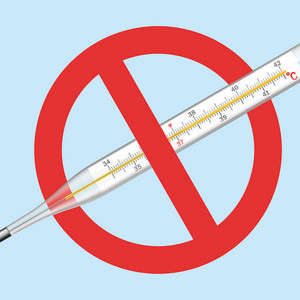
Starting from January the 1st 2026, China will fully ban on the production of mercury thermometers and mercury a test or a kind of tool that can test your blood pressure, and we call it sigmomanometers.
And this is due to safety concerns.
So let's take a look at the reality of the issue exactly what kind of harm mercury can do to human society and how much effort we've already put in to stop that harm from happening.
Yes.
And I think the full ban will be effective on January the 1st, next year, 2026.
But the move was actually announced by authorities back in 2020.
So it gives people pretty much basically businesses and industries pretty much six years in preparation for that.
And the notice is issued by China's National Medical Products Administration.
And it said it was in line with the country's goal to reduce mercury pollution.
And as well as China is trying to cut back on the use of mercury in many products and processes.
So it's not just thermometers and also the tool that we use to measure blood pressure.
There are also other efforts taking place in China trying to reduce the use of this chemical in general.
I saw that there are 12 different parts, but because they're not final product, they're like semi-product or kind of parts that are used in especially medical equipment, are also being replaced.
The interesting part of this is kind of what's happened as a result of that announcement.
So as we're just a couple of weeks away from the end of the year, you mentioned it.
There's been a demand for mercury thermometers and it's been a hot topic on social media as of late.
There are even influencers that are posting pictures of themselves buying dozens of thermometers at a time.
And you mentioned the prices, too.
There was a report from Daily Economic News and they wanted to find out the price comparison.
So they noticed that mercury thermometers, which had been priced pretty steadily at about 7 or 8 yuan that's about a dollar for the past 180 days, so about six months or so suddenly doubled in price on the 10th of December.
And, what's more, when visiting the pages with those inflated prices, they were already marked as out of stock often, and the platform would even tag them weekly sales up by more than 10 times or promotional things like that.
People, with this announcement all of a sudden, And with January 1st being the date all of a sudden, wanted these things more than anything else, it seems.
Yes.
And on some social media posts I've even seen people saying I bought 10 and I'm going to leave them in my family like a family heirloom.
And to them, I say, no, don't do that.
Because the reason that we're banging this is not that we're losing the ability to produce them.
We do not have the technology, nor that mercury is such a valuable kind of metal that we no longer have.
We're running out of the resource.
No, it's none of those.
It's precisely because we see this kind of product as the outdated product, because they generate more harm or they pose more risks in our daily lives than the benefit they bring us.
It's just been such a hot topic.
People are discussing the policy on social media and such discussions have drawn more than a hundred million views on Weibo.
It's just the hottest issue right now for people to discuss on their socials.
Yeah, I think that the reason is that people have this emotional attachment to mercury thermometer, basically because when we were growing up, it is like the staple in every household.
You need a mercury thermometer in your home.
And I think for a lot of people that would also become the common knowledge that how toxic mercury can be.
You know, when it's made of glass, so inevitably sometime it will be broken.
And there are some very strict procedures.
You need to take care of yourself to clear those liquid metal on the ground or in the air.
And it's almost ironic.
It's made of glass.
It's really easy to break.
But if you want to use it, you have to shake it really, really hard.
And it's really easy to get on any kind of hard object so that it breaks.
Yeah, if you break it, odds are it'll break.
You could hit it on a countertop.
It might break.
But the nostalgia aspect of this, Feifei, one poster said this online.
Farewell, mercury thermometer, the warmth of mom's hand, the gentlest form of care.
And when we were sick, thank you for ensuring we had healthy childhoods.
Really?
I mean.
Mama does not like it.
Okay, let me give you a little more.
It's a bit much, isn't it?
It is.
It's like you don't cherish it when you have it.
But when it's time to say goodbye, suddenly it became so, you know, nostalgic.
A teddy bear, yeah, but a thermometer.
Definitely not necessary.
Okay, so here is something you need to know about the thing that you put so much attachment on.
Mercury is the only metal that remains liquid at room temperature, and it really easily evaporates into toxic vapor.
A standard mercury thermometer contains one to two grams of mercury.
Once broken, it can rapidly raise room mercury levels to Several times or even dozens of times above safety limits.
And it's really hard to if, if you really think about it, sometimes when there's toxic air or kind of chemical in your home you would open windows and have it vacuum, will have it get out of your room.
But this is really hard for mercury.
And also we see, inhaled mercury vapor primarily damages the nerve system, highly toxic, and children and pregnant women are especially vulnerable, with potential risks including development delays, fetal abnormalities and also irreversible norco harm.
This is really bad and if you think about it, those who are really tend to break these kind of thermometers would be kids.
They don't know they break it and without proper education.
I think i kind of got the proper education when i was a kid.
That is, from my parents and a mom's a doctor, and she said if you break a thermometer, definitely do not touch the mercury with your hand because it's round, it looks shiny, it's like little beads and it's fun to play with.
If you put them together, the little little beads would get together and form bigger beads.
It's fun toy to kids, but it's really bad for children.
I've got some tips on what to do if you do happen to break one in your home.
Do you want to save that for later?
Do you want to hear that now?
Now, All right, so if you do happen to break a thermometer in your home?
I did not know this.
Never use a vacuum cleaner.
Because it breaks it into tiny little beads.
It'll put it into the air and it'll increase exposure.
Also, never use a broom to clean up the mercury.
It'll break it into smaller droplets and spread them around.
Also, once you do gather it, never pour it down a drain because it might lodge in the plumbing and cause future problems during plumbing repairs or things like that.
And if it's discharged...
It can cause pollution of the septic tank and sewage treatment plant that it will eventually travel to.
And also, never walk around.
Your shoes might get contaminated.
Your socks might get contaminated.
Also, get your kids out of there.
Get your pets out of there.
Put them in different rooms.
And there are too many do's and don'ts.
Yeah, there's a ton.
But if you do spill it, then use stiff paper.
This is what they say.
Use stiff paper or cardboard and tape to collect the beads and then dispose of them in a sealed container.
And you know, we've actually broken a couple oh really such thermometers at my home.
And the first thing is put on your gloves because you don't want to touch um the bees with your bare hand.
Open your windows because the vapor coming from mercury can be very, very toxic, and inhaling a high concentration of mercury vapor, which means greater than one milligram per square kilometers in a short period of time, can lead to acute poisoning.
And if a thermometer breaks and if all that mercury evaporates, it can raise the concentration in the air of, for example, your bedroom to a 22 milligram per square meters.
So it can be very, very toxic.
So do need to open the windows to let the air breathe a little bit and then collect what Steve mentioned collect the beads.
Yeah, and they're just not really necessary anymore.
There was a doctor, a TCM doctor from Guangzhou, talking about the fact that the most commonly used options today are digital thermometers and infrared thermometers.
They have non-contact forehead thermometers and contact ear thermometers.
You've had one of those, right?
Those digital thermometers, they stick it in your ear.
And they're not really that used in hospitals anymore.
The same doctor said that mercury thermometers are now becoming archaic almost.
They're really rarely used when measuring body temperatures in a hospital.
I use an infrared thermometer at my home with my kids because it's also faster.
Yeah, exactly.
With this kind of thermometer it takes around two to well, around two minutes, two to three minutes to put in your armpit and you have to just keep it there for that long.
You mean the mercury thermometer?
Yes, the mercury one.
I think you need to leave it on for like at least 10 minutes.
Oh, really?
Yes.
Huh, so that the reading can be accurate.
So it takes a really, really long time if you have a kid.
Yes, and now we do have these different types of alternatives and we know why it's being banned.
But actually banning only the thermometer or the mercury thermometer and also the type of all kinds of parts that we mentioned that are used in medical equipment is not the only thing that China has been doing after joining or after talking about how harmful mercury can be in human society, and we've done a lot in this process.
Yes, it's actually happening with an international background.
There is an international treaty called Minamata Convention on Mercury, which is basically a global treaty, I think, with over 150 countries assigning to that, to protect human health and the environment from mercury.
It was adopted in 1913, and China is among the first ones to join and sign this treaty.
It is named after the bay in Japan where, I think in the mid-20th century, mercury-tainted industrial wastewater poisoned thousands of people and leading to severe health damage.
And it later became known as the Minamata disease.
Yeah, I had never heard of this before, but this goes back to the 1950s.
Minamata Bay in Japan became contaminated with mercury.
There was a nearby factory that was manufacturing a particular chemical, and then that mercury was biotransformed by bacteria in the water into something else, which was basically an organic mercury, and that accumulated and magnified in the muscle of fish.
And what they noticed, this became a serious problem.
First, local cats that ate that fish began to stagger about and die, and then the local population of people that depended on fish were affected, particularly developing fetuses and children, and over 2000 people lost their lives and thousands more experienced crippling injuries.
So this is where that Minamata... where that travesty happened and why they came up with this.
And that is also the reason that China is not the only country that has spanned mercury thermometers or all kinds of different mercury-related equipment, parts and chemicals parts that are used in different equipment.
Internationally they have long been marked for elimination.
As early as 2007, the European Union enacted regulations that let member states to replace mercury thermometers with electronic alternatives.
And people signed, like Fei-Fei said, the assignment in 2013.
And the reason that we wanted to take effect in 2026 is want to make sure that there are enough other types of thermometers in the market that can smoothly replace the mercury one.
And also, I think when we're talking about getting rid of certain type of thermometers is not as simple as we think.
Because, for example, in China, China previously produced around 120 million mercury thermometers annually.
And even accounting only for breakage, over 10 tons of mercury required for disposal each year.
So how to take care of that amount of mercury safely?
What kind of technology is needed?
What kind of equipment and industrial chains are needed for, you know, dispose these metal liquid metal safely is also very critical.
So that's why we need some time to sort of making sure that the society is ready.
For example, we started to work on the infrared technology.
I think back in 2003.
China has started to realize that infrared temperature screening relied on certain chips and we need to be able to have the capacity to mass produce those chips.
So, starting in 2008, you know, chinese companies start to invest heavily on this kind of technology and also when it comes to other technologies.
To sort of re, sort of slowly reduce your reliance on the use of mercury can also take time and efforts, and also money as well.
Yeah yeah money, money.
Speaking of money, um and availability, there was a report from um jimu news and a reporter visited a dozen different pharmacies in some different places chongqing changsha, wuhan and found that mercury-free thermometers were not available in any of the visited pharmacies.
There was another visit in shanghai, another four visits in shanghai.
Excuse me, Only one of those pharmacies stocked mercury-free thermometers.
So that speaks to the lack of availability in some places and also to the price.
It's a notable price difference.
The mercury thermometers were priced at 97 yuan and the mercury-free versions were listed at 42 yuan.
That's nearly fourfold, isn't it, the price difference?
Yeah.
And I think that has something to do with the fact that, instead of finding the substance of mercury and put it in the glass kind of thermometer that we're used to use, that we feel familiar that we can still attach that temperature of mom's hand on.
Wow.
We are focusing on developing the infrared thermometers, the relatively more stable and also more accurate ones, and they can last a bit longer.
It's just, I think, for a different generation.
For example, for my kids' generation, they can get their attachment on these ones.
They listen to the beep of that little machine when they make, when they got to your temperature, and that is that can be their new memory they make related to moms.
So so it's a different thing.
So I agree with Steve that the current ones because people are doing different types of experiment, finding different substance to replace mercury, so that kind is definitely with problems.
For example, it's hard, even harder, for those ones to get a proper temperature.
It takes longer time and also i think it's also oh, we mentioned this that is, when you use a mercury thermometer you need to shake it really hard to get it back to room temperature instead of human body temperature.
You do that with this new type of thermometer, glass thermometer as well but it's really hard relatively harder to shake it back to room temperature, which is another complaint.
Common complaint
Yeah, particularly in outdoor testing.
Yes, yes.
But again, you do not really have to stick with this old form of testing body temperature.
There are new ones to be used.
And in general, China has done a lot to eliminate the potential harm mercury can have.
From all different aspects from the very beginning.
We have to find a better and healthier and safer ways to get rid of the mercury that is already in our environment.
Because we all mentioned already earlier that when mercury is out there, it's out there forever.
You cannot really rely on the nature itself to dissolve it.
And once it accumulates in shrimp and then in fish and then in all kinds of seafood, it gets back to human body and that same level of harm would still exist once the volume increased in a human body as well.
So safely get rid of the mercury or collect them and put them somewhere safe is one part of the research.
And also we only mentioned thermometer because it's The most commonplace.
Each individual common show on the block, you and me, we can see mercury.
But when you see those or people used to use this kind of metal in other scenarios, and well, and we need them because of their different traits and characters, and you need to find other kind of substance to replace them.
Yeah, and it's not just thermometers or blood pressure gauges.
It's industrial use of mercury as well.
I was reading a little bit about the nostalgia aspect this morning.
Yeah, there's the nostalgia aspect, but a part of that is the trust level too.
People have, because they've been in use for so long, centuries maybe, these thermometers, that people just believe it.
They trust it.
But with the new ones, they don't know if the reading is accurate.
They don't know if the information that they're getting is accurate.
So there's a trust issue there too.
Yeah, yeah.
My mom is a good example.
She always think you know, mercury thermometers reading is the most accurate compared to electronic ones.
But I think her doubts were starting to cast out after she saw hospitals also using electronic ones.
And I think that can be one of the challenges when we're talking about phasing out the use of mercury in our society.
It's about public awareness and trust that it is really not the only thing that we can rely on.
When you're shifting from one thing to another, it usually takes a little bit of time.
Yes.
And that's the stage that China is at.
We are ready to say goodbye.
But There are definitely remaining challenges to China as well as other developing countries.
And we see that we are only saying goodbye to thermometers, as well as the blood pressure scale in 2026.
But there are other things that we can do, but there are also other challenges that we face.
For example, I think financial resources can be one, especially when it comes to industrial use of mercury.
You know, mercury can be very useful in PVC production, in the production of lighting products and also in gold mining and all the other kind of metal processing.
Not every country, especially for developing countries.
That can be difficult to enforce regulations and provide training and subsidize new technologies that are mercury free, because you know it's just, it's been there for centuries.
It's cheaper when compared to other new technologies.
And when it comes to mining, for example, it will be just convenient and financially making sense for factories to just go back to mercury.
So that can be financial resources, can be a very, very big challenge internationally.
Yeah.
Public awareness, I think, too.
I said when we started this chat, I didn't know anything about this, really.
I mean, when I was a kid, my grandmother used to stick a one of these things in my armpit to gauge my temperature.
And I didn't know about it then.
And to be honest, I still didn't know about it now.
But after learning so much about how harmful it is and not only harmful, dangerous it is it seems like an easy switch to make.
But if people don't know that, then it's going to be harder to convince people to make that change, because we talked about it, didn't we?
Fourfold price change. difference, four times as expensive.
So without the knowledge that you're doing something good for the environment, doing something safer for your home, then it might be a little bit more difficult to convince people to make that switch.
And after the switch, we can definitely see more families switching to digital and infrared thermometers, which I think are quite accurate.
Make sure you buy the good ones.
Buy the ones that are used in hospitals, because they can make sure that it's quite accurate when it comes to taking body temperatures.
And at the same time, if you still have some of those mercury thermometers at home, It's still okay.
You do not have to throw them away.
Just keep them in a safer place away from kids.
And if you do not know how to deal with a broken one, listen to the playback of today's roundtable.
Steve has given you all the tips.
And any other things that we might face and we need to know after January the 1st, 2026?
Well, I think, just keep in mind that we can still buy those thermometers on the market after January 1st, because it's only banning the production of those products.
There will be stock ones that can be sold.
But it's just.
I think it can be a reminder for people to see that mercury thermometer would not be your preferred choices.
Yeah, we have the same rules in Canada.
If you have them in your house, you can continue to use them.
So I think for consumers who do happen to have them in their homes, then you have to know how to safely keep them right.
Store them.
This is what the experts say.
Store them in a dedicated case out of children's reach. so that they can't potentially break them.
If it does break, immediately open the windows, as we mentioned before, for ventilation, or use sulfur powder, they say, or zinc powder to treat residual mercury, although I don't know who has zinc powder.
At home, ready.
Yes.
Hanging around their kitchen.
The elderly.
This is the final point experts make.
The elderly are advised to switch to electronic models regularly, with large screen displays.
That's from the consumer point of view, but from the manufacturing side, they face more urgent transformation tasks, don't they?
So the person or the people in charge of those factories, They need to make the biggest changes right now.
Yes.
And this year, over the course of 2025, Roundtable has seen and talked about many policy changes, little differences we're going to see in our lives.
And we've talked about the electric bike. the new regulations on those.
And also we think about, and we talked about the trade-in service.
At that time, it was only a service.
But in 2026 June we also have regulations talking about the kind of stuff we use or the kind of energy efficiency standards for household cooling appliances.
That will also take effect.
Probably we'll talk about it that June as well.
But all these changes are not to take away what you loved for a really long time.
It's to upgrade them.
It's to give you a better lifestyle, greener, healthier and more efficient.
And That is why I think we also do need to talk about these changes, these policy changes in our lives, so that we understand more about the meaning behind it.
And definitely after the change taking place, I see that more and more companies and research institutions would also.
It will give them the push to improve their industries as well and provide us with you know, better stuff.
I just don't understand the people who are posting online saying, I bought dozens of Mercury.
What are you going to do with those?
I think it would just be a nice way to get clicks.
Yeah.
It's for the traffic.
I guess so.
Yeah.