This BBC podcast is supported by ads outside the UK.
If journalism is the first draft of history, what happens if that draft is flawed?
In 1999, four Russian apartment buildings were bombed.
Hundreds killed, but even now we still don't know for sure who did it.
It's a mystery that sparked chilling theories.
I'm Helena Merriman and in a new BBC series I'm talking to the reporters who first covered this story.
What did they miss the first time?
The History Bureau, Putin and the apartment bombs.
Listen on BBC.com or wherever you get your podcasts.
China and Canada go from frosty to economically friendly.
Our relationship has progressed in recent months with China.
It is more predictable and you see results coming from that.
Both China and Canada support economic globalization and trade liberalization.
It's World Business Report from the BBC World Service.
I'm Leanna Byrne and after years of strained relations, China and Canada have announced a trade deal, and it's taken 25 years, but the EU Mercosur agreement is set to be signed.
Hello and thank you for joining us.
Yes, after years of pretty frosty relations between China and Canada, it seems like they've made friends economically anyway.
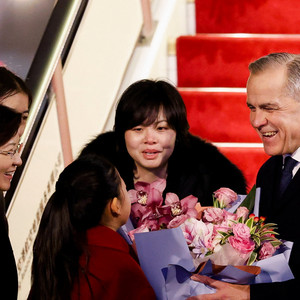
The countries have a preliminary trade deal after landmark talks in Beijing.
The deal will reduce tariffs in areas like electric vehicles and allow Canadians to enter China without a visa.
China's President Xi Jinping welcomed the deal, saying that both sides should respect each other's sovereignty and territorial integrity.
Canada's Prime Minister Mark Carney described China as a respectful trading partner.
Our relationship, the one comparison I will give you with the United States.
Our relationship is much more multifaceted, much deeper, much broader than it is with China.
But yes, in terms of the way that our relationship has progressed in recent months with China, it is more predictable and you see results coming from that.
Let's hear from China's Commerce Ministry spokesperson, He Yongqian.
China and Canada both support China.
Both China and Canada support economic globalization and trade liberalization and share broad common interests and enormous cooperation potential in the economic and trade fields.
Currently, China is expanding its high-level opening up, proactively aligning with high-standard international economic and trade rules and steadily expanding institutional opening up.
And Canadian journalist Ian Johnson, who specialises in Chinese politics, explains why this deal matters now.
I think it's important for Canada to have good trading ties with China.
China is the second largest a taker of Canadian agricultural products, the second largest single country in terms of trading.
So the United States is first and then the EU, but then China comes right after it.
So it is important that they have good ties.
And they're also doing this with an eye toward what's going on in Greenland also a neighbor of Canada that they have to show that they have other options out there.
And part of that, as I said before, is Europe, but part of it is also Asia, and that they can't be completely dependent on the United States.
These things are in flow, so it doesn't mean that China and Canada are going to have super close relationships at all, or even for all time.
But I think it's important to have some sort of options out there.
Canadian journalist Ian Johnson there.
So let's get into what this could mean for Canada's economy, its businesses.
I'm joined on the line by Baha Namemi, co-founder and managing director of CanCore, a Canadian producer and exporter of corrugated sheets.
Baha, thanks for joining us.
Of course, thank you for having me.
Now, it's my understanding that you were talking about this deal at a company meeting today, which is very fortunate for me.
So I just want you to take me into that room with you.
What was the immediate reaction when the news broke?
Right.
Yeah, I mean we're broadly supportive of Canada signaling that it's developing options, especially ahead of the upcoming Kuzma review that's coming up in, I believe, June of this year.
It obviously doesn't mean walking away from the U.S.
We do understand that North America still remains foundational, but over reliance on we all know creates vulnerability.
And the real lesson from recent tariff threats is that Canada needs a steadier, more self-reliant supply chain at home, while carefully developing alternative markets.
And I believe this isn't about replacing partners, but it is about resilience and leverage.
Did you talk about how it could benefit your business?
Certainly.
I mean, one of the main things most businesses want nowadays is predictability.
And what we've learned over the past few years is that concentration risk is real, and that applies to our industry and many other industries as well.
So, in a sense that this supply chain resilience and domestic capacity and diversified markets that we can go into is, I don't believe these are political ideas.
They're actually operational necessities for us in the business world.
So you think this could actually move the needle for you on investment manufacturing, maybe jobs, something like that.
I do believe that it will.
I mean, the long term sort of benefits are yet to be seen.
But as long as we do understand that the engagement doesn't lead to dependency, and it doesn't mean that that Canada should be naive when approaching their relationship with China.
China is a major global market, whether we like it or not.
The question is not whether to engage, but as long as clear limits and guardrails are put in place and we work on a stronger domestic capacity, then I believe this is.
It won't feel forced and it will benefit the economy in the medium to long term.
Diversification, spread your bets, always a good idea.
Now you were saying Bahad about the US and that you're not saying you're completely cutting yourself off to the US.
However, has your business been affected at all by the fallout from the relationship between Canada and the US because of tariffs and everything that's gone on?
Certainly.
I mean in our business and we are in overall in the paper industry and as an example yes, certainly we did feel the immediate sort of slowdown of the business due to the threats that were felt and the exports that we had to the US market.
However, on the other hand, we are in the business world, you have to look for the silver lining.
And there were some interesting opportunities that opened up because, as we know, this tariff war let's call it is not just with Canada.
And there are a lot of other countries that are unhappy with what has been happening unilaterally.
So that means opportunities have opened up for our business as well.
So we have been able to both diversify, both in terms of raw material that we purchase, as well as looking at exploring new markets for exports.
So you mean internally in Canada and also outside as well.
People are saying well, I don't want a source from the US.
I'm going to go for your business in Canada instead.
Exactly.
And Canadian businesses as well.
Canada.
One of the main shifts in the narrative that happened during these turbulent times is that a lot of Canadians assumed that here we have a huge pie in North America and I don't know.
60 70 belongs to US and 15 Mexico, 15 Canada.
But now the people figured out that there is no pie.
It was a piece of agreement that can be torn apart at any time.
So that shift in narrative has shifted the focus to Canadian manufacturers.
And there is real support amongst Canadian businesses who previously looked at East Coast manufacturers versus West Coast and looking at Canadian and American markets, treating them the same.
But now they're saying, okay, let's actually support Canadian businesses.
All right.
Watch this space.
Baha Nemi, co-founder and managing director of CanCore.
Thank you so much for joining us.
Chris Lowe, chief economist at FHN Financial in New York, was with me now.
Chris, you were listening to that, hopefully.
How significant is the China-Canada deal in the wider global trade picture?
Go macro for us.
Well, I think it's obviously a really big deal for Canada, as you've just covered.
But it also signals a shift in China's attitude towards global trade, because of course, China has not traditionally been a big fan of free trade.
They love selling their products to the world. they're reluctant to take products in.
I think the fact that China has been cut off from markets in places like Venezuela and it's more difficult to do business with Iran and with Russia, it's forcing them to rethink their relationship with the rest of the world.
And this is an example of China opening up with an agreement that really is very much two-way, an unusual agreement for that reason.
That is a good point.
What about Canada's perspective on this?
Because its growth has slowed really sharply.
A lot of that is because of the trade uncertainty, the US tariffs.
So did Canada need a deal like this?
I think Canada, yes, absolutely.
The Canadian economy, in fact... has been sluggish for the better part of the last 10 years.
But this last year in particular was tough and it was attributable to the tariffs.
So diversifying trade away from the US is good for Canada.
And I think frankly, you know, from the White House perspective here in the US, the president is probably happy to see them do that.
I personally think the US trade relationship with Canada historically, which was very close, was a good thing.
But I don't think in the White House they necessarily felt that reliance on anyone outside the US was positive.
All right.
OK, Chris, we're going to talk about another deal that's been 25 years in the making.
That's the sound of farmers blockading Brussels airport today, protesting an agreement due to be signed between the European Union and South American nations.
Jean-Mathieu Thuvot is a farmer from Soghi in central France and he explains why he is against the deal.
Well, to be honest, we feel as a treason from the European institution.
Basically, we have...
Big quantities of food being imported from the Mercosur into Europe with very low cost, because then you have no more taxes.
And the production conditions in the Mercosur are completely different from Europe.
So it makes it almost impossible for us to compete in a fair way with these importations.
So that's why we think that it's not acceptable.
And just a reminder, this deal will eliminate import taxes on tariffs on more than 90 of goods traded between Europe and the South American nations.
Europe hopes to boost its exports of cars, machinery and medicines, while South American farmers see a huge new market for their crops and produce.
Cecilia Malmstrom is former European Commissioner for Trade.
Yes, obviously politicians have failed to reach out and to explain and to calm and to say that actually,
It is a good deal for Europe.
We will increase our possibilities to export wine and spirits and dairy, lots of cheese and other things that has been so expensive to sell to Latin America.
And what they are worried about.
Some key products like beef, poultry rice.
They're actually very limited quota so they will not increase a lot.
I think there's a lot of other concerns about the future of agriculture the big global competition, the demands that the climate transition is putting on farmers and others as well.
And I think politicians could have made a better job in some countries.
The Commission has promised financial support for farmers in future EU budgets.
Is there any more money guaranteed right now or is this a political promise rather than a legal one?
Well, it's not a legal one yet, because the so-called long-term budget that the EU has just embarked on negotiating will probably take another year or so.
There are no decisions there, but the Commission has made a proposal and the Commission president has promised to adjust that proposal with an increased part for farmers specifically.
So I think they consider it as a binding promise, but it's not legal text yet because the final budget isn't done.
But there is a possibility national parliaments could refuse to fund that support.
While they can refuse the whole budget.
Of course, there are so many other things to take into consideration social cohesion, the climate transition.
But I think this is considered as a promise.
And the countries who have been the most sceptical to the Mercosur are a clear minority, though.
I mean, this is a deal that most member states really want and have been wanted for many years.
I think they will make sure that they are very watchful when this part of the budget is up for negotiations.
One of the issues for farmers, and you mentioned this earlier, is the imports surge.
And now there are safeguards if imports surge, but sometimes it's difficult to understand who decides when those safeguards are triggered.
Is it the Commission, the member states, Brussels officials?
And how quickly can they actually be used?
Well, it is the commission who imposes them, but this will be watched very closely, I'm sure.
So member states or farmers organizations can alert the commission and you know, sort of show evidence that oops, there's something going on here beyond what should be expected, beyond normal.
And then the commission will start an investigation and look at this to make sure that it's really as they say.
And then safeguards can be imposed quite quickly.
But it has to be a sort of thorough investigation, evaluation and investigation first.
This is so domestically sensitive in some countries and there are many rumours and a lot of fears, so it has to be done the proper way.
When a farmer might hear the word investigation, they might think how long would that take?
Months, years.
It depends on what's at stake.
It can probably be done in a couple of weeks.
You said elements of the trade deal can be suspended if commitments are broken.
What would be a clear, measurable red line?
Well, in the safeguards I think it's clearly stated what they will look at if there is a sudden surge in imports that was not provided for.
But I don't think this is very likely to happen.
I mean, in these sensitive areas, there are very clear quotas.
So even if tariffs disappear on 90 of everything that we import and export between EU and the Mercosur countries, those very sensitive quotas areas as I mentioned beef, poultry and a few others they are quotas.
It will only, I mean, increase by a couple of percentage.
And actually, in my country, I join you from Sweden, we have a lack of beef right now.
It's empty in many supermarkets.
And I think that is the case in several other countries as well.
That was Cecilia Malmstrom, former European Commissioner for Trade.
Still with me, Chris Lowe, Chief Economist at FHN Financial in New York.
Chris, I'm going to ask you to assess another trade deal.
Is this EU Mercosur deal genuinely significant or is Europe overstating its importance?
I think it is genuinely significant.
The EU has always been more careful than most of the rest of the world, protecting its farmers, protecting domestic food production.
This is a significant shift.
I can understand why parties are nervous about it, particularly the European farmers.
It remains to be seen exactly how it plays out.
But I think it's really important, among other reasons because US agricultural production has been again tied to US trade policy.
It's a bargaining chip along with the tariffs the U.S. has imposed.
This is an opportunity for Europe to source elsewhere.
Yeah.
I mean, Europe is openly framing this as a response to US protectionism.
And we were talking about the China-Canada deal as well.
I mean, really, are we seeing what Washington has done under President Trump effectively?
It's pushing allies into doing deals without the US and we could see a completely new world order.
Yes, absolutely.
And I think in fact, if you listen to what they say, particularly Commerce Secretary Lutnick, this is by design.
They want – they intended – to decrease American trade with the world in both directions, partly to make the US more self-reliant and partly because they think the US was getting a bad deal.
Whether that last part is true or not, I don't think they mind that the rest of the world is shifting to doing more business with each other rather than doing business with the US.
It's part of the design of the whole process.
All right, Chris Lowe, always a pleasure.
Thank you so much for joining us.
Here with World Business Report from the BBC World Service.
Now, the past few months have been rough for young people just entering the workforce.
The unemployment rate in December for people 20 to 24 was 8.2%.
That's down a tenth of a percentage point from November.
Still, though, that's well above where it was a year ago.
It's also way higher than the 37 unemployment rate for people in the US, what economists and demographers call the prime working years.
That's 25 to 54.
Marketplace's.
Stephanie Hughes has more on what it's like to be a 20-something and trying to find a job in the US economy.
24-year-old Bella graduated from the College of Charleston last spring with a degree in psychology.
By the time she finished school, she knew she didn't want to be a psychologist.
So she started looking for any job.
Yeah, sales, receptionist, food and beverage, anything.
Bella's been applying for positions since August.
We're not using her full name because she's concerned it could hurt her job prospects.
She blocks out time for her search, spending up to four hours on job boards every day.
They make it very easy to apply for jobs on there.
You can just upload your resume and quick apply.
But I think with that these companies probably see a lot of people applying that way, which makes it hard to sift through on their end.
She's applied for about 30 positions, but hasn't landed an interview.
It feels like a cycle to me where I feel depressed because I don't have a job.
And then I go and apply to some things and then not hear back.
And then it just starts over like, oh, I'm depressed because I don't have a job.
Oh, I didn't hear back from them.
And then it just kind of repeats itself.
Bella is caught up in a cooling job market where employers aren't laying many workers off, but they're not hiring new ones either.
Economist Guy Berger is a senior fellow at the Burning Glass Institute.
Who is vulnerable to weak hiring?
People that are coming into the workforce for the first time.
They're high school graduates in their late teens, or associate degree completers in their very early 20s, or college grads.
And these groups have really gotten hammered.
Berger says it's possible AI is taking some of these entry-level jobs.
But he thinks for the most part, employers are just sitting tight.
This just hits people that need a job more than people that already have a job.
And who needs a job almost more than anybody else?
Somebody who just finished school.
That hit at the beginning of a career can create a scar that lasts a person's whole life.
UCLA economics professor Till von Wachter studies young people who enter the workforce during a recession.
It takes a while to find that good job, and then it takes a while to reaccumulate those skills and you're just behind.
Von Wachter says these workers tend to earn less over the course of their careers, making for more stressful marriages, smaller families and worse health.
People who entered the workforce in 2008, they are still feeling that.
Now, to be clear, we are not in a recession right now.
And von Wachter says the fate of these young people hinges on what happens in the next few months.
We hope that young workers who have had a hard time finding a job will recover.
But if it takes a long time for them to find a job, then they are at risk of these longer-term chronic illnesses.
In the meantime, young people are pivoting, some of them more than once.
24-year-old Corbett Gleros graduated in 2023 with a degree in biology from George Washington University.
He applied for over 100 research jobs.
Most of them, you didn't even get a response.
It was just like waiting.
Even a rejection would have been nice.
So he got another degree, a master's in business studies with a focus in AI and quantitative business.
Still, he couldn't find work in his field.
He's fallen back on his bartending skills.
Because, I mean, the money's good.
Pays the bills.
Glaros says that bartending involves problem solving, which will be useful in any career.
Also, there's a steadiness that he likes.
People, they get off work, they want to go eat, they want to go drink.
You're always going to need somebody to serve that food and alcohol.
I'm good at that, so I'll always have a job.
He's grateful to have work, even if it's not the career he imagines.
That report from Marketplace's Stephanie Hughes.
Now several British families are in a US court today taking legal action against TikTok over the deaths of their children.
These parents have travelled to Delaware for a hearing, and they're the first families from the UK to try to hold the company to account through the American legal system.
Lily Jamali is our BBC North America technology correspondent and she joins me from San Francisco.
Lily, first of all, you know, why is this case being heard in the US and not the UK?
Yeah, this is a point that TikTok lawyers actually raised during this hour.
Some odd hearing that took place in Delaware this afternoon.
They claimed that the parents had actually brought this case in the wrong venue, but the parents say they brought it in Delaware because that's where TikTok is incorporated.
So that's one of the things that the judge in this case is going to be ruling on in this motion to have the case dismissed, which is what TikTok is pushing for here.
OK, so can you explain what these families are claiming?
Absolutely.
These families are claiming that TikTok's powerful algorithm, which pushes particular content over others to its users, may have played a role in the deaths of their children.
These kids?
They were teenagers who participated potentially in these things known as blackout challenges that were pretty pervasive on TikTok and some other social media platforms a couple of years ago.
And so one of the things that we often hear from the social media companies is that they're not responsible for what their users post.
In this case, the parents are saying it's not about the content itself.
It's about the algorithm, the way that these companies have designed the algorithm that pushed that content to their children.
That's really at issue here.
And they want to know, for example, what was being watched by their children.
They want access to the data on their kids' phones, on their TikTok accounts, in order to see what were some of the final images and videos that they were watching just before they passed away tragically.
So is that why that information, that data is so crucial?
It is, and TikTok says that it's, you know, in compliance, their effort to comply with the law.
That's the reason that they routinely delete that data in situations like this.
There are just a couple of exceptions, when they don't delete TikTok data when someone has passed on.
One exception is if there is a law enforcement investigation.
One of the parents in this case, Ellen Room, whose son passed away in 2022.
He was a 14-year-old boy named Jules.
She really wants access to the data on his phone, but the law enforcement investigators apparently came to TikTok too late for them to pass it on, because they had already deleted it a couple of years prior.
Lily, I imagine it's very difficult legally to prove that an algorithm would directly contribute to a child's death.
It may prove to be difficult, but what's really interesting for people who observe these legal cases and who are very interested in American tech policy, who follow it closely, is that for so many years these companies have been able to shield themselves legally using this legal provision from way back in 1996, well before social media, really well before the modern day internet.
It's called Section 230 of the Communications Decency Act.
And tech companies have had great success protecting themselves from what users post to their platforms.
This question about the way they design their platforms, social media platforms, the algorithms and how they push content.
What content gets promoted over others?
That's a very debatable question right now.
And it's going to be playing out in a whole host of legal cases that we at the BBC are following this coming year.
Well, we thank you so much for following that.
Lily Jamali, BBC's North America technology correspondent in San Francisco.
And that's it from World Business Report.
Thanks for listening.
I'm Leanna Byrne.
If journalism is the first draft of history, what happens if that draft is flawed?
In 1999, four Russian apartment buildings were bombed, hundreds killed.
But even now, we still don't know for sure who did it.
It's a mystery that sparked chilling theories.
I'm Helena Merriman and in a new BBC series I'm talking to the reporters who first covered this story.
What did they miss the first time?
Listen on bbc.com or wherever you get your podcasts.