Discussion keeps the world turning.
This is Round Table.
You're listening to Round Table with myself, He Young.
I'm joined by Steve Hatherly and Yueshun in the studio.
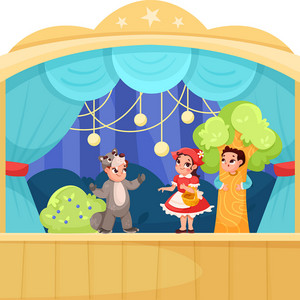
Children's theater is more than fun and games.
It's a gateway to confidence, empathy and self expression for young hearts and minds.
As we approach International Children's Day, we'll explore how drama education is inspiring children across China to dream bigger and feel deeper.
Tune in and discover the magic behind the curtain.
And the holiday's coming up.
Finally, time to crash, binge, scroll, repeat, right?
But real talk, why do we still feel wrecked after all that?
Maybe we're doing…rest wrong.
Let's break down why your brain might be more tired after chilling, and what science says about actually recharging the right way.
Our podcast listeners can find us at Roundtable China on Apple Podcasts.
From the world of entertainment to what fuels your passion, our heart to heart segment is all about you.
Share your thoughts with us at roundtablepodcast at qq .com or better yet, record a voice memo.
We'd love to hear your voice on our show.
And now, let's move on to the next topic discussion today.
With International Children's Day just ahead of us, it's the perfect moment to spotlight something that's growing fast and stirring hearts across the country.
Children's play or children's theater.
In 2022, China took a significant step forward. drama was officially included in the national curriculum for compulsory arts education that means drama has brought a new spark to Arts Education encouraging children to explore imagination empathy and self -expression in creative ways what changes have taken place in children's Theatre in China tell us about the national curriculum yes actually the Ministry of Education has been issuing policies in recent years to promote the development of drama education.
In 2022, the ministry presented a revised curriculum and standards for 16 subjects in compulsory education.
Art courses were reformed with those for grade 1 -7, focusing on music and drawing supplemented by dance, drama and other elements and those for grade eight and nine focusing on a selection of arts lessons.
Children's theater play as a performing art integrating art, music and dance helps train the aesthetic taste of teenagers and also children in China.
And to be clear, these are the things for young audiences, also youth theater, which are theaters for children and children's theater is a branch of theater arts that encompasses all forms of theater that are attended by or created for younger audiences.
I am jealous, almost, of kids these days in the sense that they get this as part of their regular curriculum.
When I was growing up in elementary school I think in elementary school we had our Christmas play, which is a once a year production that, you know, it wasn't a big deal, really but it wasn't something that we learned as a class.
And then even in middle school, nothing on offer there either.
When we got to high school, you could become a member of the theater group and then in afterschool classes, you would go and practice and then there would be a big performance at the end of the semester or something like that.
I never got involved.
I do regret that as well.
But my point is simply having this as a part of the curriculum I think is just such a wonderful opportunity for the kids to be able to have some fun and express themselves.
Yes, and just considering how large our country is, this is...
well sometimes for the policy to land in every school there might be variations so I'm not sure whether this is a class that everybody has to take, but for the schools with the resources and with the conviction they can offer these kind of classes and I would think that you probably need to sign up to be part of it.
But it's certainly a step forward in the sense that in the past we didn't even have it, so this is a wonderful opportunity for those who would like to take it up.
And like you, Steve, I kind of feel a little bit jealous of this being an option available for children in this country.
And I still remember the closest I've ever gotten to children's theater was during a school trip in fourth grade in Beijing, and our school took us to the China National Theatre for Children, which is a prestigious institution of children's play.
And at the time, I didn't really know what we were getting into, or in a way, what a it was just to go on a school trip and enjoy that uh almost an hour and a half of sort of transportation of your mind to a beautiful animal kingdom and I still remember the leading star of that production was very good looking at least in my little girl's mind I was like oh and he was supposed to be a tiger and it was just a really great experience and of course It stirred imagination and it was a wonderful time to just get out of school.
And I think as a kid, or a young adult, I thought, you know, that's always a plus.
So what forms has children's theater taken in China?
How is it evolving?
Yeah, so children's play, or children's theater play is drawing from China's rich cultures.
Guomin daily reported that adaptations of classics like Journey to the West, Xi Beauty or Neu Jia, captivate young audiences while preserving traditional stories, and these classic franchise adaptations have both sentimental and also educational significance.
They not only evoke parents' childhood memories, but also serve as a bridge connecting the emotions of two generations.
As you said, you guys have having that kind of envious emotions, I think in my childhood, we have that kind of play but they are not in the curriculums, there are several like children theater plays in our cities like Grand, it's called Grand Theater, but you gotta pay for that, it's not a compulsory class, but Oh, you pay as a student, you pay to sign up to be a member of the group?
No, to see that Oh, OK, yes.
Um, these are the plays that you can watch and maybe your parents will go with you.
And that is why I think these I think new styles or the new adaptations of classics can bring both the memories of the parents and the kids.
So yeah, you can now with this new curriculum and directories and more availability of in away educational resources kids can study and practice and put on their own plays in school if resources are available or there's a whole wide selection of choices that children or more like parents and teachers can take children to enjoy these theater performances out there that are designed and catered towards, specifically, children.
Yeah, the director of the creative department at the China National Theatre for Children told a research team that nearly one hundred and ninety original plays have been produced by the theatre so far.
Many classic productions, they'll go on tour every year, for example, Journey to the West that premiered in 2009, but it's still in such high demand that tickets are still hard to get now, after so many years.
That's a really cool thing.
And nowadays, parents, they can choose more educational plays tailored to their children's development, if that's what they're looking for.
And that might include performances about vision protection or dental health or safety awareness.
A lot of plays are typically co -produced by professional institutions and theater troupes, combining both public interest and educational value.
My friend who did this as a full -time job in Seoul.
He was a member of a children's theater troupe and they would travel around and put on different productions for different aged children and sometimes they did exactly that.
Some of them were about things that parents wanted their kids to incorporate into their daily lives like dental health or something like that.
And they turn it into a fun play production, which is just fun.
Fun for everyone. That's one of the happiest friends I have because he just was always in a good mood, always working on play productions for children.
Yes! To get a closer look at what drama education really brings to young minds, let's have a listen.
From Matthew, who's from England, a seasoned drama teacher who's been working with students in theater education for many years, and here's what he has to say about why drama matters in education and what students can take away from the experience.
Learning through drama and learning through theatre and learning about theatre is ultimately, drama is a social art form, it's something that we do in a group together with other people but also what makes it unique is that it deals with the imaginative context in the here and now so unlike a novel or reading a book which you would probably do on your own you are with a people in a room and you are creating an imaginative context.
So that gives you the safety and the protection to explore life, to explore human behaviour, to look at social dilemmas, to look at difficult situations together along with teachers and students so all together.
Now of course theatre is also an art form so there are skills to theatre, so you know we learn how well that we can act, we learn different styles of theatre, we learn different genres of theatre.
But my pedagogical beliefs and my philosophy is that the theatre art form and the content of theatre, that it examines dilemma and difficulties and relationships, they go together.
When drama education and learning through drama and the arts is at its highest, we look at drama as an art form, the skills, and the act of examining the world through drama as well.
But of course it does give, not necessarily just teach confidence, but it provides students with a way of taking risks, which helps with creativity and imagination.
The idea that we try different things out, then we evaluate the quality of them.
We give feedback, we receive feedback.
We then can refine things to get them into a place where we can share them with a public audience.
So those are the sort of transferable skills as well.
Often um in my experience if you talk to people in higher education and you ask them what they think about students who learn through drama and learn about theatre it's something they really like because they know that they can work with other people.
They know that they can collaborate they know that sometimes they can take leadership roles or listen others and they show that they can be compassionate and work with others.
That they can work independently to shape something.
And then they have the confidence, the passion, and the commitment to share that back to an audience knowing that they will make judgment of what they see.
So many aspects of learning through drama and with theatre, the way we can act and the way we direct, the way that we interact with the people, the way that we can come up and create ideas and see things from different perspectives lives and see things symbolically, that we learned that dedication and passion and commitment are such important things in drama and theater, but also in other contexts of life.
And that in studying plays and studying play scripts and looking at situations, we think not just about one short situation, but how that fits into the world and the context of society.
Isn't that just beautiful?
I mean, it's just so well said and you can feel Matthew's passion for what he does.
And if you're a parent listening now, and you're thinking, Oh, should I get my kids involved in theater?
Well, Matthew just laid out all the reasons why you should.
There's so much more to learn for kids rather than just, you know, memorizing the lines of a play.
When you do it in an educational context of a classroom with other students, then you get to kind of dissect and analyze what's happening within that play And the the drama within the drama itself, and the human emotions connected.
And then you get to you get to kind of examine your own skills and find out if you're really good at acting or if you're really good at directing or there's just so many benefits to it.
You said it's not just about memorizing lines when you said just it's not just. And I'm thinking from a very like Chinese perspective.
And I was like, no, I thought you were going to say it's not just about mathematics, algebra, Chinese literature and language that deserves your attention.
Because I think for a lot of Chinese parents, this is changing.
But I think the main focus and a lot of schools as well as the grades and it's the things that are going to be tested in the Gaokao or the national entrance, National College Entrance Examination, which is coming up in almost a week's time, more less.
And I think now the focus or at least I think parents in schools are looking even at the bigger picture that is arts education is, is essential.
And this, you know, when we talk about why arts education matters, not just drama, but music, painting, dance, and so on, it's not about turning every into a professional artist it's about something deeper it's about well let me just try to put it in the words of British actor sir Ian McKellen you might know him as Gandalf from the Lord of the Rings or a Magneto from x -men he put it so beautifully practice any art music singing dancing acting drawing paintings Podcasting.
Yes! He didn't say that.
He didn't say that.
Sculpture, poetry, fiction, essays, and so on.
No matter how well or badly, not to make money or fame, but to experience becoming.
To find out what's inside you.
To make your soul grow.
And that's exactly it.
Arts education gives children the space to become, to express, to imagine, to understand themselves and others a little bit better.
And I just like to say, maybe in China, we are at this point now, because when I was a child, it was very much a luxury to utter those words.
And now you see more parents sending their kids to piano lessons, to ballet lessons, to taekwondo or, you know, things outside of the curriculum.
And I think that is showing that education is evolving and the perception towards what do you get from an education is changing too.
Yeah. And the goal is to be introducing the next round of well -rounded human beings to society, right?
and drama education in theater and the arts in any way shape or form is just an effective way in my opinion, in the opinion of many others of course, an effective way to achieve that goal.
Thank you to Matthew once again for sharing his thoughts too.
Yeah and also that reminded me, or that make me think that's such a positive sign that is showing that a lot of these schools, parents, they are not thinking or with a way of that exam grades -oriented anymore.
They're thinking about that what we call a quality education or sooju jiao, and they put a lot of these emphasis on I think building up the personality of their children.
I mean when they're learning these dramas and plays and arts that stuff, you are not going to see a very sharp and quick result very soon.
But in the future, I think for building up the whole character of this person, it would be such a good influence on you.
Well said, well said.
Oh, you just you've remind me of so many things in this area, in true Chinese fashion, when so many people are interested in developing one thing.
And then there will be a great system, and there is a great system of how well you play the piano, the violin, or any musical instrument from Grade 1 to 10.
And then in true Chinese fashion, everybody's racing to get to the top level.
And then it kind of deprives some of the enjoyment of the art form itself, but it becomes a way to calibrate, to judge, to add a few points to some exam or application you make to the next level of education.
I don't know how to balance these different these different aspects, but I do see more parents are kind of like, well maybe we're not going to be so and goal -driven.
I just want my kid to enjoy this and to really put his heart or her heart and soul into this and and better we're talking about betterment of the the personality and uh lifelong experience maybe and that might be the most important thing.
Coming up next, why do we Way listen to our discussion to figure out.
What is the right way stay tuned?
Looking for passion how about fiery debate?
Want to hear about current events in China from different perspectives then tune in to roundtable or east meets west?
Understanding is the goal Is the hour of roundtable with myself, huh young I'm joined by Steve Hatherly and you should the holidays that magical time when we finally get to kick back, sleep in and recharge.
Right? But what if I told you that lounging around all day could actually make you feel more tired afterwards?
Yep, you heard that right.
With the Duanwu holiday creeping up, there's no better time to ask.
Are we resting the wrong way and what is the right way?
Why does more rest lead to more fatigue sometimes.
The problem isn't the amount of rest. It's how we're resting.
It's the ineffective rest. Psychological research shows that poor rest habits don't just fail to recharge us they actually completely deplete our mental resources even more so than we may realize so when you're doing things like binge watching or gaming or endlessly scrolling through your phone Ho Young as you mentioned.
It might feel relaxed at the time.
You might feel relaxed at the time.
But what you're doing is you're bombarding your brain with what's called fragmented information and that triggers what's called or known as attention residue effect.
That was a phenomenon that was first introduced by a researcher back in 2009 and that researcher found that when people switch rapidly between tasks, then you get some leftovers from the previous task that linger in your mind and then that impairs your concentration and then your performance on the next task.
If all of that is a little confusing, here's something very simple.
In 2017, the journal of experimental psychology confirmed this.
After one hour of mobile gaming, participants took three times longer to recover their focus compared to those who simply meditated.
Oh yeah, and I can totally relate it to it because especially when you've like spent a long time maybe playing with your phone, scrolling through short videos after maybe a few hours you suddenly snap out of it and you realize that wow, I've just spent two hours on these short videos because all that content is so fragmented and it feels like you haven't really done anything at all and that sense of emptiness and guilt could just make you feel like you've just been wasting your time and it will make you feel worse.
So that's one problem.
Here's another one.
Have you ever heard this expression, work hard, play harder?
Yes absolutely. Yeah I've done that a lot.
And that is a lifestyle that often triggers a sense of psychological compensation.
And that can lead to some unhealthy choices or unhealthy behavior, like staying up late at night to watch binge shows, which will disrupt your biological clock.
Or you can binge eat, that puts some strain on your body.
Or maybe you'll just be a couch potato all day and then that can be bad for your circulation and your muscles.
The point here is that you think, oh I've worked really hard so when I have the opportunity to chill out and relax or have fun, I'm really going to go hard at that!
but obviously. This one's a little bit more self -explanatory I think.
That doesn't help you rest either.
So, what kind of rest does the human body and soul really need?
Well there's different types.
Panthea Sidapour, who is a licensed clinical social worker, views rest, I love this description, as shifting from what's external to what's internal and making time and space for our inner selves, our minds, and our creativity.
So that could be physical rest where you're getting caught up on your sleep, it could be sensory rest where you're taking a break from constant noise and from lights, from screens and information overload that we get from that doom scrolling, it could be a mental Rest. If you're constantly feeling aimless or lonely or unsupported, your mind might need that kind of break.
You might need an emotional rest or a social rest. Maybe you're always spending time with other people.
My point is that there's many, many different types, but just making sure that you're saying...
even they say saying those words out loud to yourself, okay, I'm going to rest now.
I'm going to take a break now.
We'll put that at the forefront of your mind and get you ready to actually take the break.
I would say get enough rest, but not excessively, but get enough sleep that that doesn't mean that indulging in lying bed all day.
Yeah, as the holiday draws near, we hope you find a rhythm that recharges not just your body, but your whole being.
Wishing you a restful, meaningful break.
Take care and enjoy your holiday if you can.
Thank you, Steve and Yusun, for joining the discussion.
I'm Ha Young. We'll see you next time.