This week on Up First, a high-stakes funding fight over ICE tactics.
Can Democrats negotiate any real change or will the Trump administration refuse to budge?
Get up, get informed and get on with your morning.
With Up First the top three stories you need to start your day.
Listen on the NPR app or wherever you get podcasts.
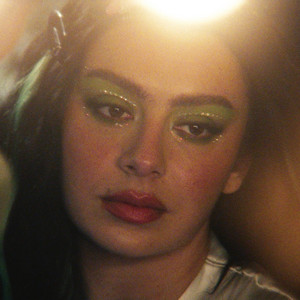
Remember Brat Summer?
This was, of course, 2024, the year when Charli XCX's Brat album catapulted her into the mainstream.
Now she's turned that moment into the movie the moment.
It's a hyper-pop super-meta, faux documentary commenting upon the intense response to Brat and Charli's fickle relationship with stardom.
Along for the ride is none other than Alexander Skarsgård, in a great comedic turn as a concert filmmaker, who's totally not Brat.
I'm Stephen Thompson.
And I'm Aisha Harris.
And today we're talking about The Moment on Pop Culture Happy Hour from NPR.
Joining us today is NPR music reporter Isabella Gomez Sarmiento.
Hey, Isabella.
Howdy.
Great to have you.
Also with us is journalist and host of the movie review podcast Seated, Trevelle Anderson.
Hey, Trevelle.
Hello, hello.
So great to have you.
So look The Moment stars Charli XCX as a version of herself in the immediate aftermath of the so-called brat summer of 2024.
She's feeling intense pressure to capitalize upon her newfound mainstream success and reluctantly goes along with her record label's shrewd business plans.
Those plans include shooting a concert film of her brat tour, and the label insists she hire a director named Johannes to helm the project.
He's played by Alexander Skarsgard.
Johannes' mainstream vision clashes with both Charlie's party girl aesthetic and her creative director Celeste, who's played by Hayley Benton Gates.
Are you familiar with light-up wristbands?
Wristbands that light up and the audience wears them, and then we can program the wristbands to react to the music, to the beat.
When you see it live, it'll blow your mind.
The movie's central question is this.
Can Charlie keep the brat momentum going?
And more crucially, does she even want to?
The moment is a feature debut of director Aidan Zamiri.
He directed Charlie's music videos for 360 and Guess.
And it's in theaters now.
Trayvon, I'm going to start with you.
Were you living in this moment?
You know, I'm going to go with yes, Aisha.
Let me start by saying, though, I am deeply in my auntie era.
I don't know nothing about this lady in real life.
I don't know the music.
I know Brat Summer and I know it was a thing.
But, you know, I'm still listening to R&B hits from the early 2000s.
You know, I'm a little behind.
So going into the film, I didn't really know what to expect, but I was along for the ride.
I found it quite a different approach to the mockumentary style.
It's funny, but not laugh out loud.
It do go on just a little too long as a movie overall, but I left it being like Well, I'm actually really happy to have someone here who is not all up in the Charlie XCX lore, because I did wonder how that would play for someone who, like you said, is not checking for Charlie in that way.
So it's good to have that opinion here.
We have a great group here.
Stephen, I'm going to ask you, were you living in this moment?
Well, I mean, who's more brat than me, right?
Yeah, seriously.
I don't know.
I have no idea.
A 53-year-old man.
I was very much in Brat Summer, maybe not of Brat Summer.
Yeah.
Loved the record, loved the videos.
Glad to see the director of several of those videos directing this, because I think he has a really good sense of her sensibility and this kind of meta-satirical vibe which, as Trevelle said, is not laugh-out-loud funny.
This is not, this is Spinal Tap.
This is not Popstar, Never Stop, Never Stopping.
It is not a mockumentary classic in that way.
Oddly what it is is.
I think it's more illuminating than a straightforward, artist-produced kind of self-hagiography.
I felt like I got to know Charlie XCX more than I would have with one of those kind of stage-managed artists.
Taylor Swift's many self-hagiography documentaries or any number of pop stars who have done this.
I felt like taking this approach to it, where you're kind of constantly questioning I know this is fake, but is this real?
I think that vibe permeates this movie in a way that I think is really consistent with what she is all about.
And I really appreciate the fact that they made a satire that feels more real than real.
Yes, absolutely.
I would have to completely agree with that point of view of this not being laugh at love funny.
And the movie does do, I think, a really good job of sort of making it very clear that it has its thoughts about those concept documentaries.
And in fact it references at some point like the reason that they're even doing this is because like, that's what sells right now.
Like that is what is getting butts in seats.
Isabella, though, I am so, so curious to hear your thoughts on this, especially as someone who is, I think you're a little bit closer in age to Charli XTX or like that era.
And also you cover music.
So please tell us, how do we feel about this moment?
Yeah, I mean, I was all in on Brat Summer.
I listened to the album.
I know the Apple dance.
I went to the Sweat Tour, which was like her real tour promoting Brat alongside Troye Sivan.
They did a whole co-headlining thing.
I was not a big fan of this movie.
I think it touched on really interesting concepts that have percolated throughout Charlie X's career, especially as it relates to the tensions between true artistic vision and capitalism and and label pressure, and I thought it tried to make really interesting points.
I'm not sure they really landed for me all the way.
I think part of it is just that the mockumentary felt like it dragged a little bit.
Sometime during the middle, I was like, oh my god, when is this going to end?
Which I don't think is a great indication.
But there were really good laughs.
And I do think ultimately I liked the Charlie sensibility of poking fun at herself being in the situation more so than a melodrama of like it's so hard to be a pop star.
So I think that the relatability factor of it worked really well, and just how ridiculous of a situation this is for anyone to be in.
Yes, yes, absolutely.
I also had a moment not too many moments, but I did have one moment in particular where I will say, a cameo pops up in the middle of this film.
I won't say what the cameo is, but you and I are in agreement here.
I can tell.
Yes.
It is a cameo of a very famous person who is also, like Charlie XCX, extremely online, has grown up extremely online.
And they have this whole exchange that I think is supposed to be.
Sort of it is a catalyst for the last, the back half of the film and Charlie XCX's choices.
And it sets her off to be in the same room as this person.
And that, scene felt like it went on for about three minutes too long.
It may have been only four minutes, but it should have only been like 30 seconds.
And I think that the economy of time is something that this movie doesn't quite.
It's a first time director sort of issue, I think right.
Aidan Zamiri, this is his first featured debut.
But I have to say, like, I kind of loved this.
And you know I didn't go to the most recent tour for this album.
But I will say I'm going to throughout my Charli XCX bona fides here, because I can't often say this about musical acts, but I've been with Charli since almost the beginning.
I've seen her five or six times, starting in the small little clubs in 2013 that she was playing in New York, up to, more recently, the Crash Tour.
So I love her.
I think that she is one of our most interesting pop stars right now.
And you know so many people have said this before, but she is someone who really understands online language and uses that in her music in ways that I find fascinating.
And I think this was the only way that she could come out of Brat feeling still like herself or the self that we know her as, which is like she's always been uncomfortable with the fame aspect.
It's clear she has aspirations of wanting to be famous.
But you also get the sense that she's constantly denouncing her previous albums after the publicity run is done.
And she's like, oh, I'm leaving that behind.
And the fact that Brat was an album where she couldn't quite leave it behind and she's wrestling it with now in this way, I think, works so well.
And I also think the way that she incorporates Johannes, the Alexander Skarsgård character, in here as sort of the foil, the villain we should say to her creativity is And what brat is and what brat isn't.
And just how brat kind of got out of control.
Let us never forget, Kamala is brat was a thing.
Kamala is brat.
Even after all this time.
Yes, yes.
But I do think Charlie is, not just as like a mockumentary, but I think as an actress.
And I will say I saw Charlie XCX in no fewer than three different movies at Some dance, including this one.
And I also saw her in two movies at the Toronto Film Festival.
So she's like out here trying to act.
I think this is by far her most successful bid so far as a performer.
And I think it really sort of shows in certain moments where you can't quite tell the line between herself and where the movie itself goes.
But Stephen, what were you going to jump in and say?
Yeah, I mean, I think it's interesting Aisha, that you refer to Alexander Skarsgård's character as the villain.
He is definitely the villain, and he's definitely a slimeball.
But he's not the only force kind of pushing her in this kind of more hyper-capitalistic direction.
She is also willingly entering into this horrifying deal for a brat credit card.
Yeah.
Which is definitely satirizing, and this is not the first music mockumentary satire to make hay of this particular kind of corporate crossover.
But I think the fact that those lines are blurred in every way right between art and commerce, but he just kind of comes in and personifies it in this particularly grody and funny way.
Yeah, yeah.
Travelle, I'm curious to hear a little bit more about like what your experience was watching.
Like, do you feel like you came out of it getting a sense of like, who this person is, or was it more just like oh, this was fun.
Good question.
I feel like I have an idea, right?
Like the Charli XCX character, is kind of positioned as warring really, with herself and her creative desires and kind of the broader industry that wants to make this moment continue as long as they can.
Say what we want, but pop stars are human too, right?
And I feel like that is kind of the thing that the film is trying to push and trying to showcase.
It obviously is not new in doing so, but I did feel like Charlie had a little on-screen presence.
I was like, I would check her out in something else.
I did not know she's been in all these movies, Aisha, apparently.
She's been in a lot of them.
I was like, I'd watch again, you know?
But I think the thing for me that kind of set the tone is the beginning of the movie.
It starts in what was, for me, a jarring kind of way, but really sets the tone for for I think the world that they're trying to create.
And apparently this world of Brat and Charlie XCX that I assume the fans are super familiar with, but I wasn't.
And so it immediately kind of forecasted the wild chaotic, kind of harried journey we were going on.
But I was with it overall.
I think also, like, for me, one of the more...
Funnier moments.
One that I actually kind of laughed out loud at was a scene that I think sort of encapsulates everything about Charlie's whole thing, which is she's in a car or whatever, and the driver is like oh, are you famous.
And they have this whole back and forth where he just pulls up her video.
I've seen those moments play out before.
I know how that works.
It's like, oh, your little thing.
You do your little thing.
Well, he immediately pulls up Charlie Puth.
Yes.
That was very funny.
Always the punchline, never the star Charlie Puth.
Exactly.
But I enjoy those little moments.
Isabel, I'm curious to hear a little bit more about like, just like, what wasn't working for you exactly.
I mean, I think part of it going back to how you were saying she's acting in all of these films right now.
I think the way that this mockumentary is trying to grapple with overexposure while at the same time, she continues to be in a space in her career where it feels like she is a little bit overexposed this year.
Like we have all of these projects coming from her.
She's doing the Wuthering Heights soundtrack.
She's in all these other films.
Like it felt hard to wrestle with because it was like we're actually not getting a break from her in any real way.
And in a way that I think you know we say this a lot about certain pop stars, but it's like sometimes it's good to maybe like go away for a little bit.
And like, Let things sit and then come back.
But I think also part of it was for me the direction at certain points tried to build this sort of like Safdie-esque anxiety, as we're sort of trying to see Charlie's anxiety and mental state, trying to figure out which direction to take with all this pressure coming at her from all these different angles.
And those scenes to me felt particularly dragged out.
So I feel like it kind of had the opposite effect of maybe what it was going for.
But I guess maybe also there were moments in this film where I had to remind myself that it was satire and not real.
And I think that's also intentional.
Like I think maybe there was also a moment where, like it's supposed to feel a little bit annoying that she's having such a hard time like making these decisions, I guess.
But yeah.
But there were really good laughs.
And I really appreciated Alexander Skarsgård's role here as sort of like the normie hyper-capitalist, like cringey guy, just bringing things up and having them turn around and be like what are you even talking about?
Who are you and why are you here?
Like those laughs did land really, really well for me.
Yeah.
One thing that I think really worked about the tension created by the introduction of the Alexander Skarsgård character is I've seen a lot of the kind of music documentaries that this film is parodying.
And they tend to feature either Taylor Swift or Beyonce.
And one thing that those movies are so careful to state or over and, over and over again, as text and as subtext
It's that the artist is in charge of their creative vision and the artist is obsessed with their creative vision, every single angle on it.
You know, you see Beyonce in rehearsal and she's obsessed with everything.
You see Taylor Swift and she's, you know, she's Taylor Swift.
She's fussing over every little detail.
And one thing that I liked about this film, and One thing that I thought this film kind of did pretty subtly for a movie that is otherwise not very subtle, is that Charlie XCX is largely checked out of the creative vision of this tour.
She literally leaves.
She literally just wanders off and just goes on vacation while a chunk of these creative conflicts are happening.
I found that to be a really kind of funny and self-aware approach that made this very unlike so many of the movies that it's parodying.
Yeah, that's a good point, because I do feel I appreciated the fallacy of sort of the singular auteur vision, in the sense that you realize so much of this is like there's these massive teams behind these stars.
And oftentimes they are at odds with one another.
And the last person anybody wants to hear from is the actual pop star.
She was kind of like a sidebar throughout this whole thing.
Yeah.
Also, what's interesting, and I also think.
Skarsgård is amazing here.
I also think Hayley Benton-Gates as Celeste is very, very good here.
Especially the tension between Johannes and Celeste is very fascinating.
It's supposed to feel like a nightclub.
That is what we do.
That is what we are good at.
Totally respect that opinion, obviously.
But I have to say that I think we're slightly misaligned here.
I'm trying to tell a story here, okay?
And a nightclub is not a story.
And what I found interesting about it is that it had sort of like that story that we've seen over and over again, where it's like the pop star starts off like their own thing.
Maybe they bring their best friend along.
And Celeste is supposed to be also sort of her best friend as well.
So there's that complication there between both being her best friend but also being someone who is helping her career and is in charge of her career.
And I thought that it was really interesting to see that, especially given that, like so much of what I think we often know about Charli XCX is that yes, she has her like writing partners.
She has those people she leans on, but she's also someone who, like literally just started making stuff on her own computer.
She is of like the extremely online tumblers generation.
I think the movie does a pretty decent job of finding that tension between, like Charlie the rebel, the like I'm doing, like this is all coming from me.
This is who I am versus like Charlie losing absolute control over like what she used to be.
And we don't usually see concert documentaries.
I mean I have.
I definitely have not seen as many as you have Steven, but like I've seen enough, and you don't usually see them when they're on that sort of precipice.
It's like usually, when you've already ascended, Maybe you have something to prove, but it's not necessarily that you have to prove like oh, I'm still me.
It's like, oh, I am.
I am Beyonce.
I am doing homecoming like this is me.
I'm going to this is my thesis statement.
And Charlie doesn't really have a thesis statement except like I'm trying to be Brad.
Like and I don't mean that in a negative way.
I just think the thesis statement is a little more muddled and unclear.
And I think that's what drives this.
But also Isabella, I agree with you that the Safdie-esque it feels like it's aiming for Safdie-esque and it can't quite get there on that tension.
Absolutely.
Yeah, I think that's a good observation.
Well, tell us what you think about the moment.
Find us on Facebook at Facebook.com slash PCHH and on Letterboxd at Letterboxd.com slash NPR Pop Culture.
We'll have a link to that in our episode description.
And up next, what's making us happy this week?
Valentine's Day is coming up and the perfect gift for the NPR lover in your life is waiting at the NPR shop.
From cozy sweaters and mugs made for slow mornings to our tiny desk hoodie, there's something for every NPR fan.
Each purchase supports public media and the journalism you love.
Find something meaningful at shopnpr.org.
There is a long history of misinformation about autism, from accusations about bad parenting to RFK Jr'.
's false allegations that Tylenol has something to do with it.
But science is getting closer to truly understanding what drives autism.
It looks like there are hundreds of genes that are involved.
To find out what the research actually says about autism and what we still don't know.
Listen to Shortwave in the NPR app or wherever you get your podcasts.
On NPR's Wildcard podcast, Melinda French-Gates on seeing her ex-husband Bill Gates' name in the latest Epstein files.
For me, it's personally hard whenever those details come up, right?
Because it brings back memories of some very, very painful times in my marriage.
Watch or listen to that Wildcard conversation on the NPR app or on YouTube at NPR Wildcard.
This is Tanya Mosley, co-host of Fresh Air.
You'll see your favorite actors, directors, and comedians on late-night TV shows or YouTube.
But what you get with Fresh Air is a deep dive.
Spend some quality time with people like Billie Eilish Questlove, Ariana Grande, Stephen Colbert and so many more.
We ask questions you won't hear asked anywhere else.
Listen to the Fresh Air podcast from NPR and WHYY.
And now it's time for our favorite segment of this week and every week.
What's making us happy?
Travelle, I'm going to start with you.
What's making you happy?
Okay.
What is making me happy?
Now, I have recently discovered this show called Moonshiners.
Okay.
Apparently, the show has been around since like 2011 or something.
But I just found it.
And it is a docuseries, as they say, about these people who are making moonshine up in, like the Appalachian Mountains and, like you know, North Carolina and Virginia, and you know all of those places.
And I was like, this is just the kind of drama that I like to see in my reality series.
It is just such a slice of life that I kind of feel familiar with because I'm from South Carolina.
In case you can't hear it in my tone
But also very much different than me and mine.
And so what's making me happy is this show, Moonshiners.
You can check it out on HBO Max, on the Discovery Channel, if you have that.
Okay.
I have not heard of that show before.
So that is good to know.
Thank you, Trevelle.
All right, Isabella, what is making you happy this week?
What is making me happy is the novel Heart the Lover by Lilly King.
It was published in 2025.
I just read it thanks to my book club.
It's a fictional story about this love triangle between three college students who are best friends and there's this sort of drastic time jump into the future as their grown-up selves sort of reflect on the repercussions of all of these entanglements between the three of them and what that looks like as you get older.
It's kind of a sad novel, I will say.
I stayed up reading the end of it sobbing in my room.
But I love a book that can get me to be that emotionally attached to the characters that, like I feel they're feeling so, so deeply.
And I hadn't had that experience in a very long time.
So I highly recommend it.
It's called Heart the Lover by the author Lily King.
Right.
I mean, look, sometimes we all need a good cry.
Oh, my gosh.
Okay.
This will deliver.
I don't know anything about that, Aisha.
Yeah.
Sometimes it just feels nice to feel something, anything.
But enough about me.
Steven, what is making you happy this week?
Aisha, my pick made me cry, too.
Oh, good.
Well, that's not surprising.
I know you enough.
So I needed a little bit of a comedown after the Safdie-esque intensity of the Charlie XCX movie.
And so I was just like sitting on my couch scrolling blue sky when I came across an old-fashioned prompt from someone calling for people's favorite song with a long title.
And the replies are fantastic.
It sent me down a rabbit hole.
And for me, that rabbit hole ended with one of my favorite songs of about a decade ago.
It's by a band from New Zealand called Tiny Ruins.
When I work at the museum With you across the way.
That is me at the museum, you in the winter gardens.
It is just a perfect, soft, dreamy little bit of scene setting.
Perfect for drifting into the weekend.
Look, it is a loud time right now.
The world is loud.
The Charlie XCX movie is loud.
The Super Bowl is going to be loud.
I'm trying to make sure I make time to exhale a little bit.
Anything to soothe my raging anxiety is what is making me happy this week.
So that is a wonderful song with a very long title.
Me at the Museum, You in the Winter Gardens, by Tiny Ruins.
Ah, thank you.
That does sound like cozy up, get a quilt or a blanket, sit on your couch and eat soup kind of song.
This song is a mug of cocoa for your soul.
Yes.
Well, thank you, Stephen.
Well, what's making me happy this week?
Well, we recently recorded our 2026 Sundance episode wrap up of some of our favorites there.
And, of course, whenever we record these episodes, we always say we hope you'll be able to see these movies and they get distribution, because a lot of the movies don't have distribution.
So what's making me happy is a movie that I saw at Sundance in 2023, and it is Mila Sutando.
This is a documentary directed by Mila Sutando Bangela, who is a South African filmmaker.
And it's basically like she brings her own personal essays brought to life onto the screen.
She uses home movies interviews, tons of some really striking archival footage where she's excavating the lingering effects of South African apartheid on herself and her friends and family.
She's a millennial, so she's kind of like she was of a young age when just a kid when Nelson Mandela was freed and eventually became president.
And she talks about that.
She also questions what it means to have white friends in South Africa, which I find very illuminating.
She has a really fantastic conversation between herself and her friend who's also a producer on the movie, Marion Isaacs, who is white.
And it's one of the most blunt real, challenging conversations I've heard between a Black person and a white person about what their relationship means to each other.
It's unlike anything I've ever seen before, and I really hope people seek it out.
Absolutely worth talking about, and especially in this era where so much of history is being erased, it's nice to see this perspective done in such a well-done way and in such a moving and affecting way.
So that is Millie Sutando.
It is streaming on the Criterion channel.
And that is what is making me happy this week.
Also, one last thing before we go.
We are pulling back the curtain and letting Pop Culture Happy Hour Plus supporters sit in virtually on a live episode taping.
This is so exciting.
I'm very excited.
Basically, you'll get to see how the show is made and experience this episode before everyone else.
We'll be talking about something Oscars related, which is one of our favorite topics.
It's all happening over Zoom on Friday, February 13th at 3 p.m.
Eastern, noon Pacific.
If you're not a Plus supporter yet, you can go to plus.npr.org slash happy.
Again, that's plus.npr.org slash happy.
If you're already a Plus supporter, thank you.
And yeah, just scroll back in your feed to January 22nd to learn how to register for that taping.
That brings us to the end of our show.
Isabella Gomez-Sarmiento, Travelle Anderson, and Stephen Thompson.
Thanks so much for being here.
This was fun.
Thank you, Aisha.
Thank you.
Thank you.
This episode was produced by Liz Metzger, Carly Rubin, Kayla Lattimore and Mike Katzeff and edited by our showrunner, Jessica Reedy.
Hello, Come In provides our theme music and thank you for listening to Pop Culture.
Happy Hour from NPR.
I'm Aisha Harris.
We'll see you all next week.
Venezuela, Iran, Greenland.
World events move quickly.
Make sense of them with State of the World from NPR.
We bring you on the ground reporting from around the globe in just a few minutes every weekday.
Listen to State of the World on the NPR app or wherever you get your podcasts.
2026 marks the 100th anniversary of what we now celebrate as Black History Month.
So on Code Switch, we're reflecting on that journey.
Black History Month is a time for people to observe Black history as a movement and a legacy.
That was about correcting the historical record.
Listen to NPR's Code Switch podcast on the NPR app or wherever you get your podcasts.