This is the Global News Podcast from the BBC World Service.
I'm Charlotte Gallagher and in the early hours of the 4th of January, these are our main stories.
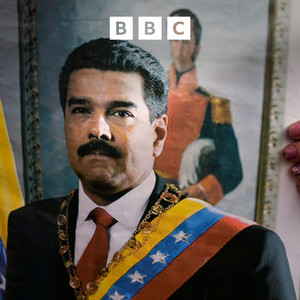
Venezuela's President, Nicolas Maduro, has arrived in New York, where he's facing drug charges after being captured by US troops.
President Trump has said his administration intends to run Venezuela until a transition can be achieved.
Also in this podcast, how does it all feel inside Venezuela?
There's always this fear, after things like this happen, that we will start seeing anarchy taking place.
There are lots of armed people that have been given weapons.
We'll hear from a woman in the capital, Caracas.
The Venezuelan leader, Nicolas Maduro and his wife are now in the US after their capture by American special forces in Caracas.
Several dozen people who appeared to be law enforcement officers led a figure dressed in grey from a plane across the tarmac of New York's Stuart Air National Guard Base.
Earlier, Donald Trump had posted a picture which showed Nicolas Maduro after being captured by the US.
He was wearing a grey tracksuit, his hands tied, his eyes blindfolded.
Among the journalists watching his arrival in New York was our correspondent, Neda Tawfiq.
Despite the extraordinary circumstances of all of this, he will be treated just as any other criminal defendant of high profile has been treated in New York.
He will be taken by law enforcement to be processed and booked, to be fingerprinted, to have his mugshot taken, to finally then go to the Metropolitan Detention Center in Brooklyn.
There, he and his wife are expected to be put into a special part of the jail, away from the regular population.
And we expect on Monday that he will then face those charges against him to have them read out in court.
25-page indictment that accuses him of narco-trafficking and importation of cocaine.
Neda Taufik.
Nicolas Maduro has always denied any links to the drug trade, and his vice president, Delcy Rodriguez, called his capture an illegal kidnapping.
Appearing on state television alongside senior government figures.
She said a state of emergency had been declared.
Venezuela's high court has ordered that Delcy Rodriguez should take up the role of interim president.
The opposition leader, Maria Corina Machado, welcomed the US intervention, saying Venezuela's hour of freedom had arrived.
Asked whether she should take power, Mr Trump said the Nobel Peace Prize winner was a very nice woman but lacked support and respect in the country.
The BBC's Vanessa Silva, is in the capital Caracas, and watched the American attack unfold.
Pictures posted by President Trump on social media appear to show him and his top officials watching the overnight operations unfold.
It was a force against a heavily fortified military fortress in the heart of Caracas to bring outlaw dictator Nicolas Maduro to justice.
It was dark and it was deadly, but captured along with his wife, Celia Flores. both of whom now face American justice.
The capture led many wondering who will now run Venezuela.
And then this.
We're going to run the country until such time as we can do a safe, proper and judicious transition.
Nicolás Maduro has led Venezuela for more than a decade.
Now Washington says he will face charges, including terrorism and drug trafficking, in the United States.
His capture was part of a huge military operation, with Venezuelans ripped from their sleep by loud explosions in military sites across the country.
Residents cowered in fear as the US military struck an airstrip and a military base in the heart of the capital, Caracas.
The U.S. has long accused Nicolás Maduro of running a criminal network.
Claims he denies.
Just days ago, he said he was open to talks.
If they want to seriously discuss an agreement to combat drug trafficking, we're ready.
If they want Venezuelan oil, is Venezuela ready for U.S. investments, like with Chevron?
Whenever, wherever and however they want.
Venezuelans have been living under the threat of US military action for weeks.
The US has now acted on that threat and most Venezuelans, supporters and opponents of President Nicolas Maduro, are simply concerned about what comes next.
Look, you see the streets empty.
People are in their own thing, buying things to go back home.
A lot of uncertainty in the entire country for everyone.
You, me, someone walking.
What will happen tomorrow?
What will happen in the next hour?
Nobody knows, but, well, it's an enigma that we are living right now.
It's an enigma that we are living right now.
Many Venezuelans wanted Nicolas Maduro out.
He was widely considered to have stolen the recent presidential election.
But as the hours pass, the full realization of what has happened is hitting Venezuelans.
Despite these historic events, the future remains as uncertain as ever.
Vanessa Silva in Caracas.
As we've been hearing, President Trump has said the US intends to run Venezuela and he isn't afraid of putting boots on the ground.
For more on how events are unfolding, here's our State Department correspondent, Tom Bateman.
We've had, you know, I think, as each hour has passed here in Washington.
Just first of all, more of the remarkable detail that has been variously briefed, some by anonymous officials, others on the record by the US military, including details from unnamed officials that, suggesting that it was a CIA informant in Mr Maduro's inner circle that was giving real-time information on his location, that stealth drones were being used to follow him as well, and that when these elite Delta forces went in, Mr Maduro had tried to escape to a safe room and was basically still trying to close the door when they arrived.
Now, in addition to that, has then been the justification by the administration, which broadly has been around this idea that this was a law enforcement exercise carried out by the US military because Mr Maduro had already been indicted on drug trafficking allegations, which he has always rejected, saying that was just a front for an attempt at regime change.
And then, I think, this remarkable moment where Mr Trump said that the US would now run Venezuela until such time as there could be a transition.
Now it felt to me there was just a real lack of clarity about exactly how that would be done, beyond the very clear threat of coercion, basically towards the people that remain of Mr Maduro's regime and namely the vice president, Delcy Rodriguez who, it seemed, you know, had this lengthy conversation with the secretary of state, Marco Rubio.
And Mr. Trump seems satisfied would do what the Americans want.
And he is making no secret of the fact that he sees one of the major objectives here as American access to Venezuela's oil.
Well, I mean, he said that, didn't he?
He was going to send in U.S. oil companies.
That obviously is going to raise a lot of eyebrows.
Yeah, and I think that's where this, you know, throughout the last three months is.
We saw this huge US military buildup in the Caribbean Sea, off Venezuela, a kind of zigzagging of really what the intention was.
Now, the biggest justification that's given by the Americans is that they see Venezuela as a key linchpin of the drug and people trafficking into the US that this administration sees as America's biggest national security threat.
And so they have acted on that.
They say, despite the fact that they've got a lot of criticism, especially from the Democratic opposition, you see this as illegal unconstitutional, a kind of bullying campaign against a smaller nation.
I think the problem is now how the Americans use their role now, because they have basically carried out a decapitation.
But are they replacing Mr Maduro with, in effect, the Trump administration, with still the support of elements of the Maduro regime?
That's Tom Bateman in Washington, and he's also been speaking to a woman in Caracas.
We're not using her name as she's afraid that might put her in danger.
She supports the opposition and got woken up at 2am by explosions and aircraft flying over her home.
She told Tom how she sees her country's future.
Well, we do hope there will be justice.
As you all know, we've been through many years now of all these atrocities taking part of our daily life in Venezuela.
Personally, I feel hopeful that things will be done in the way it should be, correctly.
There's always this fear, after things like this happen, that we will start seeing anarchy taking place.
There are lots of armed people that have been given weapons to take care of the personalities that belong to the regime that probably they're out there.
But on the other hand, I trust our people.
We are so fed up.
I mean, we are so tired that we probably will respond in a positive way and that allow these things to happen.
Probably I'm being too optimistic.
I don't know.
But we do feel a kind of release.
You know, I have to say it.
Were you able to watch President Trump's press conference?
I mean, that's a different story.
After listening to him saying, we will run Venezuela.
And then the second thing when they asked him about Maria Corina Machado, listening to him and saying that she's not respected in her country.
What is he talking about?
I mean, he doesn't know what he's saying.
I mean, so embarrassing from a president.
It's really, really disappointing.
I mean, but this is the big question now, isn't it?
Because, you know, he seemed to kind of contradict himself by saying you know we're the US is going to run Venezuela into the transition.
But then he mentioned Rodriguez.
So what? know how he is.
He says something now and tomorrow he changes his mind.
I mean, I'm just grateful for what they did, taking Maduro out of here.
But besides that, the next steps that will take place.
Well, probably it would be a good idea that they are watchful on the transition and they will give some support to Besides that, I can't believe they're taking their oil back.
They're taking what belonged to them back.
I mean, these kind of things I really want to ignore.
I don't want to take them seriously.
Well, we'll see what happens.
I mean, we'll see how we manage that.
But at least we can see some light at the end of the tunnel after taking Maduro out of this country.
That was Tom Bateman speaking to a resident of Caracas.
Still to come in this podcast, reaction from the Venezuelans who've settled in the US.
I've been looking forward to this day for so many years.
Thank you, President Trump.
I'm so, so happy because now Venezuela is free.
Our correspondent has been speaking to people in Miami.
This is the Global News Podcast.
Nicolas Maduro has long said that Donald Trump's interest in his country has less to do with stopping the flow of drugs and people into the US and more to do with gaining control of Venezuela's oil fields.
And it's something President Trump didn't deny was part of his motivation.
It's actually very dangerous.
It's blow-up territory.
Oil is very dangerous.
It's a very dangerous thing to take out of the ground.
It can kill a lot of people.
It has killed a lot of people doing just that.
The infrastructure is old.
It's rotted.
Much of it is stuff that we put there 25 years ago, and we're going to be replacing it.
And we're going to take a lot of money out so that we can take care of the country.
Yeah.
Venezuela has the largest oil reserves in the world, but they're frequently accused of being mismanaged.
In the 1970s, the country was responsible for more than 7% of global production.
Last year, it was around 1%.
With his assessment, here's our business correspondent, Mark Ashdown.
Venezuela's oil reserves are estimated to total more than 300 billion barrels, the largest on Earth.
It is primarily extra-heavy crude, costly and difficult to extract.
Yet Venezuela remains the world's fifth-largest exporter.
Even with the growing number of US Navy vessels being stationed in the Caribbean Sea, last month still saw nearly a million barrels a day flowing to China, southern Europe and the US.
Production has been hit in recent years by political unrest, and for decades, the country's state-owned oil and natural gas company, Petroleos de Venezuela, has been hit by strikes and accusations of poor safety standards.
The US has accused President Maduro of using oil money to fund drug trafficking.
He has accused Washington of being intent on taking control of his country's oil reserves.
The oil field seemed to have escaped any damage from the airstrikes.
Whatever the future holds for Venezuela, its oil industry is likely to play a key role.
That was Mark Ashdown.
As you might imagine, this is also being watched very closely across Latin America, not least in Venezuela's neighbours.
BBC Mundo correspondent Daniel Pardo is on the Venezuelan-Colombian border, where Colombia has announced it's sending forces.
He told us why.
For many reasons, because this is the country that is most affected by what happens in Venezuela.
It's always been.
One third of the 8 million people who fled Venezuela in the past decade for the political and economic crisis are here in Colombia.
So there's a fear that this is going to generate a new wave of migration towards Colombia.
But authorities in Colombia also think that many Venezuelans might want to go back to Venezuela.
So they're trying to prepare for that.
That's one reason.
Second reason is that they want to control better and enforce their tackling of the armed groups illegal armed groups that are present here in the border with Venezuela.
Bear in mind that this is an area where Colombian guerrillas, narco-militaries and drug traffickers are present, have control of the area and kind of fight among them in order to control the area.
So this is a very complicated place, and Colombian authorities think that the power vacuum after Maduro's capture might generate more violence.
And third of all, it's the probability of a of an American, of a U.S. intervention also in Colombia.
Bear in mind that Mr Trump thinks that the president of Colombia, Gustavo Petro, is also part of this drug trafficking scheme for which he ousted Maduro.
So there is the probability, and even Trump has said it, that there's an intervention here too.
So there are many reasons why this is major in Colombia.
And you mentioned there the power vacuum inside Venezuela.
Do we know how that's going to be filled?
That is going to be the biggest question, because you have Delcy Rodriguez in power now, or at least holding on for Maduro's post.
But what we've seen for the past years at least a decade is that the central government in Venezuela doesn't have that much power over its land anymore.
So one of the questions is how are they going to be able to control most of the territory in which there is, as I was saying, there is presence of all sorts of illegal activities, armed groups that are not necessarily linked to the government of Venezuela or to Maduro, but that are still there, right?
And that they control part of the area.
You have colectivos, you have the army, who is hugely important in Venezuela.
It has increased its power all over this 20 decades of chavismo.
So it's very difficult to say who is in power in Maduro, who really controls things in Venezuela.
And how much support does Maduro still have in Venezuela?
Very little.
I mean, we know from all sorts of polls that have come out in the past five years that he has less than 10 of support.
So most Venezuelans are happy to celebrate right now.
That was Daniel Pardo.
So what about Venezuelans living outside their home country?
As Daniel was saying, almost 8 million have fled since President Maduro took power.
Many went to neighbouring Latin American countries and some settled in the US.
As news of the raid broke, crowds started gathering outside a Venezuelan restaurant in Doral in Miami-Dade County, where more than 40 of the population come from Venezuela.
CHEERING
Elsewhere in Miami we've seen celebrations on the streets with people waving flags and singing songs.
My family is still in Venezuela and I've been looking forward to this day for so many years.
Thank you, President Trump.
I'm so, so happy because now Venezuela is free.
I've been speaking to Luis Fajardo, BBC Monitoring's Latin America analyst, who's in Miami.
It's fair to say that there's many people in Miami, particularly among the Venezuelan community, who are glad about the news that came from Venezuela a few hours ago.
There's thousands of Venezuelans who had to flee the political and economic turmoil and made their homes in Miami.
But they've always kept the hope of returning to their country or at least seeing more of a normal situation in their country, less turmoil.
And for many of them, this is maybe a first step in that direction.
I am in central Miami right now.
And not that far away from here, I was seeing several dozen Venezuelans applauding the action of the Trump administration.
Some of them were wearing Trump hats and Trump T-shirts.
So clearly this is something that could increase Trump's popularity with the Hispanic community here in Miami.
And what's the reaction in the region, countries that are close to Venezuela?
What are they saying?
There's a lot of very strong reactions and mixed reactions, I would say, across Latin America.
I think Latin America, more than many other regions in the world, has serious nationalistic concerns regarding their relation with the US.
They many times have seen or have considered the US as an interventionist power.
And the fact that Donald Trump, in his press conference, when he was talking about the action in Venezuela, he cited the Monroe Doctrine, a 19th century doctrine by which the US claims it has the right to exert more influence in the Americas.
Well, many people in Latin America, many schoolchildren in Latin America, were taught to be very concerned about this type of US feeling about the Monroe Doctrine.
But on the other hand, There's also many people in Latin America who were very concerned about what's happening in Venezuela, both because they did not like the ideology, particularly conservative Latin Americans were very concerned about what was going on, that the same thing that happened in Venezuela could happen in their countries with these types of very left-wing policies.
And they also, in many cases, had experienced the massive migration of Venezuelans into their countries.
So, again, very intense but very contradictory feelings across Latin America.
Some countries like, for example, Mexico and Brazil, have expressed that they are objecting to the action.
They say that it was a violation of Venezuelan sovereignty, while other countries, like Argentina, have applauded very strongly.
The president of Argentina, Javier Millet, a very strong supporter of Trump policies.
He came out saying that he believed that this was a move in direction of more freedom for the region.
So again, a very mixed picture in that.
Louise Fajardo in Miami.
The UN Security Council will hold an emergency session to discuss the crisis in Venezuela on Monday.
Here in the UK the Prime Minister, Zakir Starmer, has said Britain was not involved in the American military action.
He said he wants to talk to President Trump to establish the facts.
Russia, meanwhile, has called the US operation deeply concerning.
Our World News correspondent, Jo Inwood, reports.
Donald Trump came to power promising America first.
Many assume that would mean an age of isolationism, but no more.
We're going to have a group of people running it until such time as it can be put back on track, make a lot of money for the people and give people a great way of life, and also reimbursement for people in our country that were forced out of Venezuela.
It's maybe no surprise that China, a long-time ally, said US actions threaten peace and security in Latin America, while Russia said ideological hostility has triumphed over business-like pragmatism.
There are fears that last night's unilateral actions undermine international law and make it harder to condemn aggression elsewhere, say Taiwan or Ukraine.
Germany's Friedrich Merz said the principles of international law must apply.
Keir Starmer knows he faces a balancing act between defending international law and maintaining a hard-won relationship.
I can be absolutely clear that we were not involved in that.
And as you know, I always say and believe we should all uphold international law.
But I think at this stage, fast-moving situation, let's establish the facts.
It is hard to overstate the importance of today.
It feels like the world at a turning point.
The question is, in which direction?
Jo Inwood reporting.
And that's all from us for now, but there will be a new edition of the Global News Podcast later.
If you want to comment on this podcast or the topics covered in it, you can send us an email.
The address is globalpodcast at bbc.co.uk.
You can also find us on X at BBC World Service.
Use the hashtag Global News Pod.
This edition was mixed by Nikki Brough and the producer was Will Chalk.
The editor is Karen Martin.
I'm Charlotte Gallagher.
Until next time, goodbye.