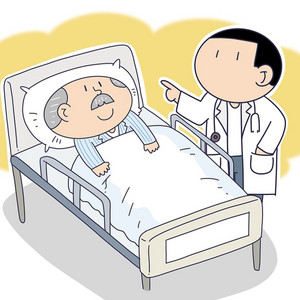
In the face of a hospital bed shortage, what if the answer was to simply share?
In China, shared hospital beds?
A model proven with bikes and power banks are now being tested in hospitals.
Could this strategy finally reduce the long waits to be admitted for treatment?
And ever seen those ads from social media influencers promising fame and fortune through their online courses?
Before you click buy, listen to today's show.
And as we take a closer look at it, whether these courses are really the goldmine they claim to be or are they just a scam is something you can find out.
Coming to you live from Beijing, this is Roundtable, I'm He Young.
For today's program, I'm joined by Yu Xun and Ding Heng in the studio.
First on today's show.
In China, shared services such as bikes, power banks and even umbrellas have become commonplace, allowing underused resources to be accessed for a fee.
And this model has proven to be a viable business concept.
Now it's being extended to hospitals with a shortage of beds for inpatients.
Many hospitals are experimenting with a shared bed system where available beds in any department can be used by patients in urgent need, regardless of their specialty.
For instance, a patient from orthopedics might be placed in an oncology ward bed if it's free, optimizing hospital resources.
So Yu Xun, can you paint a picture for us of how shared hospital beds are currently being implemented in China?
So we can see is that in some hospitals, there may be a shortage of hospital beds.
Then many hospitals in China have adopted this kind of shared bed model, allowing different departments to share beds.
So patients can be admitted to beds outside their designated department.
For example, an orthopedic patient might stay in a surgery department bed.
And this also greatly improved hospitalization efficiency, actually.
According to a recent Xinhua report, a patient surnamed Li went to a hospital in Beijing for her tumor treatment.
This hospital called the China Japan Friendship Hospital is also one of the most popular hospitals in Beijing.
Which means it could sometimes be pretty hard to get a bed.
And it took only less than a week from getting the medical registration to getting hospitalized, which can be considered fast.
Because it took her over a month to get the available hospital bed for the same disease a few years ago.
So that is the situation that you can quickly get a bed, but it is not from your designated department but maybe from another, like, you know, next to your department.
Oh, what a great pity that Ms.
Li had to go back to the hospital for the same element a few years apart.
I hope she's okay. So this is the situation that has garnered people's attention these days.
And initially when shared hospital beds was being reported, I was wondering if it was two people taking turns staying in that one bed or whatnot.
And obviously that is completely off the point.
So this is more about, you know, designating the scarce and very much needed resource of a hospital bed for treatment for those in need.
And what was your initial reaction when you saw this Ding Hong?
Well that was a wow, a big wow actually.
Why is that? Well, because we have read too many news reports or hearsays about how, you know, how difficult that in terms of the difficulties and challenges of getting access to unavailable hospital beds, especially for those who do have the need to stay in the hospital for surgery, for the post surgery,
recovery, etc. So that was a pretty innovative method to try to address this challenge, especially in big cities, big hospitals.
Yeah, as far as I know, some hospitals are divided into, say, medical and surgical parts.
And within that parts, different departments close to one another can share beds, I guess.
And currently, I guess in the case of this Beijing -based China -Japan Friendship Hospital mentioned by Yu Shen earlier, there were 47 beds in this department.
So with the sheer beds, it can hospitalize much more patients as if it had nearly, like, close to 70 beds, increase by almost 50%.
I guess this is not only here in the Beijing in that particular hospital, in other localities in China, for example, in the central Chinese province of Hunan, a local hospital called Hunan Children's Hospital has coordinated bed allocation and other relevant resources to transfer patients to other internal
medicine wards. Then in the eastern province of Fujian by rolling out bed sharing, the first affiliated hospital of Fujian Medical University have reduced the patient's average waiting time for admission from the previous seven to eight days to the current level of three to four days.
So a lot of encouraging signs are being seen nowadays.
Yes, indeed. And here we're talking about, just to make it even clearer for people, inpatient treatment.
So basically, these are hospitalized treatments, referring to the medical care that requires a patient to stay in the hospital for observation, surgery, or treatment that cannot be done on an outpatient basis.
And this is typically involving a longer stay for some serious conditions requiring bed space, round -the -clock care and ongoing monitor by healthcare professionals.
And we're seeing that here that, you know, possibly there is a solution to what was a dire need, as we've seen in reports.
And actually, this is something that needs a little bit more of our attention of the reality here in hospitals.
So if you live in China, you're likely aware of the hospital bed shortage.
But the reality seems to be that while there are actually many hospital beds, but it's still not enough.
And why is the discrepancy?
Exactly. So we can see that, according to the official website of the National Health Commission, there is a report revealing that by the end of 2023, there were more than 10 million medical beds nationwide, an increase of 424 ,000 beds from the previous year.
By 2023, the number of beds in medical and health institutions per thousand people reached 7 .23.
But the situation is that globally, we're all facing a kind of shortage in medical beds.
That means that maybe the medical resources is there, and people can get that.
But after the treatment or after the whole population that needs medical beds, it is in kind of a shortage.
We can see that even in advanced countries like the US, UK, and other European nations, hospital bed shortages or challenges with bed availability and utilization still exist.
Though, you know, the causes and skill may differ somewhat.
What we can see is that in the United States, fewer beds per capita.
You know, the US has significantly fewer hospital beds per capita compared to many other developed countries.
According to the World Bank, the number of hospital beds per 1000 people in the US has dropped from 9 .2 in 1960 to around 2 .7 by 2020.
Also in the UK, national health services called NHS strain is also an issue over there.
The NHS often struggles with hospital bed shortages, especially in winter.
You know that winter pressure, we call it, cold weather and flu outbreaks may cause more people getting to the hospital and need hospital beds.
And that typically strained the system, you know, leading to delayed discharges and long waiting times for non -urgent care.
And here I think is important to zero in on this situation.
Sorry to, you know, not to sort of shed the spotlight on the US, but sorry, guys, you're really not performing well in this particular department.
I mean, just let's just compare figures by 2023.
And this is according to a statistical bulletin on the development of China health care industry in 2022.
Apparently the number of beds in medical and health institutions in this country per 1000 people has reached 7 .23.
And what was that number in the US?
It's shockingly low.
2 .7 out of a thousand people in 2020.
And let's compare figures in other places.
In Japan, the same figure of comparing, you know, hospital beds per 1000 people for Japanese citizens, that's 12 .7.
And for South Korea, it's 12 .8 per well, hospital beds per 1000 people.
So this is critical medical infrastructure, you know.
Yeah. So, so my impression from reading through these figures that both of you have cited, my first reaction is that China was, China is actually not performing so badly as compared to these developed economies in terms of the nationwide situation.
But here in China, I guess the challenge is that within a particular hospital, for example, the use of beds across different hospital departments is sometimes quite uneven.
For example, each department has its own peaks, its own valleys.
For example, during cold weather, there is a higher chance for respiratory infectious diseases, including cold.
During hot weather, probably more people are more likely to suffer from diseases like heat stroke, diarrhea or skin diseases.
So this unevenness is quite visible.
And I guess across different layers of hospitals in China, because in China we have a multilayered system, right?
Usually the best hospitals are classified as the third class or tertiary hospital.
They're like AAA class.
AAA, yeah. Basically, yeah, the major hospital.
They're the best hospitals with the most abundant medical resources and talent, and attracts a lot of patients.
Yeah. So basically, the figure in 2023 is that the utilization rate of hospital beds in China, the national level was close to 80 last year.
But for top hospitals like tertiary hospitals, it's over 90 percent.
For secondary hospital, it's about 74 percent and 54 percent for those grassroots community -based hospitals.
So we're seeing that the most popular, the best hospitals, they attract the most number of patients.
And if you live in big cities in China, you would be very familiar with the overcrowded big hospitals.
And if you thought this represents hospitals all over China, you can't be more wrong, because apparently in smaller hospitals, they're not getting so much traffic for sure.
And I think the hospital beds is merely one window to look at some of the deeper issues of an imbalance of resources, as well as patient demand in these different levels of medical institutions in China.
Exactly. And that's why we're seeing that that kind of utilization rate of hospital beds is so important.
And as we have already listed so many numbers, it is showing that, you know, the utilization rate of the hospital beds has not reached its saturation limit, and there is still significant potential for our further exploration.
You know, if we break down the boundaries between departments within the hospital, because sometimes one hospital can be, you know, empty and some and another can be just fully occupied, right?
Empty might be a little bit.
I exaggerated it a little bit, of course.
But anyway, that's what I mean, you know, so implementing overall planning and reasonably adjusting beds can, you know, not only satisfy more patients in need of hospitalization, but also greatly improve the hospitals admission capacity.
Well, let's break it down further for people to understand.
In theory, this doesn't sound like a huge revolutionary practice.
It's basically saying that in the different departments of one hospital, well, now, instead of every department being in charge of who's going to come in, or how many people are going to come into my ward due to the vacancy and occupancy rate of my ward, now, in a way, you're giving up that information and sometimes
you can say power to decide into this, like, centralized system.
So now the whole hospital, they're supposed to share information of the vacancy rate of your number of hospital beds in your department, right?
And then now it's a more of a centralized information system of some sort that the hospital altogether might have a special platform of some sort, and then they need to share this information and also decide, so let's put a bone patient into the heart, patient ward, that kind of thing.
So, I mean, this is obviously from an outsider's observation.
Some people are going to give up their power, because to provide a bed for somebody in an emergency urgent need for medical care, I mean, yeah, now the whole hospital needs to share that information.
And, okay, so do you think this is a good idea?
Do you think that there, while we've talked about, okay, this might be solving an urgent need of the medical system, but could it be potential downsides at the same time?
What's your assessment?
Downsides, I am not yet to think of any direct downsides out of this, but I have to say, well, we have to acknowledge that in the meantime, there are many other issues or potential problems behind this perceived insufficient hospital beds that cannot be solved by this practice of intra -hospital bed
sharing. One issue is, like I mentioned earlier, there is the different bed hospitalization rates across various hospitals, across very different hospitals.
And then there is this uneven bed distribution and utilization among regions.
For example, again, last year, the number of hospital beds per 1 ,000 people was 8 .4 in the northeastern province of Heilongjiang and a little over eight in Hunan, Sichuan, and Guizhou, these provinces.
This figure, in some of the more so -called wealthy regions like Shanghai, Beijing, Zhejiang, Guangdong, where population density tends to be higher, was below the national average, was lower.
And then there is this very restricted rehabilitation service.
According to some expert opinion, apart from this uneven bed utilization rate among different levels of hospitalization, hospitals, one problem or another problem is that this post -surgery rehabilitation services across China's hospitals are quite limited.
Basically, the idea is after surgery, many patients still need to occupy the hospital for a quite long time.
The national average is that they need to stay on that bed for nine days.
In some developed economies, this figure is quite low.
Right, but also, I would just like to offer maybe a caveat there.
What you've described there, Dinghong, sounds maybe more true in the smaller hospitals, in the slightly smaller cities as compared to the biggest cities, like the five top tier cities in this country.
Because I've also, I mean, this is from personal experience as well as reading some anecdotes online.
In big hospitals, in big cities in China, the hospital beds are in hot demand.
The doctor often wouldn't usher you, but basically, your treatment plan is you occupy this bed for as short time as possible.
And the issue with that is with a lot of the rehabilitative services that Dinghong, you're describing, then patients have to deal with that themselves after being discharged from the hospital.
Sometimes that requires a lot of specialized services and knowledge or whatnot, and that's not something that some people feel like you can adequately receive because the hospital, they pretty much are responsible for the surgery and the recovery.
A lot of it is up to you, and then that could be also a potential issue with the overall healthcare service and experience for average citizens.
And you seem to have something to share here, you shouldn't, sorry.
Because we're talking about the downsides, right?
But I wouldn't say it is a kind of a downside, but a kind of a challenge for this kind of patient into their departments normally.
But if the patient is in another department, first thing is that maybe it's from my nerdy mind.
You need to build up a whole new system that is connecting all of the departments in one hospital, right?
And then maybe before, one department can only take care of their own patients in their departments, and now they may need to communicate or connect with other departments to make everything go smoothly.
And another aspect is that doctors, they sometimes need to go check on the patients.
They have to, especially if you gave surgery to this patient, then the next day, you're in charge of doing the rounds.
And that's just what doctors all do.
And now your patient is in a different ward in a different department.
What do you do, Doctor?
You should. Yeah. So that could be kind of a challenge for doctors or sometimes for the patients, because if they need some urgent help and then they're calling their own doctors and they may cost them like before, probably just five minutes to get their, to getting into getting their wards.
But maybe later with this kind of system being operated, maybe the doctor needs to go through the whole hospital to get into the ward.
Yeah. So there are some of these things that we can think of, which might sound a little bit trivial, but they sound pretty practical, like pretty practical obstacles or maybe hiccups that might occur.
And it would be great to have a doctor in this room to tell us whether these are real issues for them.
But it does sound like this is some kind of revamp of the hospital bed system.
Yeah. I feel like it's actually no big deal for a professional doctor to travel from one section, one area of this hospital to another area to check on his or her patients.
Because, for example, our studio is in a different flow from our own office.
I don't feel it's a big deal to come to the studio.
But what about this?
But that's another story.
Yes, let's move on.
Let's move on. Here is that there should be a principle regarding doctors follow patients.
I think that's a common or that's an increasing practice that many hospitals are taking.
For example, when a patient is transferred to a hospital bed in another department, the original department doctor is still responsible for treatment.
And nurses, they have also received some kind of targeted training in order to make sure that they are capable of handling those maybe differentiated nursing tasks.
And maybe they're developing towards general kinds of nursing.
So this kind of internal mechanism, I feel like it's quite easy to deal with, actually.
The steel, I feel like the overwhelming challenge is all those issues I talked about earlier, this differences and variations across different hospitals.
It's very difficult to transfer patients from one hospital to another hospital.
That's more challenging.
In essence, the shortage of hospital beds is not about the number of beds, but it's also about how efficiently they're allocated, managed, and utilized across these different departments, as well as different hospitals and regions.
But so I think the crux of the issue is not just about, okay, now the hospital beds can be shared among the patients of different departments in one hospital.
What about that major gap that you guys mentioned that the smaller hospitals, they have some empty beds and the patients would rather go to the big hospitals than receive treatment in these hospitals.
So do you see as potential directions of solution to address the root problem?
Yeah, that actually reflects the whole picture of our medical system.
And I know that's a similar or a kind of a system that it's coming up, you know, making healthcare more convenient for residents and improve medical efficiency is that you can go to your local community's medical center to get help at first.
And then if you need more help, get to a higher level hospitals.
Yeah, that sounds like the first step of the referral -based healthcare system, but also you need to have the trust in your local hospital doctor to make that happen.