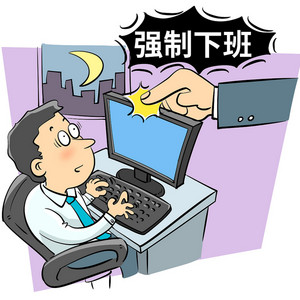
discussion keeps the world turning this is roundtable you're listening to roundtable with myself her young I'm joined by Steve Hatherley and Yu Shen in the studio coming up clocking out like a boss is no longer just a dream some companies are now literally turning off the lights to push employees out the door from overtime fines to surprise fire drill shutdowns, the anti rat race movement is gaining momentum this year, but is forced punching out really the dream or does it come with unexpected trade -offs?
And picture this, it's the weekend, you're wrapped in a blanket, laptop resting on your belly, deep into a dough yin or tick -tock or some kind of short video platform rabbit hole.
Feels like a perfect weekend afternoon, right?
But what if your beloved lounging habit is secretly toasting your skin, straining your neck, and even tampering with your fertility future?
We take a look at the hidden risks of our favorite lazy day activity – laptop lounging.
Our podcast listeners can find us at Roundtable China on Apple Podcast. Got a question that's keeping you curious?
From social issues to tech and everything in between, let us take Like us to have at it, email us at roundtablepodcast at qk .com.
Now let's switch gears.
China is no stranger to grueling work hours.
In fact, taking all of one's paid annual leave days can feel like a luxury, but this March, some companies are flipping the script.
Overtime bans, weekend shutdowns, and mandatory clock outs are on the rise.
Sounds great, right?
But what happens when the group chat pings after hours and when deadlines don't budge?
Sorry to sort of burst a pappy bubble for everyone, but you know those things could happen.
But guys, tell us more about this anti -overtime movement.
Oh yeah, I was so excited when I first read about it.
But apparently in China, several companies, especially domestic companies, have adopted strict regulations to curb overtime.
And that includes, first of all, Daz years, which is the Dazang innovations, where DJI, a Chinese technology company known for it's tech gears like portable cameras and drones.
So Dazang's HR clears out the office at 9 PM in Shenzhen, and that news just shocked everybody in the past few days.
And, well, apparently, it's not just in Shenzhen, it's in their Shanghai office as well.
The Shanghai office shuts off lights at the same time, so the employees will need to head out.
and they describe it as feeling like a fire drill when everybody in that work building needs to rush out at the same time and just to stop them from keep on working.
And then another company called Meidi or Media, a Chinese electrical appliance manufacturer, they implemented six bands which include prohibiting after -hours meetings and discouraging performative over time.
That's an interesting term, by the way, official social media accounts highlight the push for employees to leave on time.
And then there's another one called MiniSew that's a Chinese retailer and variety store chain that focuses on reducing unnecessary formalities and just improving meeting efficiency, which I find super cool.
Yeah, how do you do that?
Hire has a good one.
This is good. They've enforced a strict two -day weekend policy.
Oh. Banning employees from entering the office on Saturdays.
If you want to work overtime, then it has to be approved one week in advance.
You can't just make that decision on a whim.
Right. What about pound dong lai?
I know. This is my favorite one.
So pound dong lai, that's a supermarket and also a chain of malls and grocery stores.
Its founder, Yu Donglai considers overtime shameful.
And employees must leave on time, work no more than 40 hours per week, and managers face a fine of 5 ,000 yuan, were nearly US $700 if their team works overtime.
Wow. That's not a cheap fine either, is it?
Definitely not. And this supermarket has really made a name for itself last year for its very humane company culture.
And we know that for supermarkets, especially the really popular ones like this one, it's kind of labor intensive in industry and for this kind of business to stick its neck out and say we want to do something that might be going against the grain and we want to our employees' well -being as such and also its pay has been known to be quite good definitely in the upper scale in the industry so no wonder it's attractive.
It's of course gaining a really good reputation inside and out of the industry as well and people want to go work for them.
It's also a great kind of marketing strategy as a kind of bonus if you get your name in the news a lot talking about the great things you do for your employees.
And that's the positive press that not a lot of celebrities or companies generate all the time, so this is actually really promising news.
But there's one small thing that, I'll not repeat the company name, but Yushan mentioned earlier.
She said that that company shuts the light at 9 PM.
Yeah, it's a bit late, isn't it?
Okay. It depends on the industry.
All right, all right.
Yeah, it depends on the industry.
When we hear words like must and prohibited and strictly forbidden, it just shows how seriously these issues are being taken by some companies.
It seems like there's a work shift, a shift in workplace culture, isn't there?
Young workers, they're looking for that work -life balance that is so hard to acquire sometimes if you're being asked to work excessive hours.
They don't want to have meaningless overtime.
There's a lot of discussion on social media that reflects a growing resistance to overtime culture or being overworked and now businesses are recognizing that as well.
They know that long hours, that that doesn't mean that your employees are going to be more productive, necessarily.
Overworked employees, we know this, right?
They might easily get burned out, not as efficient, and even things like overtime, even a little bit of overtime, can lead to someone suffering from their mental health, too.
Mm, right, and speaking of managing such a big market, there's also this governmental initiatives, and that's from the 2025 Government Work Report, where it's highlighted that the concerns over involution -style competition and emphasizes the needs for quality driven performance instead of just excessive working hours, and policy discussions at China's two sessions that's just wrapped up last week also push for stronger labor protections as well.
What's involution -style competition?
I can help you to provide a definition.
So involution or nai zhua in the Chinese context refers to a socioeconomic phenomenon where intense competition leads to diminishing returns.
Individuals or groups put in more effort without corresponding rewards or progress.
And originally, it was used to describe agricultural societies when increasing labor input did not lead to higher yields.
In modern Chinese workplaces, for example, involution might manifest as employees working excessive overtime to outperform one another, despite the lack of real productivity gains or promotions.
So unhealthy competition at the cost of the company overall and at the cost of the employees too.
No one wins in that situation.
And everybody's miserable, but everybody feels like you can't stop.
Yeah. Got to do it.
Yeah, the rat -rays kept on going and also, it is addressed in the 2025 Government work report as well that the concern of nadron or involution style competition will include both the corporate price wars and the internal inefficiencies such as excessive overtime and you know, just people reluctant to leave work due to all different reasons, pressing debt lying on stuff.
So there's a shift in focus towards innovation and quality rather than sheer work hours.
And that is crucial for enhancing employee engagement and also company performance in general.
And one thing well might be at the back of some people's minds is in theory, over time should come with more pay.
And that is not always happening.
But sometimes it does.
So, it kind of varies with the company and with some pretty outrageous examples that I see of personal anecdotes.
Some say that they feel like they have to put in the hours just to get the work done.
So there are defecto working over time.
But they can only apply to their superiors and say, can you count these X hours as overtime that enjoys financial numeration.
So in reality when a lot of laws and policies are being implemented, DEVIL is really in the details.
Yeah, and that's if a company has the money in the budget to pay their employees over time.
Not every company does.
I write a story about a county, I apologize, I didn't write down the name of the county, it was in the United States, and they dealt with this money to give employees raises.
So what they did was they took a day away from their work, but didn't cut their pay.
They went with a four day work week, so they figured it out like that.
They didn't have the extra money, but they figured out how to give the time back to their employees, the four -day work week.
I mean, that's a, that's a whole other issue.
And we've had, sorry.
And we've had so many shows talking about that, just sampling different countries, different companies, how that's been done.
and maybe that can offer some inspiration for companies in this country.
And we're seeing that definitely there's a lot of talk about, the workplace culture and where this can be going.
Do you see that with this recent movement, it can really make a change for office workers.
And here, I apologize, we're still only discussing office workers.
Mhm. What about the riders on their scooters delivering food out there?
What about the folks maybe working on the construction site?
And this discussion, so far, does not include all walks of life, obviously.
It's such a hard question to answer, isn't it?
Because it really depends - it goes from industry to industry, it varies from company to company within industries.
Um, I was reading a story about Nvidia and Nvidia, the chip maker.
Right? Um, Jensen Huang, he is notoriously difficult to work for.
He has said he is difficult to work for and he said, but we're trying to achieve greatness and it's going to be tough if you're trying to achieve that, pardon me, but they'll work, they worked sometimes until two AM or sometimes later, 3 AM, but they were paid extremely, extremely, extremely extremely well the employees of Nvidia, some of them are millionaires.
So there's a trade off sometimes but we can't...
The reason I bring up that company as an example, yeah, a lot of people were maybe unhappy with those conditions but there was a trade off.
It's hard to make a blanket statement is my point, right?
Because industries are different, companies are different, employees are different and the company cultures are different too.
And the Jensen Huang example, well, he's of Chinese descent.
And it just made me smile a little bit every time I'm going to read about the culture that he's brought to Silicon Valley.
Because for Chinese people we're like, yeah, what do you think?
That sounds like average.
And if you're handsomely paid, then that's something I can work for.
And I'm just fascinated at how Americans or international employees react to this kind of gruesome Chinese work culture.
I mean at this point, at least here in the case of China or rather just some Chinese companies implementing such say bans or new regulations for their employees' attendance for work, I think it's more important that these companies they are having such reactions and they're having this awareness that they need to take care of the overall well -being and retain their talents in such ways.
There's one, well extreme example, I kinda wanna raise here is from, I'm not sure if you guys heard the news, but back to that supermarket chain, the company actually announced in 2024 that they will introduce an additional 10 days of unhappiness leave. And that means that if the employees feel unhappy or unwilling to work, they can take leave. and the management is not allowed to deny such requests.
Doing so would be a violation of their company policy.
That's amazing. Yeah, taking this to like one step further.
It's just, I mean, not every company, of course, needs to get to that.
And also there's a lot of requirements and variations on how unhappy you can in order to take such a leave. But I'm just trying to say that it's important that companies nowadays, they have this realization.
and they're shutting down the lights in order for people to go home at 9pm, that's pretty cool.
At least they're doing this, right?
That's what it's going to take though I think.
Because, and we've talked about this before, when you have that pressure as an employee to outperform your co -workers for limited opportunities to grow your own career, then employees, even though a company might suggest these types of things, the employees might not say, yeah okay I'll clock out at 6 p .m. or whatever when my other co -workers are still in the office, even though the quote -unquote company rule is everybody has to go home.
This needs to be forced because people want to they want to develop their own careers and they might think that staying in the office later would help and that's a reasonable expectation.
politician. So forcing everyone to follow this, it needs to come from the top down.
You can't just kind of put the policy in place and then just hope everyone does it.
Mmm. Also what's really interesting is once you have a little bit more experience living and breathing in this world, you start to see that there are tide shifts.
Let's say 10 years ago.
I remember doing shows on Roundtable.
It was rather straight forward. It was go go go.
The work culture, the hustle culture was robust to an extent, it was almost scary.
But people felt like if I put in the hours, even this is sacrificing my health, if I'm making big bucks and I'd be able to buy a flat here in Beijing in X amount of years, then it's worth it.
But fast forward to today, the economic climate has changed, the global climate has changed.
And even if, let's say China could churn out that much stuff at that a tremendous speed as it could do, I don't think that many international shoppers are going to have the consumption power to absorb so much stuff.
And that's just one example of global economy, how we are affecting each other.
So maybe, in a way, we're seeing in China as well that economic climate is a little bit different and your workers are different.
It's another generation of people.
So maybe now so much we've seen on social media that there's definitely a shift, a more nuanced perspective to work.
People are not so inclined to just throw in the hours, including my health, without questioning.
Is it worth it? Maybe there's definitely more discussion and more of a varied view on how do you see as being productive in making my life worth it and it does not always and it shouldn't ever be just connected to a number in my bank account.
Yeah but I also think that it can't just be connected to, what was it called, unhappy days.
I don't think that makes sense either.
I'm not saying that's a bad policy.
I'm just saying you can't apply that that type of policy to every company in every industry.
It's just not possible, right?
Some sectors are going to find it really difficult to eliminate overtime because of client demands, for example, because of project deadlines, for example.
I agree with you wholeheartedly about taking care of employees and making them as happy and as productive as you possibly can be from a business perspective.
That should be your goal because it's better for your company overall.
My only other point is that you just can't, it doesn't apply to everything everywhere all at once.
It has to be, each company has to come up with their own unique design, and they can do that by talking to their employees and asking them, what is important to you?
Yeah, I agreed with you in theory, but I think in reality, to significantly really improve workers' wellbeing, which I believe in China, there's so massive room for that to happen.
you need rules and penalty and really strong enforcement.
But do those factors always come in play?
Question mark. Coming up next from toasting or toasted skin to posture problems and even potential fertility concerns.
Let's explore whether your laptop deserves a better spot than your lap.
Stay tuned. Looking for passion?
How about fiery debate?
Wanna hear about current events in China from different perspectives?
Then tune in to Roundtable where East meets West and understand it is the goal.
You're listening to Roundtable with myself, He Young.
I'm joined by Yuxuan and Steve Hatherly.
After a long day, there's nothing better than sinking into your couch or bed, and laptop propped on your belly, ready to binge -watch your favorite show, or scroll endlessly through the internet.
And I would even throw in a bucket of fried chicken on the side.
Sounds like a piggy afternoon.
It's the ultimate lazy day set up, but is it actually bad for you?
Laptops on stomachs.
Are you guilty of this?
I think we can say guilty because it's generally accepted.
it's not the best location for your laptop.
Yushan, you said yeah.
Yeah, it's kind of - I miss how many nights I wake up with my laptop not so far away from my pillow.
Okay. That's the idea because by the evening time is usually the only downtime I have to get to watch a little bit of TV series or movies and the best posture to do that is half lying on the bed, you know bending over your back, and with a pillow or some sort of cushion that I use behind the back, and just kind of stand your laptop on your belly.
Crop it up. Yeah, prop it up a little bit and binge watch. Not always binge watch but watch a little bit.
I'll give you some reasons to not do that.
How about this, skin burn?
But I don't know if anybody does this but this is what experts talk about.
If you put your laptop directly onto your abdomen or your lap for extended periods of time that can cause heat exposure and it could lead to burns.
I don't think it's common for people ...
Get other laptops, wokes.
Well, if you're doing intensive tasks on your laptop or if it's been on for a long time it might get hot.
But I was going to say people generally wear like a t -shirt or something.
Don't they? Or put a blanket in between?
So that one, maybe not so much. How about this though?
Have you ever heard of toasted skin syndrome?
That doesn't sound good.
Right? They also call it hot water bottle syndrome, I think.
Have you ever put a hot water bottle on your skin for a long period?
It feels awesome. It feels good, but then your skin kind of gets this net -like pattern on it.
That's called toasted skin syndrome.
That can happen with laptops on your belly as well.
How about this one?
You said propped up on your belly, and then you're leaning forward slightly, right?
Your neck is in a weird position.
I have a cushion just for that, just for the record. But yeah, keep going.
Hold on. Skip that one.
It can affect your posture, your neck, your back, eye strain, if you're looking at it for extended periods of time, and it can affect your sleep, too, right?
But that's not just related to laptops exclusively.
That can be tablet PCs, and phones, and things like that.
Quickly. Let's get to the part that what I really wanna know about, that is we all know, let's picture this where you're placing your laptop, right?
It's in that area. So for men and women we all want to know how does this impact potentially fertility fertility.
Well for women They say that there's no strong evidence feels weird that I'm the one delivering this information There's no strong evidence linking laptop heat exposure to infertility issues.
That's not my opinion.
That's from dr Alex Robles, but so for ladies, it's okay but experts caution that male fertility could be affected if the laptop is placed directly onto your lap in that region if you will and also, how do I put this delicately?
Swimmer production could be impacted as well because that area needs to be at a certain core temperature, lower than the body's core temperature, so when you put a lot of heat there, it's not good.
Oh, so with the same kind of concept, the same kind of thinking, and by the same theory the seat warmers in your car aren't always great for guys either.
Just think about that.
And what about radiation?
Yes, maybe. Laptops they emit non -ionizing radiation that differs from ionizing radiation known to cause DNA damage.
While some limited studies suggest a possible link between non ionizing radiation and the number of swimmers for men.
This is from the Journal of Biomedical Physics and Engineering.
Laptops emit electromagnetic fields from their internal electronic circuits and Wi -Fi connectivity.
So when placed on your lab, these EMFs or electromagnetic fields, they can expose reproductive organs to radiation.
But I also read elsewhere that computers these days, laptops these days, don't emit perhaps as much as they did in the past. So that might not be too much of an issue.
But again, expose, we're talking about prolonged exposure here.
Right? That's not good.
Right. I wonder how long that could be because sometimes when I'm binging shows, it could easily go beyond an hour.
Yeah. Yeah. Right. Okay, so probably should take a break.
Take a break. Yeah.
Yeah. And what about pregnancy?
I mean, there's no clear— Oh, you're taking over.
Thank you. Thank you, Steve, for the very detailed and clear introduction on the previous part.
But for pregnancy, there is no clear evidence that laptops negatively affect fetal development.
And however, there are some reproductive endocrinology and fertility specialists that has raised caution against unnecessary heat exposure during pregnancy.
However, a laptop resting on Europe dominant is unlikely to produce that big amount of heat in order to raise fetal temperature and nevertheless, there's this exercising that is still advisable.
Dr. Robles recommends taking a precultionary approach by avoiding direct laptop placement on the abdominal.
So, yeah, ladies, be careful.
Yeah, of course. When you're pregnant, don't do it.
It's more like before that, be careful as well.
Don't use your baby as a resting place for your computer.
Ouch! It's just good advice.
Don't do that. so it nowadays there's so many other ways to watch stuff instead of on your laptop yeah and if you have a TV that has that kind of connectivity you can connect your laptop to your television yeah or watch it on your iPad but that's a smaller screen kind of the same thing yeah and that brings us to the end of today's roundtable thank you so much Steve Hatherly and Yushan for joining the show thank you for tuning in you can find us on Apple Podcasts at Become her young!
We'll see you next time on Roundtable!