Hey there, everybody.
This is just a quick reminder that if you're hearing this, you aren't listening to our subscriber feed, which means that you're gonna be hearing some ads at some point.
If you'd like not to listen to this ad, or any other ad at all, all you need to do is go to patreoncom, slash tumblepodcast and pay just 1 a month, or you can join Tumble Plus on Apple.
Either way, you get access to an ad-free feed where you never have to hear an ad on Tumble, and if you support us at the 5 level or higher, you can get birthday shoutouts and all kinds of other cool stuff.
So please think about joining or, you know, just keep on listening.
We love having you either way.
Hi, I'm Lindsay.
And I'm Marshall.
Welcome to Tumble, the show where we explore stories of science discovery.
Today, we're talking about our hands and fingers.
Is it so we can count to ten?
A one, a two.
Are you counting those on your fingers?
Yeah.
Our fingers aren't just for counting.
We're going to find out why each of our hands has five fingers and what axolotls could teach us about them.
Today we have a question from Tumble listener Ayla.
My name is Ayla and I'm six years old now.
I love your podcast and I have a question.
And the question is, why does one hand have five fingers and what made that?
That's really a great question.
Like, why do we have five fingers?
Why not four or six?
Because it would be hard to play piano if you had 20 fingers on each hand.
I don't know.
Maybe if you had that many fingers, it'd actually be easier to play.
You could do like four songs at once.
That's another way to think about it.
Let's ask our listeners.
Why do you think humans typically have five fingers on each of our hands?
And how would scientists find out?
Think about it, because when we come back, we'll meet a scientist who spends a lot of time thinking about hands and fingers, and also arms, legs and toes.
To answer Ayla's question, I called a biologist named Jessica Whited.
She told me she's always been fascinated by questions like Ayla's, why bodies are the way that they are.
Even when I was a little kid, it blew my mind and it totally fascinated me.
Now that she's a scientist, she's studying animal bodies to understand how our human bodies develop their appendages.
I've spent like almost 20 years studying arms and legs on animals.
So I'm assuming that studying arms and legs means that you study what's on the end of those things too, like also hands fingers feet toes, tentacles.
Exactly.
And Jessica's not just looking at the shapes of all those things.
She's studying how to regrow them.
We're mostly studying how animals can regrow them.
But in order to study that, you do have to know something about how they grew them in the first place or, as we would say, how they develop.
Okay, so if Jessica wants to know how limbs develop, is that going to help us answer Ayla's question about why they develop into five fingers?
Just wait Marshall, because Ayla's question is actually a journey into a much bigger question and some really fascinating science involving axolotls.
Axolotls?
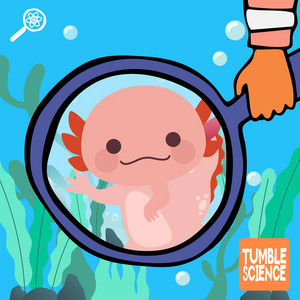
Like the little guys with the smiles and the frilly gills?
Yep, those axolotls.
But Jessica's interest in the science of biology.
The study of living things actually started with an insect.
My first interaction with biology was really through butterflies.
Jessica was captivated by the way a butterfly gets completely transformed while it's inside the chrysalis or, as she called it as a kid, the cocoon.
And the animal that goes into the cocoon looks so different from the animal that comes out and just wondering what the heck was going on inside there as time was passing for this amazing butterfly or moth to emerge.
Yeah, it's a really magical transformation of the very hungry caterpillar.
Yeah, and it didn't stop at butterflies.
Jessica started seeing biology's mysteries everywhere.
And now she gets to explore them in her lab and how humans could learn from them.
And we're really interested in these biological mysteries about how some animals can do things that we can't, because we want to know how they do those things so that maybe one day humans can do them too.
I think I'm starting to put this together.
So you said earlier that Jessica studies how animals regrow their limbs.
And I know from the episode we did about axolotls, which is called The Wild Axolotl, where you can get wherever you get your podcasts that they can regrow or regenerate their limbs.
Right.
So she's saying that one day humans might be able to regrow limbs just like axolotls can?
That's what she's working towards.
That's incredible.
Like, how would that even work?
I can't wait to tell you.
But before we get to how it would work to regrow our limbs, let's figure out how we grow them in the first place and answer Ayla's question of what made us have five fingers on our hands.
Good job.
Keeping us on task.
Well done.
So it starts with how fingers evolved or developed over time.
Humans have evolved to have five fingers from ancient times, when we shared an ancestor with other creatures that had five fingers.
So she's talking about like further back than the pyramid days.
Exactly.
The ancestor she's talking about is actually the scientific idea of a common ancestor.
That's an older species on the tree of life that humans evolved from, along with other species we're related to.
That also had five fingers.
And this worked pretty good for humans, and so we kept them.
Some people have six, like the guy from Princess Bride.
Totally.
But most humans are programmed to grow five fingers from very early on.
So actually for humans, the limb forms pretty early in development.
When babies are developing inside the womb.
The seeds of our teeny, tiny little arms and legs appear in our very first weeks.
They form a little bump that's called a limb bud.
But then you can start to see a little bump form.
And these are these cells that they come from other parts of the body.
These cells have instructions to form the arms and legs.
And then they start doing this kind of molecular talk where they decide who's going to become which part of the hand.
So who's going to be the pinky and who's going to be the thumb and in between digits, etc.
I really want to know what the fight was like to be the thumb.
Listen, you got to be the important opposable digit in the last organism.
It's my turn.
And then eventually, instead of just looking like a bump, it starts to in the case of the human, it starts to look kind of like a paddle.
So when you're an embryo you can play ping pong if you have a twin and a ball like a little paddle.
And if you look closely you can see in there that some of the what we call cartilage is starting to form.
And eventually later, that's going to become your skeleton.
All right.
So it seems like the whole human thing is coming together here.
Yeah.
Other types of cells start to file into the limbs, too, for muscles and tendons and blood vessels.
But basically, that's how our hands get made.
Kind of like if you're building a piece of IKEA furniture.
There's a structure and an order in which all the stuff gets made.
Yeah, I mean, if you've ever tried to build IKEA furniture out of order, things really don't go well.
In fact, sometimes they don't go well if you do it in order, too.
Well, so that seems like the answer to Ayla's question.
We have five fingers because that's how many fingers we evolved to have.
And they get made through this kind of incredible transformation before we're born.
Exactly.
And our fingers are just the tip of the process of developing our limbs, our arms and legs.
Okay.
But this only happens once for humans, before we're born.
And for some people, parts of their arms or legs never finish growing.
Other times people have to get their limbs amputated or removed if they've been badly injured or have a certain type of disease that attacks their limbs.
And humans can't regrow those parts again.
Yeah, of course not.
That's why we tell kids to take care of your body parts.
And keep your arms and legs inside the vehicle at all times.
They won't grow back.
Yeah.
But it's different for axolotls.
They can regrow their limbs if they lose them any time during their lives.
And that's something that we can't do as humans, but would be awesome if we could.
And so we want to study how these axolotl limbs regenerate.
So Jessica is studying axolotls because it would be kind of awesome if we could be just like them.
Yes.
In every way.
No, no.
Just if we could figure out how to have their super ability of limb regeneration, it could help people everywhere.
So we'll find out how Jessica and her thousands of axolotls.
Wait, wait, thousands?
Yes.
Are they research assistants?
Well, they might one day change the answer for how we make our hands right after this quick break.
Hey there, homeschool families.
Are you in the midst of the winter doldrums?
You know what I mean that period in the middle of the winter when spring break feels like an eternity away and all the start of the year, momentum is really starting to fade.
Listen, I've been there.
IXL can really help you stay consistent in the wintertime as you start to prepare to ramp up for spring.
IXL is great for helping you keep track of your progress in a homeschool curriculum, as it does a great job of tracking what kids know, what they need to work on, all while adapting to their pace, with no pressure.
IXL's interactive practice and clear explanations make it easy to reinforce learning during the winter months without burning kids out and letting them keep on track through the worst of the doldrums.
Make an impact on your child's learning.
Get IXL now.
And Tumble Science Podcast for Kids.
Listeners can get an exclusive 20 off IXL membership when they sign up today at IXLcom.
Slash Tumble.
Visit IXL.com slash Tumble to get the most effective learning program out there at the best price.
We're back.
When we left off, we learned how and why we have five fingers on our hands and discovered that Jessica is on a quest to help humans regrow limbs, like axolotls do.
That's amazing.
But maybe we can have a reminder of what they are.
So axolotls are these extremely wonderful, permanently aquatic salamanders.
They are wonderful little slimy, wet cutie patooties.
So axolotls are a type of salamander and all salamanders can regrow or regenerate their limbs.
Could you imagine being a salamander just cruising around doing your salamander thing?
You have no idea what's in store that day and someone bites your leg off.
Like what is a normal salamander thing like trying to go to the post office?
No idea, but while I was in line trying to ship this package to my salamander buddies, something would bite my leg off.
Well, salamanders apparently get their legs bit off enough that they evolve the ability to grow them back.
So if they lose a leg, let's say something else bites their leg off, then they will completely regenerate it at any point in their life.
That's a very cool super ability.
So Jessica thinks that if we uncover the secrets of how the salamander or the axolotl regenerates its legs, someday humans could do it too.
Yes.
So while there are not many axolotls left in the wild, they're very common in laboratories.
And that's why Jessica has a lot of axolotls.
I definitely have more than a thousand, but definitely less than 10,000.
I'm glad it's less than 10,000.
That would be like too many.
Having thousands of axolotls is still a lot of work.
It takes a lot of human effort to care for axolotls.
They all have to be separated because they're very cannibalistic.
Well, I guess we figured out who's biting off each other's legs.
Exactly.
Okay, so Jessica has thousands of axolotls in her lab.
Like, what does she do with them?
She studies them to learn the secrets of how they regrow their limbs.
And here's what she's found out.
After the limb is lost.
It's actually quite spectacular that they form like their own band-aid sort of
They just create a band-aid out of what?
Like seaweed?
Yeah.
Well, remember how embryos form bumps for their limbs?
Yeah, those are the cells that will eventually become the limb, and they fight over who gets to become the thumb.
Exactly.
Regrowing the limb bud.
And so this is the first step for axolotls.
They form something very similar called a blastema.
Blastemas are these big bumps.
They look like giant limb buds, and they're composed of a bunch of different kinds of cells.
The second step is that the blastema grows bigger and bigger.
And once it gets to be like a certain size, then the cells inside start taking up their ultimate jobs.
Like this one's going to be a muscle and this one's going to be a tendon and this one's going to be cartilage and that kind of thing.
A lot like the way that the human embryos developed their arms and legs.
Right.
But humans can't just make their own band-aid like axolotls can.
We're programmed to make limbs just the one time.
And that's why Jessica and her colleagues think that blastemas are the key to regeneration.
We feel like in order to really know the best strategies to try and test to regenerate limbs, we first have to go back to figuring out how blastemas get made in the first place.
And that's why we're focused more on that.
So then, once Jessica understands how axolotls make blastemas, she'll be able to help humans do it too.
Well, understanding how axolotls do it is just the beginning.
And say, okay, well, we saw that in order to build a blastema, we need these four steps, let's say.
The axolotl uses all four of these steps and then a blastema forms.
Then she has to figure out why humans can't do the same thing.
And then we can say, okay, well, we don't see a blastema in the human.
Is it because step one is broken?
Or is it because step two is broken or both?
Or do they make steps one, two, and three happen, but it's just step four that doesn't happen?
That way she can identify which steps to work on in a way for our human bodies to follow them.
So that we can someday be more axolotl-y?
How would that work?
That doesn't even sound possible.
I really think that for most things, most things are not impossible.
It's just, it could be really hard.
And that's okay.
I mean, it's not only okay to do hard things, it's kind of incredible.
But I really want to know if Jessica works really hard and makes it possible for humans to regrow our limbs.
What would that look like?
Great question.
I asked Jessica what would happen if there was a kid who lost her finger, for example, and wanted to grow it back.
Here's what Jessica told me could happen.
Probably it could be that they put a certain kind of bandage on it, that's like, let's say, impregnated with certain kinds of proteins or growth factors or signals that we learn about in salamanders.
And then these special medicines in the bandage could send a signal to the body's cells.
Certain kind of signals that maybe tell the cells that are still left from her finger hey, time to go and get together and make this blastema.
The blastema would be sensitive and a little squishy, so maybe the person would wear something to protect it.
And then the blastema grows and gets longer and it starts to turn into different kinds of cells.
Some cartilage is forming in there which eventually will turn into bone, and that we see that the tissue is thriving.
So that means probably that the blood vessels are in there and they're bringing oxygen and that kind of thing and nutrients to all of the cells and that she can move it.
That's really wild.
That's crazy.
You get a whole new finger right where your finger used to be.
Can it do all the same things?
Yeah, that's the idea.
And in the case of our friend, the finger would grow to be the right size for her body right now and then grow to get bigger and bigger as she grows up, just like the original finger would.
It's going to continue to grow until she stops growing when, however old she is, like 16 or something.
But yeah, that it has the right shape and it doesn't just grow uncontrollably.
That's really important.
Yeah, I can see how making your finger stop growing would be really important.
Yeah.
Yeah, it could be like a genie wish gone horribly wrong.
Like I want to grow a new finger and it never stops.
Yeah.
Yeah.
It becomes the size of a city.
So I think there are a lot of fascinating things about limb regeneration.
Like how do you stop growing it?
How do you get the right shape?
Okay, so it seems like there's some pretty big things still to work out when it comes to making this a reality.
It's a lot of work for sure.
Yeah.
And Jessica's okay with that.
It's one thing she's learned from working with axolotls.
You are rewarded an axolotl for having a lot of different ideas and being willing to try a lot of different things.
But the key is tenacity.
And the key is getting back up and trying again.
It sounds like axolotls have a lot of life lessons to teach us.
Like if at first you don't succeed in regrowing your limbs like an axolotl, try.
Try again.
Exactly.
Jessica is always willing to try again.
And her work is laying the foundation for other scientists to come.
Maybe one of the kids who's listening right now.
Yeah.
So speaking of, let's hear what Ayla learned.
Axolotls are cute.
And they can regrow limbs.
And having them being separated must be very hard work.
I kind of wonder what she thought about the whole finger regrowing thing.
Here's what Ayla said.
Maybe it's possible and it must be very hard to make the right things.
And how do you get it into humans?
Yeah, it definitely would be hard to regrow an entire finger or an arm or something and make it look and work right and like not be a tentacle.
It's a huge challenge.
But like Ayla and Jessica said, maybe it's possible.
Yeah, and maybe a tentacle would be cool.
Now that you've heard how Jessica is studying the axolotl's transformation when it regrows a limb, think about other animals that transform their bodies and what we could learn from them.
For example, think about how deer grow antlers that fall off and regrow every year.
Or a mimic octopus which can camouflage itself and also copy the shapes of other animals to disguise itself.
Think about why animals' bodies might have evolved to transform.
Then come up with some ideas about why it would be awesome for humans to have that ability too.
Draw a picture or write a story about what it would be like.
Then send it to us.
Would love to see and read them.
Thanks to Dr Jessica Whited, Associate Professor of Stem Cell and Regenerative Biology at Harvard University.
Special thanks to Ayla and her family for sending in her question and recordings.
Send us your questions for future shows at tumblepodcast at gmailcom or using the form on our website.
Thanks as well to all of our Patreon supporters.
They really help us keep making episodes of Tumble.
When you join at the 5 level or higher, you'll get ad-free episodes, special chances to be on the show and, of course, the birthday shoutouts which are coming right up.
When you sign up at the 5 level or higher at patreoncom slash tumblepodcast, you'll get all that stuff.
Another way to support the podcast is to just spread the word.
Tell your friends about it.
Leave us a rating, a review, or wear our merch.
And we have a link to our merch store right in the episode description.
Did you know that we also make Tumble in Spanish?
It is called Tumble en Español.
And if you want to hear it, it is adapted and hosted by native Spanish speakers Nuria and Alvaro.
Find it at TumbleenEspanol.com or search for Tumble en Español wherever you get your podcasts.
Elliot Hajjaj is our associate producer.
Sarah Roberson-Lentz is our managing editor and created the episode art.
Mixing and Mastering is by Gary Calhoun James.
I'm Lindsay Patterson.
I executive produce this show.
And I'm Marshall Escamilla, and I make all of the music for Tumble.
Tumble Science is a production of Tumble Media.
Thanks for listening, and stay tuned for more stories of science discoveries.
All right, everybody, here we are at the end of the episode.
And listen, by now you get you get the idea.
It's time for the birthday shout outs that all go out to our supporters on Patreon.
So but before we get to that, we've got some new patrons to shout out.
We got Scarlett and Alton.
Thanks, guys.
And now on to some birthdays.
A happy birthday on February 23rd to growing adventurer Josephine.
Dad, Mom, and Jamie love you so much.
A happy birthday to future shark scientist Claire on February 23rd, with love from Mom, Dad and Alden.
A happy birthday on February 27th to Reese.
Have a happy birthday, little dude.
To Hannah, have a happy birthday on March 4th.
Your family says we love you, Mouseicle.
Have a great one.
A happy March 4th birthday also to Tommy.
Dad, Mom, and Patrick love you as much as you love The Quiz Show.
Thanks so much to all of you and to everyone who supports Tumble on Patreon.
We appreciate it so, so much, and I hope you all know that we couldn't keep making episodes of Tumble without the support of our subscribers on Patreon.
That's just how important it is.
We really love all you people.
Thank you, thank you, thank you.
If you want to join these fine folks and get a birthday shout out of your own, just go ahead and support Tumble on Patreon at the $5 level or higher by going to patreon.com slash tumble podcast.
Once again, that is patreon.com slash tumble podcast.