You're listening to Roundtable with myself Hyung.
I'm joined by Steve Hatherly and Yushun in the studio.
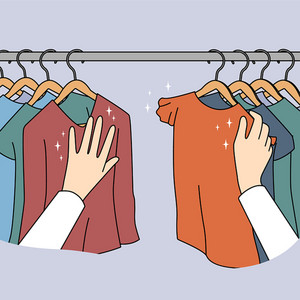
Coming up, long -termism is all about investing in stuff that will last.
Forget buying a new jacket every season.
Buy it once and it's yours for life.
But is it really about saving your money or just another marketing gimmick to get you to splurge on the so -called timeless pieces?
And ever feel like introducing your friends to each other is risky business.
You're the matchmaker first but what if you become irrelevant?
Welcome to the world of friend hoarding where we keep our friend groups separate for peace, power, or maybe just to avoid the chaos.
So what's your move?
Our podcast listeners can find us at Roundtable China on Apple Podcast and the podcast platform of your choice.
Now let's talk about shopping.
These days, seasoned shoppers who browse both online and offline are bombarded with year round e -commerce promotions.
But this year feels different instead of the usual flash sales and discounts.
There is a noticeable shift towards something called long -termism or Cheng Ji Jui.
In English with the help of Steve Hatherly, we found the term buy it for life.
Yeah, it's kind of this, I don't know, theory that suggests spending more money in the short term might save you more money in the long term if what you're buying in the short term is a higher quality product that does not need to be replaced as quickly as perhaps a lower quality product.
Right, so the focus is no longer just on haunting for bargains, but asking, will this stand the test of time?
And this apparently is all the buzz at, well, this year's sales pitches.
Well, I've certainly seen this pop up a lot on read or so.
Yes, we can see a lot of people are sharing their lifestyles of having this kind of long termism or B I F L, buy it for life, introducing that, okay, I am having this way of life of buying things.
And I'm focusing more on quality but not quantity.
And they're trying to buy things and they're having a concept of buy quality items that promise durability and satisfaction over many years.
And they treat their purchases as investment since they can use this for a long time.
Yeah. And companies will use this in their marketing sometimes, right?
They'll say to the customer, this is something that's going to last you for a very long time.
I don't know why, but the example that always comes to mind for me is Blue Jeans.
Why? Well, because I think I heard I have two older sisters, and I think I witnessed numerous conversations where, when I was young, where my sisters were buying expensive jeans and my dad was complaining to them, why are you spending hundreds of dollars on a pair of jeans?
And the response was, dad, these are going to last me my whole life.
And I think I just saw that conversation in front of my face so many times that it just got burned into my memory.
But that's one example, right?
That's one example where people will say, yeah, I don't mind spending more on, for example, a pair of high quality blue jeans because I know that they're going to last me for a very long time.
That's what we're talking about here.
That's very interesting.
Also, shall I just highlight one point?
Jeans or denim is apparently a very, very heavily polluted fashion item.
So, you know, just to make a pair of jeans, actually, I can't remember the exact figures, but takes a lot of water and the dye and all of that stuff is really bad for the environment.
So in theory, if you can make that one pair of jeans last instead of buying five over a matter of 10 years, for example, then in theory, that is a good idea.
But, but yeah. And you shouldn't tell us, does this concept of long termism or buy it for life align with consumer behavior these days?
You know, I believe that is not a new idea.
Also, I feel like my many people from for example, my parents generation already embraced this kind of concept.
For example, especially when purchasing large furniture or household appliances, it was common to focus on longevity or the durability of these things, right?
I still remember the air conditioner.
We retired last year, which was as old as I am.
It was purchased the year I was born.
Yes. Also, our TV electric fans and other appliances were typically used for at least 10 years.
Did that air conditioner finally just walk out of the house on its own?
Like I'm done. I'm retiring.
No, we got a new one.
So anyway, this is kind of, you know, to some degree, it makes sense because people are believing this kind of concept that when we are having an item that with good quality, we can buy it less.
Yeah. And also you talk about sustainability, right?
A pair of jeans might not be so great for the environment, but when you are making that one purchase, as opposed to two or three or four purchases, then that can lead to less waste and more responsible consumption.
So from that point of view, from the environmental point of view, it does make sense that consumers would buy into this kind of buy it for life theory as well.
And also it can make financial sense to a customer too, right?
Because it can save the money in the long -term.
Also, fewer repairs or fewer replacements, if you're buying a higher quality product, it would need to be repaired or replaced as quickly.
Or it becomes so expensive to repair that you just have to buy a new one.
And I'm not talking about a PRAIL anymore.
It's more like, I don't know, an expensive car or an expensive digital gadget.
Yeah, electronics. Yeah.
Like remember a few years ago, where was that last year?
Can't really remember, but during COVID, I remember there was this huge global discussion about right to repair.
Yes. Because so many of these items are just so expensive to repair.
And let's say if this item is like 10 ,000 yuan, and then repairing maybe the battery, it's going to take up like 5 ,000 yuan.
Then why would you repair when you can just get a new one?
Cheaper. Or if you break your screen on your phone, right?
And you can take it to a repair shop many times maybe it might be just cheaper to buy a new phone than have the screen repaired.
And also, we're kind of jumping to different areas, but let's keep it that way, I suppose, since we're talking about consumption.
I'm sure many of us in our 30s and beyond have been through this journey.
In your 20s, when that paycheck hits, it's all about grabbing whatever's in fashion.
Fast fashion, trendy pieces that last a season maybe, and you're living paycheck to paycheck, just trying to keep up.
But then as you get older, and your paycheck hopefully gets a little bit fatter, you start thinking, wait a minute, maybe investing in quality over quantity is the way to go.
And suddenly these impulse buys don't feel so satisfying anymore, because apparently, you're spending your money smarter, not faster.
But what if you're buying that more expensive high quality item once, this month, and next month?
And don't I deserve the best?
Yes. And this is where we talked about the benefits of consuming in this way, but it can backfire too, because in your mind, you can justify excessive spending.
Well, let's see, this brand new 85 inch television, it's going to last me a long time, so I don't mind spending here.
Oh, this luxury bag, hey, it's going to be 15, 20 years.
I'll drop a few grand on that as well.
Yeah, so you can justify it in your mind, this excessive spending, right?
Also, I think brand worship as well might come into play here.
Some consumers may equate brand names with quality, and that could lead them to prioritizing luxury brands.
Talked about a luxury bag.
Maybe you get it in your head that only luxury stuff is of quality, and that's just not the case.
Well, say more about that.
Well, there was a study done, and I don't know how many hearts are going to be broken here, but there was a study done in 2019.
I found this on Business Insider, and they did it from the University of Leeds, and what they suggested here was that low cost clothing might outlast pricier pieces.
So what they did was they used samples of t -shirts and jeans from a variety of different brands and price points, and they measured factors like seam length and color fastness and how long it took for the fabric of each piece to develop rips or tears, wear down basically.
And we all think that more expensive clothing would last longer, but in this study, they found that fast fashion products actually outperformed the expensive ones.
For example, jeans from one fashion brand lasted twice as long as a designer label pair of jeans, and the cost was one tenth, one tenth.
And here's the real one, designer label t -shirts, they were the worst performers of all the studies they did.
I have a couple of things to come back at that argument.
One thing is, sure, if that's true, but how come the fast fashion t -shirts that I got in my teens, a lot of them sort of broke down after a couple of seasons, and the fabric is, I mean, you just do the math, when it's that cheap, then no way can it always be good.
It's just one thing.
But also for luxury brands, nobody buys luxuries because that lasts forever, you're buying for vanity.
Sorry to break hearts there.
I think you're buying because the added value is you're supposed to be someone as such being able to have the taste and the economic consumption power to buy that thing.
And that's what really makes the price so expensive.
You know, I think fashion items are just one reflection of this kind of concept.
When I looked up the concept of B -I -F -L, Buy It For Life, online, it is described as, for practical, durable, and quality -made products that are made to last.
And interestingly, it doesn't mention price at all.
So I was thinking it doesn't have to be or necessarily to be bond with price or high price.
I was thinking. Some people might be misled by the notion of long -termism or focusing solely on expensive items without actually evaluating whether these products are truly durable because durability is the point of long -termism.
It's not high price because perhaps in the eyes of these who embrace long -termism.
So spending more money means the product will last longer, but it's just a really simple or kind of surface idea that you are treating durability because durability doesn't mean high price.
It doesn't have to.
It absolutely can, but it doesn't necessarily have to.
I looked up a list of things where experts recommend on the list of Buy It For Life.
It's not every product out there where you should be looking for more expensive stuff because the idea is it's going to last longer.
That's not what this is about at all.
But on the list, and I thought this was quite a good one because I love cooking, they say a good knife set, like a really good knife set will last you a lot longer.
So it's worth investing a little more.
Not necessarily thousands of dollars per se, but just a little bit more in that particular example.
If you love to cook and you'll use them a lot, then that's a case where it's worth it.
So I think the thing is it's a product by product or case by case situation.
And also I was thinking it may be something to do with the whole marketplace right now, the whole industry environment.
It is possible that the current marketing environment is no longer suitable for the concept of long termism or people trying to do that.
For example, a TV set.
I saw people online saying that back in 1980s or 1990s, appliances, manufacturers competed by focusing on good quality and durability.
They gained recognition through their durability and reliability of their products.
But now appliance manufacturers no longer rely on these factors.
Of course they rely on this, but they're not focusing mainly focusing on these, but some flashy features or the screens to increase the initial sales and or repeat purchases.
And then they can pay less attention to product durability and quality and effectively encouraging consumers to buy new products repeatedly.
But again, it depends on the product because what immediately comes to mind when you say that is a truck commercial that I used to see an American truck commercial.
And in the commercial, I don't remember the brand, but they used to beat this thing in the TV commercials.
Like they drop the heaviest stuff in the back of the truck and they drive it through a river.
Who drives through a river by the way?
But anyway, you see the point their selling point is that this thing is so strong.
You're going to have a hard time breaking anything on this truck.
It is ultra durable.
So that's my point.
It depends on the product.
They're not selling, selling luxury handbags saying you can carry this through a river.
It's not, it's not necessary.
It doesn't align with their, with their strategies.
But in some cases it does.
That's interesting.
And just that vivid portrayal of that truck, Steve, I don't think it's selling the durability of the truck.
It's selling the lifestyle that imagine you, your soul is crushed in this office building where you're tied to your, your, your workstation.
But you know what? The weekend is coming and you drive that truck.
You can in theory live the life of that adventurer.
Oh, I want to buy a truck so bad right now.
Even if you'll never reach a river driving that truck in your mind, I can be that person.
Once I buy this product, isn't that essentially what advertising about?
Isn't this essentially what drives consumerism?
You may be spot on there.
And so do you guys feel like this might as well just be the latest gimmick?
It's something that consumers have to be aware of, I think, because if we think that companies are not aware that the consumers are aware of this buy it for life, better quality, spend more money now, if you think companies aren't aware of that, we're being naive.
Of course they do. And if the company is not trustworthy, then they could use that kind of marketing strategy to their advantage, making, I don't know, false promises, promising things that will last for a very long time when in fact they may not.
So of course, consumers always have to do their research and be careful.
Yeah. And you shouldn't never like depend or solely on this kind of one lifestyle or, for example, long -termism.
It's more about you need to know what you truly need.
This is actually very difficult to define, but for example, your current phone may not necessarily need to be replaced, but getting a new phone can make you really, really happy, then it may be worth it.
So we still need to, I think, rethink it when you are trying to purchase something.
And it's a good example you use.
I don't believe any digital gadget has anything to do with long -termism because the latest new feature will come out.
Oh my gosh. Not only that, not only the latest new feature, but I was watching a documentary on consumerism recently and how some products are designed in such a way that you can't do anything to fix it yourself.
And one of the little examples was earbuds, the case for the earbuds has the battery inside, but the earbud case is sealed.
It's closed. You can't go in and replace the battery yourself.
You have to buy a new pair of earbuds.
That documentary, don't watch it.
It'll make you angry.
And also one last point, handbags are consumables or cell home.
So don't expect it to last or even increase in value.
And in the world of designer handbags, only the H brands, Birkin and Kelly, or the C brands, classic flap are the three handbags that actually can maintain a healthy amount of its value.
So it's just made to be used.
Forget about long -termism, I suppose.
At the end of the day, it's your money and it's your choice.
But when done right, it can be good for the environment and our wellbeing adapting to this long -termism, but be thoughtful and mindful.
That's all I want to say.
Coming up, mixing friend groups, power play or potential chaos.
We're going to talk about friend hoarding.
When you don't introduce your friends to each other, is it a smart move or low key selfish?
Stay tuned. Looking for passion?
How about fiery debate?
Want to hear about current events in China from different perspectives?
Then tune in to Roundtable, where East meets West and understanding is the goal.
It's the hour of roundtable with myself Hyung.
I'm joined by Steve Hatherly and Yoo -Soon in the studio.
You know, when you've got that friend you go shopping with, another you share late -night talks with, and someone who's always down for a new adventure, but the idea of them all in the same room feels stressful?
Well, that's me. I love my separate friend Bubbles that fulfill different social and emotional needs.
Turns out, keeping your friends separate has a name, friend hoarding.
I had never heard of this before.
I've only heard of it after reading the Atlantic articles.
So, do we all secretly do it?
Or is it just me, friend hoarders or not, guys?
I accidentally or had this kind of experience, I would say.
I introduced my friend to another one of my friends and they had common interests and then they become friends.
You know, I didn't feel envy or insecure through this, but it just feels a little bit uncomfortable.
Why though? I don't understand this.
I mean, I get it. I understand the words.
I understand, but I don't understand from an emotional point of view.
Why would that? Because I've done that before.
I've introduced my friends to other friends.
They've become friends.
They hang out. They do it sometimes without you.
I don't care. Why do I need to care?
So my question is, why did that make you feel uncomfortable?
The only question that I was thinking is, then where I am, because I'm no longer in this kind of a friendship anymore.
Oh, you've been kicked out in this scenario.
Because they have the common interest that I am not interested in.
And then they are trying to...
They are not doing this intentionally because they're just friends.
And we're also friends and we're still friends.
But it's just feel like then I am kind of an outsider now.
You're on the outs.
You agree with this?
Well, I sometimes know that this friend and that friend just won't mix together.
And also, I just want to have a good time with them separately.
And when we're hanging out, I give you undivided attention.
And as it's a point I've made many times on the show, if you live in Beijing and you live in Yijiang and your friend lives in Babo Shen and then you guys meet up, that is major commitment.
I'm talking about two opposite sides of the city.
So when I actually make the effort, then yeah, I want quality time with you.
And also this could be a slight cultural difference in the sense that...
Okay, maybe it's just a personality difference, not a cultural difference between cultures.
Some people like to host parties and I don't.
I come to your party, but I don't host parties.
When you host parties, you inevitable get a whole bunch of people together and then friends meet and then great, something beautiful might come out of it.
Maybe business deals come out of it or whatever it is.
But it's a lot of work.
And for my Western friends, some of them really like to host parties and then therefore you're connecting friends with friends, but it's just not what I do.
And yeah, so thoughts.
I understand that theory, particularly when you say, I have this particular interest, let's say sports is your interest.
And then you have a couple of friends who are into sports and that's kind of like your sports group, right?
But then you have another friend from college who doesn't like sports at all.
This friend is more into the arts, performances and things like this, which you also enjoy.
I get it because mixing them wouldn't necessarily work.
But what I don't get, and maybe I'm wrong about this whole friend hoarding concept, friend hoarding seems to be an intentional separation.
You will avoid putting these groups together.
I don't avoid putting groups together.
I don't go out of my way to keep them apart if they organically should meet or if I'm going to meet the sports friend, I'll ask my arts friend, Hey, I'm going to go meet up with my sports buddies.
Hey, you want to comment, but I'll be warned.
We're going to be a lot of sports top like that kind of thing.
But I don't necessarily keep them apart on purpose.
Then I am not a friend hoarder now because I didn't do that intentionally.
And I, yes, as you said, you can understand because I can also understand that I am simply just expanding my friend circle by introducing my friend to another.
And then, um, when maybe something comes up, like, uh, they become friends, but this relationship is better than yours.
And, and it kind of feel like, uh, your friend was stolen.
Uh, yeah. And that's kind of the, one of the underlying reasons, right?
Is this kind of fear of abandonment maybe or insecurity.
I mean, if we go deep into the psyche, then that's probably an underlying reason for that.
Right. And maybe like sometimes when you want to have these deep, uh, intimate connections with people, it's maybe one -on -one or maybe just maybe three people or, or whatnot.
I, I have such little time I feel I like to do that, but, um, some people might view these, um, social scenarios differently.
Some people actually, um, let's say a business person or somebody who feels that you have these social ties that can develop into career or business opportunities.
Okay. That's social networking, I suppose.
And when they open up their own social network to other people, let's say, bring new friends into this group or whatnot, um, sometimes that's done intentionally and that's thought as like a career move or, or something like that.
In China, we do that too, but often, uh, yeah, I suppose that's like a big move because you're not just thinking about friendship.
You're thinking about the other value added, uh, things that come with it too.
Yeah. And it makes sense for some people.
Yeah. And that does make sense.
And when you say it like that, you know, that's one side of yourself, say, you know, getting together for work purposes, marketing purposes, promotion purposes, but then when you get together with another group of friends, you can express another side of yourself.
Yeah. Yeah. So I guess.
Keep it separately then.
So I guess friend hoarding does make, I just don't like the term.
It makes a little bit more sense now.
I just don't like the term.
Can we get a better term?
Friends seclusion? No, that sounds weird.
We'll focus group that one.
Yeah. And, and also if you have an idea, send it to roundtablepodcastatqq .com We'd like that.
And that's it for today.
We'll see you next time.