Join today's top women retail leaders at the 2026 Women in Retail Leadership Summit, held April 27th through the 29th at the JW Marriott Miami Turnberry Resort.
It's three days of fresh thinking, leadership insight, and meaningful connections.
Register now at womeninretailsummit.com and save $100 with discount code PODCAST.
Hello and welcome to Women in Retail Talks, the podcast where C-suite executive women in the retail space share their stories of professional growth leadership development, personal journeys and more.
I'm Marie Albajez, Managing Editor of Women in Retail, a membership-based community of executive women at leading retailers and brands.
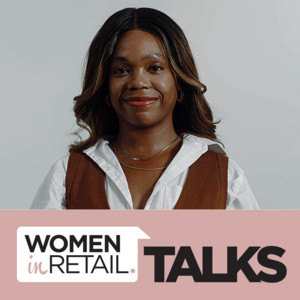
Today, I'm so excited to be joined by Reba Hatcher.
She's the Chief Commercial Officer of ButcherBox.
So we discussed the subscription services, transformation over its lifespan, its recent entry into Target, the launch of its loyalty program, how Reba thinks about data, and so much more.
So Reba, I'm going to bring you in.
Thank you so much for joining us.
Thank you so much for having me.
I'm really excited for this conversation.
I know ButcherBox has been all over my radar.
It's almost impossible to avoid.
So lots to talk about.
Let's get started with just, you know, a basic idea of what ButcherBox is.
For those of us who don't know how it works, how the company got started, just kind of its origin story,
Yeah.
Butcher Box is a high quality meat and seafood delivery company.
So we started off 10 years ago.
We celebrated our 10th anniversary this past fall.
We started off because our CEO and founder was looking for a better way to get meat and seafood delivered to people's homes.
He was about to have his first child and him and his wife were trying to figure out where to find grass fed beef.
And he was actually buying it in parking lots and splitting it up into cow shares and And someone said to him wow, wouldn't it be convenient if I could get this to my home?
And so he said, okay, why don't we try shipping that to people's homes?
And in 2015, that was a pretty novel idea to be shipping things around homes.
There weren't that many food delivery services.
And over the course of 10 years we've expanded to pretty much every protein category and over 125 products worldwide, with this core idea that high quality meat and seafood can be raised better, it can be done at scale in this country and it can get right to people's doors.
And then the other thing is that ButcherBox is a bootstrapped company.
So we've taken no outside funding.
And so I would say, between the belief of high quality meat and believing that you can do and raise cattle without taking outside capital and really controlling our company from within.
It's made for an amazing past 10 years and I'm excited for the next hundred.
Yeah, that's really impressive.
And you've been there for like eight and a half years, right?
So you came in really like from the start and really worked your way up to now.
Chief commercial officer.
I'd love to just hear a little bit from your perspective of what were the biggest kind of transformations that you've seen the company go through in your time there.
Absolutely.
So I started off on our operations team as an operations analyst, helping us process maps.
So I had a very intimate knowledge of how everything fit together.
I would say ButcherBox has evolved in so many ways over the 10 years.
Obviously, the pandemic was in between those 10 years.
And so people's habits around shopping have also changed.
I would say the biggest thing is that we've been able to hold on to our core values and culture over these 10 years, which I think is incredibly rare to go from a 25 million company when I started here to the point where we're 570 million.
We had just written down the core values actually the week before I started.
And what I think is great to watch about ButcherBox is that over the course of the years, probably three or four times, we've decided to sit down and redefine what those core values mean.
Because, In order to stay the same and have the same core values, you actually have to redefine them, because accountability looks very different at 200 people compared to what it looked like when we had 25 people.
But remaining unfazed by the growth, we're able to have this great story where we have people who've grown up here.
I'm one of them.
And we have people who've stayed in that focus on, you know, development and the culture that is here, I think, allows us to have a really strong business but also have a really strong culture internally.
That's really interesting.
Let's stay with that for a moment.
What prompts a kind of redesign or a revamping of your core values, or even just kind of an investigation into oh, it's about time that we kind of take a look at these and see if they still apply.
Yeah, I think that's a great question.
For us, it's been, I would say, different each time on why.
One of the times it was coming out of COVID.
So right before the pandemic we were a 75 person team all in and we were all in the office pretty much four to five days a week and extremely close in that way.
And then during the pandemic, we hired, you know, 100 people who were all over the country.
And so we had a team of 175 people working.
And so we knew then that the connection and how people were distilling them was all very different.
And so that prompted us to look at it a year where we doubled our revenue.
We wanted to make sure that we kept our value of humility, because when you grow that much, it's easy to be like oh, we have all this growth.
And so, for us, it's about keeping those same five core values of humility authenticity accountability, relentless improvement and customer obsession, and making sure those remain.
But then being able to say hey, how do we distill this so that everyone can feel like these are approachable and livable on a day to day basis?
Yeah.
So COVID, was you know?
One thing that was positive for you all was it sounds like it really kind of elevated your presence and grew the brand there?
Would you say that that was the gateway to growing your subscription service?
Was that kind of the boon for you all?
You know what's interesting about Butcher Rocks?
We had the amazing opportunity to be a growth-based company well before COVID.
So we grew 300% in our second year, and we grew another 200%.
And so we were continuously growing.
COVID obviously had a huge catalyst in terms of the time compression of when we were growing, of it being in three weeks.
We were experiencing growth, an amazing amount of growth for that time.
But in that year, we had seen those levels.
I think what speaks to the culture of ButcherBox is probably.
Two or three weeks into the official pandemic, if you will, we sat around as an executive team and said okay well, we don't know what's going to happen.
And we have a subscription business.
So we need to be able to make sure we can supply for all of our customers that we currently have.
So we actually went to a wait list for the first time ever.
We didn't stay open for new signups in large part because we knew we had to keep that commitment.
And I think that lends itself really well to the culture we've built around customer obsession, because for us it was more important to know we could serve them, because we got so many messages from our customers saying thank you so much.
Like the shelves at the grocery store, empty and butcher boxes consistently showing up at our door with the same quality, the same values, not changing the prices, not gouging us and making it just as easy as it's always been.
And I think that you know, for us that combines that extreme growth with also keeping that same culture internally and in the experience of our customers.
Yeah, and that was going to be one of my questions is, you know, you're on this trajectory.
We're going to talk about your brand new launch into Target in a second.
But it's really become a standout in the D2C subscription space and now going more into that, wholesale going into stores.
How do you maintain that growth, like you said, while also keeping those core values in place and making sure that the customer is always first as well?
I would say data is a large part of it.
I think that in order to stay in touch with customers, you have to have a really robust way of looking at your customers and how you define that and the kinds of behaviors and trends we look at.
So I would say for ButcherBox, one of our superpowers is the data that we have, because in the grocery overall the category, but specifically meat and seafood we're one of the only ones who has this like very one-to-one connection with a lot of our customers, because we have met them online and we've met them in stores and we've met them at their homes and we've talked to them at dinner tables and that makes us very different.
So For us it's multi-leveled in that way where we have an amazing data team and a set of analysts where we're looking at the demographics of our customers.
What are they putting in their carts?
What are they taking out of their carts?
We have a voice of the customer program where we're listening directly to customers.
We do diary studies where we're asking customers.
Can we follow you around in your food journey for the next 30 days to see what their habits are?
And so we're really learning from customers throughout the whole thing.
And I would say that that's how you maintain that growth, because we're always listening to what should be next from the lens of our customer and not necessarily just from the trends that are like posted out there in a publication, but we combine all of that to make it a holistic growth strategy.
Yeah, so as...
Chief Commercial Officer, what's maybe one or two points of data that are most important to you?
And then part two of the question is what's a point of data that more retailers should be paying attention to?
Yeah.
So I would say on the points of data that I am looking at, I mean, top line revenue always helps.
Every morning we're looking at top line revenue.
And then how much is the average order value and what people have in their carts?
Because I would say that can tell us a lot about how people are feeling about their wallets or how they're feeling about what's on their plate.
And, you know, we launched new products.
So all of that kind of combines into that AOV average order value number.
And then I would say, on the more customer facing side, our delivery satisfaction is one that we always pay attention to because ultimately, like we can have all of these shiny things that we do for customers, but we have to make sure we're delivering on the core purpose, which is to get a box of frozen meat to your door and do that well.
I would say one thing that you know other retailers could be paying more attention to is, I think, the power of talking to just like 10 customers in depth.
While that is not our entire program, but we have many times in which I went on a road show last year and talked to our top customers around the country.
At each stop.
We just had 20 people at dinner who have been customers for anywhere from two years to 10 years.
And so that also gives amazing insight.
Even though we have 440000 members, it's still important to talk one-on-one to just one customer and having those convos.
And I think sometimes we get lost in the sauce of being big companies, but we really can always just reach out to 10 20, 25 members and learn so much from those conversations.
And I'd love for you to speak a little bit to how that kind of data leads to more personalized experiences with your customers.
I know you launched your loyalty program a year and a half ago, about, you know, like 2024.
How are you using that data to kind of enrich those personalized experiences for customers?
Yeah, when we launched our loyalty program in October of 24, a lot of the work we did leading up to that was a lot of surveying and a lot of talking to customers on what would actually bring value to them.
There are a lot of loyalty programs out there that are really your simple version of you buy something and you get points.
That's fine.
But we didn't wait eight years to start a loyalty program, just to give you points back on how much you spent with us.
We could have done that probably on year two.
For us, it was important that we were delivering true value.
I would say one of the fun ones that we learned about in talking to customers that we would have never naturally come up with was around.
We became famous, I guess, for bacon for life or these for life offers.
So In our second year we said if you sign up you're going to get bacon in every box for the life of your subscription.
And so we have done many, many iterations of that over the years.
And what we heard from customers through various customer support tickets and various questions and just normal conversation.
People said you know, I love this bacon for life or the chicken breast for life that I have, but it'd be nice to be able to switch it out.
And we're like, oh, okay.
Yeah, we can absolutely offer that.
So that's one of the perks of being an executive chef, which is our top tier of our loyalty program.
And I think it's those sorts of things that like, we wouldn't have thought about as butcher box employees naturally, but we're listening so intently to all of the information that we're getting.
And I would say that that's baked into every single level of our loyalty program, everything from our sous chef to our head chef, to our executive chef, even to our roadshow and how we created that because we knew we wanted to meet more customers face-to-face to hear about their experiences.
That's great.
So it sounds like You know, at the core, it's still a very subscription centric.
Your, your subscribers to the box are your, your main priority.
But in the last few years, you've expanded a little bit into partnerships.
You launched in target plus, which is their online marketplace.
You partner with DoorDash Instacart, and now we just saw the news that you're officially in target on the shelves as well.
So talk a little bit more about expansion beyond that subscription service.
Yeah, expansion beyond our subscription service is always going to follow a customer problem.
So for ButcherBox we are looking to solve the problems that people face in getting access to high quality meat and seafood.
So when we first expanded into DoorDash, for instance, we knew that one of the issues people were running into was like oh, I didn't order this very specific thing.
Like I need burgers tonight.
And it was like ButcherBox.com as an e-commerce company is never going to solve that problem.
Even Amazon and its fastest is not getting you like 12 packs of burgers in the next like 40 minutes.
Right.
And so for us, we said, OK, what kind of platform would help us solve that in DoorDash?
And they're specifically their Dash Mart locations has really helped us do that.
So we kept building on this notion of what are the other problems that you know an e-commerce business wouldn't necessarily be able to solve, but that still exists on our mission to make sure that people have access to high quality meat and seafood.
So that led us to the 4pm problem, where 60 of consumers don't know what they're having for dinner at 4pm.
I think we've all run into this.
I actually ran into it last night.
And so people don't know what they're having for dinner.
And so we said okay, what would be the kind of partnership that we would look for in a retail location?
And so for Target, what was great is that they've always stood for a place of discovery.
And they're like what better place for us to go then?
A place of discovery, to help people solve this, to guide and inspire them.
All of the same things that are the pinnacle of what we do online, and being able to bring that same transparent, high quality product into a store.
And so it's been a great ride over the past seven or eight months working on what this would look like with Target.
But again it all comes back to how do we help customers along their journey to being able to put our product on the plate.
Mm-hmm.
So how do you evaluate which partnerships to go with?
I mean, you mentioned a little bit about what appealed to you about target, but for any future partnerships that you're working on, what are kind of the key things that you're looking for to make them a great partner?
Yeah, we have a variety of partnerships.
I'd be remiss not to mention Graza.
Olive Oil is one of our great partners and Primal Kitchen and Caraway.
And so I would say all of what these places have in common.
Even though these partnerships look very different, what they all have in common is a commitment to some quality version of what they do in their space, right?
So for Caraway.
They're all about having PFAS-free and non-toxic chemicals in the food that are created by the products that we use to be able to cook and prepare ground beef or prepare your steak.
And so for us, it's important that we have that kind of alignment.
And I think on a partnership level, it's like how interested are people in coming up with something new with us?
We're At our core, I think a group of people who just want to keep creating.
We get on the call with partners and we're interested in like making something new.
We don't want to just stand by the status quo.
So it's like we have this issue of, OK, people want to defrost train.
So we're working on that with one of our partners.
And so there's all these sorts of things.
Are they going to be able to co-create the future with us?
And also, do they stand for quality in the arena that they play in?
And I want to ask you a little bit.
We talked about the core values and I'm curious how some of the values that ButcherBox has publicly in terms of sustainable products and caring about the lives of animals, concern for the farmers and the fishermen that you all work with,
You've got something on your website about how to preserve the planet and save the planet while also taking from it sustainably that sort of thing.
How important do you think that is for your customers and how much of a driver is that in that loyalty base?
We think it's incredibly important to our customers to understand that we have what makes a superior product.
But we also know that has to be balanced with the age old, does it taste good?
And is it easy to get?
So we have to balance the logistical lower on Maslow's hierarchy of needs of does it taste good?
And can I get it?
And making it very easy to answer those questions.
At the same time as having a superior product.
And so we like to say that what we offer our customers is peace of mind when it comes to that.
Maybe they don't need to know every single thing that we're doing, but they have that peace of mind that we've done the work for them.
And we're making this a really easy option for them to choose a better product at a great price.
And I think that balance is what makes us popular with our customers, because we're doing that work for them.
And then obviously, we have all of the great work that we do.
And then the values, I think, really show up in that way, whether it's over the course of the years.
Two years ago we got to celebrate having third party animal welfare certifications across the board for every one of our proteins.
A lot of that came from our value of relentless improvement, that it takes a lot of work for those to happen.
There are a lot of work on the farmers and the fisheries that help make this happen.
But we got there in that timeframe to be able to say we have 120 plus products that all fit into this amazing claim set.
And so we're doing the work consistently.
We're staying on it, but we're also making sure it's easy enough for consumers to make that choice.
Well, and it's also just easier and cheaper to not make that choice right.
Like you know, you could have easily done without that.
So how do you approach this kind of decision to say we are going to spend more money and we're going to take more time to ensure that we get these certifications and put that extra work in?
How do you make those decisions, especially when it comes to that top line revenue?
Absolutely.
For us, it's a matter of staying both mission-based and wanting to be on a growth trajectory.
Don't have to be at odds.
And I think that's what we've stood for since day one that these two things can work together and that we believe in change in the industry.
We believe that people will be able to make those choices and that it is our duty in the space to continuously push those things forward.
And so we try to make sure we're making decisions in service of either one and both at the same time, ideally.
And so for us, there's, it's not a tension between the two.
It's really actually how can one help the other?
Because ultimately we're trying to be a hundred year old company.
And I don't think we get there by eroding trust and we don't get there by not growing trust, our revenue.
And so we have to work very closely between our social environmental responsibility, our team that is responsible and talking about these things publicly, and the overall revenue team and making sure those are all kind of singing the same song.
I love that.
Before we pivot and I ask you a few questions about you as a leader.
I'd love to know.
You said the goal is to eventually become a hundred year old company.
So, you know, we're recording this at the beginning of January.
2026 is fully ahead of us.
Anything on your radar, on ButcherBox's radar for 2026 that we can expect?
Anything you can tease or reveal for us?
Yeah, I think, as we sit here today, on January 15th, we are so excited to be able to announce that we're going into Target, which I know we just talked about.
But I think that for us it's such a big deal to expand beyond the screen and be able to be in stores.
And it'll be the first time people will be able to try ButcherBox for less than $10.
You can go and buy a pound of ground beef for $7.99.
And I think that it's going to open up a whole new world of people who can buy, check out ButcherBox and try it.
We know that the product is an absolutely amazing one.
And so I have no worries about that at all, but I'm so excited for customers to be able to try us out and hopefully we help solve your 4pm problem as well.
That's awesome.
So at the beginning I asked you what kind of transformations you've seen the business go through in your almost nine years here.
Same question, but personally for you.
Like you said, you started out in operations and Eight and a half years later you're in the C-suite.
So biggest transformations for you personally while at ButcherBox?
Yeah, I think.
You know, I've had a lot of transformations while at ButcherBox, which has been fun.
My claim to fame around ButcherBox is that I've been on every single team at some point in time or gotten the opportunity to lead more than half of the teams at some point.
And so I think what's been great is that I've been able to hone this like mental agility.
That, I think, drives me ultimately.
I love coaching. learning new things.
I love taking on new topics.
I've had amazing coaches throughout the time.
And I would say ButcherBox's commitment to providing coaches for everyone is a really big component of how I've been able to grow and transform over the years.
And then I would say overall, our CEO's willingness to invest in me personally to At the times where I'm like learning a new skill and he's like great, why don't you go ahead and do that?
And I've gotten to be able to go into so many directions that I don't think is something that's ubiquitous across the landscape.
I think a lot of times we're pigeonholed into the thing that we're doing, not the thing that we want to do or the thing we want to learn about.
And so I'm lucky to be able to do that and learn and grow, whether it's like I picked up three coding languages and learned how to lead data analytics, which was a lot of fun, but then also like getting to lead a revenue team and be able to drive us toward this next version of our growth.
I'm incredibly lucky to go in all those directions and have coaches and be able to exercise that agility.
Yeah, that's so interesting.
We just had an event last night in New York where the refrain that we heard a lot was as women leaders, we are often told to stay in our lane right.
And do what you're good at and keep your head down and you will reap the rewards.
But not a lot of us want to stay in our swim lane and we want to learn new skills.
How do you navigate that?
How do you find someone who is willing to teach you?
How do you raise your hand and say, I don't want to stay in my lane.
I want to learn new things and expand my skillset and move around in my career.
Yeah, I think it's a matter for me and part of considering like a non-negotiable of how I work that I need to be able to move lanes.
I'll use the analogy of I'm a New Yorker by heart and by where I was born, but I learned to drive actually in Massachusetts.
So Massachusetts drivers have a little bit of a name for themselves.
And I would say in that I'm not staying in my lane, and neither are Massachusetts drivers.
Like I'm just going into whatever lane there's no blinker, like I'm moving to whatever part of the roadway I want to be on.
And so I'm I think that it's incredibly important to have the inner North Star.
And I think, as a Black queer woman on top of also being a woman, it's incredibly difficult to make sure that anyone else is going to have your best interest always at heart, across the board.
And so recognizing the barriers that are out there.
But finding the right people who are can coach you.
So I have, I've had a coach for six and a half years now who was the former chief of staff to Oprah.
And so when I was chief of staff, she was amazing and helping me move forward in that way.
I have countless black female mentors who've talked to me about how to grow yourself, how to make sure that you're able to switch lanes.
And so I think, if you're keeping it like top of mind, but also reaching outside of the place you're in to find people who who, have done the thing that you want to do, which isn't always easy, but I am the master of cold LinkedIn emailing people and it's worked out well.
And it's how I found so many folks that have helped me in my journey.
That's awesome.
Was there ever a decision that you made in your career that maybe felt risky at the time but then ultimately shaped who you are as a leader today?
Yeah, I think coming to ButcherBox, it was incredibly risky.
Yeah, because you were at Ernst & Young before that, right?
Yeah, I started off at Ernst & Young as a change management consultant.
Ernst & Young had, at the time, 330,000 employees across the world.
And so they weren't going anywhere.
They were a very steadfast company.
And That was a very sure bet.
I had interned for them twice, one time in Australia.
And so I had an amazing experience there.
And so when I was looking to get off of the road and wanted to look at doing something completely different I had no experience in meat and seafood
I had no experience in food at all.
I hadn't worked with e-commerce companies because I was mainly covering the energy industry and cybersecurity for some of them.
And so I had none of the experiences that would have made me feel safe to jump into a butcher box which, at the time, had like 23 people working at it.
But I took the leap that you know.
What's great about coming from a very established company is that they'll always be there.
And so not burning the bridges and knowing that like I could have gone back, I think gave me the confidence in order to jump to ButcherBox.
I haven't looked back since, but I think that confidence came from coming from a very sure and steady place.
You know, so many of our women in retail members are in transition or looking to make that change and make that jump.
And one of the barriers is that we hear a lot is I want to go into a new industry or go from fashion to food, or fashion to grocery or what have you?
Any advice for making that jump when you don't have the exposure or the expertise in that area but you still are fascinated by it and you think you have the skill set and you want to jump to that.
Yeah, I think mastering the spin.
I've interviewed countless people who've said, oh, I don't have the experience.
And I'm like, why would you say that?
That might be true.
Like, just like when I jumped a butcher box.
I didn't have the experience, but I knew how to translate what I had learned at one place really well and never made it seem like oh, like.
I'll be taking the jump and making sure that people feel confident in you.
Sometimes before you even feel confident in yourself.
So like just knowing what that story is if you're jumping from fashion to food, it's like how did you know what consumers wanted in trends and fashion?
What would that look like in the food industry?
And what would you read to be able to figure that out and tell that story so that to the person that's hearing it that it feels seamless and like they've never thought of it before before.
I think there's a way to tell that story across so many industries.
If I can do it from energy to food, I think people can do that across all of the forms.
But yeah, never say that you haven't done something before and just make it seem like it's as natural as Wonder Bread.
I love that.
So I know you're leading a lot of teams.
And you guys seem like you're hustling, right?
Like there's so much growth going on.
There's so much happening.
Is there one or two leadership skills as you're helping your teams navigate this growth and motivating them?
A leadership skill that's been a non-negotiable for you and the way you lead your teams?
Yeah, for sure.
I would say that load operating with low data visibility.
It's something that our company has been talking a lot about in this past year, but being able to move from a space of we, as a company, have a lot of data.
And I think sometimes we can actually get lost in the fact that we have access to so much data, like we could know anything about our customers.
Like did they click on the top right, left corner of the page and move this around and it's like okay well, that's great.
And at the same time, you have to be able to operate with low data visibility sometimes and be able to move forward, and so i think that my job as a leader is to always make sure that my people can do that when necessary and know when to get more data, but also know when to act and move forward, because sometimes you'll learn faster if you act, And then you'll get the right amount of data to learn from the customer how they reacted to it.
And then I would say the other leadership quality is staying humble.
I think that getting in over your birches and coming off with ego is not something that works out well.
I think the reason ButcherBox has made it this long is that for the first six-ish years of our existence, we never told anyone about our revenue.
So people thought we were all sorts of sizes.
And I would say that There were plenty of interactions with vendors where like, they treat you very differently if they think you're a certain size.
And I think it taught me personally a lot about the importance of humility that, like you, should treat everyone, every project everything, as if it has the opportunity to grow like wildfire and be able to do that.
And so keeping that humility and operating in low data visibility.
Yeah, that's great.
So I'm gonna ask you one last question and then I'll let you go.
I can tell how passionate you are about the business and about the company, but what's a non-negotiable for you when it comes to yourself personally?
Making sure that you're balancing everything going on at work with everything going on personally.
I think the non-negotiable for me Personally, to balance everything is working out.
I think that if I have gone more than three days without an incredibly hard workout, I think I'm not as good at leading.
I'm not as good of a friend.
I'm not as good of an aunt, to be quite honest.
I think I'm a lot better when I'm working out and I try to make that a non-negotiable.
And especially when I'm traveling, it's something that I've really tested the limits on.
So, whether it's like getting in a workout class right before a like 8 am flight, I'm going to try to make it happen at all times.
And so for me, that just is something I can't say no to.
And I have to make sure it fits in, because I think it's easy to say like oh look, I was busy and then I did this thing, and then I have this other thing.
And so I think it's always important to have those non-negotiables.
Yes.
Knowing that about yourself.
I'm the same way.
Yeah.
It took a while to realize, like, why am I feeling this way?
Oh, it's because I haven't worked out in a week.
Yes.
As hard as the workout is and as hard as it is to get up and get motivated.
Just knowing that I'll feel so much better after I do it.
Yes.
Totally relate.
Yeah.
Awesome.
Well, thank you so much, Reba.
It was so great to talk to you.
Congratulations again on the launch into Target.
And I cannot wait to see what is next for ButcherBox.
Awesome.
Thank you so much for having me.
Thanks for listening.
For more information on this podcast, please go to women in retail dot com.
Slash podcasts for show notes.
Women in Retail Talks is available on Apple Podcasts, Google Podcasts, Stitcher and Spotify.
Make sure to subscribe on our podcast channel page as well.
If you've enjoyed this episode, please take a few moments to rate and review our show.
Lastly, if you're a female retail leader interested in joining our community at Women in Retail Leadership Circle, visit womeninretailcom.
Slash apply.
Thanks and until next time, this has been Women in Retail Talks.
Reimagine Your Leadership at the 2026 Women in Retail Leadership Summit, held April 27th through the 29th in Miami.
Register now at womeninretailsummit.com and save $100 with discount code PODCAST.