New from Embedded. Who gets to compete as a woman?
This question came up in ugly form at the Paris Olympics, but it's not new.
If she runs like a man and talks like a man, is she a man?
Here about the long history of sex testing women athletes on tested.
A new series from CBC and NPR's Embedded podcast.
You're listening to LifeKit.
From NPR. Hey everybody, it's MaryL.
These past couple weeks, I have fallen in love all over again with Simone Biles and Suni Lee and Shikari Richardson and Katie Ladecki.
All these strong women competing in the Olympics, they look like action heroes.
Watching them excel in their sports, I'm mesmerized by their grace, their speed, and their muscle.
I want the muscle. If you do too, you're in for a treat.
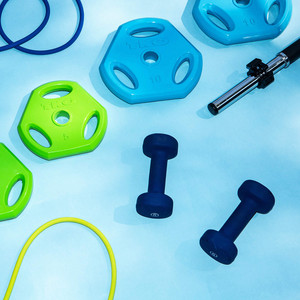
Alex Sujong Lothlin is a writer and audio producer, and for a long time she thought weightlifting was not for her.
She was worried it might make her look bulky or unfeminine.
On this episode of LifeKit, she takes us on a beginner's journey into weightlifting and unlearning some of these unhelpful stereotypes.
Support for this podcast and the following message come from Wise, the app that makes managing your money in different currencies easy.
With Wise, you can send and spend money internationally at the Mid-Market Exchange rate.
No guesswork and no hidden fees.
Learn more about how Wise could work for you at Wise.com.
I just don't want to leave a mess.
On Bullseye, the great Dan Acroix talks about the Blues brothers, Ghostbusters, and his very detailed plans about how he will spend his afterlife.
I think I'm in a room in a few places.
Yes, I'm going to manifest in a room.
All that and more on the Bullseye podcast from MaximumFund.org and NPR.
On the Ted Radio Hour, legendary soccer player Abby Wombok remembers exactly what was going on in her mind at a crucial moment during the 2011 World Cup.
As soon as the ball came off of her foot, I knew that that ball was coming to my head.
The only thing in my mind was don't screw this up.
How to apply sports psychology to everyday life.
On the Ted Radio Hour podcast from NPR.
On weight weight, we ask very well-known people about things that people don't know about them, like what was Malala Yusuf's eye doing when she heard she'd want the Nobel Peace Prize.
I went to my physics class and said I have to finish my school day because when you get the Nobel Peace Prize for education, you have to finish your school day.
A Peter Segal for the real secrets of the rich and famous Listen to the Weight Weight Don't Tell Me podcast from NPR.
Pornabell's idea of a good time is deadlifting a barbell stacked with more than her body weight.
She started lifting weights in 2016, a year after her husband died unexpectedly.
She wrote a book about the experience called Stronger, changing everything I knew about women's strength.
I felt completely disconnected from myself and I didn't know really how to connect all of the pieces because they just felt so fragmented by the entire experience.
The first time she had to flip her mattress alone, it took half an hour and she was exhausted because she didn't have the upper body strength.
And then one day she signed up for workouts with a personal trainer who got her started with powerlifting, which is a strength sport that focuses on lifting heavy weights through deadlifts, squats and bench presses.
I didn't really and had never really prioritized getting physically strong.
The language that we use to talk about our own bodies and how we relate to physical activity and the classic one being, oh I've got to equating fitness or movement to working off something that you've eaten is such a big one for me.
And so that ends up being the dominant narrative, not I might want to lift some weights because that will help me to like carry my luggage or a dustbin or something else.
And that brings us to our first takeaway, which I admit is a tough one.
Start by reestablishing your exercise goals.
Working out isn't for weight loss only, but establishing this healthy mindset is much easier said than done.
My goal with this is literally getting people to unlearn what they think that they know about fitness and to then rebuild it in a way that suits them best.
And I want to be clear here, this is something you could spend your whole life working on.
The world we live in is saturated with messaging that certain kinds of bodies are more attractive, healthier or worth more.
That fear of mine that strength training would make me bulky, turns out it's pretty common among women and no surprise it's also rooted in sexism.
It comes from this idea that women should be smaller than men that strength is unladylike or unfeminine, which is pretty messed up when you think about it.
And that fear has direct impacts on who tries to get strong and who doesn't.
A 2019 Penn State study found that women were significantly less likely to participate in strength building activities than their male peers.
Forna recommends tackling the shift by reframing any exercise you do as work you're doing with and for your body to build strength to achieve goals to help your mental health.
Instead of work you're doing to carve your body into the ideal shape size or weight.
That can be really tricky when you're going to a gym that advertises weight loss programs alongside personal training.
The posters that tend to be in most gyms, which is the guy has his top off, he has a six pack, you know he's super muscles.
The woman is in like a really tiny crop top, she's probably quite small in physique and that sends a message.
Which brings us to our second takeaway, find the right support system for you.
The starts with defining what you need, whether that's a community of people who have similar goals, a routine tailored to your needs, or equipment that you can actually lift.
This will look different for you depending on where you live, how much money you feel comfortable spending, and what you prefer.
Maybe you want to work out with a personal trainer or take classes.
Maybe you just want to follow some workouts on Instagram or YouTube.
We'll talk about some at-home options later, but if you're working out at a gym, Poirna recommends asking yourself whether you actually like it.
I know that that is such a privileged question because it will depend on how much your gym costs, what income you're on, accessibility and so on.
But if you do have a choice of gyms, I would ask yourself whether you like a gym.
It turns out not all gyms are created equally.
Do you like the culture that they foster?
Do you feel okay when you're in there?
And there are some gyms that don't have the best culture, and then there are some that are a bit more community-based, and they're much more pleasant to be in.
The gym I have access to is a commercial gym, which is a general type of gym that offers cardio machines, a smattering of weight machines, and a free-weight section.
It doesn't offer any specialty equipment or training like powerlifting classes or coaching.
While commercial gyms are often the most accessible types of gyms, they can also be pretty inhospitable for people who are looking to try something new.
Pornow works out at a powerlifting gym that focuses specifically on helping people lift heavier weights.
Now that might be unbelievably intimidating to people, but the catch 22 there is because you have people who know what it's like to lift, who have started from scratch, the environment is actually a lot less intimidating in the sense of you respect every single person in there no matter what they can lift.
Building an inclusive fitness community is the core of Justice Row Williams' work.
He's a trainer with fitness for all bodies, an organization that pairs activist work with fitness.
I've always been in the gym.
It was my main squeeze, but in my experience of fitness is very gendered binary way, but very toxic.
Fitness for all bodies host group workouts alongside guided conversations about social justice to help people from marginalized communities explore fitness without the racism, sexism or fat phobia that can sometimes arise in a more public gym setting.
And Justice brings that ethos into his personal coaching too.
Like you don't take the lead in anybody's journey, you follow, and that is our role as coaches.
We don't venture into this world where we're telling people what an athletic body looks like.
If you're interested in working with a coach or trainer, Justice says you can ask a couple questions that will tell you quickly how they view fitness.
What are your ideas about athleticism?
What is an athletic body look like to you?
I always say if coaches are pushing a perspective on diet culture or weight loss, that is in general not a coach you want to go to.
You can take the lead in your relationship.
You can ask them not to frame your progress around your weight or BMI, and if you have specific training goals, share them.
Pornah also recommends working with a coach or taking classes, as long as they focus on teaching good technique.
When it comes to lifting weights, technique and form are two of the most important things when it comes to being able to do it safely, but also more importantly, being able to do it competently.
And both Justice and Pornah recommend combating the world's narrow image of what athletic bodies look like by following people of all body types on Instagram.
One person I love to follow on Instagram is Kasey Johnston.
She's a science tech and health writer who runs the fitness and strength newsletter She's a Beast.
Her Instagram account at Swole Woman documents her powerlifting journey and shares photos, videos and advice for people who are curious about lifting heavy.
So I thought she would be the perfect person to ask for concrete tips about getting started in strength training.
What kind of advice would you give that person who's like, I kind of want to try something new, I kind of want to see what my gym has to offer, but I have no idea where to start.
It's tough. There's not a super smooth on ramp from knowing absolutely nothing about lifting to getting to a point where you can use a barbell.
A lot of starting strength training programs presume you're strong enough to handle a barbell, which is 45 pounds.
A lot of us are not that strong.
I was not that strong when I started.
That's our third tip. Make a plan and start small.
You can think of your training plan as a kind of recipe.
You'll want to figure out a few things.
How frequently do you want to work out?
And when you do, what kind of movements will you do?
Reps or repetitions are the number of times you do in exercise before taking a break.
Sets are how many times you do the reps.
So if you do five squats, then rest, then repeat two more times.
You've done three sets of five reps.
I know. It sounds like a lot already.
Luckily, there are lots of beginner strength training programs available online.
Casey recommends following a training plan that will encourage you to lift heavier weights incrementally.
A beginning strength training program can be like three movements, three days a week, sets of five or three sets of eight.
And that's it. Three movements and you're done.
So an example could be three sets of five reps of squats.
Then the same for bench press and then the same for dead lifts.
And that's it. And you'd only do that like three days a week because this kind of training actually requires a lot of rest between workout days.
You can follow a program like that for six months to a year in some cases.
And you'll really see that progress.
It doesn't need to be something really complicated.
Your body can actually build strength pretty quickly, like more quickly than you think.
Generally speaking, you probably have the capacity to add two and a half to five pounds to each of your lifts.
So like this session, you're squatting five pounds on Monday on Wednesday.
You can squat 10 Friday.
You can squat 15. You keep going.
Yeah, totally. That's wow.
It's one of the most magical parts.
That's like the part that I really want everyone to try.
Casey had a few programs she recommended.
Strong lifts beginner programs.
The R fitness subreddit and barbell medicine.
And if 45 pounds sounds like an impossible amount to lift, you're not alone.
The good news is that you can practice lifting movements with just your body weight or with something light like a broom.
There are tons of YouTube videos to walk you through proper form.
So you can build up your confidence before you walk into the gym for the first time.
And don't forget to record your progress as you're training.
Maybe you've noticed people at the gym carrying notebooks around.
I ask Casey what the deal is.
The deal the notebook is you write out the movements you're doing for the day.
You record the weight you ended up lifting.
And how it felt, but also like you want to see that progress over time.
A few weeks ago, I was lifting 20 pounds now.
I'm lifting 65 pounds. Like, well, that's really cool.
Okay, so you have a plan.
You might notice your plan includes a lot of the same exercises like dead lifts, squats and rows.
They're what are called compound movements.
And that's our next tip.
Get familiar with compound movements.
They're efficient exercises that use your muscles together, the way they're meant to be used.
So like squatting, deadlifting, benching, overhead pressing, rowing, these are all really good compound movements.
That right there is sort of a total package of a workout that you can practice the body weight versions of those movements.
If you master compound movements, you can focus on a handful of exercises during your workouts and avoid that deer in the headlights moment in the free weight section.
The contrast would be when you want to work out your arm, you can do the bicep machine, the tricep machine, the like shoulder press machine, you can do lateral raises and maybe like some pet flies if you're like, that's kind of arms, right?
Or you can just do bench press and maybe some lap pull downs.
And it's much quicker. Less time in the gym, more effective workouts and you get to look cool bench pressing.
Thanks compound movements.
So there are practical skills you can build at home to get more confident lifting weights.
But there's also the gym timidation part of it all.
You know that feeling when you walk over to the weight section and it feels like everyone is huge and lifting a million pounds and they're so ready to judge you.
I asked Kasey how she dealt with that too.
I like to compare going to a new gym to starting a new job or starting in a new school.
It's like you have to sort of give yourself the room to get to know the place and the people and just sort of like absorb when you're resting between sets.
You can kind of take in the environment.
What are other people doing?
Where do people do this activity versus that activity?
Do people normally stand here or there?
She said that even though it can feel nerve-wracking, it's important to remember that people are generally not paying attention to what you're doing.
Everyone is there to focus on their own workout.
But if you're a woman or just someone new to lifting, there's always a chance that someone will come up to you with a tip, thinking they're being helpful.
That happened to me once and it was mortifying.
Do you have any advice for people like if that were to happen?
Yes. My big one is wear headphones and potentially pretend like you're on a call.
I think you should sort of rest in the idea that it's not super great manners to go up to somebody and comment on their form.
I also like to say, you're paying the same membership as everyone else there whether you're deadlifting.
600 pounds or you're deadlifting 25 pounds.
You pay the same amount of money.
You let they deserve the same amount of space and to use the equipment the same way.
Which brings us to our final takeaway.
Remember that you're already really strong.
I know this is meant to be a guide to learning how to start strength training.
But as I talk to these people, the one thing that kept coming up over and over as a barrier to people getting started in strength training was fear.
Fear that they'd hurt themselves.
Fear that people would judge them.
Fear that they'd look stupid.
And that they're not strong enough to be in a space where other people are different than them and may not share the same values.
But the reality is is that they're in spaces like that all the time.
Their jobs. Walking down the street.
They just went into Dunkin Donuts.
Everybody in that space.
They don't share the same values, but you have the courage to go in because you have a goal.
And you're like, all right, I'm going to get my Dunkin Donuts.
You're not thinking about how people are going to react to you.
You just focus on it. Go.
This is something that's really important to remember.
When you reclaim your relationship with your body and start working with it instead of against it, you're working toward healing a lifetime of believing that you're fundamentally bad or need to be fixed or improved in some way.
Of course, strength training is no replacement for therapy and medication if you're really struggling with your mental health.
But if you're on a journey of healing your mind in some way, working with your body can and should be part of that process too.
The lifting weight matters to me a lot because it's not just about the physical activity of it.
It's because it has proved to me that I am stronger mentally and physically than I ever give myself credit for.
And that is something that I'm never going to not need that.
So let's recap what we've learned.
First, reestablish your exercise goals.
Working out isn't for weight loss only.
This is a lot easier said than done, but if you can separate exercise from weight loss and diet culture, a whole new world of fitness can open up to you.
Second, find a support system.
Maybe that's a specialty gym or a trainer or an Instagram account.
Third, make a plan and start small.
You can start lifting with any amount of weight, even nothing.
But if you follow a plan, you can gradually work up to heavier weights.
Fourth, get comfortable with compound movements like squats, bench presses, dead lifting, overhead presses and rows.
There are more efficient exercises that use your muscles the way they're supposed to be used together in a system.
And fifth, remember that you're already really strong.
You deserve to take up space in this world and at your gym.
Thanks again to Pornabelle, Justice Row Williams, and Casey Johnston.
And thanks also to Shannon Wagner.
That was writer Alex Sujung Laughlin.
For more life kit, check out our other episodes.
We've got one on getting into fitness for the first time and another on making your workouts about more than what you've seen in the mirror.
You can find those at npr.org slash life kit.
And if you love life kit and want even more, subscribe to our newsletter at npr.org slash life kit newsletter.
Also, we love hearing from you.
So if you have episode ideas or feedback you want to share, email us at lifekit.atnpr.org.
This episode of life kit was produced by Janet Ujung Lee.
Our visuals editor is back Harlan and our digital editor is Mallika Gareed.
Megan Kane is our supervising editor and Beth Donovan is our executive producer.
Our production team also includes Andy Tagle, Claire Marish Snyder, Margaret Serino, and Sylvie Douglas.
Engineering support comes from David Greenberg and Ted Meabane.
I'm Mary Elcigara. Thanks for listening.
Hey, I'm Robert Smith from Planet Money and this summer we are bringing you the entire history of the world, at least the economics part.
It's Planet Money Summer School.
Every week we'll invite in a brilliant professor and play classic episodes about the birth of money, banks and finance.
There will be rogues and revolutionaries and a lot of panics.
Summer School every Wednesday till Labor Day on the Planet Money podcast from NPR.
I'm Cara Newhouse and I'm Nima Gobeer.
We're co-hosts of MindShift, a podcast all about challenges and solutions in education.
Our new season is out now exploring everything from ways to engage students to how innovative models can help kids in the hardest circumstances.
Don't miss a minute. Check out MindShift from KQED, part of the NPR Network.