Have you ever heard native british speakers saying already instead of already, or using phrases like you're right?
Well, you're not imagining it that disappearing l isn't a mistake.
It's something that happens naturally in british english pronunciation, especially in casual or fast speech.
It's called L-elision or, more simply, just dropping the L.
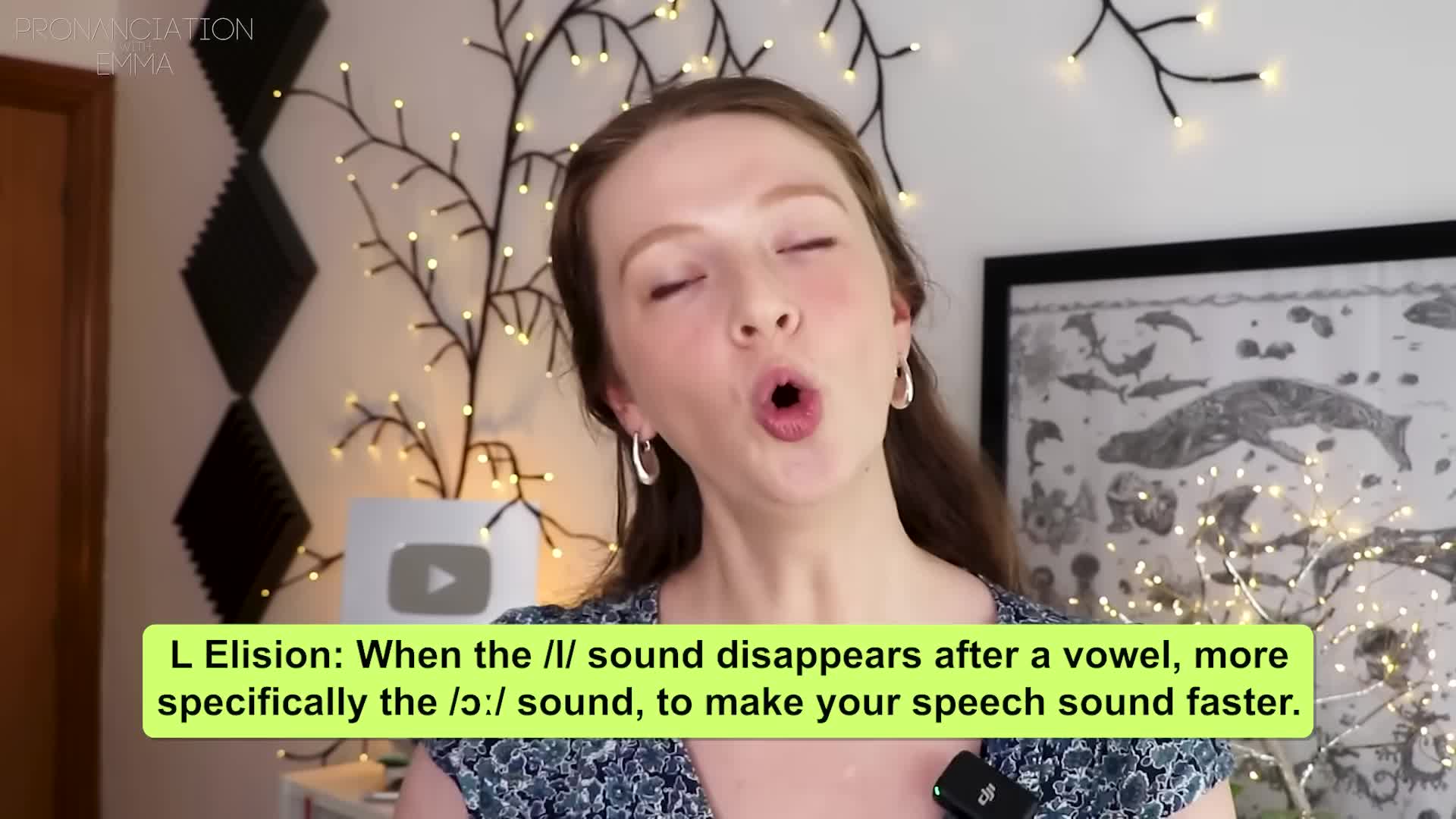
It's when the L sound disappears after a vowel, specifically the O vowel sound, to make your speech sound much faster.
This is why words like already, almost and alright often sound like already, almost and alright when they're said quickly.
So in this British English pronunciation lesson you'll learn why this happens when to remove the L, and then we'll practice both the clear and the natural versions so you can sound more fluent and confident in English.
I'm Emma, a qualified British English pronunciation coach with a degree in English language and linguistics, a Cambridge CELTA teaching qualification and a master's degree in teaching English to speakers of other languages.
I've been teaching since I was 16 years old and I've helped thousands of learners from around the world sound clearer, more confident and more natural in English.
And before we get started, a quick reminder my online pronunciation course, Emma's Pronunciation Hub, is opening for enrollment in January 2026.
It's currently undergoing a huge upgrade, with 300 new activities, downloadable audios to practice your pronunciation on the go, and weekly personalized feedback and corrections.
So if you're serious about improving your British English pronunciation, join the VIP waitlist using the link below.
You'll also get access to free live workshops and exclusive bonuses when the doors open.
All right, let's dive into today's British English pronunciation lesson.
L-elision happens when the L sound, especially the dark L that appears after the vowel or is dropped completely in quick or casual speech.
This means that, instead of saying all clearly, the L simply disappears when you say the word quickly.
So you'll often hear the following already already, almost almost alright alright always always, Also.
Also.
So why does this happen?
Well, it's all due to efficiency and flow.
The L sound.
More specifically, the dark L requires your tongue to move back and touch the roof of your mouth.
When you're speaking quickly, that movement can slow you down a little bit.
So simply removing that sound and skipping it completely can help.
That's why already becomes already and almost becomes almost.
This is not wrong or lazy speech.
It's just natural speech.
It's a natural form of rapid speech.
You'll hear el elision more often in fast, informal and relaxed speech after a vowel sound, particularly the or vowel sound, and usually in unstressed syllables.
But you've already seen an example of where that's not always the case, so I'll talk a little bit more about that exception in a moment.
So let's look at some common examples already already, and make sure you're saying this one without the l, really quickly already, almost almost although, although always, always also also all right, all right now, repeat after me and say each phrase slowly, first clearly pronouncing the l, and then we'll say it again more naturally, without the l.
Listen and repeat.
I've already done it.
I've already done it.
It's almost midnight.
It's almost midnight.
Are you alright?
Are you alright?
He's always late.
He's always late.
I also studied French.
I also studied French.
Although it was raining, we went out.
Although it was raining, we went out.
Here's a little tip to help you improve your English pronunciation, and remember to remove the L sound in your natural speech.
You can record yourself saying both versions, one with the L and then, the quick and natural way, without the L.
When you listen back to your recording, you'll notice how the second version sounds quicker, smoother and closer to how native and fluent English speakers sound in everyday conversation.
And remember that you don't have to drop the L sound in these words.
It all depends on the situation.
For example, in slow, careful or formal speech, like in interviews presentations, or if you're taking an English exam, you'll want to pronounce the L quite clearly.
So saying already, almost, and always.
However, in fast natural casual, everyday conversations it's completely fine to relax a little and remove the L and say already almost always.
The most important thing is that you're simply aware of this feature.
Even if you choose not to use it yourself and you decide to always pronounce the L understanding, it will help you recognize it when fluent or native English speakers do remove it.
Now, here's your challenge for this week.
Listen for dropped L's in real life.
So in British films, TV shows, or when you're talking to native or fluent English speakers.
Take note when that L disappears in words like also, already, and alright.
So that's the end of today's British English pronunciation lesson.
I hope this has helped you understand why the L sometimes disappears in natural British English speech and how you can confidently use it yourself.
If this video has helped you, give it a like, share it with a friend who's also learning English and subscribe for more practical British English lessons every single week.
And don't forget, Emma's Pronunciation Hub reopens in January 2026.
You can join the VIP waitlist down below in the description for early access, free workshops and exclusive bonuses when the doors open.
I'll see you in the next lesson.
Bye-bye.