Hello and welcome to the NVIDIA AI Podcast.
I'm your host, Noah Kravitz. Before we dive in, a quick reminder that the AI podcast now comes your way four times a month.
Listen to us wherever you get your podcasts.
And if you have a minute to subscribe to the show and even to leave us a review, we greatly appreciate it.
The intersection of leading-edge technology and health and life sciences is one of the most vital areas of research and development happening in the world today.
Artificial intelligence is fueling advancements in virtually all areas of healthcare and medicine, as recent episodes of our show can speak to.
Today, we're talking with someone on the forefront of integrating digital technology with groundbreaking science.
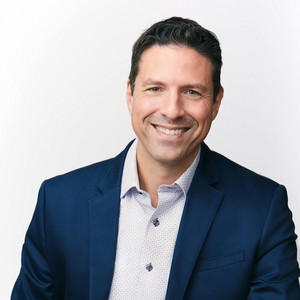
Greg Myers is Executive Vice President and Chief Digital and Technology Officer at Bristol Myers Squibb. one of the world's foremost biopharmaceutical companies.
Greg's here to talk about how Bristol-Myers Squibb is using AI to accelerate scientific pursuits and innovation. and what the future of technology in the biopharma industry looks like.
Greg, welcome, and thank you so much for taking the time to join the AI podcast.
Thanks so much for having me. So could you set the stage for us by telling us a bit well, telling us a bit about Bristol Myers Squibb, if you would, for those who might not be aware.
And then about your role and how you came into this role as well.
Yeah, of course. So we at Bristol Myers Squibb, we discover, develop, and deliver innovative new medicines that help patients prevail over serious diseases.
Those are typically in areas like oncology, hematology, immunology, cardiovascular disease and neuroscience.
Really, as a company, we're focused on being one of the fastest growing companies in our industry by the end of the decade.
And We're on track to deliver 10 new medicines and 30 new indications by 2030, a lot of which is being accelerated through rewiring the enterprise around digital data and AI, which is looking forward to talking about that today.
And then your team specifically, what are you sort of overseeing?
What is your team primarily focused on? Yeah, so we have the traditional technology or IT part of the organization.
Right. is responsible for all the data and analytics throughout the company.
So the majority of the data sciences team is within my remit.
And we also have digital health team, which is a really exciting team that is looking at the forefront of changing the way patients are diagnosed, treated, and monitored. key areas that we also tend to have therapies in at the point of care.
And so how does a major company, a major pharma company like Bristol-Myers Squibb think about technology's impact on your industry in general.
Then maybe as you're talking about that, you could drill down specifically to how AI has changed things in the past several years in particular.
Yeah. If you think about the last 100 years, we've added 25 years of life expectancy, and that's primarily through human-led innovation, right?
So think antibiotics, vaccines, chemotherapy, synthetic insulin. of which we were pioneers in.
But over time, it's gotten more and more difficult to find new medicines.
It's become more expensive. In a lot of cases, a lot of the low hanging fruit been picked.
And when you really think about the state of biology, within a human body, there's about 40 trillion cells.
In each of those cells is about one trillion molecules.
If you add it up, that's seven octillion atoms.
And any one of those atoms out of place potentially could cause, cure, or prevent a disease.
And in the chemical space, which is what a lot of pharmaceuticals are focused on.
There's about 10 to the 60th power possible chemical entities that can be created of which only a small fraction has ever been synthesized in a lab by a human.
So when you really think about drug discovery, we see it as a lot of dark data and the ability to use computation to uncover where otherwise hidden patterns and data about biology.
And one of the things that we're excited about is how you apply that against this vast both chemical and biological space to really find new pieces of information.
Of course, as things have grown in terms of compute capacity, we're very excited about the ability to apply and unlock more and more of that data.
How far back should we think when we're talking about the change from traditional methods of drug discovery and development to this new world that we're in, kind of newly in, but I think firmly in. with AI-powered drug discovery and being able to simulate experiments and do some of these calculations you're talking about that weren't previously possible.
Yeah, it might be good just to explain how historically drug development has occurred and sort of how we see AI being woven in.
And I think it is fair to say it's kind of more of an evolution and being woven in.
If you look at, probably most people learn at some point in school, the scientific method.
And the first three steps, if you were to summarize them, are more or less follow your gut.
And if you think about it, there are a lot of hunches that we have in drug development, right?
So there's hunches on the disease side. So scientists may notice an unexplained pattern.
Like we might notice that a certain protein is overactive on a specific cancer tumor.
We then have hunches about a target which means we would sort of brainstorm whether a protein receptor or a gene is causally linked to that disease. whether or not that looks what we call druggable, which means you can find something that can bind to it.
At that point, you have this qualitative rather than quantitative hunches that you're following. this receptor, this will cause and potentially stop this negative effect.
And then the last hunches we tend to have is around the hypothesis.
So we have to formulate a testable statement.
Like, can we engineer a molecule to bind to a specific receptor?
And can that receptor itself suppress, for example, maybe the scarring in lung tissue?
And then that really drives a lot of the things that we do both in preclinical testing, which as well as what you do once you get into the clinical trial process.
Now what AI has done is along the way, and I would say this has happened in bundles of capability, is it helps us to narrow down the hunches.
So, for example, if you were to look at a cancer tumor, we would typically stain it, and a human being would look at it in a microscope, and they'd be trying to look for certain aspects that help us understand more about the biology of that tumor.
But now you can take a whole slide, which is like a whole sample of a cancer biopsy.
And instead of standing it, you can have a convolutional neural net be trained on looking at that entire slide.
So rather than just looking at the tissue sample, and what's happening in the stained versus unstained, you can actually start to look for hidden subtle features and patterns. by using things like different light spectrums that humans can't see.
It may help us with diagnostic accuracy and potentially even providing us new insights into what the shape of the tissues are over time.
So what you're really seeing here is not only the ability to start to use it in research, but you're already starting to see the first generation of what I call co-designed AI molecules making their way from discovery into development.
In fact, we have several of those ongoing right now.
Can you speak to any of this? Yeah, well, one that we have that's actually going into what we call Phase 1B, which is sort of forced in human.
Okay. is we designed a protein that can basically degrade another protein that is responsible in sickle cell disease for basically suppressing a natural gene.
So when we're infants, we have a gene that produces one type of red blood cells.
And after we're born, and obviously because our lungs aren't working, so these blood cells are able to absorb a lot more oxygen content, right?
So they're much more densely rich. Once we're born, those genes naturally turn off and our adult hemoglobin genes turn on, and that produces different types of genes.
Well, in people with sickle cell disease, they have a mutation of that gene which actually makes those cells sort of shape into a sickle.
They fold onto themselves and it makes it very difficult to actually get enough oxygen.
So what AI has helped us to do is to sort of engineer features of that molecule that allowed us to be able to effectively turn back on the dormant genes you have as infants.
And that actually alleviates some of the symptoms of people with sickle cell disease.
And so There's examples where we were using AI to do different types of things that actually help us design it.
So we already knew what we wanted to do, but in this case, it really helped us work through a series of engineering problems that we had and making sure that it would attach itself to where we wanted it to attach to and not actually attach itself to other proteins that we didn't want to affect. right how do you go about this might be kind of a boil the ocean type question so feel free to write me in here but How do you go about kind of quantifying or objectifying the impact that AI is having in drug discovery and all of the things that you're talking about.
Obviously, getting a drug or some other therapy to market and seeing it help people is I'm sure the ultimate way to quantify these things.
But as you're going through these processes, what sort of stats or indicators do you look to?
Yeah, that's a great question. A few years ago, I would say maybe two years ago or so, we started experimenting with incorporating what we call predictive molecule invention, but these were they're basically predictions.
So if you think about what you do when you're discovering a drug is you basically have a hypothesis and then you have to go run an experiment to validate or invalidate that hypothesis.
And what we've been able to do is to leverage the millions of compounds we've already created historically, as well as the millions of experiments we've already done, being able to bring that together to actually build predictive models about whether or not what we're trying to test is likely to succeed or not.
Okay. When we started incorporating that into our early research, we actually saw a noticeable step change in the percent successful outcomes of the experiments we were running.
So much so that our entire research organization has moved to a world where in and about 100% of what are called small molecule discoveries.
So those are things that are sort of think of as pills.
And 50% of our large molecule, which are these are things think about as being injectable or infusibles, we would not run. experiments in the wet lab until those predictive models in those two areas respectively suggested it would be worth trying.
So that's kind of an example where we saw data along the way through proofs of concept, and each of those allow us to get to a scaling piece.
Similarly, in drug development, which is the most expensive, complicated part of our business.
It's not unusual for it to take seven to 10 years to get a drug through the development process.
So any amount of time we can get to shorten that is is worth a lot to patients and worth a lot to us.
We've done a number of experiments around how we use large language models to help us try to get us started in writing a lot of the documentation.
Clinical trials have over 300 different documents that have to get created to get them going.
If you really think of what LLMs are great at, it's reading and writing and editing words on a page, which is really a lot of what goes on there.
And as a result of some of those works, I mean, we really started and we're just starting to get on the other end of, for example, something like an informed consent form, which is a very simple form.
It's what you give patients to let them know what they're signing up for a trial.
Like we know that we can get 80% of that pre-written just by using the master document that that comes from, whereas originally that would be on a clean sheet of paper.
As we see these experiments, we build more and more conviction and that allows us to move more towards scaling.
That leads me to ask you about the other side of this.
Moving from talking about the outcomes, the results of using AI and discovering more drugs faster and everything we're talking about, and kind of to the other side of the people working on these things.
And you mentioned it's a case I can relate to in my own work when I'm writing or even writing up the show notes, right?
That's what Gen AI is so good at. scanning large chunks of text, summarizing, helping you rewrite.
What are some of the other AI-powered tools that your team's are using in their day to day work and how are they, you know, not just improving, but maybe reshaping the way that the work gets done and that people think about the work they're doing?
Yeah, we were really early adopters on this.
In fact, I would say it was maybe three months after ChatGPT 3.5 came on the scene.
We were the first company that I'm aware of.
I'm not saying there aren't any, but the first that I'm aware of that actually built an internal chatbot, and we use Microsoft Teams.
We actually built a Teams bot that was connected to ChatGPT 3.5.
That's primarily running 4.0 now, but that was built within the Teams chatbot and then since then, We've expanded that out to a whole, what we call a Gen AI storefront.
And what's interesting about that is you can go to that storefront and you can use all the frontier models.
As of today, you've got 03 and 04 from OpenAI, you can use Anthropic 2.7, you can use DeepSeq V2, you can use Gemini 2.5.
So they're all available for free. to our employees.
I was telling someone the other day, if you were to pay out of pocket, you'd be paying $300 a month.
Then we also got about close to 2,500 licenses of Microsoft Copilot out there.
Our philosophy was to really, well, I think a lot of companies were thinking about how to be worried about what would happen tools to our employees.
We went out of the gate and really wanting to make sure that we gave people proper room to experiment, to really use those tools.
And when you think about our industry, there's a couple of tailwinds.
One, it's a very much a knowledge-intensive business with lots of documents, so that lends itself well.
So we tend to be in an industry where a lot of wheels are being continuously reinvented.
So your ability to capture and leverage knowledge about the past is important, but then there's also also headwinds, right?
Very highly regulated industry with a high cost of failure.
And so we thought it was important to just get people accessibility to the tools to be able to do more and more.
When you started rolling out that first chatbot, those first iterations, What was the response like from your employees, from your teams?
Were people excited? Were people hesitant?
Were there... specific worries or specific tasks and experiments that people latched onto from the get-go?
It won't surprise you my answer. I think it was a mixed bag.
I think in the beginning at the very early adoption, a lot of people didn't, you know, in the early days of chat GPT, I mean, I think people they would look at the blinking cursor and not sure what to do, right?
There was a lot of training that we had to do.
There was a surprisingly large number of people people who kept asking questions like, well, is it okay to put proprietary information in?
Because I think in the information security world, we do such a good job training people to not put anything in the systems that don't have the word SAP or whatever on it.
And we had to actually make it clear that the reason we built these tools is we wanted to build safe alternative.
We didn't want people going out and leaking proprietary information into consumer tools.
So that was a little bit of a hurdle. And then as you can imagine, the early use cases are helping edit a performance review and editing emails.
And now they've progressively move more and more onto analytical skill sets, data science capabilities, RAG-based So it's certainly gone up to mature.
And I would say that we've adapted as the technology has matured.
And on the, I don't want to say the research side of things to imply that this work isn't part of the research, but when we're talking about researching how the molecules interact with each other and how the protein receptors work and all of the things you were talking about with drug discovery and such.
Are you building and training your own models?
Are you fine tuning off the shelf models?
You know, what can you kind of say about the technology and the AI specific end of that?
Yeah, you're talking about computational chemistry and biology, that's what we call them.
And a lot of that work is being done on the NVIDIA clusters.
And so what we're doing there is we tip have certain things that we're trying to do.
Like, let's say it's very common in drug development, or I should say drug discovery, where you're trying to find hey, here's a molecule that we know works, but it's having trouble crossing the blood-brain barrier.
We don't want to affect the active parts of the molecule but we need to affect things around it that affect its ability to either be something that can go through that barrier or can't.
So lipophilic, lipophobic. So these are features that you can use models that already exist.
In the case of protein structure prediction, we have alpha fold.
There are other modalities where we're using large language model sequences to Look at protein structure prediction, those are things like ESM fold.
To a large extent, we're using mostly off-the-shelf open-source models on high-capacity compute. that helps us do things like physics-based simulations and things like that. a lot of that work is.
It's still probably at the early adopter phase, I'll be honest, because a lot of this stuff is all very new.
And so a lot of what we're working on is how we try to find tools that have abstraction wires because not every scientist knows Python fluently. or TensorFlow, right?
So we're starting to, and I know Nvidia has also done quite a bit of work with Bionemo and a few other things to do that.
We're working on building abstraction layers to create these co-pilots, for lack of a better word, to help scientists with really specific problems that they face on a day-to-day basis.
I'm speaking with Greg Myers. Greg is Executive Vice President and Chief Digital and Technology Officer at Bristol Myers Squibb, one of the world's leading biopharmaceutical companies.
And we've been talking about Bristol Myers Squibb's use of AI internally to really to accelerate all parts of their scientific pursuits and and innovative efforts and everything related to bringing more and more effective therapies to people who need them around the world.
Greg, I want to ask you to kind of step back or sort of to a higher level from, and I say just Bristol-Myers Squibb, because obviously enormous operation, But to kind of look at the biopharma industry sort of more holistically,
As you've been saying, you've had more than a taste of using AI.
You guys were early on it in your own work.
How do you see the technology affecting the industry as a whole and specifically when it comes to workforce and workforce productivity and also operations?
Well, if you look at healthcare more broadly, I mean, 30% of all data that exists in the universe is healthcare data, scientific and the like.
But the big challenge is it's all trapped in these little silos.
So there are thousands of hospitals, for example, that all have different electronic medical records at all.
They code things a little bit differently.
Each pharmaceutical company like ours will have their own cadre of data.
Many of them, many of us are products of mergers and acquisitions over the years.
Those things tend to be trapped in a lot of legacy IT applications.
So really, when you think about and then, of course, insurance companies have a tremendous amount of information as do governments.
When you get outside the U.S., the primary payers for health care are governments.
When you think about the integration of all that data together, I think it's going to be really critical.
I'll give you an example. it is really the deadliest form of cancer.
And the reason why it's the deadliest form is because it's mostly caught too late.
And the reason it's caught too late is the majority of lung nodules when they're treatable are just not detectable by a human being looking at the imaging that they get.
But we know that as these technologies progress, you have the ability not only to diagnose patients earlier, but even when you get back to the point I was talking about earlier around using AI to look at tumors, you have the ability to start looking at which patient is likely to do better on which therapy versus another.
And in lung cancer, the other reason why you have a high mortality rate is the average lung cancer patient will fail on four or five different therapies before they find one that works.
All right. And if you only have five years to live, you don't have time to go through four or five.
So your ability to get on the right treatment earlier and not start a treatment is good for everyone.
It's good for the patients. The pharmaceutical industry doesn't want to be supporting patients that we can't help.
And of course, payers don't want to pay for medicine that they don't need to pay for.
So it's my base case that in 20 years, as a life sciences innovator, just shipping a molecule alone won't be enough.
We're going to need to work with the rest of the industry to bundle together real world evidence about how medications work in the real world Data that comes from live patients about how they metabolize and respond to therapy differently as these things all come together.
I'm really hoping for a major breakthrough in the way patients are going to be treated because in the next 25 years, the number of people over the age of 65 will double.
And those same number, the number of people with cancer will double. one out of every three people will have some neurodegenerative disease.
So we have a high incentive across the whole industry to really find a way to put data together, both about science, about biology, and about individual people to try to find ways to achieve better outcomes for patients around the world.
And given the stats you just cited about the population aging and the number of people with cancer doubling and everything, I thought back to what you said kind of near the beginning of our conversation about how human life expectancy, I think you said over the past hundred years, it's increased by 25 years.
That makes me feel optimistic even, you know, in the face of thinking, oh, I'm one of those people who's going to be over 65 in the next 25 years.
At the same time, what you said about electronic health records, medical records in particular, you know, struck a chord with me because as a Healthcare consumer, to put it that way, I face that frustration, right, of my data not getting to, you know, from my primary care to a specialist or whatever it may be. is kind of cooperation and standardizing the way that medical data is collected and shared.
Is that still one of the biggest impediments to progress, or is that something that you feel like we're making headway on?
And it's really focusing on, I don't know if the term precision medicine applies here, but In thinking about that, well, how do we narrow it down, get it down from the lung cancer patient needs five therapies to hit one to getting it on the first or second try?
Yeah, so electronic medical workers really grew during the Obamacare time.
And I think if we're honest about what they've evolved into, they're probably more optimized for accounting, billing and reimbursement than for actual patient outcomes.
So no doubt there's an opportunity to standardize and sort of reframe the ability to try to optimize for outcomes patient outcomes in addition to making sure people get paid properly.
But I'm also really encouraged that AI especially with new reasoning models, actually bridges some of this.
So if you think about having slightly different ways of explaining a disease, a reasoning model that is trained on the disease can actually bridge that gap much better than trying to do sort of cross-reference tables or however you would do that traditionally.
I'm also really excited you're really now just starting to see tools getting put into the point of care that really are changing not only sort of just specific things that occur today, but even helping uncover diagnoses people didn't even know they had.
You know, we had the last year working with a partner on getting a tool into the hands of cardiologists. to be able to detect a disease, this is a heart disease called hypertrophic cardiomyopathy, The only way that that is, is oftentimes a patient with that won't know they have it, will go 10 years being misdiagnosed because it is actually really hard for a physician to detect and can really only be found by a highly skilled cardiologist looking at an echocardiogram.
And most patients won't get an echocardiogram because they're very expensive to prescribe.
So what we were working on with this partner is being able to create the ability to look at a simple 12-lead ECG.
So that's when you get the little stickers. put on your body and you go into a doctor's, most general practitioners even have these, the ability to actually find, to detect the signature of that disease on a 12 lead ECG really unlocks the potential to uncover people who didn't know they have the disease.
And that's really important because a lot of times If you hear about high school athletes maybe falling over and dying on the field, this is from a disease like this.
So the ability, when someone goes into a clinic to do something like a routine a blood workup, the ability to retrospectively find that there is a detection of that signal and actually signal them to go see a cardiologist versus waiting for them to evolve to a symptoms is something that really has a tremendous amount of opportunity in that you don't have all these having to go through this labyrinth of tests that are unnecessary and being able to get people to point of care before they really progress.
I mean, those are the things that I'm really excited about.
It reminds me of an episode we did, and listeners, forgive and correct me.
I'm getting this wrong, but I believe it was about AI and cardiac care, actually, where the guest was talking about just the value of... data in legacy images, images that have been captured previously, and now with these machine learning AI tools, they've developed ways to go back and reinvestigate, look at these images again, but with the AI tools and just finding all this information in there.
I think they were able to find a marker that had previously been undiscovered. just by virtue of going back and re-examining all of these old images.
Yeah, that's exactly this situation, because this is a situation where it's clear that the signature of the disease appears on a 12 lead ECG, even though it's not obvious.
In fact, we did an experiment a year ago where I was talking to some leading cardiologists and I said, you know, we can actually predict a patient's age based on their ECG.
And that is just not intuitive. There would be no way a cardiologist, unless you were an infant, You probably can tell the difference between a 90 year old and a two year old, but not the difference between a 30 and a 40 year old.
So it really just goes to show that there is so much hidden data that things like neural networks are able to uncover.
And obviously the heart is great. It's the only digital organ we have.
It's either polarized or depolarized. And so it lends itself well to this area.
Right. So, Greg, I'm going to ask you to look forward as we kind of start to wrap up our conversation here.
You know, we ask everybody this question and obviously it's impossible to answer in some respects, especially given the pace of innovation recently. in machine learning and AI.
But kind of big picture, where do you see all of this headed in the biopharma industry?
Kind of, you know, maybe two years down the line, what's on the horizon when it comes to what technology and biopharma together might be able to achieve?
Well, I think it's one of the things we talked about before.
I mean, healthcare is a really... I mean, if you take in the US alone, it's a $4 trillion industry that... everybody has a long list of complaints about.
You have to believe that that is ripe for a lot of change in terms of how we manage patients, in terms of how drugs are developed.
And I think as the industries come together there's a real opportunity to not only accelerate, and obviously our hope is that we can generate new more new molecular entities faster.
We can get them through the clinical trials faster.
And if you take, for example, we've launched a number of new medicines that are actually what are called first-in-class medicines, which means there was not really previously a direct treatment.
And so if you can get a drug to market six months, 12 months, two years faster, And by the way, we're on track to shave off almost three years off of our clinical trial timeline as a result of using digital and data and AI and process changes.
Three years off of that. was it a seven to 10 year?
10, yeah, also 10 years. Yeah, around nine, yeah.
That's huge, yeah. Yeah, that is huge. And so obviously if you're a patient, and again, if you look at our pipeline of therapies, what you'll find is these are patients who are waiting for something because they have nothing.
And if you're not getting into a clinical trial, you're just not getting treated.
So the ability to get something to patients two to three years earlier can be transformational.
And I think if you look at cancer care, We are on the precipice of a whole new set of therapies.
We have cell therapy, which is still growing.
We have antibody drug conjugates, we have radio ligand, we have many, many other things that are happening. that getting them to the pipeline will really transform the care of cancer.
This is something that I'm really excited about because you know when i think about the future population where things are the ability for us to get out and treat these chronic diseases that we know we're going to grow naturally is really going to be transformational for patients.
Absolutely. On a personal note, how do you stay on top of everything?
From my end, trying to stay up on what's happening with just the technology is a job and a half.
But applying that to something as complex and huge as biopharma, how do you stay on top?
And what kinds of news, when you read about kind of lights your fire and makes you think like, oh, wait, this is something to keep an eye on because I think this might be a game changer.
Yeah, you're right. Running a technology function inside of a big enterprise, I often joke, if you're in accounting, accounting standards haven't changed since the the 1970s so much.
If you're a lawyer, while there is additional law, we're still operating off of laws that are 50, 100 years old in technology, really, you have to be almost prepared for a complete turnover of technology stacks every years.
It is really hard just to acknowledge what you're saying to keep up.
Personally, what I do is basically read it. and podcasts.
Those are the two places I get most of my information from.
Probably Reddit is a better source of news and podcasts are a great source to get much deeper into those areas.
Of course, I read a lot of journal articles and it's been great to use Notebook LM to convert those to podcasts to make it easier to read.
But yeah, I think that's really what I do is I do really believe that a big part of my job personally is focusing on what's going on outside the four walls of Bristol Myers Squibb.
Because I've got a lot of people in the organization thinking deeply about what is going on within our company day-to-day, but I see my job is to try to see around corners a little bit more and figure out what to pay attention to because As you know, there's a lot of noise intermixed with a lot of signal, and then being able to sift through that is challenging.
Absolutely. Well, on a personal note for me, now I can go to the dinner table tonight and defend my Reddit habit to my kids.
So fantastic. Greg, for listeners who would like to know more about what Bristol Myers Squibb is doing, about biopharma, about any of the things that you've been talking about.
Is the Bristol-Myers Squibb website the best place to start?
Is there kind of a sub-site, technical blog, something like that.
Where would you direct folks to go learn more? bms.com.
You're going to find there all the portfolio of things that we currently provide to patients, as well as a number of really exciting therapies we have in development.
We have one of the richest pipelines in the industry.
You'll find a lot of that online and also follow us on LinkedIn.
We're pretty active there. Fantastic. Greg Myers, thank you again for taking the time to come speak with us as a person who relies on healthcare every day goes without saying, but all the best of luck to you and your teams on the work you're doing.
Yeah, thank you very much. It was a pleasure being with you today.
Thank you. Thank you.