This message comes from NPR sponsor, Capella University.
With Capella's FlexPath learning format, you can set your own deadlines and learn on your schedule.
A different future is closer than you think with Capella University.
Learn more at capella.edu.
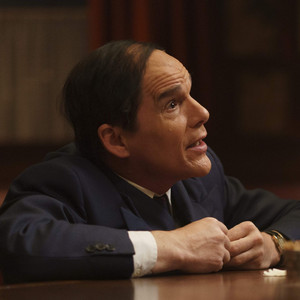
In the new movie Blue Moon, Ethan Hawke plays songwriter Lorenz Hart, who is having maybe the worst night of his life.
Hart and his songwriting partner Richard Rodgers have had a long and fruitful partnership.
But now disaster. in the form of Oklahoma!
It's 1943, and it's that show's opening night on Broadway.
It's clear that Rogers has a hit on his hands, but this one was written with his new collaborator, Oscar Hammerstein.
And it's safe to say Loren's heart is miserable.
I'm Glenn Weldon.
And I'm Linda Holmes.
And today we're talking about Blue Moon on Pop Culture Happy Hour from NPR.
This message comes from BetterHelp.
To mark World Mental Health Day, BetterHelp is thanking the therapists who change people's lives all around the world by providing accessible mental health support.
With over 12 years of experience matching clients with therapists, and one of the world's largest online therapist networks, BetterHelp can help you find the right therapist.
Visit BetterHelp.com for 10% off your first month.
This message comes from Mint Mobile.
At Mint Mobile, their favorite word is no.
No contracts, no monthly bills, no hidden fees.
Plans start at $15 a month.
Make the switch at mintmobile.com.
That's mintmobile.com.
Upfront payment of $45 for 3-month 5GB plan required.
Equivalent to $15 a month.
New customer offer for first 3 months only.
Then full price plan options available.
Taxes and fees extra.
See Mint Mobile for details.
This message comes from Mint Mobile.
At Mint Mobile, their favorite word is no.
No contracts, no monthly bills, no hidden fees.
Plans start at $15 a month.
Make the switch at mintmobile.com.
That's mintmobile.com.
Upfront payment of $45 for 3-month 5GB plan required.
Equivalent to $15 a month.
New customer offer for first 3 months only.
Then full price plan options available.
Taxes and fees extra.
See Mint Mobile for details.
This message comes from Sony Pictures Classics with Nuremberg.
The Allies seek justice for the Holocaust.
The chief prosecutor leads the trial of the century while a U.S.
Army psychiatrist battles Herman Goering's mind.
Nuremberg, in theaters November 7th.
Joining us today is our co-host, Aisha Harris.
Hello, Aisha.
Hello, Linda.
Also with us is NPR film critic, Bob Mondello.
Hello, Bob.
Welcome back.
It is so good to be here.
Blue Moon is set on the night of March 31 1943, when Oklahoma is having its opening night on Broadway.
Lyricist Lorenz Hart, played by Ethan Hawke, has had a hugely successful collaboration with composer Richard Rodgers, which has produced a gazillion songs that are still sung all the time, including Blue Moon.
They have become icons of musical theater, but now in part because he's frustrated by Hart's alcoholism and unpredictability.
Rogers has forged a new partnership with Oscar Hammerstein, and Oklahoma is their first show together.
Having left the premiere early, Hart goes to Sardi's and sits at the bar chattering away to hide his misery, while the bartender, played by Bobby Cannavale, tries to get him not to drink.
Hart is spending half his energy fretting about Oklahoma and half of it eagerly anticipating the arrival of a 20-year-old college student named Elizabeth, who he's convinced himself he's in love with.
She's played by Margaret Qualley.
Later in the evening, Rogers comes to the bar for the after party.
He's played by Andrew Scott.
And Hart can't decide whether to beg for another chance or insult what he sees as Oklahoma's corny squareness.
The film is Hawke's ninth collaboration with director Richard Linklater, following movies like Before Sunrise and Boyhood, and it's in theaters now.
Aisha, you and I both saw this movie in Toronto at the film festival.
What did you think of it?
Oh, I fell for this so hard.
I am a very big Rodgers and Hart fan.
Not to say that Rodgers and Hammerstein didn't create some of the most durable and indelible standards of our time.
But I think Rogers and Hart, for me, there's just more that I love about their catalog.
And even if their shows maybe are less remembered as a whole, the songs stand on their own.
I mean, I could write a book.
Lady is a Tramp.
Ten Cents of Dance.
I love it.
And what I love about this conceit is the specificity.
And Richard Linklater.
I think my favorite movies of his are always the ones where there's so much talking.
I mean, a lot of his films are very talky, but this is a very talky film.
It feels almost like a play. but in the best way possible.
And there's some things here and there that I questioned.
Are we trying to throw too many things into this one night?
Too many people, too many coincidences.
Creative license, sure.
But overall, I loved this.
I mean, I'm always a sucker for Ethan Hawke, but this is one of his...
Really, really, really fine performances and I was very happy to see this.
Yeah.
Bob, when I came back from Toronto, I told you I thought you were going to like this movie.
You understated radically.
So you did enjoy it.
I had such a good time.
And, you know, I grant you that there are maybe a few extra coincidences in it.
On the other hand, in a Rodgers and Hart show, there would have been lots of coincidences.
So I think that makes perfectly good sense.
Yes, yes. relentless cleverness of his work.
And it was really interesting to see what happens when relentless cleverness is what you're selling of an evening.
Mm-hmm.
And it's just there and there and there.
And after a while, it gets so exhausting and you can't wait to be out of its presence.
And somebody else comes in and he's clever again and you see it through new eyes.
And it's a fascinating exercise, I thought.
I just, I flipped over.
Yeah.
Glenn, how about you?
Yeah well, first of all, this movie got me on the Ethan Hawke's character's side from the jump, because every bit of shade he throws toward Oklahoma is absolutely right.
He starts off on a rant and I'm like, let him cook.
It's a really showy performance that, without any discipline or finesse, could easily devolve into mannerisms and tics.
You know outward stuff, sawing the air.
But it's a good old fashioned tour de force cast. character actor showcase.
It is a very theatrical performance and this feels like a theater piece down to the classic playwriting bit where, if your main character is talking all night long, at some point you've got to give another character a really long monologue to give your main character a vocal break, and that's what Margaret Qualley did.
Her character does.
I'm not going to slap the word stagey on this, because I think every theatrical element in this thing is justified.
So it makes sense if you can hear the writing.
That's forgivable, because he is a guy who's obsessed with language.
Of course he is.
And he takes pride.
We're all writers here, right?
We take pride in a well-chosen verb.
Right.
There's a moment where he takes pride in I think the verb dissipates.
And this guy would talk like that.
Anybody who's this obsessed with language would talk like that.
I do have some questions about whether or not it delivers absolutely everything it promises.
But those questions fall back to me.
They were down to me because I want to watch it again to find connections I might have missed.
We can talk more about that later.
I really liked this too.
I agree with everything everybody has said, which is partly that it is fun to just roll around in the presence of all these characters who love and care about a lot of the same things that I grew up loving and caring about, like musical theater and great songs.
But I also think outside of that, there is such a profound sadness to this Ethan Hawke performance.
He is so devastated by potentially being displaced in this incredibly important moment.
Creative partnership.
And Ethan Hawke talked about this in the QA after the movie in Toronto that essentially he's so devastated and hurt by Roger, sort of moving on to somebody else, that he essentially invents this romance with A Margaret Qualley who's playing this young student who, like she, likes him.
She enjoys being mentored by him.
But that is not a romance.
And he's sort of talking himself into it.
He's taking all the energy that he has nowhere to put it.
And he's putting it into how much he quote unquote loves her.
Right.
And that's one of the many ways in which I would think of this movie as kind of a what-if movie.
Because what if he did meet her and she was there at that party on that night?
And as we've alluded to, there are some other kind of like...
You know, famous people who were in New York at the time who sort of walk through the movie.
And some of those things, it can get a little bit cute.
It can get a little bit like, you know, and that guy's name was, you know.
But I think they get away with it because that Ethan Hawke performance is so, so cute.
As is, I think, Andrew Scott, as Rogers who is.
So You keep waiting for him to tip over, either into that he is kind-hearted and trying very hard not to hurt this guy and is willing to sort of, oh I just want to embrace you again.
Or into being villainous and careerist and is cutting the guy loose.
He just doesn't go either of those directions.
He's somebody who has really valued this guy's partnership with him but is also completely fed up.
As you said, Linda captures that struggle, that internal struggle of like being so grateful to Ethan Hawke's character for having helped his career.
And admiring him so much.
And admiring him.
And he says it so many times.
He's like, I admire, like, you know, but you can also see him getting increasingly irritated.
Yeah.
Because the heart is still, he hasn't changed.
He's still an alcoholic.
He is still someone who is not going to be able to do the work that they used to be able to do together.
And so that dynamic and the way that Rogers keeps trying to set boundaries for rekindling their partnership and saying like I will do another show with you, but you need to do this, this and this.
That push and tug is so great.
Like my favorite types of quote unquote biopics are these ones that take a very small slice of life.
Yes.
Yes, there was.
Yes, there was. where musicals would often be centered around various songwriters of the day.
It was very, very loosely based.
And then you'd have all these famous stars performing. loosely their songs.
And so the way that this movie just hinges on the creative like what happens when a creative partnership is dead and just that alone, but then opens it up to all these other possibilities around who Hart might have been, It just makes this such a great execution of the quote-unquote biopic genre.
Yeah, absolutely.
And that Andrew Scott performance could get lost easily because the Ethan Hawke performance is so big.
Andrew Scott nails something that – you talked about that frustration with him.
He recognizes that the thing that makes him a genius is the thing that makes him difficult and maybe even dooms him.
It is what addiction does to people at the edges of it.
So you just see him holding himself that earned – wariness right that i don't trust you and there's reasons i don't trust you, but still there's that hope.
Maybe this time it's like quietly moving, but it gets at something And he knew whereof he spoke in that respect, because he ended up an alcoholic later in life.
He was also a womanizer.
So that makes sense of his reaction to the Margaret Kowaly character later.
I kept on thinking, I know about these characters from elsewhere.
But it didn't keep me from going frantically to Wikipedia when I got finished with the movie.
And just looking everything up, I had so many questions.
What was the timing on that?
Does that make sense that these people would both be in the same place at the same time?
And to that point, I like the performance.
But what was the E.B.
White stuff doing there?
One point he meets the writer E.B.
White in the bar.
And I was wondering what dialogue are these two characters having that he wouldn't have with someone else?
Why is it E.B.
White?
Why?
It's specifically about writing.
It's specifically talking about writing.
That's what I was trying to get a handle on.
I think it's in there because he's talking to another writer.
He's talking to another person whose life is words.
And because he's in awe of White in a way, I think White in this has also a kind of an instant connection.
Not suspicion of him exactly, but like an instant understanding.
Like, oh boy, like this guy is gonna be a talker.
But he's very sympathetic to him.
I had sort of the same reaction.
I was like, I don't know.
Like, I don't know if you really need this, but I think it's there.
So they can have conversations about language.
About the elements of style.
I mean, you know, he wrote the book.
Yes, that's true.
The other thing I think is really moving about this is that, you know, it's taking place in 1943.
So it's, And one thing that's happening is the transition from pre-war kind of American culture to the post-war sort of people need optimism and need a little bit more uplift.
Right.
And Rogers basically says like I think people still want to laugh, but they also want to cry a little bit, right?
The growth of what Glenn would dismissively call sentimentality.
It's not just that the relationship with Rogers is changing.
It's that Hart doesn't like where the culture is going.
He doesn't like the kind of lighter kind of more let's all have a good cry.
Nostalgia for a past that never existed, which is a great line.
Nostalgia for a past that never existed, as he says.
They had previously written Pal Joey, which is a musical about a jerk.
Basically that does not have that same sort of warm and fuzzy what people think of with post-war musicals.
Now, in fairness to Rodgers and Hammerstein, they wrote a lot of musicals about some pretty heavy areas.
Carousel?
Yeah.
And there's a discussion of Carousel, which is pretty heavy, but your Sound of Music, your King and I, none of those are about- South Pacific, for heaven's sakes.
Hart feels like the world is going in a direction that he doesn't respect.
And so in a way, he doesn't want to be left behind, but he also doesn't want to go there.
It's so interesting to see these like different ways that we try to wrestle with art and the meaning of art and like trying to make that come alive.
And I think what Blue Moon does so well and does so much better than a lot of films that are talking about art, is that it captures yes, the kind of cranky old man who doesn't like where the culture is going.
But it does so in ways that like there was something very lively.
Even the E.B.
White thing, it made me roll my eyes.
But at the same time, the way it's executed is just very invigorating.
The movie never really drops off for me.
There are all these ways where new people come in.
Even the Bobby Cannavale character is very fun.
Heart dumps all his sorrows, but also who is trying to help him not be who he is.
It's a very him part.
It's a very Cannavale.
Yes, it is.
It just kind of like weaves all of these things together in a way.
It worked for me.
It really did.
Can we talk about the music for a second?
I like movies where the sound in it comes from the scene.
And here you have somebody playing the piano.
The song selections were so perfect all the time.
It wasn't necessarily what they were talking about.
It was frequently something else that just happened to comment on it.
And I love the moment where they're asking the guy who brings in the flowers if he knows any of Hart's songs.
Yes, yes.
And it's like, how could he not know those songs?
I know those songs.
And it's 100 years later, right?
Yeah.
But they're delicious.
And when he finally does recognize one, I understood why.
And I...
I love the use of music in this film.
I think it's very clever.
And they talk about other people.
They talk about Kirschman.
They talk about Irving Berlin.
This movie is perfect for anybody who is an aficionado of the American songbook.
Yeah.
At least from that era, obviously not from the last 30 or 40 years.
And I will say, as we talk about things like the E.B.
White thing and some of the other stuff.
It occurs to me when you talk about the music kind of being present as part of the film, I think.
The changes in culture and what people are going to care about.
As I said, I think that's one of the things that the movie is trying to capture.
So I think, a couple of the glimpses that you get of people who are not famous now but are going to be famous later.
That's a way of indicating like this person is what's going to be – this is who's going to be important, right.
I do think we would be remiss not to talk a little bit about the treatment of Hart's sexuality, which I think the movie is a little bit –.
My understanding is that many people who knew him considered him to be closeted and gay, you know, and he talks about it in the movie with a kind of a.
It's almost like he's so interested in telling people how everybody thinks he's gay and he's not gay and he's in love with Elizabeth.
I'm curious what other people made of the film's treatment of his sexuality.
I think they did a very nice job of painting him as somebody who was in love with beauty.
And that where he found beauty and he found it in Margaret Qualley's character he also found it apparently, in Vivian Siegel, the star of one of his earlier shows.
At the time, he wouldn't have been out.
He's pretty out with the bartender, for instance.
Yeah, exactly.
He's pretty clear about himself.
I just think they're painting a picture of a man who has a very developed set of armor around himself.
And he can articulate, he can make fun of himself and his flaws.
He sinks into self-pity often in this film, but he doesn't wallow in it because he's got this fierce pride.
He knows how talented he is.
There's a... a facility, a nimbleness with pretty much everything about himself.
We see it with how he handles professional jealousy, which is this film gets right in a really smart way because we see he's making the rounds, he knows exactly the right words he needs to say and he can be pretty convincing that it doesn't bother him.
We know it bothers him.
Everyone around him knows it bothers him.
But he knows the things you need to say.
I kind of thought that the whole sexuality stuff was going to be a part of this movie's ticking time bomb, which it turns out it doesn't have.
If you see this as a theater piece, you're waiting for the big, climactic, dramatic moment.
Some huge tragic revelation or confession or something that makes it so.
Nothing will ever be the same after this.
If it was a theater piece, it would require that.
This film's a lot more circumspect than that.
I admire that circumspection, but it does feel like it's wired for something definitive and dramatic.
And so what I think we end up getting, and your mileage may vary, but I think we end up getting a character study more than anything else.
Yeah.
I absolutely think that that's what's going on.
I mean I think the closest it comes to that sort of quote unquote.
Dramatic reveal is something that does involve Elizabeth.
And I think it does.
It goes to your point Glenn, about how he's very good at deflecting and how no one buys this.
But everyone pretends to buy it, at least to some degree.
Just tolerates it.
In the case of Rogers, he was just like, okay, whatever.
And I think that sort of dramatic turning point, It's both devastating but it's also like what else did you expect?
Like, it's inevitable.
And we know even from the very beginning, even if you go into this having never heard of Rogers and Hart, having no idea what the story is, it opens with, I think, a clever way of sort of both giving the audience information very quickly.
It's like a radio obit that's read as like the voiceover early on of Heart and lists some of the songs he's most famous for.
You know that this is a sad man.
And it's just how that sadness manifests is what is the important part of this film.
All right.
Well, I think we all like this one.
I think we all recommend it for your next outing before you go to the piano bar.
Tell us what you think about Blue Moon.
Find us on Facebook at Facebook.com slash PCHH and on Letterboxd at Letterboxd.com slash NPR Pop Culture.
We'll have a link in our episode description.
That brings us to the end of our show.
Bob Mondello, Aisha Harris, Glenn Weldon, thank you so much for being here.
I'm not going to sing, but I do care about you.
Aw, thank you.
Thank you.
And just a reminder that signing up for Pop Culture Happy Hour Plus is a great way to support our show, support public radio.
We'll see you next time.
Hello, Come In provides our theme music.
Thank you for listening to Pop Culture Happy Hour from NPR.
I'm Linda Holmes, and we'll see you all next time.
This message comes from the Council for Interior Design Qualification.
Interior designer and CIDQ president Siavash Madani discusses why certified professionals know that good design is more than just how something looks.
Being NCIDQ certified means you've qualified to protect the health, safety and welfare of the public in the spaces that you design.
Good design is never just about aesthetics.
It's about intention, safety, and impact.
So an NCIDQ certified interior designer must complete a minimum of six years of specialized education and work experience and pass the three-part NCIDQ exam.
All three exams emphasize and focus on health, safety, and welfare of the occupants.
Being NCIDQ certified means that you've proven your knowledge and skills through rigorous exams and are recognized as a qualified interior design professional.
Learn more at CIDQ.org slash NPR.