$98 billion, 18 agencies, and they came up with two conclusions this year.
The number one was that China was the number one threat to the United States, real and potential.
These incidents of spying are being highlighted now as part of a propaganda war in America and in the West to demonize China.
Well, I don't think China's losing this kind of media conflict.
But I do think China should work on this whole situation smarter.
The chat lounge unpacks views and opinions on hot issues in a more casual way.
Welcome to the chat lounge.
I'm Thuyen joining me to discuss Washington's intensified propaganda campaign against China, Arq.
Professor Joseph Sircusa, Dean of Global Futures with Curtain University, Australia, Harvey Zodin, a senior fellow at the Center for China and Globalization, and Dr.
Zhijian, a fellow of the Belt and Road Research Center at Mingzhu University of China.
It's great to have you all on the show, gentlemen.
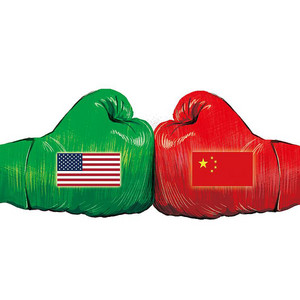
So the United States is gearing up its propaganda campaign, with one measure hyping the idea that China is enhancing espionage and hacking operations in the West.
Let's first take a look at the latest accusations.
Well, The Washington Times last week quoted a new report by a House committee which claims cases of Chinese espionage throughout the U .S.
have expanded rapidly.
And between January 2021 and this month, federal authorities logged more than 55 cases of China -related espionage in 20 states.
And the report also alleges China has stolen billions of dollars of U .S.
intellectual property.
And not long before this report, U .S.
media, including The Wall Street Journal, published articles claiming Beijing is conducting espionage activities on an undermined rival states and bolster the country's economy, and as well as reports that Chinese hackers were behind high -profile attacks on critical American Internet devices.
It seems these claims have emerged overnight.
So let me begin with Joseph, since you are the most senior among us.
Professor, what's your interpretation of the timing of the hype?
Well, I'm not so sure that this hasn't been going on for a number of years now.
I just want to say, chronologically here, I was born in 1944.
I lived through all the red scares of the 1950s and early 60s, and sometimes the intelligence community does overtime.
In fact, they're so focused sometimes on the propaganda that they forget what's going on.
I recall that during the 60s, when I was a student studying comparative communist systems in Vienna, most of the Western propaganda people forgot there was a split between China, between Beijing and Moscow.
They missed the whole thing, as a matter of fact.
So they concentrated on propaganda.
Now, look, this past year, the intelligence communities network in America, and there are 18 intelligence agencies that collect and interpret data for the American people, which is summed up each year to the American Congress.
See, $98 billion, 18 agencies, and they came up with two conclusions this year.
The number one was that China was the number one threat to the United States, real and potential, and that Russia was the number one threat to America, real and potential.
So if that is how you spend $98 billion, well, bless you.
I mean, I just can't believe that.
Anyway, they're gearing up the propaganda.
And I'm going to make a distinction here between the American political elite, that is the foreign policy elite that run the show and been running the show my lifetime, from the Eisenhower years to the Vietnam War and all the rest of it.
I had a very different view of the world.
Okay. The ordinary Americans, the people in Iowa, the farmers that President Xi once stayed with, they're quite different from what goes on in Washington.
In fact, we used to have an American vice president who used to say that Washington was 70 square miles surrounded by reality.
Now, most of those intelligence agencies are in the Washington area, and they try to outdo each other.
And they're looking for Chinese conspiracies everywhere and undermining the industrial integrity of the United States or these kinds of things.
I think they're just doing a very bad day's work.
I mean, I like to accentuate the positive.
Not a realist critic of American foreign policy, Midwestern critic of American foreign policy.
During the Vietnam War, when the only paper about to be released about why we were there was written by John McNaughton, President Johnson wouldn't read it because it said 70 % of our involvement in Vietnam was to maintain the integrity of the United States, its reputation.
And number two was to prevent Chinese imperialism.
Well, I thought that was ridiculous, because if anyone knows anything about China and Vietnam, they know that they chose throats for a thousand years.
So that was all kind of nonsense.
But this propaganda war, I don't think it's particularly big in the last six months.
It's been going on now for about five years.
It's the one thing in Congress that Democrats and Republicans can seem to agree on and that China is the next great threat, both economically and all the rest of it.
In many ways, it's the unresolved conflict of the Cold War.
I mean, the Cold War ended in 1991, but only in Moscow dominated communism.
United States never quite came to terms with what goes on in China's neck of the woods.
You said those living in Iowa, they're different from those living in Washington.
But also, they do not want themselves being spied on, right?
It's the same there.
And no one wants to be spied on.
Yeah. I mean, you know, they don't want to be spied on.
But, you know, the information they have comes out of these intelligence agencies.
And I've always been a little suspicious of what comes out of intelligence agencies.
They tend to get us in an awful lot of trouble, whether it's the Vietnam War or the war of nuclear weapons going on in Iraq back in the years ago and all the rest of it.
I'm a little suspicious.
No one wants to be spied on.
Yeah. I mean, I mean, the fear or some fright can unite people together sometimes.
Right. So then to Harvey, do you have any different interpretation there?
Yeah, slightly different.
I worked for Jimmy Carter when Walter Mondale was the vice president who said that quote.
And Washington is a different place than everywhere else in America.
So I agree with what Walter Mondale, the vice president at that time said.
It's still true today, maybe even more so because there are so many divisions in Washington and so much infighting.
It even surpasses what's going on in states and localities.
But look, I think we have to be realistic.
Intelligence and spying, if you want to call it that, are either the world's first or second oldest professions.
Everybody has done it who has the resources to do it.
Countries have an obligation to protect their citizens by knowing what's going on in the rest of the world.
My country, the United States, as Joseph has said, spends nearly a hundred billion dollars on intelligence and they want to know what's going on.
And I'm sure China spends a lot of money and any other country that can afford it spends the money.
And if they don't, they're not doing the job to protect their national interests.
But the fact that these figures and these incidents of spying are being highlighted now is part of a propaganda war in America and in the West to demonize China.
And it's clear as a bell that this is what's happening.
And as Joseph said, China is about the only issue in Russia now as well that unites Americans.
It's what I call the low hanging fruit of American politics.
So I believe that the timing is not an accident.
I also believe that many countries are doing intelligence and if they're not doing it, they're not doing their job.
Dr. Chu, from a Chinese perspective, what is your interpretation?
I think in China, a lot of people or analysts are saying it's closely related to this like Harvey just mentioned, it's closely related to what's going on in the States right now.
Well, I think from China's perspective, we all understand that right now the propaganda war has been going on really, really fervently.
According to our knowledge that in America, I think the Congress right now has been dispatched another like 1 .3 billion US dollar of the budget targeting at China, all kinds of the bad amount thing about China, to say China is violating human rights or try to infringe America's national security or try
to dump all kinds of product to affect the international supply chain.
So anything that recently is floating around to your social media front page is basically it's been on the payroll.
And also, according to our statistic right now, probably in America, sorry, around the world, there are more than 260 ,000 companies all kinds of all size has been directly or indirectly hired by the American security related agencies.
So for example, the CIA or the National Security Bureau or other kinds of so -called NGO, quote unquote.
So this kind of agencies or government branches right now are using, trying to use all kinds of the influences and the budget to try to, you know, source out their jobs and to use so -called invisible hands to that mouse about China.
For example, if you travel around Kazakhstan, you will find out that in Kazakhstan, more than 60 % of the so -called free media or private media, basically they are backed by American and security agencies.
It was all kinds of the budget or corporations.
And also, if you go to Hong Kong, China, you will find that previously they've got some, you know, local media has been supported by CIA's little affiliated branch.
So even Australia and Australia, there are several major local media has been backed by America capital.
And behind the Capitol, there are the shadows of the CIA or Federal Security Bureau.
So similar situation like that has been going on for like almost 20 years, especially when we're entering this new era of the social media.
And it goes on, you know, really, really bad, because right now everybody has a microphone.
Everybody can, you know, send some post on the Twitter, on Facebook or Instagram.
And the CIA even have a budget to nurture so -called smaller figures or what we call the non -key opinion leaders.
They are probably showing on the face on the social media, like let's say a housewife, like an owner of the street stand or just a full -time mom or just a kid or something.
And they've been probably 90 % of their social media contents, just like the cooking at home or just a gardening at home or trying to show some tricks to repair your house appliances, something like that.
But suddenly, because people trust them, people think they're just nobody, they're just an ordinary or normal person.
And then suddenly they will say something politically, for example, bat -mousing about China, something like that.
And you know, normal people will believe them because they think that they are a non -sensitive figure.
They are not trying to, you know, influence their mind that they're just some some guy or some girl next door.
So this kind of tactics really worked.
And we've been seeing many reports issued by UK, by European Union, and also inside of America, they've been showing that this has been really working well on the other country or on political agenda.
So I think we need to worry about that.
What kind of political agenda?
All kinds of, for example, right now, if you go to America, social media, of course, recently, it's all about the rental action for sure.
But just about the past three months, they've been saying something about China's overcapacity in the grainy equipment.
I said, come on. Many countries right now are actually lack of gas and oil, for example, Sri Lanka.
If you go there, you find that the oil crisis actually, you know, people are waiting in the gas station for like miles, try to get just the gasoline.
It's really expensive.
So green energy can really help them.
But you know, American are saying, OK, China is over capacity for dumping all these kind of, you know, solar panels, wind turbines was really low price.
Well, if this is true, I mean, emerging market, we probably have enough of the energy to use right now.
And even Saudi Arabia are trying to buy the equipment of the solar power from China.
And that is a country, you know, in that oil is even cheaper than water.
So how does this rumor goes around and everybody even buys it?
And they say the same thing about Chinese about medium battery, about about the little, you know, grocery products or something like that.
So and they really worked.
So I think this is some political and the slash economic agenda behind that.
That is they want direct China now economically and also put a bad name on China.
Right. Like you mentioned, actually, there are also some claims in the Western media that which tell the idea that China is trying to manipulate the U .S.
election through espionage activities.
Saying Chinese hackers may have compromised the phones of several prominent individuals in politics and national security, including some in the U .S.
government. So Joseph and Harvey, you're both American citizens.
How would you assess these claims?
Do you find them, you know, sound familiar to you?
Well, I mean, interfering in American politics has been a theme throughout much of the 20th century.
You know, when the Nazis were in power in Germany, the fascists in Italy, the America had fascists and a Nazi sympathizers who were trying to be involved in American politics.
So it had that going on.
And since the Bolshevik Revolution, the United States has been very sensitive to what Russian communists had to say about American life.
They're always competing.
But, you know, these claims that Beijing is deeply involved in determining the next president.
What president do they want?
They want President Trump.
I mean, what the hell is the difference?
I mean, Trump's going to lay an egg on the economy with these tariffs.
And Kamala Harris is deeply restricted by her state department and defense department, which is Secretary Blinken and others who have a long history of whatever they do.
I mean, there's nothing new here.
But I think the claims that China is deeply involved in the American election, I think not only are they unsubstantiated, I think they're untrue in the sense of I don't know who might be involved in who's trying to muddy the waters.
But America has been involved in the world.
And as Harvey has pointed out, intelligence agencies are always looking over each other's shoulders, not just enemies, potential enemies.
A lot of times friendly countries are spying on other friendly countries.
So, you know, they get involved in everything, as a matter of fact.
And keep in mind, you know, most of this emanates from the Department of Defense concerns.
And up until 1947, the Department of Defense was called the Department of War.
I wish they'd bring back the term again.
So people got a hunch, get an idea of what we're talking about.
This is warmongering.
Anyway, I don't take any credence in these kinds of claims.
I think they're unsubstantiated.
I tell you what, people who say this who are living in the West, they got their own agenda for saying so.
And because I don't think it makes a hill of beans to quote from a great movie.
Right. Harvey, how credible do you think those claims are?
Well, as Joseph said, they're not substantiated.
There's no proof that it's happening.
But I go back to what I said a few moments ago.
And that is that everybody has been doing intelligence who can afford it since time immemorial.
And it's important to gather information.
We live in an information age now.
We thought that the Internet was going to be our salvation, that we get a lot more information that would help us make important policy decisions and improve our lives.
But it's been a very mixed picture.
And the Internet has been abused tremendously.
And there probably are people out there that are abusing it.
And I think that that's unfortunate, because I don't think that it serves a good social purpose.
But I believe that we need to work towards a better world.
And instead of all these charges that are being thrown around about US, China, so on, we need to call a halt to all this stuff.
We need to find ways that we could understand each other and understand that people in China and the US and many other countries, for that matter, have so much more in common than are different.
And there are people whose job it is to sow dissent.
And they're doing their job.
So I think that the best antidote for any of this stuff that's going on is for people to people connectivity, and for getting to know each other better, and to spend most of our energy worrying about if we're going to have a planet in 20 years or 40 years, because a recent report that came out from the UN,
a report from last week entitled No More Hot Air, Please, has said that if we keep going with all the pledges that have been made under the Paris Climate Agreement, that we're not going to hit the agreement's target.
It's coming to crunch time now.
We need to be working together on issues like the environment, global public health, and a number of others if we're going to have a planet that we and our children and our grandchildren can safely live on in the very near term, if not the long term.
This has been the chapter on when we return is China destined to lose against the US propaganda campaign?
Stay with us! The best military commander is not he who fights a hundred battles and wins every one of them.
The best military strategy does not lead to the desiccation of the enemy's capital city.
Decoding the art of war will help you understand why there's no art in war and how since the state undefeatable using the science of war with fun stories and insightful breakdown of famous battles.
Find Decoding the art of war wherever you listen.
Welcome back to the chat lounge.
We continue chatting about Washington's intensified propaganda campaign against China.
By throwing those accusations around it wouldn't hurt Washington.
Actually they can benefit from it.
It also reminds people of what happened four years ago during the pre -election period.
Dr. Chu? Yes, so I think this is actually absurd claiming that China is trying to interfere in America's election.
How and why? Just ask the very easy question.
So last time it was Moscow, now it's Beijing.
Yeah, yeah, and I mean Trump or Harris, any one of them or either one of them, who have a better policy about China?
I don't I'm not sure about that.
I don't think either of them will be good for China.
Harris is talking about that China is the only country who has the power to compete with the United States.
And right now I think their government branches are working on the China House, which means a joint seat conference that is pulling all the wisdom and the resources of different departments to try to fight against China.
And talking about Trump, Trump has been talking about the want to have 100 % of extra tariff on Chinese product.
And also Steve Bannon is out right now and Steve Bannon is a shadow consultant for Trump.
And Bannon have a very, very bad idea about how they should work on China and to use China to benefit America.
So I think right now for China, we're just preparing for the worst.
And I don't think either one would be fitting a better China scenario.
So I'm not sure why China needs to use its own resources and employ all kinds of tactics to influence Americans election.
Do we have a search for it?
If that's so, I think China probably should work on that.
But right now, I don't think that there is any motive for China to do so.
And also for the national principle, China always made it very clear we never interfere with the other countries' domestic issues, that's for sure.
And China is always very independent, stay away and lay back country.
As long as you do not infringe China's legal rights, I think China will be cool with any country else.
We just want to be a peaceful and a good neighbor or a responsible member in the international community.
That's it. But to make those claims credible, I think they also provide some examples.
The Wall Street Journal article tries to prove Beijing is conducting espionage activities on an unprecedented scale in Western countries.
One example, it gives that in May, Canadian intelligence officials said China likely tried to interfere in two past federal elections, including by busing in Chinese students to vote to secure the nomination of a preferred candidate.
So I'm wondering whether students of the Chinese nationality eligible to vote in local elections in Canada.
I'm not sure. Maybe Joseph, you can answer that.
Well, look, the implication there is they were using names of Canadian citizens, maybe people who had Chinese names who had recently passed away or something like that.
They couldn't have used their student cards to go in there.
That wouldn't have worked.
They would have used someone else's name.
How can they bus in Chinese students?
Yeah, that's kind of a throwaway thing.
You know, the thing is this, and maybe your other guests will agree with me.
You know, when agencies say these things, these ridiculous things, then the burden of proof is on us to show that it's not correct.
And so we're asked to prove a negative and we could be here for the rest of our lives, arguing that this didn't happen or this isn't correct, etc.
So, you know, the people who say these things, they just stir in the pot, you know, to try to make things very interesting.
You know, I noticed that when President Xi was in San Francisco a couple of years ago, he said several things that just floored me.
You know, he said the planet Earth is big enough for the two countries to succeed.
And he said that the United States and China are the most important relationship in the world today.
And indeed they are.
And that there is no future and not working together.
I mean, this is just common sense.
And so I think the Chinese can always counter this kind of propaganda by just talking about reality, what they see.
You know, the Earth's big enough for everybody.
And this is just kind of a reworking of peaceful coexistence, which people ought to stay closer to as a matter of fact.
So, you know, I think all you can do about these claims is just talk common sense.
I think about this charge about the Chinese students.
It's a bogus charge because in Canada, the only people who can vote in Canadian elections are Canadian citizens.
Some of them may be of Chinese origin.
Some of them may have been born in Canada.
Some of them are from different backgrounds.
But the bottom line is the only people who can vote in Canada are Canadian citizens.
So this charge on its face is bogus.
It's false. It's propaganda.
It's intended to divide.
And I have a wish. The wish is that going with my comment before about the Internet and how it's not what we hoped it would be.
We need to have more media literate, Internet literate people.
We need to be able to know that we have to pick apart every statement, which many people don't do and maybe many won't.
But we have to try.
We have to teach people, well, number one, you consider the source.
And number two, you consider why they're saying something, why it's in their interest to say it.
You have to assess their credibility.
Right now, people accept so much on face value.
And this is wrong. You talked about The Wall Street Journal.
The Wall Street Journal is owned by that great American Rupert Murdoch.
Of course, he's Australian, but he got an American passport so he could own Fox.
Well, he's one of the most rabid anti -communists in the world who puts his money where his mouth is.
And his family is now fighting about which generation is going to control the empire, whether it's the son that hates communism or the son that is much more balanced, even handed and follows the truth to wherever it leads.
So I think that's just some additional comments in addition to what's just been said.
But it's not like everybody can have, the privilege you enjoyed being media literate or being media guru, or people would accept what they hear or what they've been told by the media sometimes, like those espionage or hack accusations.
And some other measures, Washington also resorted to in its propaganda campaigns, this $1 .6 billion fund to counter China's global influence, particularly in the belt and road countries where a lot of people would just take whatever they're told by the Western media.
And the so -called countering the PRC malign influence fund authorizes $325 million annually from 2023 to 2027 to counter the influence of China globally.
And this bill has been passed in the House.
So if this project will get the green light from the Senate, it will also play a big role in the White House's propaganda campaign.
I'm not sure that that's exactly the case.
I think you need to frame it differently.
The $1 .5 billion sounds like a lot of money, but it pales by comparison to the $100 billion that are already being spent on intelligence by the United States.
This is a small additive to already what's going on to the malign influence of America.
The president I worked for, Jimmy Carter, he once said that America is the most warlike country in history because America has fomented so many wars using techniques that are now trying to be added to with this $1 .5 billion.
So America has overthrown so many countries, the governments that it hasn't liked.
And so even on the grounds of fairness and equity, you have to say that America is not just saying what it's done in the past.
It's not a secret, but it's America's dirty past where it's overthrown so many countries that it didn't like for whatever reasons it didn't like, because in America, money talks and in America, might makes right.
I think China is very different.
China is trying to build a global model where everybody can benefit from the advances that we're making.
And China has been saying and is making a world that has a common win -win goal.
And I think America is still on its old path of divide and conquer, unfortunately.
So what are you saying?
Are you saying that those efforts by Washington wouldn't bear the effect that they expect?
No, I'm saying that they've been doing this for many, many years because America's money is taught.
They could bear fruit, but I'm also saying that with a $100 billion intelligence budget, which includes, let's call them dirty tricks, which includes global dirty tricks, they've been doing this.
This is just more in their toolkit to enable them to divide the world and to take us closer to a war that nobody wants.
So before we talked about the differences between citizens and governments, I don't think anybody in China, any reasonable person in China, any reasonable person in America or anywhere else, wants to have a war that has the potential to destroy our planet, to destroy our civilizations, to destroy life
as we know it. But if it can reach their political agenda or what they aim for, it's already enough, right, for the money.
Yeah, it could do that.
And that's why I talked about media literacy.
We need to train people better to understand what the information is, where it's coming from, why people are saying it.
When I was vice president of ABC television, we did a little bit of this, but not a lot.
We should have done more.
I think it should be very important for people to understand if they're interested in a better world, to understand what's going on and why certain people are saying certain things.
We have many tools now to analyze what's being said, but those tools are not being used.
I think if we had more media literacy, we'd have better citizens in all our countries.
All right. And Joseph, what do you think?
Do you money in creating those claims or narratives?
It's anti -malign fund.
This is a drop in the bucket by using this anti -Chinese drumbeat.
And it's not just Chinese.
It's an anti -commerce party, same thing in Russia, too.
By emphasizing this drumbeat here, it justifies America's defense budget, which this year is $841 billion.
They want the American people to tolerate that kind of money spent year after year, despite problems at the border, despite homelessness, despite poverty, despite drugs and opioids and all the rest of it.
They want Americans to be frightened of something so they can take all this money and prepare for a war that nobody wants to fight, and no one wants to engage in.
But it's a business now.
These F -35s are about $35 million a unit, a copy, not to mention spare parts and the rest of it.
I mean, this is nothing.
The money they want to throw up against the Belt and Road.
I mean, America is a fearful place.
It has always been based on fear.
In the 19th century, it was the great powers getting involved.
Then it was and all the rest of it.
I mean, the American people aren't going to tolerate these kinds of budgets unless they're told day after day they have something to fear.
My concern is not just this particular amount of money.
My concern is dredging up things that have been solved.
In my mind, and I tell this to the Australian politicians who will listen to me, that the issue of Taiwan has been settled in the Shanghai communique of February 1972.
This idea that we have to revisit and re -litigate the fact that Taiwan is part of China and there's only one China and all the rest of it strikes me as ridiculous.
I mean, the genius of Henry Kissinger, who wasn't always a genius, by the way, was taking that Taiwan issue and taking it off the table for the next 50 years.
That was brilliant on his part.
Just brilliant as far as I could tell.
The idea that they're dredging up these other things, but it's a drumbeat.
After a while, maybe the guy in Iowa figures, well, maybe there's something here, but keep this in mind.
There is an important pew poll taken a number of years ago, about 20 years ago.
80 % of the American people do not believe that Congress or Washington will do the right thing.
They don't trust Congress.
In a way, they already got a built -in filter about what comes from that neck of the woods.
But, you know, American people at the end of the day may be a hell of a lot smarter than the people in the intelligence community.
But those are Americans.
What about people outside the US who always look up to the example or the leading country?
They would buy those.
37 countries outside the US count on America's extended nuclear deterrence, the ultimate guarantor of their sovereignty and territorial integrity.
When they agree to American policy, whether it's in Gaza or Ukraine or some other place like that, it's part of their insurance policy.
That's the premium on the insurance policy.
They go along with the Americans.
I talked to you, an Italian diplomat last night who was in, on his way to Ukraine before the war started there in 2022, and he said to me that, you know, most American defense assessments and American political rhetoric is hyperbole.
They exaggerate everything to try to get people's attention.
So he said we tend not to believe most of what they say.
So, in a sense, you've got to develop some perceptive skills here to deal with this.
I mean, governments like to scare people, but I do not want to see issues that have been settled and taken off the table, re -litigated based on some some phony information or this feeling.
Most of the people in the Washington area, the young people who work for these politicians, they tend to be 30 to 35 or 25 to 35 years old.
They want to make a name for themselves.
So they write books called Strike Iran, Strike China, Go to War with Ukraine, or Go to War on the Side of Ukraine.
They talk about crazy things because they want to attract attention.
And in Washington, that's 70 square miles that Fritz Montsdale talked about, everybody in Washington is trying to attract attention to themselves.
So what they try to do when they talk about the world is to outbid each other about their extremism.
And at the end of the day, they start to believe this stuff.
You know, and I see young people and I go to Washington as often as I can to the Kissinger Center.
I want to meet these people.
They live in a fantasy world where they think they can affect the rest of the world, when in fact the world is moving away from the unipolar moment we're supposed to have had in 1991.
We're moving into a multipolar world where we're back to nations sitting down and deciding what to do about the future of things.
And my concern is that a lot of the institutions we have now are not fit for purpose.
Now your nations can't seem to decide on anything.
But we need the great powers to sit down.
So we've got to separate this nonsense from common sense.
And I think the way to do that is frankly like conversations like this.
You know, people from around the world can get together and say, look, there's nothing, there's something that's not right with this picture.
The chat lounge. The chat lounge unpacks views and opinions on hot issues in a more casual way.
Again, it's about your wishes, but in reality, what's happening is that, you know, a lot of people would buy what Washington tells them, right?
So that's exactly what Beijing is concerned about, right?
And Dr. Chu, what kind of damage or impact do you expect such kind of claims or anti -China narratives would have on, you know, especially in belt and road countries?
That's what Washington has always been wanting to.
So discord, right? How do you expect it, you know, the turnout would be from those, you know, moves by Washington?
Well, I don't think this is a work moment.
And this is the moment that we should worry about it the most.
Like, what is that?
Because this is kind of a propaganda war, they have a specific name for it.
It's called the recognition war.
It means that by influencing the targeted countries, people of mind or public opinions, or the third party countries, public opinions to bad mouths and the damage in another country, the targeted country.
Well, it's been going on for like, well, like since forever, since the new China was established in 1949, this has already been here, they pictured the new China as the demon.
And then the Korean war happened.
And you know, probably at that time, I mean, most of the world doesn't quite understand what new China is about.
And then so called the United Nation Army, and then has been dispatched to the peninsula.
And I think most of the world at that time are picturing China as a just a little stooge of the USSR, and then is probably a very vicious country and etc.
So I think starting from that time, China well, was not quite a good image under the narrative of the United States of America.
Right now to take a look at the whole picture.
I mean, most of the nation and the whole world actually, they depicted China as neutral, or, you know, relatively positive image.
We have many friends, emerging markets and about a road neighbors, most of the people are picturing China with a positive impression.
So I think the situation is much, much better.
But of course, American propaganda machines is working harder than before, like I mentioned, huge, you know, bunch of the, the budget has been already been made to, you know, further this kind of effort.
And I just mentioned a belt and road country like in Kazakhstan, Uzbekistan, Indonesia, in Malaysia, and Myanmar even.
And in India, well, we have so many so called social media, or private media, or the free media, they've been taking the money from the big boss and that melting of China, and they were actually get paid for it.
And well, I we have to admit that a certain public opinion will be stirred by that kind of effort.
People, they didn't quite get the true story, or the whole picture, they probably will think another in other way.
But I think China itself has been emerging as a positive powerhouse of the global economy.
Because people with the social media come watch right now, when America's a bombing sending bombs and bullets to another soil, China are sending like a power station, solar panels, and bridges, infrastructures, and all these things can be filled and touched by, you know, local people.
And also China are not only rising by heart power economically, but also by soft power.
We have, you know, our own social media, very, very popular among the younger generation, not even in emerging markets, but also within America.
So people will actually have another choice of hearing the true story hearing about second opinion.
So I think this actually give China a very important tool to try to reverse the trend of this bad mountain.
Well, I'm not saying that we're trying to interfere people thinking, but actually, they will have another choice.
Like just our colleagues here just mentioned, well, Murdoch, they own probably every trumpet.
So people will probably hear 90 % of their voices through Murdoch media.
Now, even I think even Trump can not stand it.
They say fake news all the time.
So they get the the truth video by the Trump Corporation.
So I think right now the whole world is getting sick of the kind of the situation, the monopoly of the voices.
Right now, I think China is fighting back many emerging markets are fighting back.
And I think this is going to be a future trend.
Of course, the negative impact will always exist.
We need to be very careful about it and fight against it.
But I think the situation has already getting better and better.
You're depicting a rosy picture, but the latest counsel on global affairs report shows American views of China have hit a 46 year low and the situation is no better in quite some European countries.
So does that mean China is destined to lose against the US propaganda campaign, at least for now?
Nope, I don't quite think so.
Actually, we have done some investigations just not long ago in America.
We mentioned about what's your opinion about China.
And yes, as you mentioned, 80 % of the people doesn't have a very positive opinion, they have middle or middle negative and very negative opinion about China.
That's for sure. And then the second question comes to, what are you thinking about Chinese people?
Well, here comes the reverse.
The reverse is more than 80 % of people they say, okay, Chinese people are good.
Actually, they're quiet and they're working smart and very polite.
For those who've been to China.
So here comes Zinger.
So I say, well, China is the country funded by or consists of Chinese people.
So why do you have this negative opinion about China, but how you basically think Chinese people are all right.
So they don't know how to understand, they say, okay, we read all kinds of bad news from the TV, from the social media every day.
But we ran into Chinese people, the tourists and so many of them went to China before they say, okay, Chinese, actually, a cold country, people are nice.
So they actually are thinking was two different systems.
One is been daily repeatedly, you know, brainwashed by those kind of the negative trumpet, like the murder of news corporation.
But on the other side, they will ran into Chinese people, you know, even though this is just like a piece by piece, kind of little memories or little impressions built by their daily life.
They have a positive opinion about China.
So I think what we need to do is that, well, I don't think China is losing this kind of media, you know, conflicts.
But I do think China should work on this whole situation smarter.
But meanwhile, we don't need to quite worry about that situation, like I mentioned, China is not that, you know, poor, pathetic, weak country anymore.
China has its own power and China have all its way to, you know, present itself to all around the world.
And right now we have the visa free policy, we have the social media, and I think more and more people are coming to China.
And also here is a mistake that is we why we pay so much attention to our American are thinking about China.
Right? I mean, there are a whole bunch of the world.
They are people to my students.
Well, this is basically very unimaginable.
Among my students, I have students from South Korea, from Pakistan, from India, from all kinds of about our own country from Japan, for sure, and Vietnam.
And they are people as well, I think, what they think also matters.
So I think American opinion are over, you know, overvalued.
All right. You know, we over estimated this kind of opinion.
Meanwhile, we need to just be ourselves.
And I will do what we need to do and, you know, worry less.
And Harvey, Dr. Chiu just mentioned, we should, you know, China should work on the situation in a smarter way.
So what would be your suggestion since you you're an media expert?
Oh, I think that would take a couple chat lounge to talk about.
China is doing a better job of what President Xi has asked for for more than a decade now.
And that's telling China's story better.
This program and CGTN radio are examples of that, especially you compare the media in China to how it was when I first experienced it in 1988.
It's traveled light years since then, but obviously can do better and will do better.
But I think the other point is Dr.
Chiu mentioned about people visiting China.
China's first premier, Zhou Enlai, had this idea he called it folk diplomacy.
We today we call it people to people connectivity and public diplomacy.
I believe more effort needs to be made for foreigners to visit China for Chinese people to visit other countries.
The new Chinese visa policy is welcoming many foreign nations.
Now the number is increasing.
I believe if we had more people to people context, we would see that Chinese people are much more alike than they are different from, let's say, Americans.
And I do disagree with something that was said earlier.
That is that the policies of, let's say, the Harris administration are going to be the same as Biden's.
I think that's basically true.
But I think a big difference is if Harris wins, the Vice President Tim Walsh will make a difference in encouraging people to people connectivity.
Because he had a wonderful experience when he taught in Guangdong province in China in the 1980s.
And it's affected him.
And while the policy differences may not change a lot, I think what is going to change is there are going to be more attempts for the people to people connectivity, as Zhou Enlai offered us so many decades ago.
And I think that's something that needs to be done.
And I think it's something that will make the world a better place.
That's the best. If what you just said could happen, if Kamala Harris can win the election.
But we'll have to wait and see.
And last but not least, Joseph.
Well, look, Australia has 37 universities.
Right. It has a very large international student contingent.
75 percent of those students who make up about 36 billion dollars in trade here, our third largest export, they come from China.
And in the last six months, the federal government in this country is trying to limit the number of overseas students by saying that they drive up the cost of housing.
So they're trying to use some kind of lame excuse, but it doesn't work.
This people to people.
When I was a student in Vienna in the 60s, I got to visit the Soviet bloc.
And it's changed my life in terms of just people to people.
This public diplomacy is wonderful.
There's no substitute for it.
And I know it does work, because in a lot of these nations that are on the rim of China in the recent last couple of years, the American government, that's the Biden, Blinken and and the Defense Department, had asked these people to choose between Beijing and Washington.
These people, I mean, South Koreans, the Japanese, the Malaysians, they're just too sophisticated.
They're too worldly to fall for that.
You know, they may tell the Americans whatever they want to tell them.
But in that sense, you know, they're trying to play an equidistant game with the nation that they've been dealing with, I don't know, for thousands of years.
They're not completely suckered into this.
But this idea of keeping these lanes open is very, very important, because I think at the end of the day, you know, people to people is far more important than the cost of an F -35 or the rest of it.
And keep in mind, these people and these other nations, the foreign policy elite there is even smaller.
The great decisions, the worldly decisions, they're the external decisions are made by groups that are proportionally smaller than those in Washington.
So, you know, the ordinary people.
So what we have to do is, as educators and communicators and all the rest of it, is we have to create opportunities to develop a foreign policy public that can distinguish or differentiate between a bad idea and a good idea.
So I don't think it's all gloom.
You know, I think a lot of nations are prepared to deal with the new world, America with lesser impact than it used to have, China more impact.
And let me tell you, when the Chinese government offers a proposal for a diplomatic solution to the Ukraine war and offers a diplomatic services to the Middle East to use Beijing as sort of a place where this thing can be solved.
I mean, these are things that make an important impact.
And there's nothing more important, I think, in the last six months than the picture of that Chinese rocket taking off the other day to a space station.
Americans are very, you know, they're in line with that, you know, I mean, if everybody in the way in the military will say, it's got military applications, and so Americans didn't.
But you know, when the Chinese are conquering space, and they're trying to do things at the Belt Road and all the rest of it, people can see that China doesn't have 800 ,000 American troops stationed abroad in all kinds of places to get in trouble.
I mean, you know, I think the days of that have probably ended.
So, you know, sooner or later, the American people are going to take a deep breath and say, I don't want to do that anymore.
And I come from a very progressive Midwest.
We don't trust to Washington Washington policies and these foreign wars are always very suspicious of them.
But I think sooner or later, the American people will wake up.
And I think the people in the world, they're not as suckered by America as you might think they are, because if they have to choose between Washington and the United States and Washington and Beijing, I'm afraid to hear what the answer really is.
All right, hopefully those decision makers in Washington will hear and understand this, not only with their ears, but also with their heart.
All right. On that note, we wrap up our chat for this session.
Many thanks to Professor Joseph Surakusa, Dean of Global Futures with Curtin University, Harvey Zodent, Senior Fellow at the Center for China Globalization, and Dr.
Jijian Fellow of the Belt and Road Research Center at Minzu University of China, for your insights and shows available on all major podcast platforms.
If you have any comments, please email radio at cggn .com.
I'm Tuyen. Thank you for being with us.
We'll have more chat at the chat lounge next week.
The strong wind was howling and whistling.
He was the first Chinese citizen to graduate from Yale University in the mid 19th century.
I was born on the 17th of November.
She had prominent features.
Three of us were old enough to lend a helping hand.
He navigated between two vastly different cultures and moved further to realize his dream and promote understanding between the people of China and the United States.
Jie Minxin was a native of Hanyang.
I realized no danger.
China is really awakening.
Come and join us in discovering the incredible journey of Yong Wang in his autobiography, My Life in China and America.
Check out the audible stories on radio .cgtn .com and all major podcast platforms.
Just search for the podcast, Books and Beyond, and find My Life in China and America.