Registration is now open for the 2026 DICE Summit, the premier video game networking conference from February 10th through the 12th.
Receive 10 off a full DICE Summit and awards.
Pass with our exclusive GameMakers Notebook discount for listeners.
When you register, use the code DICE2026GEN10.
That's DICE2026GEN10.
Find more details at DICESummit.org.
To our game dev listeners, are you wondering how to expand your game around the globe?
Well, wonder no longer.
Xsolla Payments is a solution built for global game commerce and monetization.
It boosts player engagement with localized checkout experiences using your players' preferred payment methods.
The simple user interface makes it easy for gamers everywhere to pay for your games and in-game content exactly how they want.
Even better, they can save their favorite payment methods for quick purchases to help them get back in the game faster.
And you'll love Ixola Payments because of its customizable checkout and integration options with everything from sidebars and iframes to fonts and images, making the buying process feel like an extension of your game experience for payers.
Ready to go global?
Visit xsollapro slash AIASP, or click the link in our podcast description to learn more.
Hi, I'm Alexa Ray Correa, and this is the Game Maker's Notebook podcast.
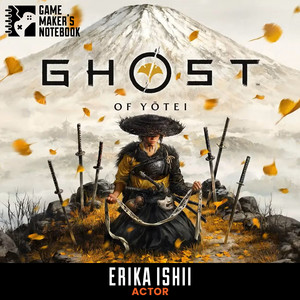
Today, my guest is the ghost of Yotei himself, Erika Ishii.
We talked about their background in acting and really dug into the collaborative process of finding Atsu for the ghost of Yotei.
It really sounds like in terms of writing, in terms of creating this character, in terms of the story, There was a lot of cross-disciplinary collaboration for this game, and that included Erica and the other actors.
It's a really fascinating story.
I learned a lot from this conversation, and I hope you enjoy it as much as I enjoyed having it.
Welcome to The Game Maker's Notebook, a podcast featuring a series of in-depth one-on-one conversations between game makers, providing a thoughtful, intimate perspective on the business and craft of interactive entertainment.
The Game Maker's Notebook is presented by the Academy of Interactive Arts and Sciences, a member-driven organization dedicated to the recognition and advancement of interactive entertainment.
So my favorite question loaded question that I love to ask those on this podcast how did you get here?
What was your journey that brought you to where you are today?
Um, that's a long and convoluted tale, but the long and short of it is that I grew up acting.
I was very fortunate.
My parents were in the industry, a camera assistant and a film editor.
And so you know when, in the course of being a child and getting to try out different activities of, So I did the whole child acting thing.
You know commercials and plays and a little bit of.
I was in an episode of Full House.
I did see that.
Yeah.
And then mostly I was doing a lot of violin and, and school.
I went.
I went to UCLA, came back to acting through.
Uh I, I did.
I was at Strasburg Institute, the method to school.
Um, but probably most importantly, I was at the upright citizens brigade and that part of uh sort of that, that community and network and sort of that cohort which ended up to this day.
I'm still working with and friends with a lot of the folks who came up with me.
And so I've always been, you know, a fan of video games and of cartoons.
I made the conscious decision to get into voiceover.
Specifically, I really wanted to do games.
It was my dream to do big, meaty narrative games.
And somehow, between then and now, you know, with tabletop and hosting and Twitch streaming and a lot of auditioning, now I did it, you did do it what was the game that you played that you were like oh i, like i want to act and stuff like this, like this is this, is it, this is peak i i definitely, you know, i've said in interviews it's uh, the last of us for sure was the sort of definitive moment um, but you know it, it was kind of like we reached a critical mass you know of of, of course, you know jen hale and mark being in um in Mass Effect and just all of them, like all of the games that I played, you know, there were really compelling performances.
But I think The Last of Us was the first time I really kind of understood that it could be a full-time career and was a separate path than on camera or any other kind of acting.
Was there a specific performance in The Last of Us or part of it that like made you just be like whoa, this was it, or was it like the whole i i think it was just every.
Every actor in there is is so incredible.
Such incredible performances and the way that, especially hearing about behind the scenes you know i looked up different videos and interviews and hearing how the writers and the designers and things were built around the actors performances and vice versa and you know how integral the performance was to the game, was really kind of eye-opening for me, I think.
So you know the specific, obviously Ashley Johnson and Troy Baker, but you know, and the whole ensemble really, and just the fact that there was so much care and attention put into voiceover, backing up a little bit to your you went, you went to Strausberg and you called it the method school.
Can you, can you like?
What did you, what did you study there?
Can you elaborate a little on that?
Like, what was that like?
So uh, Lee Strausberg was sort of the American um method guy.
You know what we sort of, what a lot of actors refer to as method acting, the idea of sort of an inside out transformation and, you know, playing the honesty of a scene and a character and a feeling is from him which and he is sort of of the Russian acting discipline, further back from that.
You know, it's, I don't really consider myself like a method actor.
I think it was really wonderful.
I had some incredible teachers there and learned some incredible techniques.
Um also, i think a lot of the uh portrayal of method acting is not, or or sort of explanation of method acting is not exactly uh, truthful to what.
What we learned.
It was definitely a lot less self-serious, i think um, but you know i, i think i, i learned a lot of um things about you know uh, The training focused a lot on theater on, you know, acting for theater, on recreating circumstances.
And I think that that was incredibly instrumental with voiceover, specifically with mocap, with performance capture.
It feels a lot like black box theater, which is, you know, sort of what they prep you for, mostly in Strasburg of theater, having to sort of recreate all these elements and feelings and circumstances in your head.
And I found it very, you know, very helpful in that way.
And the idea of sort of just being able to build up.
Use your imagination to build up all of these circumstances like being on horseback or being in the snow, or being sick or injured and Yeah, I mean, but I didn't have to do any of those things specifically to you know.
Recreate the circumstances in my imagination.
I mean, I have done a lot of those things, but it's more about sort of finding ways and shortcuts, I suppose, to really making it feel authentic for yourself.
How do you, if we're going off the idea of shortcuts for you like, what does that thread look like?
When you're like okay, I'm acting with it's going to be me and my horse using Ghost of Yotei?
I'm assuming a horse is not with you on the motion capture stage.
No, I had a wooden sort of stand in for the horse.
And It was.
You know it's so soon.
You sort of your body has sort of the shape of a.
But then also I've been very fortunate to have gotten to horseback ride in my life.
You know so the idea of you know just the understanding, the movement of it and you know how to, how to move your body and how to ride.
You know you can look up videos of you, know different kind of like like Western or versus English.
You know writing and you know, or even like,
The understanding of.
You know, this animal is warm, you know, and petting it might feel like petting a big dog, you know.
So there's always sort of ways to build that scene and that circumstance in your mind without actually like having a horse there, which is something that frequently people get to do in on-camera film TV.
But yeah, it's just completely fabricated when you're in a booth.
When you mentioned, you mentioned previously, so you've done, you started as a regular child actor.
You've done a lot of voiceover.
I did get a chance to go and look through your IMDb and, like you, have an extremely, extremely varied list of roles you've tackled and things and things that you've done, and it's just such a wide, a wide swath.
And when you are preparing for, let's say something, where you're just doing voice, you're not on the mocap stage, you don't really get a chance to.
Well, when you're doing voice acting, do you also feel it in your body too, like what is the difference?
Like when you're preparing for those two things um, you know yeah, i think well, i it's again.
Sucker punch is just such a consummate um, holistic studio.
I'll say
I think you know I mean I'm just a contractor but from what I saw, so many of the departments really work together and really communicate with each other.
And that includes performance.
So, whereas a lot of times in voiceover you don't get a chance to, you don't get your script beforehand.
You just kind of show up and have to read it cold.
You don't always know what your character looks like.
So you don't get to see the art department's work, you don't.
Sometimes you don't even know what game you're recording for um great, or you know auditioning for so but sucker punch, you know, they gave me the scripts beforehand.
I had a die.
We had a dialect coach um in, you know, in studio with us.
Um, you know, I could talk with writers.
If I had questions.
I got to work with other actors, which is all.
This is all just such an incredible luxury, because a lot of times in voiceover you're just in a booth alone and you've just received the script and you're just kind of reading as it, reading it as it goes and making a strong choice and hoping for the best.
So I I think you know I just really got spoiled with with, with Ghost of Yotei and that they sincerely cared about the experience of acting and provided me with all the tools that I needed.
And you know, I mean it is normal and it is very due rigor for actors in doing just voiceover not to get anywhere near that amount of information.
So yeah, it can be significantly different and you just kind of, you know, take what you have and use that.
So it sounds like this was probably one of the more collaborative kind of setups.
You're talking about departments working together and you kind of working very closely with the writers.
I want to hear this story and give me all the little nitty gritty details of how you got this role.
I want the audition story.
Oh man, I think you know the sort of boring reality of it is that you know as an actor.
Most of the time you just sort of wait for auditions to come in, you know.
I mean, there was definitely a time where I was out seeking my own role, before I had an agent.
You know, I would go to conventions and hand out my cards, or I had friends in games, and you know like I was like Hey, I cut a demo.
Like if, if you ever need actors to audition, i would love to audition, um and and just sort of doing, doing the hard hustle.
But i think you know you, you actors receive auditions from their agents and i received a request um for this uh undisclosed, uh sony game set in feudal japan.
So i, you know and, and You know, I mean that is, you know a lot of information to go off of and enough for somebody like me who's a fan of games to kind of figure out what it was.
And so I sent an audition tape.
Audition tapes are difficult because you don't get any direction.
You just got to again like sort of make a choice and hope that they see something in there that they feel is worth bringing you in to explore.
And then I had a call back and you know it was, it was a lot of the team there on the Sony soundstage.
And I they asked if I had any questions.
And I said, yeah, is this Ghost of Tsushima 2?
And I think they were a little taken by surprise by that and had a hurried conference and said yes yes, it's something like that.
Yes.
And I was like, good, okay, cool.
Well, now I know sort of how grounded it needs to be and sort of how much Kurosawa to add.
Amazing.
And about Kurosawa and about the first game and about, you know, Westerns.
And so I think early on, we were very aligned in our sort of vision of the tone of all of this.
You know, they gave me so much great direction and sort of, but I think there was something in my audition that they saw, that I saw what they wanted, you know.
And I was.
I just I feel so lucky.
You know that it all kind of worked out and that my Otsu was the one that they kind of had in mind.
I love that.
When you joined the project about, Because you mentioned again collaborating with writers and collaborating with all the different departments and art.
Where was the game in this process?
And how closely were you all working together moving forward?
I'm pretty sure that they had been, I was cast in about 2022.
You know, there were so many people working so hard on this already before I joined.
And just the fact that they were able to fold me in and to consider, you know, my performance when doing other like art design writing, you know was was unbelievable to me, because that's not usually.
There's not usually the time or the you know the budget to have actors be a part of the process.
I think a lot of times actors are brought in nearer to the end.
Is that correct?
I mean, for, well, definitely for just voiceover, but, you know, even for PCAP, I know that sometimes, you know, they have to like build the whole, build the rigs and do so much.
And then actors are just like a.
You know, actors really are just a cog in this sort of the machine of this project.
And I was just lucky that I was, you know, a cog that was really sort of considered very carefully and thoughtfully placed in.
Yeah.
And for three years, that's a very long time to be dedicated to one project, especially as so you said contractor, but someone who typically, like you think oh, we're going to stand everything up and get everything up and running, scripts done, things built, and then we will bring the actors, and you had the opportunity to really like it sounds weird to say, but like, leave your mark.
I, I was able to grow along with them, you know, I mean, coming in, there were still like a lot of changes and they were willing to sort of move some writing and things around in order to really get it right.
I mean, and that that was something I was also very impressed with with was the agility of the team.
There were things we shot multiple times because they were like okay wait, actually this needs to slot in at this time, but we need to have this.
And most, I mean, like the writers are phenomenal and usually they have an arc in mind.
They gave me her arc, you know, and her character development starting out, which again is so rare, because usually, because frequently, it's just kind of you get it when you can, you know.
And I think there were times where I'd be, you know, recording a batch, and then there would be like a month or two in between, and then I'd come back.
Things had been revised or more had been written.
And so, yeah, I really got a chance to sort of play and, you know, like grow with the team.
What was that dialogue like between you and the writers?
As a writer, it's a dream to get the actor in early and get to build a character together.
So what is that?
What's that like for you?
I have the greatest respect for game writers because, you know, not only is their job difficult and they have a lot of considerations, you know, they cannot it cannot be story oriented. just story you know first in the way that even a film can because they have to work around technical restrictions and gameplay design and you know the list goes on of things that they have to take in into account while they're writing a great story it can't just you know it can't just be great characters great story the script is done it's they have to build it along with the other departments and that's true I think of all video game writers and plus you know they don't have a union or anything or no we don't and wga won't let us in anyway so you know and wga has decided that you're not writers i guess i don't know i don't know how it goes um sorry ongoing battle ongoing battle that aspect of it but yeah it's it's remarkable because i think you know, just in the way that they have to build around things, you know, I always had a lot of questions and they always had answers or an, oh, we'll find out or we'll figure it out together for me.
Because you know there's certain things you can't restrictions on actors for video games.
As much as you want to have sort of a naturalistic almost sort of, you can't ever overlap dialogue.
You know, when you're in the booth with somebody else you can't.
Uh when, when interrupting you have to be like okay well, will the dialogue, will the next line be able to fire?
Like, right.
You know, is, is, is the dialogue system work that way?
Um, so do you cut yourself off or you just keep going and hope, and then audio will cut it off, you know.
Um, you can't like when you're doing a PCAP performance, you have, you know, if you're hugging someone, you have that, the horse mask on.
Essentially, I call it.
It's, it's, you know, the, the, the facial capture rig.
Yeah.
It's like a long pole in front of your face.
So you got to work out which side you want to.
You know also, you know I'm.
You know the relative sizes might be different.
The, the.
You know spacing might be different, and then they will sort of move you in post, and So you know, there's things that I have to say, like as sort of, if you want a naturalistic style, you still need to tell the players things they need to hear, because they can't rewind it like in a TV show or film that they're watching later at home.
So it's an interesting process.
And I think it's helped if you play games because you know call-outs or you know when you're mumbling a direction to yourself, you know, and you know it's, and it's really fun for me because i, i love games and i love, i love playing them and i know what i would want to hear uh, when you know when i'm, when i'm moving a pc around, and i really hoped to capture that to make people get to feel what i was feeling in in the making of it.
Yeah so um, You played Ghost of Tsushima.
You've said in interviews you really loved that game.
You know what you're going in.
You know you're coming in.
You're like, all right, I'm the next ghost.
And then you start working with everyone.
The team has talked a lot about the archetypes they pulled from the Wandering Mercenary Spaghetti, Western Samurai Revenge films.
How did you approach those genres and that material while you were developing this character?
I mean, I was so fortunate that, you know, I kind of came into this with my homework already done, just because I grew up loving samurai films and loving westerns and just, and you know I love a good revenge film, you know uh, you know, maybe Snowblood or or Kill Bill or I just I just re-watched it's Halloween season, so I just re-watched The Raven last night.
I was like, oh yeah, that's right, I did think a lot about about um, Brandon Lee um, and you know I, I think um, it was, it was all there.
You know so much, so much of the script.
You know there were there were lines and references and um uh, things that I would recognize, and especially like Ian uh, who you know one, one of the writers uh, would he and I would be like ah um, so yeah I and, and throughout it, I think, especially when when I would have a block of filming coming up.
I would just sort of throw on Sanjuro or Yojimbo or one of the man with no name movies just kind of in the background or, you know, renew it in my refreshing of my brain.
And I definitely wasn't trying to imitate them, but you know, sort of it was also nice.
You know my body is very different from theirs and my, you know, performance and character is different from them.
But being able to sort of fold in elements of of them and and think about some of their process, to like going back and hearing about some of the exercises and the and the things that they brought to their characters and and thinking like how can I bring something like that?
You know, like, Clint Eastwood had bought his own hat.
He got it on the Hollywood Boulevard, you know, that iconic hat.
What's iconic for my character in terms of wardrobe that she always carries with her?
What's, you know, what's an animal that, you know, I could sort of look up in the way that I know Mifune looked at lions for some of his roles, you know?
It was really kind of a fun, just sort of way for me to go down rabbit holes about some of my favorite performances.
Yeah.
So what is that for you?
What is that iconic piece of Atsu?
Like, like the hat or the thing?
What is that for you?
I mean, I think definitely it's, you know, the swords are always there.
The sort of pain in her left shoulder or the sort of healing of her left shoulder from the night of the burning tree.
That's always a physical and emotional reminder for her.
I think um, and they the idea, especially in that first big cinematic where she's coming back from the dead and, like you know, she's beat to hell.
That was another thing of my favorite.
Action films always have the hero getting beat to hell like It's, like they get the shit kicked out of them.
And like they are just, they're just going to keep going and it's not going to be attractive and it's not going to be clean.
And they're going to be limping around or just like breathing heavily.
And I love that.
You know, like Harrison Ford and so much of his stuff with Indiana Jones, like they don't, they really couldn't take a punch in the same way that I think we see superheroes do.
I think superhero films have sort of colored our portrayal of heroes these days, where they can really just kind of shake it off and move on.
But then you'll see older films.
I think they're like sticky and sweaty and just sort of dragging themselves around.
And I, I really loved that.
And there's so many times I think where, where Atsu is just like not able to, you know, get her way and is just kind of you know, the walking walking, deading around, you know.
So that was, I think an element I really loved and wanted to sort of bring to it.
And yeah, the importance of sort of the hat and her sword and like in all the the sort of circumstances where I could just sort of be like you know, they're a part of her, I think.
And, you know, you get to change her hat out, which is, you know, an important part of it.
But the idea of having something, some protection for the elements, was definitely always a little bit in the back of my head.
Yeah I, as I was playing and I was watching her get the just the absolute shit kicked out of her multiple times.
And then there's the very technical kind of the standoffs the drawing of the sword, the way that you you hold the sword and move.
And then also the shamisen playing.
This is a very physically taxing role, it looks like.
Yeah and like again, it is such a collaboration because also, you know the incredible stunt team that did all of the fighting and all of the you know the real idol sort of draws and you know even you know the mo-cap actors who did my walk cycles and you know but you know I got a chance to do, especially in some of the big cinematics, some stunts of you know, like where they like yanked me back or or when I got stabbed.
You know like sort of having to replicate the shoulder getting wrenched back, or you know doing some of the draws and stances myself because you know it's like the characterful moments you know and you know doing doing the facial capture for that, and so it is again like such a testament to the animators and and to like make that such a seamless transition and and to sort of put that physicality into you know their performances too um, but yeah, it was, it was nice to get to, like it was a good excuse to sort of start taking some kenjutsu and iaido classes um, of remembering you know i i used to take japanese dance um, and there's certain elements, like the way you hold your core and the way you walk, that are pretty similar.
And both of them sort of derive from things like kabuki or no.
And it's a thing that sort of is I don't want to say second nature, because it is something you think about a little bit, but it's something sort of in the back of your head, I think, as an actor, when you're, when you're moving.
I used to.
I remember at Strasburg I took a like a body, like a movement and voice, voice class or something where it cause I was like I don't know what to do with my hands frequently.
No, I think all of us have that problem normally.
Like you know when, whether you're posing for a selfie or something you're like, what do I?
What do I do with my?
What do I do with my hands?
So yeah, it was very helpful to have have different training.
You know both in my, in my arsenal and you know to do for this.
Did you?
Did you have to do the scene where you're?
I guess you're?
We'll call it your death scene when you come back and there's like the guy laying on top of you.
Did you, did you have to lay there with like a person on you?
Was that like, was just such a phenomenal actor and so physical.
Like you can see it, you know, in like the moment where he's like examining her, like just so snake-like.
Oh, my God.
And Nelson, yeah, was there for it.
We did it with.
That was, I think, the scene that had the most people on stage, because there were also a lot of the villagers that were like you know, that were walking through.
And so we were, you know, we did it where it was, like, I get stabbed and then I'm stabbing him repeatedly and then he falls onto me and we're just sort of lying there. and that's another thing where it's like well where where do you put the horse head camera face yeah where you know like how do we do this to i know safely and like and you know what the what what can we fix in post so i'm like stabbing as hard as i can but then they move the knife to like be in him during post-production animation and you know it's it's you know fun to sort of figure out the blocking of that and like nate fox and um billy harper who were always there directing movement and and directing the show were just so good about working with us and you know making us feel safe and uh you know letting us really kind of go all out too um and i you know i think they uh said they've said in interviews before but uh nate always does a an actor's choice shot he'll get we'll do as many takes as it needs and then he'll we'll do one more where we can just feel like well we've got it we've got one but we can experiment with this one and a lot of times that's the take that they ended up using um which is again so i can't we never get to do that we never get to do that so yeah big shout out to the entire crew was there of the choices that you got to make in these scenes that you're referencing is there any one that like you really stands out to you or that you can speak to that you were like that was my choice and that's in the game and that's like this it was just this thing for you i think adding in the shoulder sort of role i think early on actually weirdly the uh standoff the first standoff with Saito um you know in the first part of the game you know uh was you know where we we have this moment and this tension and um you know I when I when I get into the stance um I sort of roll my shoulder back you know as part of it which is not necessarily like not part of a traditional um yeah idol or stance or anything but it's just something I think that again, she's not a traditionally trained swords person.
So, and it's something that she has to like, actively remember and like how to carry herself with this shoulder, that she had to sort of resurrect, And I think they added I noticed that they added it into some of the walk cycles and some of the other, you know, like her favoring the other arm.
And I was like, wow, that's so cool.
I did that.
Yeah.
And again, it's just such a testament to how they had choreography and writing and performance and the you know animation, all sort of working together.
So which as you were, so we talked about the genres you wrote into, and you're working with the writers, these bits that you've added, and you're building Atsu.
Where did you draw from?
When you're on the stage, you're getting ready to play her, what do you bring forward?
What are the pieces of you that you have brought into Atsu?
You know, it's hard to say.
I mean, you know, I think that when you're acting you always bring elements of yourself to a character you know, because you can only really kind of do what you know or do what you've researched.
And I think you know just sort of that squishy inside.
You know that I think Atsu would be a very different person if she had grown up without this horrific tragedy.
And I think that that remembering to keep that and that sort of love of it was again they, they left in i think early on it was kind of decided.
Like atsu loves animals and it's like so prevalent in the game of horses and, you know, with the wolf and the birds.
Now, like that was a surprise to me too.
I was so happy because they know i'm i'm obsessed with shima and naga, the little birds, little borb, the white orbs um, and you know love, that you know sort of excitement about animals and fireworks and and the people that she, she sort of begrudgingly lets into her life and but then you know the idea of sort of walling it all off and and and having to survive and you know is is I think that her, her sort of standoffishness and prickliness is sort of the, the parts that are not as close to me and don't come as easily for me.
And that's part of the big performance of just really being sort of tough and badass.
You know, I think I don't think that that's something that comes naturally to me or that I've I've had a lot more therapy than her, I think is the difference in terms of the similarities.
She just does have this sort of joy in the world and sort of like wonder, and I mean, it was very easy knowing the.
You know just how gorgeous the landscapes and the environments are, you know from the first game and just sort of Seeing that and thinking about real Hokkaido, and you know how much I think she loves that.
She loves her hometown.
And I think that is something that I, you know, I got to sort of bring to her from my own experiences.
And you had the opportunity to also, which not, like you were saying earlier, a lot of games are.
You come into the booth, you are handed the spreadsheet of death and you read down the spreadsheet of death.
But in this, this opportunity, you actually got to play off other people.
Um, you played off under share, played your brother and you have just I've I've seen all your guys posts.
You guys are adorable.
OK, so let me tell you about all of the actors that I got to be on the stage with, like truly.
I mean the Wolfpack and I guess spoilers.
But you know no, sheer is like we have known each other since we were like first taking workshops together.
And well, years ago.
And so, you know, when when he showed up at the callbacks, I was just so overjoyed, you know, and I had there were so many talented actors that were that were at the callbacks. it was but but it was so lovely to see him and and yeah just it just he made it so like he would always surprise me and he would always he just had so much dedication to detail and thoughts about you know well what would it this look like and for the time period how would it sound and you know just all these little details um and um genie who played oyuki like was another she she came in early on and was like oh my god like she brought she she really classed up the place you know like honestly uh it's just she's just like the way she carries herself kind of like like a dancer and and sort of a compassion and a heart and a you know sort of a a yeah like she's phenomenal and just this depth and this I can't it's almost like you know not to get too you know florid with the prose but kind of like a river like a really like a serene brook that's just like roiling something roiling underneath and Susie who plays another role that is our secret just had this you know brought this sort of like joy and childlike wonder that made it just very easy to have it sort of crack this, my characters, you know, like really prickly facade.
And, you know, I mean, Theo Chin was there since my callbacks.
He, he, he, you know, he just was a reader for me and, and he has this, he's like a force of nature.
His performances are just a force.
You know like it's undeniable and charismatic and you know just the like every actor I worked with again, like Nelson was there a lot, you know as the snake oddly, you know, and and as other other characters.
You know, Andrew Kishino was a reader for the booth and he was always there and like read one million people.
You know he had to sort of be all the characters that weren't me whenever I was reading with him and fantastic, like everybody.
This was a really special production and that everybody really got to bond together as artists and as friends and um yeah, amanda wyatt brought us all together, you know for for a rap party and we were missing some of the folks, but um, the rest of us like yeah, it's just something really really special, It sounds really special.
I don't think I've interviewed many actors on this show and I haven't heard of a production yet that got you all together so intimately for so long.
It's such... It's very unusual.
And I can only guess that it was probably Pricey, but it really led to something special and different.
Like you can tell, there's this chemistry there.
You know and, and you know everybody does a really good job when you know actors.
Actors do an incredible job of creating, recreating the scenes.
And even if you're reading down the spreadsheet of doom, it's like you still can, you know, create in your mind that circumstance of having somebody that you care about or have have some sort of relationship with.
And, but, but actually having it is like such a cheat code.
It's such a cheat code, I think.
You can, well, you can see the chemistry in your performances.
I've, I'm right, right at the end.
So I've made my, made my, made my way through, through Yotei.
I know that's what I'm doing tonight.
You should have definitely told me that just in case.
No, no, it's totally fine.
Being, working in the industry and like I've, I, nothing spoils me ever.
I'm just enjoying.
I'm enjoying being there um, and also we can we can talk spoilers on this podcast.
I get we get spoiled all the time.
We've cool for poor producers.
I think i've ruined every game for them um that we've done uh, interviews for great.
So one of the one of the things that i really really strikes me about ghost of yote is that you have those themes of it's the revenge story, but it's essentially this like path to healing.
That is not linear.
There's a lot that goes on.
A lot of steps forward, steps back, realizing people can not be who they say they are.
People can be different.
People can change.
People can grow.
And that's heavy.
So when you are stepping into Atsu's world and you're dealing with these really quite dark, very weighty topics,
How do you protect yourself as an actor who is embodying this character but kind of taking on all of this baggage?
How do you, how does that work for you?
What is that toolbox like for you?
I think I'm very fortunate, both because of voiceover and because of probably, tabletop has a lot to do with it.
Where it's like.
Oddly enough, I feel like some folks, you know it takes both practice and you know a lot of sort of learning about learning and understanding about yourself to sort of not cause.
As I said, you know, as an actor you bring a lot of yourself to a character and that includes, you know, your own sort of baggage and life experiences.
But I think that, you know, with Tabletop, I sort of got very practiced.
I had, you know, my thousand hours of switching it off and switching it on.
You know of like.
On one hand, you're like, you know this is the person, the love of my life is dying and i am so in it.
Also, i have to roll my, my d20 and make sure that i can, you know like, speak to them as they're dying or something, and i don't mess it up, or something.
You know it's like you know being able to sort of code switch.
It's akin to code switching, I think.
And I think that, you know, it's like a muscle, honestly.
Emotion and acting is a muscle that you rehearse.
And I've been very fortunate that I've been able to sort of try well, I hope, but bring a depth and a sort of real vulnerability to my characters and still be able to you know, as soon as cut is called just sort of be myself and not bring any of that out, or vice versa.
That's another thing I've seen is when people are having a hard time and then they bring it into a character.
You're like okay whoa whoa whoa whoa, whoa.
But I think that yeah, it's just sort of practiced the, the sort of unsexy answer is practice and therapy, and um, it's not an unsexy answer, it's a good answer.
Well, i mean, and and also having you know the the, the crew is like, you know very, very into it, you know, but it's not like they have to, you know.
I mean, it's nobody talks about how you know, quote unquote, like method, acting or you know, really getting into character, uh is like, is it extra nice when your character is having a good time, or or is if your character is just a sweetie like, is that, does that carry over into your life or vice?
Or when you're having a great time, does that carry over into your character?
I think um, you know, i i sort of touched on it earlier, but i think a lot is made of the idea of having to sort of take on all of that.
I think I like to think of it as like I'm in a sort of immersive black box theater where I create everything in my mind.
But then I can always see the exit sign and I can always just kind of exit, you know.
So I don't know.
I think yeah, there was a lot that was like really heavy or something really upsetting to me scenes uh, but it was always really exciting and fun and joyful and like there's something really cathartic about when you're like screaming and crying and stuff and and then you're like, oh my god, we got that on camera.
Like that's really cool.
Um yeah, and and you know huge, huge ups to all of the actors you know and and direct, and the director and crew members who make you feel very, very safe and who ask you know, I remember there was one time where Nate Fox was like okay, you know, we just did a thing where you have a loved one die or where you got stabbed, like if you need to like step aside and go into one of the conference rooms and like calm down or or have a cry or something, you just let me, just let me know or, or you know, do you want that?
You want to do that now I'm like no man, I'm so good, like So, but but the fact that he offers that is is, you know, even just knowing you have a safety net, like that is, I think, really special, really good and should be standard practice.
Especially when you so often these games are shot out of order.
You're not you know, you're not doing the whole arc in order.
How was how was that experience for you?
Because Atsu's journey has so many peaks and valleys and you're not doing that in order.
Like, how did you keep it straight?
Yeah.
I mean, I think that again, having a background as a gamer um, like just being really familiar with video game narrative and design and also the um production, just oh like whether it was a writer or the producers, oh my gosh, like um.
Maria Borg and Kelly Snyder and Gail Oda, like always, could tell me where I was, what was happening, what had just happened, like whether or not this was part of a diverging branch.
But you know, I have that language in my head of like knowing what you know.
Okay well, you could, the player could do this or that and this that we're filming now.
It like falls in the middle of those you know.
And I think yeah, it's.
It's just it's nice to have that sort of guidance and to you know it was.
I had that guidance available and I knew how to sort of process it.
And, yeah, it was very much out of order.
But they always gave me all all the information I ever needed to know.
I've read a couple of interviews as well where you guys had a lot of room to improv as well.
Yeah.
So again I'm like listen, I'm an improviser and sort of like an improvised storyteller, but I'm not a video game writer.
So I definitely kept sort of the, And one of my pet peeves as an improviser is like watching movies or something.
And you're like, Oh, they just kind of let the camera keep running.
And like these actors just kept ad-libbing stuff and they had no idea what it was like, you know how this would fit in, or whatever.
And it's just fun for them.
But you know, I think I tried, whenever we would get our actor's choice take, you know, to add in things that made sense for my character or that were, would you know, sort of support the story or other characters or this journey, you know, because I think you know I, really I, if these people are like the, some of the best in the world at what they do,
So like, why would I want to mess with that too much?
Like, you know, I know how my character is and being in Atsu's head for so long.
Yeah.
There's like things of like well, how would she say it?
Or how like, maybe there's a word difference or or maybe you know, like it was always fun.
You know, I think we early on decided that sort of less was more with Atsu, kind of the you know sto like, not stoic, but sort of laconic, I guess.
Um, you know that you see that a man with no name and Yojimbo of like they'll spend less time explaining themselves and more time doing it, you know.
So I think that was sort of how we, what we would lean towards, you know?
And yeah, but it was really lovely to get a chance to sort of be trusted with the character.
What was the most difficult or hardest part of playing atsu for you?
What was the biggest challenge?
Hmm, i mean definitely keeping it a secret for that one.
Yeah, that's not for three years.
Yeah, that's quite, that's for almost almost three.
I'll say i guess two years since the uh, the trailer, the teaser trailer, when my face dropped on the point like in 2024 in September.
And it was, yeah, like, it was just such a big part of my life.
And I really couldn't talk about it.
And I always was like well, they could just dump me at any time.
You know, like I don't know, maybe they decided they made a mistake, you know it's.
It was so surreal.
And I think that now that it's out, for some reason, I was like, oh yeah, when it comes out, it'll be like my life will change a little bit.
I might be a little more busy for the rest of the year.
And then I'm like, oh, I always am in this game though.
It's not going away.
I think, like you know, people will finish it, but it's not like I will stop being this character or that this game will stop being like existing or something um, which is a weird, weird thing that i'm trying to wrap my head around.
I think so.
I think most of the difficult parts were outside of the game.
You know like okay yeah uh, the sort of scheduling things, and bless them, they were always able to.
You know, work with my weird schedule, you know, for filming and on dropout or what have you.
You know, and and um, you know yeah, I think, just the the.
The weirdness of it is is me sort of realizing that like, what do you, how do you sort of onboard that?
You, you did your dream.
You know you did it.
And yeah, I think it's, it's everything around the game, making the game.
That was just lovely.
Wonderful.
Like never a bad moment, but it was everything around it.
That's like, whoa, man.
Is it surreal to, like you know, Sony did the.
The traditional one of the Sony studios puts out a game and they do all the.
They do all the art.
It's your face.
It was so cute too.
Cause it's like, I know Rahul.
And it was just like, Oh, that's just like Rahul and me being buddies in a picture.
Like that's so great.
And then you know all these again, all these characters that I, you know, we're the actors, were my inspiration and these characters inspired me to want to do this.
You know Aloy and Ellie and you know I just it's crazy.
It is especially because it's my face.
So it's not just that the character that I play is, you know, like getting to pal around with these characters, it's that character that has my face is getting to pal around with these characters.
It feels like a dream come true.
You know it's it's, it doesn't feel real.
It is definitely real.
Uh, it is out, it is, it is, it is out there.
When you're, when you're, when you're playing, do you ever like, how do you feel when you're playing yourself, like watching yourself, like are you constantly, are you?
Oh, it's a jump scare.
You know, and, and such a crazy thing to sometimes all react the way that she does.
And then it'll kind of happen in stereo, you know, like, ah, dang it or something, you know?
And yeah it's, it's still wild and it's funny.
I think she's.
She and her voice are different enough from mine that, like it's still, I can still kind of immerse myself in it.
You know, without being too critical of my work, that's always a problem, you know, as an actor.
But I think you know, and just the game is just so immersive that you know it is it's hard to like not be sucked into it a little bit, Definitely.
I feel that well personally, like I can't, once it's out in the world, I can't play anything I've written.
It's like, I play it while we're testing it and then that's it.
I have to like hide or whatever, but like, this is, how does it feel looking at this piece of work?
And again, you've already been a golden joysticks shortlist already.
Like we're getting into the award season to know that you know this character because you basically have been with her since inception.
You worked with the writing team, you worked with people across discipline, you worked with the studio.
She has your face, that this is you and her are, you know, forever kind of intertwined.
How does how does that feel?
I mean, you know, i just don't want to ever.
It's weird to also be like well, i can't mess this up, you know, like i, that's wild, you know i i, i think it's.
It's truly an honor to be trusted with this.
You know, I think that it is somewhat different than just voicing a character that doesn't have my face.
And even if it was, you know, a character that didn't have my face, it's still.
I mean, just being a lead of a Sony game, of of of the big game is just the greatest honor.
I mean, this, I don't know that I ever would have dared dream it.
So you know, I and I and I hope that too I, you know, as as much as I have gotten to contribute to Atsu, like this was such a group collaboration like, and I and I and I will always, always want to like.
If somebody's like, oh, you did a great job.
I want to sort of in that moment be like, oh, thank you.
It was also the animators and the designers and the directors and the, you know, my co-stars and you know, like all of these people, like the people that like scanned my face, like everything is such a like when people say they admire or love my performance.
It was such a team effort.
I wish there was some sort of like a little like copy paste I could do, or like a little button that I have that I just point to.
That's like thank you.
It was also you know, all of these people you know.
Yeah, just like a card.
That's like thanks.
Here are the other.
Yeah yeah, here are the phone credits.
Yeah, with the full credit, maybe that's it.
I joked about like, if there was any time that I won an award, maybe I'd just like bring a laptop up with me and just like set it to scroll through the credits while I'm like giving my speech.
Not a bad idea.
I think you should do it.
I think we'd love that.
Or like a scroll or something so that, like you know, everybody can like, you know uh, do take a screen cap and be like look, it's a qr code.
To like here's the here's actually.
Yeah, i'm gonna actually talk to sucker punch about this.
I'm gonna have a button that's or something that has the qr code on it and be like actually, oh shoot, oh shoot yeah dude that's, that's a great idea actually.
I think i like that.
I love, i love that idea and i love that.
I love that.
You know, when I – I love hearing these stories where it really is not just like oh, we cast this person and they did the role, and here we are.
Like, you were quite – not to be cheesy, but you were all in it together.
Like, you really were all in it together.
I mean, you know, I think a lot of actors, you know, this is their – it's a job, you know.
It is a super fun job, you know, and a job that seems very sexy.
Yeah. you know, I, I get it.
Some people don't have the kind of love and this sort of fan ishness of the medium you know, and they can still do an incredible job.
But I, I just this was my, this was my brass ring.
You know this feels so weird to have intentionally done all of this.
And then it then it kind of working out, it definitely worked out.
That's working out, is the the chillest way to put it.
When you the like it worked out.
Oh no, it's like up here it's working, since to be doing going well yeah everything, everything's great, it's good.
There's, you know, just a little game, go suyote um, so we've, you know we've, you've told me this, this beautiful story, you're working on this together, sort of how you found atsu, And again we're talking about you, talking about, you know, everyone else who worked on her and you know, down to the people who scanned your face and whatnot.
So now that you know this is part of the Ghost of Yotei stories, the stories that you're telling me here.
So what do you hope?
That you know?
A lot of people who listen to this podcast are developers.
Are you know people who work in games or who want to work in games?
What do you hope the takeaway is from, you know, the tale of Ghost of Yotei, behind Ghost of Yotei?
I mean, I honestly feel like And again I'm, I am, I I'm not part of the studio, but you know they treat, they have treated me so well and and invited me to feel like a part of the team.
Um, I, I, I say, you know, go for it.
Like just, just really go for it.
And and it's possible to have this interdisciplinary, you know sort of like dream project where everybody was so excited to be part of it and so happy to be working with each other.
But, you know, I would, I would also say that, you know, it's hard right now in the industry.
I, I know that and, and I see it.
I have a lot of.
I was friends with developers before I started working with them and a lot of them are really hurting right now.
I think that if you can find a place that treats you right, or if you can, even better, make a place that's going to treat people right like please, you know, find a way, find a way to do it.
And I just really want, I don't know, this is rambling.
I didn't, I didn't consider this was such a triumph of collaboration.
I think it's such an endeavor of love, I think.
And I wish, I wish to see more like that and hear more stories like that of, of of studios that will, you know, like keep people together and and let them work with each other and and we'll, you know, really kind of trust their performers.
Yeah.
And, you know, I'll always be grateful for this.
Yeah.
That is a, and then I, that is a very lovely way to put it in a very lovely answer.
And I hope for the same as you.
I want to see more, again like I'm in the writing trench as well, but I want to see more collaboration across every single person our contractors, our actors, everything.
And our things will change crossing fingers.
We're all putting in the work.
I think there is.
The fact that we're having this conversation at all is is you know miles more than you know, maybe a decade ago, than than when I first started working with developers and everything.
And I think that, you know, maybe, maybe it's, this is, you know, overly optimistic and stuff, but I think that, um, you know, not only the workers, but fans are starting to realize that the workers make a game, you know, that the studios and the people in the trenches are the ones that actually make games happen.
And I hope that, um, the people with money will realize that too.
Amen.
I agree with my entire heart.
Thank you.
Thank you so much for being so open with me today and having this conversation.
I love ghost of yote.
I'm excited to finally finish it.
Um yeah, thank you so much.
Thank you, i'm glad we finally got to like have a long chat.
I know oh, my gosh, circling around each other for a long time, you know.
So we did it, we did it now.
You, now you can't escape me sorry yeah yeah oh, thank you so much.
Yeah, thank you.
Thank you for joining us for the Game Maker's Notebook.
For more information on the Academy of Interactive Arts and Sciences, our podcasts and our other initiatives, please visit wwwinteractiveorg.