Do you ever feel like no matter how many hours of sleep you got, you're still fatigued?
We have to be able to differentiate sleep from the different ways that we can rest.
On the Life Kit podcast, the seven types of rest and why each one is important to living a full, healthy life.
Listen to the Life Kit podcast in the NPR app or wherever you get your podcasts.
You're listening to Shortwave from NPR.
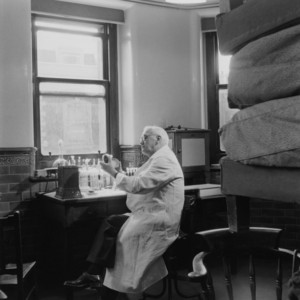
In 1928, the Scottish physician, Alexander Fleming made a discovery that would change the field of medicine forever.
He was studying bacteria on auger plates in the lab when he noticed something odd.
There weren't any bacteria growing around a spot of mold that had contaminated a part of the plate.
It turns out he discovered a medical super compound, penicillin.
Since then, penicillin and other antibiotics have saved millions of lives.
With one problem.
The growing threat of antibiotic resistance.
Antibiotic resistance means that somehow the bacterium usually acquired a mutation.
For example, the penicillin is there, but it doesn't do its job.
And therefore, the bacterium grows happily and it's resistant to penicillin.
This is Natalie Balaban, a biophysicist at the Hebrew University in Jerusalem.
And she says more and more bacteria are becoming resistant to all of our antibiotics, which could spell a major problem.
One day, all of our antibiotics could stop working, unless scientists can find a major weakness in bacteria.
Recently, Natalie's lab may have done just that, by hacking dormant bacteria.
Because antibiotics, they work by killing off growing bacteria.
But sometimes, bacteria don't grow.
They shut down.
And in that case, antibiotics like our guy penicillin are rendered useless.
The penicillin will kill all the growing ones, but the ones that are not growing are going to persist.
And this is what is called persistence.
Today on the show, antibiotic persistence what it is and how it can help scientists discover new ways to combat a growing bacterial threat.
I'm Regina Barber.
You're listening to Shortwave, the science podcast from NPR.
This message comes from BetterHelp.
February is full of flowers, candy and lots of relationship talk.
It can feel like everyone has it all together in their love lives, but the truth is they're still figuring it out.
And whether you're married, dating or prioritizing being single, just remember you're right on time.
Therapy can take the pressure off and help you feel lighter.
Just a little outside perspective from a professional can lead to new understanding and a lot of progress.
Visit betterhelp.com slash NPR for 10% off.
You can target your buyers by job title, company, role, seniority, and skills.
All the professionals you need to reach in one place.
Get a $250 credit on your next campaign so you can try it yourself.
Just go to LinkedIn.com slash NPR pod.
That's LinkedIn.com slash NPR pod.
Terms and conditions apply only on LinkedIn ads.
Okay, Natalie, antibiotic resistance is definitely a problem.
We talked about that.
But there's another way bacteria evade antibiotics, which is what you study, right?
Like, what is that term?
Right.
So we study antibiotic persistence.
And it's different from resistance because persister bacteria they just survive during the antibiotic treatment process because they turn onto a dormant form.
They just arrest their growth.
And when bacteria arrest their growth, then many antibiotics don't work, because antibiotics typically need active growth in order to kill the bacteria.
And then those dormant bacteria can come back once the antibiotic is gone.
These are the persisters.
So it seems like this dormancy is the key.
What did scientists know about this dormant state before you looked into this?
So it was known for a long time that when bacteria do not grow, they are not targeted by many antibiotics.
They protect themselves from all kinds of stresses.
So usually when you starve them, they arrest their growth and then they go into this dormant, protected form.
But it was not realized that these dormant forms, once they grow again, they can really lead to the speed up of the evolution of antibiotic resistance.
When we were prepping for this episode, our team learned that clinicians really don't look at persistence in people.
They just kind of focus on resistance.
So definitely resistance is a major problem.
And usually if you have a good immune system and you are given the correct antibiotics, these persistent bacteria, they are there.
But your system is the one that is going to take care of them.
So the antibiotics never kill all the bacteria.
This we already know, but it's enough in a healthy patient.
It's enough for the antibiotic to kill most of the bacteria, or even just to arrest the growth of bacteria.
But of course, in immunocompromised persons or in a part of the body where the immune system doesn't work, or in elderly patients.
Persistence leads to resistance.
And these resistance strains actually can go and infect other people.
Antibiotic persistence can lead to antibiotic resistance.
Yes, actually we saw that, that when bacteria are more persistent, they have a higher probability of becoming, at the end of the day, resistant.
So in other words, antibiotic persistence is really a stepping stone for antibiotic resistance.
And it means that any new drug that you put on the market, if you are not taking care also of the persistent bacteria, then they will eventually evolve to be resistant to this drug and then this drug will not be as effective as it was.
And you published a paper this year, in 2026, about how these bacteria can persist in this dormancy state to then become resistant to antibiotics.
What did you find in that study?
What we found is something that changed the way we look at dormancy.
So in the lab, we can use, for example, these antibiotics that just arrest the bacteria.
You can also use all kinds of heat stress or pH stress.
So there are different stresses and will create bacteria, will make them enter a state of gross arrest or dormancy that protects them from different types of antibiotics many, many times.
It was more, you know, you haven't parked your car and this is why your car is not on the road.
It's just, you know, by accident.
You just, you had a car crash.
And now your car is not moving.
It's not because you actually stopped because you wanted to.
Exactly.
This car crash didn't kill them, but it made them stop their growth.
And now this crash, instead of being bad for this bacteria, turned out to be beneficial, because now the antibiotics come and they happen to be non-growing.
And therefore, they happen to survive the antibiotic treatment.
So what would be like an example of a car crash in this situation?
So in the body it can be meeting with an immune cell that is trying to kill the bacteria but doesn't succeed, right?
Then the bacteria would go into this arrest.
They're just putting them in dormant states.
They're putting them in dormant states.
But what we find out in the lab is that it's not an organized dormant state.
It's this car crash type of dormant state.
Okay.
What does it mean for bacteria to be in this more chaotic, dormant state?
Like, how does that change how they behave or respond?
So when they're in this chaotic state instead of being, you know these bacteria that when they see an external signal, they have a very organized response.
Now they are trapped into this state that they didn't plan to enter.
Hmm.
And it means that now their recovery is going to be very, very long, extremely long in the context of infection.
It means that if you had a persistent bacteria that was in this chaotic state now you stop the antibiotics.
You may not see anything, but after a day or a few days this chaotic bacteria will start growing again and then you'll have a reinfection.
So the chaos that is governing the recovery time of this bacteria is also actually dictating how long the treatment should be, because you know you need to keep the treatment on for as long as they are in this chaotic state.
Yeah, How could, knowing this chaotic, this like dysregulated state like that it exists how can it help us with future antibiotic treatment?
So it really has changed the way we thought about tackling persistent bacteria, because what we find out in this recent work is that their membranes is more permeable in this chaotic state.
And now there are all kinds of ideas of how to take advantage of this increased membranal permeability to actually use all kinds of compounds that can kill them.
How could this search for these new types of drugs change the trajectory of treating antibiotic resistance?
So I think it's really realizing that, in order to prevent the evolution of resistance, there are many things to do.
One of them is to prevent these persister bacteria from re-emerging in these very long infections.
And preventing them from re-emerging means treating them probably with these membrane-targeting compounds before we stop the antibiotic treatment completely.
And then we've treated most of the bacteria.
The only ones surviving are these chaotic bacteria.
Now let's use a compound that is specific against these chaotic bacteria and then stop the treatment.
Natalie, thank you so much for talking to me about antibiotic persistence.
Thank you.
If you like this episode, listen to our shows on extreme bacteria and Yellowstone and the last universal common ancestor.
We'll link to them in our show notes.
And follow us on the Empire app or wherever else you get your podcasts.
This episode was produced by Burleigh McCoy and edited by our showrunner, Rebecca Ramirez.
It was fact-checked by Tyler Jones.
Jimmy Keeley was the audio engineer.
I'm Regina Barber.
Thank you for listening to Shortwave from NPR.
Valentine's Day is coming up and the perfect gift for the NPR lover in your life is waiting at the NPR shop.
From cozy sweaters and mugs made for slow mornings to our tiny desk hoodie, there's something for every NPR fan.
Each purchase supports public media and the journalism you love.
On the ThruLine podcast from NPR, the former slaveholder who took on the KKK and won.
He became more and more and more militant as time went on.
Listen to ThruLine in the NPR app or wherever you get your podcasts.
It is hard to get a house.
Getting that down payment together?
Brutal.
You shipped off to Djibouti to afford a down payment for a house?
Yes, sir.
100%.
On Planet Money, the high price of housing, what the Trump administration is trying to do about it, and will it work?
Listen on the NPR app or wherever you get your podcasts.