Discussion keeps the world turning.
This is Round Table. The new school year kicks off this September 2nd, and parents have geared up with shopping sprees for the young ones back to school.
But wait, is all that shopping and spending necessary?
Are they feeling the pinch?
And we're on a mission of starting your week with a motivational kick.
Our motivational Monday offerings will get you ready to tackle the week.
Coming to you live from Beijing, this is Round Table.
I'm Ha Young. For today's program, I'm joined by Steve Hatherly and Yu Shen in the studio.
First on today's show is that time of the year again as September rolls in, the new school year in China kicks off, and parents have been hitting the stores and loading up on supplies for their kids, especially those fresh-faced university freshmen.
What's on their shopping list?
And we'll get into the essentials that are driving the back-to-school economy.
And guess what? Starting this autumn semester, Beijing's education authorities are giving elementary and junior middle school students a sweet treat.
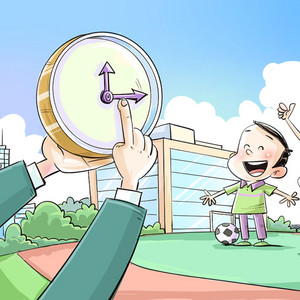
Break times have been extended from 10 minutes to 15 minutes.
More time to chill or play.
Yes, please. I would think.
Oh yeah, I love the idea of changing from 10 minutes to 15.
It deserves a better nap in between classes.
Oh, for a lot of young students in school, this might be the greatest thing that has ever happened to them in their young lives, increasing their break time.
Can everyone? Yes, and let's hear from a sixth grader himself in Beijing.
I am Wang Yuhao, a sixth grade student.
I feel very happy about the adjustment to the break time because extending the break means we can have more time to rest.
Plus, during the break, we can finish our homework at school so that after school, we can focus on additional practices instead of bringing unfinished schoolwork back home.
So I think the adjustment to the break time is fantastic.
Thank you very much, Yuhao.
He sounds like a teacher.
And also thank you, Yushun, for doing the voiceover.
You might have recognized this voice.
Yeah, so I guess this is something really exciting and this has been trending on social media on Chinese microblog Weibo over the weekend as well.
And could you give us a little bit more background and also, you know, what are the reactions of internet users and folks around?
I mean, the way I see it is that the best part of this policy is for elementary schools, students to arrive and get dismissed and also enjoy the lunch break times at the same schedule as before.
That's plus the five minutes per each break between classes.
And in junior high schools, that works a little bit different, which is just the five more minutes after school.
So the dismissal time will be pushed back by only five minutes while the morning arrival and lunch break times will stay the same.
And well, the way I see it is that if it's really practically implemented as planned, then of course this is good news for students from of all ages.
But there are also doubts among schools, especially with school teachers and parents on how to implement it.
Yeah, before we get into that part, I'm curious, Steve, actually, we didn't, you know, talk about this before the show or anything, but do you remember back in school?
How did re sorry it didn't it came out the wrong way?
I'm sorry. Of course I remember.
No, it's just, you know, okay, from my distant memory, there were there was recess.
Exactly. And but there was only one recess like for maybe an hour or something like that.
No, much shorter than that.
So in between classes, what was the arrangement in North American schools?
Yep. Well, in Canada, we had our school start around 9am, I think something around there.
And then around 1030 ish, we would have maybe a 10 or 15 minute break.
I think it was 15 minutes.
And during that time, you would put your jacket on if it was the winter time, even if it was the winter time, kids would go outside to play.
And teachers would come out with us to make sure it was a safe environment and nobody was doing anything wrong.
We would run around and play or do whatever, eat a snack and then 15 minutes later.
Okay, time to go back into the class.
And we loved it. Everybody waited for recess time every morning.
Right. And I wonder if there's this general concern about what if a kid falls over on his or her face, somebody scrapes a knee or two kids get into a fight.
And once you let these wild little monsters out of the room, they're kind of out of control.
Well, they're not out. Well, in Canada, in my experience, everything was really well supervised.
So we had our teachers outside with us, but there were also school staff that were out there keeping an eye on us as well.
So it's not like the kids in Canada just go outside and nobody's watching them.
And it's also a closed in area, right, where the students stay in one particular spot.
Do kids get hurt sometimes?
Yeah, of course. Will kids get in an argument or fight sometimes?
Yeah. But I think that's just viewed as part of the, how shall I say, learning new social skills, learning how to get up if you fall down.
All these extra benefits that come, you get the extra physical activity so kids are better behaved in the classrooms when they go back in because they've burnt off that extra energy.
They can stay on task. And there's other reports that have come out about increased memory and concentration and other benefits like that.
But to answer your question, sure, kids get hurt sometimes, but it's not really seen like that big a deal if that makes sense.
And Steve just perfectly concluded my first ever experience of breaking one of my limbs during a 10 minute break.
Back then it was only 10 minutes before classes, but yeah, I had that experience when I was 80 years old.
And I just hearing the, you know, the, what's the name, like the alert?
The bell. Yeah, the bell sounding to call everybody back from the playground back to the classrooms.
There were no teacher at the playground back then.
Everybody's just out having our good time and everybody just rushed back hearing the bell.
And I was accidentally tripped by either someone or something on the ground and I fall landing on my left arm, which, you know, what happened afterwards.
And it broke your arm. Yeah, it broke my part of my arm and my left wrist as well.
Goodness me. So yeah, one minute trying to rush back to classroom kind of experience ended up to be a three months lesson learned on recovering and realizing that, okay, we need to keep our pace lower.
So you are against this extended recess time in the morning for Chinese students?
I mean, of course not because now that time is longer, we can have a better quality playing time out there, which kind of ensures us to, you know, have sufficient time to walk back to the classroom.
Instead of running back.
Right. You point to something very important and I think it's, it must be addressed for students, families as well as schools to feel more comfortable about not setting them wild, but, you know, letting the kids run about kind of thing.
But I remember back in my day when I spent a few years in elementary school in Beijing and because we were such a big school and the teachers basically did not allow us to go to the playground during these in between class recess, well, in between class break time.
Let's just put it that way.
But during recess, which is a longer period of time than we could go to the playground.
And for exactly the reason kind of similar to what you should was pointing at that is, you know, during the break time, which is only a very short amount of time.
And then the teachers just felt that it would take us way too long to get to and back from the playground.
So we could only play outside in the corridor.
In the hallway. There was limited space, but us kids still made good use of that space.
And there were, as you know, girls, we go grow a little bit older and then we're like, huh, we don't want to like be kids and hang out with, you know, those kids.
The hallway's lame. Oh my, we're like, we want to like chat and have former little cliques and stuff like that.
And then the teacher was like, hey girls, you got to go out, you know, like she was like shabbiter shabbitering the herd and forced us out.
And now in hindsight, it's like, oh, she was that was a really good teacher.
Well, or it was her break time to get out.
But see, like in recent years, there's surprisingly maybe for some of the outside of China folks to hear this that there's actually been major debate whether to let kids out during recess or in between break time.
And a lot of the teachers don't feel comfortable because they don't want to bear the consequences possible, possibly legal repercussion.
If something bad happens.
And I suppose this assessment between like risks versus benefits, it becomes something of a discussion point.
And I wonder if you guys have some thoughts about to like settle this one once for all.
Back to my earlier point, I think once this 15 minutes, say quote unquote longer break could be truly implemented, especially among the younger students, they can just form this habit of taking their time during their their in between classes break and also like the our young little interview you just mentioned just now that there will be more time for them to rest
like fully rest themselves just to get ready for the next class, whether they want to go out to play or just try to finish the homework from the previous class.
So it's just well on how fully can this policy get implemented throughout the whole society here in China.
So yeah, I guess we'll need to wait a little longer to see the outcomes.
Yeah, I guess see how it goes right do it for a semester perhaps or a couple of semesters and get some feedback from the students and get some feedback from the parents and the teachers everyone involved and maybe they can make it a full time thing going forward.
I grew up with it. So I'm in full support of it.
Yeah. And we all grew up with the 10 minute break now 15 life changing for them is what Beijing is implementing coming this semester starting from this semester.
And as the school year kicks off the buzz around the back to school economy fills the air sparking excitement and anticipation.
What is top of the shopping list.
Wow, it's been mentioned more than once in recent news report that students who newly become University freshmen have started their school entry shopping campaign since mid and late August.
So this is to better equip themselves for their brand new start on camp on University campus life of course and in the meantime like hurting their parents wallet pretty bad I believe in some cases not all cases apparently in during those shop during the shopping season reports from said reporter from son news found that some parents spent dozens of of thousands
of Yuan on their children's school purchases one good example that really is gays whitening for me is that a father surnamed one bought his son a camera as a reward after Galco which is the Chinese college entrance examination and he said that his son has always been a fan of photography and has always wanted a new camera so he just makes his wish come true after the boy
was enrolled by his dream University I mean it all sounds like it makes sense but here this out it's also reported that the wrong spent Mr.
one spent 15,000 Yuan or roughly 2100 US dollars on one camera alone for his son and that is followed by a nearly 20,000 Yuan or 2800 purchase on a new smartphone and a new laptop can you email him and ask him if he wants to adopt a little aged Canadian man sounds like being his son is a real treat.
I mean there's even more if you want to hear so upon all those digital devices purchase there's also gym membership card training fee to get a driver's lessons fees for dinner parties with his classmates etc which all added up to be almost like a 15,000 Yuan or 7,000 US dollars expenditure for his son before he enters university.
Wow that's a lot of money I don't think that's the average I don't think that's the norm and when I think of back to school items for parents I don't think of brand new cameras.
I think that was just a gift on top for perhaps doing well in the Galco.
I was reading from a report from Deloitte in North America the back to school shopping season.
They keep pushing it forward.
And what they found through the from the business's point of view is that customers will spend more money 1.5 times more money when they shop earlier for back to school stuff as opposed to last minute purchases which seems totally counterintuitive doesn't it I thought it would have been the other way around but that just shows that parents really are involved in getting
their kids back to school pencil cases and pens and the notebooks you remember right all the stuff is pretty exciting for a kid to go back to school shopping.
And I was looking at different countries around the world.
Canadian spend quite a bit getting their getting their kids ready to go back to school.
I looked at Ireland as well because we don't talk about Ireland on the on the show so I thought let's see what's going on there.
And they said that it's quite expensive actually to get their kids back to school they said they spend about 1086 euros per primary school child that's about 7900 Yuan.
That's expensive. And then for secondary school children it goes up to 1400 euros that's almost 11000 Yuan per child to get them back to school.
The report from Ireland went on to say that parents will often go into debt as a matter of fact borrowing against their credit cards because it's not seen as luxury spending it's seen as necessary items to get their kids ready.
May I ask what are they buying.
They're not buying anything else that you know perhaps Chinese parents or Canadian parents aren't buying it's just you know kids do you remember back in school we used to write on paper with a pen.
Well now it's everything's digitalized so kids don't have books anymore I guess to write their notes and a lot of kids have computers or tablets that they use and that's probably part of the cost.
I remember as a kid living in the US decades ago the stationery is surprisingly expensive.
In China I think it's well the prices are rising given you know so many years have passed but it's it's not as expensive.
If I may say that way and then oh it just I just hate to you know to know that if this is posing major financial stress on parents and also a lot of the stuff do you think it is all that necessary.
I remember back in the day like if my dad was well he's very good he would take me to the stationery store and just go daughter get what you need and wouldn't be very fussy about it.
But yeah I throw in a couple of things like stickers which I loved or you know just things that you know aren't completely necessary but this is big expense and how do you or what do you make of it.
Yeah it is a big expense I was looking at CNN and Americans consumers a few years ago they spent a record forty one point five billion dollars that's according to the National Retail Federation on back to school that's nationwide of course right but that works out to about eight hundred ninety dollars American per household and it does put a large strain on a lot of families
bank accounts and as a result some of the items that are necessary to go back to school for some lower income families they'll they'll look to second hand or used items to give their kids to get back to school I mean I agree with you you know is a new computer necessary is a new tablet necessary are these expenses necessary maybe for those things you could argue perhaps
not but then if you look at things like school uniforms not not every school requires a uniform but a lot do and those are very expensive as well so some of these some of these costs are just unavoidable I think.
I'm glad you mentioned uniforms Steve because here in China we have this culture in especially among middle school and primary school students to require all students to wear uniform so and that is really sorry and you and for years it's been lambasted as the ugliest uniform in the world but but but it but they exist for good reason that is when your kids when your
teenagers you shouldn't be thinking about okay this is probably the parents speaking you shouldn't be focusing on how fashionable how good it looks it should look like really baggy they're basically baggy tracksuits that completely highs your figure and they're often made of mediocre material and their static cling that just clings to your legs and it doesn't
feel great but you know what everybody's wearing exactly the same and it's meant to not make you look fabulous yeah and nobody's comparing what we're wearing you know everybody focus on your studies and more important things in life when you're at that age and yeah so that's sort of like the thinking to it and that's not even being included in the back to school expenses
in China yeah there's a lot of advantages and disadvantages to school uniforms but I think yeah wearability is perhaps one of the downsides to the uniforms here well one good side that I'm going to vote for uniform is that as you mentioned where they're baggy and they're meant to be the sports suits that's you know they're fashionable over its prettiness let's say
but it gave me a huge security back then to just hide especially for a lot of girls like me back then to hide our changing body during puberty so back then that was my best shield I'll say yeah I felt the same too and not just school uniforms for a lot of younger students here in China especially in primary school and middle schools the main purchase during this time of the year
are just textbooks, tutorial books or stationaries and school bags which don't really count as so expensive there's one girl that's just bought the real necessities that include bedsheets and stuff for the dormitory life and cost less than a thousand you want less than say 140 US dollars so if we just focus on what you know the kids truly need for a new semester then
it's probably not that much so I think it's important to sort of make a distinction that is for the older kids you know the college freshmen often the expense spikes because for the first year of those four years if you graduate then you it's like an investment and parents feel and in Chinese parents are just like any parents around the world they want the best for their
kids they want their kids to feel good look good if they want to and then therefore you know investing in a laptop and you know all the other bunch of expensive things that you guys mentioned earlier but for younger kids I suppose if it's just stationary and notebooks and stuff like that it's not like a horrendously high figure that it mounts to but what's really shocking
to me is I feel very this is all very much new to me in the sense that now I'm a gym membership driving school expense yeah these are being parents are footing the bill for these things too yeah as I was kind of looking through the stories about expenses here in China driving school and driving lessons kept on coming up in different different reports and I thought oh that's
that's interesting so that means that here in China this would be a time in life when you're starting your university life that a lot of people will get their drivers licenses for the first time you are correct Steve because according to some managers of driving schools that's located in Xiaoman as mentioned in the report that you know high school graduates took
up almost 70% of all students of the school in the summer break and also this group of you know fresh college students or university students who is enjoying their summer break is also the main force of learning to drive during the summertime so for them is the biggest income source learning to drive in Canada we can get I think if the laws are still the same we can get
our beginners license at 15 years old and then you can get your full drivers license I think at 16 years old so I got mine in the beginning of high school so by the time university came around I had already had my license for a couple of years wow well that wouldn't happen in China because you have to wait until your 18 yeah interesting yeah and also this has become such
a big topic of you know you can see it as a family consumption topic or you know it's actually having an impact on the overall economy and what are some of the interesting findings to that or also we can talk about since it's such a big discussion going on some experts are giving advice in saying that hey parents if you're feeling the strain that maybe you should discuss
family finances with your kids especially if they're going to college they're they're old enough to handle this information when I was a child this is the way my family did it for me so after I was born every year for Christmas my mom would put a bond it's called a bond it's a it's kind of like a it's it's kind of like a check if you will an amount of money I think it was $100
every year will go into my bank account I never use that bank account I was a child but that was my university fund and what that money did every year she would put $100 into the account until I went to university that money paid for my first year of university a lot of it and that we had that conversation okay Steve we've paid for this and now it's your responsibility
to so yeah having a conversation about finances with the university kid is a good idea and also for universities it's also encouraged that you need to let the students know at least provide the least a list of you know learning tools and stuff that's required and maybe setting a budget to give the parents sort of an idea of what is the pretty standard expense and that might be
useful good for the parents to know too yeah for sure