You're listening to Roundtable.
I'm Niu Honglin, joined by Steve and Li Yi .
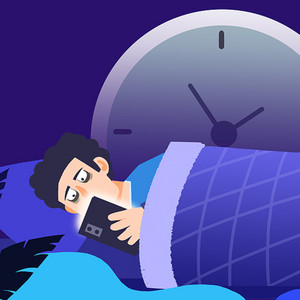
Coming up, you've had a long day at work, finally settled in at home, when suddenly, ding, a message from your boss lights up on your phone.
The tension returns and your relaxing evening is put on hold or ruined at all.
And what if that late night pain is just another notification you can ignore guilt-free?
If you've been indulged with the right to disconnect by law, will you have a better work-life balance?
And did you know that some of the everyday gadgets we rely on, like keyboards and electronic toothbrushes, were originally designed for people with disabilities?
Join us as we uncover the surprising origins of these inventions and how they've transformed from specialized tools to essentials for everyone.
But now. In today's increasingly connected world, the boundary between work and personal life has become blurred, even leading to burnout and stress.
Well, a new law in Australia has employees jumping for joy thanks to the right to disconnect rule.
These key workers are no longer required to reply their boss's messages after working hours.
What are the implementations of this law?
What are some implications?
What's the impact on productivity?
Are we witnessing a broader trend of protecting workers' rights in the digital age?
You want to hear my impression of every employee in Australia right now?
Yes. Woohoo! That's quite vivid.
This is a new law in Australia.
It was passed in February.
It took effect in August for most workers.
This will apply to small businesses of fewer than 15 people starting in August of 2025, the next year.
But in 2024, it was August 26th when this got applied and it's businesses with 15 or more employees.
And it adds Australia to a growing list of countries.
There's about two dozen countries around the world, mostly in Europe and Latin America, that are looking to protect workers' free time.
So this new law, the right to disconnect, doesn't strictly prohibit employers from texting or calling or emailing their employees after working hours, but it does protect employees who quote, refuse to monitor, read or respond to contact or attempted contact outside their working hours unless their refusal is unreasonable.
That is the quote according to the Fair Work Commission that's Australia's Workplace Relations Tribunal.
So there's no definition of reasonable in the law per se, right?
If I am an employer and I demand or I deemed my asking for a reply as reasonable, I can still call them and it's up to the employee to decide whether or not to reply and maybe whether or not to file a report about the company or against the company even later.
And if they do file against the company and there is a violation with the Fair Work Commission, they can file there and if the company is found to be in violation of the law, they can be fined up to 18,000 Australian dollars.
That's not cheap at all.
But I get your point. This is a big gray area, isn't it, right?
Because it's not simply the employees don't reply to their bosses at all.
They can't do that. It's not a hard and fast rule.
If it's okay, if it's deemed an emergency, if it's deemed appropriate for them to respond, then they have to respond.
But if it's a simple work-related task related to that type of thing, they don't need to reply at all.
But to me, I think it's overall an encouragement of the right to disconnect, especially in the modern area when, I mean, instant messaging, digital tools, online messaging, all this kind of tools are being increasingly used at workplace.
And I think here in China, we also have this similar discussion about the debate over the right to disconnect.
I think very firstly, we see these very apparent, a blur in the lines between work and life during COVID.
Especially during COVID.
Especially during COVID because you have to work from home for a long time and I mean, you have to cook for yourself.
In the meantime, to deliver your work reports to your bosses, so that means you do have this blur in the line.
But meantime, after COVID, somehow we still copy that work mode or people are still getting used to this kind of blur in the lines between work and life.
So that's why I think here in China, we also have this similar discussion.
And working overtime in China has also been quite widely discussed.
Especially when it comes to working overtime, some people find it almost a habit, almost how they live.
But some people would definitely say this is not okay.
And we have seen very significant and again, here to discuss the cases between an employee and a company when the employee filed a lawsuit against the company saying that I have been overworking for quite a long time during weekends and after working hours and I am not paid for that and that is not okay.
We've actually seen famous cases and the employees won.
And one funny thing about this is that when you take a look at the discussion on the internet, most people, if not 99% of the netizens would say, oh, definitely I work overtime all the time, I should be filing a lawsuit against my company.
And not all of them though have to take a deep and closer look into the cases that the employees actually won.
If you take a look at the cases, they have worked real work and replying with only one or two messages to your bosses.
I don't think it counts.
I disagree. I totally disagree.
And they disagree in Australia as well.
You can finish your point and then I'll fight with you.
What I'm trying to say here is that for those one cases, actually they've been working so hard and that's why they won.
And for those netizens who are complaining and saying I should be filing a report against my company, I don't think they will want under this circumstances.
They did a survey in 2022 by the Center for Future Work at the Australia Institute.
That's a public policy think tank.
And they found that seven out of 10 Australians performed work outside of scheduled working hours.
And people reported experiencing physical tiredness, stress, anxiety as a result of that.
And then the following year, the Institute reported that Aussies clocked an average of 281 hours of unpaid overtime in 2023.
Now if you value that labor at average wage rates, it's estimated that the average worker, they're losing roughly 7,500 US dollars each year.
That's about 53,000 yuan each year per employee.
And if you add that up for all employees, that's 88 billion US dollars in unpaid wages.
And that's why I wanted to fight with you about the, oh, Monday I got a text message at 9.30 asking me to respond to this email.
Wednesday morning before work, I got a text message asking me to send this email.
If that happens consistently from week to week and from month to month, that time adds up and employees deserve to be paid for their time that they work at the company.
And it's not just Australia.
I'll give you some other examples of other countries that are trying to protect their employees from this type of, I don't want to call it harassment because it's not, it's not harassment, but it's also outside of the contractual agreement that the employer and the employee agreed to when their work began together.
Well, let me play the devil's advocate since you have already talked about the benefit of all this because in my opinion, people work in different modes.
Some people prefer to work very concentratedly for a certain amount of time.
For example, some people can work straight for hours in the morning and they are very productive and they can turn out the results.
But some people prefer to work for around an hour and then go for a walk, have a drink, go to the canteen and then later on they'll continue their working.
It's different working habit and different working mode.
And for those who are not asked to stay at their desk eight hours, the eight hours that the employers have paid them to stay in front of their computers and do their work, maybe you can give them some flexible ways of working in that sense.
You're talking about individual working modes, but I think what we are talking about is the invisible working culture, workplace culture because I think we're talking about different industries.
For example, here in China, we have seen a rise of tech companies and they are known for offering flexible working hours.
For example, one of my friends, she used to work in a major tech company here in Beijing and maybe her experience might not be representative in this industry, but according to her, usually she doesn't see her colleagues before 10 or 11 a.m.
at a company because it's sort of like a silent norm for the company that you can start your work late, like 10 or 11, that's fine, and usually people might arrive at the office at noon time and then start to work during the whole afternoon and that work could end at 9 or 8 o'clock or even 10 o'clock, that depends on your workload.
But the thing is that even if you don't want to fit in this workplace culture, you can't because almost all your colleagues are working in this schedule.
So you have to wait for your clients, wait for your superior, wait for your colleagues, coworkers to do certain projects.
So that also makes you to passively follow that pattern as well.
Almost like you're living in another part of the planet.
Yes, exactly. You mentioned COVID and how the lines got blurred here in China with people working remotely.
That's exactly why they came up with this law in Australia as well is because that's what was taking place.
And by the way, I was playing devil's devil's advocate before when I was having a little argument with you Hong Lim, but also not everyone in Australia agrees with this change as well.
Opposition leader Peter Dutton, he's already pledged to repeal the right to disconnect if his coalition wins the next federal election in 2025.
So this might be a very short lived law if Peter Dutton's party wins.
He says that this new law is damaging to relations between employers and employees, and it's also a threat to productivity.
What do you think about those two points?
Is this potentially damaging the relationship between employees and employers?
I think it really could because even if a boss cannot punish you, and this is part of the Australian law, if I text my employee at night and they don't respond, well, I can't do anything about it legally at work.
But what's that going to do to the relationship between myself and that employee if they never reply to my text messages?
So this could create a bit of a problem.
Definitely. I think this might pose challenges for management, of course, but I don't think that's a threat for productivity because I mean, when it comes to working overtime or invisible working hours, in the end, we are talking about whether companies or company operators are really awarding employees for working overtime.
If they are doing so, then I don't really think employees would have a lot of complaints about that.
But in reality, the truth is that we are forced to work overtime yet we don't really get paid for that period of time.
So that's why people are complaining about that.
I think one very interesting yet it feels like a core issue of this argument is that whether or not the company is paying for the result of your work or your working hours.
Because if we think the priority is how much time you spend in the company or maybe you're working remotely, then how much time you're spending in the work, then definitely we should make this no payment, no work kind of rule that's the right to disconnect because we're paying for the eight hours.
Yet somehow, some company would argue that I'm paying for your talent.
I'm paying for the outcome.
If you can finish the task I assigned you in only six hours, you can spend six hours working and have the rest two hours for your private life.
So I think that is also kind of important when it comes to this kind of discussion.
And another thing is that we know actually France is the first country to implement this right to disconnect to law and it's about work emails during non-working hours and text messages and instant contact information, all these.
But according to our research, at least by the end of 2023, over 45% of French workers do not know that their company are restricted by the right to disconnect the law.
Well, I'm pretty sure that the French people have a relatively chill and relaxed attitude towards life and work balance already.
That's kind of the reputation of work life in France.
There probably aren't that many texts to their calls after working hours.
They don't need this law.
But you're right, it was 2017 when they implemented this right to disconnect.
A little bit different from the Australian law.
This is for companies with 50 or more employees and if they fail to comply, they are inviting a fine of up to 1% of a worker's total compensation.
That's in France. Oh, and by the way, a year after that was implemented, there was a company called Rento Kill Initial.
That's I think a pest control company.
They were fined 60,000 euros for requiring an employee to always have his phone on.
That's a massive fine. Belgium, they have laws.
Portugal, they have laws as well.
Spain, Ireland, Italy, Portugal, Colombia, Argentina, Greece, etc.
The two Netherlands countries, yes.
Interestingly, the US and the UK don't currently have any laws about this type of thing.
In Canada, they're in the talks from what I could tell by looking up different stories.
But there are almost a couple of dozen countries that are having these right to disconnect laws.
I think if I live in a society that after working hours, no one would talk to me and also the competitiveness of my work environment is not that high.
I would be more than happy.
Yet, if I get to choose, and also if the overall competitive level of the society does not change, if we're looking at a, I'm not only talking about societies here in China, but globally, if we're looking at the kind of atmosphere that everything is rapidly changing, that technology evolves so fast that university majors are changing and trying to figure out what is the best
way, that level of competitiveness, I feel like maybe I still like the option of not replying.
But in the meantime, I would also like to receive the message and let me decide whether or not I'll reply.
It's kind of like on a Friday night.
Listen, boss. You can text me.
But I'm not going to promise I will reply.
If I deem it necessary and emergency, I will reply.
And also if, for example, in a Friday evening, if I get to get the message that by the end of Monday, I will need to hand in a very hard to comprehensive and also hard to compile kind of report, maybe personally, I would choose to do a little bit more during my weekends to just ease the pressure on the Monday.
That's what I'm talking about when it comes to the previous argument of people have different working habits and styles.
You're right. And this is another potential problem with law or with laws like these is the environment within the office.
Because let's say you do say, actually, I'm going to enjoy my weekend and reply on Monday.
During that time, the boss is communicating with another person who says, oh, I'll step up and I'll do that project, Honglin, she's off partying this weekend.
I'll do it. Now, what's going to happen the next time a promotion opportunity comes along?
That could be a problem as well.
That is a factor to be considered.
And meantime, I think it's also important to consider, is it really necessary for you to be on the call all the time?
Because I mean, I don't want to be on the call.
I want to be able to see the message, but decide whether or not to reply myself.
But meantime, there are also like jobs like doctors, police, and they have to, somehow when they enter this industry, they already accept that they are always on the call.
Because meantime, and I mean, for average people, we are also enjoying the benefits of getting access to customer service and also civil service service.
There are also 24 seven being offered to average people on the daily basis.
So that also depends on different jobs, professions, and industries.
This law does not apply to police officers.
Oh, you get a text, oh, there was a murder.
No, no way. I'm just going to wait until Monday.
That makes sense. Right.
So this is not for every industry.
And remember, don't forget as well, if the text or the call is considered an emergency at work or reasonable, then the employee still has to reply.
Definitely. You're listening to Roundtable coming up next to ask the Paralympics, captivate the world with incredible displays of skill and determination.
We are reminded of the power of innovation in leveling the playing field.
While athletes are pushing the bungees of what's possible, there are also everyday innovations that were originally designed to overcome obstacles for people with disabilities.
From keyboards to electronic toothbrushes, when we try to improve exclusiveness, we might have just made everyone's life easier.
Don't go away. You will get into the details right after.
Looking for passion? How about fiery debate?
Want to hear about current events in China from different perspectives?
Then tune in to Roundtable, where East meets West and understanding is the goal.
It's the hour of Roundtable with myself, Niu Honglin, Steve Hathorley and Li Yi.
We've just conclude Day 5 in this year's Summer Paralympics in Paris, France, from 28th of August to 8th of September this year.
This is their 11th consecutive appearance at the Summer Paralympics since 1984.
Yes, I am talking about the Chinese teams, which has dominated the last 5 Paralympics.
It is looking to continue its winning streak, I am hoping here.
And the Paralympics are now competing in 548 metal events across 22 sports, both individual and team.
Notably, two Paralympic sports do not have an Olympic equivalent.
That's the goalball and Bolshe.
So Paralympics is as excited as the Olympic Games.
Because when we look at or watch Olympic Games, we are looking at athletes who are striving for higher, stronger and faster and together, and it's the same for Paralympic Games.
We see those with obstacles jumping over the hurdles and doing a really good job in the items in the sports events that we cannot do, even though we have the abilities that they do not have.
And I think it's a very interesting thing to think about that.
We live in a world largely designed for those who can see, hear, walk and talk.
However, for another 1.3 billion people with disabilities, the world is filled with obstacles and in order to rescue or to reduce the obstacles in their lives, people have invented or modified a variety of products.
Some of the products have entered our lives as well.
So looking at the list, which ones are the most impressive or do you deem almost something that impressed you the most?
Yeah, I would encourage people to look up this information as well, because this is really cool to know.
For me, one that stands out on the list is the electric toothbrush.
We know, of course, that brushing our teeth is important for everyone, but for people with limited motor skills, they really, really struggle.
They have a hard time to keep their teeth clean in the early days, but in 1954, there was a really significant game changer that came along.
It was called the Broxo Dent Electric Toothbrush, and the reason it was created was to help people with limited strength or limited mobility or control to help them do a better job of brushing.
But then, after the invention came out, it quickly became obvious that electric toothbrushes were just superior in every way to your standard toothbrush.
So now, most dentists encourage everyone to use them.
They did a study back in 2019, and they found that people who use electric toothbrushes, they keep their teeth for longer, and they have less tooth decay, and they have healthier gums as well.
And for me, I think the thing that stands out on the list is typewriters or keyboards.
I mean, they are the daily thing that we use at workplace, at a daily basis, but actually this typewriter was the brand child of an Italian inventor named Pellegrino Turi, and he noticed that his friend could not really write letters by hand due to her blindness.
So in 1608, he developed this first-ever typewriter, which involved keys and metal arms with raised characters.
So Turi also invented carbon paper as a way to provide ink for the machine.
And since then, the typewriter has morphed into the computer keyboard, and even in today's time, you can notice that those two little small horizontal bars on the keys F and J, because they can make you easily put your fingers in hands in the correct position when you're typing.
So that's just a smart and sweet design.
Wow, that's really wonderful.
I've never heard that backstory before.
And actually, for those who enjoy texting over a phone call, it was originally designed to help those with hearing problems.
But let's face it, sometimes a call from a person just irritates you a little bit, and you want to text.
Your boss. It's like 7.30 PM.
And in the meantime, one thing very interesting is audiobooks.
Actually audiobooks, it is still a useful tool for vision-impaired readers.
However, it made it much easier for the population to enjoy a good story than I do not have to read, you can rest your eyes, or you can listen to these books while you're commuting.
And same goes to closed caption.
Actually closed caption was first made with MBS and ABC TV as they began experimenting with caption transmission in 1971.
It was also originally designed for those who have hearing problems.
Can I sneak in one more example?
Of course. Before we finish up, I love this one too.
Do you know the vegetable peeler that you have in your kitchen?
I think everybody has one, right?
The handle is quite large and comfortable.
Is it not? Definitely. Do you know why?
Why? Yeah. Because of Sam Farber.
Sam Farber was a man back in 1990.
His wife had arthritis, and she couldn't comfortably hold a potato peeler.
The older ones are metal, and the handles are really thin, right?
She couldn't hold it comfortably at all.
So he designed the OXO or OXO brand of Good Grips.
The line is called Good Grips.
And as a result, each kitchen tool that they designed featured a very wide oval shaped handle that was easy to control, even if you had very little strength in your hands.
And Sam saw his wife having a hard time when she was doing things in the kitchen, and he thought, I can make something to make her life easier.
Little did Sam know he was making all of our lives a little bit easier.
These are all very important and actually sweet stories.
But in the meantime, I think even for those kind of inventions, those kind of adjustments, that will only benefit those with disabilities.
We should definitely pay attention to the making of such stuff.
And for example, do you know that the reason that in most escalators or elevators, actually you would have glasses on the wall?
That's because for those who are in a wheelchair, it is easy for them to back words out of the elevator.
So in a lift, if you know where you're going, you know to not hit people.
So how to do that? That's why there's glass on the back wall.
Exactly. So actually for all these little design that can help those with disabilities, well, make their life a bit easier.
Actually I think we should do it because I do always think and believe that disability is not an identity.
It's a state. It's almost a period that everyone might be experiencing one day.
And if the society can take care of them a little bit better, it's actually taking care of each and every one of us a little bit better.
Very well said. Great points.
And that brings us to the end of today's roundtable.
We'd love to hear your thoughts on today's topics.
Leave us a comment wherever you listen to your podcasts or email us at roundtablepodcastatqq.com.
That's the two-letter qq.com.
Until next time, keep the conversations going and the ideas flowing.
I'm Niu Honglin with Steve, Li Yi.
And thanks for listening.