Discussion keeps the world turning.
This is Roundtable.
You're listening to Roundtable.
I'm Steve, together today with Lai Ming and Fei -Fei.
Coming up, the pandemic threw the education world upside down, causing students and teachers alike to have to adjust.
But coming back to the classroom, post -pandemic was, or is, a period of adjustment as well, and apparently some students might be having a little bit of a hard time with said adjustments.
After that, are you the type of person who goes into complete panic when your phone battery says 50 % remaining?
Ah! Get me to the nearest charger.
I need it to be 100%.
Well, if that's you, you're not alone.
But if that's you, we may have something that will change your mind.
Our podcast listeners can find us at RoundtableChina on Apple Podcasts.
And please don't forget that we love hearing from you as well.
An email that suffices, but we love hearing your voice and the other listeners want to hear your voice too.
So send those our way with your thoughts on any of the issues that we discuss on the show.
Here's how you do that, roundtablepodcast at qq .com.
One more time, roundtablepodcast at qq .com.
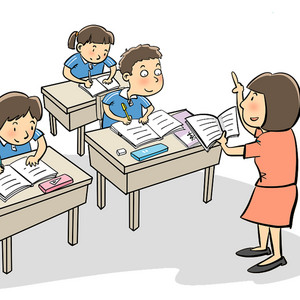
And now, are kids in the classroom getting ruder?
It's a question that often pops up in teacher lounges and among concerned parents.
Is there a noticeable decline in classroom civility?
Are instances of disrespect, such as talking back to teachers, interrupting peers, and ignoring instructions becoming more frequent?
Or is it simply perhaps that today's teachers have a lower tolerance for certain behaviors?
A study was conducted in Canada, and we'll see if we can find out some answers to those questions.
So Fei Fei, where was this study conducted specifically, and what did they want to know?
Well, the study was from Brock University in Canada, and they found a significant increase in classroom incivility since the pandemic.
And the researchers asked over 300 Ontario kids, which is a Canadian province that has the city of Toronto.
And our capital, Ottawa, is in the province of Ontario as well.
Yeah, and the kids aged between 9 and 14, they fill out a survey and the survey asked if they were ever engaged in rude or disruptive behavior, include things like texting in class, interrupting or talking over a teacher or packing up before the lesson is over.
And they also spoke with over 100 primary educators about their experiences in the classroom.
The data was collected in 2022 and they also compared the surveys conducted before the pandemic in the year of 2019.
So what did they find then?
They find a significant increase in this classroom incivility, even though other issues also raised in the survey such as bullying or emotional well -being.
They don't really show a lot of changes.
But the findings do find that people, students are getting not only ruder to the teachers, but also ruder to each other.
And also one example would be students are also struggling to pay attention through a whole lesson and can't even seem to manage their own disruptive behavior.
That's according to one Otariil teacher.
and they also often can't resolve conflicts without eventually yelling to each other.
Oh, even fighting with each other sometimes in the classroom.
Yes, and that, I guess, also has an impact on the teachers themselves because of managing the students in the classrooms and they are also, I guess, for teachers, they are also struggling as well.
Of the things you mentioned, though, texting in class, maybe interrupting a teacher when talking.
Those seem like, I don't know, relatively minor offenses, minor crimes.
Do we need to be taking these that seriously, I wonder?
It really depends on the culture one grows up in because in a more conservative society, I say texting in class obviously is an offense and interrupting or talking over a teacher or challenging the teacher, obviously, can be considered as a root behavior, obviously.
But then, I don't know.
Fei Fei, in her earlier introduction, did mention quite a few factors here.
And obviously, COVID -19 may have been a factor because there was a comparison of the data back in 2019 and then the data in 2022.
So things have changed.
But I'm sure the pandemic must have played a role in this.
I mean, we are talking about a generation of young kids who missed classroom, who even a whole, if you're a college student, I mean, you may have even spent three or four years without going to your classroom, meeting your students, fellow students and meeting your teachers.
So I'm not sure if what we miss out in the early days can be made up when students do have the chance to go back in the classroom.
That certainly can be a factor here.
But I'm also not sure whether this is an overall trend where parents become more indulgent, teachers become more indulgent, and students just feel like they have more of a leeway.
More empowered. In Canada, growing up in school, I think I can safely say there is a culture difference between North America and Asia.
when it comes to classroom behavior or expectation of the students.
In Canada, we are encouraged to speak out.
We are encouraged to offer our opinion.
And a little bit of a, how shall I put it, extroverted personality in the classroom is not often seen as a bad thing.
Teachers, of course, will ask you to sit down and be quiet, but it's not considered a terrible thing.
But here in Asia, it's a little bit stricter, I guess, in terms of the expectations of student behavior.
Is that fair to say?
Yes, absolutely. Yeah, I can draw the comparison of certain behaviors.
For instance, the way students dress, the way students sit up in the classroom.
I remember as a kid, and this must have been more than 30 years ago, as a primary school student, we were told to sit up, up straight, and then put our hands on the desk and raise our hands only when we have a question.
No question without raising our hands and getting the teacher's permission.
No speaking out. And I learned in our chat before the show started, before the mics came on today, that even the way of raising your hand is different in Canada and China.
In Canada, you just raise your hand straight up into the air, I guess, with your palm facing forward.
Doesn't have to be like that.
But in China, it's more specific than that.
Yeah, it also has this age consideration for younger kids who just got enrolled in primary schools for like first graders or second graders.
People will have, teachers will have stricter rules when it comes to how you raise your hand.
Like it was important to socialize them.
Yes. They may or may not have gone to kindergarten before primary school grade one.
So I think the importance was attached on getting them socialized.
All on the same page Helping them know how to behave And also, I guess It also sort of matters With the authority of the teachers themselves Because for managing a classroom Full of 30 plus young kids Aged around 10 Can be very challenging So I guess the teacher needs A level of authority in the classroom
So he or she can manage around And actually teach something According to their plans So that's one thing But when the kids got a bit older, for example, when they enter the third grade or fourth grade, they know better.
And then these rules, for example, in terms of how to raise your hands, will be relaxed a little bit.
The reason I mentioned that before, I don't want to give our roundtable listeners the impression that Canadian classrooms are wholly unruly.
Much too liberal. Monsters running around, you know, screaming and shouting.
But I mentioned that it's a little bit more liberal, because if this is in the news, if teachers are commenting on the lack of civility in the classroom, and there was leeway given before, that means that if teachers are seeing this now, it must be becoming a problem.
But here's the question, and this is the way that I like to look at problems in general in life.
Rather than emotionally react to the problem that you're seeing in front of you, look behind the behavior and try to figure out where it's coming from.
Because in Canadian classrooms, this was not such an issue before.
So did COVID have something to do with this?
One teacher, her name was Mary Linda Lamara, and she thinks that the pandemic and remote learning played a huge role.
in this spike in incivility because they were behind a screen this is her quote they were home behind a screen with no classroom instruction or decorum they could do what they wanted and now it seems they've brought that back into the classroom here's my argument why we should be okay with this not that it
doesn't need to be fixed but we should almost expect it i remember when i was doing my show in korea i covered a story about how companies some companies were hiring etiquette outsourcing etiquette managers to come into their company to re -welcome their employees when they came back to the office post
covid they were outsourcing someone to come to their company and teach their employees they wanted to pay money well yeah but how to behave in the office because people forgot how you're supposed to behave in the office those are adults when you're dealing with children who had to deal with the emotional
difficulties of being at home not seeing their friends not learning specific social skills that are necessarily necessary for their for their development and then asking them to come back into the classroom and act like okay everything's okay we shouldn't expect children in any country to be able to
do that I don't that's for sure yeah so here's my question in China's classrooms we saw that post pandemic or we're seeing it post pandemic in Canada are we seeing this in China's classrooms too well it depends on the behaviors specifically for example there is a group of scholars from Hongjo University
of Science and Technology and also the University of South Carolina, they worked together and they studied some of the behaviors in 2021.
And they found that about 10 % of the school aged children in China reported also having some behavioral problems during the pandemic, such as school bullying, such as internet gaming disorder.
But for Chinese students, I guess, texting in classrooms or speaking, talking over a teacher normally won't be a problem because the teacher just simply won't allow it.
So here in China, we are seeing different types of behaviors that's been affected.
I would say not only because of COVID, but also the technology has a role to play here as well.
And parents are yet to make a decision as to what their policy with regard to gadgets are, because I'm at a point where I'm considering giving my son a smart device to help him navigate the technology so he know he's five he's five yeah it's almost i mean i've seen kids younger who's uh very smooth
with the smartphone or a tablet but i in my house i have worked diligently to make sure that he doesn't get addicted he he doesn't even know how to operate a smartphone yet so where where what are you thinking now you said you're considering it?
I'm considering it because I think, because I've seen other examples of kids being able to use smart devices, meaning my son already possesses the ability to navigate technology.
But the issue is whether it is ready for him to do that, whether he's at a point where he can reduce contact with the physical world, but increase contact in the virtual world.
Does he have any opinion about that?
Well, he's curious.
He's shown curiosity at Grandpa's smartphone.
And honestly, he's going to live in a world where he will have to work with smart devices going forward.
Fei Fei, did you notice any behavior, I mean, in school, out of school, just in general, any behavioral changes with your children post -pandemic?
Well, I don't really see any very clear or any behavioral changes stand out to me, but I do notice that when it comes to technology, my kid is a fourth grader, so every of her friends possessed some sort of smart device at this stage.
Could be a smart watch or a smart phone?
For example, my kid has a watch where she can make calls, text her friends, and socializing.
Yeah, she can also pay for snacks with her watch.
And then she also has an iPad, which is used for online classes.
She has an iPad? Yes, it's essential.
She needs it for her online classes.
And also, a lot of the study materials are now digital, so she needs an iPad to look through those PDF files.
So it's inevitable to get involved with this technology.
And I think you bring us to our next really interesting point.
You know, I don't know if it's a consensus or not that Gen Alpha is less polite.
You know, getting out of the classroom now and just talking about the generation in general, there seems to be some sort of internet consensus that it's a rude generation.
And we're talking about kids born between 2010 and the mid -2020s.
That's my kid. Right, but this is the first generation.
These are the children of millennials, right?
And this is the first generation to grow up entirely in the digital age.
Touchscreens, everything, virtual classrooms, everything.
It's just part of, they don't think it's new and cool.
That's just life to them, right?
This generation too.
And I'm not sure if this is true in China, but I think we can say that this might be true in the West.
This generation is known for embracing diversity, and they're taught that framing an opinion is an okay thing to do.
It's okay to question authority.
Think about all of the access to the number of opinions on every issue that they see online.
They see conflict online, and now they're forming opinions.
So rather than seeing it as a type of disrespect when questioning authority, like in the classroom, for example, it might be seen as something that's inevitable, perhaps.
What do you think about that?
I don't think they're getting ruder.
In my opinion, they're just having their own opinions at an earlier age than ours.
for example my kid she's definitely well in in traditional sense she can be rude to her older generations for example her grandparents um she won't talk to them like I used to talk to my grandparents in a really polite and indirect way she will disagree with them when she find their opinions are not okay
are not acceptable to her was is that shocking was that you're used to it now I'm sure but was that shocking for you to see?
Yeah it was shocking for me at first especially considering when she was just seven eight years old and I realized she can talk back to an authoritative figure in the family and then I realized maybe that's what this generation is about they have their own opinion they are not afraid to talk to talk
over talk back to the authority?
And also maybe because of the technology they're blessed with, I guess.
I think it's a nice thing parents, no kids in fact, are being exposed to a wider source of information and they're forming their opinions based on that.
I mean, we in our generation haven't had that chance.
And I could see the benefit in encouraging a generation of people to be critical.
But I think we need to approach this with a more nuanced way, and that is to distinguish respect and challenge of authority.
That can be a blurry line.
Yes, yes. Because in my home, I'm really focused on teaching my kid how to treat the elder in the family because it's one thing to have your own opinion it's another thing to express it in a rude and offensive way and and i think it really takes a lot of effort on the part of parents and teachers to
to build respect self -respect in the face of young kids so if that really is important for the society so if he wants a smartphone as long as he requests it in a polite and respectful fashion and and he could get one it's an agenda well he can make a proposal like a proposal he's five yes yes we've
been raising him like that and he really been he's proved himself to be a strongly opinionated kid so that's that so far has been our approach he can make a proposal we can discuss what to do with this proposal and what to do with the phone once I mean, that's the challenge for parents, and that's the challenge
for Canadian school teachers, Chinese school teachers.
For many countries in the world, we're dealing with a new generation of people that might not behave or might not communicate in ways that we grew up communicating.
And that can be a challenging thing.
You're listening to Roundtable.
Stay with us. Coming up, we'll tell you whether you should be charging your phone to 100%, or wait a second, you could be doing yourself a disservice.
Looking for passion?
How about fiery debate?
Want to hear about current events in China from different perspectives?
Then tune in to Roundtable, where East meets West and understanding is the goal.
We all love waking up to a fully charged phone, don't we?
It makes you feel like you're ready to tackle the day.
You see that one and then the zero, and that little bonus zero at the end that makes you feel oh so powerful.
But have you ever wondered if charging your device to 100%, especially overnight when it remains charging after it's already achieved 100%, could be harming your battery in the long run.
Let's explore the truth behind this common practice and maybe reveal the best habits to keep your phone battery healthy.
Lai Ming, is it harmful?
Let's get straight to it.
Let's not bury the lead.
Is it harmful to plug your phone in overnight and start the day at 100 %?
It is harmful. Despite technologies put in place to slowly charge your phone beyond, for instance, 80%, various brands of phones have already introduced that technology, despite such technology is or is still quite um well unfriendly to your phones when you and you keep doing that charging your phone
to 100 overnight because imagine that like um imagine your battery like your cardiovascular system when when you charge it to 100 you you are adding high voltage and so the pressure within the battery is high and so it's just in the same way When you live with hypertension So you're not going to fail
well When you go through hypertension So likewise It's not healthy for your phone To charge it to 100 % I'm trying to think of some equivalents If you pour water into a cup And you keep pouring the water The cup will eventually spill over I'm not sure if that's a perfect analogy How about this?
A balloon Okay, go on If it's a balloon and you keep pumping air into it.
It'll explode. It'll explode.
And if you keep it at 100%, well, the example with balloon is that it can expand.
But if you keep it at 100%, then the plastic, the fabric and the tissue might distort.
And so the nature of the balloon might change over time.
We talked about the degradation of plastics from larger plastics previously on the show.
and that's what's happening here as well if you charge your phone to 100 % and then you leave it plugged in that can accelerate battery degradation right by 10 to 15 % faster over its lifetime which is pretty significant right so is that to say then that we should never charge our phone to 100 % what if we're
watching it carefully what if we plug it in and we're watching it go up 97 Nobody watches that.
If we unplug it at the right time, then it's not doing any damage then.
I'm a picky person.
I tend to spare more attention than necessary to the percentage of my battery on my phone.
Okay. But I think, you know, even for me, I couldn't keep watch all the time.
So it often is the case that my battery goes up to 100 % every day.
So Fei Fei, then where should we be happy?
In what range of battery charge should we be satisfied?
Well, according to experts, Chao Yang Wang, he recommended keeping our battery between 20 % to 80%.
Because it's not healthy to make it go further down, to make it go to 0 % either.
Yeah, so it reduces the time the battery spends at high voltage.
But I guess for me, I just felt a little insecure when the battery dropped below...
Below. Okay, tell me your number.
Is it 15? 50. 50. 50?
I'll start secretly panicking in my mind about, you know, I'm losing my power here.
And this is where it comes down to personality difference.
Because for me, if I look and it's at 11%, 8%, you're fine.
I feel confident. I'm good for a couple of hours.
I would rush to recharge it this minute to recharge it.
Well, how about you, Lightning?
So even within the studio, we have examples of healthy management of the battery as against an unhealthy management of the battery.
Like I said earlier, I always keep my battery at 100%.
So adding extra pressure on the battery and therefore is unhealthy.
Whereas in the case of Steve and also in my wife's case, I often see my wife draining his battery down to 0%.
But often it's the case when we are outside and her battery is like 10%.
And both her, both Xi and I wonder, how is it that her battery manages to survive for so long, whereas my phone, when it hits 20%, it's a forecast that the phone will shut off in half an hour.
So my battery isn't healthy, really.
So then if it gets down to that 5, 4, 3, 2, 1, 0, are you hurting the battery by letting the battery run out?
Yes. You keep doing that, too.
So the recommendation is keep it between 20 % and 80%.
And that brings the question that is the size of the battery really matters here.
It's not just a matter of personality.
Like Fei Fei and I are more anxious about our battery life, whereas Steve and my wife, They're just carefree persons.
The size of the battery really matters.
I recently bought a Huawei phone, which has a much bigger size battery compared to my old iPhone.
I couldn't remember the English word for the unit, but my battery for iPhone is 2 ,000 -something, whereas the new Huawei phone is 4 ,000 -something.
So the overall size and the overall deposit of the power is bigger for the Android phone, Whereas, I mean, iPhone, they always work very hard on promoting their fast charging technology, how efficient we make use of the power.
But they always been reluctant to raise the size of the battery.
And that somehow has shaped somebody's habit with their phones.
And according to these experts, fast charging also generates heat, which can also degrade the battery over time.
so does that mean maybe fast chargers could also be a bad idea if we want to expand the the lifespan of the batteries not if you are in our line of work who may be caught to duty in the matter of half an hour you need your dispatched to something to a new spot let's play a game you both have your phones
right okay just click it open what percentage is your battery at right now 87 93 uh -oh 22 that says a lot about us but it lasted through the show did it not uh that will do it for roundtable today thank you to feifei and liming and thank you for your time as well don't forget you can find us at apple
podcast at roundtable china for today i've been steve and we look forward to you joining us again next time