Discussion keeps the world turning.
This is Roundtable.
You're listening to Roundtable, my name's Steve and together today with Yu Xian and Ngo Hong Lin.
Coming up, probiotics are all the rage, promising a happy gut and a host of other health perks.
But with so many yogurts and pills and potions boasting live cultures, it does make us wonder if the Miracle Workers are all they are made out to be.
After that, when we say, I love you, I do, do our waistlines also whisper, Me too?
Is it the cozy contentment of Coupled Life, or the shared love of Late Night Snacks, or just the Universes way of celebrating a new union with a little extra insulation?
We'll talk about that as well.
Our podcast listeners, that's you, can find us at Roundtable on Apple Podcasts.
And please don't forget, we love hearing from you as well.
An email is wonderful, but we really, really enjoy hearing your voice.
So send those voice notes our way with your thoughts on anything that we discuss here on the program.
Here's how you do it.
Roundtablepodcast .qq .com.
One more time. Roundtablepodcast .qq .com.
And now, probiotics.
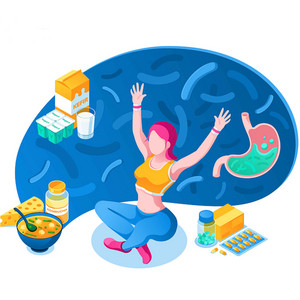
Probiotics have surged in popularity, lauded for their purported ability to bolster gut health and overall wellbeing.
From yogurts and fermented foods, to an array of supplements lining pharmacy and grocery store shelves, they're marketed as a powerful tool for digestive harmony and beyond.
More recently, the beauty industry has embraced probiotics, touting their potential to improve skin health and address concerns like acne and inflammation.
But are these microscopic allies truly the cure?
All that they are often portrayed to be both internally and externally, or is there a more nuanced reality behind the probiotic promise for our gut and for our face?
You've seen them around, right?
All of the products saying probiotic this and prebiotic that that, they are everywhere, right?
So let's dig in a little bit.
We hear those terms. I've mentioned them already.
Probiotics, prebiotics, what are they?
What do they do and what's the difference?
So probiotics, they are the microorganisms that provide health benefits when consumed or used in adequate amounts.
In their earliest forms, probiotics, they were limited to dietary supplements, certain foods and food additives targeting to just help your gut's microbiome.
Which is the natural ecosystem of microorganisms in your digestive tract.
Which is just to help you digest food.
Yeah, your gut microbiome, it helps with the breakdown.
It helps with the absorption of nutrients and it's really, really, really important for your immune system regulation as well and also your neurotransmitter production.
That by the way, if it's not working correctly, if there's too many or too few of certain messengers, it can lead to a whole host of problems, potentially contributing to depression and anxiety and a whole laundry list of potential problems there.
So that means that you have to have the right amount of neurotransmitters at the right time And this makes it crucial for a healthy brain and a healthy body.
So, what can it do for you if you do have beneficial microbes?
Oh, actually most of the microorganisms in our guts have a symbiotic relationship with us.
Which means that we both benefit from the relationship.
We provide them with food and shelter and they provide important services for our bodies.
It's like you live with millions and millions and millions of little neighbors inside your system.
And one thing that some people might not know is that everybody's inner probiotic community is different.
There are different types, there are different proportions, and the ones that are good for other people, or I mean the entire combination, might not be the perfect for you.
So it's all the different.
Yeah, it's different for every single person, right?
So, what would be some examples of prebiotic foods or probiotics?
Let's focus, I guess, today more on the probiotic.
So, what types of foods are we talking about there?
Well, yogurt, kimchi, miso, pickles, some type of cheese, anything that is fermented I'll say.
And also, I like this metaphor of imagining your gut or your digestive system as a diver's native garden that you rely on for nutrients and foods and medicines and all the things we put in your mouth.
So when your garden is healthy and thriving, you thrive too.
But if the soil is going bad, polluted, if pests and weeds are running around and growing inside your system of course your health and the general ecosystem inside your body is going to be damaged.
So that's what the probiotics are for.
That's a great way to put it too, a little garden living inside your belly somehow.
There's a huge market for probiotic drinks, isn't there?
Wow, the drinks, I see them on shelves, usually inside refrigerators and convenience stores.
They're literally everywhere, well globally and here in China too.
So the global probiotic drinks market size is to grow from US $39 .72 billion in 2023 to $98 .52 billion by 2033.
That's a growth rate of about 10%, isn't it?
Yeah, that's a lot.
And that's at a compound annual growth rate of 9 .4, 9 .5 actually, 0 .5 % during the projected period, and also sales in the United States of soft drinks containing prebiotics and probiotics increased 210 % from April 2022 to April 2023.
I was a little shocked to hear that number, 210%.
But even two seconds later, I'm not really surprised by that because it kind of became the catch phrase.
I don't know how to describe it exactly.
But you just started to see these products just everywhere.
And all of a sudden, within the last few years, right?
Here on the roundtable, we talk a lot about people having better awareness of maintaining a good health condition of especially the younger generation going for better foods.
By saying better, I don't mean more delicious but healthier foods.
And we constantly are changing or, excuse me, chasing the super foods we're chasing after prebiotics, probiotics, prebiotics, by the way, are foods that act as food for human microflora.
So prebiotics are used with the intention of improving the balance of these microorganisms. So that's pretty - It's food for them.
It's food for them.
So you want your body to have healthy beneficial probiotics and you feed your healthy probiotics with prebiotics.
Yes, exactly. It's food for the garden.
food for the garden.
And the idea here is that we chase after all these different types of food, drinks, products that are claiming themselves to be healthy.
Yeah. And there's a lot of things on the market that make a lot of claims, right?
Yogurt drinks, probiotic yogurt drinks, probiotic shots.
I'm not sure if you've seen those before.
I've tried those before.
Oh, have you? Are they, are they, are they good?
Do they taste good?
idea. I mean they taste plain, but by saying I have no idea, I mean I don't know what they do to my body.
Well we're going to learn exactly today.
There's probiotic soda, probiotic milk.
I like those. Yeah.
Water -based probiotic drinks.
Also probiotic fruit or vegetable juices.
Those are fortified with probiotics.
So if we can get, but we've mentioned foods already, right?
So if we can can get naturally pro and prebiotics from foods, then is taking them in a supplement form really necessary?
It breaks my heart to say this, but in short, the benefits are negligible.
So not that obvious.
I've been taking bottles of bottles of probiotic, well, not drinks, but tablets and capsules for a few months by now.
And it's sad to hear that while the research on probiotics themselves is still in its infancy.
Even though early studies have suggested that they can support everything from immunity to digestion and even mental health, the science is still rather thin at this point.
And one review find that probiotic products, including capsules, the ones that I've been taking, as well as drinks, biscuits, and sachets, may be of no benefit since there was no evidence they change the composition of bacteria.
Did you after taking these supplements over a period of time, did you notice any difference whatsoever?
I'll say it helps to prevent diarrhea in a better way.
I've got this digestion system that's prone to diarrhea.
Let's say I can test food and I get the symptoms while other people don't.
So for me the biggest change is when I find out that the digestion system is telling me, yeah, you are OK, you can eat a bigger range of food than previously.
So that's the main observation for the Hasmon. So you did see a difference then?
Yeah, that's right.
I didn't. For me, for my, Good, not for her, for you.
No, no, I mean, I didn't see a difference because I've tried these products as well.
But after today's research, I realized that for these kinds of products or drink or shots to work first we have to approve that they have an actual effect on our health and that that effect was there for a significant proportion of people.
So maybe it's working for Yuxian, but it might not be working for me.
Or maybe I didn't find the right product for me.
And if you really think of the probiotics, they can only live, most of them can only, I mean, most types can only live in four to eight degrees Celsius.
And if you think about going into the factory and drink from there, um, I don't know, production line, then it might can, it might be able to make sure that the probiotics are in that state.
Other than that, when they stopped producing and put them into the bottles, the storage, the cold chain supply when they're in your home, whether or not you've put them in the fridge where you should, can all affect the situation.
And, of course, they have to survive your digestive system when you actually consume them.
And that's the point that I was waiting to get to here, because research has questioned that positive of making it a part of your daily routine, because the beneficial bacteria needs to make it all the way to your digestive tract.
and there was a study that was done that suggests more needs to be done to protect consumers from false and misleading claims in this area.
So what are we talking about when we say the probiotics need to make it to people's digestive tracts?
What does that mean?
It means... Yeah, that means that upon putting that capsule inside your mouth it goes - Or the delicious yuca.
It needs to go through your digestive system.
Your stomach acid. Your stomach acid and survive that.
So one small study at University College London back in 2014 showed that same result which tested eight probiotic products and found that only one of the probiotics tested survived gut acid and then flourished in the intestines.
And I think that is why in a lot of advertisements, we see people say, ah, in our product we have 10 billion of this kind of probiotics in it.
And it doesn't mean that all 10 billion would arrive where they should.
It just means you have a better chance of having one or two arrive into your gut and surviving the stomach. And even that, even after that, remember, there is a already very mature community living in your garden already and that community needs to be very welcome to the newcomer and the newcomer has to set foot there and start to produce generations and generations of later probiotics which is a problem.
It's almost like an adventure movie for the probiotics and here's another point on top of what you just said.
Look out for probiotics that have a lot of sugar like these yogurt drinks or other drinks that have a lot of sugar, because the sugar can apparently make it difficult, even if the probiotics do survive the difficult trip through your stomach acid, even if they do make it to the apartment complex, so to speak, the sugar might give them a hard time in actually settling in and doing their job.
Yes, but without the sugar, you will find it too disgusting to consume the yogurt, which is why in a lot of those drinks, there is a higher than should be amount of sugar, but they also want you to consume a daily for a certain period of time to make sure that out of the 10 billion probiotics per day adventure of your one month period of having it, you can actually have some in your gut and start reproducing.
And even if that happens, even if your garden, your community starts to welcome the newcomer and having them I don't know, a habit, live there, you still need to live a very healthy life because do you still remember the prebiotics?
You have to eat healthier.
You have to eat fiber intensive food so that your little neighbor in your garden have food and can survive.
So that's a whole lot of thing to do to keep yourself healthy.
I love the way BBC2 put it.
And this is kind of a reiteration of what we just said But I think this is the most important part for consumers to know.
BBC explained it like this.
In order to be able to say that probiotics definitely benefit our health, we'd have to prove that the live bacteria from the products first survived being eaten and passed through the stomach, which is highly acidic.
Then they have to find a home in the gut where they can stay and breed and would have to significantly boost the existing population there.
Then we would have to prove that they are having an actual effect on our health and that the effect was there for a significant proportion of people and that is a lot to prove.
That's a long journey to make.
And all that being said, we don't mean you should not care about your health.
We're just saying here There's no magic portion.
Magic potion out there.
It doesn't mean you take this specific type of product full of probiotics, it can cure your problem, your immune system or anything like magic.
It doesn't work like that.
Yeah. We're just saying do your research on the products.
Be aware of this information.
So for consumers, then, I mean, what tips can we give people when it comes to probiotics?
What, what should people be looking for?
To start with, in China, only two health claims are officially permitted for probiotics, regulating the gut microbiota and improving immunity.
So if you come across marketing that makes extravagant claims about probiotics, be sure to evaluate them objectively and make sure if they are saying things that are not even allowed in the Chinese market, they're definitely not doing the right job.
That's the first thing.
And also, we've already mentioned, we need to do a lot of things to make your inner garden healthier.
Not only to give them good citizens but also provide them with good environment.
Meaning that staying up late is hurting the garden and the citizen living in the garden.
Eating too much food that are deep fried with no vegetable is starving your little citizen in the garden and having a sudden illness situation so that you're eating or having or taking, let's say the kind of antibiotics medicine would harm the garden.
so live a healthier life would definitely be tip number one.
And very quickly for your skin because I mentioned that the makeup industry has products with a lot of probiotics.
Experts suggest that for people who don't have a skin disease but who might want to increase the smoothness of their skin or prevent wrinkles or boost hydration levels, there is little little evidence that probiotic creams readily available in shops will have any benefit whatsoever.
And I think an important point just before we put a bow on this topic, it's important to know that probiotic skin treatments are classed as cosmetics and not medicines, and their manufacturers don't have to share the results of trials that may have been conducted on their products, so what that means is that it's difficult to know how effective they are.
Goodness me, so much to be careful of, huh?
Hopefully that information was helpful for you the next time that you're going out to try to do something friendly for your gut.
Coming up, what if the question, baby I love you, will you marry me, was replaced with, baby, I love you.
Will you gain 15 kilograms with me?
Not exactly the same romantic flair is it?
But does that happen?
You're about to find out.
Looking for passion?
How about fiery debate?
Want to hear about current events in China from different perspectives?
Then tune in to Round Table, where East meets West, and understanding is the goal.
Ah, the honeymoon phase.
Between the blissful cuddles and the shared takeout menus, a curious question often tiptoes in almost as quietly as those extra snacks appearing in your refrigerator.
Could it be that the comforting embrace of marriage extends a little too comfortably, perhaps leading to a few extra kilos as we settle into domestic bliss.
does saying I do sometimes lead to saying, I do want that piece of second chocolate cake?
What do you think? Yes, as long as it's shared, right?
I mean, it's what it means to be within a relationship, right?
I've never been married before, guys, don't look at me like that, but here, I'm just sharing my insight on this.
That is, if you guys agree to, you know, share this life together, then certainly sharing good food that of course might put on extra pounds on your weight, is part of that process naturally, right?
Does marriage make you gain weight?
Before we get to the research, what do you expect the answer to be?
Yes, definitely. Totally.
And that's it for today's round table.
That is exactly the answer.
New research shows a shocking, maybe not so shocking link between marriage and excess pounds.
So here's what they did.
A team from the National Institute of Cardiology in Warsaw, Poland—we go to Poland for this research—they found that getting married can in fact make you overweight or obese but it's not the same for men and women.
For men, marriage triples the risk of obesity and increases the risk of being overweight by 62 percent.
Boo. Conversely, being married had no impact on the obesity risk for women, but it did increase the risk of being overweight by 39%.
So slightly worse news for the guys today than it is for the ladies.
There are actually a lot of different types of research out there from different countries, from different research teams. We see another research, a 10 -year -long study from an Australia team.
They followed over 6 ,000 women and found that individuals in stable and happy relationships gain an average of 5 .9 kilograms. And some gaining up to 1 .8 kilograms per year.
Stable and happy relationships?
What about the unstable and unhappy relationships?
I wonder if they studied that?
I bet they didn't study that, I don't think so.
I would say. I'd be curious to know the effects on weight levels.
What do they call that?
They call that happy fat.
They call that happy fat.
Apparently, happy fat is a thing here in China as well, we call it happy fat too.
It's more when you're in a stable relationship.
There are different stages.
The first stage would be you have feelings for each other, but you don't even know if you're in a relationship or not.
There's the anxiety.
There is the excitement that makes you wanna think about your relationship only, not any other things, not even food.
You just think about the significant other -to -be and thinking, hmm, whether or not we end up together.
You're talking about in the dating phase.
In the dating phase.
And in a dating phase, mostly, people are getting, actually they're losing weight, because - They're getting fit.
Yes. They're getting fit for the significant other.
They're also focusing on the relationship a bit more, And then you are in the honeymoon phase, which for some people is when they get married, if you're in a honeymoon phase, again, that's when the Australia research is focusing on and during that phase you're happy together when you are happy, you tend to do things that will make you even happier, like sharing a piece of chocolate cake would definitely make me happier and that would lead to the gaining weight phase, but once we get married, actually, there are two different types of situations.
One is to gaining weight a bit more together all together and forget about there are other people outside of your marriage who also care a little bit of your health.
And there is also a possibility of the people, the couple getting into the marriage, and they want to lose weight together.
Yeah, that's very commonly seen on social media like RedNote.
We see a lot of videos like that before and after videos of when a couple first got married and then two years later there's the chubbier version of of their pictures being shown and then they go to the gym together and tell the later half of that story of how they lose weight and get back in shape.
So that's something that young people pay attention to nowadays I would say.
It's too common to the extent that people have a term for it they call it cold obesity or cold gaining yes it is a term coined in 2017.
They say marriage couples who those who are cohabited for over two years are more likely to experience the cold obesity effect.
Yeah they talked about this in the study from Poland too.
They found a stronger link between marriage and obesity in men in the sense that wedded men, married men, were over three times more likely to develop obesity than bachelors.
And that made me think, do they need to study this?
Is this not just a team of researchers dedicated - How much time do they dedicate to this?
Just ask your buddies, yeah of course, everybody does it I think.
Yeah. But I think there's another...
Well, echoing what Yushan has said about, they lose weight together.
Actually, a couple would lose weight together because research also shows that after marriage people tend to resemble their partners more physically.
Oh, like, actually look like that?
Yeah. Actually look similar.
Yes. And greater...
Do I look like a Korean woman now?
Well, give yourself around five years.
Because the greater the marital happiness, the more similar the couple becomes and for the really, really loyal listener of Roundtable, if you still remember Xiaohua, she, well, I have met her family, her husband and herself and their daughter.
In Chinese we say it's like their faces are copy and pasting.
That's cute, isn't it?
It's really cute. I mean, I guess it's just a, it's a natural thing then right?
right for couples in the beginning of the marriage, maybe stay a little bit on the thin side, and then you get to that happy fat phase, and then together you want to maybe make an effort together to exercise a little bit more.
I don't really see any problem with this.
Do either of you? No, the only thing is that with more and more people focusing on having a healthier lifestyle, and with the country advocating for a little bit of weight control, maybe instead of gaining weight together, we can ask people not only here in China, but around the world to go to the gym together, lose a bit of weight together and look similarly prettier together.
And you asked what the study is about, Steve.
I think it's about studying your level of happiness.
We call it Happy Fat after all, right?
The happier you get, the ratio of overweight is a bit higher, but it's OK, as long as you're happy.
As long as you're happy, that's the point, right?
And that will do it for today's Roundtable.
Thank you Niu Honglin and Yu Sean for joining the show.
Thank you so much for your time as well.
You can find us at Roundtable on Apple Podcasts, and I'm Steve.
Thanks for your time today and please do come back again next time.