This BBC podcast is supported by ads outside the UK.
Round off your 2025 with a brilliant podcast from the BBC World Service.
13 Minutes is the podcast telling epic space stories, from the first moon landing to the creation of the space shuttle.
Unlike any spacecraft we had ever flown before...
The Con invites you to enter a world where nothing is as it seems.
There was somebody out there who's faking pregnancies.
What does she have to gain from this?
And CyberHack investigates alleged cyber gangs and the heists and hacks they're accused of committing.
The largest cyber criminal case in the FBI.
Search for 13 Minutes, The Con and CyberHack wherever you get your BBC podcasts.
This could be the Hollywood takeover of the decade.
Our deal is pro-consumer.
It's pro-creative talent.
It's pro-competition.
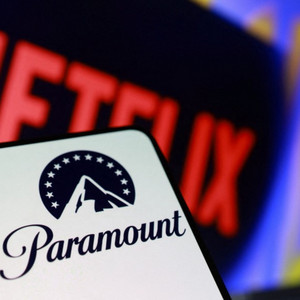
Yep, Paramount is bidding again for Warner Brothers Discovery.
But do the regulators agree?
I do think our enforcers will take a very close look at this deal.
This is World Business Report from the BBC World Service.
I'm Ed Butler, and today we're going to be looking at those latest twists in the dramatic tussle to win Warner Brothers Discovery.
Will it be Paramount Skydance?
Will it be Netflix?
Will it be neither of them?
Also in the show why Russia's oil price is crashing and the Chinese city that more than any other makes Christmas sparkle.
Well, let's start with let's face it the type of boardroom drama that Hollywood scriptwriters just dream about.
The world has changed.
And some things that should not have been forgotten were lost.
But the ring of power has a will of its own.
Evilist.
Yeah, a trailer there for The Lord of the Rings, part of the back catalogue of the lucrative Warner Brothers film series.
And Warner's now finds itself the prey of two circling corporate predators.
The American billionaire Larry Ellison has today promised more than 40 billion of his own money, he says, to help subsidise an improved offer from the American US media giant Paramount to buy Warner Brothers Discovery.
Mr Ellison's guarantee is an attempt to resolve doubts over how Paramount could finance a hostile takeover bid, one worth 108 billion, it said.
Lauren Hirsch is a New York Times reporter.
She's with me to take me through all of this.
Lauren, you better just start us gently with the beginning of all of this, because this drama keeps changing, doesn't it?
The history.
First of all, we had Netflix, didn't we?
A few weeks ago it made the bid for the movie studios just the movie studios and the streaming services a smaller offer of 73 billion plus debt.
Yes.
So there have been two main bids that we in the media have been focused on.
There has been Netflix's bid for part of Warner Brothers' business.
As you mentioned, the streaming and studio.
And there has been Paramount's bid for the entire company.
Last week or two weeks ago, Warner Brothers said that they thought that Netflix's deal was better for its shareholders and it was going with Netflix.
Paramount very quickly said that they were unhappy with Warner Brothers' decision.
It thought it made a mistake, and so it did what's called a hostile bid.
It went to Warner Brothers shareholders and said, your board made a mistake in rejecting us.
We're offering you the better deal.
Come to our side.
Take our offer.
Warner Brothers last week effectively said Warner Brothers shareholders don't do that.
It is a mistake.
We have major concerns about Paramount's bid.
And one of the reasons why we are so concerned about Paramount's bid is Larry Ellison, the father of David Ellison, the CEO of Paramount.
Larry Ellison has not personally guaranteed that bid.
And because he hasn't personally guaranteed that bid.
If it falls apart, We have no way of getting our money back.
We're in a bad place.
So they said, don't take the offer.
But now he has stepped in and he will understand.
Exactly.
Now he says, you're moved, Warner Brothers.
We've taken care of that.
What are you going to do next?
Right.
So this is the drama.
And Larry Ellison is a key personality, isn't he?
Because he's not just one of America's richest men, the co-founder of Oracle.
He's also said to be a close friend of President Donald Trump.
Exactly.
Close friends of the president and the president is expected to have a major role in this deal.
He has said that he would be involved in any review.
Now, technically he's not supposed to be involved in antitrust reviews, but his presence looms large.
So there is a really big microscope right now on the relationship between Larry Ellison and the president.
Yeah, well, I'm going to talk about that now.
So just hold fire.
I'm going to come back to you, Laura.
One of the issues to be resolved is whoever wins this bid, will it get regulated over?
And will a newly merged company even be just too big, defying national and international antitrust laws?
I've been speaking about it with Philip Berenbroek.
He served as a chief counsel for the US Senate's Judiciary Subcommittee on Antitrust Matters.
Both deals create competition and antitrust concerns under US antitrust laws.
Different flavors of concerns, but both create substantial risks under our antitrust laws.
Which one looks more vulnerable, do you suppose?
You know, I think they're both vulnerable.
The Paramount transaction.
That seems to be in second place right now, but that transaction would further consolidate two of the largest movie studios.
There are only five remaining studios, major film studios.
This deal would further consolidate that marketplace.
It would consolidate the streaming marketplace and then, unlike the netflix deal, you know, it would combine the cnn cable news network with paramount's cbs broadcast network, which has a large news component.
So if you're concerned about sort of consolidation of media and the way the American public accesses news and information, that's a big red flag.
And it would be larger, wouldn't it, than Disney in terms of the studio?
And there would be that.
Netflix.
Of course, it would cement Netflix's dominance in streaming, creating a group with 428 million subscribers I was reading, which does sound like a very large number.
Yeah, I think that's right.
I think you described this transaction makes Netflix by far and away the largest streamer.
It's already the largest.
This would combine the first and either the third or the fourth, however you count HBO.
And yeah, there is some concern about whether the federal antitrust authorities, at least in the US, will step in under this administration.
Luckily we have state antitrust enforcers and our state attorneys general that can also step in and challenge a deal if the federal authorities don't.
Larry Ellison is a longtime friend of Donald Trump, we understand.
I think he's played that card, the Ellison family have, in developing the Paramount bid.
I mean, could that play in his favour?
I think you're right.
So I think one of the pitches that Paramount has made about this deal is that it thinks it can get a deal approved, whereas it doesn't think that Netflix or Comcast, who is the other bidder, could get the deal approved, ultimately by the Trump administration.
I think that could come into play with regards to the federal antitrust enforcers.
I think you have a president who has made pretty clear that he relishes being a dealmaker and he perceives himself to be that in this case,
But again, we do have state antitrust authorities that can step in if the federal enforcers don't do their job.
So we anticipate that could happen.
But President Trump as a dealmaker means what in this context?
I mean, we've got two different companies going for one particular studio.
How does President Trump make this deal?
Right.
I think your guess is as good as mine on that.
I think he envisions himself, as you know, someone who wants to be in the mix on this deal because it's in the news.
It's a very flashy transaction involving a Hollywood studio.
So I think that's it's very appealing for him.
And I think he, you know, sees the news coverage as something he wants to be part of.
But yeah, I don't exactly know what what it is he envisions his role as being.
The Netflix CEO, Ted Sarandos, says he's confident that his deal, at least, would win regulatory approval.
Warners, I guess, take the same position.
They think it's fine.
I mean, what do you think will happen?
Do you think the regulators in the US at least will step in?
Do you think European Union regulators might get themselves involved?
This is a global marketplace.
This is a global industry.
So I think regulators from around the world can and should be looking at this transaction to see how it impacts their local markets.
For instance, Warner Brothers has a television studio, a UK component of that television studio which would be impacted?
I do think at some level here in the United States, whether it's the federal enforcers or whether it's our individual state attorneys general, I do think our enforcers will take a very close look at this deal.
But at this point, we don't know exactly which deal it is they'll be looking at.
So it's a little bit difficult to forecast.
Antitrust lawyer Philip Berenbroek.
Lauren Hirsch, New York Times reporter, still with us.
Lauren, I mean, I've seen different takes on this.
Some saying the Paramount have now, you know, they've addressed Warner's concerns.
Others saying this hardly shifts the dial.
I mean, they haven't increased their $108 billion offer.
I mean, what do you think?
What happens next?
I'm gripped.
I'm on the edge of my seat.
Well, that's good, as we all are.
So what happens kind of logistically next is Warner Brothers needs to respond.
And it will basically decide between the two options you laid out.
It could say, well, you've addressed one of our main concerns.
We're going to open up a dialogue with you because you may potentially give us a better deal than Netflix.
And our deal with Netflix allows us to do that.
Or they'll say thanks for addressing one of our concerns.
But we've already done the math, we've already done the analysis and we think, purely from a numbers perspective, Netflix offered the better deal.
So that is what could happen next.
And in either case, right there's Netflix and Warner Brothers, who can choose to kind of further ruffle the feathers.
But this could run for months, potentially.
Oh, expect it to run for months, yes.
Lauren Hirsch, The New York Times.
Thank you very much indeed.
Now, in a surprising but perhaps little noticed development.
Today the price of Russian crude oil dropped.
And it dropped quite a lot.
This as global oil prices were increasing.
Well, it seems that the US efforts to sanction Russia's major oil companies have begun to have an impact.
Russia's crude is now priced at under $35 a barrel.
Compare that with $60 or more for the other major oil producers' exports.
I've been speaking about this with Alina Rybakova.
She's an economist with the Peterson Institute for International Economics in Washington.
Was this drop in price in Russia significant, I asked her, and what did it imply for Russia's war economy?
It is an extremely significant drop.
Of course, we need to be careful about estimating these numbers.
We have seen before, when we showed wide discounts and then they were not actually confirmed, or maybe they narrowed very quickly as Russia found workarounds.
But it is even more significant drop than we have seen at the beginning of the sanctions in 2023.
What was the number recently?
I mean, what have we been seeing lately?
So Russian Urals was trading closer to 50 just a few months ago.
And now we're seeing the estimates closer to 33, 35 dollars per barrel.
This is a significant drop given the assumption for the budget for next year is 59.
Is this because of US sanctions?
Of course, those sanctions were taken out on Rosneft and Lukoil, the two biggest oil firms in Russia, a couple of months ago.
Or is it because of military moves by the Ukrainians against Russian oil tankers and facilities in the Black Sea?
I'm afraid it's hard to disentangle these two factors.
I think it's a combination of the two.
We definitely saw reaction in the market first to the Rosneft and Lukoil sanctions.
Let's not forget that Rosneft and its subsidiaries accounts for almost 50 of Russian oil exports and Lukoil probably is another 15-12 of total exports.
So it's a big hit to the market.
And at the same time, Ukrainians have been attacking the ports and also the shadow fleet.
And that's likely also having an impact on the margin.
How much of a threat is this then to the wider stability of the Russian economy?
I mean, standing back from the specifics of an oil price fluctuation.
It is coming at a very inopportune moment for the Russian economy.
We're likely to have a recession end of this year, early next year.
And even the Central Bank of Russia is not expecting a recovery until well into 2026.
We're likely going to have maybe half a percent growth this year, maybe another half a percent one percent growth next year.
And the budget deficit is already widening.
If 35 a barrel became the norm, let's say for another several months, how quickly does this start to unravel then for Russia and its wartime economy?
If 35 per barrel stays for the next year, Russia is likely turning into Iran Venezuela, North Korea.
And that will be very difficult to continue the war.
It would not be impossible, but it would definitely weigh heavily on the domestic population.
The break-even price for the budget is very high at the moment.
And other non-oil and gas revenues will also fall.
You know, Russians were very happy that the oil and gas revenues are a smaller percentage of their total revenues, but they're forgetting that this is just a cyclical effect of the booming economy.
Now, of course they're raising VAT and other taxes, but if you don't have consumption much right, you're not going to have a significant pickup in this other non-oil and gas revenues as well.
The thoughts there of the regional economist Elena Rybakova.
Well, Peter Jankowskis was listening to that.
He's vice president of research and analysis for Arbor Financial Services in Chicago.
Peter, it's interesting, isn't it?
The international price of oil has actually been creeping up in the last few days, just as Russia's oil exports price has come down 60 a barrel.
I mean, is this in response to what's happening in Russia?
Or is this more about what's happening in the Caribbean right now?
I think it's likely to be more about what's happening in the Caribbean.
But of course they are somewhat related, you know, in terms of both having military blockade type features, risk to tankers, all of those factors coming into play.
Yeah, the US is blockading Venezuelan oil tankers.
And today again it's saying it's an active pursuit of a third oil tanker, allegedly one carrying sanctioned oil.
That's drawn protests from both Russia and China.
The price of oil is one thing.
$60, I guess, still remains a pretty low number by recent standards in terms of the global economy.
But...
What is going up is the price of gold.
Tell me about this.
Well, I think there is certainly a geopolitical component to that.
Always in times of crisis, you do see gold pick up.
But I think another factor is just in general some concerns about inflation.
The US Federal Reserve has lowered three times.
There's expectations they'll continue to lower next year, even though the US economy right now is operating at a reasonable clip.
And there's concerns that that's going to simply drive up prices.
I want to switch to a slightly more domestic US story now, which is the Trump administration's announcement.
It's suspending construction of all large scale offshore wind farms, citing national security concerns.
I mean the Trump administration has.
Well, I think the election campaign last year was built to some degree, wasn't it?
On an anti-renewables platform.
How do you see this playing out?
And I suppose, how significant do you think it is in terms of some companies' performance?
Well, I think it will certainly be a drag on the larger players in that space.
I think GE had gotten out of their wind turbine business, so it won't be impacting them.
But there are others where there'll be a strong impact, I think.
And in general, a lot of the Trump policies have been disruptive in various areas.
It remains to be seen what the long term impact is.
But in the short term, it's definitely putting a lot of strain on many companies.
Peter Jankowskis, thank you very much indeed.
Round off your 2025 with a brilliant podcast from the BBC World Service.
13 Minutes is the podcast telling epic space stories, from the first moon landing to the creation of the Space Shuttle.
Unlike any spacecraft we had ever flown before...
The Con invites you to enter a world where nothing is as it seems.
There was somebody out there who's faking pregnancies.
What does she have to gain from this?
And CyberHack investigates alleged cyber gangs and the heists and hacks they're accused of committing.
The largest cyber criminal case in the FBI.
Search for 13 Minutes, The Con and CyberHack wherever you get your BBC podcasts.
You're with World Business Report from the BBC World Service.
Now, when it comes to matters on the pitch, Morocco presumably could not be happier.
At the moment with its opening match in the Africa Cup of Nations.
It played on home territory and with an audience of more than 60000 in the stands watching the Moroccan football team comfortably beat Comoros by two goals to nil.
And yet this tournament has attracted controversy even before it began, with protests sparked in part by anger at the vast sums that Morocco has been spending to host the tournament.
Kalista Enegele is a freelance sports journalist and she's in Morocco covering the competition.
Morocco is actually hosting most of the tournaments happening in Africa and they are on the verge of hosting the World Cup in 2030.
So a huge investment has gone into that in terms of infrastructure, logistics as well.
I'm reading 16 billion US dollars to host this tournament.
Because you have stadiums, renovations there.
You talk about hospitality.
You talk about trains.
You talk about airport renovations, hotels.
And naturally, Morocco is a tourist country.
Not today.
People do visit Marrakesh.
But when you talk about investing huge amounts of money into stadiums like you, look at the Rabat Stadium in Morocco.
Here was renovated for the AFCON as well.
And the Mouleh Hassan Stadium was renovated.
You look at the Medina Stadium in Rabat to get it ready for the AFCON season.
And I think it's paying out for Morocco, because when you talk about the AFCON, the WAFCON, they are hosting it.
They just won the under-17 World Cup, under-20.
Then they won the FIFA Arab Cup, which they celebrated semifinalist at the last World Cup in Qatar.
So a huge amount of money is going into that.
They're getting what they want.
They're getting the global support.
Exposure, that is what we are talking about right now.
And branding the Morocco Federation is bringing people all over the world to come and see what they are doing in the country to host a lot of people coming in for local businesses as well.
Yeah, but I mean nonetheless, 15 billion does sound very large, doesn't it?
For an African economy?
It's only like, what, 58th, 60th country in terms of size in the world, $180 billion a year in GDP.
I mean, any African economy...
That's a big amount of investment.
This has not gone without notice hasn't it?
There has been some controversy.
Yeah, there have been, because definitely some people want such money to be invested in health care education, unemployment and some protests about how some of the other states in Morocco are not getting this globalization or renovations.
Apart from Tangier, Fez Marrakech Casablanca, some of the other parts of Morocco want that to get into that.
So people are going to be unhappy about that because it's a huge amount of money.
But on the larger run, I think it's what the Morocco Federation, the country as well, has set aside to do and say OK, if we want to become a global country to invest more, we have to invest in sports and take a look at the likes of Qatar.
Saudi, they are investing heavily into sport and entertainment, unlike the previous years.
I think that is what Africa is doing right now, Morocco is doing.
Because you have the Afghan going on and their Nigerian team is here, people from Nigeria, people from other African countries who want to come to watch their country play.
They make money from that.
There is a sense, though, I guess, that also if...
Morocco itself becomes the winner this year, and it certainly fancies itself as one of the leading candidates to carry the competition.
It could become a footballing superpower, with the World Cup coming of course in the next few months as well.
And that will certainly change the mood, even if there is disgruntlement about the amount being spent on stadiums.
Definitely, because for one, if you've ever been to Morocco, Morocco is a footballing nation or a sporting nation.
On every street you see, there's a five-a-side pitch there.
They love to play football.
So winning this AFCON at this time, after investing so heavily in a sport here, it will mean a huge lot for them ahead of the World Cup preparations.
I think...
They stand a huge chance.
They're one of the most complete team in the tournament in terms of preparation.
So they should be able to win this and compete against the current winners.
Who is Ivory Coast and some other good teams like Egypt Nigeria, as well as South Africa.
Freelance sports journalist Kalista Enejeli on the host.
Morocco's rising football ambitions.
Some call it the Christmas capital of the world, a place that provides the world with more than half of its festive decorations.
What started out as a poor rural county in China Yiwu, is now a city booming with traders and international buyers.
But tariffs are pushing up prices on key products from that city, meaning that Christmas cheer for some businesses and consumers in the US anyway could be coming with a bigger price tag this year.
I've been hearing all about this.
Yiwu is a major international trading hub, especially at this time of year.
If you were to imagine that Santa Claus has outsourced all of the production, of everything he produces, it would likely be found in Yiwu City.
That's Han Lin, China Director for the consultancy The Asia Group.
60% of all of the global production of Christmas ornaments, for example, are all produced in Yiwu.
And Yiwu sells to about 500,000 buyers from 200 countries around the world.
There are 50,000 shops in all.
If you were to spend just three minutes in every one of them, it would take you more than a year to get round the maze of arcades here.
Du Darenok, the founder of a Chinese research and analytics consultancy that works with companies in the city, says that Yiwu is one of multiple towns and cities in China built around a very specific category of export.
China likes to have centers of excellence.
For example, in Guangzhou we have a town it's a shoe town or another town that focuses on underwear, and Yiwu focuses on, you know, small commodities or Christmas decor.
A company that I personally know of.
They produce Christmas ornaments and they produce Christmas balls.
They are able to assemble a Christmas ball in about two seconds.
But how secure an industry is this, given the growing cost of all this international trade, especially the trade that's going to the US?
If you look at that, China, first row, China, 67%.
Ever since the start of his second term in January, President Trump has been introducing and then sometimes walking back massive hikes on the import taxes imposed on Chinese goods.
Just in October, a 100 tariff was threatened in retaliation for China's refusal to buy US soybeans and restrictions on its rare earth exports.
There was subsequently a deal between President Xi and Trump, but the precise terms of any enduring trade truce still remain elusive.
It's left many traders in Yiwu predictably frustrated.
Trump, he's a joke.
He tells jokes every day.
Imposing tariffs is like a joke to him.
We used to have buyers from the US.
Now we don't care.
We have rich buyers from elsewhere.
Doing business with them is good.
In America, in this sector, as with other imported goods, prices have been rising.
In the run-up to Christmas, I spoke to Mac Harmon.
He's the founder and CEO of Balsam Hill, a leading brand in Christmas decor.
We've had to raise our prices at least 10%.
It kind of depends on the category.
So as an example, snow globes, you know, a wonderful holiday treat.
We cancelled the orders because the tariffs were so high on those that we just decided it didn't make sense to bring in.
Surprisingly, back in Yiwu, there seems to be no sense of a gaping loss in their export market this year.
Storeholders in Yiwu are no longer as reliant on the US as they once were, switching exports instead to other countries.
That's the end of that piece.
You can hear more though if you tune in to Business Daily later this week.
More on Yiwu, Christmas capital.
That's just about it for this edition of World Business Report.
This on the day that Larry Ellison has stepped in, promising to underwrite half of Paramount's massive bid for Warner Brothers Discovery.
From me and the rest of the team here in Salford, thanks very much for listening.
Round off your 2025 with a brilliant podcast from the BBC World Service.
13 Minutes is the podcast telling epic space stories, from the first moon landing to the creation of the Space Shuttle.
Unlike any spacecraft we had ever flown before...
The Con invites you to enter a world where nothing is as it seems.
There was somebody out there who was faking pregnancies.
What does she have to gain from this?
And CyberHack investigates alleged cyber gangs and the heists and hacks they're accused of committing.
The largest cyber criminal case in the FBI.
Search for 13 Minutes, The Con and CyberHack wherever you get your BBC podcasts.