I put together five of the most challenging American pronunciations that Indians have when trying to speak with an American accent.
And these issues are also common for a lot of other accents from all over the world, so stay tuned.
Now, I have done several individual videos on these pronunciation issues, but on this video i put it all together for you.
And stick around, because at the end we're going to be mixing and matching these five pronunciation challenges into structured sentences, so everything i teach you, you will be able to retain my co-workers late versus my co-workers late.
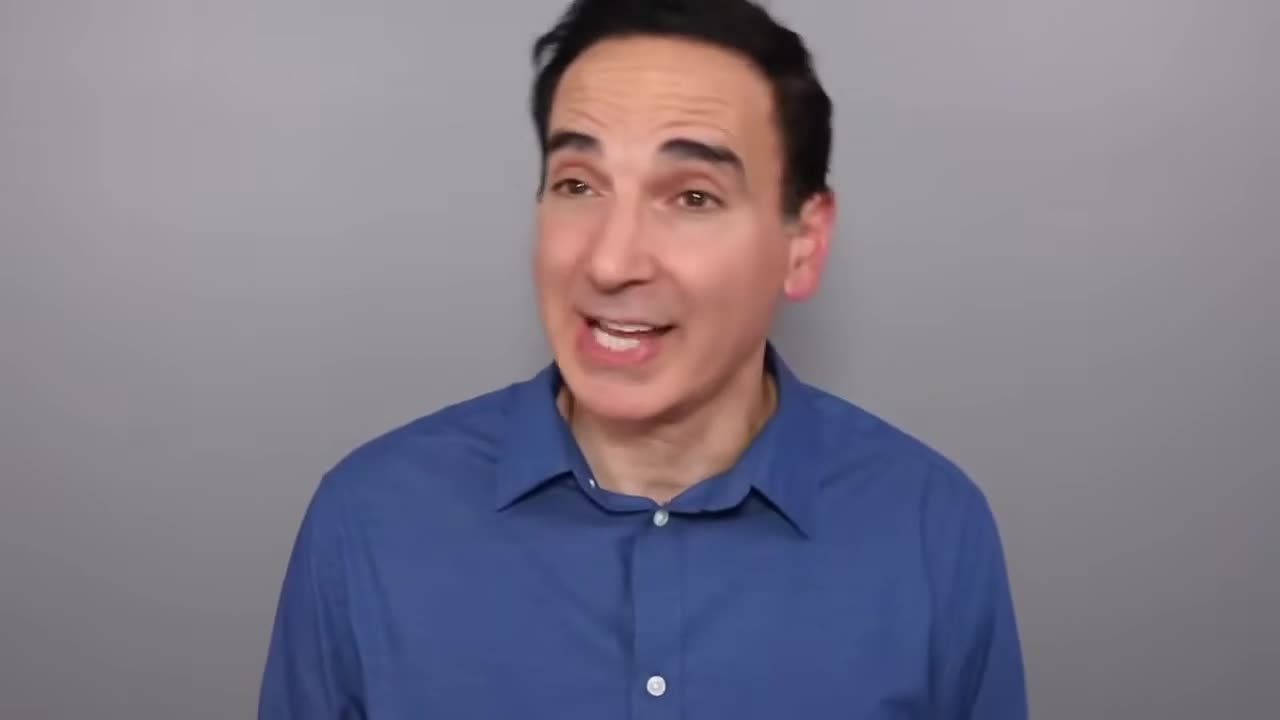
Hey there, I'm Gabriel Barofato from GB Voice Academy, your voice coach to help you get that much closer to mastering the American accent.
If you haven't yet, subscribe to my YouTube channel so you get access to all of these videos.
Also check out my five-star best-selling accent reduction course, as well as my other communication courses, to take your communication to the next level.
So now let's just dive right into it.
The first sound I want to focus on that a lot of my clients miss is the A sound.
You'll hear this in words like today, okay.
Indian speakers tend to go eh eh, today.
Okay, so this particular pronunciation has two different sounds in it a and then e.
You can't have one without the other a.
So the is what's missing for a lot of Indian speakers.
They tend to skip that today versus today.
Do you hear that?
We got to give it that full structure because when you miss it, there's the accent.
Let's look at another word way versus way.
I know way, i know a way.
You hear those two elements in there and it's got a nasal equality to it as well a right versus a a down here.
Let's look at another word.
That's right.
Late.
You see how this particular sound is consistent.
It never changes.
Whether it's today, way, late, it doesn't change.
Versus late.
Sorry I'm late.
Sorry I'm late.
Now, I want to cover something before I move forward.
Sometimes I get comments that, oh, you're making fun of our accent.
You have to understand that what distinguishes me from other accent reduction instructors is that I have the capability to be able to replicate what you say so you could hear it for yourself.
And then from there, we modify it to the American accent.
I do this with all of the accents.
Russians, Hispanics, Portuguese, I do the exact same thing.
I match their accent and then we modify it from there.
And that really makes a difference.
Last one.
Let me hear this one.
That's right.
Make.
Right?
Versus make.
I like to make cake.
Give me that full, full A sound.
I like to make cake.
Now I'm exaggerating, I'm making faces, but this is something that I do just so you're able to see visually where that sound is resonating.
I don't want you out there in public going, hey, today I need to get cake.
See if you can make that sound relaxing your face muscles.
Ready?
Let's internalize this.
Let's do that sound again.
Ay.
Ay.
Good.
Now let's go to the next challenging sound that a lot of my Indian clients have issues with.
This is the sound.
I want you to clench your teeth like this.
Now, the reason why a lot of Indian speakers have problems with this is because of the British influence.
The Brits tend to go .
I've heard of her.
And I know a lot of my clients from India have studied with people from London.
But in America, we really eat that R sound.
So what I want you to do is I want you to clench your teeth and growl like a bear.
That's right.
Let's go through some words.
Work versus look see how loose that is versus clenching your teeth, tightening and choking on your tongue like a bear.
Work, let's try this other one round.
You hear that.
Round.
Versus round.
You need it tightened up.
It's like you're choking on your tongue.
Round.
Let's try this next one.
I put that R in the middle there, right?
Thrilled.
Thrilled.
Versus thrilled, thrilled.
When you see that R, we never ignore it.
We never soften it up like the Brits do.
Thrilled, thrilled.
So whenever you see that R, tighten, tighten, tighten.
You're doing great.
Now remember to stick around, because we're going to put all of these words into structured sentences, to see if your brain was able to retain the information I'm sharing with you.
Now here's a big one.
And it's such a simple fix, it'll blow your mind.
Indians tend to really hit the L sound.
A little more than necessary.
When you come across an L that's in between a word, try relaxing everything.
Let's go back to that word we were doing earlier.
Thrilled.
You gotta hit that R sound, but when you go to that L, relax the tongue.
Thrilled.
Versus thrilled.
Americans never really put the emphasis on an L sound when it's in the middle of a word, unless it's at the beginning of the word.
For example, listen, ladder.
Then the L is hit a little harder.
But if it's in the middle of a word, nice and relaxed, barely even there.
Let's look at this word.
Instead of hitting that L hard, relax that L like it's barely there.
Feels weird, doesn't it?
I'm thrilled that all of you could make it.
Did you hear any L in there at all?
At all?
Did you hear any L in that word?
At all versus.
So remember that l nice and relaxed.
Let's go to the next pronunciation challenge now.
I covered this particular issue extensively in a video.
Indian speakers have a tendency of pronouncing w with a v sound instead of Pretend you're kissing someone.
Give me that pucker sound and then give me a versus .
That's a whole other sound.
Let's go through some words. versus .
Yeah?
W. We.
Yeah, versus V. Now, I threw that R sound in there for you.
We're gonna relax that W and tighten right up into that R sound.
But let's separate it first.
W. R. W. R.
Work.
Feel that?
Versus the Look.
Keep these words that we're covering in mind, because we're going to throw them into structured sentences in a bit.
Now, the last challenge a lot of Indian speakers have is with the O sound.
Again, if you've been taught British English, it's very shallow.
Versus.
The Americans tend to do a deeper version know, so Indians tend to do no, I know.
Again, this sound, similar to the ones we did earlier, has two elements to it oh and then ooh.
Oh, Indian speakers tend to just do the first part.
Oh, I know, versus I know.
Hear that?
You see how there's much more involved with that sound?
Let's go through a few words.
This is a word that we say a lot in casual conversation.
And guess what?
The A sound is in there as well.
Normally, Indian speakers would say versus the full O and then the K sound.
Okay okay, see how there's much more involved in that sound.
It's not just okay okay, okay.
Now the first part is ko versus go, And again we have that R sound that we're working on.
So make sure to tighten up on those R's.
Co-worker versus co-worker.
And we also have that W in there as well.
So you see, as we're progressing, I'm sort of putting all of these issues into these words so you can cover them all at the same time.
So instead of Remember that?
When you practice these individual sounds on its own, then when you come across words that have all of them together, like in this particular word, It's no longer a struggle.
You'll know how to navigate through it.
It's like when you're practicing for a boxing match, you learn separate combinations.
You learn how to do a perfect uppercut and then a perfect left jab individually.
So then when you're in the ring and you got to do an uppercut left jab, it's there for you.
And that's what these videos on this YouTube are for.
Let's look at this other one. no.
Right?
Versus no.
I know.
I know.
Now, take a deep breath.
Let's put all of these words that we were working on together in structured sentences, so it makes sense and your brain will be able to navigate through these words that we've already worked on.
So everything that we're going to be doing from now to the end of this video, your brain will know the patterns because we've been working on it good, so let's just break it down into individual sentences and then we'll put them all together at the end.
Let's look at this first phrase.
We got that w welcome versus welcome right to today's meeting versus today's today's, today's welcome to today's meeting excellent, let's go to the next structure.
There's that w.
Again, we are thrilled.
There's that.
L See how relaxed that is.
Versus thrilled.
Thrilled.
We are thrilled.
Very relaxed.
You are.
There's a relaxed L. Can may.
There's that A sound.
Make it.
Let's put it all together, that sentence.
We are all thrilled you all can make it.
Now do it again without the crazy face that I'm making.
We are all thrilled you all can make it.
Let's go to the next part of this phrase.
My co, there's that O sound we were talking about.
Worker, remember that?
Nice tight R sound.
Is late.
Let's put that together.
My coworker is late.
Versus, my coworker's late.
Good, let's go to the last part.
But it's, there's that okay, okay versus okay.
I know, there's that oh, my way around.
Excellent.
Let's say that more in real time.
But it's okay.
I know my way around.
Excellent.
Now, let's put all that together.
See if you can go through all of these challenging pronunciation issues smoothly.
I'll do it slow first.
Welcome to today's meeting.
We are thrilled you all could make it.
My coworker's late, but it's okay.
I know my way around.
Very good.
Now let's do it a little more in real time.
Welcome to today's meeting.
We are thrilled you all could make it.
My coworker's late. but it's okay.
I know my way around.
Great job.
Now we covered a lot on this video, but don't get overwhelmed.
Remember, everything could be broken down into bits and pieces, like I did on this video and like I do in my other videos.
These are step-by-step approaches to get you that much closer to mastering the American accent.