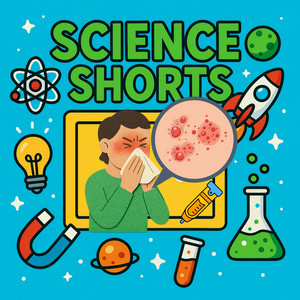
Squiz Kids Science Shorts the show where we take your big curly questions and unpack the big science stories everyone's talking about break them down into snack-sized science-powered answers.
We sort out the fact from the fluff, keep it fun, keep it fast.
And if you want to see these episodes, you can watch them too on the Squiz Kids YouTube channel.
Just look for them in the Shorts feed.
Have you ever been happily patting a dog when suddenly your nose goes wild?
Or watched a friend go red and itchy after one tiny bite of a peanut?
What is going on there?
This week we're asking the question why do some people's bodies freak out over peanuts, pollen or pets?
Let's investigate.
Your immune system is like a team of bodyguards.
Normally they only jump into action when something dangerous shows up, like a virus or dangerous bacteria.
But with an allergy, those bodyguards get confused.
They mistake harmless things like pollen peanuts dust, mites or even skin cells and saliva in a cat's fur for dangerous invaders.
Those harmless things, they're called allergens.
So the bodyguards hit the alarm loudly, even when they don't need to.
When that false alarm goes off, your body releases a chemical called histamine.
Histamine makes your nose run, your eyes water, your skin itch, or your lips might puff up.
Basically, it's your body saying, everyone panic.
And that's why antihistamines exist.
They work by turning down the alarm so your body can chill out again.
They're great for mild allergies, but only ever use them with an adult's help.
So what's the difference between a true allergy and an intolerance?
They are not the same.
An allergy involves your immune system, comes on quickly and can be serious. and intolerance is usually a tummy issue uncomfortable but not dangerous think of it like this an allergy is the fire alarm blaring and intolerance is your stomach grumbling that something didn't agree with it sometimes the immune system doesn't just overreact it over overreacts that's called anaphylaxis and it is serious A giant wave of immune chemicals are released all at once, causing blood pressure to drop and a dizzy feeling that makes the heart beat faster to try and keep up.
Muscles in the airways squeeze, making them narrow and making it difficult to breathe.
And swelling can happen in strange places like the tongue, lips and throat, and they swell because the immune system is pushing fluid into those tissues.
That swelling makes breathing even harder.
An affected person needs help straight away.
That's where the EpiPen comes in.
When it's used, it releases adrenaline, also called epinephrine, which helps to open airways, raise the blood pressure and reset the body's reaction.
Teachers are trained to use them.
If you ever see someone having a big allergic reaction, if you're a kid, your job is simple get an adult fast.
And if you're an adult, check if the person has an EpiPen and call emergency services immediately.
So why do only some people get allergies?
That is an excellent question, Christie.
Part of it comes down to genes.
Allergies often run in families.
Part of it comes down to environment what you're exposed to, especially as you grow up.
Part of it is simply how each person's immune system learns and develops over time.
No one chooses an allergy, and it's never about being dramatic or fussy.
It's just how some bodies respond.
So how do we look out for ourselves and others?
A few simple habits make a really big difference.
Avoid sharing food if someone has an allergy.
Check labels carefully, follow medical plans and listen to adults in charge, whether they're parents carers teachers, coaches and, above all, be kind and considerate.
Understanding allergies helps keep everyone safe.
Had fun, So drop us a five-star review and tell us what you want to know next.
Leave your questions in the comments or email me at squizkids, at thesquizcomau, and you might just hear your answer right here.
On next week's Squiz Kids Science Shorts.