Hey, it's Christopher Kimball from Milk Street Radio.
Sounds like I'm bragging and I am.
We're the number one most downloaded food podcast in America.
You know, Milk Street Radio travels the world in search of the very best food stories.
You'll hear about smuggling eels on the black market, the secret intelligence of plants and insider tips to eating in Paris.
And every week, listeners call in with their toughest culinary mysteries.
Discover a world of food stories by searching your podcast app for Milk Street Radio.
This is Love Letters.
I'm Meredith Goldstein.
In our last episode, we heard Rory Uphold talk about how she realized in a literal haunted house that she might be on a date with someone behaving like a monster.
If you haven't listened to that episode, please do.
It's very funny.
Rory recently published a book called A Final Girl's Guide to the Horrors of Dating.
She explained the trope of the final girl in horror films –
Final Girl being the name for the woman who survives at the end.
Rory wants to be the final girl in her love life to survive all of the messy dating experiences until she finds someone great.
It's fascinating to me how easily horror films and their tropes seem to dovetail so nicely with the way we talk about romance and love in general.
After talking to Rory, I realized I wanted to get deeper into this with someone who has written horror.
I wanted to find out why the scariest scary movies actually seem to be about vulnerability.
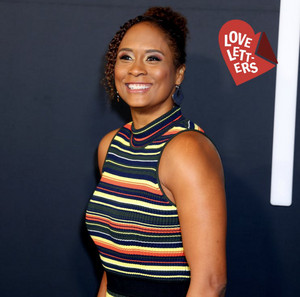
I'm thrilled to tell you that for a very spooky Halloween episode, our guest today is Akayla Cooper.
She's a screenwriter and producer.
You might know her work from American Horror Story or the movie Malignant about a woman who starts having visions of murders.
Or my favorite, Megan from 2022, about a very preppy AI doll who's programmed to take care of a child and will kill a bunch of people to do it.
Megan was scary in a slasher way, and also hilarious and silly.
But in some moments, the movie gets emotional and deep.
It's about a woman whose sister dies, so she winds up becoming guardian to her niece.
The doll in the movie is the horror monster, but the most frightening thing about the film is actually caregiving for a young person.
And that's what I love about Akela's stories.
They're chilling and self-aware, and they know that the highest stakes are in matters of the heart.
Hello, everyone.
Kayla Cooper here with you.
Nice to be on the podcast.
I really appreciate Meredith for having me.
So the reason we were so excited, desperate to talk to you and thrilled that you said yes is because we have a specific podcast about a woman who wrote an essay collection categorizing her romantic life with horror tropes, like the time she was with menacing clowns, the time she was zombies.
And I just thought, like, I'm a big horror movie fan more than I ever thought.
I think I just never really admitted it to myself, partly because it helps a person process complicated things, I think
But I would just love to know how you became a horror person.
I grew up you know full honesty with two parents who let their kids watch Most things with them, like obviously they were boundaries.
But for the most part, we all watched R-rated movies with our parents.
My dad loved John Carpenter's The Thing.
I would watch it with him, but also I would recognize him like oh, this is about to be a scary part.
And then I would duck behind the couch because I knew to self-censor, wait for the scary part to be over, and then climb back over the couch and sit next to him again.
And so that was my upbringing.
And so I guess that is kind of, in a way nurture, but it was all I always had.
This I like, I guess, desire maybe to like scare people.
And I would scare my mom cause she was the easy one.
Like I would hide behind corners and like wait for her to come out of the bathroom or the kitchen or all this other stuff.
And like, just, you know, her.
And at one point she told me, you got to stop or else you're going to give me a heart attack.
And I'm like, well, my intention is not to kill you.
It's just to scare you.
Okay.
So I have to like rethink things.
But for me, horror has been a constant in my life.
Horror just stuck for whatever reason.
It just, horror just felt right.
I love that.
Horror just felt right.
I don't know what age I was when I started to see the layers of these stories, right?
Like I have an older sister who definitely watched a lot of nightmare on Elm street.
And I watched a lot of that with her.
And you go from the kid who is like, knives are scary.
Knives for fingers are scary.
Gross creepy creatures are scary to getting to a place where you're like Oh, nightmare on Elm street seems to also be about like the collective trauma of a community that has a secret that punished a man who did a bad thing.
I mean I'm, I think I'm remembering that plot line well, but that there was Yeah extra, extra judicial justice.
And for those who don't know, from my memory, Freddy Krueger did some bad stuff.
He did.
He killed children.
That is the thing.
Freddy became such a ubiquitous like comedy horror villain that people forget he was actually a child murderer.
He killed kids, and then the parents were like, not in our...
Suburban community.
I think it's because he got off on a technicality or something, and that's when the parents were like oh no no no no, no no.
And then they took justice into their own hands.
And then he came back to kill their kids in their nightmares later on.
Yeah, and I was probably later in my teenage years when I was like oh, the fact that this is suburbia, the fact that this plays into parental fears about protecting their kids, all of this stuff seemed to be much more emotional and not just as simple as scary person does scary things that these were all greater metaphors for things we worried about in life.
And I wonder when that kicked in for you of like, oh, oh, this is a metaphor.
Or perhaps you figured that out way earlier than I did.
Early on, I took horror movies basically at face value.
Like John, again, the thing, it's like dudes trapped in an isolated area.
It's about paranoia and distrust.
Now we look at the thing and it's like, oh shit.
And like it's kind of prescient in how people will turn on each other when faced with an outside threat.
I think like one of the early tropes that I did notice, just as a black female horror fan is just like the black guy dies first.
Every time a horror movie would come on and there would be a black guy.
I'm like, oh well, I know where this is going.
Like, oh, he's going down.
Yep.
Yep.
And now he's dead.
Okay.
Okay.
And in this movie for me to identify with.
And that really was kind of the case for a really long time.
And I actually didn't see myself as a heroine in horror films until Tales from the Crypt, Demon Knight with Jada Pinkett now Jada Pinkett Smith.
Like she not only survived, but she saved the world.
Can we talk about Megan?
Yes.
Tell me about the birth of Megan.
Yeah.
The birth of Megan, I guess I could say the conception of Megan, not to make it weird, started in an office space at Atomic Monster on the Warner Brothers lot at the time where their offices were.
I had a general with those guys and we all hit it off like we're all horror lovers, which for me was actually like really rare thing at the time, like I would take a lot of general meetings with executives who did not like horror and like some of them just openly disdain horror.
But to just sit there and you have a meeting where we're all basically just like shooting the shit, talking about all of our favorite horror films.
I was like oh, this is really refreshing, like they get it, and I don't have to explain tropes, I don't have to explain anything else.
It's like they we're speaking the same language basically, and And so as that meeting came to a close, they were like hey, internally they had been kicking around wanting to do an updated version of Child's Play.
Child's Play, the 80s movie about the doll that's also a serial killer.
Hi, I'm Chucky, wanna play?
Except they didn't want it to be supernatural.
They wanted it to be scientific, like AI-based.
So they were like, hey, if you have any thoughts on that, like, we'd be happy to hear it.
And I was like, oh, okay.
And so, just leaving in my car, driving off of the lot, the name my brain immediately shoved to the forefront was Megan.
I knew it needed to be an acronym for something.
I'm like, I'll think of the acronym later, but it's Megan.
Like that is who this doll is.
You need to learn some manners, Brandon.
You know what happens to bad boys that don't mind their manners?
They grow up to be bad men.
Akayla then explains how this story idea about a creepy doll then connects to love her own love combined with her own fears.
I have a sister who's 10 years older than me, and she has two kids.
And when I first moved to LA like fall of 2004, like around, I want to say 2007 I was like busting my ass as an assistant.
My sister reached out to me because she and her husband were like, I think at the time they were creating their living will or whatever.
And she was like hey, if anything happens to me and my husband and if anything happens to our parents, like my mom and dad, we want the kids to come to you.
And I'm like the baby of the family.
My brother is in between us.
And I'm just like, wait, I'm again, a broke ass assistant.
I am in no position to take care of two children.
What the hell is wrong with you?
And she's like, hopefully it never happens.
And I'm like, God forbid it does.
That interaction always stuck with me.
I'm like no, you're not going to dump two children onto someone who herself is just entering adulthood.
And so when I was thinking about the characters, it was also around this time that, like STEM and women in STEM were a huge thing.
And so I knew I wanted the protagonist to be like a woman who was in robotics.
And I'm like, oh, well, I just take what happened to me.
And now it happens to her, except for real, like she gets custody of her niece and has no idea how to take care of her.
And so she ends up pawning it off on this doll.
Once again, the scary thing isn't really the doll.
Megan, as a villain, is kind of funny.
The real horror is being afraid of not living up to the expectations of someone you love.
If you haven't watched the first Megan, which Akayla wrote, please do.
When we return.
Akayla talks about how romantic love and dating and being coupled might be the best inspiration for jump scares.
Holidays sneak up fast, but it's not too early to get your shopping done and actually have fun with it.
Uncommon Goods makes holiday shopping stress-free and joyful, with thousands of one-of-a-kind gifts you can't find anywhere else.
They're exactly what the name sounds like.
Unique products that feel personal.
Uncommon Goods has actually been a go-to for me, especially for friends who need something crafty and special.
I bought one friend a succulent clay craft kit to work on while he was recovering from a surgery.
And I bought another friend a DIY Dream Library bookend kit.
So shop early, have fun, and cross some names off your list today.
To get 15% off your next gift, go to uncommongoods.com slash loveletters.
That's uncommongoods.com slash loveletters. for 15% off.
Don't miss out on this limited time offer.
Uncommon Goods.
We're all out of the ordinary.
There's a battle playing out right now over who should control American universities.
We're going to bankrupt these universities.
In season one, we were guessing what was to come.
Now, we know.
We want nothing less than $500 million from Harvard.
From the Boston Globe and on the media, it's season two of the Harvard Plan.
This time, it really is personal.
Listen wherever you get your podcasts.
Back to horror writer and producer Akayla Cooper, talking to us about why relationships are scary and why the best horror films are actually about love.
One thing I'll say is that all of these films, love is part of it.
Not just familial love, but also dating love.
And because we are a place where people come to talk about difficult relationship stories and divorces and all these.
You know things.
And so often there is like a trope of, well, maybe nice guys aren't nice.
And maybe the person coming to get you is the person who was supposed to be helping you.
And what was one I saw this year, The Drop?
The Drop, if you haven't seen it, is about a woman on a great first date with a hot guy.
While on the date at a fancy restaurant, she starts getting anonymous airdropped messages to her phone telling her to do awful things or else
Like, kill your date or your loved ones will die.
The woman knows that whoever is sending the messages is in the restaurant because they're close enough to be airdropping.
So she has to figure out who the villain is, all while charming her good-looking suitor.
It's a nightmare date scenario.
Which, by the way, like I probably, I think I'm constantly airdropping things to my neighbor who lives next door because,
I hit it too fast.
But it would be like a picture of a plant.
But like this idea that I don't know where the message is even coming from.
Like it's like coming from a ghost.
Why do you think this genre works so well for the horrors, I'll say, of romantic relationships?
Because it is so personal.
And because, you know, we are all seeking some form of companionship.
And that puts us immediately in a vulnerable position.
And so, especially for women trying to do jesus christ, trying to date and like a lot of times these guys are like so obvious with the red flags and then you find someone who is like maybe a beige flag or a green flag and it's like yay.
And then something happens and there's that twist where it's like oh no this, this was a setup, and now it's like it's hopefully at worst, it's a letdown and at worst yeah, you're in a horror movie.
How often does um Answer this question to whatever you're comfortable, because it's a personal question.
Do your own experiences in that part of your world factor into the kind of horrific tale you want to tell or the humor that you want to tell?
I've actually written a script recently.
Hopefully it gets made for Sony called It's Over, which is all about like relationships and the horror of being trapped in a relationship.
And some of it was personal experience.
But I also, I'm just like so hesitant to date, especially in this dating world.
Online dating is awful.
We all know online dating is awful, but it's also just like, as a woman, with the amount of independence I have, there is the fear of losing that independence.
Cause once you, especially for heterosexual women.
Once you are in that relationship, there are the expectations of oh, you need to like, keep the house.
You need to do this.
You need to do that.
I don't want to fall into those tropes and take that fear and then literally manifest it as a demon in this horror film.
Like the pressures of being in a heterosexual relationship manifested as an actual thing was a lot of fun, was really kind of cathartic and just like bringing voice to the fears that women have.
There was this phrase that I learned when I was on TikTok a Permanent level of, or something like that.
I'm screwing it up.
It's like, oh, what was it?
It's like a tolerable level of unhappiness or whatever.
But the point was that, like women in relationships will often reach a point where it's like they are unhappy but they can tolerate it and they can continue tolerating it.
And that is what a lot of heterosexual relationships and marriages are.
And so I actually like. drop that into the script, like, coming from the demon, I think.
Like, this is where you are, lady, and this is where you will always be.
And so it was fun to explore that aspect of it and just like bring a demonic voice to the fears and the frustrations that we often have in relationships.
Oh, I got it.
Sorry.
A tolerable level of permanent unhappiness.
Oh, my God.
That is a tagline for a movie i would see.
Uh like, because it is right it's, it's.
It's so often as a and i will say as a straight woman like yeah, like it.
It's like you are told that to be uncoupled is like the scary place right, when in fact, that's not.
That's not been my experience.
I love like in the modern day era, everyone is like oh, you're gonna be a cat lady.
It's like, as someone who has two cats and is currently single, it's fucking awesome.
I want to talk about like why seeing horrible things can make us feel better, because i remember during lockdown in particular, there were some stories done about research that people who watched horror movies.
It actually helped with their anxiety.
I wanted to get your take on that.
Is that is it?
Is it soothing to you to watch, and Why would something so amplified help us with all of these awkward feelings and scary feelings?
I don't necessarily know if horror films are soothing for me.
I think they're fun.
To me, horror movies are like a roller coaster where it's like, I am uncomfortable.
And then it's over and it's like, all right, that was cool.
I think for a lot of people horror films can act as a very safe exposure therapy where it's like the scary thing you think is going to happen.
You watch it, you see people go through it. maybe take some notes.
And then a lot of times they make it through, the sun comes up, everything is fine.
But even if there's the last minute jump scare that sets up the sequel, it's like okay, but I can turn the lights on.
I am in a controlled environment where I am choosing to do this.
I am choosing to watch this.
I am choosing to experience this.
And now it's over.
It's like horror is trauma on your own time, as you command it.
Wish I could phrase that better, but it's trauma that you control.
And it is a way for you to experience that and then see that everything is okay, or maybe not as bad as it was.
And hopefully, if you're watching something like Megan or Return of the Living Dead, one of those, it's fun.
It's funny.
And it is just a way of people to experience things and then have them end.
I know you're not coming from this as a relationship expert, but if you're talking to somebody who feels like their relationship life is resembling this kind of storyline, that there are jump scares, that there are expectations that turn into, you know, really awful expectations.
And like is there some sort of psychology about thinking like a final girl within healthy reason?
That is instructive.
I think it is like if it's identifying hopefully what kind of monster you are dealing with.
And then how would you escape said monsters?
Again, it's like your friend was talking about.
It's like applying horror films to her romantic life.
It's like, OK, what genre is this?
Then what monster is this?
Then I've seen this horror film.
How did Nancy get out of it?
How did Sydney get out of it?
How did Geraldine from Demon Knight get out of it?
You just take those lessons.
But first, it's like you have to.
It's kind of like when people go to AA meetings, it's like, you have to admit you have a problem.
That's the first thing.
You have to admit you're in a horror movie.
And then go from there.
Is it something where the monster can be tamed?
I don't want to say change, but can you live with this monster?
Is it one of those situations where I am failing to come up with an example of a horror movie where the protagonist and the monster were cool?
But I'm sure there are examples.
Are you, you know, Virginia Madsen in Candyman?
That is a very toxic, toxic situation you need to extract yourself from immediately.
You know, it is it is taking those lessons and just taking the example of those final girl.
As you said, it's like they survived and they were better off getting out of the situation.
Sometimes that's all there is, is to, you know, metaphorically turn off the horror film.
I think about language too, about I always want to be careful with my friends who start to label things as a scary problem before it's a scary problem.
They'll be like and I'm getting love bombed and this person is a this and like and I'm like well, it's could be.
It's also could be that there's no monster and they just like like you a lot.
So yeah, it could be that like that, because of all of this trauma and exhaustion that, as my friend Rory says, like maybe the call is coming from inside the house sometimes.
Like maybe, maybe you're seeing monsters that aren't there.
And it seems like learning how to trust yourself as part of this too.
It is learning to trust yourself.
And then also hopefully, you know, at the start of every horror film is a group of people.
It's a group of friends.
Hopefully you have friends who can help you.
If you're all looking around, it's like, am I in a horror movie?
I don't think you're in a horror movie right now, but I will tell you if you're and then you know it's like you have those people to help you figure it out.
I am an quote unquote elder millennial.
And it is interesting watching Gen Z just take therapy speak and use it willy nilly.
I'll say that.
And it's like that's not.
Not everything is a psychological, like it's sometimes.
A cigar is just a and find out what's going on.
And it's also, you know, like take a step back, breathe.
And again, like check in with people you do trust and make sure what you know.
The film you put in is a horror film.
It could be like a, it could be just like a bad, boring movie.
You just could be in a shitty romantic comedy.
Oh, Love Letters is a production of the Boston Globe.
Our producer is Christina Hanatu.
Our executive producer is Kristen Nelson.
Story editing by Jasmine Aguilera.
Special thanks to Nancy Barnes and Linda Henry.
Remember, Love Letters is also an advice column.
Send any questions about dating, divorce, marriage, singlehood to loveletters at boston.com.
I loved Robert Eggers' Nosferatu just because he's a history nerd and he loves doing homework.
I need to go watch.
I was putting off watching that movie because I was like, this is not a horny movie.
But that's not the point.
Oh, it's incredibly horny.
What are you talking about?
I'm Meredith Goldstein.
Thanks for listening.