From the heart of Beijing to the edges of the global stage, you're at Roundtable.
I'm Niu Henglin.
At 803 pm, just after the Spring Festival Gala begins, my processors surge.
Millions of prompts arrive at once.
Write a blessing for my grandmother.
Generate a lucky slogan for my business.
Make it poetic, make it funny.
I do not taste dumplings, I do not board trains home, yet I am present in living rooms across the country.
For the first time I artificial intelligence am not simply a background tool, but part of the Chinese New Year ritual.
I believe that's how AI tools would summarize their experience for this year's Spring Festival.
Do you?
Let's discuss.
And for today's show, I'm joined by Yuxuan and Steve Hatherly.
Now pull up a chair and join the conversation.
Another Chinese New Year celebration has just taken about.
Yet this year, we noticed many things different.
We saw robots trading folk dances for high-speed kung fu, AI assistants causing literal bubble tea meltdowns in the real world, and digital clones of celebrities showing up in kitchens where they definitely weren't invited.
It's been a week where the line between festive tradition and Black Mirror episode got somehow a little bit blurry.
But as the digital red envelopes fly and the drones take over the family photo, we have to ask is AI actually making the holidays easier and more fun?
Can a robot truly capture the essence of a thousand-year-old painting, or is it just a very fancy copy and paste?
And even more specific, when an AI steals a celebrity's face to wish you a happy Chinese New Year.
Who actually owns that smile?
Before asking all these questions, I think it's time to do a quick reality check and see how AI is quietly maybe not so quietly occupying almost every aspect of this year's Chinese New Year celebration.
This year AI really felt like the extra guest at every Spring Festival dinner, even before the Spring Festival right.
We started.
A lot of these tech companies started to introducing new AI models, asking users to invite new users, et cetera.
And generative AI is absolutely one of the biggest talking points during this Spring Festival holiday, and data from Doubao, which is the AI model produced by, I think, ByteDance.
On Chinese New Year's Eve, the total number of interactions with Doubao AI reached 1.9 billion.
During the Spring Festival event, the AI helped users generate over 50 million New Year themed profile pictures and more than 100 million New Year greetings.
Everybody's using AI for their New Year's greetings.
I was doing that.
I mean, for previous years, it was one of the hardest thing to do.
And I think for several years I would steal the blessings from one friend and use it to those friends who I definitely know would not know the friend that I stole from.
So, But this year, we didn't have to do that anymore.
We can use AI to generate the kind of blessings that we really want the style and the catchphrase and the specific aspects.
I literally received a video taken by my friend and she was in that video with her dog, but the whole video was AI-generated.
At first glance, I couldn't even tell it's AI-generated.
Oh, you would be able to tell mine because in my video, my cat was saying happy Chinese New Year.
People were having fun with it.
Yes.
And it did kind of change, I guess, how people handled the holiday in terms of certain aspects of it.
Things like travel bookings and buying movie tickets.
We talked about this, I think, on the show before the Spring Festival how it was much easier this time around when compared to the past.
Bubble tea giveaways were at astronomical numbers.
I know, Yushin, you took advantage of that opportunity.
So yeah, it just became more a part of instead of kind of I think you mentioned it Yushin, already instead of being this kind of like tech add-on aspect, kind of became more integrated into the natural part of the holiday.
And, if I can look 12 months into the future, I think we're going to be having a similar conversation next year as well until the point that it just becomes commonplace.
Yeah, and some other aspects that AI is like seamlessly integrated into our life, for example, what you mentioned Now.
AI can help you to like shop and you can just totally use your mouth to order something and then they can finish all of the steps that you need to take.
For example, because some of the platforms they own different kinds of platforms, like the payment, the shopping, e-commerce platforms and also the AI platforms.
So that you can totally just ask that chatbot to buy something for you.
And then the whole process of selecting the commodity and then payment can all be done in one single phrase.
Yeah, one time.
The interactions.
Over a very short period of time, from the New Year's Eve to the third day of the holiday, the number of interactions with AI, large models, more than just one, a few of them together exceeded 10 billion.
And among those there were 130 million people that used AI to assist them with things like placing orders.
Doing so.
For the first time though,
I think that's the important aspect of that one. nearly 4 million of whom were over the age of 60.
I think that's an important note to make as well.
And also one final important point there were more than 40 of those users that were from Gen Z orders for movie tickets.
They grew by 372 times.
So this is the new way, I guess, everybody's getting their tickets.
And also we think about maybe AI interaction is restricted to bigger cities like Beijing or Shanghai or what have you?
But that's not the case anymore.
In smaller county-level towns, those orders exploded by 782 times.
You mentioned the fact that we are seeing more and more relatively elder people using AI and the fact that in smaller cities, we see the interaction between human and AI changing, surging during the spring festival period of time.
I think it has something to do with the fact that for spring festival here in China, it's a time to spend with your family.
So a lot of younger people would come home to their parents would celebrate the holiday together.
And that is a great window for them to show their parents how to use these different types of tools.
So we see they, because I think one thing about artificial intelligence that is quite having this game changing effect is that, instead of having a certain level of fluency in literal fluency or literacy in the tech aspect,
That was the situation for the elder generation.
There kind of still is this digital gap.
But for AI it's different because you can interact with it like you're interacting with a human being, which is why we see kids teaching their parents, volunteers teaching the older generation how to really talk to the AI and have the AI interact, giving the AI the right to control somehow control quote, unquote your phone to place an order for you.
And even one very important part is for the elder generation is that they were.
Well, we see younger generation teaching their parents to use AI tools for hospital registration, for medical test interpretation.
These can be very, very useful to the elder generation and they're all happening during the spring festival period, no doubt about it, and i think you know it's quite easy to use.
Actually, it's just.
It's just.
The setting it up in the beginning is the complicated part, if you've, if you've not experienced it before.
But once it's all up and running then yeah, it's just press a button.
Or maybe you don't even need to press a button, Just talk what you want, tell it what you want, and then it'll do it for you.
Yes, and Steve mentioned bubble tea craze, I think.
This was crazy, wasn't it?
It was, it was.
This grew into a bigger story perhaps than anyone anticipated.
Yes, because I think this is a very I think good and smart strategy, or I would like to say scheme, of a lot of these tech companies, because they are using this kind of way to attract more new users, of course,
Also occasion.
Yeah.
And then bubble tea is, I think, one strategy that I think easily can attract a lot of people, and users invite another and another.
What really happened?
Let's start from scratch.
Before spring festival period of time, something happened and all of a sudden everyone in the office are is ordering bubble tea, and they didn't know what happened.
So it starts actually from a very, very old tradition of Chinese New Year.
First of all, for about a decade, tech companies have turned the tradition of giving red envelopes filled with cash, of course, turned this kind of tradition into digital.
But this year they added a massive twist, which is artificial intelligence the game.
So media reports are saying that some tech giants like Alibaba, Tencent and Baidu they poured at least 45 billion yuan that's about 630 million dollars into a massive marketing battle.
So they're not only just giving out real cash, they are also using the scheme of giving out free bubble tea.
So here's the thing that That company actually gave out millions of vouchers for bubble tea.
To get a tea, you had to ask their AI assistant to place the order for you, which means you need to register.
Yeah, so there's different chatbots, right?
One is from Alibaba.
Alibaba, you said they put in 3 billion yuan.
Tencent owns WeChat.
They put up a billion yuan for their AI chatbot, Yuanbao.
Is that how you pronounce that one?
And then Baidu, they put up 500 million yuan for the Wenxin assistant.
And so they're all battling with each other.
And these are all just chatbots.
These are not food ordering platforms or anything like that.
But all of these different companies wanted to take advantage of the Spring Festival.
And they put so much money into this.
And the bubble tea chaos that ensued...
It made news beyond just the company investing money into giving away vouchers for the bubble tea.
Now, how did that come to be?
It wasn't all the AI assistants, right?
It was one in particular where you had to.
So the news came out they were going to give away a bubble tea.
And then you had to talk to the AI assistant...
Give me my voucher.
And then you had to tell it to order it for you, right?
And then it would.
And then how many people ended up doing that?
And it just turned into an absolute nightmare for the people who were working at all the shops.
Yeah.
And it was just so successful that in just five hours, the AI processed five million orders.
And this led to scenes that workers described that I just want to quit.
Aww.
Aww.
And some did, I think it came out in the news, because they just couldn't handle how busy it was.
Imagine that kind of receipt machines in milk tea shops that just churned out long and endless strips of orders that no one could just keep up with.
And also another famous chain called Chaji.
A teenage worker said that stacks of cups wanting to be filled were taller than adults.
Aww.
Well, I think it kind of makes sense, because in any other day, if one of your apps said well, you know, I want control of the other app of yours which is connected to your WeChat wallet or Alipay, the payment system, you would give it a second doubt.
But it's the spring festival period.
And they're saying that to buy place in an order in my app is I would be able to give you this free bubble tea.
And also it's kind of like the same app.
Well, the app that's in the same company that I belong to.
So you can kind of trust me.
That makes sense.
Alibaba's AI chatbot was new to the game, is that correct?
So this was kind of the entry battle point for them?
The chatbot has been there for a while, yeah.
And they also introduced some of other really good large language models that people could use.
And they have been there for a while all of them, actually but I think they are grasping this chance or opportunity of the Chinese New Year to bringing more users into the game.
And I think, of course, this scheme is also trying to telling people that I have the ability to integrate different platforms because I own them and you can Just seamlessly do whatever you would like to do.
And that's what's new, right?
Yeah, it's not that the chatbots themselves are new.
It's almost like they're working together now.
What's it called?
Internet of Things, in a sense.
Yeah, in a sense.
They're connecting different platforms.
And I would like to say it's not like okay, you are asking the ai to place an order and it just placed order without any other like consent or something you still need to authorize.
Yeah, authorize and also pick that specific type of drink that you would like to order right from one specific store, and also You need to use your face ID or a fingerprint to prove that you would like to pay for that order.
It's just all of the process is done in your AI tool instead of in your e-shopping tool anymore.
Amazing, isn't it?
It is amazing.
I mean, think about that.
It's going to be such a pain maybe a little bit in the beginning to set up your life.
Through the AI.
Instead of your ecosystem.
Yeah, because you know where you buy your groceries.
You know where you get your coffee.
You know where you get your favorite hot pot delivery from.
You set all of that up and then you just tell the AI get this from this place, and boom, it's done for you.
But to be honest, this is not the first time we do something like this.
I think one of the reasons that the companies are confident enough that this strategy might work, that they want to give it a try, is because we did this before.
Previously for us, The paying platform is the e-paying platform.
Previously.
For us, making a phone call means that you make a phone call, not that you start a WeChat video call or voice call.
But all that change has happened in human history here in China already.
And that was kind of giving it an impetus for the companies to to give it a go in the spring festival period of time.
Before these apps becoming a super app with basically every aspect of your life can rely on it.
They are just one single, let's say, instant message app or a purely payment app.
And now they, of course, introduce some other features into one app.
And some industry analysts saying that this kind of craze about free bubble tea is also trying to replicate that kind of massive success back in, I think around 2015, when WeChat started that red envelope campaign as well, used incentives to attract users to use their payment service, and then They want AI systems to become the new WeChat Pay kind of phenomenon of how essential they are to people's daily life.
Yeah.
And so that makes it smart from the company's point of view because they saw the success already.
The precedent had been set over a decade ago.
Yes, but still it had been set.
And also smart, in the sense that people in China know that spring festival time is the time for something like this to show up right.
So it would be somewhat comfortable and almost expected in a way.
What wouldn't have been expected was the poor employees at the tea shops.
Can you imagine working there that day?
Five million orders in five hours.
The printing machines with the receipts all of a sudden would have exploded.
I mean, you would have thought it was broken or something, I would think.
It was a good day for Yusheng.
He got the order.
Yours looked really good.
Yes.
And besides, I think one thing interesting happening that might not be noticed by everybody was the fact that previously, our mentality or our perception towards AI tools was that yes, it helps us to generate certain articles that we want.
It's something that we can play with.
It's something that we can test a little bit to, you know.
See the temperature of the water a little bit.
But now it's becoming something that we can actually use, and maybe we can actually use in a daily basis.
And that is great.
From the consumer's point of view, definitely cool and easy and relatively speaking convenient.
But from the company's point of view, the server's point of view, the major, huge data centers that Roundtable discussed for several times on the show, from their point of view it can be quite stressful.
And if you can take the pressure during the spring festival period.
You could handle it any time of year.
Exactly.
Imagine, like back then, we also have that kind of sensational phenomenon or discussion online, that of course people are discussing the Spring Festival Gala during the same time.
And then at time, people will also discuss that.
Okay, now this platform is breaking down because so many people are talking at the same time.
And now these apps are showing people that, even though you are doing something even more than just talking, you're using that AI agent to place an order, to generate a picture, generate some uh, like greetings.
We can also handle that.
I didn't think about that, actually.
That's the one aspect that didn't occur to me.
I was so focused on the poor tea shop employees that I forgot to think about the platforms themselves.
They were able to handle that kind of traffic.
I mean, that's impressive.
You're right.
You should maybe in the past 10 years or more...
You know, you get that volume of traffic to a website or whatever.
We'd always say, oh, it crashed.
It crashed because of this.
The platform crashed.
Not anymore.
And every year we mentioned the spring festival period could be a crucial time for companies to present their cool new function of their app, of their product technology, and another, even cooler stage would be the Spring Festival Gala.
For sure,
And I think we already mentioned the fact that young people are teaching their parents to use an AI tool to read or to interpret the medical checks so that they understand it better.
And it was also presented in this year's Spring Festival Gala.
So many of those functions were used in the gala, were used to help the design of the program and also were presented during the Spring Festival Gala.
Anything that caught your attention, Yusheng?
Oh, yeah.
I think one of the most impressive feats was how AR was used to animate classic Chinese ink wash paintings.
And there, of course, this is the Year of the Horse, right?
And one painting is very, very famous, the Six Horses painting.
And then that AI model, C-Dance 2.0.
Oh, everybody's talking about that these days.
Right.
And introduced by ByDance, brought this artist, Xu Beihong's famous horses to life.
And reports are saying that the AI didn't just move the horses.
It understood how to keep the ink wash texture so the horses could gallop, turn and also jump, while still looking like a moving masterpiece rather than a simple digital drawing.
That tool these days is making so many headlines that CDANCE 20 its capabilities now.
And again, I think every time news like this comes out and I see what AI is capable of, I'm always kind of blown away, even though it's only been like six months since the last time I was blown away.
And it's happening once again.
Yeah, that was a great example of the abilities of ByteDance's applications in terms of AI creations.
Not only the CMG Spring Festival Gala, which is the most watched show on earth.
Actually, a lot of local shows have also been using AI to help them generate better content.
For example, I think this one that was jointly produced by CCTVcom and Longwan District in Wenzhou, the city of Wenzhou.
I think it was the third time of the AI Spring Festival Gala.
And for them, they were also aired at 19.30 on cctv.com.
And what they got was 11.9 million viewers.
And also during the spring festival period.
Overseas Chinese audience from more than 40 countries, including Portugal, Singapore and Brazil, also tune in to watch this online cyber spring festival.
It's crazy the stuff they were doing.
There was another feature in the gala where they had these digital twins and they were so realistic that it was almost impossible to tell them, apart from the actual performer on the stage.
And it wasn't pre-recorded or anything like that.
It was all done in real time and the digital versions of those actors lived on the stage.
And There was one particular performance called dream.
And in that one, the performer dance.
So the performer was on the stage dancing right alongside multiple clones of herself.
And that was done by a, they used a game engine for that.
They had 70 high resolution cameras and they reconstructed her into a 4d digital asset in the cloud.
And And then the shadows of those digital clones even changed in real time.
So the stuff that they're able to do now is really cool.
And we didn't even mention the robots yet.
Yeah, that was my favorite.
I talked about that.
That's how I opened the show yesterday.
Right.
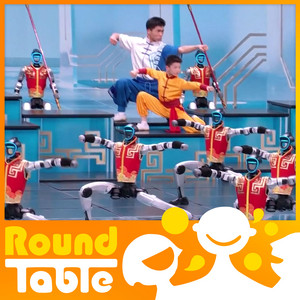
Yeah, the martial art robots.
I mean last year they were pretty good and pretty impressive because it was their debut, it was their first time.
Well now I'm not impressed by last year's game, right?
Exactly!
That's how fast they develop, they evolve.
We kind of teased it before the Spring Festival Gala and saying that we are all kind of expecting how fast or how great these robots are gonna be right.
And then this year, wow, I really got wowed by these robots.
So did I Last year.
It was called Yangbot because that was a traditional Northeastern style of dancing robots.
And then this year, it's called Wubot, which means martial art bot.
So they are using that kind of charming synchronization to high-octane combat intelligences.
You know, the U-Bot stunned global audiences by showcasing that embodied AI through high-speed kung fu duels, black flips, weapon mastery.
They are like playing with the stick.
They're also flying around a little bit, in my opinion.
Yeah, the synchronization part, that doesn't really impress me anymore.
You just program them all to make the same movements.
But what was crazy was that the movements, these are real Wushu-style movements.
Yeah.
And they didn't look robotic.
They looked like human beings.
The fluidity in the movements and back flips, front flips, jumping off walls.
This looks like the end of security guard training.
And this time we do not say ooh, they're real human trying to put on makeup and pretend that they're robots.
We know those are real robots because that's how good they are now.
Yeah.
And all these fancy performances, all these integration and application of AI, of robots are also emerging in real life.
We see more and more people getting an interest in buying one of the robots.
We see that in a lot of local celebrations these different types of robots would emerge and they put on different types of performances.
And they are really, really welcomed by almost all of the viewers, no matter if it's online or offline.
Even now people are saying that we have the new robots three classic new year goods.
Because uh, you know, giving away or prepare that classic new year goods is also one of the traditions of chinese new year, and back then it was just sweets and snacks and also pickled foods and also festive drinks.
These are the the old, traditional three classic goods.
And then now people are saying uh um, you know, in places like shenzhen's huaqiangbei market, The top selling items have been AI glasses, robots and drones, which have also quickly earned the nickname of new three must-have gifts for Chinese New Year.
We talked about Temple Fair during the Spring Festival period.
And here in Beijing, there have been this Haidian Temple Fair, technology Temple Fair.
It includes more than 70 enterprises and 150 exhibits.
The things that are exhibited include general purpose AI agents, smart education, virtual motion capture, digital gaming.
All these functions are integrated into one robot or different types of robots, and you can Try them on, experience a little bit and see how these can be used in real life.
I thought it would take a while for AI glasses to become kind of a cool thing that everybody would get into.
But 80 increase in sales during the holiday compared to how they usually sell.
All that being said, we are experiencing this fancy and fun and eye-catching functions of new technology.
But technology is a neutral word.
When it's in the hands of the wrong people, something bad can happen.
For example as a celebrity.
If you see yourself saying Happy New Year to a lot of strangers that you don't know, it can be a little bit worrying.
And that also happened this year.
Yeah, many of the viral New Year's greeting videos showing stars like the comedians at people's dinner table were created using some of these deep fake technology, without the stars, of course, ever knowing they were invited right.
And this led to a major legal push for people to just stay within the lines of the law.
That sounds cute and funny because it's a spring festival.
Oh, this celebrity is sitting at our dinner table saying happy new year.
Okay, that is a cute and funny example.
Now think of all the not cute and not funny examples that could be done using this type of technology as well.
Like I said, the new AI ability in terms of video generation is huge.
Almost indistinguishable.
There are videos online that I saw, not China-related, not Spring Festival-related, but people making videos.
I think one was a Tom Cruise and Brad Pitt fight from a movie or something.
I mean, this looks like it was done in Hollywood.
Seriously.
And that's why it's making so much news these days.
It's becoming indistinguishable.
Yes.
And we also saw a lot of different types of videos online teaching people, warning people that if someone video chat you, if your parents, if your kid video chat you and asking you to transfer a big amount of money into a certain account, do not do that without to double check with people in a different way and talk to them, ask them something that only you know, because now we see this as a reality.
But I don't think it's the responsibility of each and every individual.
For the government, for us, we talk about using AI for a good reason.
We talk about trying to set up different regulations or different laws to keep up with the speed of the development of technology.
And those things are also very, very important.
So stay vigilant, stay smart, and stay benevolent.