Thank you. Hello and welcome to the NVIDIA AI Podcast.
I'm your host, Noah Kravitz. A study released this past July of 2024 by the Special Olympics Global Center for Inclusion in Education found that 64% of educators and 77% of parents of students with intellectual and developmental disabilities, IDD as they're known, view artificial intelligence as a potentially powerful mechanism to promote more inclusive classrooms and close educational gaps between students with and without IDD.
But only 35% of educators surveyed believe that developers of AI currently account for the needs and priorities of students with IDD. pointing to the need for the creation of more disability-inclusive tools.
More recently, the G7 held its first ever meeting on disability in Umbria, Italy, just a few weeks ago as we record this in October of 2024.
The event aimed to bring greater attention and action to disability issues globally with a major focus on assistive technology and AI.
Our two guests today have been involved in working with AI and the potential of AI in special education for some time now.
One of them was involved with the survey I mentioned, and the other led the U.S. delegation to the G7 meeting. and they're here to talk about the potential for using AI in special education and some of the things we need to do to best realize that potential.
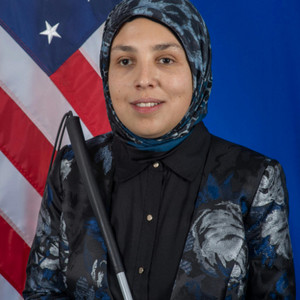
Sarah Mankara is the Special Advisor on International Disability Rights at the U.S.
Department of State. Special Advisor Minkara leads the United States comprehensive strategy to promote and protect the rights of persons with disabilities internationally and across our foreign policy.
And Dr. Timothy Schreiber is the Chairman of the Board of Special Olympics, where, together with 6 million Special Olympics athletes in more than 200 countries, He works to promote health, education, and a more unified world through the joy of sport.
Sarah, Tim, thank you so much for making the time to join the NVIDIA AI podcast.
Welcome. Thank you. Thank you. Thank you.
So I covered only just the tip of the iceberg of all the work that you both have been doing throughout your careers and your lives. to further the cause of folks with special educational needs and disabilities.
But I only scratched the surface in that intro.
And I'd much rather the audience would much rather hear from the both of you.
So maybe we can start. And Sarah, I'll ask you to go first, if you don't mind.
Just tell us a little bit about what you do, what you work on, and then we can kind of roll into the whole AI technology part.
But let's just start with what you do. Definitely.
So my team and I, we lead the U.S. government foreign policy on disability.
What does that really mean? You know, as we enter the foreign policy conversations, dialogues where we focus on global peace, security, prosperity, where we focus on trade, economic development, AI, climate change, food insecurity.
How do we ensure that disability is integrated, mainstream, and part of those dialogues and conversations.
My office, we cover the globe when it comes to disability foreign policy, But the work is still very much, you know, there's so much still that needs to be done How do we ensure that when society looks at disability, including foreign policy, it's not seen from a charity lens?
It's not seen from a pity lens? But it's seen from a value-based lens to really understand, hey, when you include people with disability into your economy, it's going to help your GDP up to 7%.
When you bring people with disabilities into the systems society and innovation, we will be able to bring so much more innovation and benefit to the technology world.
You cannot achieve full recovery reconstruction that's accessible for everyone if you don't bring in the disability lens.
So our goal is we need to ensure that the civility is at the table and that we'll never be able to reach global peace and prosperity and security if we don't bring in the 1.3 billion individuals in this world with a disability to the table.
Excellent. Tim? The Special Olympics movement is just over 50 years old.
We were started in the 1960s when the norm for a person with an intellectual disability, let's say someone with Down syndrome or a comparable kind of challenge, the norm would have been an institutionalized life, often begun at birth and then for their whole lives relegated to living in a congregate care setting that often included subhuman conditions.
The reason I mentioned that is because the movement has, the world has changed a great deal in some ways for the better, but the movement hasn't.
Our movement has always been focused on how do we use the power of sport to heal these wounding attitudes to heal these discriminatory attitudes to heal this sense in which cultures tell people with intellectual and developmental challenges, you don't matter.
You don't belong. You can't fit in. So our goal is to, yeah, we play soccer, we run track meets and all these kinds of things, but we also try to put sports at the center of conversations in schools about how can young people three, four, five, six, seven year olds, how can they learn together with their peers with intellectual disabilities, learn how to play together.
And all of a sudden you're starting to learn how to learn together.
And then ultimately you learn how to live together.
So We're in 190 countries around the world.
We do, in an average year, about 60,000 games a year at the community level.
You know, single sport tournament, basketball games, bowling tournaments, spring games, summer games, softball challenges, you name it. all over the world, villages, small towns.
And in every one of them, it's an invitation to see the potential of a person with an intellectual disability to fit in But equally, as Sarah has just pointed out, to have the culture, the community see that without including everyone, you're selling yourself short.
You're actually penalizing everyone by excluding anyone.
Couldn't agree more. Sarah, before we get started into talking about the summit and the larger role of AI in education, Would you like to talk a little bit about your own experience as a woman with a disability? and how that's impacted both your entrepreneurial and public service work.
Yes. Disability is a big part of, of course, my identity, my lived experience.
I became blind when I was seven. My sister also became blind, but she was seven years old.
And because of two reasons, one, because of our laws and legislations and policies in our country here in the US, and because of my parents who did not allow society's expectations or lack thereof on disability to ever enter the home because that narrative When it comes to disabilities, you can't, you can't, you can't.
And that's a very common narrative when it comes to disability.
Yeah. But instead, my mom really pushed us to have ambitious dreams and really taught us, let's work on breaking down barriers so you can reach your potential.
But then Growing up, I realized most kids with disabilities all over the world don't have that same privilege, and it shouldn't be a privilege, it should be a reality, but don't have that you know, that reality of being seen, being heard, and being valued.
And I think that's what Special Olympics is also doing.
For me, That lived experience really then influenced my trajectory.
Yes, I was a math and econ major in undergrad, but I ended up actually then starting a nonprofit organization working in countries like Lebanon to really work with youth with disabilities to creating and empowering system for them to be integrated and seen and heard and valued.
And that led to then my company and then that led to this role in government.
So ultimately my My entire life has really stemmed from the fact that I had parents who really gave me the opportunity to live my whole life, my full identity, and embrace my identity as a blind person with pride.
Makes such a difference, right? It's a lottery of the parents we wind up with.
But glad to hear yours have been supporting you in all the best ways it sounds like.
One of the things I always talk to people about is how do we partner up with folks to break down barriers so people with disability can be fully integrated, right?
It's almost like people always look at like, oh, we helped you people with disabilities.
No, no, it's actually we help society by breaking down barriers so people with disabilities can contribute and that becomes a benefit for everyone.
And that's an important thing that we always try to talk about.
Policies can help break down barriers, which then will allow for society to benefit from work and education.
I appreciated to that point in kind of your answer to my opening question about tell us about who you are and the work that you do. that you framed it that way from the beginning that look there are all these people who you're choosing to exclude and if you would include them your bottom line is going to go up, like for starters, you know, and yeah.
So let's talk about the role of technology.
Let's talk about the potential and some of the potential pitfalls and how we kind of work around them to use technology to help.
We talked about it in education way back in the day.
I tried my hand at classroom teaching and I know firsthand how hard classroom teachers work, not because of me, because of the people I saw.
You know, I found my other path. But the promise of technology and education has been around for as long as technology and education, right?
But with AI, there's a lot of talk about personalized learning, dynamic learning, all of these sorts of things.
And when we talk about AI kind of writ large and generative AI, there's a lot of talk, especially more recently, which is great, on bias on things like what kind of data was the model trained on?
Where's the data coming from? Who is it representative of?
Who is not representative of? All of these factors, right?
Narrowing in on the world of IDD special education, What are the benefits?
What are some of the risks that are presented by AI for persons with disabilities?
Well, I can jump in and maybe summarize at least at a high level what we are seeing in the special when we talk to people across the globe, whether it's the northern hemisphere, the southern hemisphere or different cultures,
The first thing is that in schools, personalized instruction is fantastically helpful. for people with intellectual and developmental disabilities.
It's a game changer. One of the primary obstacles to inclusion is the absence of the teacher's capacity to devote the time for individualized instruction if she or he has a group of 20 or 30 or 40 or 50 children. be a game changer for personalizing the learning experience of children with intellectual disability.
We know that when children with intellectual disabilities are included, everybody wins.
Bullying goes down. Graduation rates go up.
Test scores go up. Can you imagine? People think if you have a child with intellectual disability in my kid's class, my kid's not going to learn.
It's the opposite. Your kid's going to learn more.
So this will benefit all kids. The third thing we can say about AI is that we're not at the table right now.
We're not at the table as people are building the models.
We're not at the table as people are thinking about the application of the models. for making life better.
We're not at the table listening to the needs and gifts of people with intellectual challenges, their families, their friends, their brothers, their sisters.
So we've got this tool with enormous potential We can see it.
Our parents can see it. Overwhelming numbers, 70, 80, a high 80%.
Yeah, we want this for our kids. Yes, we want our kids to learn it, but we're not there now, which is why if I can say this in a crass way, Noah, I'm so excited to be talking to your audience. because your audience and your community is on the inside.
You're behind the, for us, Right behind the curtain.
You're the guys doing the real work. You're making it all happen.
And we just, all we want to say is, hey, look, we're raising our hands over here.
We want to help you. but we also want you to help us.
Right. And so what does that look like? Do you have a vision, the beginnings of visions?
What's the, um, yeah, I mean, we have like, you know, we were talking the other day, well, what's our exactly this question?
We don't have a strategy because it's too early.
Honestly, we don't, have, and maybe Special Olympics, we're much more of a grassroots movement, so strategy sort of often emerges from the field.
But look, I could see a time when an AI... enabled Special Olympics coach and do what we can't do today.
We have three Before pre-COVID, 6 million athletes.
They don't all have a coach. And there's another 6 million on the sidelines because we can't find them a coach.
Their coaches don't have the time to help them with nutrition and fitness, with hygiene and functional skills, with tracking performance and developing skills.
And AI, the SO coach, could be that companion that doesn't replace human contact, but supplements and compliments. human contact.
Think of that just in the context of physical activity, play, social engagement.
But then think about that same kind of coach, if you will, classrooms.
Think about that coach who's helping people manage behavior issues, emotion, self-regulation.
How do I find time when I need to seek help?
How do I do it? The AI coach should be right there.
Hey, you're struggling with stress. You're not feeling included.
How do I get help? The coach could almost be there to talk me through, to work me through these more social and emotional...
I mean, the headline here is without huge technological advances, from my understanding, AI could really make life better.
I mean, I'm going to say that bluntly. I know there are risks.
We can talk about them. But AI can make life better for people who for centuries upon centuries have been excluded from the basic means of ai you know it's a huge umbrella term it's being thrown around working on et cetera et cetera We're sort of in this stage that I've heard some folks refer to, probably somebody who was on the show, I guess, on the show referred to it as kind of were in the applications phase, where the models, you know, that made a big splash, GPT and Claude and the other ones were released to the public and people started using them.
And and they caught on and everything. And now people are figuring out how to build applications that leverage these models to do things to improve lives, right?
And there's a lot of focus, obviously, on business and industry and things like that.
Tim, what you're seeing is that the developers and the free market who's building these apps on top of the models just aren't serving your community or is it?
I don't want to make it a net negative. I mean, Matt Smith, Brad Smith tweeted out our column that we did on AI and Special Olympics, the polling data.
There's obviously an enormously powerful person that had one of the most powerful companies in the history of the world, Microsoft. who's talking about it.
I don't want to say that people aren't interested.
I want to say that we're at a moment. Look, most revolutions, if you look back, have left our folks out. for decades, decades upon decades.
We don't want that to happen this time. So we're trying to get ahead of it.
We're doing a We're trying to invite, in a sense, we want to invite ourselves in the application development phase because we have huge confidence that there are people of goodwill who would like to see the applications of AI include our community.
But to your point, if they're thinking about where's the most lucrative application to build that's going to be in business, the most you know, popular applications to build is going to affect, you know, 70, 80, 90% of the population.
Maybe that's not going to be us, but you know, the most impactful, uh, applications to build, I defy anyone to say there is an application for AI that would be more life-changing than the kinds of applications we could build for our community.
Can we call this an open call to the audience?
Open call, yeah. You're a developer, you want to be a developer, you're someone who project managers run, whatever your skills are.
This is an opportunity to get involved. Thanks to Sarah, we're being heard on this issue at the highest levels of government.
We have ministers of education around the world who are asking for solutions, for strategies, for protection. for building the kind of ground rules and the codes of conduct that can make ai successful protecting safety privacy security these kinds of things at the same time responding to the needs.
So, you know, Sarah's put us on the stage at the level of political leaders.
And many other stages, too. I don't mean to diminish it to just that.
But the open call, you know, we need a G7 meeting with the G7 of tech. you know, with Google and Microsoft and all these guys.
We want that G7 meeting. And I want Sarah to give a keynote address at that G7, the big seven or the big whatever it is, And invite them, you know, just say exactly what you just said.
Now, look, hey, gang, you know, we're going to change the world.
That's not a question. We know that our parents know that.
Parents of kids with special needs, they know it's coming.
We want to make it great. We want to join you.
And I have no doubt that in that audience, there will be people both film using their kind of passion and purpose mindset, but also from a business point of view. saying, yeah, no, it makes business sense.
And you know, by the way, if you do this, if we built the, the, the state of the art special Olympics coach, it helped with sports, with hygiene.
Social needs and so on. Guess who would benefit?
Everybody. Everybody's kids benefit. So anyway, it's a potential real win-win.
Sarah, since Tim brought up the G7 and maybe this call, maybe this podcast will spark the big tech seven. coming into the Special Olympics table.
Sarah, do you want to talk about the G7 that you just attended? and maybe dovetail from whatever direction it makes sense for you to start, but get in a little bit to your work with the US government and kind of what the US government has been doing to drive development, drive access to assistive technologies for folks with disabilities.
Definitely. I'll actually take it for a broader view, bring it back to G7.
Please. Just to what Tim said is really important.
From a foreign policy kind of lens, we have the G7, we have G20, we have the Asia-Pacific Economic Cooperation, we have ASEAN.
We have the C5 plus one, so the Central Asian countries plus the US.
These are all different multi-lap spaces that in every single of those spaces, there's an AI discussion happening, either an AI ministerial meeting.
Actually, during the G7 disability ministerial meeting, there was an AI one happening at the same time.
Okay. And so just with that perspective, right?
A lot of times these AI leaders, and I've been to a lot of different AI conferences, are not thinking about, as Tim said, they're not thinking about the disability and accessibility.
They're not. And this is where it's really important, on one hand, for governments that are working on This is a call for anyone that's working on disability within government and beyond.
How do you insert yourself in those main AI spaces and say, hey, disability, disability needs to be aligned.
I'll give you an example. So ASEAN, the Southeast Asia countries right now, they're negotiating the digital economic framework agreement.
How do we make sure disability accessibility is part of that?
These are the things that we need to map out and understand what are the main AI spaces And how do we make sure we bring the disability community, we bring organizational forces with disabilities, we bring disability experts to the table?
That's number one. Number two is, you know, to the point of Tim, it's we bring value, we bring innovation.
When AI is not accessible, it further marginalizes us.
Mm-hmm. AI for assistive technology. Yes, there's AI for assistive technology, but there's also AI in general that we're building.
We need to make sure it's accessible. Those two layers.
When you bring people to those spaces, if you know Microsoft Teams, there's the automatic captioning.
Where did that come from? That came from an employee. of Microsoft who's deaf who needed to make sure it's accessible for him, and that automatic caption was created because of him, and now everyone uses automatic caption.
But then also AI is still built on a biased data, which actually has been hurting us in a lot of different spaces, including applying to jobs, for instance. when companies are using AI as an initial platform.
So that's the layers. These are the conversation we need to bring to the multilat spaces and the bilateral spaces to say, hey, you need to make sure we bring the disability community.
Side point to that, we need to also work on making sure we're bringing upscaling the disability community into AI development. cybersecurity, technology development, programming, we should be part of that job set.
So to answer your question on the G7, this year we had the first ever G7 inclusion and stability ministerial meeting.
It was on the protocol level. G7 ministers of disability and their delegations coming together where we talked about technology and AI, we talked about independent living, we talked about crisis and disability.
It was amazing, thanks to Italy. We had civil society, private sector, and government.
We need to continue elevating through that, but we also need to continue mainstreaming disability through the other G7 ministerial meetings that happen throughout the year.
And I think that's as important. Again, it goes back to the twin track approach.
And I just want to end to one last point.
AI could be a solution to so many different issues, whether it's climate disaster, whether in terms of responding to crisis, whether it's food insecurity versus farmers and the technology that they use, whether it is economic and business development.
We need to make sure if AI is a solution for a lot of those spaces, we need to make sure that visibility lens is also integrated across the board through that.
Sure. To your point, there's so much that digital technologies of all sorts lend themselves to flexibility and lend themselves to being able to make the information accessible through whatever, whether it's through audio or through images and text or, you know, going forward through robotics and other sort of more physical means.
Please correct me where I'm wrong here, but kind of as I'm hearing the sort of larger issue of you know, across all of these different spaces in the world and things that people do in ways that whether it's legislation or private enterprise ways that things get done, folks with disabilities and bringing AI to the disability community is just something that needs to happen more.
I'm wondering in your work if that's primarily a governmental function, Is it kind of a public private partnership?
Is it, you know, as with both things, sort of some of both, you know, government, and then you have individuals like the person at Microsoft who, you know, out of a personal need arose this thing that's helped so many people.
I'm not asking so much where the responsibility lies. but just sort of how does this happen?
How do people get more of a seat at the table?
That's a really good question. I think it's a combination of a few things.
One, yeah, it's a policy issue where how do we ensure that when companies are developing AI, it's a standard that it is accessible for all, right?
How do we get to that point where companies need to you know, bring in that lens from the get go.
Because then that would translate because I have so many conversations with startup companies And I was like, how's your beta version going?
And is it accessible? Not yet, not now, maybe later. right there's also a narrative issue where are we are an invisible population a lot of the time We are a population that people don't think about us.
But many times I hear, oh, I've never thought about this, right?
And this goes back to why having a conversation with you and with other folks in the media world and entertainment world that we've bring and make more visibility on the intersection between AI and disability, AI, disability, and other issues like security, climate, whatever.
The more we bring those forward through the media world, create more of the narrative, the more that people will think about it and bring it forward.
I think it's multilayered, but I think policy is definitely an important part for sure.
I'm speaking with Sara Minkara and Dr. Timothy Schreiber.
Sara is the Special Advisor on International Disability Rights at the United States Department of State.
Tim is the Chairman of the Board of Special Olympics.
We've been talking about the role that AI can play and will play and more broadly, the role of assistive technology and technologies in general and how people with learning disabilities and other disabilities have historically not have as much of a seat at the table as we've been calling it. have not been as much of a part of the process as really they should be for a number of reasons benefiting all of us that Sarah and Tim have been talking about.
As we were saying, Sarah has just come from the G7 meetings in Italy and the first ever Ministerial on Inclusion and Disability.
Of course, when we're talking about the growing presence of AI and its ability to, for me, I think about its ability to hyper-personalize things.
The sort of positive side of that, the sunny side, is the ability to just really advance the way that we learn and fit in different modalities and skill levels and interests and Needs and abilities and disabilities and all those things.
Kind of a dark side of that is the endless scroll.
Right. I'm guilty of it as much as anybody where I'll find myself reaching for a device, looking at something because it's interesting to me, or at least that's what I perceive. it and then however much time goes by and I feel sort of isolated and lonely and maybe not that great because I've just been kind of doom scrolling for a while.
You know, it's something that, Tim, in prepping for the podcast, I read some, I don't know if they were your thoughts directly, but some articles and some things.
And I think you have some thoughts on that that the audience I'm sure would be interested to hear.
I mean, I think, first of all, the risk is real.
We do live in a time when most young people well, in this country, in the United States at least, are either lonely or depressed.
I say most, just over 50%, depending on how you count.
That's an enormously painful number. It's shocking to think of 16, 18 year olds, more than half of them feeling it's fair about the future. a negative impression about their own capacity, distrustful of others, that's a recipe for disaster.
So we got to take that issue seriously. And for people with intellectual and developmental disabilities, that's been the norm. for centuries, lonely, isolated, left out, right?
So here's the point. We need a groundswell of innovation right now.
This technology is coming out not when the printing press came out or when the combustion engine came out or when the personal computer came out.
In all those eras, People with disabilities were invisible.
Today, we're on playing field. Look at Sarah's role.
Look at her leadership. We're on the playing field.
We want to make this revolution different.
We want to make it more thoughtful about human interactions, more aggressive more aggressive on innovation, more attentive to the risks of isolation and despair and distrust that we see all around us.
This technology Maybe we can talk about all in grandiose terms, all the things it can do.
But if it doesn't do this well, it will have failed humanity.
This is my view. If we don't heal distrust and the fear in our relationships, and if we don't use it to empower people on the margins to join the mainstream and empower people... in the mainstream, open their hearts and minds to what they will learn from people who have been excluded.
If we don't do that, technology will have failed us.
I don't care how fast it writes a novel.
I don't care how fast it can solve a complex problem.
It will fail us if it does not address this fundamental tension are all over the world right now, which is how we heal this fear and this anxiety and this distrust between us.
So is it real? People are talking about warning labels on phones.
That's a real thing. Anybody who's got a child who's a teenager or older who has a device is worried.
I mean, like 98% of parents are worried.
So that's not a joke. That's a real fear.
But I think Sarah and I agree on this. I'm not waiting for the government to show us how to do this.
I know the government can cooperate. But the innovative energy, creative energy, the break the boundaries of what's possible energy, that will come from the private sector.
That will come from coders that will come from engineers that will come from people who are being honest.
And then they will say, hey, Mr. Government, look what I can do for your kids.
Look what I can do for health care. Look what I can do for community building.
Join me. But the creative energy has got to come from the business and the technology sector.
People like Sarah, me, and the millions of people with intellectual developmental disabilities, their families, they're going to have to be powerful self-advocates.
They keep hitting the door and saying, Wait a minute.
Don't leave without us. We have the key to a successful revolution here.
And to Tim's point, thank you, Tim, for what you said.
It's so true. If AI technology is made, that's without... being in mind and it further marginalizes it, it's failed.
Here's what really bothers me a lot in traveling the world.
I still have communities that say, You know, they're fine that people with disabilities are left behind.
They're left in their homes. They're still shackling of people with disabilities.
There's still people in institutions. There's still sterilization of people with disabilities.
So this still is a reality. Sometimes I talk to companies and they're talking about the challenge of people with disabilities and getting to employment and they say, well, They can just work from their home or they can just be whatever it is.
The solution is always let them just stay behind.
Sorry, but that's not right, and we should not accept that.
And AI, if it's made without accessibility, it's going to further leave us behind.
But again, if AI is made with a disability in mind, it can allow us to be further include in society.
Again, for me, I use technology on a not even more than hourly basis. right like because of apps i'm able to call an uber and i'll be able to get an uber on my own and i'm able to get you know get to my location because of apps i'm able to use But again, there's a lot of apps and websites are not accessible.
So I'm not able, why? simple thing is that it was baked from there from the beginning, right?
There's hotels now that are being fancy and there's the touch screens of things and But again, I'm not able to turn on and turn off my life on my own without having someone helping me out.
You can have an easy solution for that. But again, it's because they don't have this in mind.
My ask is always, we need to get to a point where it's a standard, we see the disability community, they're brought to the table, And sorry, but it's not enough for people to say, pull up a seat at the table.
Is the space physically accessible? Is it accessible for deaf people?
Is it accessible for black? Sorry, it's not enough for you to say, pull up a seat to the table.
And then from there, I want to get to a point where companies demand this because they see the value that it brings to society.
So this goes back to narrative change. No, it's a fight that I think we all need to fight on behalf of one another.
And I think you both articulate much better than I could, but that's the feeling I'm coming away with.
So Sarah, Timothy, thank you so much for taking the time.
For folks who are listening, who want to learn more, who want to donate their skills, who want to get involved, who have a crazy innovative idea that's gonna really change things.
Sarah, I'll start with you. Where can folks go online to, it doesn't have to be online, but if there's a website, to learn more about the work that you're doing, about the work that's going on in any of the governmental or other organizations you're involved with?
Where's a good place for listeners to go?
Definitely the State Department's social media, the DRL's handle, the website.
There's media notes that come out to us. on all of our travels.
We've been to 48 countries, so all of our travels, there's media notes in terms of the work we're doing.
If you're in a certain country, the U.S.
Embassy will always be in touch with the work that we're doing.
Fantastic. And Tim, for folks who want to learn more.
I mean, look, the Special Olympics movement is in Pretty much, I'm guessing, every country that a listener to this podcast is listening in.
If you're out there listening... And Special Olympics is not visible in your country.
And please, drop us a mail. Email Tim, exactly.
Yeah, if you've got a great idea. Let me tell you, this is a movement that is composed of creative, innovative rule breakers.
Our founders were rebels in pursuit of social and political change.
That's the only way they got what they got.
That's the way we got into 190 countries.
That's the way we've found a million volunteers we're a movement of volunteers 99 of our workforces volunteers So we welcome the innovative energy of citizens who want to make a difference.
My personal email is tshriver, T-S-H-R-I-V-E-R, at special olympics.org write me if you've got an idea this is a movement that is eager As angry and as frustrating and as infuriating as it is, so many times to be an advocate for or a person with an intellectual or developmental or a physical disability, sensory disability, as frustrating as it is,
This is a hopeful community and it's a community that wants participation.
And it's a community that wants to bring a greater degree of fulfillment to the world.
We're a community that's hungry And everybody that I know of in this field says the same thing.
Once I opened the door, once I saw, once I went, once I gave it a chance, changed my life.
Very few people say, oh, I met Sarah Minkar, she convinced me to do something, and now I'm never going to do it again. of people say, I met her, she told me to do this, and wow!
Things are so much better. Same thing is true in Special Olympics.
I hope the message people hear when they listen to this is, wow, there's some folks out there really need me and want me and would welcome me and Yeah, get involved.
I hope you're hearing that. Be inclusive as a starting point and get involved.
I mean, you know, the simple part where people go, I don't have time for that.
One thing everyone can do right now, text HR at your company.
If your company's got six people or if it's got 6,000 or if it's got 600,000, Text HR.
Do we hire people with disabilities in our company?
Just send that one text. And you watch.
If the answer is no, you're going to get a change in policy.
And if the answer is yes, you're going to learn about people in your company that can make a difference.
There you go. Tim, Sarah, thank you again.
Let's do it again sometime down the road, and hopefully we'll have positive.
I have so many things to report. Updates, Momentum, cool new apps, the SO Coach.
The SO Coach, yeah. The SO Coach, there you go.
You heard it here first. thank you both so much thank you thanks everyone Thank you.