Discussion keeps the world turning.
This is Roundtable.
You're listening to Roundtable with myself, He Yang.
I'm joined by Yu Shun and Steve Hatherly in the studio.
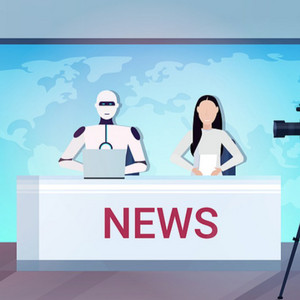
Coming up, AI anchors don't get tired, nervous, or forget their lines, and they're starting to appear on real news programs in China.
But can a virtual face truly replace the warmth, instinct, and spontaneity of a human broadcaster?
With AI presenters on the rise in China, a sharp question looms over broadcasting degrees.
Should these four -year programs be axed one day?
Or should we just reimagine it for a new media era?
And play is more than fun.
It's how children make sense of the world, build confidence, and connect with the others.
But what if a child has limited space, steady friend, or parent with time to join in?
A recent survey in China's Shanghai shows many migrant children are missing out on the experiences that shape a healthy childhood.
As families pursue better futures, migrant children often carry unseen burdens.
How can communities ensure every child, no matter their background, has the chance to play, grow and belong?
Our podcast listeners can find us at Roundtable China on Apple Podcast. Also, from the world of entertainment to what fuels your passion, our heart -to -heart segment is all about you.
Share your thoughts with us at roundtablepodcast at QQ .com.
Or better yet, record a voice memo.
send it over to roundtablepodcast at qq .com.
We'd love to hear your voice and have it featured on our live show.
Now let's move on to the next topic discussion today.
Broadcasting and hosting arts students in China are grappling with a sobering question.
What does their future look like when AI anchors can deliver the news flawlessly, tirelessly, and increasingly believably As photorealistic virtual presenters gain traction on Chinese media platforms, the once straightforward path from classroom to news desk is being disrupted.
From news broadcasts to commercial live streams, AI is reshaping the media landscape.
In this discussion, we explore how these technologies work, where they're already being used, and what this means for students, educators, and the future of communication.
We need to start with the basics.
As though AI is the word that the artificial intelligence term is flying everywhere.
What are AI anchors and what is the technology enabling them?
I think more or less we have seen some of these AI anchors on TV or social media, at least, right?
So these are like computer -generated presenters that produce real -time audio visual output that mimics human newscasters.
And they're usually modeled after actual reporters to enhance familiarity and realism.
So first of all, you may get a, like, scanner or just camera in front of you to take a picture or video of that actual person.
And then they can get a virtual one.
Yeah. Or other types are just totally virtual news anchors.
Yeah, it depends, right?
The tech. So they combine speech synthesis and facial animation and muscle modeling and AI algorithms. And they're able to produce this quite lifelike speech and quite lifelike expressions, and they can do that in real time.
The progress includes moving from fixed single camera views to multi -angled, more dynamic presentations, and the ability now they have to modify hairstyles and clothing and backgrounds on demand.
Those are some of the advancements they've made.
That's why they can be so real.
They can be hyper -realistic, yeah.
I mean, if you look at maybe, what, five or six years ago, I think was the first time that I saw an AI news anchor.
At that time, it was pretty clunky, I think, like the mouth didn't match the speech, and you could kind of tell you were looking at something non -human at the time.
these days, it's getting harder and harder to tell the difference.
Now some AI anchors, they have these really intelligent dialogue capabilities, and that will allow them to interact on a basic level with viewers or interviewees.
But still, most will, of course, remain scripted.
Indeed. And apparently the language ability of these AI news anchors have improved as well.
The use of multiple languages and dialects can customize this AI news anchors reach. And also one thing to highlight here is in China, apparently a lot of these AI digital avatars are modeled after real people.
Yeah, that's what you should was saying.
Yeah. So not all of them.
I don't I don't think but a lot are some of them.
Yeah, are they look like an actual human being that works for the station?
Yeah, so you can have a sick day.
And, and the in theory, without the actual labeling, then the audience wouldn't be able to tell the difference.
And therefore, even if, for example, I shouldn't use myself as an example.
So for a news anchor who doesn't speak Russian, for example, but only speaks Mandarin, and you could be broadcast. Well, your AI digital avatar could be broadcasting in Russian.
That's just really interesting.
And these digital avatars aren't just appearing on social media sites anymore.
They are on air. So where are AI anchors showing up?
Let's categorize the different scenarios.
And how are they being integrated into real media settings across China?
But we have to mention that they're not like, you know, when you turn on the TV, wow, they're not like AI everywhere.
But, you know, many broadcasters from national to regional networks are actually experimenting with these kind of AI anchors, even in hard news sectors like legal and financial reporting.
A striking example is actually, this sounds similar to what He Yan just listed, you know, Hangzhou Culture Radio Television Group, where during the 2024 Chinese Spring Festival holiday, six AI -generated avatars took over primetime broadcasts for eight nights.
Eight nights, yeah, right?
These virtual anchors, they blink, they nod, and they speak with the same polished cadence as their human counterparts and drawing millions of views on social media.
Can I correct one word?
I don't think these digital avatars are reporting.
reporting. They're merely broadcasting in the sense that they are great for reading off a piece of paper, but they can't improvise, obviously, and I'm really glad they can't.
And they're not reporting per se and like being like a journalist, seeing what's happening around, for example, oh, there's a huge forest fire and then you're on spot and you're reporting.
None of this is happening but reading off a piece of paper yes it can do really well and as we're preparing for this show I was looking at some of these videos and it really shocked me how real these digital avatars look exactly like the real person that that uh host or news anchor must have authorized all of this isn't even called biometric information anymore but you know your cadence your voice your face everything all of these data uh have been programmed and poof you get the digital avatar and the only time i could after watching like two minutes of the so -called news reading of a male um
um a host on that news show in hangzhou the only time i could tell the difference that this is a digital avatar was the speed his adam's apple trembled oh you were really paying attention i was because this was this is this is affecting at least all these broadcasting students of course course, educators, you know, the future of the degree, and also, you know, I'm into communication.
So I'm really interested in this.
And that's just how real these digital avatars are these days.
So that's in terms of the news realm.
And another huge part of the so called broadcasting, or posting or whatever you call it is happening in China, in the live stream business.
And that That is huge here.
That's like a key marketing strategy that all companies are developing.
And tell us how AI anchors or, you know, these hosts can play a role there.
Mm hmm. One example is a live stream or this live streamer called Luo Yonghao.
He used to be a businessman.
Well, he's still a business.
Different type of business.
Yeah, different types.
But he's now doing live streaming.
but now he's also introducing an ai generated digital twin of him to host a live stream uh in june this year and wow that live stream sold over 55 million yuan that's about 7 .5 million us dollars i can't believe i mean there are actually a lot of ai um live stream live streamers and they are like playbacks of these live streams and people can buy stuff from these kind of live streaming platforms yeah this is this is a pretty big turning point in the commercial application of these types of hosts um these types of avatars these digital avatars they can not only mimic human behavior but they can also drive
real business results as evidenced by the 55 million yuan in sales that is insane that's hard to do for a human being many human beings never mind an ai generated host um obviously going to be a big part of business in the future um the integration though has been building for years and it's gradually gotten better um there were early projects that went back to to 2018 that was kind of focusing more on the novelty side of things kind of um yes modeling the avatars after real presenters but only for special events and maybe maybe some interactive features.
But doing those experiments at that time, it helped media organizations explore the potential of AI in broadcasting and see what was available, what was possible, and what was maybe going to be something that they could use in the future.
Well, for that period, I think we're kind of familiar with that, and especially with some of of the let's say hard news shows uh in china and they already have really well -known uh hosts and news anchors and then having this slightly more playful and clunky digital twin on social media doing all kinds of things interacting with users i think that we're kind of used to but now it's It's just starting to get more real in all aspects for people.
Yeah, I'm reminded of watching the robot soccer match recently, right?
The robots look like they're intoxicated, falling over, falling over each other.
And it's hot on social media because it's cute.
And people are maybe forgetting that this is the very beginning.
And if we go back a few years and look at AI avatars on television, that was the very beginning.
Now we're a few years later, and it doesn't take long for tech to catch up, right?
So now we're at a point where it's getting hard to distinguish between real and not real, and maybe the cuteness factor has disappeared.
And we're getting to the point where it's like, oh, this is actually potentially a real thing.
Yeah. And I think in a way that the technology developed so fast that it kind of skipped the uncanny valley problem altogether.
It just went from cutesy, clunky, kind of adorable to my eyes.
What is happening in front of me?
And in China, there is that rule, I suppose, that you need to label, oh, this says a digital avatar.
Yeah. So that's the only reassuring thing to me.
Do you feel like this might be a bit like, is that a fable?
Judas' goat, a trained goat, was used to lead herds of sheep into the slaughterhouse.
The animals followed straight to the chopping block and the goat, too, was eventually slaughtered.
When human anchors lend their faces, voices, everything to AI doubles, are they writing themselves out of it?
But in trying to stay relevant today, because all of us are going AI this, AI that, are they helping to automate themselves out of it?
I mean, you're caught between a rock and a hard place there, I think, right?
From the media organization's point of view, I think it's really easy to understand why they would want to do this.
You can increase your efficiency in your news production.
introduction um as you said at the beginning these AI anchors they can operate continuously they don't need breaks they don't take vacations with their families right they don't make mistakes so you've got all that that you don't have to worry about um the consistency in the messaging and the tone um there's no improvisation or divergence from the script you might be looking Looking for that sometimes from an anchor, but I think for many news organizations, that's not even allowed anyway, right?
Where, you know, don't give your opinion.
I used to work on a live news show, a television show, and I was told explicitly, do not share your opinion.
You are only here to share the facts.
So I've lived through that myself.
But for that, you don't need to worry about that with AI.
They're not going to slip up there.
So I think there's obvious reasons why there would be great interest from media outlets to at least experiment with this.
I saw a post on social media from Six Tone earlier today, and they were talking about this issue.
And I replied by saying, yeah, right, from a media's point of view, I get it.
But I think the bigger question is, how will audiences respond to this?
The tech is there, right?
That's problems been solved.
The media organizations have an advantage by doing this.
But will audiences feel comfortable watching an AI news anchor deliver their news to them?
That's a question that we don't know the answer to yet.
Well, what do you think?
You should. I mean, of course.
And like the examples that you listed years ago, people or these stations are using like virtual anchors or just virtual avatars to maybe sometimes even talk to a real person.
And back then, like virtual idol was a really, really popular topic.
Right. And that brings people a sense of, I'd say, cute cuteness and a playful kind of image that this kind of station can create.
And that is why when we're talking about how audiences are thinking about this.
And, of course, I think these are the things that these stations are thinking.
What is the result or what kind of effect that we want if we're using these kind of virtual broadcasters?
are they using this because they can like talk better than real person i don't think so of course like they have they have millions or a lot of really really good broadcasters out there but why they're using the virtual ones because they can create an image for audiences saying okay we are a quite um you know positive and lively and um going to like cater to the youth youth kind of broadcasting stations.
And that is why we're using this kind of new technology and telling you, yes, we have this kind of technology and we would like to show you that kind of cuteness side of our station.
And that brings kind of audiences a sense of, okay, this is like another side that I never seen from this station.
Well, you mentioned the virtual idols, which have have been popular for more than a decade, I suppose.
Japan has their version of Chu Yim Weila.
I don't know the Japanese.
Hatsune Miku. There you go.
And in China, we have Luo Tianyi, I think, a few years ago, very popular, had his own concert kind of thing.
And I think that's interesting in the sense that can you create, let's say, an AI anchor out of thin air that doesn't exist in this world, world, a new person, person now it delivering news.
How would people feel about that?
I think that's one thing.
And also what's already happening is that, OK, these are digital avatars of real people.
And for me, OK, let's just say for some people to answer your question, Steve, I think it depends on what you get from the news.
If you know that I'm only getting the facts or the perceived facts from this news organization, it's a whole group of people doing their reporting, writing up the script, or maybe there's AI involved in this stage already.
And then it's just a mouthpiece that is delivering it.
I'm sorry to say, maybe for some people, it doesn't matter what is spewing out the words.
And because you know, it's going to be a robotic mouthpiece delivering the facts.
And that's one thing.
But if we're talking about a news commentary show, if we're talking about some show that really thrives on the personality, the realness what is this person thinking in terms of opinion then of course i want the real person so i think it kind of depends um for me it doesn't depend at all because even if the news anchor is simply delivering facts right and we know well i know news anchors read off a prompter it's really fun if you pay close attention to their eyes you can see their eyes going back and forth a little bit.
But even though there's no room for opinion there, even though there's no real self -expression, I still want that to be a human being.
Why? Because when you're a broadcaster, you are establishing a relationship with your audience, and that takes years to do, right?
But some of the most famous news anchors from many countries around the world have done exactly that.
And I think people want to have their news delivered to them by someone that they can relate to, not just an avatar that would deliver the same information.
So the companionship, the relatability, I think would be completely lost. And that's why, in my opinion as a broadcaster, this is a little worrisome, but there's no need for full blown panic.
And that's what I would say to the students who are interested in getting into broadcasting.
Let's get into that part of the discussion.
Different stakeholders are grappling with what it all means for their roles and futures.
And right now, I know there are some new, maybe upcoming students who are considering whether they want to get into broadcasting and hosting arts.
And what about the teachers, educators, the people who are already in this and also those who are graduating with that degree?
Is this degree still worthwhile?
I think so, and Steve has already explained some of the reasons why, right?
And real emotion, it's something, even though we need to, like, neutrally convey all of the information, still, the emotion that human can bring is unreplaceable, irreplaceable.
Yeah. Students, though, I mean, obviously they're they're aware.
Right. And they're becoming increasingly aware that AI anchors.
It's not just a novelty anymore.
And they're becoming maybe part of mainstream newsrooms. And by the way, we're talking about China here, but it's not just China.
There was a Greek state broadcaster that used AI avatars.
Korea in Korea, they did that as well.
Well, in Los Angeles, there was a station called Channel One AI out of L .A.
I think that they were fully, I think, AI avatars for their anchors.
I don't I don't know if there's if that project is still going on.
But anyway, broadcasting students obviously would be very, very, very aware of this.
And it's causing some students to pivot away from the industry, maybe to tech companies or new media platforms or or perhaps diversing, diversifying into other forms of media beyond traditional broadcasting I think maybe and maybe it's a natural reaction that students might be a little bit scared at this point but I would give the same advice that I gave when we were talking about new majors in universities still follow your passion but just figure out how AI is influencing your passion currently and where it might be Be influencing your passion in five to 10 years and make sure you're keeping
up with that path. I would give the same advice here.
And also I think maybe in the future with maybe policies and regulations to be refined, the industry could be even better.
And one example is what I saw like the 9th July.
July, after nearly 11 months of striking, video game actors have reached a new agreement with some major video game studios that addresses concerns over the use of AI.
The deal requires these studios behind games like Call of Duty, Apex Legends, Overwatch, these things, to obtain written consent from performers before creating their digital replicas of their voices and also images and appearances and to pay them at rates comparable to traditional in -person work, which means they can get paid even their AI replicas that's being used.
So yeah, maybe in the future with all of the rules and regulations, we can get a refined industry.
Yeah, the tech is just getting so good though.
I mean, I've heard podcasts where the AI podcast host host make mistakes yeah but they're they're programmed to make mistakes and to make pause awkward pauses sometimes like they can program them to do that it's just getting out it's getting out of control good these days and you mentioned a really great point here you shouldn't that the licensing rights absolutely paramount in this discussion because if you give away the you know know the data of your basically your your likeness yeah your your face your voice all those things and then in theory it's there for them to use forever if you don't
put a expiry date on it so that's a big part of possibly um point of contention where this is going but for broadcasting Podcasting and hosting art students.
Yes, I agree with you, Steve, that for those who are truly passionate about this and this is what you want to do, you really have a knick about it, then just go for it.
I think that's one part, but the other side of the coin is if there's more AI being employed.
No, deployed, deployed.
deployed. And then if let's face the reality that a lot of people are still engaged in cord cutting, so TV stations aren't really employing more people, let's just put it that way.
And for an already competitive job behind the news desk in China, these opportunities are possibly shrinking.
And then to devote four years into studying something that you know, is an industry in decline.
Certainly not the kind of recommendation I would give to my niece and nephew.
I think that's totally fair.
And that's why I said before, I think audiences are going going to depict uh sorry audiences are going to um tell stay stations how it's going to go in the future because from the media's point of view there are plenty of and we didn't even talk about the financial incentives for media media groups to do this right they save they can save a lot of money they can save a lot of money so there's plenty of incentive for the media groups to do this if nobody's watching the ai avatars they're not going to do it that's what that's my personal opinion that's why i said the audiences will have control
over what happens here in the future i think and it's not like always that kind of flawlessly presented um you know what we see is these ais delivers the news flawlessly but we don't know how much time we've these people have spent on like let's say fact checking reviewing all of the things these, let's say, broadcasters delivering hard news?
Because like us, we know how much time we need to spend on the image or the materials that we can feed these AIs to read out.
Yeah, it's just going to get better and better and better, though.
Better and better and better and better and better.
Yeah. Well, that's, so also it kind of depends on, well, yes, whether the audience is going to to accept and trust these digital avatars.
But in the future, if this is not an industry that you see more jobs for real people, then I think that's also just something to think about.
But also for broadcasting students, some say, look, the potential opportunity is in the commercial side of things.
There are so many live streams out there that some are using digital AI live stream hosts, especially in covering the graveyard shift one night at 2 a .m. I don't know why I turned on a Taobao live stream.
Only once in a lifetime would I do that.
I need my sleep. But there was a digital avatar selling stuff.
And yeah, you don't want a human being doing that.
Right. Right. Anyway, so but here's kind of a catch 22 for the human hosts.
It's like it feels, first of all, anybody who's good at talking, who are animated, they can do live stream hosting in selling goods.
You don't necessarily need a four year degree to do that.
And during those wee hours, you have the digital avatar to do it.
it so i don't know if you are so highly trained in hosting potentially maybe this is something you can do or maybe not so much i guess that's the last question i have for you guys for this topic you mean other avenues possibly what do you think yeah i mean i think that's why institutions universities have to keep up with their curriculum and these these as we talked talked about yesterday, these micro majors, right?
Staying up to date with the changes that are happening in society.
And by doing, if you don't do that, I'll put it like this.
If institutions don't do that, then you're kind of leaving the next generation in the dark, wondering what they're supposed to do.
But if you do have programs that reflect the changes, I think the next generation will be okay.
And what I can sense is that, you know, make a good use of AI.
That's what you always say, techie person on roundtable.
Coming up, school's out, but not all children are getting the same summer.
For many from migrant backgrounds, access to safe, meaningful play is still limited.
What's behind the gap and why does it matter for their future?
Stay tuned. Looking for passion?
How about fiery debate?
debate. Want to hear about current events in China from different perspectives?
Then tune in to Roundtable, where East meets West, and understanding is the goal.
You're listening to Roundtable with myself, He Yang.
I'm joined by Steve Hatherly and Yu Shun.
China's latest census data shows that 138 million children are affected by migration, nearly half of the the country's entire child population.
More than half of them migrate with their parents in search of better opportunities.
Yet for many migrant children, this journey comes with emotional and practical hurdles.
The biggest one, separation looms, as they'll most likely return to unfamiliar hometowns after taking, well actually this is before taking the National College Entrance examination away from their current lives and sometimes their parents or one of them.
A recent report from Shanghai finds that migrant children often lack access to safe and stimulating play spaces, consistent friendships, and active parental engagement in play.
How does this affect their development?
And what defines the kind of high -quality play every child deserves?
First of all, let's get the terms right.
What does it mean to grow up as migrant children or 流动儿童 in China?
Migrant children refers to children aged between 0 to 17 in the migrant population.
And the place they live and study is different from their original place of hukou household registration.
and this hukou system is we mentioned before in previous shows is a household registration system in china that ties closely with your social benefits and rights uh like uh also housing and also um medical insurance and something like that so and why it is a kind of big issue is that most of these students find it difficult to enjoy some uh equal opportunities as their local peers in terms of, no matter if it's in maybe educational or some resources of entertainment.
So then these kids, these migrant kids, when they grow up, they have to return to their registered residence, which is their hometown, right?
To live and to attend school.
And then that may lead to separation from parents who are are working in cities it might cause them to leave the environment that they've become familiar with their classmates that they've made friends with and it could potentially mean stronger academic competition too from the peers in the in the hometown schools so it's a tough it's a tough situation but i but i have to say like it it might just be you know due to different policies in different cities because I think in a lot of cities aside from cities like Beijing and Shanghai it's not as that depressing as it sounds because one example
is I myself I didn't grow up or go to school in the city where my household registration is and I was never required to return there for exams or like you know anything like that or I never seen my one of my any of my classmates to go back to their hometown to take that exams it's more about like mmm it's more about the place that you've been living and the current city you've been living for a long term it has a lot to do with okay let's say for parents who might hold an office job or with higher income or with a more advanced degree.
These all add to the point system in which you can apply for the HUCO, the household registration in your current city.
And as time moves on, as the parents work hard, sometimes you can get the a new hukou.
And that means, okay, what we're, you know, that thought of separation, the thought of, oh, the kid might need to return to the hometown doesn't exist anymore.
But often it is for, let's say, manual labor workers, when their chances of obtaining hukou in that new city, usually it's a bigger city with more job opportunities, higher pay, the chances aren't ample.
And so, for this part of the population, it's a very real situation that sometimes, not everywhere, but especially in the biggest cities you've heard of in China, often it's extremely difficult to obtain hukou.
So when a kid gets a little bit older, they have to go back to their hometown because that's where they're registered for their schooling?
Well, let's say for someone who's a migrant worker working in one of the biggest cities in China, which in theory have better public benefit package, that could be the case.
But in recent decades, we've seen that the gap between cities, between urban and rural have been shortening.
and among some of the smaller cities, the differences have really shrunk to a great deal.
And this kind of difference doesn't happen that much. But if you're comparing with the most prosperous regions in China, then this difference often still exists.
And here's why this report can be, I think, a really good indicator in a way for us to understand what happens.
And also, can I please just offer a little disclaimer here that, you know, these terms migrant children may sound cold, even harsh.
No child should be reduced to their living condition or what they lack.
But in China, these terms are used in policy and research to spotlight children deeply affected by migration whether they move with their parents or grow up apart and we use these words not to define them but to see them and to really zero in on the reality people are living in so what does this report show about migrant children or i suppose the lack of high quality play we're talking about like playing you know how is this all important yeah many Many activities such as visiting museums or science centers are less accessible because of maybe, let's say, long distances of their residential area,
high ticket prices, and hidden economic costs.
Although places like amusement parks or sports venues are designed by many issues like spatial exclusion or inconvenient transportation limit their access.
And also some of them may face a lack of playmates.
You know, in this report, 62 % report losing friends who had to return to their hometowns due to the reasons that we mentioned before.
And also parental involvement is also lower.
Some children say their parents often play with them, even though most report emotional closeness and spending time together.
And this mainly due to parents being too busy with work or just prioritizing academics over play.
Yeah, part of it was about the focusing on the academics because the parents want their kids to have better opportunities than they had.
And part of it, as you said as well, is simply not having the time.
There's not enough hours in the day, right?
The kids are busy and then when the kids aren't busy and the parents come home, they're absolutely exhausted and it creates almost an inevitable problem, I think we can say, because there's just not enough energy points in the human body to be able to spend all the quality time that's needed.
So what do you think needs to happen to make this better for people's lives?
I know it's easier said than done.
on parents raising their awareness of, you know, learning through play, that kind of idea.
But this kind of awareness can be shaped by influences from all parts of society, like short videos, right, surrounding environment, facility, and infrastructure.
No more short videos, please.
But this is everyday life.
You have to admit that.
I mean, maybe just, I mean, gosh, I don't want to sound judgmental, but maybe just being aware that children need play.
It's really, really important to their development.
So just taking care of your child, of course, is incredible and necessary.
But that play aspect, which might seem luxurious to you, is actually necessary for them.
And actually play does, it can be so cheap.
You know, when we were kids, we didn't spend a dime on play.
But when you have kids together to hang out and stuff, that's usually how, well, that was what it used to be.
Well, thank you guys for joining the show.
Thank you, Steve and Yu Shun, for joining the discussion.
I'm He Yang. We'll see you next time.