We all have moments when we could have done better, like cutting your own hair.
Yikes. Or forgetting sunscreen so now you look like a tomato.
Ouch. Could have done better.
Same goes for where you invest. Level up and invest smarter with Schwab.
Get market insights, education, and human help when you need it.
Learn more at schwab .com.
From The New York Times, I'm Michael Barbaro.
This is The Daily. By Monday evening, the death toll from the flooding in Central Texas had surpassed 100.
27 of them from a single place, Camp Mystic, a century -old all -girls Christian summer camp.
Today, the story of what that camp meant to the generations of girls who attended it.
I spoke with one of them, Erin Paisan.
It's Tuesday, July 8th.
Well, Erin, thank you for making time for us.
We really appreciate it.
You're welcome. It's been a hard three days for a lot of us in the Mystic community.
My first year at Mystic was 1975 when I was 10.
And my mom sent me for five weeks.
And how many years did you end up at Camp Mystic?
Okay, so it was bubble in, tumble in, look in, look out.
um idiots idiots that's the name of a cabin idiots delight was the name of it i was there six summers i was not there as much as a lot of other people but it was just a very special place for me the years that i've spent there yeah those are very formative years yes Yes.
Boyer, and that's what we want to talk to you about.
What Camp Mystic means to people, what it meant to campers like you, and why it occupied such a big place in the lives of so many people.
And I wonder if you could take us back to the very beginning of Camp Mystic for you.
Talk about your first impressions of this place.
Let me tell you about how I chose Camp Mystic.
My older brother went to Camp Stewart, which is on the other fork of the river.
And when we were down there picking him up, we went across a bridge that crosses the waterfront of Camp Mystic.
And all these girls were out on the riverfront splashing and playing.
And it was just so beautiful.
And I was six years old and I said to mom, I want to go to that camp.
And that's how I ended up at Camp Mystic.
I was not one of those kids who was on a generational list. Just explain that generational list. It was such a special place that generations of women wanted to send their daughters or granddaughters.
And there was only a certain amount of space.
So if you wanted your daughter or granddaughter to go, you had to get on the list early.
And some people thought it was birth.
Get on the list at birth.
Yes. And my mom was a single parent of four children.
We were not, like, an elite family.
And somehow my mom, I don't know, I got off the list and went.
Well, paint a picture of what this place is like for the younger version of you when you arrive.
Clearly, you had an idea of it from seeing it from the waterfront with your brother.
but when you actually get there.
So let it be known that I packed my trunk in December.
I was so excited. December for a summer that was many, many, many, many months away.
I was second term. I wasn't even first term.
I went in early July.
And when that day finally comes, you get on that bus with a lot of older girl campers that have gone for years.
And these are girls who are in high school.
And you're like, and you're heading down toward the hill country.
tree. And the best part is you're looking for the mystic sign.
There is a lighted sign that overlooks the river.
And so, as soon as you start to see the mystic sign and turn that corner, everyone just starts screaming because they are so excited to go through those gates.
And people get off of that bus and they go running for their friends from the summer before.
I'm just so struck by the excitement and the joy that you are conveying in this moment.
I mean, you are very far removed from this experience, but you're right back there.
Well, listen, I am not lying, and you could have my two daughters on this call who know that when I die, my ashes are to be spread at Camp Mystic.
It runs that deep for people who went to that camp.
camp. It was a very, very safe space.
You know, it just was a clean slate.
No one knew what you were like at school every day.
No one knew that I was the geeky kid.
I just was a camp mystic girl.
I didn't even have a present father.
I didn't know what anybody else's father did, or how much money, or the size of the house they lived in.
It was a space where people could come, And it was a level playing field.
You're describing an experience of being anonymous in the best possible way because from what you're saying, you didn't have an idyllic childhood.
I felt different from.
My mom was a busy mom.
She was one of the only divorced parents when I went off to camp.
So I did not have an idyllic childhood.
I had a privileged childhood.
childhood, but, you know, just because you're privileged doesn't mean that things are always going well at home.
And I think a lot of kids were grappling with themselves, and they came to Mystic, and it was just a place to be a child.
What did it mean to be at a camp with only other girls?
Well, I didn't have an older sister.
I had an older brother, And he was great, but I looked up to girls.
I don't think I understood that at the time.
And it was also a place where you could just be silly.
And I don't know that I would have been silly in front of boys at that age.
There were all kinds of shenanigans always going on in Camp Mystic between these girls.
I mean, there were pranks.
What's your favorite shenanigan?
I probably shouldn't mention this one.
But you would be standing in line waiting to get into the dining hall and someone would just come up and yank your pants down to your ankles.
I mean, it was those kinds of crazy, funny...
We rolled around in the mud and we threw mud at each other and, you know, just...
You were free to be exactly who you wanted to be in that moment.
Yeah. At a time, I guess we should say, when you're just figuring out who you are.
Exactly. And it was so easy because it was such a beautiful place.
Well, just describe this beautiful place, the layout, the geography.
Once you're there, you're off that bus, what do you see and what do you feel?
The road into Mystic is something I still dream about on a regular basis.
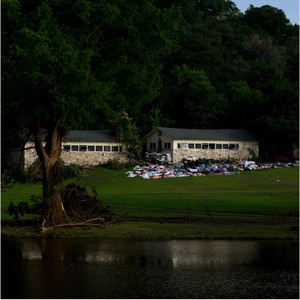
You roll through the gate and on your left is a huge swath, which is called the golf course, but I think it's used for a lot of different things.
But it's a very open field with the background of the hills.
It is spectacular view.
And that's where the Mystic Sign at night is lit up and shines over the river.
And then the waterfront, which was what initially drew me.
We spent a lot of time having campfires down by the water.
And the smell, oh, you know.
What is the smell? The smell is the trees and the cedar and the river.
I wonder if you can spend a little more time on that river.
river. Clearly, it's what drew you into this place.
And what is it like?
And what role does it play in the life of the camp?
The river is like a character.
Because if you had an 8 o 'clock swim class, you were dreading going in that river because it was frigging cold.
But it was also a place of refreshment.
They had these huge floats on the river that you could could swim out to and jump off of.
There was a diving board, there was snorkeling, there was canoeing.
And we spent a lot of time having campfires down by the water.
There was a song called Peace, I Ask of the O' River, and we sang it at bonfires.
And then there was the, there's a camp on the Guadalupe River.
It is the camp of my dreams, where the whippoorwills call softly and the bright moon beams. There's a camp on the Guadalupe River Where hearts are loyal and true Camp Mystic, I will pledge my true And faithful love to you I sang that to my children the Mullah night when they were babies.
What does it feel like to sing that song right now?
it's just it's heartbreaking it really is honestly you know i live with a man who when he can't sleep he plays a golf course in his mind i go straight to the river at camp mystic hmm and it calms me because at night the way that the bonfires the campfires on the river happened where everybody lined up by cabin and oftentimes we were holding candles and you sang all the way to the river and you brought a towel and you sat in the cool wet grass and the river was just like glass some nights.
Mm -hmm. Calm. Calm.
So in the restless version of your night when you see this river, you see the calm, idyllic version.
Yeah, I just go to Camp Mystic in my mind.
You know, I just picture being there and how I felt.
Aaron, were you or anyone else in the camp ever instructed to think about this river, which is clearly the source of so much joy and activity, were you ever told to see it as something that could be dangerous?
Well, not from a flooding standpoint, but nobody ever went near the water without a counselor near them.
Now, I do, okay, here's one thing I do remember.
The thing I was most afraid of was someone crossing the river in the middle of the night because there were so many horror movies out, you know.
Oh, an outsider somehow getting across the river to the campers.
The camp was very protective of campers, you know.
Their safety was numero uno. And so they had a night watchman and he sat in a waterfront chair with a shotgun every night.
Wow. I felt protected, you know.
There was a lot of protocol around safety there.
But not around flooding?
No. No. Not prior to 78.
We'll be right back.
We all have moments when we could have done better, like cutting your own hair.
Yikes. Or forgetting sunscreen so now you look like a tomato.
Ouch. Could have done better.
Same goes for where you invest. Level up and invest smarter with Schwab.
Get market insights, education, and human help when you need it.
Learn more at Schwab .com.
Hi there. I'm Chris Wood, audio engineer on The Daily.
That means that I put the finishing touches on the show, make everything sound a little bit better and hit publish on my computer.
That sends the day's episode out into the world so it's ready before most of our listeners wake up.
So the Daily team makes a show every weekday.
That can mean late nights and that's when they pass it off to me.
Part of the reason that I'm able to do the work with a clear head is that it's not the middle of the night for me.
You might have already guessed from my accent I live in London and we're five hours ahead of New York.
The Daily is only possible because it involves people all over the world.
And that includes the whole fleet of New York Times journalists who give us their expert analysis and in -depth reporting five days a week.
So if you're a loyal listener and want to support what we do, as well as explore everything that the New York Times has to offer, you can subscribe at nytimes .com slash subscribe.
Cheers. is. Erin, when did you come to understand that flooding was a potential danger at this camp?
1978. I was 13 and I don't really even remember it raining all that hard when we went to bed.
I was on the top bunk and in the middle of the night, I mean, you could start to hear the rain really coming down.
It woke me up and I got up and I looked out and there was this huge cypress tree right next to the creek.
At the top of this cypress tree, there was a light that lit the way up the hill and the water was just below the light.
Wow. And I was terrified.
fight. And I can't remember whether my counselor was already up and could see what was going on.
But I walked over to her and I said, we got to get out of here.
You could tell that this was flooding.
Yes. So we were all told that we were going to be moved up to a cabin called Angel's Attic.
So you were pretty much evacuated from your cabin.
Yeah, we didn't have food for a couple of of days.
And what I do remember was cars going down the river, deer, animals, all kinds of big things that you're just like, oh my God.
Wow. And the golf course looked like the Pacific Ocean.
I just couldn't believe I was looking out on all this water that was just raging.
And then what really resonated with me was how devoted the staff was to keeping everybody safe.
The water was starting to recede a little bit, but it was still raging.
And I remember watching with horror as a counselor, they were trying to get food over to us like peanut butter sandwiches or something from the dining hall.
and they got on a horse and I remember watching them try to get across and I was like, please God, please please don't let anything happen to these people like, everyone was just waiting you know, just couldn't believe they were trying to get to us because it was still really dangerous but understand that the flight of 78 was nothing it just doesn't That pales in comparison to what just happened.
Well, knowing what you know about flooding at this camp, when did you first hear that there had been another much, much worse flood?
Well, I'm constantly on the Camp Mystic alumni reunion site on social media, so I think I must have started to see things on that first. And people were...
just in a frenzy, just so grieved.
Everybody's just heartbroken.
But honestly, until yesterday, I was completely numb.
Yesterday, I just fell apart.
Yesterday was the day that I just broke when I started seeing some of the pictures of these campers.
One is two little girls that were best friends, Lila Bonner and her little friend Eloise Peck, with their arms around each other just broke me just broke me um and then the footage of the girls that were being evacuated can you tell me about that footage i haven't seen it they're seeing the destruction and they're singing through it That's what we did at Mystic.
You know, we just sang.
So really in the middle of the worst thing that will likely ever happen to these girls, they are invoking the songs that you learned when you first got there and that seems so essential to the culture of this place.
They're taking care of each other.
Yes. that's part of being what they call a mystic girl we look out for each other and we trust God you know whoever that is for you you know can I ask you what may feel like a very delicate question about these floods.
And perhaps it strikes you as too early to ask this, but your own experience makes me want to ask you it.
This wonderful place floods with some frequency, right?
I mean, it happened to you in 78, but in my reading and in the reporting from our colleagues at the Times, it happened again with deadly consequences in, I think, 1987 187 in this region, and even more deadly consequences this past weekend, July 4th, how do you think about why, whether it's parents or local officials, the folks who run the camp, why people keep tolerating the risk level of these floods and perhaps not doing a ton to mitigate them?
Like in 1978, that flood rose so fast in the middle of the night that you couldn't see.
Nobody could see or predict it was going to rise that fast. So what would have worked?
A siren system in that area, to my knowledge, I don't know.
I mean, it is so remote down there that But trying to put a siren system in is not something—I'm sure they looked at it.
They did. In fact, the local officials talked about it.
But I'm hearing you say you're not convinced that even if the best system was in place, it would necessarily prevent the worst. I don't know.
I think it's a difficult—it's a huge lift in that area because you can barely get cell service.
And these camps are so spread out, you know.
But honestly, as someone who lived through a flood down there that came on the camp so fast that nobody could have stopped it, even a siren system, I mean, I don't know.
Well, what do you think happens to Camp Mystic now?
The damage is really extraordinary, and there's the reality that folks may not want to send send their children back to a place that has now flooded so catastrophically and could, in theory, flood catastrophically again?
Well, of course, I would love to see Camp Mystic come back, but I don't think, yeah, I don't know.
Maybe this was a wake -up call for the community that the money needs to be invested in something.
I don't know. I don't know what that answer is.
All I can say is it was a very important place to me and many other young girls and women.
Still is. I wonder if, after everything that's just happened, when you are sitting in bed, restless at night, if you think you will still think back to the image of the river, this calm river, which is what you said you think about.
You know what? I will never not go to that river.
has it become sort of a character in my mind that can be angry sometimes yes but i choose to hold on to the beautiful moments there would you could hear the you know the locusts and the crickets and the crackle of the you know the bonfire We understand just how we feel We're leaving Mystic when it's for real And the voices of all these girls singing softly together, you know.
We understand, we understand I hang on to those things, and that's what makes it special.
Change your mind, come back to Mystic And you will find Well, Erin, thank you.
Truly, we appreciate it.
You're welcome. It's a privilege to share about this place.
We love you, Mystic Yes, we do We love you, Mystic And we'll be true When you're not with us We're blue, so blue On Monday night, hundreds of camp mystic alumni and supporters gathered at a park in Dallas for a vigil to mourn those who had died at the camp.
Meanwhile, the lieutenant governor of Texas, Dan Patrick, expressed dismay that a system of flood warning sirens were not in place to protect places like Camp Mystic and said that the state's government would seek to have such a system installed by next summer.
Had we had sirens along this area, up and down, that would have blown very loudly, it's possible that that would have saved some of these lives.
We'll be right back.
same goes for where you invest level up and invest smarter with schwab get market insights education and human help when you need it learn more at schwab .com we are living in interesting times a turning point in history are we entering a dark authoritarian era or are we on the brink of a technological golden age or the apocalypse no one really knows but i'm trying to find out From New York Times Opinion, I'm Ross Douthat, and on my show, Interesting Times, I'm exploring this strange new world order with the thinkers and leaders giving it shape.
Follow it wherever you get your podcasts.
Here's what else you need to know today.
On Monday, President Trump revived his threat of tariffs ranging from 25 % to 40 % against countries that have yet to reach trade deals with the U .S. Among the countries threatened were Japan, South Korea, and South Africa.
Trump paused his original tariffs for 90 days until July 9th and has extended that deadline until August 1st. The new threats appear designed to encourage deals before then, but so far, the U .S. has reached only two preliminary trade deals with Britain and Vietnam.
Today's episode was produced by Mary Wilson, Claire Teneschetter, and Olivia Nat.
It was edited by Liz O.
Balin and Michael Benoit.
Fact Check by Caitlin Love.
Contains original music by Dan Powell, Marion Lozano, and Diane Wong.
And was engineered by Chris Wood.
Our theme music is by Jim Brunberg and Ben Landsberg of Wonderly.
Special thanks to Edgar Sandoval.
that's it for the daily i'm michael barbara see you tomorrow we all have moments when we could have done better like cutting your own hair Yikes.
Or forgetting sunscreen so now you look like a tomato.
Ouch. Could have done better.
Same goes for where you invest. Level up and invest smarter with Schwab.
Get market insights, education, and human help when you need it.
Learn more at schwab .com.