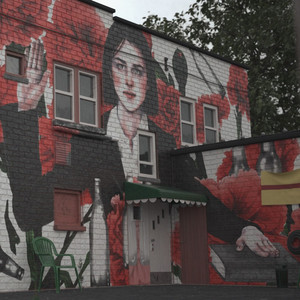
The Justice Center inCleveland, Ohio takes up a whole city blockdowntown.
It's a cluster of concrete towers built in the1970s.
I get headshere, but I'm just going to sayit.
The buildings arehideous, butpractical.
The Justice Center houses in one location everything a justice systemneeds.
The city in countycourts, the countyjail, prosecutorsoffices, the sheriff'soffice, and headquarters for the Clevelandpolice.
Roughlyspeaking, the building functions like mosthierarchies,vertically, in this case from the bowelsup.
The main court tower is 26 storieshigh, so the elevator really runs theplace.
If a person is arrested inCleveland, they're coming into the Justice Center from thebasement.
Weary cops escort suspects from the underground parkinggarage.
They getbooked, go up a few floors to thejail.
Once they get a courtdate, they're riding up to one of the courtroomfloors.
The lower floors are for lessercrimes, less hallowedproceedings,misdemeanors, housingcourt, and the higherfloors, starting about halfway up thebuilding, are forfelonies.
Detectives wearing lanyards often get off on the ninthfloor, where the prosecutor's officeis.
The court'sstenographers, alwayscourteous, drag their squat wheelie cases on and off theelevator.
Maybe they chat for a few floors with the officers from the sheriff's department in search of a coffee and amuffin.
Defense attorneys are riding up and down allmorning, muttering to eachother, can youbelieve?
Gripping aboutjudges, who have their own judgeelevators, so they're notoverhearing.
The elevatormainstays, ofcourse, are crime victims in theirfamilies, and defendants in theirfamilies.
Sometimes those families are one and thesame.
When I'm feelingoptimistic, I appreciate that an elevator car in a government building is one of the few places left in our country where different kinds of people are forced intoproximity.
I like to think that we can all stand so close to oneanother, with our sensible heels and timbrillen boots and American flag lapelpins, and fake eyelashes and axi-colon and orthopedic inserts and tear-dropped tattoos into gocoffees.
And when the elevator doors openup, spilling us out onto ourfloor, the fact that no one is bloodied or even intears.
It's asmall, pleasing reminder that we're all in thistogether.
Other times the shoulder to shoulder closeness only magnifies theobvious.
We're not thesame, not atall.
Coming up from the lobby onemorning, a young black woman is holding a little portablespeaker.
The white people in the elevator give each otherlooks.
I don't want to reciprocate theirlooks.
Instead, I decide it's my duty to break the tension by saying the lamest thing I possiblycan.
To beclear, that wasn't myplan.
It's just what came naturally tome,apparently.
I was a soundtrack for theelevators.
Not like they're exactly usuallyyet.
It doesn't even bother witha,mm-hmm, thistime.
Now I keep my head down to avoid the looks of the black people are probably giving eachother.
This place is primarily black andwhite.
The majority of the courthouse staff isblack.
Clerks are mostlyblack.
Most of their managers arewhite.
In the Sheriff'sDepartment, most of the security guards areblack.
Most of the deputies arewhite.
Most of the attorneys arewhite.
Almost all the county judges arewhite.
And their bailiffs arewhite.
Most of the defendants and crime victims areblack.
In the cocoon of theelevator, everyone's polite to eachother.
Pretends nothing is weird aboutthis.
But if the elevators were calibrated to detect a power imbalance in theload, like a socially conscious clothesdryer, they'd be perpetually on thefritz.
From this American life in WB EasyChicago, it'sserial.
One courthouse told week byweek, I'm SarahCanick.
If you've listened to serialbefore, you probably know that our first season was about a murder case inBaltimore.
Ever since that storyaired, people have asked me and the people I work with aquestion.
What does this case tell us about the criminal justicesystem?
Fairquestion. And toanswer, I'd usuallysay,um, because the answer is that cases like thatone, they're not what's filling America's courtrooms everyday.
The defendant in thatcase, anon-sayed, was charged with first-degreemurder, had never been in troublebefore, his family had an expensive defenseattorney, and rarest ofall, his case went totrial, and it lasted sixweeks.
None of that is typical of the vast majority of cases moving through the criminal courts in thiscountry.
And even if itwere, I don't think we can understand how the criminal justice system works by interrogating one extraordinarycase.
Ordinary cases are where we need tolook.
We need to spend at least a year watching ordinary criminal justice in the leastexceptional, most middle of theroad, most middle of the country place we couldfind.
Cleveland. When I first began reporting thisstory, I called a former US attorney there foradvice, explained what I wanted todo.
And hesaid, Cleveland's not a badchoice.
And then hesaid, please don't be mean toCleveland.
You can be mean to the criminal justicesystem, but please don't be mean toCleveland.
I told him I didn't plan on taking cheap shots at the mistake by thelake, because I'm a classyreporter.
Andanyway, we could have gone to lots ofcities, and the problems would look about thesame.
Minneapolis, orAtlanta, orPittsburgh, orSacramento.
Same sorts ofcrime, same struggle forfairness, same attempts atreform.
In mostcourts,though, it's really hard torecord.
You might need permission from the State SupremeCourt,hello,Illinois.
In otherplaces, recording of any kind is barbed-incourtrooms.
What is yourproblem,Pennsylvania?
Cleveland,though, they let ourproducer, Emmanuel Jochi andme, wander thecourthouse, unencumbered withmicrophones.
Extraordinary. We spent more than a year in the JusticeCenter, following criminal cases of allsizes.
Tinyones, reporters don't usually pauseover, like weed possession or driving undersuspension.
Have yourcases,assault, armedrobbery.
Up to the most serious crime thereis, aggravatedmurder.
Everycase, Emmanuel and Ifollowed, there came a point where wethought,no, this can't be how itworks.
And then we werelike,oh, myGod, this is how itworks.
This is how ithappens. People have been through thesystem, who work in thesystem, maybe they know what I'm talkingabout.
But millions more don'tknow.
Thisseason, we're going to tell you the stories of the cases wefollowed.
Sometimes they're going tooverlap, they might span two or even threeepisodes.
You'll see what we saw from theinside.
First case we're going to talk about issmall.
It's a barfight. We're starting with this one because it's a simplecase.
And it's also an example of the systemworking.
I want to show you what that looks like in thiscourthouse.
So you have a baseline for what's considered functional justice in PaiyogaCounty.
So here wego. A bar fight walks into a justicecenter.
How's it going to look when it walks backout?
Let me show you thisvideo.
I want to get your impression ofit.
One morning lastspring, RussBenzing, a defenseattorney.
Takes me into a little side room off the hallway on the 20th floor of the JusticeCenter.
He wants to tell me about a case he'sgot.
I'm calling the defendantAnna, which is not hername.
She's charged with assaulting the policeofficer, which is a fourth degreefelony.
Russ is drafting me into a one person focus grouphere.
He wants to know whether an outsider like me will interpret the video the same way hedoes.
I'm his stand in for ajuror.
Okay, so just explain what we're lookingat.
Okay, this is a surveillance type of thebar.
This incident occurred in thebar.
Okay. There she is right there in the lower left-handcorner.
Yeah,yeah, longhair.Yep,yep,yep,yep,yep.
Anna'swhite, younglooking,small.
She's wearing librarianglasses, skinnyjeans,boots, and a t-shirt that fits her justso.
Even in this terribly grainyvideo, she'sattractive.
She's leaning on the corner of thebar.
Okay, there sheis. You see somebody approach her from therear.
Okay, and smack herass.
Is that what he justdid?
Yeah,well, you'll seemore.
Anna had gone out that night with her friend and some other guy to a small corner bar on the west side ofCleveland.
When I metAnna, she told me it's not the sort of place she usually hangsout.
It was her first timethere.
Just a little rougher people are there olderpeople.
She and her girlfriend noticed these two women down the bar looking atthem.
I just noticed her and the other girl constantly staring atus, but we still stayed there for about anhour.
And that'swhen... Did they talk to you oranything?
No. So what was why were they looking atyou?
I have noidea. I personally think it's because we werepretty.
So I go and get adrink, and this guy is smacking me on my rearend, and I was a guy you had been talking to ornow?
No, just some random guy at thebar.
Are youserious? Is there a randomguy?
I figured you knew thatguy.
No, I did not knowhim. Why is he just smacking yourbutt?
Because men aredogs. They can bedogs.
And at first I waslike,haha, youknow,stop.
And then he kept doingit, and I actually gotmad, and I got in hisface.
In the surveillancevideo, there's a perfect view of allthis.
First one guy touches herbutt, and lets itgo.
Then a second guy touches herbutt.
She pushes him back in a playfulway.
Then the first guy starts inagain, hittingharder, smacking her ass threetimes, fourtimes, and it turns and lifts her foot at him as in cut itout.
He slaps her a sixthtime.
Behindher, a police officer walks slowly onto thescreen.
He's not seen any of theslapping.
He'd just come from the bathroomdownstairs.
He'd been working down the block and then come in the bar topee.
Meanwhile, back at thecounter,smack.
The guy hits Anna a seventhtime, Anna spins around to confront the assslapper.
At thatpoint, one of the women who'd been staring at Anna from down thebar, a stockyblonde, she storms over toAnna, gets between her and the assslapper, and immediately gets into it withAnna.
This is what Russ wanted me tosee, how Anna wasprovoked.
This other woman enters the pictureframe, and they startarguing, and then they go atit.
It's not clear if anybody threw the first punch orwhat.
But Anna goes decisively for the lady'sthroat, and then it's just amess.
The people around them are trying to break itup, but Anna's notstopping.
She's thrashingaround.
She gets swallowed up in thecrowd.
We want somepeople, not to theground, where this person kicksher.
Oh,oh,oh,oh, myGod.Whoa,whoa.
All these boozy patrons are pilingin.
People are grabbing Anna's longhair, and her head is getting yankedaround.
Then she's pulled to thefloor.
It's awful towatch. The most disturbing moment to me is when the blonde lady's friend takes off hereyeglasses, places them next to herbeer, readyes herself by sweeping back herhair, and then she doesn't just kickAnna.
She gives her a ferociousstomp, like she's trying to kill arat.
Anna gets backup, or maybe she's dragged backup.
I can't even tell if she's fighting anyone in particularanymore.
Anna later tells me she's got the heart of afighter, but maybe not theskills.
That looks aboutright.
Someone behind Anna has got his big arm around herneck.
Now you see thecop. There's the cop rightthere.
And people are still grabbingher, and she'sflailing.
It's got her by theneck.
Yeah, there's where she swings andhits.
And hits thecop. Looks like she gets them on the left side of hisface.
And then thecop, who's a bigdude, is on top ofher, takes her to theground, cuffsher.
Afterthat, it's four nights in the Cleveland CityJail, a $5,000 bond to getout, and a fourth degree felonycharge, assault on a peaceofficer.
The videoends. So you're on ajury.
You seethat? You convicther?
No, I wouldn't convicther.
Imean, I don't think Iwould.
Yes,technically, she connected with the cop'sface, but tome, it lookedaccidental.
That is the answer Russ is hopingfor, asolid, not guilty for hisclient.
But, oryet, he'd like a not guilty tingeed with righteousindignation, which I can alsoprovide.
How does the video we just watched add up to a felonycharge?
A young woman tries to stop a man from hitting herass.
She's then verbally and possibly physically attacked by some puffed-up batinsky from down thebar, ends up fighting for all she'sworth, defendingherself, all 110 pounds ofher, against a pack ofstrangers.
Cop stepsin, she hits him from the looks of it byaccident.
The cop is notinjured, by theway, and is the one who ended up scratched andbleeding.
I get that bad behavior abounds in thisepisode, and Anna'sincluded, but felonyassault.
To become a felon forthis, that cannot beright.
Russ thinks it's notright.
He thinks that the system got this onewrong, that Anna's case should not be happening atall.
It tells metoday, his plan is to gobig.
I know that they'll offer me a misdemeanor assault on thiscase.
But he doesn't want to settle for a misdemeanor assault on thisone.
He's got the surveillancetape, which reads like a closed-circuit moralityplay.
He feels like that alone ought to be strong enough evidence to force a course correction on the part of thestate, to undo what's already beendone.
Anna'srace, herwhiteness, is not really part of his calculationhere, but at least it doesn't work againsther.
After many decades in thisbusiness, Russ says he's accepted the shameful truththat, as a generalrule, it never helps to beblack, and never hurts to bewhite.
Sotoday... I'm going to try to see if the state will dismiss thecharges.
Okay? He's going to ask the prosecutor to drop the wholething.
This is what I've come here tosee.
How's this adversarial system going to turnnow?
How's this going to playout?
Russ gathers hisstuff, we leave the little conferenceroom.
I follow him as he goes to look forAnna.
He told her to be at the courthouse this morning by9.
Harry, how youdoing? What's your guy doinghere?
Russ has been an attorney for 41years.
He's head of the Chaihoga Criminal Defense LawyersAssociation.
That's how I methim. I went to a meeting of the group and watched how all these people rushed himafterwards, as if he were wearing a pin thatsaid, when your casenow, ask mehow?
It's like that all the time withRuss.
He walks around the Justice Center and people just come at him foradvice.
Ping punging the details of their cases off ofthem.
An attorney corrals him in thehallway.
So my guy was caught transporting the two kilos from Chicago toCleveland, hesays.
Okay, but he doesn't admit to being the guy that made the secretdepartments.
Yeah.Yeah,yeah.Okay, Russ willsay, rocking a little on hisheels, wearing the coins in his pantspockets.
Then he'll cite the case law they need or the new ruling out of the 8th district they hadn't heardabout.
Russ has no personalsecretary, no lawclerk.
It's justhim. He likes the actionhere.
He likes thekibbutzing.
And he's a master of doleful TGIF courthouserepartee.
Did I hear something about justice in thisbuilding?
I likeRuss. His colleagues like himtoo.
Not clear whether his clients likehim.
He can sometimes be a bit of an asshole to his clientsactually.
They call him all daylong.
One guy didn't show up at the courthouse today and is confused about where he's supposed togo.
Russ tells him to the JusticeCenter, where the courtis.
You've been herebefore.
What? You don't have awarrant.
You don't have awarrant.
You just get down withyou.
Like most of the defense attorneys in thisbuilding, Russ has some paidclients.
But he also has a lot of assignedclients, people who can afford to hire a lawyer so the court providesone.
That's how they do it in CaihogaCounty.
30 to35% of indigent defendants get a public defender and the rest are assigned to private attorneys likeRuss.
Russ has the difference between how he treats his paying clients and his non-payingclients.
Comes down tohandholding.
The actual lawyering part is thesame, hesays.
But his bedside mannerchanges.
With a payingcustomer, he might visit them in jail just to checkin, make sure they're doingokay.
He is not doing that with an assignedclient.
And I'm guessing a payingclient, he's not talking to them likethis.
Tell youwhat,Mike.Okay?
I've been doing this for 41years.
I'm going to be willing to bet that I can do a better job of researching the law than youcan.
So let me take that weight off yourshoulders.
He hangsup.Wow. I'm not fucking believe a book of paper in abank.
I don'tknow. Anna is also an assignedcase.
But so far she hasn't annoyedhim.
He's nice toher. He meets her up on the 20thfloor.
She's sitting in the waiting area under theTV.
There's one on every floor set to the FoodNetwork.
Always. Just the right amount of milk that just brings thatstudiness.
Anna looks small andnervous.
I'm not allowed to record theirmeeting.
That would violate attorney clientconfidentiality.
Russ leads her to a conference room so you can explain what's happeningtoday.
A pretrialconference.
Soundsformal, but it'snot.
All it means is that Russ will track down Anna's prosecutor and they'll have a quick conversation about thecase.
Anna doesn't even get to be there forit.
She just has to sit and wait under the TV for Russ to reportback.
I don't know whether Anna knows thisyet, but Russ for sure knowsit.
Prosecutors will almost always pursue a case that involves acop.
That's the way itis. Law EnforcementCode.
The next time I seeRuss, he's eating a piece of carrot cake that was on offer in a judge'schambers.
He's had his pretrial with the prosecutor on Anna'scase.
I made the mark request for hismissile.
The meeting Russ asked the prosecutor to drop the case againstAnna.
She said that it was laughable and filed with probably being marked to thefelony.
So it'll probably betried.
Wait, she wouldn't even knock it down to amisdemeanor?
Well, she doesn't have the power to doanything.
She has to take it to hersupervisor.
Who's a hardmarker? And a hard markermeans...
Yeah, it just like itsounds, and it's not going to reducemuch.
Russ sounds matter of fact aboutthis.
And he is sortof. He's not shocked that his dismissal request was shotdown.
But he is offended about the way it was shotdown.
As the day wearson, and I follow Russ around to his other pretrial on othercases, the kid caught driving a stolencar, a sex offender who violated a registrationrequirement, a guy nailed for having drugs and a scale in hiscar.
Russ keeps circling back to how the prosecutor on Anna's case called his requestlaughable.
He couldn't shake hisirritation.
He told me aboutit, told other people waiting at the elevators aboutit.
Laughable.Laughable.
He was irritated because he didn't make this dismissal requestfrivolously.
He's been doing this a longtime.
He's good atit. He knows how disinclined prosecutors are to drop acase, how rarely thathappens.
He wouldn't ask for a dismissal without goodreason.
So to call it laughable feelsdisrespectful.
He doesn't really know thisprosecutor.
Her name is JenniferKing.
He's heard she's a goodlawyer, but she's a littleyoung.
Maybe she doesn't yet understand that if you call a person'searnest, Mark requestlaughable, that can erode the professionalrelationship.
I talked to JenniferKing.
Perhapsunsurprisingly, she had a different take on why they got off to a scratchystart.
Jennifer's been in the prosecutor's office for three years in the General felonyunit.
She's got a huge invitingsmile.
She toldme,Russ' request for a dismissal didn't sound like much of a request toher.
She didn't like histone.
The defense attorney came to me at the first pre-trance andsaid, you're going to dismissthis.
Oh, hedid?Yeah. He didn'tsay, will you dismissthis?
Hesaid, you're going to dismissthis?
Imean, he wasasking, but it wasn't an askingmanner.
Did he mean you guys are going to end up dismissingthis?
Like, by the time I'm through withyou, you're going to wish younever, like it was likethat?
Or was hesaying,hey, can you dismissthis?
Like, what'd you take fromit?
I took from it as being prettyaggressive.
And, you're going to dismiss this because this case iscrap.
And you all are just charging random girls in thisfight.
Jennifer felt like Russ was telling her how to do herjob.
Youknow, a young female prosecutor who's never worked with an older maleprosecutors, probably been practicing longer than I've beenalive, youknow, comes at me andsays, you're going to dismiss thiscase.
I never told her you're going to dismiss thiscase.
Never. I would never say that to anyprosecutor.
I wouldnever, I'm not a confrontationalguy.
Not to belaborthis, but Russ remembered yet a different interaction in which he thought Jennifer misinterpretedhim.
He says he tried to fix it after that firstmeeting.
Told her he didn't mean any offense by anything hesaid, but his quasi-apology didn't go overwell.
He knows it's hard to be a female attorney in thisbuilding, especially a youngone.
Female attorneys get shortshrift, hesays.
There's a bias againstthem.
Principally, among older whitemen,I.E.
a lot of the criminalbar.
Jennifer told me whatever her personal feelings about a defenseattorney, she is not going to take them out on thedefendant.
That does not influence mymark, shesaid.
I thought maybe Jennifer would be a little sheepish about Anna's case that they were prosecuting it atall, much less as afelony.
Butno, toJennifer, Anna's case wasuncomplicated.
Anna was facing a felony because punching a cop is afelony.
Jennifer had watched the same bar surveillance video that Russ had and that Ihad.
And shesaid, soyeah, you can see whathappened,but...
What you don't have isaudio.
You don't hear the officersaying, police break it up and she's stillflailing.
She's stillkicking. And she punches an officer who's trying to keep people from being harmed right in theface.
And Imean, her arm comesaround.
So wesee,yes, there's an assaultthere.
And did that punch look deliberate toyou?
Or did it look like somebody kind of flailing around trying to defendthemselves?
Somewhere inbetween. Imean,no, it wasn't a duke substrate punch to theface.
I see you kind of athing.
And it wasn't just like her arm flung back and happened to hit him in the faceeither.
Imean, she is aggressively fighting at thatpoint.
Andyes, there's lots of people on the floor and there is another woman kickingher.
Butreally, if she had just stopped at thatpoint, nothing probably would have come ofthis.
She probably wouldn't have been charged with any sort ofassault.
For therecord, Anna says she never heard the officerssay, stop or break itup.
She says she never even knew police were in the bar until someone arrestedher.
But that's Anna's word over hercops.
Jennifer will take thecops.
Russ thinks this whole case is built on amisunderstanding, starting from the very beginning when the cop arrestedAnna.
Russ pointed out that the cop didn't watch the surveillance video that samenight.
So he must have thought Anna was thetroublemaker.
In his policereport, he writes thatAnna,quote, initiated thefight.
Russ said the cop didn't know Anna was being harassed by some ski-v-dood in a baseballcap.
Didn't know the blonde lady got in Anna'sface, that Anna got stomped while she was on thefloor.
If the cop hadknown, Russsaid, I don't think he would have chargedher.
But I don't think anybody really knew the full story of whathappened.
Is thattrue,though? The police were wearing body cameras that night in thebar.
Listenhere.Like, stop smacking myass.
And... Making who'sass,right?
Yeah. He was making herass.
This is Anna'sfriend,Kristen, who is sitting next to her in thebar.
Kristen talked to at least three different officers thatnight, including Sergeant TimothyGill, the cop who got hit in theface.
And she told him all the samestory,same, accuratestory.
So then he wouldn'tstop.
So she got pissed offlike,yo, chill the fuckout, stop smacking myass.
And then the other girl got in her face like jumped up rightaway.
So don't talk to my friend like this and then start going at it withher.
This body camera footage is part of the evidence in Anna'scase.
I listened to all ofit. And I gottasay, it contains some gems for Russ'scase.
First ofall, the officer did know whathappened.
Andyet, Anna is the only one who gets in any trouble thatnight, which seems extravagantlyunfair.
At onepoint, Sergeant Gill tells Anna they're aware of the lady who got in herface.
That they are going to file a report saying that lady assaultedAnna.
That doesn'thappen. They never even talked to thatlady.
She wisely high-tailed it from the bar right after Anna wasdetained.
In hisreport, Sergeant Gill will describe the other woman not as anassailant, but asa,quote, mutualcombatant.
As for the asslapper, he did stickaround.
There's this whole exchange between Kristen and SergeantGill, who asksher, would the guy look like who wassmackin' yourfriend?
What guy'sblack? Iswear.
Kristen Domeris, she'slike, I don'tknow.
And then Gillsays,sweetheart, just give me what yougot.
And Kristen coughs itup.
Shesays, that's him right there in the redjacket.
Who does this guy with the red jacketoutside?
The guy's takenoutside, paddeddown, put in the back of acruiser.
And then the police let himgo.
Why would they dothat, youask?
Well, maybe because back inside thebar, the remaining patronssay,oh, guy in the redjacket?
I don't think he had anything to do with theofficer.
I talked to this fellowafterwards.
Troy, he'snice. He felt badly about what happened toAnna.
Weall,as, youknow, there was about four or five people thatsaid, we never seenthat.
Youknow, he wouldn't do something likethat.
Did you knowhim?No. But hewouldn't...
And other people didn't knowhim?
Yeah. To say like that's hewouldn't.
That's nothim, he wouldn't dothat.
Troy believes this is why the ass lapper was letgo, because they all vouched forhim.
Okay.Ha, so the male cop is believing four men or six men over the women who say he's lapped herass.
Yeah.Also, the cophimself, SergeantGill, thevictim, he doesn't appear to care that much about beingpunched.
Consensus from the bar patrons is that the punch was essentially anaccident.
They don't think anyone should get alldowntown, includingAnna.
They give Sergeant Gill some sloppypushback.
You got aarrester?Seriously?
Sergeant Gill struggles a little toexplain.
In thistape, Sergeant Gill is in thebackground, he'ssaying, let me make this perfectlyclear.
Nobody wants to arrest thegal.
We'resorry, do you make a perfect clear fromthat?
Nobody wants to arrest thegal.
What's goingon?No, I'mnot.
It's hard tohear, but hesays, will I presscharges?
No, I'mnot. Do I think it's the biggest deal in theworld?
No, Idon't. He says the same thing toAnna, who's outside the bar sitting in the back of a policecruiser, halfhandcuffed.
One cuff had slipped off and was dancing every whichway.
His tone with her is not exactlyapologetic, but it isconciliatory.
Gill tellsher,sweetheart, don'tworry, I'm not going to presscharges.
No, don'tworry, I'm not going to presscharges.
It doesn'tmatter, you'refine, but I have to take it to jail because you hit apoliceman.
Hey, listen tome. Itdoesn't.
No,no,no.No,no,no,no.
I'm not sure why Sergeant Gill is saying he's not going to presscharges.
Sergeant Gill isn't the only decider onthis.
He's the first link in achain.
Here's what's going tohappen.
A detective will come by the bar tomorrow and look at the surveillancetape.
He'll see what he needs tosee, that Anna's arm made contact with Sergeant Gill'sface.
And that'll be probable cause for felony assault on a peaceofficer.
The prosecutors will take it fromthere.
For the cityprosecutor, then the countyprosecutor, Sergeant Gill could stop the whole thing rightnow, as he's talking toAnna.
He could letter out of thatcruiser, send her home tobed, but hedoesn't.
Instead, he saysthis, which to me is the most confounding sliver of audio from the wholenight.
Sergeant Gillsays, I know you didn't mean to punchme.
I understand itwas, I was sure it was reallyaccidental.
But the factis, it's on the groundup.
I'm sure it was purelyaccidental, hesays.
Maybe he's just trying to calm herdown.
Regardless, Anna is notplacated.
It's possible nothing could have placated her justthen.
She told me she was a little drunk and very angry sitting in the back of thatcruiser.
I'm sitting in a fucking cop car forhours, for no fuckingreason.
Why am I in the back of thiscar?
This isbullshit! Why can't you guys tellme?
Anna loosed a slurry ofinvective, ofprotest.
For onehour, she kept itup.
I askedher, how was she not scared to talk to cops likethat?
Shesaid, I hate to sayit, I'm a whitegirl.
You know what I'msaying?
Sometimes you can get away with things and you can saythings.
Do you understand what I'msaying?
I did understand what she wassaying.
I'm30.Really? And the cops on the receiving end ofthis.
These aren't even the cops who arrestedher.
Never went into the bar oranything.
They happen to be on duty down the block when someone deposited Anna in their backseat.
By the time they drive her to the Justice Center and shepherd her from the garage onto theelevator, they're arguing likefamily, tired andfamiliar.
We don'tknow, we know just thetruth.
Why am Ihere? Why are youwaiting?
Where's the police officer that I supposedlyassault?
We arewaiting. I can't answerthat.
That'sfine, but you still have to go throughthis.
You still have to go throughthis.
The message to Anna from the police officers that nightwas, we know you don't want to get on thistrain, but toolate, you're already onit.
Don't worrythough, it'll stop for youeventually.
Like Sergeant Gills said to the bar patrons after one of his rhetoricalQ&As, do I want to doit?
No, Idon't. Headded, she'll get her day incourt.
That's coming up afterthis.
The time hascome. In his heart ofhearts, Russ thinks the real reason the prosecutor's office is pursuing this case against Anna is because there was a copinvolved,yes, but also because she's already got arecord.
Nofelonies, but she's got somemisdemeanors.
FromFlorida, there's a driving undersuspension, aDUI, then some localconvictions, including a recentone, which looks prettybad, a case that started out as two felony theftcharges, but got dropped down tomisdemeanors.
Anna's notclean. Not that there are a lot of clean records in the JusticeCenter.
Most of thedefendants, many of thevictims,too, have had some prior entanglement with thelaw.
And even if it's smallstuff, marijuana possession ortrespassing, you get the stink on you or what I've come to think of as thestink.
You get a whiff of bad citizenry aboutyou, an odor that causes the presumption of innocence toshrivel.
Russ understandswhy, I understandwhy.
It's because everyone who works in this building has become accustomed to the likes ofyou.
You are the usualsuspect.
And now it feels natural that the courthouse is where youbelong.
So with the aroma of prior misdemeanors clinging to Anna'sfile, the prosecutor moves from the laughable stage of negotiations to a solid pleaoffer.
M1Assault, first degreemisdemeanor, just as Russ hadpredicted.
Russ knows the whole system is primed for him to take this misdemeanoroffer.
Facts of the case bedamned.
Everyone herepleads.96% of convictions in this courthouse come frompleas.
Allday, that's what people aredoing.
Brokering,haggling, angling for pleadeals.
The tendency even among defenseattorneys, Russsays, is to go along with theflow.
We're trying to get rid ofcases.
If somebody is offered a plea to amisdemeanor, you takeit.
Bedone.Okay? That's a win in defenseparlance.
The feeling willbe,well, she has a prior recordanyway.
So a plea to a misdemeanor is of no consequencehere.
I remember one judge toldme, this is one judge toldme, in this county innocence is amisdemeanor.
What does thatmean? What that means is if they don't have the evidence againstyou, they'll let you plead out to amisdemeanor.
Okay? If they can't prove heguilty, they'll give youmisdemeanor.
Everyone aroundhere,prosecutors, defenseattorneys,judges, evendefendants, has internalized this idea that a misdemeanor is of littleconsequence.
A lawyer like Russ sometimes has to remind himself how mangled a principle thatis.
If the prosecution can't prove itscase, they should dropit.
Not simply shrink it until it looks harmless enough toswallow.
What'smore, if Anna does plead to thischarge, just to make her case goaway, thejudge,understandably, is going to treat her as if shedid, infact, assault acop.
And she's going to give her a hard time aboutit.
She's going to lectureher.
And, youknow, when you're client didn't doanything.
That'sjust... Idon't...
I just don't want to put her in that situation where she is belittled and accused of doing something that she didn't do because she didn't doit.
Anna rejects the state'soffer.
Russ agrees withher.Again,provocation, accidentalhit, the glaring unfairness of itall.
Why should his client plead to any kind ofassault?
They'll take it totrial.
Another decisionmade.
Except now Russ is having coldfeet.
Because I'm having second thoughts aboutthis.
Aboutwhat? About trying thecase, because first ofall,it's...
Anna's case is no longer about what really happened in thatbar.
It's become a risk-benefitanalysis.
The surveillance video is greatevidence.
But Russ has a slim concern that the state might try to bring in the body camvideo, where Anna's on atear.
She says some ugly things init.
It's not incriminating oranything, but it doesn't help her looksympathetic.
And regardless of how well the trial goes forAnna, there's always that5% of juries who do somethingweird, like convict on a case likethis.
If Anna does getconvicted, then there's the matter of theroom,20b, Judge MourinClancy.
Judge Clancy used to be aprosecutor.
She got a reputation as law enforcementfriendly.
She could be a toughsentencer.
ForAnna, this judge was an unluckydraw.
In about 20 otherrooms, Russ wouldn't worry about Anna getting sent to jail forthis.
But thisroom, it isconceivable.
Those are the risks forAnna.
Butthen, Russ admits there are risks for himtoo, in rejecting the misdemeanorassault.
Risks that shouldn't matter when you're considering what's best for yourclient.
But inreality, theydo.
I know that when I tell the prosecutor that she's going totrial, and I'm relativelycertain, I'll getblowback.
Youknow, why are you taking up the court'stime, and not pleading this out to amisdemeanor?
I wouldn't certainly get it from theprosecutor.
It wouldn't surprise me if I get it from the bailiff and thejudge.
Have you gotten that blowbackyet?
No, but Iwill. In whatform?
I'll be viewed as somebody who's complicating thingsunnecessarily.
Like you'll just be seen as an irritant now in thiscase?
Well, it's anobstructionist.
Somebody who is impeding the disposition ofcases.
I willbe... I'm not going to say subject toridicule, but I will be regarded as anobstructionist, as Isaid.
And, youknow, Ido. You don't want to get a reputation forthat.
Reputation is everything aroundhere.
It's a closed and somewhat circular community at thiscourthouse.
Everyone knowseveryone.
Word gets around very fast if you're a pain in theass, if yougrandstand, if you're a boatrocker, if you slow docketsdown.
It can affect yourbusiness.
Colleagues might not refer clients toyou, and judges might not assign youcases.
About half of Russ's income is fromassignments.
Some likeAnna's, some appellatework.
One byone, they don't paymuch.
They're not exactly paid by thehour.
There's a feecap. According to the courtrules, the most you can get paid for Anna's caseis $800, whether he takes it to trial ornot.
The minimum he can get paid is curiouslyspecific, $256.
The best way to make money as an assignment attorney is to treat it like a volumebusiness.
Take lots ofcases, resolve themquickly, but not tooquickly.
The catchis, judges control theassignments, which can lead to a kind of subtle self-inflictedpressure.
Maybe I won't file thismotion, or take this case totrial, because that might annoy thejudge, and then he might not assign mecases.
Russ has a goodreputation.
I doubt he's in real danger ofreprisal.
But if this courthouse veteran is worrying about whether he'll be seen as an obstructionist on a little case likethis, imagine what a less secure attorney might do in hisplace.
Three weeks before the trialdate, Russ and Anna make a last-ditchcounter-offer.
How about disorderlyconduct, anM4?
It's one of the smallest charges in thecourthouse.
Just one upfrom,say, a speedingticket.
The state rejectsit.Nope, saysJennifer.
This was definitely anassault.
So it's either take theM1, or try to beat the felonycharge, atrial.
We are here today in the teeth ofSteve.
Anna shows up for her trial wearing a new dress she got atMarshall's.
Navy blue with white piping around thecollar, capsleeves, string ofpearls, sparklyflats.
She looks like anattorney, which she later told me was the look she was goingfor.
She'll leave the tags on the dress in hopes of returningit.
The shoes she'llkeep. Russ isthere, ofcourse, standing with Anna at the defensetable.
At the prosecution'stable, across fromthem, noJennifer.
It's some otherguy, a young prosecutor namedJonathan.
And listen to how Jonathan characterizes the crime beforethem.
Disorderlyconduct, a misdemeanor of the fourthdegree.
Seems Jennifer was busy on a murdertrial, so about a week ago she'd handed off the case to JonathanMcDonald.
Jonathan watched the bar surveillancevideo, and this morning before Anna's trialbegan, Russ saw Jonathan back in courtchambers, and first thing he said to Russwas, you got your disorderlyconduct.
Anna takesit. In thecourtroom, she pleadsguilty,happily.
Jonathan gives the judge a quick synopsis of thecase.
There was afight, hesays.
It waschaotic. Multiple people were touchingAnna.
She wasflailing. He closes it out with a fourth degree use of the passivevoice.
SergeantGil, he tells thejudge, was struck by ablow.
Fireblow, and I would bring you with adefendant.
Sergeant Gil himself isn'tthere.
He'd come by earlier in theday, but he had toleave.
Another officer wasthere.
Judge Clancy double checks withhim.
Like, you're cool with thisoutcome?
The officer mentions Anna already spent four days injail.
Hesays, Imean, I would say that'sadequate.
Judge Clancy finds Anna $200 and sends her on her way with thegentle, good luck toyou.
Thankyou. Thankyou. Everyone suddenly seems so chill about this felony assault on a peaceofficer.
Just weeksearlier, Jennifer had firmly rejected the M4disorderly.
Whathappened? Whatchanged?
Obviously the prosecutor forone, fresh eyes on thecase, and thisinstance, eyes attached to a guy who gets along well withrespensing.
But personalitiesaside,wrestler, toldme, it's also thetiming.
The eve of trial can be a magicaltime.
He rift on a Samuel Johnsonquotation.
The prospect of going to trial concentrates a man's mindwonderfully, a claritydescends.
Sometimes you learn things about your own case that you hadn't quite seenbefore, like that it sucksmaybe.
And I think that's probably what happenedhere.
That they just took a look at it that came to realize certain things about it that this was not a tribalsituation.
Infact, I toldJonathan, Isaid, you couldn't find 12 people in your office who would convict her ofall, would all agree that she should be convicted ofthis.
And hesaid,touche. Why did you say that toher?
After we did thedeal, after we did theplea.
At thispoint, I was sincerely confused about what to make of Anna'scase.
Just in a fundamentalway, was this thumbsup, thumbsdown?
Is this an example of the systemworking?
Or notworking?Oh, I think it achieved the rightresult.
So it's an example of the systemworking.
Youknow, I had this gone totrial.
That would be an example of the system not working because it's never should be perfectlyblunt.
She never should have been charged withthis.
So setting aside that Russ believes Anna didn't commit a crime and that she just pled guilty toone, the systemworked.
I talked to Jennifer about thistoo.
She and Russagree. She said she was glad the case went to a prosecutor who had a good rapport withRuss, and that she was fine with theresult.
In anyway, Jennifer said at the end of theday, the difference between the initial offer of misdemeanor assault and the final offer disorderlyconduct.
Buh. Really the difference between the M4 and the M1 is so negligible that it'slike,okay, so it came in M4 and it workedout.
The justice systemworked.
Can I please just pointout,no.
The assault versus adisorderly, I'msorry,no.
If it were your record or myrecord, or I dare say Jennifer's record we were talkingabout, the difference is notnegligible.
This is what rankles me most about Anna'scase, the breeziness with which everyone's looking back on itnow, clapping the dust off their hands andsaying,right, that'sdone.
Smallcrime, smallcase, smallpunishment, all inproportion, justice isserved.
But they're notsaying, maybe because they're not seeingit, is the extent of Anna'spunishment, which when you take a minute to catalog theconsequences, was notsmall, did not fit thecrime.
I'm gonna do thatnow, take youthrough.
So that when theysay, she got to fine and was set on herway, could have beenworse.
You'll see why I'm arguing that it wasworse, quite a lotworse.
Firstoff, Anna sat in the back of a police car for at least anhour,belligerent,yes, but alsodistraught.
Then she's booked into the Cleveland Cityjail, which isdisgusting,disgusting.
Agreed, I've seen parts ofit.
Anna spent four nightsthere.
I can say itfast, four nights injail, or I can say it like it fell toAnna.
Thursdaynight, then Fridaynight, Saturdaynight, then Sundaynight, for a barfight, four days andnights.
It was loud inthere, people shouting and arguing up and down and across thecells.
Anna slept on a mat on thefloor, noblanket, nosheet, a pathetic little sponge on a stick for atoothbrush.
Because Anna's white andskinny, Anna said people assumed she was a heroin addict and gave her a hard time aboutthat, called her a clock and ajunkie.
Everyone's messing with eachother, just to pass thetime.
Everyone'sbored. There's noTV.
They gave you maybe a magazine that'suninteresting, where to eat and cleavelandby...
Is that themagazine?Yeah.
Mindyou, they're food sucks and you're just sitting in therelike,uh...
Finally, Mondaycomes, and Anna sees a judge who sets her bondat $5,000.
That's alot. The judge had otherchoices, Anna could have been let out a jail with just a promise to come back tocourt, but this was $5,000 fullpayment, which Anna didn'thave.
Instead, she paid a bondsman of fee of $500 to post the bond forher.
Money she doesn't getback.
If she hadn't been able to muster thatfee, she'd have been sitting in jail formonths,possibly.
A condition of her bond is court supervisedrelease, sort of like pretrialprobation.
EveryWednesday, she's got a come-backdowntown,check-in, and pee in a cup for a drugtest.
And these visits are on top of thepretrials.
Alltold, Anna made more than 20 trips to the Justice Center for thiscase, and she does not live closeby.
The judge find her $200 for the disorderly conduct plus courtfees, which she has to pay because she put guilty she wasconvicted.
If the state had dropped the charge or she'd gone to trial inone, these fees woulddisappear.
I showed them to Ross to ask if he could explain the item Ilist.
It's 14 differentfees, some with names that suggested deep respect for catch-allaccounting.
Reparations, countyoperations, court special projectsfund, something called adfee.
Ross had no idea what this stuffwas.
You'relaughing,why?Oh,my.
It's a steep as what itis.
Anna owes the court a totalof $784.50.
On top of the500, she paid thebondsman.
Ross said there's a way he can petition the court to waive the fees if Anna can'tpay, but she doesn't ask himto, and he doesn'toffer.
Technically, he's not a lawyeranymore.
The list of fees was a surprise toAnna,too.
Have you seen thisbefore, thisnumber?
No. Did you know about all thesefees?
No. Imean, I plan to payit.
I'mjust, youknow... Do you have ajob?
No. I just lost myjob,so...
Oh,no. Justcrazy. Butyeah, I'm gettinghungry,Sarah.
She'spregnant. She just foundout.
She's happy aboutit, hoping for agirl.
A monthlater, Anna was working atMcDonald's.
Her online account with thecourt,meanwhile, has turnedred, indicating that the county clerk has handed over the bill to the Attorney General's Office forCollection.
All this for an M4disorderly.
A felony judge I was talking to for a different story in thisseries.
To tell me he was thinking of giving a defendant serioustime.
What's serioustime, Iasked?
Heexplained,well, to someone with commonsense, even one day in jail isdevastating,life-changing.
To someone who's got no commonsense, maybe they do threeyears, fiveyears, meansnothing.
They go right back out and commit morecrimes.
I knew it meant punishment isrelative, what it takes to teach you a lesson depends on what you're usedto.
But there was a more disturbing implication aswell, one that prowls this courthouse and throughout our criminal justicesystem, that we are not likethem.
The ones we arrest andpunish, the ones with thestink, they're a slightly differentspecies, with senses dulled andtoughened.
They don't feel pain or sorrow or joy or freedom or the loss offreedom, the same way you or Iwould.
This little case for the state of Ohio wasn't little forAnna.
In ourinterview, she couldn't bring herself to watch the bar surveillance video of thatnight.
It was tooupsetting. She teared up a couple oftimes, thinking about what a horrible year it hadbeen.
And she blamedherself.
She'd been stupid to go to a bar likethat, shesaid, with people she didn'ttrust.
Anna doesn't havemoney, she doesn't have a stablejob.
She's reallyyoung, just21.
Anna didn't feel the stress and outrage and shame of this case less than I wouldhave.
I think she felt itmore.
Before Anna's final day incourt, when she ended up taking theplea, Russ had had only one interaction with the judge regarding Anna'scase.
He was summoned to her chambers by herbailiff, who told Russ that Judge Clancy had a question forhim.
Russ waited around for 20minutes, finally the bailiff came out and just relayed thequestion.
Out ofcuriosity, the judge would like to know was the defendant in this case related to a county judge who'd recentlyretired.
Same lastname. Russ told thebailiff,no, norelation.
Russ told me this almost a year after ithappened.
I asked him what if the answer had beenyes, Anna was related to the retiredjudge.
Oh, saidRuss, it would have beendismissed.
If they found out she was a judge's niece or related in someway, I don't think she even would have beencharged.
Ha, that was that how it works inCleveland.
Next time oncereal. Cereal is produced by JulieSnyder, a manualJochi, Ben Calhoun andme, with additional reporting by IdaLieskowski.
Editing on this episode from IraGlass, BrianReed, Hana JaffeeWalt, and NancyUpdike.
Whitney Dangerfield is our digitaleditor, research and fact checking by BenFalen.
Falen is our director ofoperations.
Cereal staff includes EmilyCondon, JulieWhitaker, CassieHowley, and FrancisSwanson.
Our music is by Adam Dorne and HalWilner, with additional music from MattMcGinley.
Our theme song is by Nick Thorburn and Remix by AdamDorne.
Special thanks to DanaChivis, RichHorus, AmyCallahan, LisaNoller, BennettEpstein, AlexKotlowitz, and SteveBogueira, who spent a year in the Cook County Courthouse inChicago.
He wrote a great book about it called Court Room302.
That book is the inspiration for thisseason.
We also want to thank the judges and staff at the Cairoca County Court of CommonPlease, also everyone over at the County ProsecutorsOffice, and at the Cairoca County Public DefendersOffice.
Finally, the art on our website was made by MelodyNewcombe, she created the mural for thisepisode, and by MothStudio, who did theanimation.
Please check it out on ourwebsite,cerealpodcast.org, that'scerealpodcast.org.