You basically can't have a defense company if you don't have a large US business.
The government thinks that we can deliver some pretty major stuff now and in the future.
They announced a monster $20 billion contract with the US military, one of the largest ever.
We could not have a more apt or pertinent guest, as he takes us behind the scenes of both the contract and of Angero.
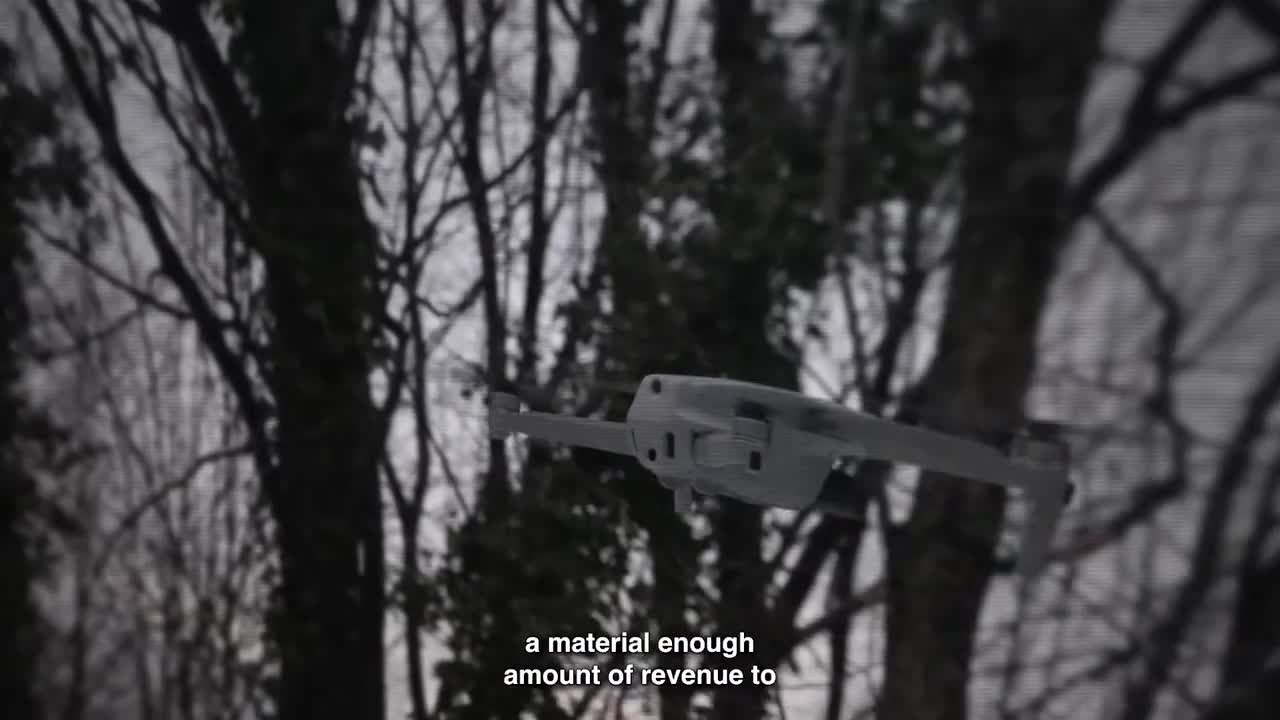
There are very few drone programs that would create a material enough amount of revenue to actually create a real business.
You have to create a monopoly.
There are lots of VC companies I would love to buy if I had an unlimited checkbook.
Is there other like an ethical question?
Do we agree with sending thousands of missiles to Iran?
Ready to go?
Matt, I am so excited for this, dude.
I just got off a chat with Christian Garrett and Matt Grimm and they gave me incredibly tough questions.
So this is going to be a grueling hour for you.
Here we go.
But thank you for joining me, dude.
Yeah, thanks for having me.
It's really great to be here.
I actually want to start with Trey.
Weirdly, which was Christian.
Garrett said that I had to ask this.
He said, what was Trey like at Georgetown?
And what is it about the Andrewil founding team that has made Andrewil so successful?
Yeah well, Trey and I were classmates, met freshman year.
Played Ultimate Frisbee together on the team.
So we went on a lot of road trips with one another.
You know, I don't think Trey has changed at all.
You ever seen the movie Hot Tub Time Machine?
Yeah, great movie.
Yeah, there's a line in it that's like every group of friends has an, but trey is our, you know.
You know what i'm saying.
Yeah, that's trey in a nutshell, and he's gone on to such things.
It's crazy how that works.
Yeah, it has hope for you.
You know, I've never had such a weird start to a show.
There you go.
No, we're kicking this off, right?
It's like a movie reference.
Yeah, we're definitely kicking this off.
And then Trey's our arsehole.
Yeah, yeah, yeah.
He'll love that one.
Yeah.
In terms of the team itself, I have so many defense companies pitch me and...
I think, bluntly, the team is always lacking.
What do you think it is about the team that Angelo has in terms of founding team that has made it so successful?
Well first, there's kind of some magic in the fact that it's the same leadership team today as it was when we started the company.
That implies a whole lot of things.
I think mainly it's that we're all friends, so I think that's actually pretty critical.
There's a bond there that basically can't be separated by business or stress or life.
We all know each other really well.
But then on top of that, we all come at the industry from really different backgrounds and lenses.
And especially in defense, which is it's like everything works against you to get into the defense market.
It's like every headwind you could possibly imagine.
If you don't have a lot of perspective and knowledge about what's about to come, it's hard to think around corners and you get yourself kind of mixed up and gummed up a lot.
Founding teams.
One of the most important things in defense is Some of them can be outsiders and brilliant technologists and thinkers.
It does take a lot of inside knowledge.
And I think that one of the things we got right and keep getting right is that blend of like the outside, inside process.
Who can think differently and bring in sort of commercial perspective, high-tech perspective, add kind of entropy into the system.
And then who can really deeply represent our customers how they think?
How does that come together uniquely?
That becomes super important to having any success in the defense world.
I think one of the things I most look for honestly is, like GTM, experience and ability in a team that I'm looking at in defense.
How should we think about analyzing teams for their ability to actually sell and go through procurement?
Does it matter if you've got technologists and people with military and combat experience, but no one with GTM experience?
How important is that?
I know procurement better than fucking anyone.
It's multidisciplinary, right?
So the challenge becomes, in defense, that if you're missing any of the 12 different types of disciplines it takes to really capture a large program, you will fail.
And so one of the things that we've done is, over the years we've built up a pretty sophisticated apparatus to kind of round out these teams with all of the various skills in acquisition and budgeting and technology.
Then again mission and operational analysis and doctrinally, how these types of technologies will integrate into the military.
You have to have it all.
I think the one maybe interesting piece here is there aren't actually a lot of big programs in government.
And so one of the things you don't need to necessarily look for, I think what you would in a traditional hiring process you would look for someone who has demonstrated the ability to capture a large program in the past.
But since there's so few of these things, you can't really look for that.
Sometimes you luck into it and like great.
You should certainly hire people who have shown to be able to capture large programs.
You generally don't actually have that in the hiring pool.
And so what you ultimately have to do is piece together the right puzzle for everything that you're going after.
Does it matter if the founding team doesn't have that experience in terms of going through procurement and GTM?
I think it does.
And I think that you know I advise a lot of companies and if I notice the founding team at least a portion of it or a person on it, hasn't kind of been there done that the first thing I recommend is that they have to find someone who represents that piece of the puzzle that's missing to their team.
When you meet all of the defense companies that you meet today, again, I'm an investor.
Dude, we have so many different European drone companies, every fucking UAV.
Dude, I honestly don't get it at all.
They come with some other thing and I'm just like, Matt Grimm, please tell me if this is good.
I really do ask Matt about it.
It's very funny.
He sees everything in Europe because of me and tells me that it's shit.
But when you look at them, what is the most common red flag that you see?
When you look at the emerging class of defense companies trying to be as awful as it sounds, the next Angelo.
I think it's basically two things. not realizing that what they are doing already exists.
There's too much hubris.
I think in the technology market that as high tech people, we can do everything better than everybody else.
I think that causes some companies to think they have an idea that isn't actually an idea because it already exists.
And that's pretty common.
I'll give you an example.
Years and years ago I was looking at a pitch, or I forgot, maybe I was advising someone, and here's my idea.
And I said well, the thing you don't know is in the 1960s we invented that, and so so there's a there's kind of a hubris to thinking like um, the technology sector has all the answers when like, actually since the 50s we've had the most brilliant people in the world working on these problems and a heck of a lot already exists.
And this is sort of the point of like if you don't actually have the inside knowledge, you don't know what mistakes you're making.
So that's one.
The second, which will be more familiar to you, is addressable market.
I think there's in many cases an overestimation of addressable market, where actually what ultimately they're going after is a very small sliver of a problem which might materialize in a single large contract.
But a single large contract is not an enduring business.
And this is one of the big challenges that I face is when we see a company that in France is saying we're selling to the French military.
Dude, I don't know how to say, I upset everyone these days.
I just get used to it.
The French military spend less than I do in Chanel for my mother.
I mean, it's like, fuck all.
And so my point is like can you be a European, only next gen prime, or do you have to be selling to the US as well?
How do you think about that?
Yeah.
You basically can't have a defense company if you don't have a large US business.
Right?
So 50% of defense spending is in the US, and 50% is in the rest of the world.
And so if you are cutting off half of your market from the get-go, that's probably a big problem.
The challenge in Europe is it's not like a European Union in defense spend, right?
Each country has its own sovereign companies and has its own sovereign agenda.
And so you keep getting winnowed and winnowed and winnowed.
And you're like, oh, well, Europe is my market.
Well, if you're a French company, it kind of isn't.
France is your market.
And so you have to be really careful around how you're actually analyzing who your ultimate customers can be.
You mentioned 50% of that spend is in the US.
You guys signed a $20 billion contract.
It's pretty incredible.
It made me feel thoroughly irrelevant when I look at my companies going from one to four million in ARR for an HR software company.
And the whole team's like, ah, bugger.
My question to you is...
What's actually entailed in the $20 billion?
Was it like an accumulation of all the little contracts bringing together?
Because it's a big headline number.
But I didn't actually get it and I don't think a lot of people did.
Yeah.
So let's actually define it because the stuff I saw posted about it was all over the place.
It was like a rainbow of interpretations.
So think about this as like a credit card limit.
So the government has said up to 20 billion they can spend on a class of Anduril's commercial technology.
There's no obligated money, but it basically creates a process that reduces a ton of friction that you would ordinarily see in defense procurement, where each individual office would have to go through financing and contracting and evaluation and all of these repeatable things now can now only have to happen once.
And they did and they just did.
And so Maybe a fast track is probably the wrong word.
It's more like in the arduous process to actually get something contracted.
We've cut a lot of the first steps out.
There's still a lot of hard work.
We've just made it slightly easier for the government to access all of our gear.
When they say dependent on delivery, what does delivery mean?
They will obligate the dollars as the products, which is hardware and software, are actually materialized.
So delivery is revenue to us.
Right.
In our world.
So when I deliver something, I recognize the revenue.
Same thing in government.
When we deliver something, they actually then the actual procurement orders and dollars flow.
Again, I'm so sorry for being dumb or naive.
I'm a venture capitalist for a living.
You should be used to us by now.
Is this replacing prime spending?
Is this net additional?
How should we think about this?
And is this just the sign that Angell is now another prime?
It basically means that we have enough business with the federal government to justify putting together what is a fairly sophisticated contracting vehicle.
So yeah, the short version of it is like Yeah, the government thinks that we can deliver some pretty major stuff now and in the future.
It took a lot of work by a lot of people on the government side to actually make this thing happen.
They are not going to do that unless they think that it's worth it.
What do they span with a Lockheed or a Northrop for comparison?
So Lockheed, I think, is in the $100 billion revenue a year.
I think we'll do a couple billion in revenue this year.
So we're still small in the grand scheme of things.
When you look at the software and the hardware element, How do you guys sit internally?
Are you a hardware company?
Are you a software company?
Are you a services company?
There's a lot of ways to look at it.
So I think one of the things we've done, maybe uniquely, is we've given our customers a lot of ways to access our company.
So what I mean by that is We've been very creative in.
A customer wants a piece of software, but it's difficult in government to contract for software, and so we can wrap it in a hardware appliance.
Or they want a piece of hardware, but they know the software is the sophisticated piece of it, and so they're willing to pay more for it because of that sophistication.
In government, you get these weird things where money is, it's called the color of money.
So money is obligated to certain types of spend.
So maybe a customer only has money that they can spend on services.
Well, okay, can I do an as a service product?
Actually, one of our first major contracts was with US Special Forces for all of their counter UAS systems.
That started as an as-a-service contract, where they weren't buying hardware, they weren't buying software.
They were literally buying a service that obligated us to defend certain sites from certain types of threats.
And as long as we were meeting the KPIs on the contract, we were fulfilling the obligations of of the agreement.
So quite novel in that contract has since gone in a lot of different directions and we do a lot of different things on it.
Not just that, but We have been kind of dogged in our approach to this, like basically realizing that the more ways we give our customers to get at us, the better it's going to go.
What's the hardest thing about working with the government?
When you look at the structures that you have to contort yourself in to get a deal done.
What's the hardest thing?
I've interviewed Shyam, who I presume you work with from Palantir Days.
Yeah, I worked for Shyam for a really long time.
He's a good friend of mine.
There's a lot of answers to this question, but maybe from my lens it is.
It is how few and far between the large wins are and how hard it is in between those periods of time.
So if you look at our business, you know, this year we'll do a couple billion in revenue.
We'll do 600 separate contracts this year.
Only 20 of those are probably of material revenue size.
I think the hardest thing is like, what happens in between the 20?
And what are you doing to position yourself for the 21st?
And because it's so concentrated, every single one of those deals is considered risk to the business.
If it goes right, if it goes wrong.
Why specifically is it hard in between?
Is that morale?
Is that revenue predictability?
What is it that's hard in between?
The government can sometimes tell you where they want you to go, but oftentimes they don't.
And so a lot of this is trying to predict an unpredictable system, right?
So how many lenses can you look at at sort of the next couple of years?
I can look at it through what the government is saying through their rhetoric and through their budgeting.
I can look at it through a warfighting lens and what general officers are saying and what military theorists are saying.
I can look at it through a technology lens, like what technologies do I think are going to influence the battlefield in the future?
And I need to kind of blend all of that together today to make decisions on what I want to build.
That will be available, you know, five to seven years from now.
No one is saying today, this is what I need five to seven years from now.
It's all sort of an educated guessing game over time.
What did you not do that with the benefit of hindsight you wish you had done?
And what did you learn?
There's been a couple of areas that have kind of emerged that maybe we were a bit slow in that we would have accelerated.
I'll give you an example.
There's a huge movement in not just in the US but NATO and the rest of the allies, into offensive cyber warfare.
Um, and you're seeing this now becoming public for the first time, which is really really interesting.
Um, you know, to date this has been one of the the spookiest of all spooky things, right like something that just no one ever talks about, and now you're literally seeing public officials talking about it for the first time.
We should have moved into that seven years ago and been the first the first in it.
We weren't big enough probably, to really even understand it seven years ago.
But in hindsight, it was kind of obvious.
We'll probably try and play some catch up here and get into the game.
But there's a couple of examples like that where you see these things kind of thematically in hindsight.
And you're like, well, obviously, five years ago, I should have done it.
And you only realize that today.
What is the fear with offensive cyber when we look at the worst case scenario?
Just so I understand it.
Well, it's a lot of things.
So it's both what are our adversaries doing and do we understand it?
And are they asymmetrically influencing battlefield tactics?
And the answer is yes, they are.
Sorry, can I just stop that again before I get lost in your next statement?
What does it mean like asymmetrically influencing battlefield tactics?
One version to think about this is just cost.
For a very low cost, they can create an effect that has major implications for us, NATO and our allies.
That's asymmetric.
So often people refer to terrorism as an asymmetric tactic, right?
For a minimal set of people- But this would be like a 10000 drone that hits a 1 million- Drone.
Warfare is an asymmetric Battlefield tactic, exactly.
And cyber being not only asymmetric, but you'll often hear the term non-kinetic associated with it.
So I'm asymmetric, as in I'm cheaper and more nimble and I can get a large effect, but I'm also non-kinetic.
And why is that so dangerous?
Well, when something explodes, we react to it, and we react to it with the full force of the military.
When things are kind of simmering beneath the surface in sort of a cold war-ish type of a way, it actually becomes really hard to react.
And so, in cyber warfare in particular, if assets are affected that we care about Well, can we do attribution?
Do we know where it came from?
How do we respond?
Do you respond with a non-kinetic attack by going kinetic?
Is that an escalation of force?
How is that perceived by the global community?
So you get into all of these really challenging doctrinal uh positions because of um uh, just how sort of unexplored offensive cyber is, um?
And then on the flip side right, it's like do we have the ability to amass cyber effects on our own right?
Because what you would want to do is you would want to do, tip for tat, you wouldn't want to do it for the most part a set of like escalatory decisions.
You would want to match force with force.
Do we have the ability to amass the same kind of force non-kinetically right?
So all of these are super important questions that, in my opinion, to date have not been debated publicly and absolutely need to be.
Can I ask you what cyber assets do we care about versus not care about?
What do we care about protecting or what do we care about affecting?
Both, actually, if that's okay.
Yeah, well, protecting, right?
Probably the main one is like the list of critical industries.
The military is included on that list.
But think about infrastructure, think about power, think about energy, think about all these things right.
Okay, so it's like a foreign adversary impacting energy supplies in large cities, or water supplies, or healthcare, data or financial systems, I guess.
Yes.
Yep.
But even now though, on the battlefield, it's a foreign adversary impacting our military systems, such that we can either not mount an offense or we can not successfully defend ourselves.
Okay.
Got you.
And so that's the cyber assets that matter on the defense side.
On the offense side, do we think the same in terms of...
Everything that they would do, we would do too.
Yeah, exactly.
That's the way to think about it.
Is there any part of you that's like Northrop or Lockheed have $100 billion spend?
With the greatest of respects, we have a $20 billion spend.
We're nowhere in offensive cyber.
Fuck it.
Let's not try and catch up.
Let's progress.
No, I mean, in a nice way, you can laugh at me.
And maybe I'm going to get killed for this, but I don't really care.
Let's just accelerate while we're doing great.
Like, why bother catching up when you're seven years behind?
Well, let's talk about just our strategy as a whole.
So when we started the company, we knew we had to go really wide really quickly, right?
Because to the point of like, what do other defense companies or newer founders getting wrong?
It's that addressable market question.
So in every technology class in defense There's probably one, sometimes two actual programs that if you capture them you have a business.
And if you don't, you have no business.
So take small drones as an example.
There are very few drone programs for small drones that would create a material enough amount of revenue to like actually create a real business right.
And so like you're basically shooting the movie that you have to create a monopoly.
We knew that.
And so what we did is we created a bunch of fundamental technologies that are applicable to a lot of different types of problems.
If you read about us, this is called Lattice in a lot of our like published literature.
It's fundamental tech that allows you to consume data, make sense of it, and then manipulate robots, basically.
That's what it is.
Those technologies apply to tons of different things.
And so we have 20 different PLs at the company all that are going after different parts of the defense apparatus, that take a lot of these fundamental technologies that we build and kind of piece them together in different ways.
So just so I understand.
So it's kind of like a horizontal foundational technology that you then verticalize and specialize-.
Yeah, Lattice is a software platform.
Exactly.
I can talk about software platforms with you.
It's hard to actually talk about software platforms with a lot of people, because if you don't actually understand what we're talking about, it gets a bit weird.
But yeah, Lattice is basically just a software platform that we can branch from.
And it's led us into all of these interesting places.
So, as a really crazy example, the first product we built was a sensing tower that just allowed us to automatically through a bunch of computer vision technologies.
And this was, by the way, pre-cool AI.
This was old school CV AI in 2017. just allowed you to spot threats at distance, right?
But automatically without a person having to look at a screen.
There are pieces of that technology that are resident in our autonomous jet fighter today.
Not all of it.
There's been a lot of advancement since then, but there are code blocks that are shared in common between all of our pieces of technology.
That becomes pretty magical when you approach whatever the next problem is, because you've already got pieces of it solved.
Gives us a head start, allows us to get to market at usually reduced cost, usually a better schedule, kind of hitting all of the performance characteristics that our customers care about.
OK, so back to the actual question on cyber, right?
So why go after it?
We kind of have to go wide and we have to believe that we have parts of the problem already solved with the platform in order to even approach a market.
We wouldn't get into a market if we didn't think we already had applicable technology or a technology tailwind.
But where we do, we're definitely going to go after it.
What you said was fascinating to me.
You were like basically you have to assume a monopoly market if you want to build a big enough company for drones.
Why the fuck are there so many drone companies then?
Yeah.
I don't know.
I've seen so many, like 30, 40 in Europe, just European ones.
There'll be one that wins, right?
It's going to be really hard to pick it, I think is the problem.
But there will definitely be one winner.
I think the challenge for investors is actually figuring out which one it is.
So we should invest in offensive cyber and defensive cyber.
How do we think next then?
You're CBO, you're president.
Are you like?
Great, we should put a billion dollars against it and build that out as a separate business unit.
And please tell me where I'm primed too much.
What's the subsequent thought to this?
Yeah.
So the way that we do this is, when we have a new idea, we basically start a really small tiger team that we generally piece together from various parts of the business.
And we kind of match our own internal motivation and spend our own IRAD to what the market is whispering to us.
So in government what this generally looks like is You piece together some tech really, really quickly so that you have a demonstrator or at least a dart to throw.
And then you start to pulse the market and you see how close was that dart throw to what the customer actually cares about, how they think about the problem.
Do you modify it?
Were you totally off and you just need to scrap it and start over again?
And I think in government uniquely you know you have something when the customer's excitement starts to match your own.
And all of a sudden you're kind of walking down a path together, as opposed to this weird like vendor customer relationship.
But that's always how we kind of identify that we're onto something.
I would say all of these things can be characterized by like a singular champion on the other side of the table that gets it, that believes in it, that wants to shepherd it.
Actually, you mentioned Sham.
He talks a lot about this kind of like heroism, like it actually comes down to a single person in government a lot of times.
Same experience for us.
And if you do it right, it kind of tracks similarly.
The first year is low dollar spend.
But there's a lot of learning and you sort of jump from.
I tend to use this like lily pad example.
You kind of jump from pad to pad.
And this is what I mean by the 600 contracts in between the 20 that matter.
You're basically jumping from contract to contract trying to figure out, do I have it right?
Is the customer excited?
Are they telling me things?
Do we keep going?
Do we keep spending?
Ultimately, the thing you're trying to jump at is something very large.
How do you know when you have something really special and when you should concentrate capital?
Again, I think the best founding teams are the best resource allocators.
When do you unleash the funding, tap and open it up versus constrain and move from little lily pad to lily pad?
Yeah, there's a lot of ways to look at our business, but one way I think you hit on it is we've been very good at allocating capital.
We basically guess right most of the time.
If you do this correctly, you have enough data to develop conviction to open the tap.
And so I think in the beginning we were working in areas where if we made a mistake, we weren't too far in on spend, that if we pulled back it wasn't a disaster for the company.
I think a lot of the stuff we're building now is quite sizable and expensive.
You're looking for certain proof points along the way.
That can be formal feedback from a customer, that can be informal, that can be successful operator feedback, that can be successful engagements with the legislative branch.
Like remember in the US, like your funder is the Congress, right?
And so they have a say in all of this.
What actually it is, it's all of those things pieced together.
And so we run like basically an investment committee internally where these Tiger teams ultimately have to present.
Here's what we did.
Here's what we discovered.
Here's what we want to do next.
Here are the gates.
Here's what it'll cost.
And very similarly to how You know, most financial institutions do it.
The investment community says go.
And I think maybe uniquely, when we say go, we have the ability to do it faster and at a higher level of spend than most of our peers, which is a huge advantage.
And so when we actually develop conviction in something we pretty much believe, we can get there faster than everybody else because of it, if we think about it as an investment committee, we're speaking a language that I know.
Now which Tiger team was the most successful bet and which was the least successful bet.
The most surprising cases to the upside right now is in our missiles portfolio.
So we started our missiles business a couple of years ago.
If you read about us, the best example we call the Barracuda family of systems.
So it's a.
It's basically a a set of cruise missile systems different sizes, different shapes, things like that.
We basically got into the missiles business looking mainly at the actual military warfare lens.
There is clearly a gap in capability.
We clearly believe that we can be ahead of everybody else if we've already developed it and when the customer asks for it, we'll have it.
And that turned out to be quite prescient.
Now, I don't know if you've seen, but there's a war going on with Iran.
I have seen, yes.
And so it's like okay, so we got into this market years ago with a certain set of theses, and geopolitics now has dramatically changed what those theses are to the upside.
When you say it's changed them, do you mean it's confirmed them?
It's confirmed them, but it's confirmed them in such a way where it feels wholly different.
You know, I think the original theory was we have to get low cost, we have to get more ubiquitous, we have to have a mix of exquisite systems and mass, like all of these kind of major theories of warfare kind of all converging at the same time.
Um, we have to be able to build uh something that takes advantage of commercial supply, uh and commercial manufacturing techniques, as opposed to uh aerospace and defense supply and technique.
You know, this kind of like crazy crystallization of a lot of things at the same time.
And now, okay, we, we, there. there's a war in Iran, we fire a lot of our arsenal.
Now there's public reporting that large percentages of our offensive and defensive missile systems have been expended and they're really hard to replace.
They take a really long time and they're very expensive because they take advantage of parts of the market that are kind of strange and very specific and very exquisite.
You know, just to give you an example, the cruise missile we build, the actual airframe is built like you build a bathtub.
And so we can take advantage of tons of contract manufacturers in the United States that can actually build a bathtub right.
So just thinking through the design differently from the very beginning has led us to build something that we can just turn on.
It's like another way to think about it is you can handle elasticity of demand for the first time.
Um, and that that's not really a thing that's ever existed in the missiles business, right?
Where you have a fairly uh labor intensive process to increase or or frankly, sometimes decrease demand.
I think we are onto something in that we've built kind of a first of its kind that can handle the ebb and flow of geopolitics and warfare.
We can turn lines on and off.
We can scale up and down based on the number of contract manufacturers that we engage.
What do margins look like for these types of products?
What is good?
As a business we run sort of 40 plus gross margin across the board which, by the way, in hardware and defense is quite good.
But every product kind of lives along a spectrum, as you can imagine.
The best way to think about this is Things that you make more of, like missiles, where you're selling thousands and thousands tend to be a little bit lower gross margin.
And things that you make less of, you can tend to get a decent price for it.
Sorry, I'm naive.
Why is that?
I thought the more you produce, the better the margin, because you have bulk materials, bulk buying.
No?
It mostly comes down to customer expectation for what these things should cost over time and then your ability to gain back margin by cost saving in the long run.
Yes, you can close a firm fixed price contract.
It doesn't necessarily mean that you can fix that cost forever.
And again, it's just like another weird aspect of government business.
Can I ask you a weird one?
But Matt did say I could ask it.
Is there other, like an ethical question of like do we agree with sending thousands of missiles to Iran?
I'm not saying right or wrong, but is there other an ethical question of how your products are used?
If you work in defense and if you start a defense company, Your moral compass tends to be pretty clear on this question, which is we have a democratically elected set of governments that represent the US, the alliance NATO, all of the countries participating.
They set the rules and we abide by those rules.
And if you start to mess around with anything within that framework, you create a pretty dramatic set of slippery slopes that that, if you play the actual thought experiment to its end, end up in a pretty messy situation.
And so that the key here is people that live in the world that I live in.
We, we tend to think a little bit differently than a person not connected to the national security community on this front.
We tend to think a bit more long term as well.
Where I'm building missile systems that might only field in 2035?
All right.
And so, if you fundamentally lack trust in democratic institutions, this is not the game and this is not the business for you.
As weird as it sounds and as horrible as it sounds, is war not great for business?
I think that's the wrong view.
Again, if you look at things that span multiple decades, which is probably the right horizon to think through, everything nets out.
Yes, you'll have spikes in in conflict but, as an example, there are many companies that are profiting off of the war in Ukraine.
And I would posit that for the most part, if those companies are myopically focused on that conflict, they will not have a business coming out the other end.
So it's very you have to be very careful around over rotating on the problems of today because it can really mess up your strategic thinking.
Do you think you took advantage enough of the opportunity in Ukraine?
We were still a baby company when the conflict started.
So, you know, just as a reminder, we were zero people in 2017 when we started the company.
We're about 8000 people today.
We were quite small, a couple of hundred people when the war in Ukraine started.
And just sort of as a reminder and now this is kind of lived experience for me and my colleagues you go to war with what you have.
That saying is very, very true.
You do not invent new stuff along the way.
You take what you have and you see if it works and then you adjust.
And so we had some stuff in Ukraine, but we were just too small.
I think, if I think, if you play that forward to today, we're heavy participants in the current conflict in the Middle East, mainly on the defensive side.
We build some pretty sophisticated air defense systems that are widely deployed.
So it's a wholly different experience because we're a wholly different company.
Are Andro drones used in Iran?
I can't speak to specific weapon systems used in specific situations, but we are for the most part, a defensive company.
In the Middle East as in, we are defending against incoming threats.
So if you've read about the Shaheed drone as an example, We're one of the principal systems to defend against that threat in the Middle East.
Other than that, it's hard to get into specifics.
Yeah, I would hate for you to reveal some inherent military secrets on 2020.
You become pretty good at talking around these things when you do this work.
That's not in my interest either.
Please don't.
I'm really comfortable with my nice life.
Can I ask you, if I gave you an unlimited checkbook, what would you spend on that you're not spending on today?
I think there are some venture capitalist backed defense companies that are making some really, really awesome technology and they are entirely unaffordable to us today.
And when you say they're unaffordable, you mean they won't sell at an appetizing price to you, given the amount of money that they've raised.
Correct.
Yeah, their valuations are just too high for us to justify the buy.
We've bought, I think, almost a dozen companies, maybe more.
But for the most part they've been more traditional style defense companies with what you would command in the commercial market for that type of company.
There are lots of VC companies I would love to buy if I had an unlimited checkbook.
But right now, the multiples today are they put it out of reach for us.
This was going to be one of my questions, which is is there a universe of buyers for the massive VC-funded companies that have been generated in the last few years, and what happens to them?
Actually Trey.
I will always remember when he said this, that never be surprised around how long a company can continue to exist.
Meaning, like you know, I think we were sitting around a table being like oh like, it's going to come to the point where the multiples, will you know, decrease and all this stuff.
And Trey's point was, you know, Trey has this annoying tendency to mostly be right.
I don't know if you know that about him.
But he's our asshole.
Yeah, exactly.
He's our asshole.
His point was like we don't know, but it might be a while before we can actually buy these companies.
And so I don't know.
There's still a lot of investment in defense tech.
Multiples are still very high.
I actually think our multiple is quite low compared to most of them.
Why would you say your multiple is low?
Because it is.
I think we're like 10 or 14x forward, something like that.
But you're seeing deals in 20, 30, 40x forward.
My dear friend, you're seeing deals a lot more than that.
You're sorely mistaken on that one.
Great.
It's even worse.
20, 30, 40.
Why are you times up by five?
Dude, I see like 200.
Who would you most like to buy but can't?
No, that's a tough one for me to answer.
I would probably either compliment or offend people that I don't want to compliment or offend.
But I'll give you the classes of technology.
Super interested in space domain.
There's a couple of companies that are doing some absolutely fascinating things, both ground segment and on orbit.
There's a couple of companies flying fast.
Why is ground segment and on orbit interesting?
There's this interesting thing happening in space domain where you've got the legacy primes on the military side that have these very large contracts but they perform sort of traditionally.
Right.
So it's going to be very, very high performance, but it'll come at a cost and it'll probably take a while to get there.
Right.
And then you have SpaceX, which is just dominating on the commercial side.
And when their commercial tech applies, they do a bunch of government business as well.
There's a weird kind of gap in between those two types of companies where the government wants to move really fast.
But it's not necessarily commercially adjacent to what SpaceX is doing.
And so there's kind of a dearth of providers.
And it's certainly something that we want to run at.
Right now, we do a bunch of partnerships.
We build a bunch of our own stuff.
We integrate a bunch of really interesting technologies.
It's a huge open hole, I think, in the market that is something we definitely would run at.
MARK BLYTHEWAITE- So we have that as one.
Any other categories that you're like, that's prime for the taking.
I wish we had more money for that.
MARK BLYTHEWAITE- Most of the rest are kind of uninteresting.
It's just consolidating around where we're already winning.
Do you respect Helsing as a competitor?
I respect everybody as a competitor.
I think the worst thing you can do in this business again.
You know, at the start of the conversation I mentioned hubris.
I think it's like the second you start to have.
You think you're better than everybody else.
You're going to get knocked on your ass.
And so I think I in particular on our leadership team, hopefully people would agree I provide a check against the hubris.
You have to respect that.
You do.
You're unusually humble for the Andruil founding team.
You're like, honestly, dude, I love Grim, but I wouldn't say he's super humble.
Yeah, I don't think I would say that either.
I know Palmer.
Great dude.
Wouldn't say super humbly.
It takes all types.
It takes all types.
And you're so thoughtful and kind.
You're nice.
Never forget, I am an international arms dealer.
So just keep that in the back of your mind.
Oh, well, there we go.
It's like the Nicolas Cage movie.
That's right.
Have you seen this movie?
Yeah, yeah, yeah.
But okay, I will push back on you.
Andrewel is one of the hottest companies in a world where capital concentrates towards the few outcomes that are interesting.
You could raise.
I mean you don't need to comment on the fundraisers, but it's reportedly raising 4 or 5 or 6 billion.
Whatever it is at 60 billion.
The amount of SPVs for Android, Matt Grimm tweets about it all the time.
I see it.
You could raise another billion or two billion on some crazy price and go and buy these companies.
Why don't you?
It's not the company we want to run.
We want to create an enduring public company.
And so we're running it like that.
And we're running it like that right now, even though we're pre-public.
And so I think protecting the valuation is important.
Not getting over our skis is important.
The work is still hard.
We will get knocked back if we make a mistake.
We don't have the luxury of making mistakes.
A lot of our competitors, the really big ones, if they make a mistake, they get paid to fix it.
I think if we make a mistake, we lose money and we lose contracts.
So there is a bit of conservatism on the team, but I think it's warranted in terms of the market.
And overall, right, it's like we want to be a company in 2050 and 2060.
And we're already thinking like that.
Totally understand.
But what I don't understand is why you want to go public.
We see companies like Stripe, who are able to never go public, be a brilliant business and avoid the glare of public markets very efficiently.
Why would you want to go public?
Yeah, there's a pedigree to it in the work that we do.
And ultimately, if you are a part of the national security apparatus in the United States.
I wouldn't say it's like an expectation and no one would ever say it out loud.
But when you are a public company, there is an additional level of trust that is afforded to you that you don't have when you're a private company.
Do you want to go public in 26?
Still a couple of years out, but we're close.
We're in the window.
It's in the sniff zone?
It's in the close enough?
Yeah, yeah, yeah.
We're already spending an insane amount of money trying to do all the internal system stuff and all that kind of stuff.
What do you not have ready yet that needs to be ready to be public?
So I mentioned we have 20 products and only about a quarter of those are in any kind of rate production and throwing money back to business.
Everything else is in low rate or development, meaning they're losing money.
And so, right.
It's kind of your standard product jaker.
So we need more of those 20 core products to come up the curve, to throw money back to the business.
And then and then you trigger the bulk of that.
What does that J curve look like from a duration standpoint?
Is it months?
Is it years?
And then how long do you put up with a losing product before you shoot it?
Yeah.
In defense, typically in a traditional sort of product curve, it's seven to ten years.
We're doing it in three to five, which is kind of part of the magic of the company.
And the thing we've become known, known for with our customers is like you're effectively having the traditional path to rate production.
Roadrunner is a good example.
Roadrunner was, I think, 24 months from a back of a napkin drawing to a fielded system.
How much goes in in that three to five year period?
Oh, so much.
It's a crazy amount of money.
But just like from my naive brain, it's like 100 million or like 500 million or like a billion.
Yeah.
So Roadrunner is a moderately sized air defense kinetic intercept system.
And that's- You're over 100 million easily before you're generating revenue.
And we have 20 of these separate products.
Yeah.
So it's a lot of investment, right?
So you really have to believe that they're going to come up the curve.
And then to your other question about like, when you, when you track a product, we track it before we even like it.
The better way to think about it is like don't even enter the curve if you don't have faith that it's going to come through the other end.
And so we kill a lot of developmental products well before they ever get into high spend.
Because once you get into that curve you're, you know 10 20 50, 100 million plus in.
We spoke about what did you not do?
And you said offensive cyber and the cyber that we discussed earlier.
What did you do that you shouldn't have done?
And what do you learn from that?
That's a good question.
Way early.
I mean, we got into some tech that we weren't ready for.
We got into some markets that we weren't ready for.
We tried to early on build a pretty sophisticated aerial system.
We didn't have the core building blocks.
We didn't have the core team.
I think we were 20 million or 40 million in before we kind of realized that it was a it was a scrap.
We didn't have the sophistication with the customer.
We didn't know how the customer was going to buy a vehicle of that sophistication.
The kind of crazy part about all of this is like Well okay, given all of that and given that that was not a good business decision like clearly, by most metrics, do we even get to build the autonomous jet fighter?
If we had never made that mistake.
And so it's hard to replay history sort of perfectly, right?
And it's like, I don't think so.
I think part of that failure was a stepping stone to getting to success.
Yeah, we probably spent too much money on it and could have gotten out quicker.
I think we had to learn that lesson in order to then re-approach the aviation market in a new way, which obviously has been quite successful for us in recent history.
And so if you look at a lot of these failed things that we've done, it's hard to separate that from what came after it.
Final one before we do a quick fire.
I always think to this question of like the biggest challenges in life are not, like it sounds, so corny, but like not iron or gold, but unmade decisions.
I never made the decision to move to Silicon Valley, and everyone always reminds me that it will be the decision that haunts my career.
Is there an unmade decision that ever haunts you?
No, but I'm kind of weird that way.
I have trouble separating indecision and failed decisions from the current success that we're actually seeing as a company.
I just do.
And so people talk a lot about, I think, these overblown ideas around like oh, you have to learn from failure and fail fast like yes, all that's true, most people suck at actually doing that, and you know so.
So for me it's.
I deeply learn from indecision and from bad decisions.
Um, but it doesn't like haunt me and it doesn't like i'm not gonna like kill myself over it.
Right, i'm gonna, i'm gonna move on and i'm gonna make the next best decision.
Dude, I want to do a quick fire with you.
I say a short statement, you give me your immediate thoughts.
Does that sound okay?
Sure.
What's one belief you have about modern warfare that most people think is insane?
I think a lot of my beliefs and our beliefs that we started the company on are now becoming a bit more commonplace.
When we started the company, maybe we were a bit out of on a limb of like.
Could I replace every single mission that the current set of technology provides us with an autonomous system?
I believe that that is true in the long run.
I also believe that we're not even close to where a lot of people think we are on it.
I think we're still in the early days on on tons of this tech.
But as time goes to infinity, like absolutely every single mission can be replaced with this new way of thinking.
2017 when we started the company, not only was that not widely held, that was a headwind for us.
I think that's changed pretty dramatically.
What do VCs fund in defense that you think will most go to shit?
What are you like, oh, It's really companies that there is only one large program to capture.
That's fundamentally what it is.
In defense, you have to be wide by the very nature of how acquisitions occur.
And so I think anything is a risk where it's like nope, there's kind of one program and if you don't win it you're not a good company.
When you think about your kids.
What do you tell your kids, or kids graduating college about the world when it comes to career advice?
Knowing and seeing all that you do?
Yeah, I mostly say a couple of things.
I think it's about the community that you surround yourself with.
Um, and that that's a reflection on sort of my own personal story.
I mean everything that I've done in my career um has been the community of people around me that have helped me, have gotten me jobs, have afforded me responsibility.
It's not like some big machine or process.
It's really just the people you surround yourself with.
I like to think I made some pretty good choices early on that helped.
Then the other piece would be I think people tend to overthink a lot of their steps and don't appreciate how much you just can learn along the way.
You know, I talk to a lot of military folks that are transitioning out into the commercial world.
And I would say for the most part they kind of like hem and haw over what company they should go to.
And, you know, my main advice is I actually think you just need to start.
And you're actually a really smart person.
If you don't like it, you can leave.
If you like it, you got lucky.
And you should talk to a lot of companies.
You should pick.
And you should change your mind when you need to.
Oftentimes there's a hesitance to change your mind, right?
And I don't think that's actually true.
It doesn't need to be true.
Final one for you.
And this is the most unfair of all and that will get you most in trouble.
When you look at the founding team in a hypothetical world, in 10 years time, you start another company, but you can only take one of them with you as your co-founder.
Um, which?
Which one, and why?
I can't?
I can't take them all.
No no no huh, it's a trick question, because there's no way that i'm starting another company after andrew.
I don't know if you know this, but starting companies is really tiring.
Um no, i'm eventually.
We know it's tiring.
We're much wider than you.
I'm just going to retire to the countryside and live with my family.
I'm going to do that.
Dude, you've got to choose one.
Yeah.
I'm not choosing.
Don't make me choose.
You know, I live in Washington, DC.
I'm very good at not answering questions.
Maybe it's Bobbik, just because the contrast of his baldness and my hair would make us a pretty formidable duo.
Do you think Palmer's brand is helpful?
I do.
Unequivocally.
In defense, anything highly regulated, right?
Every single thing is a headwind.
And so the main thing you do to cut through headwind is you try and establish trust relationships with people who matter.
I think Palmer is an N of one when it comes to establishing trust relationships with people who matter.
I've loved this.
This is so not how I thought it would be, to be totally honest.
It was so nice.
It was so fun.
I learned.
I totally didn't do anything that I kind of thought I would.
But thank you.
It reminds me why I love doing what I do.
This was great.
Honestly, it was great to meet you.
I do listen to the pod most episodes.
I love listening to it.
So thanks for having me on.
It was cool.