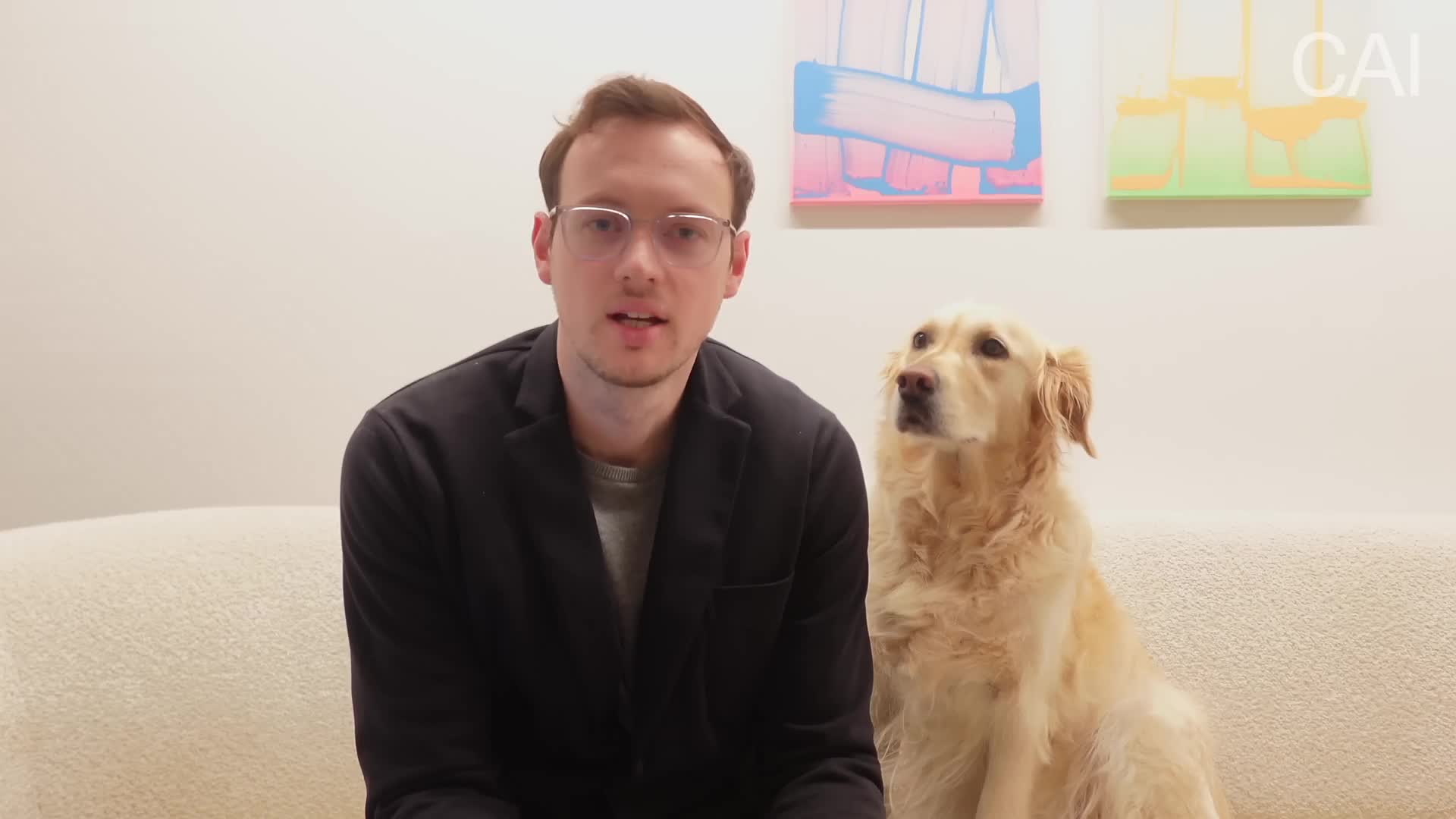
Hello, dear readers and subscribers.
In today's video, i'm going to talk about five essential realizations or pieces of advice that are absolutely crucial if you want to build a sustainable career as an artist, and for this video, i've found the advice in this book.
Here and before we dive into those five points, i want to make it absolutely clear that i wasn't reached out to promote this book in any way or form, nor am i being compensated for doing this video about this book.
However, as it is my job to devour any book that is being published about advice for artists, this one is one that I've read and thoroughly enjoyed, so let's dive into it.
A first important piece of advice, and one that I have shared on this channel as well, is having a good work-life art balance.
Want to know a dirty little secret?
Every artist has a job.
We're not just talking about BFA grads at the beginning of their careers, but successful artists at big city galleries.
And this is a reality that many people often forget.
A lot of artists that are actually performing at a relatively high level have to combine it with a day job.
I know people who sell their work frequently between 2 to 12K that are in international art fairs, have both institutional exhibition opportunities, won some prizes and also showcase their work with some good galleries.
And some years, yeah, you can live from it comfortably.
It's the same for me, I think.
But when things get more tight or the year is not as good as it should be, then you're kind of being pushed into this position to do something stupid.
Because if you have this financial sword of Damocles hovering above your head, you can't really play the long-term game.
Because you cannot predict how long your work needs to reach maturity or how long it will take before all the pieces of your personal puzzle fall together.
Nor can you predict when that work is being given a shot.
We can speed up that process, but we never know when those contexts are going to give you an opportunity, nor can we predict how lucrative that opportunity will be and when the next one will be and the next one, and when the snowball effect truly starts to gain momentum.
So a good work life, art balance.
What does that involve?
I would say being able to work at least eight to ten hours minimum every single week on your art and having at least, let's say, 1500 your disposal every single year for materials.
It's Sufficient depends on your practice, of course, but if you're clever and efficient, it can do the job.
So don't think that you can just give it a go as a professional artist and just sit out the first weeks or months using your savings, and that it will then already start to pay off, or if it will pay off eventually.
Try to organize your life in a sustainable manner where you can put in the time that is required to build the art and the context and the career that is required to do this.
Another important reality is the second paragraph of the same page.
While we're at it, here's another little secret.
The average income of an artist at an emerging gallery from sales of artwork is approximately 10000 a year after taxes.
And this aligns exactly with our research we've done when it comes to how much contemporary artists make.
58 of the artists that are exhibiting in the art world system make less than 25000 US dollars in profit annually.
So that is not enough to go full time.
And if you have other responsibilities a partner, a pet, kids then it's kind of irresponsible or insensible to not have a day job.
So organize your life to be able to play the long run, play the long term game.
Don't try to go fast, but go long.
If you do not have to live off the money that you make of your art, which can be very, very small margins, then it allows you also to reinvest it more in the career, which is necessary to keep that growth going from better materials to better pictures of your work, better texts written of your work, better studio situation, till you can afford yourself also to give yourself more studio time.
A second part is staying connected, and this is something that I have noticed on numerous occasions, also when talking with artists.
A lot of people are interested in creating art and becoming a successful artist, while being utterly disinterested in art in general or what a successful artist actually is and means.
And this is of course a discrepancy that is rather problematic.
Go to shows, meet people, be friends with your peers.
Being friends with other people doing work in your art community at an emerging level means your careers will grow together.
Today's graduate students are tomorrow's commercial gallerists, curators in major institutions or serious academics.
And this is very, very true.
Instead of trying to receive validation from an older generation that is already in higher tiers.
I think it makes perfect sense.
And it's also easier to connect with the next generation.
And for anyone, let's say below 40, that is the people of your generation.
A third topic is being truly genuine about your art.
I feel that a lot of artists feel that they have to justify their work and therefore they create these artificial statements to justify them.
That is not really about what the work is about and it does not hold up well because of it.
No amount of poor padding with theory is going to make work look any more convincing or intriguing than it already is.
Another great quote, I think, by Denise Markonish, which really summarizes it.
If more artists wrote honest artist statements, they would be more meaningful.
I often find that they write what they think the art world wants to hear, which is never what I want to hear and is almost never what the art world wants to hear.
So try to write about your work really in your own voice and do not try to artificially justify it with jargon or things that aren't there.
And this can be quite tricky, and I think that for our artist statement generation tool is quite useful, because all it actually does is ask the right questions which allow you to talk about the right things.
So if you're interested in building that artist statement that can be the foundation for your artist biography, for when you're networking, for when you're pitching something, for when you're submitting to an open call then definitely have a look at that tool.
I'll link to it in the description below of course.
Next, on page 194, they have recited the 10 main ways curators and gallerists find artists.
So, let's have a look.
First, it's artist recommendation, other artists recommending you.
Then it's a curator recommendation.
And third, social media or other online presence.
Fourth, seeing a solo or group show in person.
Fifth, art fairs.
Sixth, submissions or open calls.
Seventh, social events.
Eighth during a show, ninth open studios and ten registry or flat file.
So it actually almost runs completely the same as our personal findings that we have shared here, which i mentioned five ways galleries are finding artists in 2025.
Feel free to watch that video.
Next perhaps, when it comes to recommendations, the collector recommendation is also a very powerful and common one, and you can also see that in first place, the artist recommendation is actually not a surprise, and why it is so important to stay connected with your peers.
So too often, artists focus on reaching out to galleries, to collectors, to art advisor, whereas perhaps we should be reaching out more and staying connected more with artists.
And it's also a lot easier to connect with artists than it is to galleries, who are being bombarded by artists on a daily basis.
I go see a lot of things.
I go to galleries, museums, and I do a lot of crits at schools.
I keep tabs on artists who I think are interesting, that I've seen when they were getting their MFAs.
But hands down, the best source for artists is other artists.
Word of mouth.
If you want to contact a curator, tell an artist you know to tell them to look at you.
And they will.
Almost always.
If an artist tells me you should look at this, I do it.
We conclude with a final piece of advice that is actually much more of an attitude or a mindset than it is practical advice.
There's a difference between failure and rejection, and I think it's important that people understand the difference.
Failure is something that you decide.
No one can make you a failure.
Rejection is purely subjective.
Expect it.
Revel in it.
Know it will come.
Rejection will definitely come as an artist.
There are simply so many artists and not a lot of opportunities.
So not a single artist, even the most successful ones, hasn't had to deal with rejection in their life.
There is of course lots more to unpack in this very generous book.
I think it is definitely in the top three books that provide advice for artists.
I would say this one is also very much oriented for the contemporary art world.
So very similar orientation as we have.
And you'll notice that a lot of the things that we teach on this channel are also being discussed here, albeit sometimes from a slightly different perspective.
So it's a great source, lots of useful information.
So I strongly recommend it.
I will link to it in the description below.
So if you want to invest in yourself, perhaps this is an ideal Christmas gift.
What other books are in that top three?
I would also say this book that I've talked about in another video, Everything for Art, which has perhaps a bit more the perspective of the young artists or artists graduates.
But also a very good book that discusses these unwritten rules quite well.
And then, to conclude, a third book, but it would be in spot.
Number three, if we compare it to the other two is, of course, How to Become a Successful Artist, by Magnus Resch.
He paints very good a picture of the different tiers in the art world and mapping that art world, also based on data, which is, I think, the best part of this book.
Although I completely disagree with the fact that art is not important, especially after reading and seeing all the interviews he has done, where they all say art is important and of course it is and then also a bit of a lack of actionable advice and also some harmful advice.
So i would say these two are my favorite picks and this is also useful reading, but read it critically.
And to conclude, if you're looking for more useful articles resources, text with advice for artists, then of course the go-to place is our very own kai advice for artists, which i'll link to in the description below as well.
Thank you so much for watching today.
Feel free to watch our video on five ways galleries are discovering artists in 2025.
Next, support us on Patreon and please consider subscribing to stay posted for more contemporary art.
Bye.