Hello, hello, hello, and welcome to English Learning for Curious Mines by Leonardo English.
The show where you can listen to fascinating stories and learn weird and wonderful things
about the world at the same time as improving your English.
I'm Alistair Budge, and today we are going to be talking about ice cream.
But today's story isn't really about ice cream.
It's about murder, police corruption, drugs, prison, Glasgow, Buckingham Palace, and a
two-decade long fight for justice.
But before we get right into today's episode, I want to remind you that you can become
a member of Leonardo English and follow along with the interactive transcript and subtitles
over on the website, which is LeonardoEnglish.com.
Membership of Leonardo English gives you access to all of our learning materials, including
instant translations in 12 languages, study packs, all of our bonus episodes, and much,
much more.
So if you are ready to take the next step on your English learning journey, the place
to go is LeonardoEnglish.com.
Okay, then let's get right into it and talk about the Glasgow ice cream wars.
I imagine that many of you might have memories of your childhood that include ice cream.
Maybe that's eating ice cream at the beach.
Perhaps it's being allowed to go down to the ice cream shop on a Saturday afternoon.
Maybe it's being taken to your favourite ice cream shop by a grandparent and being able
to choose an extra scoop or a flavour that you won't normally allow.
The UK isn't a part of the world that is particularly associated with ice cream.
Sure, there are some ice cream shops, but the fact that it is cold and wet for a lot
of the year probably means that there aren't as many days when people feel like a cold
refreshing ice cream, is there in Italy or Spain, let's say.
What every British person of a certain generation will recognise, however, is the sound of
the ice cream van.
Children would hear this tell-tale jingle, plead with their parents for some coins and
rush towards the van.
These kinds of vans were popular all over the country and were in particularly high demand
in areas without easy access to ice cream.
This was really most of the country as ice cream shops answer common in the UK, but there
was one area in particular where the residents cheered in ecstasy when they heard this sound.
Glasgow, the largest city in Scotland, had been an economic and industrial powerhouse in
the 19th and early 20th century.
But by the 1960s, with many of the major industries closing, the city was in a downward spiral.
The centre of the city was crowded and unsatory.
People crammed into small apartments, often without their own toilet.
There was a mass project to move people out from the centre to new so-called schemes,
housing developments outside the city.
The apartments would be fit for purpose, they would be practical, they would have proper
bathrooms and toilets, it would be a big step up from the previous situation.
As this took place, there was a mass mobilisation of people out from the centre.
It was, in many ways, a big improvement, better housing, green fields to play in and fresh
air.
The major problem was that the planners and architects hadn't thought of everything.
Public transport options were limited and there weren't enough shops.
Soon enough, onter of preneural glass weachers, people from Glasgow, stepped up to plug the
gap.
They would be grocery vans, fishmongers and people selling fresh vegetables who would
drive up to the schemes, make their presence known and would find that they were flooded
with potential customers in no time.
And for the kids, ice cream vans soon started to pull up to the estates, their trademark
music playing and they would find that kids were excitedly chiscing after them and that
there was a queue around the block.
Or perhaps more realistically, as we're talking about kids here, their vans were surrounded
by crowds of children thrusting coins in the general direction of the van and arguing
amongst themselves about who was there first.
Now, ice cream was a relatively profitable thing to sell, high margins, customers who wanted
every day and pretty easy to make.
And ice cream van drivers became quite possessive over territory.
Some routes and locations were more lucrative than others and ice cream van drivers would
resort to intimidation and violence to protect their territory, to make sure that nobody
else sold ice cream to their customers.
At the beginning, it might be something relatively harmless, a rival driver squirting
sticky raspberry ice cream sauce all over the windscreen so that the other driver would
have to spend hours getting it off because it was so sticky.
But often, it was more violent than that.
Rivals would use baseball bats to smash windows, tires would be slashed, vans would be put
out of action.
And this all took place in an area of the city without much of a police presence, a deprived
area that was characterised by street gangs and petty crime.
And before long, organised criminals started to enter the ice cream market.
They bought up vans and got into the legitimate ice cream business, but they would also use
ice cream vans to sell products that were not as frozen or innocent as ice cream.
First, it might be alcohol, cigarettes and tobacco.
It might even be stolen goods, which criminals could take in a robbery during the night,
load up into an ice cream van and sell by midday the following day.
Scotlanders went a step further still, selling hard drugs, in particular heroin.
Since the 1980s, Scotland has been battling a serious problem with drugs and especially
with heroin.
Even today, Scotland has five times more drug related deaths than England on a per capita
basis.
As back in the 1980s, in these economically deprived areas of Glasgow, heroin was a serious problem.
For heroin users in these areas, the drug wasn't particularly easy to get hold of, given
that these areas were far out of the city centre and poorly connected by bus.
Ice cream vans were the perfect vehicle, literally and figuratively, for selling heroin.
Naturally, they were on the go.
They would travel from place to place, and there was nothing unusual about someone approaching
a van and handing over money and being given something in return.
They were already clear territories, and the ice cream trade was already characterised
by violence and rivalry.
As you might imagine, as the value of the goods sold from the trucks increased, so did
the violence.
Gangs and drivers would go to extreme lengths to protect their most valuable routes,
seizing territory from others through a mixture of intimidation and real violence.
If an ice cream truck ventured into the wrong zone, it would soon find its windows were
smashed and tires slashed.
It was a period of intense violence, with anyone who didn't comply falling victim to
beatings and vicious attacks.
Understandably, many complied, they went along out of fear of what would happen if they
didn't.
Many, but not all.
One person who was not going to play by these rules, he was not going to sell drugs, and
he wasn't going to avoid an area just because some gang member told him to, was a man called
Andrew Doyle.
His nickname, which probably wouldn't be quite so acceptable today, was Fat Boy, which
seems a little unfair as he wasn't even particularly fat.
Anyway, Andrew Doyle was only 18 years old, but he was a good, upstanding citizen.
He drove an ice cream truck, he wasn't a drug dealer, and he wouldn't be intimidated
into becoming one, or playing by the rules of the gangs.
He would go where he wanted, if kids wanted ice cream, he would drive to sell it to them.
He had no intention of playing by other people's rules.
But if you know anything about Scottish drug dealers, or perhaps we should say drug dealers
in general, it is that they aren't sort of people to say, okay, no worries, have a good
day.
After numerous threats, one day Doyle found two masked men in front of his ice cream truck
with a shotgun.
They fired a shot through the window, not aiming at him, but to the passenger side.
The objective was clearly to frighten him.
Next time, we'll point it at you.
But Doyle wouldn't bunch, he wasn't prepared to compromise his morals.
In April of 1984, the gang members decided that Doyle needed another frightening, or something
worse.
If a shotgun through the windscreen didn't do it, he needed reminding that they knew
where he lived, and they could hurt him and his family.
In the early hours of the 16th of April, 1984, a group of men approached Doyle's apartment,
where he and his family were sleeping.
They poured petrol on the front door, lit a match and ran off into the night.
Black smoke gushed into the apartment, and the fire continued to spread.
The fire brigade was called, but it was too late.
Of the nine people inside the apartment, six were killed.
Andrew Doyle died, as did his father, two of his brothers, his sister, and her 18-month-old
baby.
His mother survived, but she would end up burying her husband, her daughter, three sons,
and her baby grandson.
It was all over the national news, a sign of the lawlessness of these housing schemes,
and the inability of the Glasgow police to do its job and enforce law and order.
There was a huge investigation, but nobody was willing to speak to the police.
Nothing, not a word.
Then the police revealed a breakthrough.
A man named William Love was willing to go on record, and say that he had heard a group
of men plotting in a pub about how they were going to set Doyle's apartment on fire
in a bid to intimidate him.
This witness, William Love, was a petty criminal, and at the time that he gave the statement,
he was in jail awaiting trial for armed robbery.
The names that he gave the police were Thomas T.C. Campbell and Joe Steele.
Now these men, T.C. Campbell and Joe Steele, were no angels.
T.C. Campbell was well known to the police.
He also had a nice cream van, registered in his wife's name, and there had been reports
that he had been intimidating people for years, including other ice cream van drivers,
and a bid to protect his most profitable routes from which he would sell stolen goods.
He was arrested shortly afterwards.
When the police searched his house, they reported that they found a street map with Doyle's
apartment circled out.
The police also claimed that T.C. Campbell confessed his involvement, even though T.C. Campbell
denies ever having made any such confession.
The police also had another witness, another petty criminal who was in jail at the time.
His name was Joseph Granger, and he was willing to go on record, saying that he was there
at the scene of the crime, but it wasn't him who lit the match.
It was T.C. Campbell and Joe Steele.
But T.C. Campbell and Joe Steele maintained their innocence.
Sure, they might have done other things they regretted, but this wasn't them.
They were innocent.
There was a trial, and the prosecution's argument rested on four things.
The testimony of the first petty criminal, William Love, who said that he had overheard
a plot being made as a pulp.
The other petty criminal, Joseph Granger, who said that it was T.C. Campbell and Joe Steele.
The map found in T.C. Campbell's house and the police statements.
The problem was, when Joseph Granger was questioned, he broke down.
He admitted that he had made it up.
He wasn't there, and had never said he was.
But the police had pressured him into signing the statement, because they had told him
that if he collaborated, he would get off the other unrelated charges.
And then there was the question of the map found at T.C. Campbell's house.
It seemed odd, unusual, for someone who was a career criminal to leave such an obviously
incriminating piece of evidence visible to anyone who would come into the house.
Especially as, if he really did commit the crime, he would presumably have thought that
the police might come knocking on his door.
All throughout, he protested his innocence, saying that the map must have been planted
by the police, placed there in a bid to frame him for the crime.
Despite all of this, the jury was unanimous in its decision.
The two men were guilty, and were each sentenced to life, at least 20 years in prison.
The public was sick to death of the violence that had plagued the city, and horrified
by the fact that an entire innocent, law abiding family, including an 18-month-old baby,
had been murdered in their sleep.
The jury no doubt saw these two men who were well-known violent criminals, and thought,
well, perhaps the evidence is a bit flimsy, but the city will be safer if they are behind
bars.
They were duly sent to prison, but constantly appealed.
It wasn't us, they said, you have the wrong people.
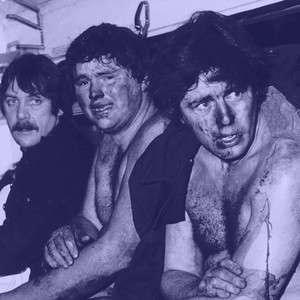
Campbell went on hunger strike in a bid to try to get a retrial.
Steel, on the other hand, had a different approach.
He escaped from prison, doing so three times.
And every time he escaped, he did some kind of publicity stunt to try to draw attention
to his situation.
The first time he climbed onto the roof of his mother's house and shouted down his
defence, but the following time he went one step further.
He travelled to London, leaving Scotland for the first time in his life, and glued and
handcuffed himself to the gates of Buckingham Palace, the Royal Residence, in a bid to
speak to the journalists who descended to cover this unusual story.
And it was unusual, to go to all of the effort of escaping, but to do something that would
mean you would immediately be arrested, only to draw attention to the fact that you said
you were innocent.
You didn't necessarily look like the actions of a guilty man, but it didn't work.
Steel was immediately put back in prison, and his request for an appeal denied.
Fast forward a few years, and in 1992 there was a breakthrough.
The cases, supposed star witness, William Love, admitted to journalists that he too had made
the entire thing up.
He said that police had encouraged him to testify against TC Campbell and Joe Steel, and he had
gone along with it, because he thought that they would let him off the other charges.
But this was a private conversation between Love and Journalists.
It wasn't evidence in a Scottish court of law.
Still, it was a strong sign that the men were not guilty, or at least that the case
should be revisited.
So in 1996, pending the appeal, the two men were released on bail, 12 years after being
sent to prison.
They were free, finally.
Two years later, they had their day in court.
The case was duly referred to the Scottish courts of appeal.
But to their horror, their appeal was refused.
Even though William Love had said that his testimony was a lie, meaning that there were now no
witnesses putting them at the scene of the crime.
There were still these statements from police officers saying that the two men had confessed,
statements that the two men vehemently deny ever having made.
Still the judges verdict stood.
After living for two years as free men, TC Campbell and Joe Steel were sent back to prison.
It wouldn't be until 2004, 20 years after the crime, that the case was referred again,
and a committee decided that the evidence of the police officers was not reliable.
In other words, the police officers lied about Campbell and Steel's confessions in a bid
to frame them for the crime.
The pair were officially declared innocent, and they were allowed to walk free after two
decades of being thought of as the men who burned an innocent family to death.
And the people who really committed the crime, if we are to presume that TC Campbell and
Joe Steel are innocent.
The guilty parties have never been found.
Nobody else has been convicted for the crime.
In an interview from 2019, Joe Steel told a Scottish newspaper that it was another local
criminal called Tamakraw, who was behind the murder.
He was, according to Steel, a close friend of the police, and that's why the law enforcement
officers tried so hard to pin the crime on TC Campbell and Joe Steel, so that their friend
and associate wouldn't have to pay for what he did.
Tamakraw was asked about the murder, but he always denied it.
And if it really was him, he took the truth to the grave as he died in 2007.
Now, there's an urban legend that ice cream trucks are banned in Glasgow because of the
city's history with them being used by criminals to sell drugs and stolen goods.
It isn't quite correct to say that, but several housing schemes have banned them.
It's more from a public health point of view, to curb Scottish obesity rates.
But certainly, for many Glasgow residents who were alive during this period, the noise
of an ice cream van brings back memories they would prefer to forget.
OK, then, that is it for today's episode on the Glasgow Ice Cream Awards.
As always, I would love to know what you thought about this episode.
Have you been to Glasgow?
Have you heard of this story before?
What other similar stories are there from your country?
I would love to know.
For the members among you, you can head right into our community forum, which is at community.beanardowinglish.com
and get chatting away to other curious minds.
And as a final reminder, if you enjoyed this episode and you are wondering where to get
all of our bonus episodes, plus the interactive transcripts, subtitles and key vocabulary,
then the place to go for that is at leanardowinglish.com.
And if you aren't yet ready to become a member, but you would like to do something to support
the show, then I would love for you to think about leaving a review or a star rating on
your favourite podcast app.
It takes less than 30 seconds to do, but they are super helpful and each one brings a smile
to my face.
You've been listening to English Learning for Curious Mines by Leonardo English.
I'm Alistair Bunch, you stay safe and I'll catch you in the next episode.