Hello, hello, hello, and welcome to English Learning for Curious Mines by Leonardo English,
the show where you can listen to fascinating stories and learn weird and wonderful things
about the world at the same time as improving your English.
I'm Alistair Bunch and today is part three, our final part of our three part mini-series
on the sensitive but important topic of slavery.
In case you missed them, in part one we talked about slavery in the ancient world, ranging
from Mesopotamia to ancient Egypt.
And in part two, which was one of our member only ones, we talked about the transatlantic
slave trade.
The 400 or so year period where millions of slaves were transported from Africa to toil
and suffer on plantations in the Americas.
And in today's episode, we are going to explore slavery in the modern world.
We still exist today.
It is an uncomfortable subject, but it is important and the scale of it might just surprise you.
But before we get right into today's episode, I want to remind you that you can become
a member of Leonardo English and follow along with the Interacted Transcript and Subtitles
over on the website which is Leonardo English.com.
Ok then, modern slavery.
So far in this mini-series, we've talked about slavery in the ancient world and during
the transatlantic slave trade.
From the ancient Egyptians to the plantations of Brazil, humans have enslaved one another
and forced their fellows to give up their freedom and work for free, often doing the most
back-breaking and soul-sucking labour until they dropped dead.
But then, as if by magic, this dark stain on humanity started to disappear.
Starting in the late 18th century, countries around the world started to wake up to the
horror and inhumanity of this trade.
The independent republic of Vermont was the first state to ban it in 1777.
France followed in 1794 during the French Revolution, but it was then reinstated by Napoleon,
only to be banned outright in 1848.
By the start of the 21st century, it was illegal in almost every country and when the Islamic
Republic of Mauritania officially criminalized slavery in 2007, astonishingly, it was officially
banned in every country in the world.
And when we think about slaves, or if you were to stop someone on the street and ask them
when they thought the historical period with the most slaves was, I would imagine many
people might say the 17th or 18th century, the height of the transatlantic slave trade.
We hear of the ships packed to the brim with people ripped from their villages in Africa
and sent to toil away in the tobacco or sugar plantations of the Caribbean or Brazil.
As you will know, this was a truly terrible period, with millions of people displaced
and killed, the profits from their labour being turned into lavish houses in the Americas
and back in Europe.
However, the unfortunate reality is that this wasn't the period of history with the most
slaves.
That ugly prize goes to right now, today, the 21st century.
In 2021, according to the Global Slavery Index, there were an estimated 50 million people
worldwide living in conditions of slavery.
This has actually been increasing.
It's up by 10 million people since 2016.
To put this in perspective, there were an estimated 12 to 15 million people in total who were
transported during the transatlantic slave trade.
And that was over almost 400 years.
Now, of course, we need to add some context here.
Modern slavery is different to the slavery of the 18th century.
It does not involve state-sponsored slave traders and ships sailing across the oceans packed
with people clapped in ions.
To quote the Global Slavery Index again, modern slavery takes many forms and is known
by many names.
Essentially, it refers to situations of exploitation that a person cannot refuse or leave because
of threats, violence, coercion or deception.
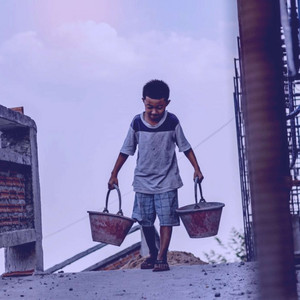
Modern slavery includes forced labour, forced or servile marriage, debt bondage, forced
commercial sexual exploitation, human trafficking, slavery-like practices, and the sale and
exploitation of children.
In all its forms, it is the removal of a person's freedom.
They are free to accept or refuse a job.
They are free to leave one employer for another or they are free to decide if, when and
whom they marry, in order to exploit them for personal or financial gain.
End quote.
In other words, the definition of slavery is somewhat broader than the one used to refer
to slaves in antiquity or during the transatlantic slave trade.
So it is not a like for like comparison.
But there are still an estimated 50 million people who are not free, who are controlled
and exploited by someone else.
It is a huge number.
If this were a country, it would be the 30th largest country in the world, bigger than
Spain.
So in this episode, we are going to try to unpack what's going on.
How, when slavery is now banned globally, is it a bigger industry than ever before, generating
profits of $150 billion annually?
Let's start with some statistics about where this modern slavery is taking place.
The easy answer to that is actually everywhere.
It is far more widespread than slavery was during the transatlantic slave trade, where it
was concentrated in the Americas.
But as you might imagine, some countries are much worse than others.
The ten countries with the highest prevalence of modern slavery are, in order, North Korea,
Eritrea, Mauritania, Saudi Arabia, Turkey, Tajikistan, United Arab Emirates, Russia,
Afghanistan and Kuwait.
By prevalence, this is calculated as the percentage of the total population that is enslaved
in some way.
In the case of North Korea, it is a staggering number, 104 out of every thousand people,
so 10% of the population, which is so high because of the number of people imprisoned
in forced labor camps.
But even going to number four on the list, Saudi Arabia, there is an estimated 2% of the
population that is living in modern slavery.
You can probably already see some themes from that list, limited protection for civil liberties,
high levels of human rights abuse, and countries in or close to volatile regions which are
marred by political instability, war and authoritarianism.
These countries are often home to large numbers of vulnerable people, people who might be fleeing
war, persecution or famine, and are most likely to be forced into slavery.
Now, that was the list ordered by the percentage of the total population that is enslaved,
as per the definition of modern slavery.
But if we were to look at the total number of slaves, we get a slightly different list.
Number one is India, followed by China, then North Korea, Pakistan, Russia, Indonesia,
Nigeria, Turkey, Bangladesh, and even the United States, where there are an estimated 1.1
million people living in modern slavery.
Added together, the total global population of modern slaves gets to almost 50 million.
And as you can see, modern slavery exists in practically every country.
In terms of the different categories of modern slaves, the definition is broader than it
was a few hundred years ago.
So what defines a modern slave?
There are a few categories.
First, bonded labour, so people who are forced into working for someone else to pay off
a debt and have no option to leave.
This is one of the most common forms of modern slavery.
Secondly, so-called domestic servitude, which is when someone is employed in a house,
but is unable to leave.
Thirdly, sexual exploitation, when people, typically women, are forced into prostitution.
And finally, forced marriage, when people, again, typically women, and more often than not
young girls, are forced into a marriage with someone that they did not consent to.
Of course, these are somewhat loose categories and have overlaps.
Bonded labour can take the form of sexual exploitation.
Faced marriage can result in domestic servitude and so on.
But these are useful categories to think about the different types of people who are classified
as suffering modern slavery.
Now, as to the question of why modern slavery is thriving, despite its illegality, let's
take a look at some of the root causes.
Firstly, a combination of a global population boom and the persistence of poverty has meant
that more people than ever before are living in extreme poverty.
Yes, hundreds of millions of people have been lifted out of poverty in places like India
and China, but hundreds of millions more are still left behind, and susceptible to falling
into the trap of slavery.
To be precise, according to the World Bank, 8.5% of the world's population lives in extreme
poverty, or over 680 million people.
For these people, eager to find any way to escape from this dire situation, it's easy
to understand how they might be tricked into an offer of a better future, only to find
out that it ends up being one of lifetime bondage, where they are trapped in a country far
away from their own, forced to work from dawn to dusk with no way of leaving.
Let me give you one example of this that you might not have heard of before.
I'm currently recording this episode from the small Mediterranean island of Malta.
Hundreds of people come here every year for sun, sand and other hedonistic pleasures that
island offers.
Others come to learn English, while others for its low taxes.
The country is also a hub for online gambling companies.
It has long been a lawn-dramat for organized criminals, and in 2014, the country started
selling its passports to ultra-wealthy individuals who wanted a safe space to store their money.
These slightly debi-ous activities have led to billions of euros flooding into the tiny
country, and a subsequent economic boom which has brought prosperity to many citizens of
Malta.
Go into any cafe in Malta, and eavesdrop on a conversation, listen to what the people
next to you are talking about.
You'll find people talking about building and renting out apartments, how they are buying
and selling garages, and so on.
Many multi-speople have grown very wealthy in a very short period of time.
The problem is that Malta is a very small country, with only 400,000 or so multi-citizens.
It doesn't have enough people who are willing to do hard, manual jobs, building apartment
blocks, cleaning the streets or working as delivery people.
The kind of jobs that are necessary to sustain the country's economic growth, and appetite
for greater profits, but are typically hard and poorly paid.
So, the country has imported tens of thousands of people from developing countries, primarily
Indian, Filipino and Nepalese.
There has been much talk in the multi-media over the past few years of modern day slavery
in Malta, where people from countries like India or Pakistan have paid an agent often
thousands of euros for a work permit to come to Malta.
Being promised a salary of 2,000 euros or so, and being told that they can live like a
king, only to find that when they arrive here, the salary is a fraction of what they were
told.
They are forced to live in an apartment with 40 other people, and work 18 hours a day,
only to pay off their debt to the agent that sold them the work permit.
Now, for the absence of doubt, this is clearly not the same as the slavery endured by people
captured in Africa and then transported to the plantations in the 17th century.
But by the modern definition, it is slavery nonetheless.
In some cases, the working conditions and the treatment of the vulnerable by the powerful
really aren't so far from the slavery of the 17th century.
In September of 2021, a woman going down a country road in the north of Malta stopped
to help an injured man she saw on the side of the road.
There was a ghanian man lying on the floor under the midday sun in agony.
When she approached him, he was crying out for help, repeating, I don't want to die,
I don't want to go to prison.
She called an ambulance and the man was whisked away to the hospital.
The man whose name was Jaiti Lamin had a broken back and two broken arms.
He was unable to move and had been trying to drag himself off the road using his broken
arms.
He initially told the police that he had been hit by a car, but later admitted that this
wasn't the truth.
He had been working on a construction site and had fallen from the second floor.
After he had fallen and clearly suffered a horrific accident, his boss had told him that
he was taking him to hospital.
But after driving a short distance and finding a piece of countryside road with no passing
cars, his boss stopped the van and threw his worker out of the door, leaving him to
ride the round in agony in the scorching midday sun and warning him not to tell anyone
what had happened.
Fortunately, the injured man was found by a passerby and brought to hospital where he eventually
revealed the truth.
There was a criminal investigation into his boss and all sorts of irregularities were found,
such as he didn't have any safety equipment, wasn't being paid properly and the work
was illegal.
Still, to date, there is no evidence that any criminal proceedings have taken place
against the boss or the company.
The company is still in business and proudly boasting on social media about new developments
and making counts and profits.
Its crooked boss still seemingly walking free and counting the zeros on his bank balance.
Well, Jaita Lamin is left with chronic pain.
And this is in the European Union.
Sure, it might be different from the slavery of the past, but it is slavery nonetheless
as per the definition of modern slavery.
As you would expect, there are all manner of legal frameworks and agreements that are
aimed at combating modern slavery in all forms.
EU laws, UN conventions and national laws.
But the grim reality is that it is an increasing problem in practically every country in the
world.
The economic incentives exist to keep marginalised people in conditions akin to slavery.
And in too many countries, even countries you might not expect, there are not strong enough
incentives to do anything about it.
So to wrap up this episode, this short exploration of modern slavery.
And also this three part miniseries, one thing is clear.
The face of slavery has morphed over the centuries, from the shackles of ancient servitude to
the brutal inhumanity of the transatlantic slave trade.
And now to the different forms of modern slavery that lurk in the shadows of our global society.
Despite the monumental shifts in laws and ethics, the scourge of slavery, so it seems, has
adapted rather than vanished.
As we've seen in this episode, modern slavery, though often less visible, is not less real.
It's a global problem that transcends borders, cultures and economies, a way to exploit
the most vulnerable.
From a construction worker in the EU to a child bride in a distant land, the chains may be
metaphorical, but in many cases, they are no less binding.
Okay, then, that is it for today's episode on modern slavery.
And with that comes an end to the sensitive but important miniseries.
I hope it's been an interesting one, and that you've learned something new about this
dark chapter on humanity, that unfortunately remains open to this very day.
And as a final reminder, if you enjoyed this episode and you're wondering where to get
all of our bonus episodes, plus the interactive transcripts, subtitles and keyboard
cabbary, then the place to go for that is LeonardoEnglish.com.
And if you aren't yet ready to become a member, but you would like to do something to support
the show, then I would love for you to think about leaving a review or a star rating on
your favourite podcast app.
It takes less than 30 seconds to do, but they are super helpful.
And each one brings a smile to my face.
You've been listening to English Learning for Curious Mines by LeonardoEnglish.
I'm Alistair Bunch, you stay safe, and I'll catch you in the next episode.