Hello, hello, hello, and welcome to English Learning for Curious Mines by Leonardo
English, the show where you can listen to fascinating stories and learn weird and wonderful
things about the world at the same time as improving your English.
I'm Alistair Budge and today we are going to be talking about Korean pop music, otherwise
known as Cape Hull.
It's the story of how artists from a small and in some respects unlikely country went
on to have a huge impact on global music and pop culture, acquiring a legion of diehard
fans and making billions of dollars in the process.
But before we get right into today's episode, I want to remind you that you can become a member
of Leonardo English and follow along with the interactive transcript and subtitles over
on the website, which is LeonardoEnglish.com.
Ok then, the Korean Wave, how Cape Hull conquered the world.
On February 1, 1964, almost exactly 60 years before this episode was released, a group
of four young men from Liverpool had their first number one hit in America.
The song was, I want to hold your hand, and the young men's names were John, George,
Paul and Ringo.
You'll know them as the Beatles.
The group went on to monumental success, not only in America but around the world, achieving
ten number one hits, selling out concert after concert to millions of adoring fans and
having an enduring impact on society and culture.
And if you had sat one of the Beatles down in 1964 and asked them what country they thought
might produce the next kind of band to have a similar global influence, well, I wonder
what they might have said.
The obvious answer might be the United States or their home country, the United Kingdom.
Perhaps they might have suggested France or Italy, European countries that were cultivating
their own musical identities.
One country that I imagined they might not have suggested would have been South Korea
in 1964.
In 1964, South Korea had only recently gained its independence after 35 years under Japanese
rule and then endured a bloody war that was still technically ongoing, it was never declared
over.
It was also very poor, with a GDP per capita only just slightly higher than that of Pakistan
and 8 times lower than its neighbour and former coloniser Japan.
The point is, South Korea was a very poor country that was just coming out of a brutal
war, not necessarily the kind of place that Paul McCartney would have thought would produce
the next Beatles.
But fast forward 60 years and South Korea is a musical powerhouse, producing some of
the most influential pop bands in the world.
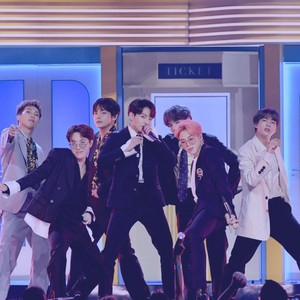
In fact, one Korean pop group, BTS, is the only band that can claim to have ever rivaled
the Beatles in terms of global popularity.
And the only group other than the Beatles to have got three number one albums in the
same year is BTS, the Kings of K-pop.
So how did this happen?
How did the country of only 50 million people become a pop music factory?
Well this is the story of K-pop.
Now a quick disclaimer is that you might remember us touching on this subject in an episode
last year on 21st century soft power, but we're going to go a lot deeper in this episode.
So to understand where K-pop came from, we first need to remind ourselves of some modern
history of Korea.
Korea, as you may know, has a long and rich history, but in the interests of brevity we are
going to just talk about the 20th century onwards.
The Korean peninsula has always been sandwiched between two powerful neighbours in the form
of China to the western north and Japan to the east.
North powers invaded and threatened Korea throughout much of its history.
And in 1910 the Japanese successfully invaded and annexed the entire peninsula, turning
it into a Japanese colony.
In 1945, where the Japanese defeated after the end of the Second World War, Korea was liberated,
but was divided into two parts, with the Soviet Union occupying the North and the United
States, the South.
This was meant to be a temporary administrative division, with the understanding that the
two zones would be reunited, but Cold War politics got in the way.
Then the North invaded the South in 1950, war broke out and lasted until a ceasefire in
1953.
And as you will know, Korea is to this day two separate countries, North Korea and South
Korea, separated by the 38th parallel.
To the North is the communist North Korea, the isolated rogue nuclear state, most closely
allied with China and Russia.
And to the South is South Korea, a now flourishing democracy with strong economic ties to the West
and the United States in particular.
The US isn't just a remote ally to South Korea, almost two million American soldiers fought
in the Korean War.
And to this day, the United States maintains several military bases in the country, with
just under 25,000 American troops still based in South Korea.
So during and especially after the Korean War, these tens of thousands of American soldiers
needed some entertainment.
Back in the United States, a revolution in pop music was just getting started.
Elvis, Marilyn Monroe, Nat King Cole and Louis Armstrong were topping the charts.
The young men stationed in Seoul or Pyeongtaek were no different to those growing up in New
York or South Francisco, they wanted to listen to the latest music.
Soon enough, records made their way over the Pacific, and Nat King Cole could be heard
blasting out of American army bases.
In fact, Nat King Cole even visited Korea to entertain the troops, as did Marilyn Monroe,
but they couldn't be there all the time.
The soldiers wanted some more permanent live entertainment, they wanted people to perform
for them in bars and clubs.
And there were plenty of young Koreans who were more than happy to do this.
After all, Korea was an incredibly poor war-torn country, and many people jumped at the chance
to earn some money performing for American troops.
Now, Korea had its own rich musical culture and history.
Oh, that wasn't what the 20-something American soldiers wanted to hear.
They wanted to hear the sounds of home.
Koreans started performing at military bases.
They were very popular, and this also started to change domestic musical taste, introducing
the South Korean population to a Korean interpretation of American pop music.
And the late 1950s and early 1960s saw a continued swing in Korea towards US culture.
Many Koreans had grown up surrounded by American culture and influence, and this naturally
influenced Korean culture and the behavior of some Korean youth.
Some people started to grow their hair long, take drugs, and have a more liberal attitude
inspired by the hippie movement in the States.
However, the political situation in Korea was moving in the opposite direction.
In 1961, there was a military coup, and the country moved in a more conservative direction.
US pop music was banned.
This most famous rock musician was imprisoned for possession of marijuana, and it looked
like the westernization of Korean culture had come to a hard stop.
That was until the early 1990s, when the Korean government noticed something.
There was a government report on the economic impact of a recent American movie, Jurassic
Park, which came out in 1993.
South Korea, at this point, had a growing economy and had developed expertise in the manufacturing
of goods like electronics and cars.
The largest company in South Korea in the early 1990s was Hyundai, the car company, which
had produced over 4 million cars by this point.
It was a huge driver of economic growth for the country, but this government report looked
at the economic impact of the film Jurassic Park, and determined that just this one film,
two hours and seven minutes of movie, had an economic impact equal to producing 1.5 million
Hyundai cars.
Now, not to belittle the work of Steven Spielberg, and the original Jurassic Park is a great
film.
But the Korean government looked at this and thought, hmm, this pop culture business
looks quite easy compared to producing millions of cars.
As a result, it formed something called the Cultural Industry Bureau in 1994, which had
the mission of developing Korean pop culture and expanding it abroad.
The problem was, there was very little market for it at first, so it was fighting an uphill
battle.
But slowly, slowly, it started to work.
And so poppers and TV dramas were translated and started to be shown on Chinese TV networks.
They became hugely popular, and a so-called Korean wave, how you, started to sweep over
much of Asia.
The process was later repeated in several Latin American countries, such as Peru and
Brazil, and soon tens of millions of people who had never set foot in South Korea became
as familiar with Korean culture, if not more, than they were with the culture of any other
country.
And it wasn't just film, of course.
Despite the government's original attempts to suppress the burgeoning Korean music scene,
the groundwork had been laid, the seeds had been sown.
The first sign of K-pop's potential had actually come a couple of years before this Jurassic
Park report, with the 1992 debut of a band called Siltagian Boys on a talent show on Korean
national TV.
The judges gave the boy band trio the lowest possible score, but the audience and the wider
public, well, they didn't quite agree.
Siltagian boys would go on to be a huge chart-topping sensation.
They were only active for four years, from 1992 to 1996, but they were huge in Korea,
and gained popularity throughout Asia as well.
For copyright reasons, we can't actually play their music, but it was a kind of fusion
between a variety of different musical genres, rap, hip-hop, rock, and techno.
They also made dance, front and center of their performances, and they were performances
in the true sense of the word.
Now, Siltagian boys might have been the trailblazers, but it wouldn't be until almost 20 years
later, that Korean pop music would have its first undeniable global hit in the form of
size Gangnam Style.
This is a song I'm sure you'll be aware of.
They top the chance in practically every Western country.
As of the time of recording this episode, the cult music video is about to top 5 billion
views on YouTube, and it was a musical and cultural sensation.
And even as Sigh was dancing on the rooftops of Si-Hong, beneath the surface, unknown
to everyone but a tight-knit group of musical executives and even bigger sensation was brewing.
In 2010, an executive at a music company called Big Hit Music had offered a teenage boy a record
contract, and then held gruelling auditions to find a group of other boys who would join
him to form a boy band.
The result was BTS, which was formed of seven young men, boys you could even say, aged
between 12 and 17.
The band members were chosen in 2010, but they weren't unveiled to the public until 2013.
They had to undergo an intense period of training and practice, perfecting their techniques
before their public debut.
This came in 2013, with their first album Too Cool for School.
It was a moderate success, getting to number 5 in the charts in South Korea.
But it would pale in comparison with what was to come.
Fast forward to 2017, with the members of BTS still in their early 20s, and they'd gone
from Korean pop sensation to global superstars.
In 2019, they became the first non-English-speaking group to sell out both Wembley Stadium in London
and the Rose Bowl Stadium in California.
They won dozens of awards, being on the front page of Time magazine.
They broke the record for the most YouTube views in 24 hours, which was 113 million by
the way.
They were invited to meet President Joe Biden and have a massed tens of millions of
die-hard fans all over the world, the so-called Army.
Now, if you are not a member of the Army, or you are not so familiar with the work of BTS,
it is incredibly polished, flawless, music, and dance.
No mistakes ever.
The members of the group are incredibly polite, always smiling, friendly, hardworking, and
happy young men.
Of course, their public image is very carefully controlled and curated by their record label.
None of the members are ever allowed to be seen in a public relationship, as an important
part of their appeal is that they fit into this boyfriend fantasy.
If they are seen as single, or at least without a visible partner, it keeps the doors open.
It increases their appeal among fans who can imagine that maybe one day they might be
chosen by one of the members.
And to address the question in the title of this episode, how did K-pop conquer the
world?
Other than the fact that Korean pop stars make very catchy, memorable pop music and are
incredibly hardworking, there are a few other elements to note.
Firstly, K-pop stars, and BTS, I prime example of this, are very adept at using social
media.
BTS are constantly posting on Twitter and Instagram, giving fans a behind-the-scenes look at their
eyes, and the fact that all of the members seem so nice and honest, so flawless and
down to earth.
This has led to legions of fans spreading the word and fighting for their band at every
opportunity.
They seem like good, hardworking young men, deserving of their success, so their fans root
for them.
Secondly, and on a related note, social media has meant that a band can now bypass
some of their traditional channels.
When Syltai Geon boys were starting out in the early 1990s, they would have to go on
TV, deal with record labels and go on tour.
Fast forward to the era of social media and YouTube, and a band can record one music
video or share one clip, and immediately it's live everywhere in the world, cutting out
any middlemen and transcending geographical borders.
BTS's YouTube channel is a testament to this.
As of the time of writing this episode, it had 22 billion views.
The band posts all the time, and when I just looked, it posted a video from 4 hours ago,
and it had already amassed 1.3 million views.
And one of the amazing things is that this video, like most of their videos, is only in
Korean, no English subtitles, no nothing.
If you look at the comments on the video, they are in Korean, in English, in Russian,
in French, and in Spanish.
This gives you an idea of the scale of their popularity, and how far their influence
spreads across the world.
And in terms of some more numbers, to ram home quite how much of a big deal they are,
it's estimated that 1 BTS song, Dynamite, added 1.4 billion dollars to South Korea's
economy in 2020, and was responsible for 8,000 new jobs.
And that the group overall is worth something like 3.6 billion dollars to South Korea every
single year.
Now, perhaps you're hearing about BTS for the first time.
Perhaps you're thinking, how did I miss this?
I don't know anyone who listens to BTS.
If so, let me tell you that BTS fans and K-pop fans in general tend to fit into a particular
demographic.
The genre is most popular with young people, with the average age of a K-pop fan being
23, and over half of the fans being female.
It is perhaps an unusual army and unusual group of fans, but it is a very powerful one,
united by love of K-pop, and in particular a love of BTS.
As just one example of this, you might remember how a group of K-pop fans, mainly teenage
girls and young women, managed to successfully humiliate Donald Trump a few years ago.
There was a free rally held by a Trump in 2020, but K-pop fans got together to register
all of the tickets and then to simply didn't go to the event, so that he gave a speech
to a mostly empty stadium.
To wrap things up, the story of the rise of K-pop is not just a tale of catchy tunes
and flashy performances.
It is one of cultural resilience, strategic planning and the power of globalization.
South Korea transformed its image from a war-torn nation to a global cultural powerhouse,
influencing fashion, language and lifestyles worldwide, and generating huge wealth for
the country in the process.
And to bring it right back to the start, we asked ourselves the question of what one of
the Beatles might have said if you'd asked them in 1964 to name a country that would have
produced a similar global musical sensation.
Of course, we still don't know the answer to that question, but we do know what one of
the Beatles thinks of BTS now.
Sir Paul McCartney has publicly declared that he likes BTS, saying, and I'm quoting
it directly.
It's not really because of the music, like it is for the fans, but for me, it's a
bit about just seeing some young kids go through what we went through.
BTS, Korean guys, I like watching them and seeing what's going on, I think they're
good.
So there you have it, BTS and the Beatles, K-pop and Beatlemania.
They aren't as far apart as you might think.
Okay, then, that is it for today's episode on the Korean Wave, how K-pop conquered the
world.
I hope it was an interesting one, but you've learned something new, and if you've never
knowingly listened to any K-pop before, well, perhaps this might have inspired you to
go to YouTube or Spotify, type in BTS and see what all the fuss is about.
As always, I'd love to know what you thought about this episode.
Are you a K-pop fan?
If so, what was it that first got you hooked?
And what do you think are some of the reasons that K-pop has become so popular?
I would love to know, so let's get this discussion started.
For the members among you, you can head right into our community forum, which is at community.lionardoenglish.com
and get chatting away to other curious minds.
And as a final reminder, if you enjoyed this episode and you're wondering where to get
all of our bonus episodes, plus the interactive transcripts, subtitles and K-pop capri, then
the place to go for that is LeonardoEnglish.com.
And if you're not ready to become a member, but you'd like to do something to support
the show, then I would love for you to think about leaving a review or a star rating on
your favourite podcast app.
It takes less than 30 seconds to do, but they are super helpful.
And each one brings a smile to my face.
You've been listening to English learning for curious minds, by LeonardoEnglish.
I'm Alistair Bunch, you stay safe, and I'll catch you in the next episode.