Chat with Traders is brought to you by Trade the Pool.
Did you know that every decade the market reinvents itself?
Online brokers open the doors.
Mobile apps made trading seamless and commission-free trading erased barriers.
Now a new era has begun.
Meet Trade the Pool Limited Risk Trading.
And now you also have unlimited time to reach the profit target.
From now on, your trading risk is capped. and your trading opportunities are limitless.
Trade the Pool funds home-based stock traders with up to $200,000 in buying power.
That means you can trade larger positions and scale your strategies without risking your own savings.
It's time to trade with more capital, making it truly worth your time and effort.
Ready to trade the pool?
Click the link in the description and join the stock trading revolution today.
Chat with Traders is also brought to you by Tasty Trade.
Ditch those rookie trading apps.
Get Tasty Trade, the platform for serious traders.
Chart with 300 plus indicators.
Know your profit odds and move fast.
Trade stocks, options, futures, and more all in one account.
See why serious traders choose TastyTrade.
Visit TastyTrade.com.
TastyTrade Inc. is a registered broker-dealer and FINRA, NFA, and SIPC member.
Trading in the financial markets involves a risk of loss.
Podcast episodes and other content produced by Chat with Traders are for informational or educational purposes only and do not constitute trading or investment recommendations or advice.
This violence for the more experienced trader might be not only how big it is, but how it developed, the speed at how it grew right.
So a lot of us that are day trading and really looking at the candles, they behave a certain way, right.
Some have Every stock has a very distinct personality.
And so when you see that bar after multiple bars down, you might start to see it jitter.
And then all of a sudden that velocity starts to come.
And that's that violence.
And so sometimes if your intuition is is there and you have the experience, you might be able to.
Oh, you get that gut feeling.
You jump into the violence and it turns out to even grow more.
Markets, speculation and risk.
This is the chat with traders podcast.
Hey, everyone.
Welcome back to Chat with Traders.
This is episode 309.
I'm Tessa doing this show with my co-host, Ian Cox.
How's it going?
How are you?
I hope you're doing well in every way and I hope you're also finding joy in the little and simple things in life to help keep you grounded, no matter what your circumstances are.
Let's always try to support and lift each other up, okay?
Trading is hard enough, right?
Take care of yourself.
Our guest today is really special to me for several reasons.
And one of the reasons why he's special to me is because I've gotten to know him in the And he's been one of our influential members in the community, alongside a few others that we've mentioned in the past.
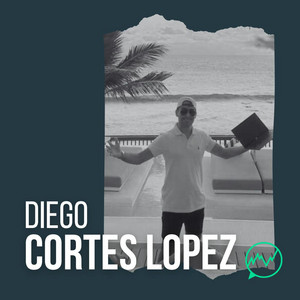
But today, this particular trader's name is Diego Cortez Lopez.
Diego was basically raised on the tennis courts from around age five.
Tennis was his passion in his young life.
And by the way, he's still very young.
Eventually, though, a back injury closed the door on him going pro.
And so by 16 he was coaching tennis, successfully coaching private and group lessons until 2020 hit.
And then you know what happened in 2020, right?
Since then, he's been living in Southeast Asia from Bali and Vietnam.
So I guess you can say he's a classic digital nomad style American expat trader.
He's one of those 100 trading for a living traders who are just hard to find that are willing to interview.
So I guess we're lucky.
By the way, he's never missed an open.
Talk about dedication to one's craft.
Diego trades large cap stocks using a rule-based approach that he learned from his mentor, Oliver Velez.
Focusing on certain support and resistance levels and clean reversal signals and also very clean charts.
I mean, simple, simple, simple charts.
I've seen them myself.
He trades mainly in the first hour of the market open, with tight stops and a three to one or better reward to risk ratio, and cutting risk fast, over and over proving that disciplined execution matters more than a high win rate.
In this episode, you'll also hear a few trading terms and concepts from Oliver Velez's methodology, which Diego has drawn from, but over the years he's also blended it into his own trading approach.
By the way, Diego explains his strategies in such a way that, even without a chart or visuals, you can imagine what he's describing.
So pretty cool.
Anyway, let's get to it.
Ladies and gentlemen, we are so pleased to introduce Diego Cortez Lopez, currently living in Southeast Asia.
Well, first, I'd like to welcome you to Chat with Traders.
Thank you.
Yeah.
And tell us a little bit about your early childhood, kind of where you grew up and what interests you early on.
So I was born in Mexico City, but I grew up in Dallas, Texas.
At a very young age, I started playing tennis.
I've been playing tennis since I was maybe five years old, somewhere around that.
I'm 24 today.
I'll be 25 September 7th.
So I've been playing maybe 20 years.
I got to a point where I was pretty close to playing maybe professional.
Who knows?
I got injured before I...
I could find out if I could have made it.
So I acquired quite a bit of discipline through sports, through tennis.
I think that passion then eventually led me to Desiring to find something else to get very good at, since tennis was something that I just could not keep doing.
Eventually, I started teaching tennis.
Young adults, adults, elderly.
And I did that for a few years.
How old were you at that time when you were teaching tennis?
I think I started teaching around I was 16.
So at the age of 16, I hit my I was I think I was hitting my prime, you know, 16 year olds.
By the time you're 16 you should know if you're going professional or not, because most professionals they go professional around 17, 18.
So at that time, I was pretty good.
But my back injury did not permit me to advance much.
So I stopped playing tennis that much and I focused on teaching.
Turns out that teaching was a very, very, very good business.
So doing private lessons, group lessons.
And I did that for a few years.
Until COVID hit.
And that killed the whole business.
And I was like, all right, well, I got plenty of money, plenty of savings.
I'm going to move out to some other country.
Chose Mexico.
And I was there for a while.
Came back to the US mid-COVID around 2021, I believe, then moved to Asia a little before COVID happened.
So late 2019, Interesting.
So you moved to Asia while you were still kind of figuring out what you wanted to do, or or you were temporarily sidelined from the teaching tennis.
Yeah, so 2020 killed the tennis business, made some money, the start of 2020.
But late 2019, got into trading through some guy I met in college.
And I got into Robin Hood, like everyone else does.
Bought my first stock, Tesla, Bitcoin, and I think some penny stock.
I forget what it's called.
And early 2020, around March...
Or was it February or March before the big recovery is when I really got into trading.
And I think that was during spring break of college.
I never went back to college.
I just dropped out.
I said, I like this.
This is really, really cool.
So I'm going to go all in.
I had plenty of savings because of tennis.
So I decided to move to Mexico for a few months.
Tried it out.
Lost everything through trading.
Tell us, let's get into the weeds on that one.
What were your early kind of strategies and what was your style of trading early on?
It's a bit embarrassing.
I really did not know what I was doing.
I thought I did, of course, back in the day.
But I was so-called scalping, going for one or two points trading futures.
Futures was the cheapest way to access the market because stocks was too expensive.
So I was doing that, scalping micro minis.
I think that's what they're called, right?
I forget.
I haven't traded futures in many years.
But yeah, I was scalping those, trying to make something happen.
I was basically trying to short the lows of previous days.
So I was shorting that support and I was buying into resistance.
So I had it the wrong way.
I should have been buying at support and shorting that resistance, but i didn't know any better.
Um, so i was getting smoked lost Nearly six figures.
So that was pretty painful.
And then after Mexico.
After losing all that money, I moved back to the US, started the tennis business back up.
Did that for about six, seven months.
Made a lot of money again. and then moved to Bali.
And I'm still trading during these times, right?
So I haven't missed a single open since, you know, the start of 2020.
And so after losing that money, did you make any adjustments or were you learning?
Did you have like a mentor or any, how did you learn?
No, I did not have any mentor.
I thought I could have learned this skill on my own.
But I was very wrong.
I didn't change anything.
I thought that I was around the neighborhood of being on the on the right path, but I was very wrong.
It took me two years and a half to find the right approach.
I can't tell you exactly what was it, 20... late 2022 that things started to turn around.
So two years and a half into my training.
Were you doing the same strategy of buying at resistance and then shorting at support or any modifications along the way?
And what security?
You were trading futures, is that correct?
At that time?
Yes.
At that time, still trading MNQ, MES.
The Russell and I'm scalping looking for breakouts out of yesterday's highs or yesterday lows.
So I would short the low of yesterday, hoping that it would break down a lot lower, just for it to reverse on me and get smoked.
Now, keep in mind that my stop losses are very small.
So any movement will nick me out and I'll lose, you know, 99% of the time.
So I clearly did not know what I was doing.
And then I met through YouTube, I think in late 2022, I found a gentleman called Oliver Valesse.
He's been trading for almost five decades.
Clearly, he knows what he's talking about.
So I gave it a shot and it did give me new eyes.
I had to unlearn everything I learned.
And it turns out that trading was actually a lot more simple than I could have imagined.
So just a basic risk management, some decent odds.
And yeah, so I developed myself since 2022, not the right way.
And then I guess in December, I'll be training for six years, more or less.
So I'm still a baby in this industry.
You know, six years is nothing.
So let's dive into the new way of trading.
Like what kind of a trader are you in this new type of trading?
Are you a scalper or day trader or what?
So today for the past three years and a half or more or less, I've been trading stocks.
So I just trade the big main stocks, you know, whatever is popular.
So Tesla, AMD, MU, Microsoft, Meta.
MSTR, the big ones, as long as they have a low spread.
And I do the opposite of what I used to do in the past.
You know, back in the day when I was scalping, I believed that I could achieve a 9 out of 10 win rate, 8 out of 10 or even 7 out of 10, which I was very wrong.
Now today, with my six years of experience and a lot of losing, I believe that not everyone is capable of producing a 70 win rate.
I think that is extraordinarily high.
But I'm sure there's people out there.
You know, there's always a Djokovic or a Michael Jordan or something like that.
But I'm not that guy.
And I'm not that smart.
I'm not that that good, but I can reproduce a 30 percent, 40 percent win rate.
So as long as my win rate is 30, 40 percent and the risk reward makes sense.
Right.
Those two key factors.
Um, you can be profitable, so let's dive into uh.
Let's dive into uh kind of what you look for say, to go long or go short, like what are the characteristics of uh, of what does the chart look like to you?
All I focus is at the daily.
I look at any major support.
So any daily high.
So yesterday, for example yesterday, let's say call it uh, the spy, yesterday's high and yesterday low if it had a violent bounce off the lows right created a very violent, major bounce, then I'll consider it a strong support.
And if today opens and it reaches that level, if it gives me, for example, a tail bar, I'll consider a loan.
As long as the entry and the stop is small enough to give me a decent reward. then I'll take it.
And I just have to be right three times out of 10.
So when you're looking at support then it doesn't.
You don't look at the preceding weeks or months to see, oh wow, this level of support is really good going back a number of months.
So that would influence my desire to maybe increase my position further at when it gets back down to that support.
Or do you just totally ignore all prior history prior than the day before?
So it can go back a few weeks as long as it's obvious to the eye.
So it has to be obvious.
If you're making it up and you're guessing and you're trying to convince yourself that it might be, it's probably not.
So everything is a self-fulfilling prophecy, you could say.
So as long as it's obvious that it's a support, then it's probably going to play out most of the time.
You don't want to be trading random support levels off of a one minute time frame because you're probably going to get smoked most of the time.
But if you're looking at those more important ones, that maybe so institutions or whatever big money is looking at.
Whatever you want to call it, they work most of the time.
So daily support and resistance, that's good.
If I don't find anything off the daily, I'll go down to hourly to find some key support level or resistance.
But most of the time, the daily is always available.
I trade usually around 10 stocks.
So there's always something available.
But the strategy doesn't work well in trending markets.
So, for example, today, September 5, this morning, the SPY sold off pretty heavily.
You know, trying to catch a falling life is probably not going to work out today.
But other days when we're, you know, a little bit more calm, just ranging, it's a good time.
I see.
So you're looking to play the, what, overbought, oversold conditions within a cycle?
Yeah, yeah, yeah, yeah.
Mm-hmm, mm-hmm.
So I really want, for example today, let's say, the spy sold off for the first 30 minutes and there's just, you know, on a five-minute chart, there's just 10 red candles in a row.
That's obviously...
It's too much.
So what I would look for is a buy event.
A buy event to me would be a nice little tail bar.
As long as it's obvious to the eye that it is a tailboard.
Not too big because you don't want the wrist to be too big.
Not too small because you don't want to.
It needs to be bullish enough, right.
And go for a three to one, four to one, but minimum two to one on the bounce.
So you really want it overextension, oversold into support.
I see.
And what, what timeframe are you looking at on your charts?
Five minute.
That's the main one I look at.
Okay, five minute chart.
So when it looks to you so it signifies that the correction is over.
When you have what a reversal bar is, that it.
Yeah.
So people, what do they call it?
They call it tailbars.
Oliver Less calls them 180s, wide range bars.
There's a bunch of names.
But any reversal bar, any reversal event that qualifies for a potential reversal.
As long as the location is good.
Right.
So major support levels.
What if the volume is really light on the bounce?
Does that influence you not to go long because it's the volume is weak or how do you look at that?
I don't look at volume.
So I could not tell you.
I've learned how to use it, but my day-to-day trading, I don't use it.
I keep it very simple.
As long as it's very oversold, at least multiple bars in a row. of the same color.
So you can imagine it, you know spice selling off one two three four five six seven eight, nine red bars in a row.
If you were short, you would probably start to you know, tighten up your trailing approach.
So a pullback would be imminent, right?
After such a move.
So I'd use the five minute.
And, in order to reduce my risk, I'll use a smaller time fling, such as the two minute or even the one minute, to try to really nail down my entry and find a appropriate stop.
And a lot of times I might be able to find a very nice entry with a very nice stop that could potentially reward me with three to one, four to one, five to one, sometimes even more.
And how do you calculate?
I mean, how do you?
What's your target price to get out when you say three to one, four to one ratio?
What kind of retracement back up in this case are you expecting?
The retracement that I'm expecting is no more than a third of the move up.
So let's say one third of the decline.
So yes, one third of the backup.
Yeah, yeah.
I think people call those Fibonacci levels or something like that.
But I just imagine it's just massive move down, a bounce to the one-third mark.
That is the most I should expect.
Now, can it go a lot further?
Sure, that would be the home run.
But I need to make sure that my profit take is at the one third mark.
And by that moment, I should be able to achieve at least one to two.
If I can get more than perfect.
So when you're looking at the potential reversal and then you get one one reversal bar, does it matter to you or how much would it impact your decision to go along if it's a violent retracement, like like what we would call an elephant bar?
Yeah.
So if the retracement happens very violently without me being in it, then I'll wait for the price to come back down to where I wanted to get in and then put the stop at the low of day.
So imagine the big move down, violent retracement.
It hasn't hit the one-third mark yet, or maybe it did.
But if it drops back into that area of that violent retracement, it could still be potentially a good buy for another move up to that same one-third mark.
Does that make sense?
So it's like a second attempt to get a second chance to get in the trade.
I see.
And in one of your videos, you referred to this, I believe, what was called the gift zone.
Yeah, that's what it is.
And so what does this bar look like?
I mean this violent bar.
How does it compare to the other bars so that traders can identify when this happens?
Chat with Traders is brought to you by TastyTrade.
Tired of trading on rookie apps?
TastyTrade.
TastyTrade gives you the tools to trade your way.
Chart your heart out with over 300 tools. indicators.
Know your odds with probability of profit and move fast with quick roll.
Trade what you want and trade it your way.
Stocks, options, futures, and more all in one account on one platform.
No wonder why serious traders choose TastyTrade.
Visit TastyTrade.com and see for yourself.
TastyTrade, Inc. is a registered broker dealer and member of FINRA, NFA, and SIPC.
Have you ever watched a stock explode and thought if only I had the capital.
Or sat on the sidelines because your account balance felt too small to matter?
Good news with Trade the Pool's limited risk platform.
You don't need millions or even thousands to start trading the U.S. stock market.
Bypass the PDT and tap into over 12000 US listed equities, from penny stocks to big caps ETFs, even the newest IPOs and short anything you like with zero locate or hard to borrow fees.
Start your evaluation.
Get funded with up to 200000 in buying power so you can go big without risking your own savings.
And now you can also have unlimited time to reach the profit target.
It's a game changer.
Not ready to trade yet?
Trade the Pool offers a free demo and educational resources.
Practice on live data.
Master the platform and build confidence risk-free, before you even pay a cent.
Click the link in the show notes to start trading with Trade the Pool's capital.
This episode is brought to you by State Farm. like a good neighbor State Farm is there prices are based on rating plans that vary by state coverage options are selected by the customer availability amount of discounts and savings and eligibility vary by state It just has to be a lot bigger than everything else to the left.
So it has to be obvious.
It has to be very obvious.
Again, if you're guessing, if you're doubting, then it's probably not big.
So it has to be... a lot bigger than everything to the left.
If you were to ask a child to, you know, circle the big bars, that's how it was taught.
Highlight the big bars.
That's how Vales taught us.
And it's just that simple.
If it's big, if it's obvious, then, you know, it's a violent bar.
Now you can go more in depth, right?
Because violence for the more experienced trader might be not only how big it is, but how it developed right.
The speed at how it grew, right?
So a lot of us that are day trading and really looking at the candles, they behave a certain way, right.
Some have.
Every stock has a very distinct personality and so when you see that bar, you know, let's say, after multiple move, multiple bars down, you might start to see it jitter, and then all of a sudden that velocity starts to come And that's that violence.
And so sometimes, if your intuition is there and you have the experience you might be able to oh, you get that gut feeling.
You jump into the violence and it turns out to even grow more.
It's hard to explain.
I see.
And so.
But you said earlier that normally you wait.
Even though you see the violent bar, you wait for it to retrace.
How often does it retrace and how often have you found that it just continues to go on up and you missed out on the trade?
I found it to personally from my stats, it's 50-50.
It's 50-50.
So sometimes if you're not in the trade, if you don't nail the entry and it goes without you very violently, it might just go straight up and hit the profit target and sometimes it'll bounce violently.
Pull back, give you another chance to get in and then the move happens.
But um, you know, it's 50, 50.
And how often do you see these elephant bars with any one particular stock?
Or does it vary significantly depending on the stock you're looking at?
It happens every day.
Every day, multiple times, at least 10, 20 times a day.
So it's that specific event, the very large bar, it's everywhere.
With the same stock?
With the same stock or do you need to be looking at dozens of stocks?
With the same stocking can happen, of course, depending on the timeframe.
It can happen multiple times a day.
So if you were to look at the SPY today on the five minute I mean, there's multiple large bars, right.
Even on the 15 minute, there's multiple large bars.
Today's September 5th for the people listening.
But yeah, there's multiple large bars, multiple of them.
You could call it, okay, this move is oversold.
It's exhausted.
The exhausting part.
Do you trade mainly in the morning session or throughout the day?
Or have you found any particular time times during the day that you prefer over others?
I do best after the first 20 minutes go by.
So I'll usually trade only the first 60 minutes.
That's it.
Oh, why is that?
I mean, what makes the first 60 minutes better for you than say, the rest of the day?
So you, i well one, i'm in asia, so i have no uh, no interest in.
I want to go to sleep um early, um.
But the majority of the volatility is in the first 60 minutes, first 90 minutes.
So if I can't get the job done by the first 60 minutes, I don't want to be there.
So that's just me.
Again, also more participants are in the first 60 minutes, right?
So for my events to work, I need people trading, right?
I need the big money to be there.
And so if I don't have... then there's not going to be follow through on the trades that I'm taking.
Right.
So I need that institutional participation.
I could, you could say.
Do you look at moving averages and their potential aid in helping you go long or go short?
Yeah, I use the 200 moving average, the simple moving average and the 20 to keep it simple.
If the price is above the 20 and the 200, you're in a bullish state.
If your price is below the 20 and the 200, you're obviously in a bearish state.
If the 20 and the 200 get too separated right, then you could assume that you've been trending for quite a while and be careful, going long now.
So that's what we call a wide state or a trending state.
A wide state can always get wider.
So be very careful trying to go against the trend.
But that's why I say that when I'm going short, I'll take a short at a good location that has decent odds of producing a reversal.
Okay.
Describe that to us at a good location.
What would it look like on the chart and with the moving averages, so that people can imagine what you're talking about?
Imagine, let's say, Tesla.
It's been in a range for the whole week.
It's Friday.
And right off the open you get 10 green bars in a row up into, let's say, the major high of the week right, which happens to be, let's say, two days ago, right on a Wednesday.
And that Wednesday happened to be a very violent drop from the top.
So the origin of the move was violent.
So I can assume that...
If Friday's move, which is right now green, we're 10 bars up.
If we can get to that Wednesday high right, which is just a simple resistance, I could expect, I could predict that there is going to be some sort of reaction, probably a drop.
The majority of the time, new highs fail.
So I'm going to bet that there's going to be some sort of reversal.
So let's say now we're 15 green bars in a row and we get that nice topping tail bar.
That's a short opportunity, right?
Short it.
Let's hope that the risk is appropriate and the risk reward makes sense and go for it.
Now, I would say that for most traders, they should aim to achieve a 30% win rate.
I think that's reproducible.
That's realistic for the majority of the industry.
I think a lot of people go many years trying to achieve 30 unrealistic statistics that it's just not going to happen.
So 30% with a 3 to 1, 4 to 1, math is going to make money for you.
Now, it's not cute, it's not impressive, but it's reproducible.
Yeah, where do you set your stops?
Is it – or have you heard of it being common for traders to set their stops just slightly above the very top of that resistance level, and it creates an area for – trader, other traders or manipulators to do stop loss hunting to blow out those, those last little stops.
And so where do you place your stop?
So if the tail bar appears, like I said, after 15 green bars, the tail bar appears, I short at the tail bar, at the low of the tail bar, and the stop will go above the tail bar.
If I get shaken out right, the tail bar gets taken out and let's say maybe one bar higher, two more bars proceed after that and then another tail bar appears, then i'll give it a second shot.
But this it's only.
I'll only give it two chances.
Um, And shakeouts happen.
I just have to reenter.
And there are reentry approaches that I take.
But I don't like to give myself a wide stop.
I'd rather be wrong more often, um and and have good risk management.
I, i see.
So where you place the stop is not based on a percentage.
It's based on on uh, where the just above the, the tail bar, meaning you're, you're putting your stop just above the last highest level of resistance that you saw.
Yeah, yeah and uh.
The monetary stop is the most important, so every, every trader should have either a percent stop or a dollar amount stop.
Do you place much importance when the 200-day moving average is aligned or compressed together with the 20-day moving average?
When you see these elephant bars appear.
In other words, do you, are there scenarios where you see a confluence of events that are so compelling that you greatly increase your position size, or how does position sizing work for you?
So position sizing for me, it's changed over the years.
A few years ago, I had the approach where I would have my light size, medium size, heavy size.
But nowadays, since my win rate is a lot lower, It's around 35%.
I keep my position size relatively the same, since I just don't know which trade is going to be the winner.
So all my position sizing is the same.
I don't want for me to position size lightly.
And then because of the randomness of the market, it ends up being... a mega trade like today.
Today, the trade that I accidentally position sized too lightly, ended up being the biggest move of the day.
Why?
I couldn't tell you.
The other trade was the better setup, but today this one just happened to... to be the main room.
So it's too random for me to honestly say yeah, like I know I should be position sizing very heavy here.
I just...
Over the years, I admit I just cannot manage to be right 7 out of 10 times.
So I'd rather keep that 30% win rate, 35, and position size the best I can.
So let's say today...
I take a trade where the risk on the tail bar might be $50, but I get a better entry.
And I can size in a little bit heavier.
My risk might be very tiny, but by the time it starts moving my way, I'm heavily sized in, while still losing 50 or less.
And that turns out to be a big winner.
So entries are very important.
Do you do any journaling?
Um, yeah, I journal every day on my I have a WhatsApp group chat with myself in it.
And I'll just screenshot the trade and put it there.
And but I don't journal anymore.
I used to journal a few years ago, but no, not anymore.
I think that.
I know what I'm doing today, so it's just second nature.
I show up one minute before the Open.
I don't really trade the first 20 minutes, so it doesn't really matter.
It's a very... slow and, uh, what would you say?
Nonchalant.
It's just laid back, but, um, it's become like walking.
So it's, it's easy now.
What do you um?
What's your opinion when traders some traders say that they like to look at multiple timeframes, many timeframes to really nail down, you know, is this move sustainable?
So they'll look at maybe the two minute five you know 15, 30 hour timeframes to try to get a comprehensive look at the quality of the move.
Do you place much value in that or just looking at a two minute or five minute is sufficient for you?
For the beginner I would say to just stick to only one timeframe and learn to read that, because most of the time beginners, they look at too many things and they get overwhelmed and they don't master one thing.
So when I first started, I focused only on the two minute and I became profitable on the two minute.
And then I added on the five minute, the 15 minute, the hourly and the daily and use those as confluence.
Right now, if you're more experienced, then you'll know how to use the 15.
The more confluences you get, the better.
But for the beginner, I'd stick to one thing.
Too much is usually not good.
Does anything in the pre-market activity influence your trading at all?
Or do you place much value looking at the pre-market?
I don't look at pre-market.
I have pre-market turned off.
So I only have regular trading hours on.
The first thing I'll pay attention is yesterday's high and yesterday's low.
And if it is, like I said, a violent trade drop from yesterday's high, then I'll consider it as a zone to go short.
But I don't look at pre-market, no.
Let's go back to the gift zones.
So you say about half the time when you get an elephant bar on a reversal, it'll continue on in that direction.
And roughly the other half, it'll experience somewhat of a correction back into the gift zone, allowing you to get a better purchase price.
How do you I mean when it starts to fall, after it makes the elephant bar to correct back is there a other bar, like a come with a reversal, to know, that you look at so that it doesn't keep falling, that it maintains some level of support within that narrow, within that minute or two minutes timeframe?
There's no...
Let's say you have an elephant bar wide range bar after five minutes and it's retracing back into the gift.
Right.
There's no way to really know that this is going to be the one that ends up dropping even lower and stops you out and continues down.
Or it's the one that goes higher.
It's very random.
The only guideline that I do have is that ideally, you don't want the majority of the bar to be removed.
And so you could use, let's say 80% of it, 80% of the large bar.
If 80% of it gets removed, you can assume that most of its power is not holding up and it's over.
But For the beginner, I just keep the stop at the very low and you gain that experience.
So over time, it looks like 80% of the bar being removed.
Usually it fails.
But there are times where it retraces near the lows and then violently turns around again.
So the guideline is... as long as it doesn't take out 80% of it.
Um, if you want to be more aggressive, the halfway mark would be it, but I think that's too much.
So in the years you've been trading um, and I don't know how many other traders you have met or talked to, but is there, have you witnessed uh, the common types of mistakes that traders make, both for yourself and other people that you've?
You know yeah, i think uh, off the top of my head, i think one of the most common mistakes is starting off with scalping.
I think that's a big mistake, attempting to have a high win rate.
I think that's a big mistake because it takes so much skill to maintain such a high level of accuracy, with good risk management, to stay profitable.
I personally don't know anyone.
Well, that's a lie.
Of course, my mentors, you know, but they've been trading for four, five decades.
So, but.
Other than that, people I've been training for about my time six, ten years I don't know anyone that has such a high win rate and is scalping for a living.
Most of them are doing 30 40 and they have three to one, four to one risk rewards and they're doing well.
So, starting off with scalping, I think that's a big mistake because in the long run for the beginner, they never learn to hold on to a winner.
They cut their winner so quickly.
And just from pure human nature, they hold the losers.
And the opposite happens, right?
So the profitable guy, he's cutting the loser quickly and holding on to the big winner. um the not profitable guy and the losing trader he's uh of course taking it too early and holding it too long the loser so it's literally the opposite Very funny.
It's as beginners, we do things backwards.
Right.
So what are the indicators for you, given that you're trading in a short timeframe to hold on to your winners longer?
And do you ever come across situations where things are going so good during the day that you decide to hold it overnight?
I've never felt that.
No, I don't hold trades overnight.
I'm always out of the trades before.
The hour ends the first hour.
But what keeps me holding a trade is is just seeing those violent bars continue and continue and continue.
So let's say I'm looking at the two minute chart.
If there's just consecutive... medium to large size bars, just nonstop.
I'll just trail my stop at a decent distance using perhaps a moving average or a bar by bar under every bar, until I get trailed out.
But usually I'm able to achieve a two to one almost right off the bat.
So from my entry, two to one is relatively close because my stops are pretty small.
So I like to see the trade pop violently in my direction.
By the time I hit two to one, I'll get my first profit take and continue to trail out.
In one of your videos, you mentioned about good experience and bad experience trades.
What are they?
A lot of people are very convinced that.
That by using this, this, this, this, this, this, they're generating good experience.
And most of the time they're creating a lot of bad experience that it makes you go backwards in your journey rather than forwards.
And I've met a lot of dudes that have been trading 15, 20 years and not to be rude, but they're very bad.
They've gone completely backwards.
Um, just because of the false beliefs that they have uh generated, like myself, buying into support scalping, trying to achieve 90 win rates, holding onto losers and believing that it's going to bounce, while holding it for days or even months.
And these are not things that generate good experience.
What if they come back and say but these trades are as long as it's profitable, isn't that a good experience?
Trade.
Everything, every loss can be a good experience, as long as you break down the loss and you understand why you lost.
But if you don't break it down and...
Analyze it and stay arrogant and tell yourself that it's fine.
It's fine.
It doesn't matter.
And continue to do those same bad habits.
I don't know where the saying comes from, but I think someone says that The definition of insanity is doing the same thing over and over, expecting a different result.
So that was me many years ago, losing in the same way, expecting a different result, thinking that I'm getting better, but I was going backwards.
What is a trap zone?
And what can we make some good trades in this, in this trap zone?
Yeah, the trap zone, as I was taught by Velez, is just being stuck between a major high and major low.
And in this case, with the definition of the trap zone, it's usually using yesterday's last 45 minutes of data.
But the trap zone really can be at any time, anywhere.
So if you're consolidating in a range a tight range or medium-sized range that could be a trap zone.
So you usually don't want to be trading inside of a consolidation or ranging market, because you're going to get smoked.
Now, if you're very good, then you can trade the range, right?
But yeah, usually you want to try to stay away from that.
I personally prefer ranging markets, obviously big ranges, because I want to be, you know, supporting resistance.
But on a smaller time frame, of course, on a two minute.
You don't want to be trading inside of a tight range.
That's not a good idea.
So share with us a little bit.
How has your trading performance been over the years, or how has it kind of evolved and fluctuated over the years?
Yeah, 2022 was fantastic.
2023 was even better.
2024 was my best year.
Um, 2025 this year has been slow.
Um, but you know, I still think I'm a, I'm a baby in the industry.
So a lot to learn.
Um, but it's, it's over overall, it's been, um, a line up.
Right. exponential lineup.
So it's good.
Every month is very difficult.
Every month, every week is very challenging.
So a lot more experience is needed.
I have a Mentors that are green every single day.
These guys have been trading 30, 40 or even 50 years, like the last.
So, of course, sure, they have two or three red days per year.
But I mean, these guys are incredibly, incredibly skilled.
And you've been living whereabouts in Asia for some years now?
Yeah.
I lived in Bali for a while.
I lived in the north of Vietnam.
I'm in a city called Nha Trang.
And I've been living in a small island in the south of Vietnam for quite a while now called Phu Quoc.
So it's a very beautiful island.
It's definitely got to look it up.
Very, very, very beautiful.
I think it has some of the most beautiful beaches in the world.
Wow, fantastic.
Sounds like you're living the life.
Yeah, it's nice.
Yeah.
I wanted to go back to.
You mentioned that some of these guys that you know trading in a similar style that you do are green overwhelming majority of the time, except for a few days here and there throughout the year.
What do you think they do differently qualitatively?
What makes them uh, super profitable, uh much more than say, the average trader who follows their same system.
Like, what could we do different to uh get their, to their level of experience, to their level of performance?
I would say that it's uh the psychology.
The psychology, the ability to reduce risk so incredibly well.
There are They're very, very good at losing very small amounts.
That's very impressive.
And I also think that the size of your account does matter.
I think, especially depending on the style that you have, there are traders that are able to pyramid into trades and get themselves out of a nasty trade and turn it into a winner.
And of course, the more money you have, the more you can pyramid and damage controlling and get out of a losing position.
But of course, that also takes an incredible amount of skill.
But yeah, I think it really comes down to psychology.
Yeah. an amazing ability to lose well, incredible risk management.
They're great losers.
I think that's what it is.
This will help us to keep the episodes coming.
Also, if you haven't subscribed to our email list, please hop on to chatwithtraderscom and click on subscribe, so we can keep you posted of information that may be of importance.
Thank you.
Now back to the chat with our guest.
Uh-huh.
Uh-huh.
Have you shared your passion of trading or been able to teach anyone else to trade during these years in Asia?
With Tessa, when I met her, I don't know when we met.
I think it was three years ago.
Was it three years ago?
Something like that.
I was able to teach some people that are...
Still with me today.
They're my some of my closest friends.
So I talk with them pretty, pretty regularly.
And sometimes we trade together.
So they're great friends.
And most of us do trade the same approach.
And it's been good.
I love those guys.
They're my friends.
It's hard to make friends in this industry sometimes.
So to wrap things up, what do you struggle with most as a trader?
I think for me is obviously the losing.
I don't like losing.
I come from a very successful career, I guess, in tennis.
I was very accustomed to always winning.
But it's an everyday struggle to be okay with losing, going on sometimes 10 trade losing streaks.
That can happen.
Right.
But staying, staying with the method, staying with the approach and sticking through those, those tough times.
It's just part of the math.
Right.
So are you?
Do you feel that you're now at a place where you're comfortable with your process, kind of your life?
Is there anything that you're looking forward to next?
My main focus today is obviously trading and investing a lot.
Everything that I make, I try to invest it all.
And enjoy my life, have fun, not focus too much on money.
So yeah, it's good.
Great.
Things are good.
Fantastic, Diego.
Diego, thanks for coming on Chat with Traders.
Thank you so much.
Oh, hi there.
Thanks for sticking through the end.
And I hope you enjoyed Ian's chat with Diego.
So if you have a few more minutes, feel free to stay on for my brief chat with Diego.
Take care.
So regarding tennis, do you still play tennis for fun or...
Yeah, I found a golf club.
There's a, what do they call it? country club.
There's a country club like five minutes away from here by the beach.
It's like a big resort.
And they have tennis courts, pickleball courts, golf.
We go there.
Me and my girl go there pretty often.
Yeah.
I'm trying to go to the beach every day because, you know, you get used to it.
So you stop going.
But we're going there as often as we can every other day.
Yeah.
Some days we have lazy days, but yeah, still playing.
That's great.
It's great that you're still somehow involved in your passion of tennis your very first passion, right.
Tennis.
Yeah.
Because of your tennis background and you said that you taught tennis I feel like it's really reflected in your explanations on the way you trade.
Especially, I was part of your private group, your trading group.
And I just remember just the way that you explain things on the chart and kind of your approach based on Oliver Velez's methods.
It was just so clear to me.
And one of the things I remember that I use every day in my trading is the trap zone.
I think I mentioned that to you.
I swear I use that.
That is so helpful for me.
Just that one thing I can remember.
And I can use every day to either stay out of it or if I go in it, be really, really cautious.
But that is something I use every day.
So I just want to thank you for sharing that with me.
And also, there's something that you said that was really interesting.
You never missed an open at the market open since you started trading.
Yeah, I've never missed an open.
How do you do that?
Um...
I think I've made trading always my priority.
It's been my ultimate passion, even though I think it's one of the most frustrating and difficult activities, but also very rewarding.
I love it a lot.
I don't want to miss any Open.
I feel like missing an Open is...
Especially since I don't have a job, right?
I don't have anything else to do.
So there's no excuse for sleeping in or, you know, being out doing something that I shouldn't be doing.
I need to be there for the open.
Especially because one day I want to... be able to say like I'm a true professional.
And so I should dedicate myself as much as I can.
It's I would say I'm still in my university years, late university years.
I feel like you're a professional already Diego, but you're so humble, and it's a humility that really is what brought you here, I think.
So you mentioned, I remember you talking to me and you taught your girlfriend how to trade as well.
Is that true?
Yeah.
Yeah, yeah, yeah.
She still trades almost every day.
She's picked up other hobbies.
So she loves cooking.
She loves baking.
She loves making dresses. and working with Clay.
So as long as I can fund all her hobbies and she's happy and entertained, I'm happy.
If she wants to trade, she can trade.
If she wants to do whatever she wants to do um, you know i'll be there for it, to support it.
But um yeah, every now and then she's trading for fun.
That's amazing.
It's like you guys are partners in crime.
Yeah.
Trading.
That's amazing.
And I think it's great that you know she has other hobbies too because honestly, if I were to just trade and that's the only thing I did, I don't think I can handle it.
It's, yeah, I got to have other things.
Yeah.
Let's see.
There's one, okay.
Trading from a 13-inch laptop screen.
That's another very unique.
We've never...
I have never had a guest on the show that trades from a laptop, one laptop, small laptop.
Is that driven by just the lifestyle that you have or convenience or simplicity?
Why is that?
Um, it's, um, well, I, I first started off trading off of, uh, four monitors.
So I had the laptop and then two ultra wide monitors.
So actually that's four.
So it was, it was a ridiculous setup, but I was losing money in a cool way.
And then eventually I learned Oliver Velez's approach.
I realized that it was so simple that I really only needed to look at one screen, one time frame.
So my laptop was all I needed.
And I travel a lot.
I travel quite a few times per year.
So I've refined my approach to be simple enough that I only need one screen.
And that's it.
I could trade off my phone, obviously, if it was swing trading, not day trading.
Day trading, I definitely need my hotkeys to be quick.
But I can analyze any chart off of a phone.
I mean... you don't need much for reading a chart.
Of course, trading, you definitely need your hotkeys, right?
Yeah, to be quick.
13 inches, yeah.
Yeah.
Final question.
Well, you mentioned something I think is really important about community that you know when, when we had the chat with traders, community open at the time.
That's how I met you actually is through the community.
I'm just so glad that you came into our community because I feel like you shared so much with other community members.
Like you said, you became friends with some of them even to this day.
And that is just so important because trading is just by its nature, it's just so lonely, right?
Yeah, we're all still keeping in touch.
I'm so grateful that you guys made that community.
It was life-changing, at least for me.
Good friends, good experiences, and it's hard to find communities like that.
Like I said, it's hard to make friends.
So hopefully one day you guys make another one because making friends is hard here.
Yeah well, no promises, but yeah, that's always a possibility that in the future we could reopen the community.
Yeah, just so glad that you're still in touch with us, Diego.
And yeah, thanks for coming on the show.
Thank you so much.
I really do appreciate it.
And zero hype on the way soon.
So to stay updated with each great new release, subscribe to the podcast and iTunes.
And we'd love it if you'd leave a rating and review.
We'll catch you next time on Chat with Traders.