This week, on Up First from Minneapolis to Venezuela, to the Federal Reserve.
One of the biggest stories of the year so far is how the Trump administration is using presidential power.
We're following every angle, so you start each day knowing what's happening, what's true and what isn't.
On Up First.
Listen on the NPR app or wherever you get your podcasts.
Last year, 28 years later, Jump started a long-dormant zombie franchise which began more than two decades ago.
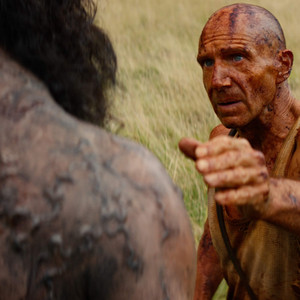
Now it's already got a gruesome sequel starring Ralph Fiennes.
I'm Stephen Thompson.
Joining me today on NPR's Pop Culture Happy Hour to talk about 28 years later The Bone Temple is Ronald Young Jr.
He's the host of the film and television review podcast Leaving the Theater.
Hey, Ronald.
Hello, Steven.
Also with us is Sam Yellow Horse Kessler, a producer for NPR's Planet Money.
Hey, Sam.
I'm sorry.
What did you say that name once again?
That didn't sound quite right.
I think you meant Jimmy.
I think is what you meant.
I'm like, is Sam doing a bit?
Sam's doing a bit.
It's Jimmy.
Hey, Jimmy.
It's Jimmy.
Of course it is.
So in the original 28 Days Later movie from 2002, a horrifying plague descends upon Great Britain.
It's called the Rage Virus, and it instantly transforms the infected into bloody zombie monsters.
Danny Boyle directed the film, which was followed by a sequel called 28 Weeks Later.
That came out in 2007, but a long-delayed follow-up film called 28 Years Later, dropped last year and, as its title suggests, it's set in a world where survivors have a lot of experience keeping the infected at bay.
At the end of that film, a boy named Spike, played by Alfie Williams, ventures out on his own into the dangerous mainland, only to be rescued from the infected by a group of vigilantes.
We meet their creepy leader, a fellow by the name of Jimmy Crystal, who's played by Jack O'Connell.
28 years later, The Bone Temple is set in the immediate aftermath of the first film.
We soon learn that Jimmy's group presents a threat and a horror that's more terrifying than the infected themselves.
In fact, they're a murderous cult, and Spike soon finds himself in way over his head.
But another story unfolds at the same time as Dr Kelson, from the previous film he's played by Ralph Fiennes, makes an unlikely friend in his medical refuge-slash-memorial site-slash-bone temple.
28 Years Later at the Bone Temple, was directed by Nia DaCosta, who also directed Candyman and the Marvels, and it was written by Alex Garland, who wrote the first and most recent film in the series.
It's in theaters now.
Sam, I'm going to start with you.
What did you think of 28 Years Later, colon?
The Bone Temple.
The Bone Temple.
Yeah, I really liked The Bone Temple.
I thought it was like a really strong sequel in the sense that like the truest sense of a sequel, as like this kind of bridge between two different movies and maybe not so much of a great standalone movie per se.
But you know, like I found the plot very simple and it kind of was incredibly easy to follow and it was tight, but there just was not a ton of like character development in it.
But I did find it had like this kind of nice cross pollinations between all these different directors and producers styles.
You know, like Nia DaCosta.
I just saw Hedda and I didn't love, love Hedda.
But I was really pleased to see DaCosta getting back to some of these kind of like Candyman creepy camera flourishes that really work very well for me in that movie.
And then some, like you know, little bits and borrowing here and there of like Danny Boyle, frenetic horror and some Alex Garland cynicism sprinkled throughout.
So overall, I liked it, but it did not leave me with a lot to think about after the fact.
I think it's interesting that you kind of brought up the notion of this film as any kind of standalone film, because one of my first takeaways from this film was that if I hadn't just watched 28 Years Later, I would have been so confused.
Oh, really?
I think it's really necessary to have seen 28 Years Later, before this one, because it refers to that movie so much.
All right, Ronald Young Jr., what did you think?
Overall, I think it was fine.
I think it was not a terrible movie by any means, but I am going to say some things that I did not like about it more than I will say the positive things about it.
So let me just start with two positive things.
I really enjoyed Ray Fine's acting and I found myself thinking about this story and this world a lot as I left.
Which means that it did have an impact on me, and I'm still thinking about it.
However, there are some scenes early in the film which feel like gratuitous torture, which is the only way I feel like I can describe it.
That kind of took me out of the film and made me wonder why it was happening.
I think there is some version of payoff or some reasoning why later in the film, but Which was, like you know, good enough for me, but it left enough of an impact on me and left a bad enough taste in my mouth that it started to impact what I felt about the film as a whole.
A much smaller quibble I have was I do not think that this film should have been called The Bone Temple.
I have a real reason.
There certainly was a bone temple, I would say.
There was a bone temple.
There is truth in advertising.
There was.
There was a bone temple.
However, in the first 28 years later, when they came out last year, they did a lot more explaining of what the bone temple was and the purpose of it.
And there's more interaction with the actual bone temple itself.
Whereas in this film, stuff happens at the bone temple.
And if you don't know that, from the first one you kind of get a couple of lines but no real explanation as to what the bone temple is.
So there's a couple of quibbles I have with it.
But overall, I think it was fine.
You think it should have been called 28 Years Later, colon, The Creepy Jimmy Cult.
Honestly, 28 Years Later, Jimmy and Them 28 Years Later Too Jimmy, Too Furious, anything something with the Jimmys.
Or even yeah, 28 Years Later, The Bone Doctor.
Something like that.
Something that references, like, Ralph Fiennes.
The Bone Doctor.
Yeah.
I had kind of the opposite thought, which was that, like it's the glass onion and knives out mystery type problem of they need the branding but they should just The Bone Temple colon.
A 28 years later story.
Yeah, I will say I really agree with Ronald about the gratuitous nature of the first roughly third of this story.
I think there is a huge, huge difference between zombie gore and torture gore.
And one of the interesting things about this franchise as a way of treating zombies is these zombies and they're called the infected.
They're not really called zombies in these movies.
They move quickly, they're frenetic.
They're very differently scary from how people usually think about zombies.
You usually think about zombies and you think about like brains and these are like there's literally a at one point.
They chase you, they're fast, like a zombie jumps up with the arms up and everything.
Part of the effect of that as a horror movie fan is it's more jump scare horror than it is evisceration horror, even though there are eviscerations.
And when you pivot away from jump scare blood fountains to humans torturing other humans, that is a very different kind of horror.
And I think they really linger on the torture in the first portion of that film.
And that makes the pivot to this kind of gentler story, this kind of sweeter subplot.
I always called it like Shakespearean, in the way that it gets into like theater and like different groups kind of interacting and having their own kind of little backside motives.
I was like, oh, this is reading like a play at this point.
Right.
And it creates this really tonally jarring effect where, like I want to hang out at the Bone Temple with Dr Kelson and listen to Duran Duran records.
And there is this sweeter and also more comedic effect storyline that for me really clanks against the kind of gruesome torture of the first third of this film.
Now, as Ronald says, there is a payoff to that.
It is going somewhere with it, but I would have cut the torture stuff down by two thirds and to get to kind of this, I think, more interesting story about Dr Kelson and the lore of the franchise.
I felt like a lot of the stuff with the cult is kind of pulling us away from this larger story of the infected and what to do about the infected.
So for me, once it kind of dispenses with that side of the story and starts giving us the payoff, starts spending time at the Bone Temple and kind of tells that story, I found this film much more satisfying, in part because I love this Ralph Fiennes performance, which is so committed and so big and kind of gets bigger and more theatrical and as it goes along.
Like you, Ronald, I still found myself thinking about this movie days later, but it was mostly because of that stuff and not necessarily because of this kind of clockwork orange punk torture guys.
Yeah, I agree.
I think the movie still ends where it needs to end, but there's a subplot of mistaken identity.
I will say that really crosses over the Jimmys with the Doctor.
I saw this movie with producer Mike Katziff, and I talked to him quite a bit about this afterwards.
Whereas I struggled with the idea of the Jimmys and the belief that they actually believed the things they were saying.
I know there was two levels of it, where the acolytes believed one thing, but the main Jimmy.
I wondered if he actually believed the thing.
And I felt like the movie wasn't certain enough.
Until maybe, one point where it's like, oh well, maybe he does believe this thing, or is he hallucinating?
Whatever.
It just felt like in that point because it wasn't clear I would have preferred it to be a little sharper how that crossover happens, instead of it being something that for me felt like a sitcom hijink in terms of that crossover.
Not saying that it wasn't well executed because I really enjoyed that part of the movie.
However, but in terms of it actually being a device to bring them together, I was like well, this is at least a little bit flimsy.
But if they were going to end up there anyway, there was probably a different way that you could have got the Jimmys to the Bone Temple.
Yeah, I want to push back a little bit on the kind of sense that like the torture wasn't really working or was kind of like incongruent with what was happening.
I think part of what the maybe the issue is is that it comes so soon in the movie and it's a little bit lopsided in the way that that like like, the audience isn't really warmed up for.
And like I'm definitely like see what you mean of like zombie violence versus torture violence is so different.
And I was very shocked by that scene and was not really totally prepared for it.
But I think what has worked a lot in the 28 Days Later franchise for me is that there's always been this kind of core of like the zombies.
I mean, this is classic to like the zombie genre.
This idea that the zombies aren't necessarily the greatest horror that's out there, that humans are sometimes more horrific.
But what happens in the first, 28 Days Later and 28 Weeks Later movies is that it comes at the very end.
And it's kind of like this core that gets unwrapped over time.
In this one it is so upfront because you have to begin with the Jimmys and you have to show how awful and evil they are that it kind of creates this lopsided thing where yeah, once that happens and you don't really unpack where that comes from.
For the head Jimmy, the main Jimmy, it's lacking a character depth.
And so I feel like that's probably what you guys are bumping up against.
Is that there just wasn't enough time spent on what makes Jimmy tick?
I don't know if that would have made it better for me to be honest, because I probably would then be complaining about how it slowed down or how it was a slog, or I don't care about his backstory.
You know what I mean?
If anything, I think they probably could have seeded it more 28 years later.
Yeah.
And it is seeded a little bit, you know, so I don't know how much is exactly the right amount.
I think some of my issues with this film are structural from a standpoint of this is the second film in a planned trilogy.
A third 28 years later film has been greenlit.
28 years later, part one. came out last year.
This is kind of part two.
And anytime you are telling a story that is the second part of a trilogy, you have to find a way to get past the.
I am just trying to get you from point A to point C.
You are naturally going to have a story that in some ways is just like trying to situate characters in a certain way.
You're not really completing a story.
And there are characters whose story is completed in this film.
But I'm not necessarily sure it can be 100 satisfying because you're really trying to move one set of characters from one movie to another.
I think I mostly agree with that.
What I think might also be an issue here is that 28 years later and 28 years later, the bone temple were filmed back to back.
So.
I think that is going to produce a different type of storytelling.
Actually, maybe I am agreeing with you Stephen because, especially if it's the second movie and you're saying we're going to end this part of the story here but there's a third one coming
And I remember at that point saying, hmm, this is kind of a new branch of this story.
I would almost prefer that you shot three films concurrently that close out this story.
Lord of the Rings style, yeah.
Exactly.
And then introduce something new in the future.
That then continues the main plot, if you will, if that's not what you were doing here,
But that being said, I like this part of the 28th. franchise later universe.
But you're right.
If we go part one and part two and then part three is greenlit and then shot later, there is going to be some separation between these films.
And then it makes me wonder, what is your goal in the third?
What story are we ending, concluding or continuing?
It makes this movie feel like a little bit more of a detour.
And as somebody who is like, I want to watch Dr. Kelson listen to Duran Duran records.
I don't necessarily want this other story.
That's naturally going to create some uneven anticipation for the third movie.
It's reminding me a lot of like this kind of unpleasant task of being the director to take up a sequel that Rian Johnson had with, like the Star Wars, where it's like you want to put your own stamp on it but you also have kind of these competing demands of getting from the point A to the point C and incorporating a lot of different styles and, you know, a kind of question of how much to please a fan base that expects a certain performance product.
And you have to kind of compile all of those, while also making it clear that you are doing something of your own voice and your own style.
To me, it largely worked then didn't work.
But it sounds like for you guys, it largely didn't work, then it worked maybe.
There is a payoff.
There is a scene in this film that is so enormously enjoyable and satisfying that it is building to.
If you can stomach the torture porn and you have seen 28 Years Later from last year, I recommend this film forever.
The payoff that exists late in this film, which I'm not going to spoil, which I found enormously enjoyable, extremely funny great, vivacious filmmaking.
This film does succeed in what it is building to.
I'll just say that.
I think you're right.
I think it ends well.
And I think, regardless of every negative thing I've said about this, I did like this movie, but I also really liked 28 years later.
So it was a higher bar for me for it to clear.
But if you liked 28 years later, you're probably going to like mostly 28 years later the bone temple maybe.
I don't know.
I think this movie is going to work really well in the three DVD box set that it eventually gets released upon.
I think it'll work as a great binge watch one Saturday morning.
That's going to be a bleak day.
I was going to say, you're just going to spend a day watching people get torn asunder.
What better way to spend a weekend?
All right.
Well, we want to know what you think about 28 years later, colon, The Bone Temple.
Find us on Facebook at facebook.com. slash pchh and on letterboxd at letterboxd.com slash nprpopculture.
We will leave a link in our episode description.
Up next, what is making us happy this week?
This is Tanya Mosley, co-host of Fresh Air.
You'll see your favorite actors, directors, and comedians on late-night TV shows or YouTube.
But what you get with Fresh Air is a deep dive.
Spend some quality time with people like Billie Eilish Questlove, Ariana Grande, Stephen Colbert and so many more.
We ask questions you won't hear asked anywhere else.
Listen to the Fresh Air podcast from NPR and WHYY.
NPR's podcast Trump's Terms is your source for same-day updates on big news about the Trump administration.
Short, focused episodes, one topic at a time, about five minutes or so.
We carry out reporting from across all of NPR's coverage, so you are always getting the biggest, most urgent stories.
Listen to Trump's Terms on the NPR app or wherever you get your podcasts.
Now it's time for our favorite segment of this week and every week.
What's making us happy this week?
Sam, Yellow Horse, Kessler, what is making you happy this week, buddy?
What is making me happy is Industry Season 4.
It is out now, at least the first episode.
And finally, we are getting back. to appointment viewing, you know, every week on my calendar.
There it is.
Industry season four.
So if you haven't watched it before, Industry is about a group of young bankers, financiers in a British bank a fictional British bank who are trying to climb the ropes and achieve financial success in this really, really competitive field.
When it started it focused on kind of new actors and really just establishing a vibe of this high-finance world.
But since then, it has evolved a lot where they get a lot of kind of prestige-y actors involved.
And, you know, the drama has just been up since then.
And season four feels like a real culmination of that.
They have a ton of new characters entering.
So, you know, besides like fan favorites like Ken Leung as Eric Tao and Myhala as Harper Stern, they have Kiernan Shipka.
Charlie Heaton plays a journalist, which I was very thrilled to see.
And it's just, I'm so excited for this season.
It started off really, really strong.
And I think it's one of those shows that I hate when people say oh, you just got to get through like the first season and it'll be good.
But really, it is appropriate to the world of industry.
It is an investment that is finally seeing returns.
Nice.
All right.
Thank you, Sam.
Yellow Horse Kessler, Ronald Young Jr.
What's making you happy this week, friend?
Well, it was industry, but I'm going to...
I'm going to now pivot to the other thing.
I'm going to pivot at the last minute from what I was going to talk about.
What I was going to talk about was an impassioned defensive industry.
But now I will say that it is the Buffalo Bills.
And I know this is sports, which is more pop culture adjacent.
I am not a Buffalo Bills fan.
However, I really like Buffalo Bills lore.
And I like Josh Allen, their quarterback.
The reason why I'm talking about lore is because I'm a fan of an NFC East team called the Dallas Cowboys.
And I know a bunch of people are throwing tomatoes and getting mad.
Yeah, okay, Steven.
Yeah, whatever.
Oh, Ronald, I don't know.
I'm going into a tunnel.
Here we go.
Yeah, of course.
This is why I don't ever tell anyone because I know this is the reaction that I get from people.
But there we go.
I'm a Cowboys fan.
But I'm also an NFC East fan more writ large.
And the four times that Buffalo made it to the Super Bowl in the 90s, they were bested by four NFC East teams.
In this order the New York Giants.
At that time, the Washington Commanders by their other name and the Dallas Cowboys twice.
That was the four falls of Buffalo.
However, this year the Buffalo Bills have won their first playoff game and the Philadelphia Eagles have lost.
Oh, thereby clearing the path for the Buffalo Bills to win their first Super Bowl.
I believe it's going to happen.
It's making me happy to think about, and I cannot wait.
Please clip this and remind us, when the Buffalo Bills win the Super Bowl, that Ronald Young Jr said it first.
That's what's making me happy this week.
My fear is that you've cursed them.
As a Green Bay Packers fan who is just wishing for anything but the Chicago Bears.
I am a fan-free agent.
Yes.
So I'll go ahead and co-sign that.
Yeah, come on over to Bill's Nation with me.
And our big athletic boy, Josh Allen.
Yeah.
All right.
That is the Buffalo Bills.
That's what's making Ronald Young Jr. happy.
Nothing about football is making me happy.
All right.
Last year, on the advice of friend of the show, Josh Gondelman, I went on Blue Sky and started following a writer named Rax King.
I was an instant fan.
She is funny.
She's bawdy.
She's full of hilarious lore.
Super smart.
Such a great writer.
She put out her second book of essays last year.
I finally picked it up last week and cracked it open.
And lo and behold, shocker, it is funny.
It's bawdy.
It's super smart.
It's full of hilarious lore.
She is such a great writer.
The book is called Sloppy or Doing It All Wrong.
It's a book of essays about... being a lovable screw up.
And if you've ever felt like a lovable screw up or an unlovable screw up, or if you've ever known a screw up or seen things in your own brain that keep trying to direct you to screw things up, you will find something to love in this book.
Rax King has such an incredible gift for breezy, funny conversational language.
Funny turns of phrase pop up in this book that are going to stick with you.
She manages to write about substance abuse and shoplifting and bad decisions in ways that aren't needlessly self-glorifying, but you never stop rooting for her.
I highly recommend picking up the book.
I recommend following her on social media.
I recommend reading her writing wherever you can find it.
I think we should start a petition here and now to cast her on the next season of The Traitors.
I recommend Rex King and her book, which is called Sloppy or Doing It All Wrong.
That is what is making me happy this week.
If you want links for what we recommended, plus some more recommendations, sign up for our newsletter at nprorg slash pop culture newsletter.
That brings us to the end of our show.
Ronald Young Jr., Sam Yellow Horse Kessler, thanks so much for being here.
Thanks for having me.
Thank you so much, Stephen.
This episode was produced by Carly Rubin, Kayla Lattimore, Mike Katziff and edited by our showrunner, Jessica Reedy.
Hello, Come In provides our theme music.
Thanks for listening to Pop Culture Happy Hour from NPR.
I'm Stephen Thompson, and we will see you all next week.