Hello, welcome to Roundtable, where we serve up piping hot debates on the issues that sizzle in China and beyond.
I'm Yuhong Lin. Ever wonder what makes an idea legally yours?
Or how patents and copyrights fill billion -dollar industries?
That is the magic of intellectual property, and this week, China is in the spotlight as the AIPPI World Congress kicks off in Hangzhou for the first time in China.
With over 4 million valid invention patents and a reputation for rapid innovation, China's IP story is nothing short of groundbreaking.
Today, let's explore the Congress, take a look at China's achievements, and discuss how protecting great ideas is essential for building the future.
For this episode, I'm joined by Yushun and Steve Hatherley.
Now grab your virtual compass and follow us to the heart of the discussion.
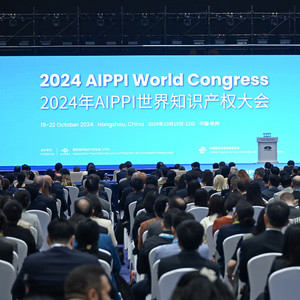
The 2024 World Congress of the International Association for the Protection of Intellectual Property kicks off in Hangzhou, Zhejiang Province on October 19th to 22nd.
By the end of 2023, China became the first country in the world with more than 4 million valid invention patents.
The Global Innovation Index 2024 also reveals that China is one of the economies with the fastest improvement in the Global Innovation Index in the past decade.
We are going to definitely talk about the achievements that China has made in the innovation capability development path, but in the meantime, I feel like, at least for my lifetime, when I was a little girl, when I was first introduced to the world of internet, I get to download music, download novels
without paying a cent to the author, which is not right currently.
But as long as, I mean, we think about the previous times and we take a look at the achievements we have already achieved these days.
And it's great to see AIPPI happening in China.
What exactly is this year's AIPPI talking about?
So, yeah, first of all, the theme of this year's Congress is the protection and innovative development of intellectual property rights.
And it is hosted by the China Council for the Promotion of International Trade and the AIPPI.
The event attracts 2 ,259 delegates from 92 countries and regions.
And also this is the first time that China hosts the AIPPI World Congress since the association was formed 127 years ago.
So this is, I think, a big thing, right?
You know, this conference marks a significant milestone in some way for China's intellectual property efforts, reflecting the international community's high regard for China's IP production work and recognition of China's key role in the global IP landscape.
Yeah, the AIPPI, if you're not familiar with it, it's a long title.
We heard it already, but we'll give it to you again because it is so long, the International Association for the Protection of Intellectual Property.
And it's a nonprofit association dedicated to the development and improvement of laws, for the protection of intellectual property, politically neutral.
There's no political interests with this organization whatsoever.
It's a nonprofit. It's out of Switzerland, and it has over 8 ,000 members worldwide from 110 different countries.
This is a big, big organization.
And this is the one time of year, the one moment in the year, when members from all around the world, they come together and they discuss hot topics in intellectual property.
And yeah, you're right.
You should. It's a big deal because it's the first time it's happened in China.
Yes. And intellectual property is something that we're super familiar with these days.
We know that whenever you post a picture on your WeChat account, if someone steals it, quote unquote steals it, they will definitely even let you know, say, can I, air quotes, steal your picture and put it in my WeChat circle if they're your friends?
That has never happened to me before.
Never? That says something about your skills.
The quality of your pictures, not worth borrowing or trying to purchase.
Yes. So it's something that we're already very familiar with.
And whenever it's a relatively official setting, if we want to use the picture to promote an event, use it to maybe even to manufacture a short video of, for example, my two -year -old baby.
And I want to use the pictures I took and plus a music, background music, to make the video a bit a bit more, I would definitely think about copyright issue, even though I'm not earning or gaining any money, any profit from it.
But that is already the common sense.
We know the idea of intellectual property.
But I feel like by around 1960s, 1970s, it was not that common a concept that everyone knows, everyone understands and everyone honors.
But that situation has been gradually changed.
Yeah. So actually back in like 1960s, most Chinese people were unaware of the importance or even the existence of intellectual property.
That's probably fair to say, right?
Even the existence of it.
Yeah. So but through, you know, all of these recommendation letters, CyTek researchers could gain access to each other's inventions.
That is the situation back then.
But right now we can totally see that people are more and more aware of the importance of protecting people's intellectual property.
So the central government has also put IP protection high on its agenda, carrying out a series of measures to enhance efficiency and combat improper behavior.
And by the end of 2023, China became the first country in the world with more than four million valid invention patents, as you said.
Which is a really impressive number, isn't it?
Yeah, this goes back to the 1980s.
You said in the 1960s, people didn't really know what it was.
They didn't really know that it existed.
But since the 80s, China's implemented a series of laws relating to the topic including trademark laws and patent laws and copyright laws, everything related.
Right. For example, April 1st in 1985, that marked the enactment of China's patent law.
These laws, they've undergone constant revisions over the years and over the decades based on different practical experiences.
And the reason they've undergone changes is to ensure stronger legislative protection.
So, yeah, they introduced the mid 1980s around that time and made some changes throughout the years.
And as the years and decades have passed, China has really filed for a lot of patents.
Yes. And also, you know, you said the example of people downloaded like MP3 back then.
I think that is not even can be traced back to like 1960s.
It's probably just 20 years ago.
So I think I can think of some of the examples of, you know, some of the brands, they will use some famous cartoon characters in their advertisements or something like that.
But maybe like 10 years ago, 15 years ago, that's not proved as intellectual property protected.
I mean, they're not acquiring any, you know, improvement from these companies.
They're just using it.
Yes. But now we can see a lot of these brands, they are collaborating actually with these brands and all of these audience or consumers, they can buy these products with the copyrighted characters on their products.
So this is, I think, the improvement that we can actually see from the products that we can get in our everyday life.
Yes. And as for the development path of China protecting intellectual property, we are to see that firstly, we allow people to claim rights over their work.
And gradually, there are those laws that Steve has just listed protecting exactly the copyright you have, the patent right you have, the as the author, what kind of rights you have, you can claim the rights of the work so that you can give people the authorization to use it or not, and you can get profit
from it and gradually, little by little, we have different articles specifically telling people what to do in regard with these rights.
And that is progress.
And it's still happening in a lot of different areas.
For us, we work in media sector, we constantly deal with the situation of music of different elements in the video making and audio making, whether or not the font of certain of different fonts can be used and certain sound effects can be used.
I hosted a show previously a few years ago, and we had come up with the design to put on the Internet, to put on YouTube for our live stream, just kind of a logo, if you will, for the show.
It had my picture in there.
And then the designer, I didn't design it, but the designer for the company I worked for used a little clock or something like that and just put it in there.
It's very, very small, got an email within like three days cease and desist the use of that clock.
I forget if it was a clock, but we'll call it a clock.
Stop using that clock in that particular.
That's mine. I designed that.
I drew it. And that one belongs to me.
You have to pay for that if you want to use it.
I was laughing now because I think it's hilarious.
It's not worth discussing, but because I feel like these are the very delicate nuance that we need to pay attention to because we're not only dealing with the author of certain work, we're only we're also working with third party designers and whether or not they have the right to use the element that they
are using would also affect whether or not we are breaching the law.
So yes, the situation is complicated, but to a good end.
That is to to protect the intellectual property of each and every individual.
Now your ideas actually matter no matter if it's an idea about how to design a experiment that may in the future lead to scientific groundbreaking results or how to write a certain piece of melody that will make people burst into tears or having a smile on their faces.
So these are all very important property that human being can actually create.
Yeah. And there's so many different sectors that are represented as well.
Robot market is huge right now.
So there's a lot of talk about that.
EVs, electric vehicles, there's a lot of talk about those.
When we talk about intellectual property, it's a very, very, very broad umbrella topic.
And there are a number of sectors that fall within that.
Actually, currently, according to the Global Innovation Index, 2024, China is still the only middle income economy within the GII top 30.
And it moves up the ranking to edge closer to top 10, reaching 11 position.
And according to a report by Beijing Youth Daily, China is one of the economies with the fastest growth in innovation in the past 10 years.
We see the country doing really making an effort in protecting intellectual properties.
And that leads to more and more people enterprises making sure that they are creative results, their work, getting patents and gain profits.
And again, in return, incite them or giving them the stimulus to further do research in the world so that they can create more intellectual properties.
And generative AI is one of the big sectors these days.
And I saw a report from CNBC talking about something that they were reporting on from the United Nations.
China is dominating the global race in generative artificial intelligence patents, filing more than 38 ,000 patents between the years 2014 and 2023.
And if that number doesn't really mean anything to you, I'll put it in a context, that six times more patents filed than US based inventors, according to the UN World Intellectual Property.
So China had over 38 ,000.
The US had over 6 ,000.
Korea had a little over 4 ,000.
Japan almost 3 ,500 and India almost 1 ,400.
But just think about that.
38 ,000 versus 6 ,000.
It's almost there. There are constantly generative generative AI patents being filed.
Yes. And also we talked about, you know, there are so many specific sectors that is treating intellectual properties very importantly.
So geographically, the industrial robot market was dominated by five countries, China, Japan, the United States, the Republic of Korea and Germany.
Together, these five countries accounted for 74 percent of the operational stock of robots in 2022.
And also, as you mentioned, the area of electric electric vehicles.
It accounted for 18 percent of global car sales in 2022.
And the market was dominated by China, Europe and the United States, which together constituted around 95 percent of total EV sales.
And in these areas, people are paying more attention on the intellectual property protection.
And it also underscores China's emphasis on intellectual property protection and its achievements in these fields.
You know, when I was doing the research, I was trying to find out some good examples of IP protection.
And I have to say, they're quite boring in these cases.
Seriously. You when you see the real cases, you figure that, OK, so if a judge can be the one who's deciding whether or not this person gets the right to claiming can claim the rights for the work or for a certain technology or a prototype to start with, the judge really needs to understand the nitty
gritty of the technology and whether or not this one is groundbreaking to the level that it deserves a certain pattern, whether or not more and more enterprises and companies would be using this prototype to in their production.
And that also is a is a factor to consider.
And one of the examples is the good baby.
Yes. One example that before you get into that kind of real good baby.
Yes, I have one example that is quite interesting, I think.
But this is a funny one.
That is, a lot of people online will say if you are like lost in an isolated island, draw a Mickey Mouse on the sand and then Disney will sue you.
You will get found immediately.
So I think that is a good example of people having the awareness of protecting the intellectual property.
It is a little yes.
And in the meantime, the reason that copyright is getting more and more important is because it's actually very significant in doing business.
I was about to talk about the good baby example.
The good baby is actually a Chinese company.
And in 2014, it produced a kind of stroller, a baby stroller that is foldable.
It's quite lightweighted.
It's only four point six kilograms and can be fold together and put it in a small space.
And it's calling itself pocket stroller.
Guess what, this pocket stroller currently is actually the core patents for this China design stroller have been authorized in over 30 countries.
In these 30 countries, those companies using this prototype would have to pay a baby stroller, well, a good baby.
And it's not. I mean, this is the move for the company to actually make the transformation from only manufacturing different baby strollers to the industry leader and to the one who has the ability to put in a lot of research and development in this area.
So it did actually transform to the industry, which shows us how important it is to protect copyrights.
But one of the hot topics and hot theme of this year's IPPI is artificial intelligence generated content.
I was going to ask you about that stroller.
Was it invented by human beings?
Yeah, you would say yes, I would say.
And that is generally been the case in history with all different types of inventions from the pen to the airplane invented by human beings.
But now one of the big issues, like you mentioned, Hongwin is what do we do when A .I.
creates something? Can A .I.
be named an inventor on patent applications?
And this is a huge legal debate around the world right now.
And it's made its way into the discussion here at A .I.
PPI World Congress as well.
And the most notable case in this regard involving A .I.
involving an A .I. system, have you heard?
Probably not. I had never heard of it before.
It's called DABUS or D A B U S, and it was created by Dr.
Dr. Steven Thaler. So DABUS stands for Device for the Autonomous Bootstrapping of Unified Sentience.
And if that doesn't mean anything to you, don't worry.
It's just an A .I. system.
It was created by Dr.
Thaler, who is a pioneer in the field.
And the system simulates human brainstorming and it comes up with new inventions.
Yeah, really impressive, right?
It's a particular type of A .I.
These types of A .I.
are often called creativity machines because they're capable of independent and complex functioning.
So here's what happened.
This DABUS A .I. tool invented interlocking food containers that are easy for robots to pick up and easy for robots to stack.
The patent application listing DABUS listed DABUS as the inventor.
And it was filed in patent offices around the world, including America and Europe and Australia and South Africa.
So in South Africa, in 2021, the story goes back to 2021, South Africa became the first country to grant a patent listing to DABUS as an A .I.
as the inventor. The patent office in the country, they accepted the application and they said, the A .I., yup, you invented it.
You meaning A .I., A .I., you invented it and they issued the patent to Thaler, the owner of the system.
Now, shortly after that, Australia said, OK, we are going to do the same thing.
But later, the decision was overturned by the federal court.
So the initial ruling in Australia said that A .I.
could be recognized as an inventor.
They later overturned it and it all depends on the language, depending on which country.
It's not this is not a universal standard because this is so brand new.
Right. Can I receive a patent or not?
But in the United States, it has to be from a human being.
In Europe, it has to be from a human being.
In China, the CNIPA also ruled that inventors must be natural persons, meaning a human being.
And therefore, A .I.
cannot receive a legal patent.
Yeah. So that is one part of the story.
Another part is if you are a human being and you are using A .I.
or having A .I. as an assistant to create your own work is your work, your work.
One of the most important and famous case would go to actually Jason Allen.
He filed. Well, last fall, the copyright office refused to register Allen's work, the very actually award winning theater diapro spectral, claiming that almost the entire work was A .I.
generated and insisting that copyright registration requires more human authorship than simply plugging a prompt into mid journey in America.
They call it significant human contribution.
So the language is different in the States, but it's exactly the same thing.
A human being can't simply type, do this, and then it's A .I.
I do. Yeah. If that's not a significant contribution.
And one of the challenges now is what's the actual definition of the work, significant human contribution?
At the meantime, you see that they're saying Alan has no control over how the artificial intelligence tool analyzed, interpreted or respond to these prompts.
And that's the reason why this human, significant human input is not there in the work, according to this case specifically in the United States.
Funny enough, when things come here to China, actually, our authority would recognize these kind of work as the work of this actual human being, because in a separate case here in China, actually one of the first case regarding artificial intelligence generated work here in Beijing.
The thing is, the difference between these two cases is that our author, in our case, in China's case, actually give all of his prompts as well as the large language model or the large model to the court.
So the court would examine and identify whether or not these prompts are with enough authorship.
And the case I just talked about, the Alan, yes, the Jason Allen case, he refused to give all of his over 600 prompts to the court for the court to examine.
So I guess that would be one of the differences here.
And another one is I feel like when, again, different countries, different languages would have different understandings and different decisions in regard with this.
And that is why we are still having this very fierce talk and discussion over whether or not or how to exactly examine and how to identify the re -intellectual property situation or status of different work.
Yeah, they don't have a clear definition that they said in the United States simply giving an AI tool a problem to solve that would not signify a significant human contribution.
But that's sorry, just finish my thought very quickly.
But if you train an AI to solve a problem in a particular way, then that could be considered significant human contribution.
But even that definition leaves this whole giant gray area.
But does that mean when you ask an AI to create, let's say, an art piece, then the creator of this AI should be the author and not you?
Well, the creator of the AI model is definitely important.
But in the meantime, the database these AI model can get access to, which are basically the content or the raw material or the data the AI is using to create the things, is also quite important, which is why the copyright of certain artists is definitely protected.
And this author can decide whether or not he or she would give the AI model the authorization of using his or her work that is definitely protected in at least the China's law system.
So yeah, this is all very debatable and leave us a lot of room to discuss.
But we're very excited to see what happens next.