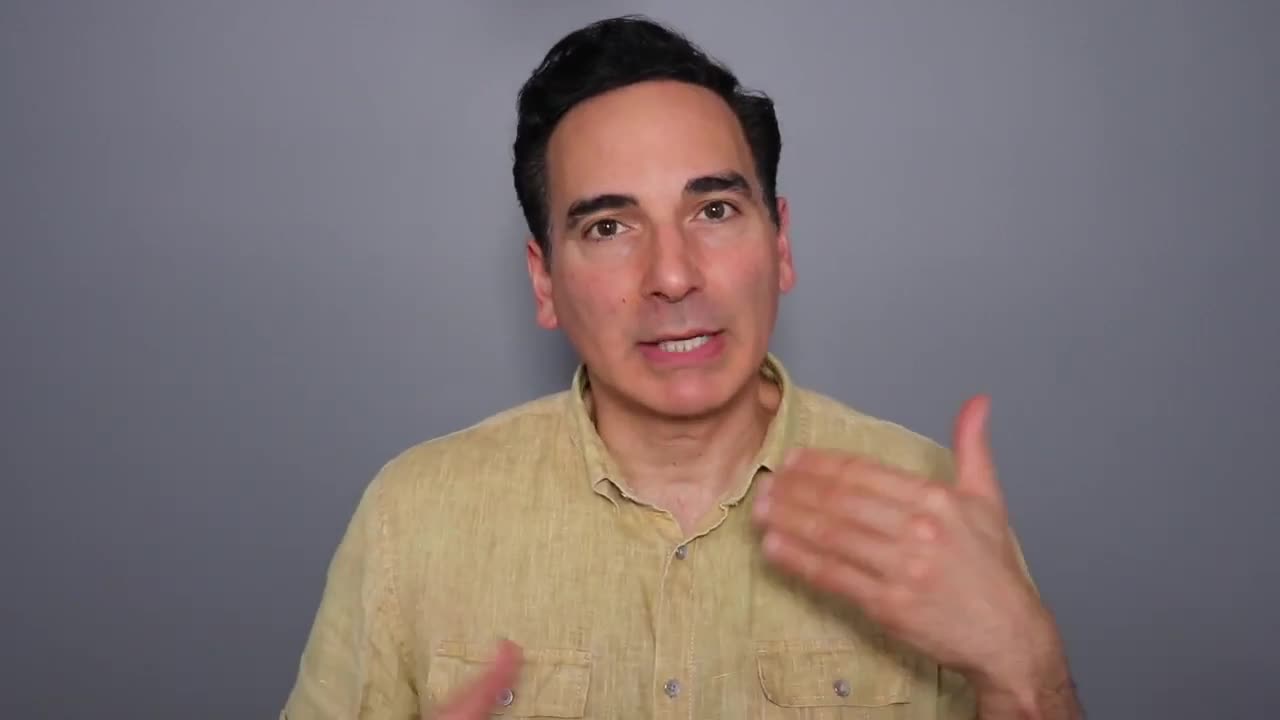
Hey there, voice coach Gabriel Barofato here from GB Voice Academy.
And on this video, I want to provide you with a 10-minute vocal warm-up that's going to help you with your American English pronunciation.
Now this is something I recommend you do every morning before you go to work, before you go to that big presentation or meeting or Zoom call where you need to be at your best.
I always say this in all my videos, this is a very physical endeavor.
This is like a workout routine.
We gotta build those muscles to create that American English sound.
So I'm gonna give you specific exercises that really work and make a difference.
And I want this to be part of your routine, along with the other videos I give you here to work on those American sounds, to really give you that edge, and so you really stand out and you sound crisp, articulate and confident.
If you're new to the channel, please subscribe to my YouTube channel and hit the notification bell, because I provide these videos on an ongoing basis for my clients so they could get closer and closer to mastering the American accent.
I want buttermilk.
I want buttermilk.
So the first thing I want to do is warm up the physical aspects of the muscles in order to create these sounds.
What I like doing is I like stretching my mouth.
So give me a big ow, wow.
So this is the movement.
Imagine going ow, wow, wow.
Yeah, feels good.
It feels nice, doesn't it?
It kind of warms my face up.
I feel the blood rushing in my muscles.
So one more time and really open that mouth up when you're going ow.
Now, do you notice?
In that exercise we heard the sound ow ow.
This is a very common sound that a lot of my clients miss.
For example, flower versus flower, Power versus bower.
See that?
Town versus dome.
Now versus no.
It should feel strange.
Your body should be going, what are you doing up there?
Are you okay?
Do you need medical attention?
But that's what we got to do.
We got to create that bright sound.
Ow.
Very good.
Good.
Now, in addition to that, why don't we do some lip trills or the rrr sound?
Not everybody can do rrr.
So if you can't go rrr, Try .
Okay?
So going up and down on these lip trills.
Let's do the first ready, nice.
The good thing about that exercise is that you have your soft palates have to be relaxed in order for that tongue to be loose enough to go.
Good, if you can't do that, let's do the lip trills.
Good, big breath again, Nice.
You should feel kind of like a tingling feeling here, like you want to itch it.
That's great.
We're having the airflow in all the crevices of our mask, and that's what we want.
So when we're hitting those American sounds, those bright sounds, the journey...
Through and in and out of those sounds will be easier because you warmed up.
Good, now moving on to what I call the Airstream workout.
These are the workouts that require Airstream, like the sound or the sound, or the sound or the or, or.
See now you see you need the diaphragm for that right, there's a lot of engagement and there's airflow coming out.
A lot of accents aren't used to doing that, aren't used to having the air flow through that.
They tend to get held back, like instead of they go or instead of they go.
Now to do that, we've got to work the diaphragm.
So, you know that area right here on the side between your ribcage and your hips, that mushy part?
Put your hands right in there like a girdle, like this.
Tuck it in there.
And then look at me when I engage my diaphragms.
Look at my arms.
Watch.
See how engaged that is?
This is the muscle that's going to help what I call the air stream sounds, right?
Which we're going to work right now.
But before we do that, let's engage that abdominal so we could warm that up to help us through this.
So just give me a nice...
That's where the power is coming from, down in my diaphragm, right?
Good.
Give me the vowels down here.
This diaphragm power is what singers use.
Ah!
Ah!
I'm engaged to the diaphragm.
That power comes from here and that's the same power that's gonna help with your air stream sounds.
So with that engagement of the diaphragm, let's go through some air stream sounds.
First one we have is the F, the F sound.
So really engaged, let's hear that.
Good.
What I like to use is and I'm sure you've seen this in my other videos I love using a piece of paper.
This really helps detect whether that airflow is strong enough.
Because if we're going, not working.
We gotta engage from the diaphragm.
See the difference?
F. So, let's go through the same vowels, R, A, E, O, U, but with the F in front of it.
So, for example, fa, fe, fi, fo.
Now, the paper should be full of spit.
I really need to see that.
Now, okay, yes, we're overdoing it here.
You're not gonna go out in the real world and say, fantastic, I'm still looking forward to this.
We don't do that.
But we overdo it here in the studio when we work out.
So then when you're out there, it'll equal out to be actually perfect.
It's like when you go to the gym and you do 20 push-ups.
In the real world, you don't use your abs like that.
But, you have a strong core available for you.
Same with this.
We're going to go 120% to reach that 100% when we're out in the real world.
Good.
Let's go to the next Airstream sound, which is the , right?
Same engagement.
So we don't need the paper at this point.
I think you have a strong idea of what that airflow should sound and feel like.
So here we go.
Excellent.
You should feel lightheaded because there's a lot of airflow happening that your body's just not used to doing.
So you're probably going, oh, what's going on?
That's totally normal.
So let's go through those same vowels with the S sound in front of them.
So sa, sa, si, The next Airstream sound is V. Again, diaphragm, here we go.
Through the five vowels.
V. V. V. V. V.
Excellent work.
Let's go to the next Airstream sound, which is the SH sound excellent.
And now we have the hard th sound, which is the sound words like those, this same thing, five hours that the, the.
Now, the last airstream sound is a soft th, which is the th sound.
Same as the hard, but without sound.
In words like think, thought.
Same thing.
Tha.
Tha.
Thee good.
So by the end of this airstream exercise you should feel like you've worked out.
You've done 20 crunchies.
Maybe a bit light-headed, that's totally fine.
That means it's all working in tandem to create these american sounds.
Your body's working with you versus against you.
Now the next vocal warm-up I want to do with you is what I call the air bombs.
These are the sounds that have a lot of pressure behind them.
For example, the B sound.
You see how there's sort of like an explosion?
We need that power behind it to create that sound versus Bah.
I want buttermilk, i want buttermilk.
See what i mean, how these exercises are going to help you be sound, more articulate, more forward, more confident.
In addition to the b sound, we have the m sound, which is another bomb sound.
You hear that pressure behind the actual sound.
And then, of course, there's the p.
See, there's pressure behind that versus but but.
But put please, please.
You see that, just that engagement and that air pop, see how it exudes more confidence in just that one delivery.
Can you please be so kind to tell me where Paul is?
Versus, can you please be so kind to tell me where Paul is?
Paul.
Paul.
Starting with a B sound.
And really build that pressure beforehand.
Baaah.
B. B. B. B. Good.
Feel that?
Good.
Now let's go to the M airbomb sound.
M. M. M. M.
Mo.
Moo.
Good, good.
And then we have the P sound.
Puh, puh, puh, puh.
Rev it up before you pop it.
Pa.
Peh.
Pee.
Puh.
Good.
Now the next exercise I want to work on is the tongue out exercises.
These are the American sounds that require the tongue to be more forward.
These are the because I have that tongue right at the back of the top of my teeth.
So if I imagine this is my jaw, this is my tongue.
This requires diaphragm power as well.
It's hard to create that sound without engagement.
Today.
Today.
I took my time.
I took my time.
It exudes so much confidence when we do it that way.
And again, it's kind of like we're spitting.
Now let's incorporate that into our five vowels, shall we?
Ta.
Te.
Ti.
To.
Excellent.
Remember, you want to overdo it here in the studio.
Let's go to the D sound again.
Tongue, forward, duh, duh, duh, duh.
Now, when I say forward, I don't mean like in between your teeth, but just duh, just like resting in the top part of your jaw.
Dah versus dah dah dah dah dah dah dah, dah dah.
Same thing with the five vowels, dah, and build that pressure, dah.
D. Do.
Do.
Excellent.
Everything you do, do it with confidence.
There's another element to your sound.
It creates such a vibrancy to your sound.
It's crisp and articulate, and that's what this workout is for.
The next tongue-forward sound, which is the, oh, not for this one.
You want your tongue... in between your teeth almost like versus I'll have a little bit of licorice.
I'll have a little bit of licorice.
Let me know what you think.
Let me know what you think.
So now let's incorporate that with the A, E, O, U sounds.
Good.
Every sound we do here.
Everything we've done here requires a diaphragm engagement.
This is the secret to creating that powerful sound.
Yes, we need to position things in our head, in our mouths, in our muscles, but it cannot be produced unless we give it from down here.
Let's do a quick cool down with a nice going from as high as you can to as low as you can.
Good.
That's really going to work on that range, because when Americans talk, they tend to talk with a lot of range.
When we talk with more engagement like this, it grabs the attention of the listener.
Versus always talking like this with a very limited range.
People fall asleep, not focus or pay attention.
Versus if we use our whole range.
Then it's as if we're being read a bedtime story.
Excellent work.
Add this to your daily routine and I'm telling you, it's really going to make a difference.
I'm excited to share with you my new online course Voice Training for a More Confident and Powerful Voice.
I left a link for it downstairs.
It's already got five-star reviews and it's a bestseller.
And I've incorporated these as well as other exercises to really give you that edge and getting you that much closer to mastering the American accent.