This message comes from Jackson.
Seek clarity in retirement planning at Jackson.com.
Jackson is short for Jackson Financial Inc.
Jackson National Life Insurance Company Lansing, Michigan and.
Jackson National Life Insurance Company of New York.
Purchase New York.
Zootopia back in 2016 grossed over a billion dollars worldwide, so it's no surprise that we now have Zootopia 2.
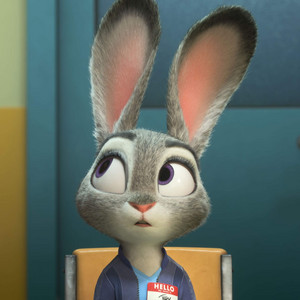
Our heroes Judy the Bunny and Nick the Fox are partners in the Zootopia Police Department now, and there's a new problem.
A snake has appeared in a reptile-free zone, and he brings to light a mystery from Zootopia's complicated past.
New voices like Kiwi Kwan and Andy Samberg add something new to what has already been a winning formula for Disney.
I'm Linda Holmes, and today we're talking about Zootopia 2 on Pop Culture Happy Hour from NPR.
This message comes from Dignity Memorial and Memphis Funeral Home, one of their nationwide providers.
Funeral director Mike Perry shares why he believes that attention to even the smallest details about a loved one is important to the families he serves.
They can't take their loved one back home with them, but they can take those details, those memories back home with them and be able to share them for the rest of their lives.
So that's why every detail is important.
Find a provider near you like Memphis Funeral Home at dignitymemorial.com.
Support for this podcast and the following message come from Strawberry.me.
If you could go back and talk to your younger self, would you tell yourself that you have a job that truly makes you happy?
Many people are stuck in jobs they've outgrown or never really wanted.
A career coach from Strawberry.me can help you move on to something you actually love.
Benefit from having a dedicated coach in your corner and get 50 off your first coaching session at strawberryme slash NPR.
Support for this podcast and the following message come from Lisa.
Lisa isn't just about sleep.
It's about impact.
They donate thousands of mattresses each year to those in need, while also partnering with organizations like Clean Hub to help remove harmful plastic waste from oceans.
Visit Lisa.com for 25% off mattresses, plus get an extra $50 off with promo code NPR.
That's L-E-E-S-A dot com, promo code NPR.
This message comes from Carvana.
The Carvana Value Tracker shows you your car's worth.
Check it anytime, track changes, and sell when the timing feels right.
Use Carvana Value Tracker to track your car's value today.
Joining me today is one of the hosts of NPR's Code Switch podcast, Gene Demby.
Hello, Gene.
What's good with you, friend?
How are you?
I am so happy to see you.
Also with us is Regina Barber.
She's a host and reporter for NPR's science podcast, Shortwave.
Hey, Regina.
Hey, I'm so excited.
I'm so excited to see you.
And rounding out the panel is the former host of Slate's internet culture podcast, ICYMI.
And more importantly, in my heart, let's admit, Regina.
Former Pop Culture Happy Hour producer Candace Lim.
Welcome back, Candace.
Hello.
Hello.
So, at the end of Zootopia, Judy Hopps, a bunny voiced by Jennifer Goodwin, and Nick Wilde, a fox, voiced by Jason Bateman, became partners with the Zootopia Police Department, having worked together to catch a corrupt assistant mayor and put her away.
Now they're settling into their new jobs, trying to get used to the fact that she's a strict rule follower and he's a little more laid back.
We have to set another meeting with the chief.
Promise we'll be better.
You talk back less.
Maybe not at all.
Yeah, or we go with my playbook and we just lay low.
They get thrown into a new case that involves a snake named Gary, voiced by Oscar winner Kihui Kwan, as well as a lynx named Paubert, voiced by Andy Samberg.
It also touches on the history of Zootopia and exactly how it came to be run the way it is.
Judy and Nick get a little help from a friendly beaver with the voice of Fortune Feimster, and they naturally cross paths with lots of their old pals from the first movie.
Zootopia 2 is in theaters now.
I'm going to start with you, Regina.
You came in kind of bouncing with eagerness to talk about this movie, which I get the sense enjoyed.
Why don't you tell me about that?
I didn't think I would.
I really loved the first movie.
I think there were issues with the complications with like racial politics and like the drug war, but overall I think it was about also, you know, white feminism, which is the part I really liked.
I mean, I really like that they addressed it.
But I think I went in with like very low expectations and I went with my daughter, who is 17, and And we were like turning to each other and we're like smiling.
And like the whole way through, I was actually surprised by stuff.
So I.
I really enjoyed it.
I was surprised, pleasantly surprised.
Yeah, well, that is a good thing.
Being pleasantly surprised is always a good thing.
Gene, how about you?
You have already sort of muttered your thought which I remember from hearing you talk about the first one that the politics of it were kind of sketchy for you.
How did you feel about this one?
I mean, I'm a sucker for like animated things with lots of puns.
Yeah.
Big fan of BoJack Horseman.
So this one actually worked.
A lot for me.
The first one was so exasperating because I'd be like, yo, this movie has janky politics in it.
Like, yo, it's a movie about a cartoon bunny.
Relax.
Like, you know what I mean?
But at the beginning of the movie she's like giving out tickets willy-nilly to prove that she's a good cop.
It's like, oh my God, there's so much history of race and immigration and policing that is just being like sort of skirted over to make these sort of like very happy points about like It was just exasperated and this movie was not that, and so just clearing the bar of like not being exasperated with his politics although I was less exasperated by the bunny character yes, just exasperated by the bunny character.
But there is some stuff in this movie that it is flicking at, that are like have some, I think, sort of trenchant real world parallels and it doesn't flick at them too hard but it's like if you wanted to pull at those a little bit it gets really tricky.
But This movie seems to be less concerned with like sort of foregrounding those things, whereas the very purposely in the first movie they wanted to make a movie about race and representation and power and policing.
And it's like, OK, good luck with that, bro.
Right.
And this one.
I think they we talked about this a little bit after we saw it that I think they're really more focusing on making something that's entertaining and visually witty and full of puns and humorous cute animals and that kind of stuff.
And it still has politics in it, but less prominently so.
Candice, you, as I understand, really loved the first one.
How did you land on this one?
Okay.
I like this movie less the more I think about it.
See, here's the thing.
So I really like the first Utopia.
I like it because back then March 2016-, really didn't expect it to have these kind of subtext becoming text conversations about race and class and implicit bias and harmful stereotypes, all those things.
I will say, I rewatched it recently and I was like, oh, unlock the affirmative action angle.
There's like little doors I feel like I keep opening up.
And I think the other strength of that movie is like this enemies to friendship arc of Judy and Nick buddy comedy, all that stuff.
However, as Gene is like very politely inferring to, that film is copaganda.
Yes, thank you.
It is.
And the thing is like upon rewatch.
As someone who lives in LA, that scene where in the first film, where Judy Hopps basically just gives people parking tickets for being like one minute late, that infuriated me.
Anyway, I say this because I actually expected this film to take that a little further.
And I think that this film is a lot less political.
It is less risky.
It's less risque.
And it really tones down the copaganda.
Now, another thing I didn't really fully understand is that this movie, I think, takes place like a week after the first film.
Not long.
The first film's like whole conflict, right, is about predator versus prey.
I just had a little bit of a hard time thinking, so you guys fix that?
You guys fix all of that?
Interesting.
But also I just think that was a purposeful tactic because I think in 2016 there were things that they could get away with that in 2025 I'm thinking more about.
But also, I actually don't think I'm the main demo for this movie.
I'm like third eye open, looking for any corner I can to see a deeper meaning.
I don't think this film is that.
And with that, it's a good sequel.
It's not the sequel I wanted.
I will push back just a little.
I think that I really, really liked the first movie because, like I said, it addressed all these things.
And I was actually an equity person at a university when this came out.
And I had to like break apart all of these things.
And I agree with you that it's...
It's copaganda.
But I also think it really addressed white women that benefited from affirmative action and like didn't really realize these things and didn't realize their own biases.
And I think that it was complicated and convoluted, but it was also very binary.
It was like kind of talking about black and white America.
And this one.
I foresaw that probably they would talk about different things races than black and white.
And I think that there was a very clear storyline of, you know, the Latino population, the Latinx population.
And I think that that was what they were trying to do.
They were like, now we're not going to get into binary.
We're going to get into something that's a little bit more spectrum.
And I know it wasn't super deep, but I think they were trying to do that.
Yeah.
I mean, there's no question that this film has its own kind of politics and real world issues stuff that it's trying to touch on, right.
I think there's stuff in here about gentrification.
There's stuff in here about, honestly, ethnic cleansing.
There are these references that if that's what you're looking for, it's absolutely there.
I don't even think you have to have a third eye, Candace.
No.
And I say this...
I should have given this piece of background, but I never see the first one entirely like watch the whole thing.
I saw a gazillion clips from it and I read a lot about it.
What I knew about it coming into it was I did know that the first one had had these kind of heavy politics that kind of were sort of interesting but also kind of messy if you explore them.
Yeah.
So it was interesting to me that this one, although it has political elements, I do think this one maybe strikes a different balance in terms of if you are, for example, a six-year-old, they kind of just want you to have a good time.
They kind of just want you to look at the funny snake and the funny bunny.
And there's a lot of stuff in it about how to be an individual good person, how to be brave and how to be a good friend and things like that.
And I think a lot of the systemic stuff would kind of go over your head as a little kid, which is probably okay.
For me watching it.
Although I appreciated where I think it's coming from on some of these issues about communities and how communities develop to exclude people, I did appreciate this movie mostly as fun and as visually witty, which is one of the things that I really miss in a lot of animation now is Every single visual joke does not have to be something flying into something else's butt.
Speak for yourself.
That's a classic.
There are different kind of things that are meant to be funny to look at, and I appreciated that.
And there are weird ideas that I thought were cool and funny in this.
There's a whole thing about how, like, the walruses, when they greet each other, they say, bub.
That was cute.
Every time it leaned into that kind of weird sense of humor stuff, I enjoyed it even more.
And I did get kind of wrapped up in like, I cared about the people.
I cared about the character.
So as it was getting tense, I was like, oh, you know, I'm wrapped up in this story.
I hope everybody's going to be okay.
I think the first movie was really like zooming out and it was like society.
It was like a systemic racism of, you know, really whiteness.
But I think this one really focused inward and it was like, It was about relationships in general.
I really liked that.
And I think for a kid, you can focus on like, how am I going to be a good friend?
How am I going to be a good neighbor?
I think that with the bub, that's really important that people talk differently in different parts of the world and even in your city.
And you need to like adapt and otherwise they're not going to understand you.
And I think that that again, it wasn't, as you know, hammer over the head as the first movie, but it is still talking about relationships.
And I, again, this is why I liked it.
I, you know, I think they did a good job.
So here's a question for you, though.
Like, if we just dig into, like, internal lore of Zootopia.
Just for a second.
Just hear me, y'all.
Just hear me.
You have.
Apparently, at some point in the history of Zootopia, there were reptiles who lived there, and they have been absent from this.
I was going to say utopia.
Zootopia.
Yeah.
For generations.
Well, they're still there.
They're just people don't see them.
I mean, think about like people who clean your houses, people, you know, like.
But there's no snakes, right?
There's no snakes in particular.
There are reptiles around, but there are no snakes.
And they're pretty anti-snake too.
Anti-snake, right.
And so they just kind of skirt by that.
It's like, okay, so you have a society built on the exclusion of snakes, right?
Like that's not.
Well, Gene, I'm going to take it one more further.
All right.
So the entire film, I was asking myself, is the snake Asian?
So let's have that conversation, which is that the snake is voiced by King Kwan.
Look, here's the deal.
The snake's name is Gary Da Snake, D-E apostrophe snake.
So unfortunately, that is where my theory falls apart.
However.
That's all right.
The whole deal is that the snakes in this film, they don't really exist in society.
They're not accepted into society.
They're definitely not getting SSIs off the society.
I just thought it was very weird that everybody was basically on the same page.
Yeah, snakes don't live here.
I know.
And no one's going to bat their eyes.
But the thing is like I think my issue, at least as a viewer, is just that, like I think I expected this film to have those layers like a game for me to kind of unlock.
And so I was kind of just reading every character as this, as that.
I mean, for example, Fortune Feimster, right?
First off, Fortune Feimster's whole thing is that she is a beaver.
She's also a conspiracy theorist podcaster.
There's that.
And I just kind of feel like one of my worst takes to the point where I'm like maybe don't publish this.
No, no, no.
You should absolutely say it into a microphone.
Please.
I kind of wish the snake was voiced by Awkwafina.
I know.
I know.
I know.
I know.
I know.
Because in a weird way, it would uncomplicate the things that I'm trying to complicate.
And that's my thing.
Makes me think of Lucy Liu as the snake in Kung Fu Panda.
So snakes are Asian.
There is a canon, at least.
This is the thing about those utopian movies.
Look at the conversation we're having about a movie about cartoon bunnies.
You know what I'm saying?
I know, I know.
There's more than just bunnies.
Sorry, bunnies and foxes.
Isn't that the whole point of the first movie?
Oh my God.
I don't know.
Like, does Disney – are they inviting this kind of – I think they are.
I think they are.
Maybe not at the level of Awkwafina, but like – I'll say this.
I got the impression that they're inviting a conversation up to.
What happens in a society sometimes is that the people who are originally there eventually are – ostracized and excluded and kind of, as power develops how it sometimes warps to become more exclusionary and more brutal toward different populations.
I think they're inviting that.
Oh, yeah.
I don't necessarily think that in 2016 they were inviting the conversation about like what?
What are you doing when you give a bunch of people traffic tickets because you want to belong?
Yeah, I know.
They didn't go that far.
So I think in this one probably also, they're inviting up to a certain point, but they're not necessarily thinking through, like if the snake is Asian, then what does that mean?
And what are we saying?
And how does that relate to different pieces of history?
I think they kind of are thinking about these things.
I think they're trying to do a lot of things and they kind of –
In the first one, they tried to do a lot and they didn't hold back.
And I think this one, they tried to do a lot and they held back a little.
And they were like, ooh.
Let's actually think about what do I want to say.
I could see that in my opinion.
Well, and it's very funny to me that in a film like this you'll see these things where it's like what are they trying to say about the identity of this snake?
And it's kind of a delicate and complicated like because of who the voice is and because of all this other stuff.
And then they're also like, Fortune Feimster is a beaver.
And so sometimes it seems to have a bit of subtlety to it.
And other times it just seems like they're going, yeah.
Well, here's something that I do think they were inviting, that I purely rejected, which is did you guys get the sense that they were trying to give Judy and Nick this like will they, won't they romance?
Yes.
Absolutely.
So there's a scene very early in the movie.
No, people are shipping hard, though.
When Judy and Nick are undercover.
Yes.
And they're posing as a couple.
Yeah, their mom and dad.
And I was like, wait, what would their baby look like?
I mean, because he's a fox, she's a bunny.
I think they would have to adopt.
I was very much like, Because a lot of movies, there's a lot of cartoon animal families.
They can't have babies, yeah.
Well, I know.
We know.
But in cartoons, when that happens, they're always like the babies are either.
Like some of the babies are foxes, some of the babies are bunnies.
But there's no question that, going back to like one of my favorite genres, which is like the, he and she solve crimes and mysteries right,
Going back to, like, my love of, like, moonlighting.
Moonlighting.
No, but, like, in, like, Scarecrow and Mrs. King and, like, all of this stuff that I have followed.
Yeah.
As soon as you see like they're going to a fancy party and they're getting dressed separately, you know that they're going to see each other and it's going to be like I've never seen you dressed up before.
And they're going to be like, ooh.
And typically in one of these will they, won't they, he and she solve mysteries kinds of things.
That's like a moment where you develop like, oh, they're going, oh.
I liked it.
I don't care.
I don't care.
They do do it.
But I think for me personally, I think a friendship story is fine.
People are like putting too much romance into the first movie with those like sexy tigers.
So of course it's going to happen.
Do you know what I mean?
Like they're giving people what they want.
I know so many people that love that couple.
So I'm okay with it.
Okay, here's the thing.
I didn't like it.
I have to voice my opinion.
And here's the deal.
I'm not even against, like, a rabbit and a fox falling in love.
No, I think you are.
I feel like I'm not racist here, I swear.
I think you are anti-miscegenation.
You would be out there in the street saying, like, this is not what God wants.
No, but here's the thing.
Now, Regina, you are right.
There are two hot characters in Zootopia 1.
It is the police chief played by Idris Elba, verified, and the hot tiger on the subway.
Oh, the tiger guy, yeah.
The dance, there's a troupe of them.
There's a troupe.
And the thing is like, Later on the scene that we're talking about it's kind of a little Ocean's 8 where they break into a Met Gala sort of thing.
They give Nick a tux.
All of a sudden, he's Oscar Isaac.
She's in a dress.
It's very Miss Congeniality.
And I just was like, someone's gaze is about to linger.
Is someone about to dance?
Is this when Harry met Sally?
Ah, ah, ah, don't do this to me.
I got really weirded out by it, but I don't know why.
I will say, can we bring up the gala?
Totally.
I was telling Linda before we started recording that i really think that there are clear frozen parallels, because in the first one they were clear frozen parallels.
Um, there was like the little girls dressed up as elsa and anna.
There was chief bogo saying let it go.
There's all these like frozen parallels.
With this one i really think and i don't want to give too many spoilers but there is a clear frozen parallel from person she meets at the dance.
I'm just saying It's very clear.
I see it.
I see it.
Frozen parallels.
There are a lot of little Disney jokes.
There's a lot going on for sure.
I think I would say we enjoyed it.
We were at different levels relative to the first one.
I think Candace is our closest thing to a naysayer, but I think even Candace found things to enjoy and appreciate in the movie.
We want to know what you think about Zootopia 2.
Find us on Facebook at facebookcom slash pchh.
And on Letterboxd at letterboxdcom slash nprpopculture.
We'll have a link in our episode description.
That brings us to the end of our show.
Regina Barber, Candice Lim, Gene Demby, when they do Zootopia 3, I pretty much demand...
At the same panel being constituted.
I also demand it.
Thank you all so much for being here.
I appreciate it.
Thank you.
And just a reminder that signing up for Pop Culture Happy Hour Plus is a great way to support our show and public radio, and you get to listen to all of our episodes.
Sponsor free.
So please go find out more at plus.npr.org slash happy hour or visit the link in our show notes.
This episode is produced by Mike Katziff and Carly Rubin and edited by our showrunner, Jessica.
Thanks to Carl Craft for their production support.
And Hello Come In provides our theme music.
Thanks for listening to Pop Culture Happy Hour from NPR.
I'm Linda Holmes, and we'll see you all next time.
Until then, over 42000 businesses have future-proofed their business with NetSuite by Oracle, the number one cloud ERP, bringing accounting, financial management, inventory and HR into one platform.
With real-time insights and forecasting, you're able to peer into the future and seize new opportunities.
Download the CFO's Guide to AI and Machine Learning for free at netsuite.com slash story.
This message comes from Capital One.
With the Spark Cash Plus card, you earn unlimited 2% cash back on every purchase for your business.
Find out more at CapitalOne.com slash Spark Cash Plus.
Terms apply.
This message comes from NPR sponsor Rosetta Stone, an expert in language learning for 30 years.
Right now, NPR listeners can get Rosetta Stone's lifetime membership to 25 different languages for 50 off.
Learn more at rosettastone.com slash NPR.