Support for NPR and the following message come from Edward Jones.
What is rich? Maybe it's less about reaching a magic number and more about discovering the magic in life.
Edward Jones, financial advisors, are people you can count on for financial strategies that help support a life you love.
Edward Jones, member, SIPC.
This is Planet Money from NPR.
The other day, I went out into New York City with a mission.
I wanted to travel the length of one entire zip code as fast as I could.
Start the timer. Okay, three, two, one, start.
I got into an elevator with one of our producers, Willa, to start our journey from the bottom to the top of the Empire State Building.
All right, we're passing through a hallway.
Go, go, go. We had to run through a couple of hallways, take four separate elevators, and along the way, we passed by every single address ending in the numbers 10118.
Because this building, like other big buildings around the city and the country, it has its own zip code.
Another elevator bank.
Welcome to the 86th floor observation deck.
My ears just popped.
Finally, we made it to the top, the 102nd floor.
Gorgeous views of New York City all around us.
Willa, how long did it take?
It took exactly three minutes and 40 seconds.
I ended up on this little mission because I had gotten curious about the zip code.
It pops up all over our daily lives.
Like you type it into the machine at the gas station to verify your credit card.
You might type it into a rental search website.
If you're looking for a new apartment, I actually found a report saying that back in 2013, the zip code contributed about $10 billion a year to the US economy.
And as I have learned more about the world of the zip code, I've come to feel that it is less like a cold, clinical ordered list of numbers and more like a kind of weird overgrown number garden full of all these odd surprising things.
Like a skyscraper with its own zip code.
A couple more. The zip codes do not start at 0000.
The lowest is actually 00501, which directs mail only to the IRS in Holtsville, New York.
The president apparently has his own secret zip code.
I of course don't know what it is.
And the White House declined to elaborate.
Santa and Smokey Bear also have their own zip codes to deal with all the mail that they get from children.
And, and there is a zip code in Michigan that is actually three boats.
The J .W. Westcott II that is the boat that is, um, I guess you might say the iconic piece that's known worldwide that's a great handling boat.
It's a single screw diesel driven and made for the trade.
The trade of delivering mail, that is Jim Hogan of the J .W.
Westcott company, they deliver mail via boat to commercial boats near the port of Detroit, Jim is the fourth generation in his family to do this.
He told me back in the day, some of the letters they delivered were more than strictly business.
A lot of the first -class letters, if they were going to guys aboard the boats would certainly have some of them be scented with perfume and things of this nature.
You're saying love letters in the old days.
Love letters right there.
There you go. Yeah.
We don't see so much of that anymore, you know, with iPhones and Android and this and the other thing with emails.
They're texting with their loves on shore, but they're getting like a toothbrush delivered from CDVS or Amazon or whatever.
Yeah. Yeah. I got to say, it is amazing to me that packages are successfully being delivered to people aboard boats.
Jim's mailboats, as I have mentioned, have their own zip code 48222.
He told me that zip code is crucial to his business, but he's never really thought about where it came from.
As the population grew, there need to be a more streamlined system.
I'm basically surmising here because I've never thought about really looking into it.
Hmm. Well, I got to tell you Jim, I'm going to find out.
So, you know, I'll report back.
I really hope you do.
Hello and welcome to Planet Money.
I'm Sally Helm. Today, we turn our attention towards the humble zip code.
Why was it born? How has it changed the mail?
How has it changed the broader world?
And has it gone too far?
This message comes from Apple Card.
If you love iPhone, you'll love Apple Card.
It comes with the privacy and security you expect from Apple.
Plus you earn up to 3 % daily cash back on every purchase, which can automatically earn interest when you open a high yield savings account through Apple Card.
Apply for Apple Card in the Wallet app, subject to credit approval.
Savings is available to Apple Card owners, subject to eligibility.
Apple Card and savings by Goldman Sachs Bank USA, Salt Lake City Branch.
Member FDIC. Terms and more at applecard .com.
This message comes from Capital One with the Venture X Card.
Earn unlimited double miles on everything you buy.
Plus get premium benefits at a collection of hotels when booking through Capital One Travel.
What's in your wallet?
Terms apply. Details at CapitalOne .com.
The zip code has its origins in a moment of crisis, World War II.
I heard about this from Lynn Heidelbach.
She's a curator at the Smithsonian's National Postal Museum.
As people went into military service during the war, they had all that knowledge built up about the route that they worked every day.
They knew how many stairs they were going to have to climb.
They knew how many mailboxes were on that street.
They knew the farm next door and how you sort the mail to prepare yourself.
When the war comes, all of those experienced employees disappear from the workforce at once.
And this throws the post office into turmoil.
The new recruits are slower, not as efficient.
They don't have a deep knowledge of the landscape.
And to be fair, the landscape has gotten more complicated, more and more people, more and more addresses.
And sometimes people make a mistake.
You know, they just write on their envelope, Margaret Oak Street, Detroit.
Like, what the heck do you do with that?
So to help these novice mail sorters, the post office creates some one and two digit codes and assigns them to different zones in some big cities.
You might have a street with the same kind of zoning name where it's Oak Street or Oak Branch Place or something like that.
And so if somebody forgot to put the number on there, it helps you be able to sort that faster and figure out how Margaret lives in the neighborhood with zone number 10.
Problem solved for now.
But after the war, things escalate.
By the 50s, the U .S.
economy is booming.
And in the years between 1940 and 1960, the volume of mail more than doubles.
There are more and more mail order businesses, more and more political mail, catalogs, magazines.
And everything that goes hand in hand in generating.
People sending them postcards to renew subscriptions and things like bills.
As the economy grows, the bills keep coming in.
Well, so by the early 60s, the post office department is struggling to handle all this because a lot of the mail sorting is still happening by hand.
Picture rows upon rows of people slotting mail into cubby holes.
They're wondering how do you handle this mail efficiently and accurately every day, because you're simply going to probably run out of a labor force to be able to to handle some of this.
Then in 1961, a new person takes over the post office.
Postmaster General J.
Edward Day. He's a newcomer to Washington.
The New York Times calls him the least known cabinet member in John F.
Kennedy's administration and then proves its own point by accidentally identifying him as Clarence Day.
He'd served on a submarine in World War Two, then he was an exec at Prudential Insurance, and he sets off on a mission to streamline the post office.
It's kind of a whole zeitgeist of ushering in this modern 20th century.
OK. So there's a big push like new, new, new machines, machines.
Like that's the feeling.
Exactly. And also economize at the same time.
Efficiency is really a key.
Soon after he arrives, J.
Edward Day hears about an idea that's been knocking around the post office for years.
Adding numbers to all addresses.
There's one postal inspector in Philadelphia named Robert Moon who's been talking about a three digit code.
Other people are talking about this kind of thing, too.
And J. Edward Day says, let's do it.
Let's create a new nationwide five digit code to help sort the mail.
It would make delivery faster and more efficient.
It would help people figure out, you know, is this for Springfield, Arkansas?
Springfield, California, one of the five or so Springfields in Wisconsin?
And it would set the post office up for the future for automation, because numbers are easier for machines to read.
And with that, the zip code is born.
How does it come to get the name that it has, the zip code?
Zip code sounds like it's really fast, but it's just an acronym.
It's Zone Improvement Plan.
It definitely sounds like one of those acronyms where they came up with what they wanted it to say and then they were like, what can we fill in under?
Exactly. I don't think it was just serendipity.
Zone makes some sense.
They were going to be dividing the country into zones.
Improvement, maybe two.
But the last word? Plan doesn't seem quite right to me.
I guess in terms of.
Zone improvement number and like system.
Yeah, the Zis, the Zin.
Exactly. Right. But yeah, they go with Zone Improvement Plan, zip.
Now, I did not know this, but each number in the new zip code has a specific meaning.
They basically start with a big geographic area and get increasingly more targeted and local.
So the first number in the zip code directs a letter to one large zone.
There are 10 of them numbered zero through nine, zero in the east, nine in the west.
So like, for example, the Empire State Building has the zip code 10118.
That first one will direct a letter to a big area that includes New York, Delaware and Pennsylvania.
Then the next two numbers, 01, help direct it to a particular processing center in that zone.
In this case, the processing center is a couple blocks away in Manhattan, near Penn Station.
And then the last two numbers mark out a particular post office or neighborhood.
This idea is elegant, simple and very powerful.
It takes this tangle of addresses and organizes it beautifully for the post office.
This is a huge relief.
You've got this way to be able to.
Oh, just finally be able to put a number to do something that, you know, it's just going to get larger and larger in that population area.
It's going to keep growing, but we'll always be able to put that under number five, number six, number seven, and be able to expand and contract as as the world's changing.
But it'll only work if you can get people to use it.
As the story goes, Postmaster General J.
Edward Day is on a flight from Chicago to D .C.
when he realizes just how difficult that task will be.
He happens to be sitting next to the head of AT &T and he mentions that the post office will be introducing this new system.
The AT &T guy is like, oh man, we tried to do that with area codes and people hated it.
Sure enough, when the zip code rolls out in 1963, the public is not wild about it.
Some people, they feel a little bit it's impersonal.
You've got one more number assigned to you and it's not just your name anymore.
It's not just your street name anymore.
It's now the all this series of numbers.
Yeah. You know, institutions like the post office are trying to deal with this increasingly complex world by turning it into numbers.
But ordinary citizens feel like they're being turned into numbers.
One newspaper complains that this is a way to further subdue man with digits.
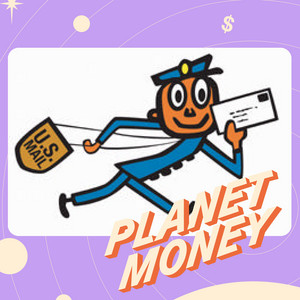
But the post office had expected this and they had a secret weapon, a little cartoon character named Mr.
Zip. By the way, I found a post office document confirming that Mr.
Zip has no first name.
Nevertheless, he feels like this warm, friendly guy.
He is an amicable, very smiley letter carrier who just like his name is always zipping somewhere.
He is leaning forward and his mailbag is kind of flying out behind him as he is speeding towards you.
In the sixties, Mr.
Zip is everywhere on posters and stamps and cardboard cutouts and literally parade floats.
So with Mr. Zip, a lot of people start to hear about the zip code, but that is not enough.
Put the zip on every letter.
Your mail will get there better.
The post office also needs to explain the zip code like what it is and how it works.
And so they put out a series of advertisements and PSAs, some of which are in fact songs.
Hello, my friend. How do you do?
We hope you have a moment or two to listen to what we have to say to each and every one of you.
It concerns our postal system.
There's choreography.
Props. In another ad, the singer Ethel Merman advertises the zip code to the tune of Zippity Doo -Dah.
Welcome the zip code, learn it today.
Send your mail out the five digit way.
It's all an effort to get zip codes to worm their way into people's minds so that they will think of this every time they write a letter.
Like they need to do some work here.
Learn their own zip code, learn everyone else's zip code.
Without that, this won't work.
This whole campaign is trying to say, this is about communication, even identity.
Mine is three oh nine four nine.
Mine is oh two four four six.
Mine is six oh six three five.
And this campaign? It actually works.
By 1965, about 50 percent of people recognize it and are starting to use it.
And then that increases to about 85 percent recognition and use of zip code.
Within the decade, the zip code goes from this little known and sort of hated number to just a part of life, something almost everyone uses all the time.
It was an enormous success, a huge male revolution.
It helps bring the post office into the modern era, helps them keep up with this crush of letters and packages and magazines, which was their whole goal.
But they have also done something else, something which was not explicitly their goal.
They have created a simple, widely used, almost universally recognized system for dividing up the country into smaller chunks and almost right away, other people start to realize, oh, wait, that could be useful for us, too.
In 1966, three years after the zip code is introduced, a postmaster in Utah notes a variety of novel ways that other people have begun to use the zip code.
He says that a handful of IRS offices had rearranged agent territories to conform with zip codes and that the Council of California was targeting agricultural advice by zip code.
And speaking of targeting, this also really appealed to advertisers.
Yeah, it shows up in how marketers reach people and looking at the zip code and they can get very granular to areas with people who might be interested in this product or this program.
In the 1990s, the census starts issuing some demographic information by zip code and researchers increasingly realize that they can use this strange little post office unit to look into all kinds of things.
Like crime patterns and the spread of disease.
My sense is that it's sort of just a snowball rolling down a hill, like zip codes exist.
They seem to divide the world into convenient little packages and so people start to use them, even though that is not what they were designed for.
After the break, two people who think that the humble zip code has now spread too far.
This message comes from ADP.
ADP knows any new technology, any old competitor, any trendy thing, even a trendy thing that everyone knows isn't a great idea, but management just wants us to give it a try for a bit can change the world of work.
So whether it's a last minute policy change or adding a new company holiday, ADP designs forward thinking solutions to help businesses take on the next anything.
ADP always designing for people.
Support for this podcast and the following message come from Arm.
Arm CEO Rene Haas discusses leadership and the role of AI in national security with the head of Palantir's defense business, Mike Gallagher, in the latest episode of Tech Unheard, available on all podcast platforms.
This message comes from ShipBob.
Did your holiday shipping let your customers down?
Were peak volumes too much to handle?
Partner with ShipBob for better order fulfillment in 2025.
ShipBob fulfills orders for you, whether they're from your website, retail partners, marketplaces or social channels, and delivers affordable two day shipping from dozens of fulfillment centers across the US and worldwide.
Plus, their dashboard lets you view real time inventory levels across all your locations and channels.
Go to ShipBob .com for a free quote.
Support for NPR and the following message come from the Pew charitable trusts sharing about the state of housing in America on the after the fact podcast available at pewtrusts .org slash after the fact.
All right. Let me introduce you to zip code skeptic number one.
His name is Gary Greenberg.
And for years he's served as the chief elected officer of a small town in Connecticut.
The town is called Scotland.
How many times a day do you think you think about zip codes?
I will tell you in public office, I would say it would average out to three or four, three or four times a day.
Sure. Because you know, at my office is constantly dealing with it.
Oh, that's the zip codes.
Gary stepped down from his post last year, but not before becoming an accidental and reluctant zip code expert, because here is the problem.
Scotland, Connecticut contains about 1600 people, about 600 houses.
And Gary says it has the distinction of containing not one, not two, not three, but six different zip codes.
Only one of which is in Scotland.
Having zip codes in that profusion for such a small number of people creates enormous chaos.
Yeah. So the zip code boundaries do not line up with the town boundaries.
One of those six zip codes is fully located within Scotland, but the others cover partly Scotland and partly neighboring towns like Wyndham or Hampton.
And officially, when you address your letter, you write the name of those other towns next to the zip code.
Living in one town, but having a zip code that looks like it belongs to another town, that creates all sorts of problems for Scotland residents.
Well, the small problems are like ordering online.
You just never know where things are going to go.
I would say that almost everybody who lives in town has had a go round or two about this, where a letter doesn't get there or a check doesn't get there or insulin doesn't get there.
It can also be hard to convince people that your house actually is where you say it is.
I mean, I was on a first name basis with the vice president of Spectrum because it was the only way to get high speed internet was to convince them that your address existed.
As Gary has discovered, many different people are making maps and lists and decisions based on addresses that they get from the postal service.
The USPS in fact charges for some of this information and organizations buy that information.
So if Gary's address seems to be in a different town, that little error can travel far and wide.
This is a problem in a bunch of other towns too.
Some of them have banded together in a kind of consortium to trade tips about how to deal with it.
There has even been legislation on this topic introduced in Congress.
And Gary says this comes up not just in daily life, but also in the world of data.
For example, during COVID there was a period when local news was reporting zero cases in the town of Scotland because they were looking at zip codes.
And they're just those 20 or so homes that have a Scotland only zip code.
None of them happened to have COVID.
So it looked like no one in town did.
That kind of thing made it harder for Gary to do his job.
You can't get any kind of reliable statistics.
And what I mean by that is how many are unemployed, how many electric cars are in town.
There's virtually no data that I can trust.
Yeah, if you're using zip codes to try to understand or analyze Scotland, Connecticut, it's almost as if the town doesn't exist.
And all this brings us to our second zip code skeptic.
His name is Tony Grubasik and he's here today standing in for a whole category of people, geographers.
Tony first got interested in this a while back, like almost 20 years ago.
He and his girlfriend, now wife, were thinking about moving in together.
They were sitting on her front porch in Ohio, eating a Jersey mike's sub, looking at houses, when she sees a listing for one across the street.
She said, that's weird.
There's a house for sale right across the street that's got the wrong address and I'm like, what do you mean the wrong address?
He said, like, well, the zip code's not right.
I said, no, it could be right.
It's just, you know, it's on the other side of the street.
That's completely possible.
And she's like, no, now why would they do that?
And so I said, I think it's still possible.
This is a moment where she's like, oh, dating a geographer.
Yeah, she's regretting every second of it.
And so then, yeah, I started to, you know, I bought some zip code boundaries from a company that sells them.
So it just sort of spun out of control from there.
The house did indeed have a different zip code, even though it was right across the street.
And for the postal service, that's completely fine.
But if you start using zip codes to analyze the world, this kind of thing can introduce mistakes, where you draw your map wrong, and then you think someone lives in one zip code when they actually live in another.
The stakes can be very small.
You know, you send your, your packet of coupons to the wrong neighborhood or to the wrong set of households.
That's not a fatal error.
But the stakes can also be higher.
Like Tony said, insurance companies sometimes use zip codes to help inform coverage decisions.
And if you're denied a policy or charged a higher premium, that affects your bottom line.
Over thousands of zip codes and hundreds of thousands or maybe even millions of streets in the United States, those errors start to add up and it ends up being a jumbled mess eventually.
Tony told me about one time when zip codes came up in a really high stakes situation, the Flint water crisis.
Here's what happened.
Residents of the city of Flint, Michigan, were being exposed to lead in their drinking water.
Mona Hannah, a Flint pediatrician and a professor at Michigan State University, she released data showing that this was a big, urgent problem.
But the state pushed back at first, said, basically, our data isn't showing this problem.
No, initially Dr. Mona had looked at Flint zip codes and she found elevated lead levels in Flint kids.
But when the state pushed back, she was like, okay, maybe I can show this problem even more clearly.
Because zip codes were a good unit of analysis here, but not a perfect one.
Here's Tony. Huge chunks of those zip codes were in outlying municipalities.
So even though they had a Flint name attached to that zip code for the mailing address, it really wasn't part of the Flint water system.
Yeah, the zip code map of Flint, Michigan is sort of similar to the map of Scotland, Connecticut.
It's a patchwork of zip codes that overlap with the city of Flint, but cover a lot of area outside the city, too.
So the analysis included people who were not drinking Flint water.
Dr. Mona asked a geographer friend to look at the data in a different way.
He geolocated the addresses of patients in this sample.
Kind of like dropping pins on a map.
Then it was really undeniable.
Patients with elevated blood lead levels clearly clustered in the city of Flint.
The zip code based analysis had somewhat underestimated the problem.
The state eventually reversed course and admitted that Dr.
Mona had it right. Tony told me, look, there are lots of ways to divide up space.
Like you can use satellite data, TV broadcast areas.
The census offers a bunch of different levels of analysis, blocks, block groups, et cetera.
Zip codes are only one, but they're a really common one.
But again, I would strongly encourage people just to, you know, stick with the mail when it comes to zip codes and leave those be for any kind of real socioeconomic or public health analysis.
Yeah, maybe it's okay to use zip codes in some situations, like deciding where to send your store coupons.
But zip codes do not describe the location of city pipes and they do not describe the boundaries of the town of Scotland, Connecticut.
Gary Greenberg told me when he first got into office, he tried to get this situation fixed.
It was one of the first things I did.
It's like, how can there be this level of dysfunction based on zip codes?
It just seems like the disconnect was so great that it would have to be fixable.
Well, I was so wrong.
The postal service does have an official process for zip code boundary review.
Gary says he tried to get the problem fixed that way.
And that at one point the USPS did make a change where they tried to let some people write Scotland on their address line, but he said it seemed to almost make the problems worse.
I reached out to the USPS about the situation in Scotland.
A spokesperson told me that they're sympathetic to the concerns of towns like this, but they have to be guided by concerns for service and efficiency.
Those are the same concerns that guided them back in 1963.
And one of the things I've learned for sure is that when it comes to service and efficiency, the zip code was an amazing invention.
An incredible way of organizing the world, or at least more precisely, an incredible way of organizing the mail.
This episode was produced by San Yellow Horse Kessler with an assist from Willow Rubin.
It was edited by Meg Kramer and fact -checked by Sierra Juarez.
It was engineered by Valentina Rodriguez Sanchez.
Alex Goldmark is our executive producer.
Special thanks to Lucretia Johnson, David Garcia, Tracy Danesich, Vince Osher, and Ricky Wertham.
I'm Sally Helm. This is NPR.
Thanks for listening.
This message comes from ShipBob.
Did your holiday shipping let your customers down?
Partner with ShipBob for better order fulfillment.
ShipBob fulfills all your orders for you and achieves two -day shipping from dozens of fulfillment centers.
Go to shipbob .com for a free quote.
This message comes from Warby Parker, prescription eyewear that's expertly crafted and unexpectedly affordable.
Glasses designed in -house from premium materials starting at just $95, including prescription lenses.
Stop by a Warby Parker store near you.
This message comes from Warby Parker.
What makes a great pair of glasses?
At Warby Parker, it's all the invisible extras, without the extra cost, like free adjustments for life.
Find your pair at warbyparker .com or visit one of their hundreds of stores around the country.