
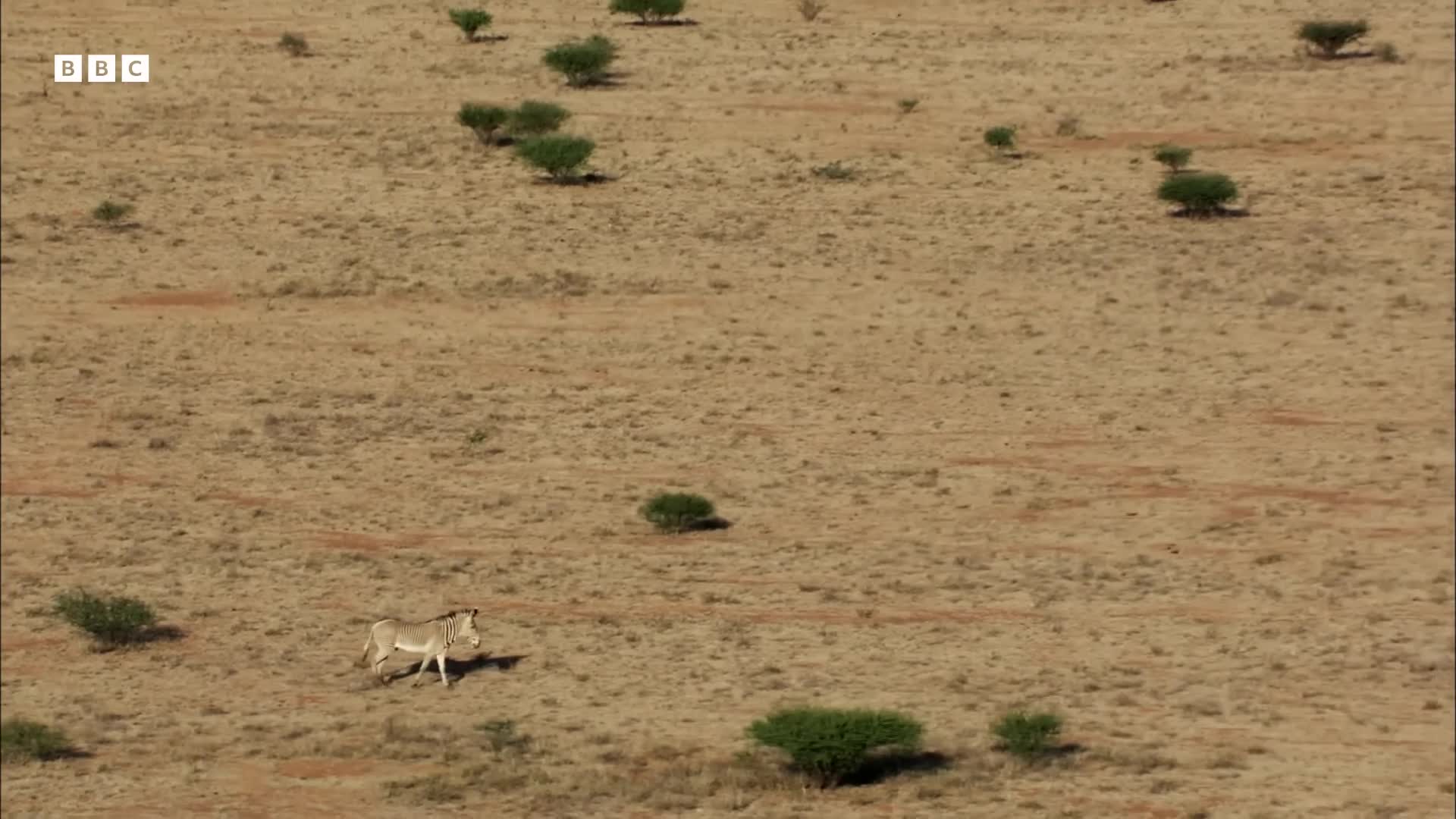
[The Territorial Struggle and Mating Strategy of a Grevy’s Zebra Stallion]-[Can This Zebra See Off His Competition? | Narrated by David Attenborough | Africa | BBC Earth]
📋 Summary
The Solitary Stallion in a Harsh Landscape
In the arid, scrubby environment of a land once touched by the advancing Sahara, a lone Grevy’s zebra stallion stands as a testament to resilience. Weighing nearly "half a ton" and possessing the physiological endurance to survive "three days without drinking," this stallion has carved out a territory that he fiercely defends. His existence is defined by a singular, driving purpose: the hope of attracting "female visitors" to his domain, marking his first potential opportunity to mate after a significant period of isolation.
The Challenge of Courtship and Competition
The arrival of potential mates brings both promise and peril. Initially, the stallion’s attempts at courtship are met with indifference; his visitors seem unimpressed, suggesting they are "looking for a more impressive partner." This initial rejection is compounded by an external threat: a "posse of young males" trailing the females. These intruders represent a direct challenge to his authority and his reproductive future, as "everyone" among them is a "rival" seeking to undermine his position.
Establishing Dominance and Proving Prowess
Recognizing the need to secure his territory, the stallion engages in a display of strength to "separate the men from the boys." He confronts the intruders "one by one," systematically seeing them off to protect his claim. This confrontation is not merely a physical struggle but a performance observed by the females, who occupy "ringside seats" to witness the outcome. The stallion’s ability to defend his boundaries serves as a crucial signal of his fitness.
From Machismo to Connection
The climax of the encounter marks a shift in the atmosphere. The raw aggression of the conflict, characterized by the stallion's "machismo," eventually subsides. As the threat of the younger males is neutralized and his dominance is established, the tension gives way to "Tentenus"—a state of tentative connection or potential intimacy. Through his persistence and display of physical prowess, the stallion transforms from a lonely refugee into a successful protector, ultimately earning the attention and validation of the females he sought to attract.

Deep Learning with ListenLeap


