Discussion keeps the world turning.
This is Roundtable. At the end of 2023, China had nearly 300 million people aged 60 and above, and that number is expected to increase to 400 million in the next 10 years.
The supply of elderly care services in various checks and forms affects almost every family and ultimately everyone in this country.
Hello, I'm Limeing and this is Roundtable.
Today with New Holding and Brandon Yeats, we introduce Experimental Initiatives in East China's Jajian Province, which seeks to inject a dose of youthful vigor into elderly care institutions.
And by youthful vigor, I don't mean that you know, metaphorically, we are actually talking about some experiments in Jajian Province in different parts of the province, actually, where they have started a pilot program to introduce young residents into nursing homes where mostly elderly people would dwell.
Yes, we're calling it intergenerational cohabitation elderly care mode.
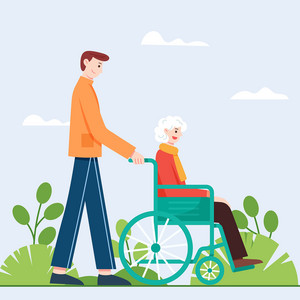
Under this mode, young people can choose to live in the elderly nursing homes to live with elderly people.
They need to pay a rent of 1,000 yuan a month, which is around 140 US dollars, not a lot of money.
Not at all. And I must say that my building in Xi Jinping kind of feels like that.
I think I'm the only young person in the whole building.
And you're paying more than that.
Exactly. You're paying more than that.
A lot more. So I think I'm getting, I'm not getting the best part of the steel unfortunately.
Because you are not doing what they're doing, which is providing at least to 10 hours of volunteer service every month.
If they offer 20 hours of voluntary service, they can get a 500 yuan deduction.
And if they offer 30 hours of volunteer service, they can get free accommodation.
And the competition is fierce.
This is the kind of mode that has been promoted and established and tried.
And I would say tried and quite succeeded in many places.
Many places, many local governments are providing such mode for the elderly as well as the young people.
And apparently this one in Zhu Jiang that Limey has already suggested is opening to the third batch of intergenerational companions recruit.
If one is selected, he can live in the nursing home without rent for a year.
And during this period, they need to offer at least 10 hours of companion service for elderly people every month.
Every month, yes. And they only need to pay a monthly management fee of 300 yuan.
So different places, different price tag, different hours of services, but similar types of mode.
Maybe I should offer some of those rates to my neighbors and see if they'd be keen to try that.
Maybe I can be someone's companion for 10 hours a month and maybe I can get some rent to get a meal.
Ooh, you are going to have to compete with a lot of young people.
I know. I know. But maybe I can get ahead of the curve because this is in Jage Young Province, right?
Yes. Maybe I can start something new in this province.
Or maybe you can just start the business here, imaging.
That could also be an idea.
And make sure if you are recruiting young people to live in the place and if you want to follow the very successful examples, you can first ask those who are with the careers like doctors, teachers, and also even police so that they can provide their professional abilities and also knowledge to help the elder generation.
And there are other requirements, for example, applicants must work in the district where the local, well, where the house is located and they have no housing in six urban districts of Hongzhou, no mental illness, and have a junior college degree or above and they need to provide a proof of no criminal record, proof of no housing and also a labor contract suggesting that they have a job.
Yeah, I think it's great to hear that there is quite a stringent list of requirements in terms of people that will be available for selection for this program because obviously elderly people, not all, but a great number do require companionship or need to be taken care of.
But that being said, you also want them to be mentally stimulated or be able to gain something from whoever that young companion could be.
So I think some of those requirements would ensure that some of the companions that a lot of these elderly folks get paired up with are going to really enhance their day-to-day lives.
Oh, definitely. That is why if you have a professional background in medicine, psychology, law, etc., who can provide stable companionship during the working days and if you have calligraphy, dance-related skills, you would stand in the front of the school.
The line. Especially the dance-related stuff because I can tell you every weekend, I always see elderly people dancing in the streets and having a great time.
So if you can dance then, I think elderly people, that's definitely a plus if you want to get along with them.
Some more explanation on the term, intergenerational, cohabitation and volunteer service.
What does this thing tell?
You mentioned something about dancing and then calligraphy and perhaps even some tape with tennis events, I heard that some guy who claimed that he was very good at Marjan really got ahead and got bumped up at the top list.
Not surprised by that either.
What are people supposed to do?
Do they live with the elderly folks in the same room or do they, what's the residential accommodation arrangement?
Well, the idea is that in certain elderly homes we have different rooms, different apartments in beds and we have certain services related to these beds.
For example, there would be food provided and the houses are being cleaned and of course certain medical services are also in tail.
And for the younger people living in these houses, they do not really enjoy all these services.
They just enjoy a relatively cheaper and even sometimes free accommodation.
And what they need to do is to provide companion services to the elderly.
So they do not really need to take care of them per se, but they need to spend time with them quality time.
It's like an organized adult play dates.
Kind of. You know what I mean?
It's a lot for it. Yeah. And you're a companion for an elderly person.
I think it's fantastic.
And you know, I think we also discussed this before the show that I think a very important element of elderly people, you know, staying around for as long as possible, which I'm sure many of the friends and family and loved ones would want.
A big part contributing factor to elongating the lives of people is making sure that they stay active, stay social.
So I think that companionship, particularly with young people, will probably greatly benefit those elements towards elongating the lives of healthy elderly people.
Of course, but then is this issue of to people applying for this position, know what they're getting into and have what it takes to be very good companions to elderly folks living in institutions.
Because here in China, we know we are a rapidly aging society and 300 million people aged 60 and above and as soon to become 400 million in 10 years is bigger than any other country rather than other than China and India.
So it is a very, very large population we're talking about and at such this country, this nation and the society, helping working very hard to accommodate this change.
Despite the amount of effort and energy that we are willing and able to invest into this endeavor and enterprise, we are sort of strapped in terms of resources.
And such we have somehow developed a 70 or 97, 3 model where 90% of the elderly population will stay at home and receive elderly care from their families and 7% would receive community-based elderly care service, which means they will live where they are and the community will somehow come up with a mechanism to take care of their needs and then 3% of them who are either experiencing certain impairments, physical impairments or mental impairments or who are extremely wealthy who can afford to spend extra money to living institutions.
So we are talking about a very, very select few, although in absolute numbers, we could probably be speaking about 9 million people there.
But still, we are talking about a very select number, a very select percentage of the elderly population and they could come with various health conditions and mental conditions are the young applicants who see an opportunity to get free or affordable rent, know what they're getting into and know what to do under different circumstances.
So for those young people who are only reading the story on newspaper, I'm not really sure they understand the situation, but if you actually sign up for it, you would actually receive a pretty proper interview in length of commuting, how to guarantee the service hours after recruitment, reasons to participate in the project, whether or not these young people will often work over time and how to solve the dispute among even elderly people themselves and they also need to know whether the young people are gentle and have patience towards elderly people by saying they, I mean the interviewers.
So actually after receiving such interview and get the position of living with the elderly people, actually young people would also go through certain kind of training sessions, knowing necessary knowledge and also they would even be told that I know you want to stay with them, you want to watch TV with them, but do not spend over one hour chatting with the elderly lady, no matter how much, both of you enjoy the company actually.
There's a cutoff time for the amount of time that these young people spend to come with elderly people.
Because after, because longer than one hour would be.
What if the TV show were watching last longer than another?
Would be too tiring for the elderly and they would be too polite and gentle and nice to say it.
So a lot of things would be told to these young people who are providing the so-called volunteering services, but we know that with a deduction of rent, it's not entirely volunteering, it's basically beneficial to both sides.
I've never known elderly people to be too shy to tell me if I'm like wasting their time or if I need to leave.
If I hang out with elderly people or if I'm kind of talking to loudly or spending too much time with them, they'll let me know.
I don't know if this is the case in China, but in South Africa, the elderly are definitely not afraid to speak their minds or let you know if you're annoying them or wasting their time.
They're very vocal about their thoughts and opinions.
Well, I think you're a perfect casing point showing that not everybody is cut up for those jobs.
Some people have a good time, have a easy way communicating with the elderly folks and showing them a good time, that kind of thing.
Whereas some others might feel like this is really too big of a challenge.
I think we've also spoken about how this really greatly benefits elderly people.
I think it's also hugely beneficial for young people, not just in terms of the rent deductions and that sort of thing, but also I think there's so much to be gained by spending time and conversing with elderly people, especially as a young person.
You can learn so much, gain valuable life experience, work experience and gain a lifetime of knowledge that can probably cover a variety of subjects.
So it's definitely a mutually beneficial partnership.
If like we've mentioned, the young people are also aware of the responsibility that they're taking on.
Definitely. And that is why some young people are saying that they wish they can just provide the volunteering service without living in the place because maybe they don't think they can win in the competition, the very fierce competition.
I mean, enough that's quite popular in South Africa where there are a lot of volunteers that do just spend part of their week or their month with elderly people not living within the same community, but they dedicate a certain amount of hours, like I said, per week or per month to spend with elderly people, either really helping people that can't really take care of themselves or literally just providing companionship.
Yes. And on top of the life experience, the kind of healthy lifestyle, Brenda has already mentioned, some young people are also saying that the kind of friends they actually met during the working in these facilities are the kind of friend that they can cherish for a life long time because they are all very patient and loving and they share this same aim of helping the elderly in the society.
So yeah, I think that is another perk.
Well, there are obviously very good benefits that both sides can reap from having this arrangement.
But then there are also real life challenges that they have to overcome.
What about the first thing that pops in my mind is how do we accommodate the different needs for this schedule?
Because I'm not sure about you guys.
In my family, we currently are having our mother-in-law helping us out for a while.
And in the first few months, in the first few months when she moved in, when they moved in, in fact, both couples moved with us.
In the first few months, we had the most significant challenge it was we couldn't agree our way into getting up and where to start the day's business.
We, as young couples, could be staying in bed until 8 or 9 a.m.
or as for the elderly couples, they would be up by sunrise and they could be working very hard and tinkering in the kitchen.
I just had this experience recently where after a night out of socialising, I mean, I was walking around the streets.
It must have been 4 a.m. 4.30 in the morning.
There were elderly people taking our trash, going for runs, socialising already at 4 o'clock in the morning.
So some elderly people in, I don't know if it's nationwide, but in Beijing, some of them really do get, as soon as there's a tiny bit of life, they're up.
Well, that's why actually you, of course, would still get your own room.
You don't really necessarily have to live in the same bedroom with older people, and that's the first thing.
And, like Limey said, for some people, it's easier to get used to this, in my opinion, healthier lifestyle, but for some others, it might not be that easy, which is why there is an acid mechanism.
Some companions can withdraw from this project midway due to job transfer, marriage and other reasons, including, cannot really accommodate two such lifestyle and have it.
So for those who are unable to complete their monthly companionship hours and leave low satisfaction with the elderly, see, the elderly could be unsatisfied with the younger people as well.
There is this corresponding acid mechanism.
So I think that is the beauty of having different experimental outer care mold in different places.
You see how, well, you have this vision of how to mold, well, let's say benefit both parties with this kind of designing, but along the way, there are problems and there are new little band-day to can put on the mechanism and can make it better.
And maybe in the future, we can see more of these facilities in different places, which is another point I'd like to make.
That is, I think with more and more population entering these so-called elderly, let's say, stage, because if you're above 60, you can call yourself a elderly already, but between 62, for example, 75, you're still very active, very capable.
You can travel around, you can take a side job, you can take care of your very, not-y, very active running around.
Grand kids, you can do a lot of those things.
You're physically very capable.
And after 75, maybe you need to be taken care of, but that part of elderly care can't happen in your own home.
And you might enter certain mechanism like a virtual elderly care service, which I've just read about.
This virtual elderly homes are the kind of services provided to certain places and certain families.
You can make a phone call and ask professionals to come to clean the house, to provide food, to provide medical services.
And they know where you are, and they can even, once you get into, for example, a marriage and aversory, they would even remind you to buy a present to your significant other.
And once you get into certain age, milestone like 80 or 90, they would also tell you certain parts the society is providing that you can enjoy.
This is kind of like the community-based elderly care only you are connected to the internet.
And people are, instead of physical proximity, you are connected to that service over the internet.
That is why it's called a virtual elderly home.
You can probably provide companionship that way as well.
So for example, if you do, you know, you said there's some circumstances where people might need to leave a certain situation, or you know, something might come up where you get married or you get a new job or whatever it is, through online communication, you can probably, so let's say for example, an elderly person and one of these young people gets along really well and they have to be split apart.
Then through these online services, maybe, you know, they can stay in touch and not necessarily be in the same facility.
And they are calling this a virtual nursing home.
But the point I'm trying to make here is that people have different needs.
They have different personality.
They have different challenges in life.
They need to overcome and they need different types of services.
And even though we say 90% of elderly care happen actually in homes, currently in China.
That's the design. That's the most economical way of doing it.
We can experiment different ways of providing community-based elderly care services as well as institutional-based, institutional-based kind of elderly care services so that different people with different needs can find their place to go.
Again, the other thing that I keep thinking about is this arrangement is definitely not for the party animals among the elderly people.
So I can see this. Well, if they come back from a party at 4.30 in the morning and the elderly person's already awake, maybe that could be perfect timing.
Although you would have to hope that the young person is still in a good state of mind after they're at night out.
That settling is a very extreme scenario.
But we can't really depend on an extreme scenario.
We can't really depend on an extreme scenario.
We can't really depend on an extreme scenario.
We can't really depend on an extreme scenario.
We can't really depend on an extreme scenario.
We can't really depend on an extreme scenario.
We can't really depend on an extreme scenario.
We can't really depend on an extreme scenario.
We can't really depend on an extreme scenario.
We can't really depend on an extreme scenario.
We can't really depend on an extreme scenario.
We can't really depend on an extreme scenario.
We can't really depend on an extreme scenario.
We can't really depend on an extreme scenario.
We can't really depend on an extreme scenario.
We can't really depend on an extreme scenario.
We can't really depend on an extreme scenario.
We can't really depend on an extreme scenario.
We can't really depend on an extreme scenario.
We can't really depend on an extreme scenario.
We can't really depend on an extreme scenario.
We can't really depend on an extreme scenario.
We can't really depend on an extreme scenario.
We can't really depend on an extreme scenario.
We can't really depend on an extreme scenario.
We can't really depend on an extreme scenario.
We can't really depend on an extreme scenario.
We can't really depend on an extreme scenario.
We can't really depend on an extreme scenario.
We can't really depend on an extreme scenario.
We can't really depend on an extreme scenario.
We can't really depend on an extreme scenario.
We can't really depend on an extreme scenario.
We can't really depend on an extreme scenario.
We can't really depend on an extreme scenario.
We can't really depend on an extreme scenario.
We can't really depend on an extreme scenario.
We can't really depend on an extreme scenario.
We can't really depend on an extreme scenario.
We can't really depend on an extreme scenario.
We can't really depend on an extreme scenario.
We can't really depend on an extreme scenario.
We can't really depend on an extreme scenario.
We can't really depend on an extreme scenario.
We can't really depend on an extreme scenario.
We can't really depend on an extreme scenario.
We can't really depend on an extreme scenario.
We can't really depend on an extreme scenario.
We can't really depend on an extreme scenario.
We can't really depend on an extreme scenario.
We can't really depend on an extreme scenario.
We can't really depend on an extreme scenario.
We can't really depend on an extreme scenario.
We can't really depend on an extreme scenario.
We can't really depend on an extreme scenario.
We can't really depend on an extreme scenario.
We can't really depend on an extreme scenario.
We can't really depend on an extreme scenario.
We can't really depend on an extreme scenario.
We can't really depend on an extreme scenario.
We can't really depend on an extreme scenario.
We can't really depend on an extreme scenario.
We can't really depend on an extreme scenario.
We can't really depend on an extreme scenario.
We can't really depend on an extreme scenario.
We can't really depend on an extreme scenario.
We can't really depend on an extreme scenario.
We can't really depend on an extreme scenario.
We can't really depend on an extreme scenario.
We can't really depend on an extreme scenario.
We can't really depend on an extreme scenario.
We can't really depend on an extreme scenario.
We can't really depend on an extreme scenario.
We can't really depend on an extreme scenario.
We can't really depend on an extreme scenario.
We can't really depend on an extreme scenario.
We can't really depend on an extreme scenario.
We can't really depend on an extreme scenario.
We can't really depend on an extreme scenario.
I think I'm not sure about the Internet solution because really I think elderly care what they need is that personal companionship.
Sometimes in our report about in the reports that we've seen covering this arrangement, there are instances where the young companion would take the time to travel to the home, the street of the elderly folk who currently live in nursing homes just because the elderly said, I want to know what my neighborhood looks like now.
So it's on these very individual, very personal levels that human beings connect and then provide that companionship.
So I'm not sure, I mean, certainly the Internet provides the opportunity to be flexible about certain services, but I'm not sure going forward we can solely retire, rely on the Internet or artificial intelligence technologies like that.
That being said, I still think evolving is a really good word.
Brendan has just said because at the very beginning we see that many of the elder care service are established through this community-based care stations or service centers.
And at that time it was a positive list system that is to provide specific actions for specific or specified projects.
And objects, for example, if you're not over the year of 60, you cannot really eat in the community-based canteen, which makes many community care institutions feel that they cannot establish a business model that can only barely maintain themselves with government financial support.
And then in 2020 we see Beijing took the lead in implementing the negative list management system that is to say for these facilities there are certain things you cannot do, you cannot really come money out of old people for sure.
That's only a very extreme example.
What I'm saying here is that we are seeing the evolving of different mechanisms and different institutions getting into the market of elderly care.
Roundtable has discussed the possibilities of traveling to a different place, rent a home there, and enjoy the beach, and enjoy sunlight to spend your golden years.
And all these different implementations and all these different methods are the reason that we are talking about all these different models that can benefit to different needs of people.
And there are so many pieces moving around this arrangement because one important caveat that we fair to mention at the very beginning is that such solution exists only because at the current stage of openization there are plenty of young people who are not living in the same city as they grew up in, and as such they are not living with their own elderly folks, and they may have the need or they may have the urge to be with an elderly folk and to share their wisdom, to interact with them, they may have that need as well.