Discussion keeps the world's turning.
This is Roundtable. You're listening to Roundtable.
With myself, young, I'm joined by Yushan and Steve Hatherley in the studio coming up.
Grocery shopping for ingredients and getting them cooked for you on the spot without spending a penny more.
Shenzhen's fresh produce markets are redefining convenience and setting a new benchmark for food experiences.
How do you think this trend will influence other markets and restaurants?
And the story of one international blogger finding solace in Chenglish on Xiao Hongshu is pretty heartwarming.
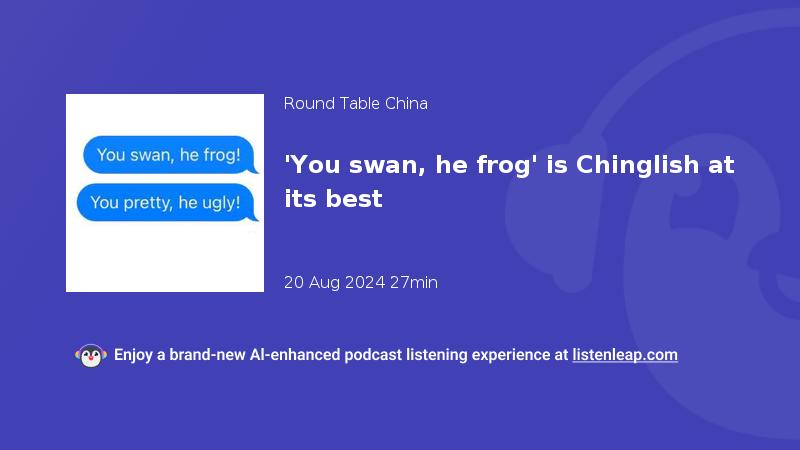
How do you think these charmingly imperfect translations, such as you pretty he ugly?
You swan he frog. Managed to connect with us on such a personal level.
For podcast listeners can find us at Roundtable China on Apple Podcast.
Now let's move on to the next topic of today.
The restaurant scene is no longer the only game in town as convenience stores, supermarkets, and now fresh produce markets are called wet markets in China.
Step into the culinary ring.
These traditional retail food outlets are not just stocking shelves anymore.
They're cooking up delicious meals and serving them hot.
Shenzhen's wet markets a vendor with a chow shen beef stall has become a local sensation with his free cooking service.
His Ubi iCook offering has gained such explosive popularity that other vendors have followed suit, transforming the market into a bustling culinary hot spot.
So this doesn't stop at markets, but also we see groceries and convenience stores.
More food options for people, right?
Yeah, and if I were a restaurant owner, I'd be quivering in the cold with all this competition.
They'll have to respond and maybe they have will find out through our conversation.
I love that though. You buy iCook.
That's such a great slogan, isn't it?
And do you know where this whole scenario started?
I just found out very recently that the service we're talking about, free cooking service and food markets started in a Lin Li smart agricultural market in Shenzhen's Yentian district.
And with this guy named A Long, who is a vendor from Hunan that runs a, like Huoyang mentioned earlier, a chow shen beef stall.
And he has become such a free cooking say star in the field because ever since the market was open in April 2024, A Long has collaborated with the market to offer you buy iCook, which allows the customers to just shop around, bring him the groceries that you got from the market and he'll just cook it for you.
So provide the service.
Yeah, so this you buy iCook kind of process.
So i buy a bunch of vegetables, maybe i'll buy a meat protein, something like that and I want to stir fry.
So then I just bring all that to A Long and then he just cooks it for me.
I've purchased all of those things from A Long as well.
Yes please. Okay, because otherwise this would be a terrible business model.
That makes more sense. That's kind of a unique and fun idea and it's a great way to get the leg up on the competition but I guess the competition has followed A Long and they've started doing it too.
I mean this is his beef stall but other stalls such as the wonton stalls, the dumpling stalls and roasted meat stalls they all followed such a trend of you know just provide me with stuff.
I'll cook it for you for free.
Yes, I suppose the customers since they're not paying a lot extra or extra and getting this free service then that's great but I wonder how the other vendors truly feel about this.
The nature of competition I suppose probably when they saw it they thought we got to do something too I guess.
And it's not just in these supermarkets but also supermarkets and convenience stores are also offering dieting options and this is the part that you shan and I we had a chat before the show and you seemed to really enjoy this kind of service.
I mean I get my daily breakfast from convenience stores outside of my community so this is how I know the such services exist in the first place like I see it in convenience stores and supermarkets first.
Before I know that okay this A Long guy who started the whole competition in the first place and you're right Huyang since the beginning of this year in 2024 many supermarkets are adding food services to their offerings for example the Wu Mart one of the leading chain supermarket in China has launched Wu Mart Kentines so a supermarket has now become a supermarket
plus Kentine plus a place to eat within the supermarket.
Yeah, like a little dining place that's just open for just you know providing food and cooking and sitting down and eat like a severe in the restaurant.
So and also in the meantime it provides affordable self-service meals with options ranging from a 13 you want to less than 20 you want so around 2 to 3 US dollars.
Really cheap. Yeah very affordable.
Convenient stores I've noticed this popping in and out of convenience stores they seem to have upped their food game haven't they?
Not only in terms of options but in terms of quality as well and you can get meals for around the same prices right US dollars maybe 2 to 3 dollars and 13 to 20 you on and yeah you can get some tasty meals in there too.
I understand why you get your breakfast at a convenience store every morning because I've seen what they sell and it's pretty good.
Yeah in the past I thought that you know just buying these readily made and fresh foods from these food retailers and bring them home it was how you do it and I thought it was pretty convenient already for people who don't want to use their own kitchen.
I mean if I were living by myself my oven would be used to store shoes.
But now it's like there's a separate little area where you can dine in in a supermarket or in these convenience stores it sounds like these businesses have really sort of changed their perception in how they can do business.
When we talked about Korea and the convenience stores there and maybe I spoke on the show about how grocery store culture was changing in Korea because of the rise of single person households right.
The demographics were changing and as a result the supermarkets followed suit whereas before you'd have to buy you know eight potatoes or something in a bag now you can buy two already peeled potatoes to take home with you.
So what I mean is they responded to what's going on in society.
I wonder if this is what's going on here in China as well if there's something similar going on with similar numbers for single households because grocery stores they'll respond very quickly if they know there's a trend in the housing market.
I mean exactly that's how it's panning out in China as well as the single person households especially those that's lived by young people amount between 29 years old to a bit about 30 years old it's increasing in recent years as well.
And according to China's statistical yearbook 2023 about 16% of the nearly 500,000 households that they conducted the survey on in 2022 fall into the category of single person households.
So and this include elder people as well as young people.
Do they have any projections for maybe five years later something like that?
Oh yeah and it's estimated according to official data that this number is going to reach 150 million by 2030.
So there you go. There's the market.
There's the market. There's the evidence right.
So stores and vendors are responding by getting it making it easier for people to eat.
Right and if you live in China actually we're kind of spoiled by the options also we've talked about in the past as on this show I think we've followed how this emerged from a trend to now just the fact of life that is very affordable and super quick delivery.
But like if food deliveries included as well.
But now it's also you can I don't really know what the fun is about this is that that okay so you sit in that convenience store eat your fish balls and maybe malatang or or anything else and then you wash people pass by.
And then after you finish your meal immediately off you go back home or you hop on the subway and go partying or do something else I mean.
I think it's not about having fun.
I think it's about a lack of time and people are so busy with their work lives that eating quickly and eating conveniently not having to cook a lot and not having to go home and you can find it.
Yeah you don't have to find a restaurant you can find a convenience store with a dining area you can find a supermarket with a dining area or you can buy some vegetables from Along you said his name wasn't have him cook your dinner for you.
I think it's just a sign of the times if you will.
And another reason is that the transparency of the cooking process is kind of appealing to younger generation as well.
And especially for you know foods like seafood that's hard to process.
When you order seafood you have to have to have some trust for the restaurant if they're doing delivery because you can't really see how it's cooked in process as well.
And for supermarkets you can just buy seafood and give it to the chef who has this transparent little glass box of a kitchen and see them process it for you and even give them instructions on say personal flavor indications.
Yeah. And that's my sense.
It's like a personal cooking class almost.
Right and this is according to Lee Dong a chef in the cook market in Shanghai that the typically requested dishes are restaurant style flavors at their market which include of course seafood and something that's difficult to prepare at home.
And for this chef Lee Dong his busiest time of work is during the morning time when a lot of old people come to him to process you know.
Get their vegetables taking care of you.
Yeah exactly. And then in the evening it's just young people young couples who don't want to you know cook.
Yeah. Or single people they want to eat alone there was a survey in the United States with Gen Z's and 64% said they're more likely to cook for themselves than they are for anyone else.
They still eat out almost two nights a week but they cook at home a lot as well.
I was wondering if the meal kit culture is popular here in China.
That was a huge boom in the United States and Canada.
And please explain what it is.
Yeah. So this became a big hit during COVID where people couldn't go out to eat at restaurants and a meal kit is where let's call it spaghetti and meatballs right.
So in the meal kit I'll get the spaghetti the noodles I'll get the sauce separately I'll get the hamburger meat and whatever spices but they all come raw.
I have to cook it but it also has a recipe card in the meal kit to tell me exactly step by step how to prepare the meal.
And if you compare the price of meal kits versus going out to eat at restaurants the average two person household in America they spend about $450 to $800 a month at the grocery store.
$27 a meal which is really expensive but meal kit prices were between $9 and $13 a meal so it's cost effective.
You get the recipe on how to cook it and all the little ingredients you need are right there.
Of course you still have to cook it though.
Right. I remember talking about this during COVID and I remember one of those big meal kit companies in the US was anticipating a big IPO.
I don't think it went that well as what they were planning for but anyhow in China there was a nested trend maybe for a little while but I don't think it ever really took off the way it did in the US.
Maybe we just have so many affordable options in China and this has something to do with still the relatively low labor price compared with let's say economies such as the US because delivery is just so good.
And so affordable. Yeah but people get tired of it don't I mean don't you get tired of it.
I go on little streaks where I'll order a lot and then I'll just stop and cook for a period of time and then go out to restaurants for a period of time I guess it's kind of streaky that way.
One thing the meal kits is not as trendy.
I believe is that of course there's the delivery and also people worry about the freshness of the ingredients inside.
I remember my family rejecting on those when I was young knowing that it's much more simpler and easier to just get a kit and go back home and just stir fry whatever but still they prefer dried materials such as instant noodles, different flavors of instant noodles or fried rice comparing with raw stuff.
And the refrigerator, the refrigerator.
And if you're going to pick out vegetables like potatoes and carrots and onions would have you rather than have someone else do it and put it in a box for you that's kind of something you want to do yourself.
I'm a little surprised that you mentioned this Steve because I've seen in the US and the UK and you know with the meal kits and also in stores like you would see these really neatly packaged boxes of fruit or veggies or whatnot and all sliced and diced and wrapped up nicely.
And I always wonder what if that person coughs on this thing and when they were packaging it or cutting it up.
And I'm paying let's say $4 extra for this so that I don't need to get my hands wet and dirty to be that dirty.
I'm in a self yeah and I always wonder but my international friends seem to not worry about it.
Well I guess we think if it's wrapped in plastic it must be safe.
I don't know what the reason is.
Yeah all right maybe that's just a easier way to look at life without anxiety.
Yeah and I'm curious whether all these different options we've talked about have posed significant threat and challenge to I guess we can compare to the traditional restaurant business because that's where usually the dining experience happens right.
Talking about restaurants responding to single person household rise in numbers in Japan and in Korea they have a term for eating alone in Korea it's called homebub.
So restaurants respond by allowing like a seat for one right where you're comfortable.
They don't feel awkward they make it a space where you don't have to worry about social anxieties of other people staring at you if you're eating by yourself.
I think maybe in the past it would have been hard to find a table for one in a communal dining culture but not anymore.
So I think restaurants are starting to change.
Is that is that the case here in China too do you think?
Well if I'm determined to dine alone I'll still try to find sushi plates.
The rotary or the little thing that they can move sushi on the way of the belt.
Yeah that kind of services that provides you just one person entry and you can just sit there face the food instead of anything else or a wall or whatever.
Interesting. Well you ask the right person Steve because you're looking at an experienced lonely gourmand in Beijing and what inspired this style of eating out for me would be Guru Sahn.
Gu Tu de Me Shujia the lonely gourmand TV series from Japan that there are now season 10 and that's excluding a whole bunch of specials that seem to come out every year.
And I think it really popularized the idea and took the stigma away in my opinion of going out and joy something that is truly delicious on your own.
And nobody's fighting for food with you and I don't like sharing when it comes to food.
Not a share. And also I don't know sometimes I actually feel this is a little bit of an empowering experience that the students really have much to do with confidence but it's like I can afford this.
I enjoy this wonderful atmosphere of a restaurant and sure maybe usually it's a group of friends or couples come here but you know what I just want to have a date night with myself tonight and I like doing that.
And if you feel like that imagine how many other people feel like that and if so many people feel like that then people like along will start cooking your meals for you so that you can enjoy them by yourself without having to go through the dirty process of peeling and cooking vegetables and things like that.
Supermarkets will respond by offering places to sit down and dine and restaurants will respond by offering more comfortable spaces for single diners.
I think this is all connected I think it's a spiderweb.
I think instead of finding a threatening that it's going to replace restaurant I think more people are concerned like more or less concerned about if it's safe enough to see food processed in supermarkets or markets just openly like that.
Do they really qualify for a restaurant standard processing or something like that?
Yeah well I guess if they get one out of five customer reviews on D&Ping or other food, critic or delivery online platform then they'll know that they'll need to up their game or to perfect their services a bit more.
And this introduction of complimentary cooking services and shenjans fresh produce markets not only meets the evolving needs of modern customers but also sets a new standard for how markets and restaurants alike must respond to this changing culinary trends and demands as well as lifestyle change in China's cities.
Coming up, Chinglish often gives us the most delightful linguistic surprises such as you swan he frog.
What do you think that means?
But what do you think it is about these quirky phrases that makes them so endearing and in today's story so comforting?
Stay tuned to find out more on this.
Looking for passion? How about fiery debate?
Want to hear about current events in China from different perspectives?
Then tune in to Roundtable.
Where East meets West and understand it is the goal.
At the hour of Roundtable with myself, young, I'm joined by Steve Hatherley and you shan in the studio.
Who are the swans and who is the frog in this studio today?
No frog, we're all swans and maybe who's the black swan?
Yeah. Well, a foreign blogger named Yourcress who is struggling with rough patch in her relationship unexpectedly found comfort in thousands of Chinglish messages on the lifestyle app Xiao Hongshu also known as red.
Even though these messages might not always hit the mark grammatically, they radiate genuine warmth and cultural charm.
Take for example the phrase, you pretty, he ugly, you swan he frog.
It's a literal translation that misses the original meaning maybe by a little bit, but still manages to convey a heartfelt sentiment of all these Chinese internet users eager to console this particular person.
So what exactly happened here?
This blogger or vlogger, she put a post about having a problem in her relationship.
She put a picture of herself with her partner and then wrote in the post how times were tough and then the internet responded with all these wonderful cute little comments.
Well, basically it's about this Yourcress girl who is parting with, I think it's her partner at the airport because both of them are non-Chinese and her partner is returning to maybe his home country or something.
So they're parting and the girl is crying and the Chinese net is in there like no you can't cry.
Like she used one he frog, I think it's a very direct way of showing kindness trying to come for the girl.
Also, yeah for the internet followers of this vlogger, they've seen how this girl and her then boyfriend went through ups and downs in their relationship.
So they've kind of followed the, the I'm sure you have a backstory as well.
They follow the drama for some time and that's why they're like yeah, we can they feel that they can say these words.
So what is the appeal of chinglish in this story?
Well, let's just hear it.
Some common say it, you frog, he, sorry, used one he frog.
Some others that I just read, one few of the most popular ones, cry what?
Man like taxi, one go next come.
One go next come. No, very accurate though.
I mean like these are just we call it chinglish, but it's just very direct and shortened, even poetry like way.
So these, so these are Chinese expressions that are very roughly translated into English.
I you say the meaning is somehow a little bit lost.
I understood everything you just said.
You say you swan, he frog, I know what that means.
I don't know the Chinese expression, but I know exactly what that means.
So what do you think is it about these chinglish phrases, which are very direct and get the meaning also the sentiment across quite well?
Do they in a way maybe foster cross national cross linguistic sort of communication or am I sort of reading too much into this?
My mind was blown, the English expression long time no see comes from Chinese expression.
Not so much. Which is one of the first expressions I learned in China, which is weird because there was nobody in China I could use that expression with.
I was seeing everybody for the first time.
I didn't know anyone where I could say long time no see, but my mind was blown.
My mind was blown. I've been saying long time no see my entire life as a native English speaker.
I had no idea that one comes from Chinese.
So maybe this happens more often than I know.
And I think as chinglish continues to capture attention, it prompts just reflections on how language could simply involve and simplify and just interpret so much meanings and embrace cultural nuances in the same time.
So it touches upon something that's cross-cultural, that people can all relate to in such rhyming and simplified phrases and words.
That's why a lot of people just conclude this phenomenon of the red responses as the Chinese Shakespeare or something.
Okay. What about these other examples?
I like to check with you Steve as a native speaker.
Do the chinglish phrases have their limits?
For example, good good study day day up.
Okay. I guess good good study day day up.
I guess that means if you study hard your day or your life will be a little bit better.
This is a well-known Chinese expression, right?
And it encourages diligence in studying.
So I was kind of right. And that's what I mean with these expressions.
Maybe you might not get them perfect every single time, but I think they translate better than we think they do.
So what about for language learners or just Chinese folks out there who haven't really mastered the language of English?
Should we feel okay in using these phrases?
Well, here's another example.
Add oil. That one means to encourage someone like keep it up or you can do it.
That one doesn't make sense in English.
So I would say maybe check a couple of different sources to see if you can use them or not.
It's better not to use direct translations so often, especially if the direct translation doesn't really match with the English meaning of it.
Yeah, so listen to round table for proper English usage.
And add oil, everyone. Yeah, we'll see you next time or at table.