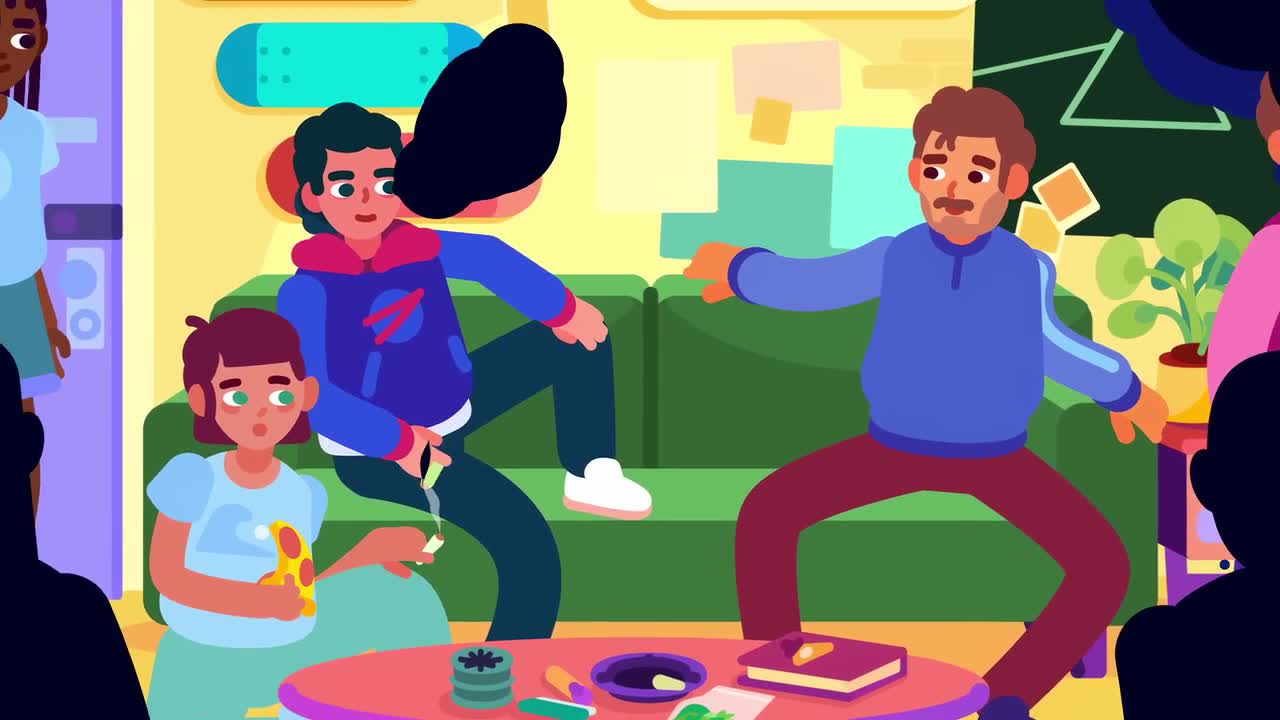
Weed is a serious drug that can have devastating consequences for your life.
This is an unpopular thing to say, but it's true.
We don't think it should be illegal because for most people using weed isn't problematic or has only mild negative consequences.
But about 20 of people who've ever tried it develop cannabis use disorder and some of them become severely addicted.
That's actually a stunning amount of people, and many who start using weed don't know what they're in for.
In the US daily, or near-daily, weed use has skyrocketed since way before legalization, and there are now more daily users of weed than drinkers of alcohol.
And most daily users consume very high amounts.
In 2023, 1 in 15 adult Americans were suffering from some form of cannabis addiction.
In England, cannabis is by far the top drug teenagers seek help for.
Today, we'll ignore medical use, casual users and people with mild problems, and instead we focus on the people who have a serious addiction or are in danger of developing one, even if they're not aware of it.
Weed is usually discussed in the context of teenagers, because using any drug while your brain is melting and rebuilding itself is a bad idea.
Instead, we'll have a frank conversation about how to fix you in your 20s and 30s.
We'll combine research with our own personal experience of weed addiction.
Unfortunately, we do have plenty of both.
Please check out our sources.
But also know this script is written by someone who used weed daily for 15 years before quitting.
Okay, so let's get into it.
Becoming addicted by accident.
Most people slip into addiction gradually and slowly.
They start using weed for a variety of reasons to experiment, to cope or unwind from stress, because it's fun and easily available.
Weed can make you feel more alive and things more exciting.
Music sounds better, movies are funnier, food is a delight.
It can be great fun with friends and a major source of comfort.
The frequency with which you're consuming weed is the most obvious thing to look out for.
If you're using daily or almost daily, this is a clear sign you're developing a problem.
As a daily user.
Your risk of cannabis use disorder is up to 30, and certainly a pretty relevant risk, since it might take years before you realize the full weight of it.
So, if you're not careful about it, what started out as an occasional high becomes more and more normalized.
Bit by bit, your weekends revolve around weed or shift to activities that you can do stoned.
Often other hobbies or obligations become less of a priority.
Then it creeps into most weekdays, and finally, it's an established ritual every day.
Over time, weed's nature changes.
The joy-enhancing effects dissipate while a comfortable numbness takes over.
Weed can become your primary method of coping with life, but it doesn't make you stronger, better or more resilient.
Instead, it covers up negative emotions by building a snail shell that you can retreat into.
Do you have a problem with weed?
Super easy, test.
Stop doing it for four weeks, starting today, not tomorrow today, no matter what you have coming up.
If that feels challenging or you can't make it, this should give you food for thought.
Once weed has become a daily or near-daily habit, the cumulative damage to your life can be profound.
But first, let's talk about another thing that can become harmful without you noticing it.
No data security.
Today's sponsor, Incogni, helps you reduce your risk of scam, harassment and more.
Data brokers constantly collect your valuable personal data, which can quickly fall into the wrong hands.
The result is lots of spam at best or a stolen identity at worst.
But you often don't even know that your data has been sold and it's really hard to get it removed.
Besides, other brokers will continue right away so it starts all over again.
Incogni helps you break the loop.
Simply give Incogni permission to work on your behalf and your data will be deleted automatically and is no longer offered for sale.
You can also use the custom removal service to delete your data from specific sites that have exposed it without permission.
Incogni is the first and only data removal service that's been verified by Deloitte.
Use the code Kurzgesagt to protect your peace of mind and get 60% off annual plans.
And now, back to weed.
Forever Tomorrow For problematic weed users, life can sometimes progress in slow motion.
The addiction keeps you where you are, while your body ages and your friends move forward.
But youth masks stagnation.
For years.
You don't notice how much weed might be holding you back, because if you're young, life changes by itself.
The outside world takes on the initiative and provides a lot of support for you.
You're surrounded by peers may still have childhood friends, progress through school, start work or university and find new places and friendships.
Moving slowly is kind of okay in your 20s, as life naturally throws experiences and challenges at you.
But it's still not great for you.
This is the time when your body is probably at its peak and you can use it for things you'll not be able to do later, from sports to dating and staying out late, traveling and experiencing the world.
It's the easiest time to build a healthy social life, the greatest predictor of how happy you'll be over the next few decades.
You'll likely never have fewer responsibilities again, so you can explore and take risks.
Spending this time stoned with passive activities like scrolling over reposts on Reddit is something you might regret later.
You'll never get this period of your life back.
As you age out of your 20s, things change massively.
Around this time, most people naturally tone down their weed consumption or quit entirely.
You're entering one of life's great inflection points, and you risk getting left behind.
Your social life is different after 30.
Friendships need care, attention and active time investment to survive, and weed addiction works against you on multiple levels.
Studies show that for some people, weed can worsen social anxiety, especially if you start using more and more.
And once you feel anxious about socializing, it becomes pretty tempting to just stay home and avoid events or new experiences.
Since weed numbs feelings, it's easy to push away FOMO or guilt about cancelling last minute.
You'll go next time.
But will you?
Speaking from personal experience.
You may turn into a friend that's unreliable, flaky or rarely shows up anymore.
But the more opportunities to hang out with friends you skip, the fewer will be there in the future.
Especially if you do weed alone, it can become the central focal point in your life.
Reports show that many people with addictions gradually reduce the activities or hobbies they once enjoyed in favor of consuming.
Bit by bit, this can make you withdraw from the people in your life.
While this can be pretty bad for your social life in your 20s, it may be catastrophic by the time you turn 30.
Because in their 30s, most people are plenty busy.
Careers, partners, travel, children and their closest friends are now priorities.
Free time becomes super valuable and casual hangouts turn into two adults comparing their calendars.
So, people in their 30s are way more selective about what and who they spend their time with.
Smoking a joint drops way down their priority list.
Even without falling out, you may simply become incompatible if your identity becomes tied up with weed, or when your friends have a lot going on and you don't.
This happens a lot without weed, but weed can supercharge it.
So many problematic weed users focus on a small circle of friends and acquaintances who are also using weed.
This can create an isolation trap.
If your friends quit or they withdraw to use it alone, you can face sudden isolation and loneliness.
Or you may feel pressure to keep using it because you're scared of losing your friends.
It's harder and takes longer to make new friends in your 30s than in your 20s, so to change your situation you need courage, energy and motivation – things weed addiction makes much harder to master.
Worse still, people who feel lonely tend to use more weed to cope, which is linked to even more social isolation.
Weed can fill the role of your best friend – it's there when you're lonely.
It makes you feel okay in the moment.
Your love life can also suffer.
Social anxiety and complacency is a great motivator to put off dating and having sexual experiences in your twenties, and it doesn't get much easier as time passes.
In relationships, weed addiction can be extremely disruptive.
Reports show that partners of daily users can feel neglected, that couple communication can break down and that trust evaporates.
The addicted partner usually doesn't realize how poorly they're handling relationship issues and can be blindsided when their love leaves them.
And, to be frank, in their 30s, people want a partner who's ready to share the growing responsibilities of adulthood and wants to build a life together.
The older you get, the more unattractive your weed addiction makes you.
Okay, but who needs friends or love if you have a career, right?
Well, the Achievement Delay Machine.
Long-term studies show that heavy-wage users are more likely to end up with reduced academic performance, a worse education, lower income, less savings and less stable employment, even when compared to people from similar family backgrounds and social class.
Many people with weed addiction struggle to show up for work.
They're not productive, they procrastinate, and they fail to meet their responsibilities.
The consequences of missed opportunities and bad decisions slowly accumulate.
Maybe you skipped networking events, had no ambition and didn't get promoted or hopped between entry-level jobs.
It's also much harder to build up savings since the addiction can cost you thousands each year.
In your 20s, you transition from being useless to being good at something.
And so in your 30s, expectations from others and yourself change sharply.
People tend to cut you a lot of slack when you're young, but this has an expiration date.
The older you get, the worse it feels to compare yourself to peers that are moving on in life and start achieving things, and it's not just career goals.
If you spend a decade or two using weed all the time you grow less as a person you probably traveled less, went out less, met fewer people, had fewer interesting experiences and, in a way, lived less than your peers, which also really becomes noticeable in your 30s.
In some studies, long-term chronic weed users had significantly lower life satisfaction from their motivation and pursuit of personal goals, social and love life to careers and options.
Your life may just overall be much less fun and fulfilling than it could have been.
On top of all this, your mental health is the final thing that you may erode over time.
The Prison of Weed.
What makes weed addiction so devious is how, at first, it can seem to improve your mental health.
It can calm anxiety or depressive feelings, make you more relaxed and feel less lonely.
But weed acts on your brain's reward system and the effects can flip without you noticing.
Weed can damage your ability to regulate your emotions and can worsen anxiety or depressive feelings, and can escalate into serious mental disorders which you might think that you can self-medicate against by doing even more weed.
This can impair your coping skills, making you fragile and easily overwhelmed, unable to deal with stress, increase anxiety or depressive symptoms, worsen your mood, cause mood swings and irritability.
The addiction can hold back a dam of bottled up negative feelings that's ready to crash into you and the people around you at any time.
Until eventually it doesn't work anymore.
Especially during a mental health crisis, weed can make things much worse for you.
On the flip side, there's research that shows that addicted people who give up weed experience a noticeable improvement in their mental health.
Here's the thing.
All the negatives we talked about – missing your life as it flies by social isolation and not even getting close to living up to your potential – are not happening sometime in the future, but today.
No matter your age.
If you find yourself addicted or in danger of becoming addicted, there is a way out.
It's not fun and it will be hard.
You need to quit.
And the earlier you do, the better your life will be.