
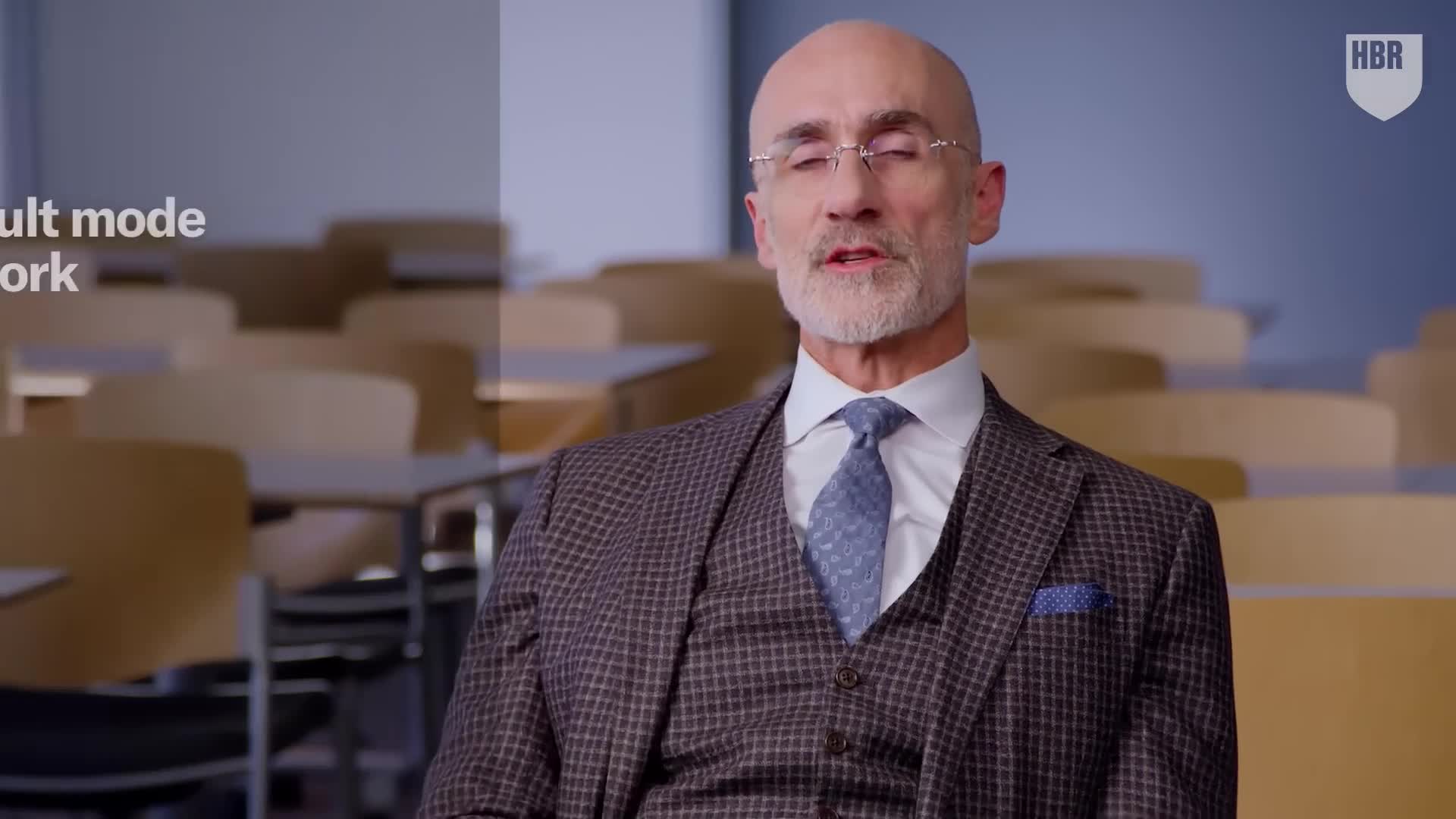
[The Vital Necessity of Boredom: Escaping the Doom Loop of Digital Distraction]-[You Need to Be Bored. Here's Why.]
📋 Summary
The Vital Necessity of Boredom: Escaping the Doom Loop of Digital Distraction
In our modern, hyper-connected world, boredom is often treated as a modern-day plague to be eradicated at all costs. However, this podcast argues that our reflexive avoidance of boredom is a primary driver of the current mental health crisis. By constantly filling every quiet moment with digital stimulation, we are inadvertently starving ourselves of the cognitive space required to find meaning, purpose, and psychological well-being.
The Neuroscience of Boredom: The Default Mode Network
Boredom is not merely the absence of activity; it is a vital cognitive state. When we are not occupied with external tasks, our brain shifts into the "default mode network." This network, consisting of a collection of brain structures, activates specifically when we have nothing else to focus on. Despite its fancy name, it serves a critical function: it turns our attention inward. While we often view this state as uncomfortable, it is the mental laboratory where we process existential questions and reflect on the "meaning of your life."
The Doom Loop of Digital Avoidance
Human beings have a documented aversion to boredom. Research conducted by Dan Gilbert at Harvard demonstrated that when forced to sit in a room with nothing to do, most participants chose to give themselves a "painful electric shock" rather than sit with their own thoughts.
Today, we have perfected the art of avoiding this discomfort by keeping a device in our pockets. Whether waiting at a traffic light or standing in line, we reach for our screens to suppress the default mode network. The speaker identifies this as a "doom loop of meaning." Because the default mode network forces us to confront uncomfortable existential questions, we use our phones to shut it off. However, by consistently avoiding this discomfort, we lose our capacity for introspection, leading to an "explosion of depression and anxiety" and a pervasive "sense of hollowness."
Reclaiming Your Mind: Practical Protocols
To break this cycle, we must intentionally reintroduce boredom into our lives. The speaker suggests starting with small, manageable periods:
- Device-Free Moments: Practice being in your own head during a workout or a commute without any audio stimulation. This is where your "most interesting ideas" are born.
- The 15-Minute Rule: Gradually increase your tolerance for boredom, aiming for gaps of 15 minutes or longer.
By building the "skill of boredom," you will find that ordinary life—your job, your relationships, and your surroundings—becomes more engaging rather than less.
Implementing Personal Boundaries
To combat the addictive pull of dopamine, which the speaker likens to "children screaming in my head," he suggests implementing strict personal protocols:
- No-Device Policy: Implement a hard cutoff for screens in the evening (e.g., after 7:00 PM).
- Physical Separation: Do not sleep with your phone in the bedroom.
- Mealtime Presence: Keep devices away from the dinner table to ensure you are there for your family, not for "people who aren't there."
- Digital Cleanses: Periodically disconnect from social media and screens entirely.
Conclusion: Redefining Emergencies
Many people fear that disconnecting will cause them to miss something important. The speaker dismisses this, noting that "the news can wait" and that social media updates are "not an emergency." By setting up emergency-only notifications and ignoring the constant noise of the digital world, we can reclaim our mental health. Ultimately, the message is clear: we must put down our phones to rediscover the coherence, significance, and meaning that are essential for a fulfilling life.
Deep Learning with ListenLeap


