We're brought to you today by Momentus.
As someone who's been plant -based for years, I've seen my share of protein powders that claim to be clean, but are loaded with all kinds of additives and fillers, and being conscientious about what I put into my body, as I'm sure you are, well, this can be a challenge when it comes to the wild unregulated world of supplements, which is why I turned to Momentus to meet my supplement needs, including their 100 % plant -based protein, because it actually delivers on its promise.
First, each serving delivers 20 grams of protein from a precise 70 -30 blend of pea and rice protein, creating a complete amino acid profile with amazing taste and mixability.
Second, Momentus is all about quality.
Unlike other plant -based proteins, their formula is third party tested for heavy metals.
No fillers, no additives.
What you see on the label is exactly what you get.
Third, their reputation speaks for itself.
Momentous is trusted by over 90 % of NFL teams, Tour de France champions and Olympians.
For years Momentous's plant -based protein has been my go -to post -workout.
It's great, in a smoothie, but I also kind of love it and just water, and sometimes I even stir it into my oatmeal, and I bring single serving travel packs everywhere I go.
So get into it, people, by visiting livemomentous .com slash Rich Roll for 20 % off all orders and up to 36 % off new customer subscriptions.
We're brought to you today by Go Brewing.
You know, I rarely get to witness the birth of a company from inspiration all the way to execution.
But that is exactly what happened with this product right here, Go Brewing, And I find the whole thing kind of poetic.
A handful of years ago I spoke at this all day event in Illinois, it was called Go.
And it was all about taking inspired action in your life.
And what I didn't realize was that, something I said that day sparked something profound in a guy called Joe, the event's founder, leading Joe to create this innovative non -alcoholic beer company.
And what makes a story especially compelling is the meticulous approach they've taken to the craft. After testing literally thousands of batches in their modern brewery and lab, Go Brewing launched in 2023 and quickly earned gold and silver medals at the best of craft beer awards.
Their selection features everything from double IPAs to sours, all crafted in small batches using carefully selected hops.
These beverages are made with natural ingredients, respecting traditional styles while offering a healthier alternative, no added sugars and no unnecessary processing.
The non -alcoholic revolution is here everybody, I'm proud to help champion it.
Check out Go Brewing at gobrewing .com, use code richroll for 15 % off your first purchase, you will be very happy.
I thought I would feel enough when I won an Emmy, I thought I would feel enough the first time I got a book out and it was on the New York Times Bestseller list. I didn't understand that that was the enough in five minutes later that enough was gone.
If there was one thing I've learned But over my 58 years, most people are out there just trying to do their best with what they've got.
And everybody is on their own journey.
No matter who you are, no matter how rich or famous or powerful or respected or even revered, nobody gets a pass on life.
We all have our pain, our challenges, our fears, our regrets.
and I think on some level at least, we're all on a path of self discovery.
Being human, we're just all in this constant process of figuring out who we are, where we stand, and how to be more authentically ourselves amidst the expectations of others so that we can be more comfortable in our own skin.
Remember what it was like to feel joy and to give and receive love.
And I gotta say, just because your name is Maria Shriver does not mean that you get a pass.
You don't ever really know what's gonna happen today.
You don't know what's gonna happen tomorrow, and you can live in that space, or you can just live.
Your purpose is you're here.
I'm a big believer in that.
And it changes as we move forward in life.
Today, I'm honored to share a deeply personal glimpse into the interior lived experience of an American icon in a delightful and at times emotional conversation, I think you'll find utterly riveting and far more relatable than you might suspect, as well as deeply hopeful for those experiencing a season of darkness.
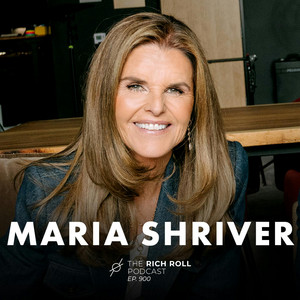
So ladies and gentlemen, the former First Lady of California, Miss Maria Shriver.
I wish I knew at 40 what I know now.
I wish. Thank you Rich. Maria.
Yes Rich. So delighted to have you here today.
Thank you for having me.
It's an honor to get to share with you.
And I think you're in a really interesting place in your life right now.
I am. We've got this new book and we're gonna get into all of that.
But I wanted to kind of set this up.
I wrote it down cause I didn't wanna get it wrong.
in thinking about your life and this new book, I Am Maria, that's coming out.
It's a very different kind of book than I think I was expecting and probably others will be expecting from you.
I don't know what I projected onto what I thought it would be.
You know, it was like these books tend to be like, confessionals or you know, it's not that at all.
It's really this really - What did you think it was gonna be?
Well, I don't know.
And maybe just, I mean, you've written books before, so I guess I didn't expect that it would just be the typical kind of standard memoir, there would be some unique way in, but I wasn't expecting a book of poetry, I guess I would say.
And in reflecting upon that, this like sort of poetic reflection on your life, it's really this exploration of self discovery, it's about finding yourself, finding your truth, your authentic self.
and this journey to kind of healing and wholeness over the course of what I think we would all agree is a very big life that you've lived with peaks and valleys, high highs, low lows, trauma, joy, longing, betrayal, but ultimately hope, it's coming home, right?
Yeah, absolutely. And I think that's really brave, it's honesty and vulnerability in a very different kind of way.
It's not vulnerable in that you're gonna tell these stories that are embarrassing, it's vulnerable because you're demonstrating this willingness to like look really deep within yourself and redress like your part in all of this as a way of finding yourself, but doing it in a way where it is about you but it's not.
Like these poems, like we can all find ourselves on some level in them.
And although our lives are very different, like I identified with a lot of what you had to share and I think it's a really beautiful offering.
Thank you. Thank you so much for taking the time to read it and for seeing that I didn't wanna do a memoir.
As I say in the book, I feel like I'm too young for a memoir.
I feel like I have this whole life yet to live, this whole chapter yet to develop in my life.
But I wanted to reflect back and figure out how I got where I was, you know, why I made the choices that I did, what was my own experience, and that it would be helpful to others, because I had gotten so much strength from reading experiences and journeys from others.
And I'm a big believer as a child, I read the books of saints to inspire me.
I was, you know, educated by nuns.
And so they gave you a lot of books about saints to read.
But as a young woman, I read biographies, autobiographies, and I read a lot of poetry.
And I was always inspired by what I read to move forward, to make choices.
And I originally never intended to put my poetry out there.
And then I gave it, as I say, the book to several people.
And they're like, this is my life, too.
This is my experience.
And this helped me look within.
And I'd given a couple of the poems to Mary Oliver, who was a huge hero of mine and friend.
And she's like, you have to publish.
You have to write more.
And that's kind of how, in a roundabout way, I came to this book.
And my hope is that it inspires others to write poetry, which I think is a tool and not the kind of poetry I think of Mary Oliver, because that's Pulitzer Prize winning poetry.
But it's really poetry from the front lines of all of our lives, and I think that's a great tool to your healing.
Yeah, when she said, you should publish these, was that a terrifying moment?
Oh, I was just like, oh, Mary.
I was like, and I only had a couple at that point.
But she was so brave. She was such a brave woman in my mind and she wrote so beautifully about nature and about life and about experiences.
And when I was First Lady of California, I produced a big women's conference.
And I always, every year I went to her and I said, could you come and participate?
And she was like, no, I don't do that, no. And she just kept knowing me and knowing me.
And then I went to hear her speak and I want to meet her.
And I said, could you please come?
It's my last year, will you come?
And she came, and that began this friendship between us all the way until she died.
And then I spoke at her memorial.
and her poetry particularly the journey, that poem in and of itself really got my attention and changed how I saw my life and how I saw my own role in my own life.
When she said, you should pursue it, I think she was more like a mentor saying to me, keep pursuing what you're doing.
Yeah, that's interesting.
I think in general we have this relationship with poetry, there are poets and there are normal people and poetry is sort of this impenetrable sort of thing.
Or so we think. Yeah, we think.
And I'm reminded of a friend of mine, his poetry, his public name is In Que and he's sort of a poet for the people.
And he writes these amazing poems and does these kind of one man shows that are really quite remarkable.
And his poetry is amazing, but he teaches poetry workshops like all over the world.
And his whole thing is like, we're all poets, and this is like, it's a practice like journaling that allows you to connect with yourself and find some kind of truths in the practice of it.
And he makes people write poems like immediately and then get up on stage and share them and that kind of thing to like get you habituated, to get you over that like barrier of like what poetry is to make it like a more accessible practice for people.
Well, I think we, I totally agree with him.
I think we are all poets.
I think we are all creative souls, I think we are all artists.
And when we were driving out here, Sydney, who I work with, we were talking about that I think it will be the poets, the creatives, the wounded, the healers, who will be shaping our society in the future, and really in the present.
And I'm excited by that.
I'm excited by people's poetry from the front lines of their life about excavating what's within about observing what is present and writing your way forward. That was a very healing thing for me to write my way forward. It allowed me to actually visualize what a life forward looked like.
I've been a different kind of writer throughout my life.
First as a journalist, which is just who, what, why, where, when, who did it?
What do you need to know?
And it's short and it's tight.
It's a very different kind of writing.
And you have like a minute 30 or a minute 40 and it's two pictures and it's specific.
And then you're writing books or you might write commencement speeches or you might journal.
And then I began the Sunday Paper which is my weekly news magazine and I started writing kind of a weekly column and then I kept at it as a practice.
And over time, a new voice emerged from within me and out of me that I first I was like, who is writing this stuff?
It's like, whoa, it doesn't feel like me, It doesn't seem like me.
And also the poetry didn't really feel like me or seem like me.
And I thought, well, that's cool.
There's something else in here.
What is it? A way of finding deeper truths about yourself.
Absolutely, or excavating deeper things that I didn't even know.
And that combined with a meditation practice, that combined with a respect for silence and making way for silence in my own life and allowing a voice to speak was, and is incredible for me.
And it's an incredible experience and one that anybody and everybody can have. But once a reporter, always a reporter, your daughter still calls it reporter poetry, so.
Yeah it is because I think we're all here really to report on our lives, right?
To find out what makes us tick.
What is our passion?
What is our mission?
I certainly grew up with, you better get out there and figure out what you're gonna do to change the world.
And so, figuring out what was my service, what was my passion, what was my purpose, started at a very young age for me.
And being in silence, being in conversation with myself, reporting on myself allowed me to figure that out in a way that the mind did not.
If that makes sense.
Yeah, I mean, the excavation process involves deconstructing the past So you can build something new for the future.
And this journey to wholeness is really that in your own life, when these ideas come out, it's like where did that come from?
Well, we have to go back to the beginning and reflecting upon your upbringing and your life, like it's very difficult for the average person to kind of understand the lived experience of what you went through.
I mean, there are very few people on planet earth who carry a name that creates a sort of relationship with the public, right?
You are sort of prejudged.
People make assumptions about you everywhere you go.
People think that they know who you are.
There's a parasocial thing with your family.
And I can't imagine what that's like especially as a young person trying to internalize that.
So I think it would be helpful to kind of paint the picture of what that was like for you, because we can't understand how you evolved unless we understand where you came from.
Well, you want me to say where I was born, who I was born to, how I came - No, but I think more of the sort of the vibe, you know what I mean?
Like we all have heard the stories of the ultra competitive you know, high Annisport, you know, competition oriented experience of, you know, being a member in good standing of your family.
Yeah, so it's the only lived experience that I have. I grew up, I'm one of five kids.
I have four brothers.
I'm one of a kind of collective group of cousins.
We all kind of grew up together.
It was intense, and I think a lot of people grow up intense, but we grew up obviously in a public way and an intense way.
And I grew up with parents who, I call them architects of change.
they were just believers that you are here to change the world, and you should start as young as possible.
And they had no, kind of my mother's like, I don't want to hear any if and buts about it, just get out there and change the world.
And they did that, both of them.
My dad obviously started the peace corps, he started the war on poverty, Job Corps, foster grandparents, you name it.
My mom worked and started the Special Olympics, and she worked along with her brother, president John F.
Kennedy to establish Council on Mental Retardation and her work was to change the lives of people with intellectual disabilities and that work continues now with my brother.
And all the programs that my dad started in government and outside of government continue on to this day and I think are, you know, testaments to his creativity, his relentless drive and his passion to make the world better and different.
So I think they both had a passion for that.
So I grew up in that atmosphere and my house was like that all the time.
They were both also deeply Catholic.
They both went to church every single day.
So our home was filled with people who worked in government, people who worked in service, people of religious life, but all people who had vocations and purpose and wanted to change the world.
So I grew up in that environment.
it was competitive, chaotic, probably dysfunctional.
And there was a lot of drama and chaos and people obviously getting assassinated and then, you know, running for more offices and getting assassinated again and everybody feeling like they, I think had to maybe run for office and do what those who had come before them did.
And I didn't wanna do that.
And so I had always felt, I don't know if it was cause I was the only girl, whatever, but I always felt like I wanna find my own path.
I wanna find my owned way, a little bit out of here to survive, but also I understood that my parents felt strongly that unless you were making a difference in the world, like what was the point?
It's complicated, cause on the one hand, Like it's unbelievably, you know, inspirational, like the example that your parents set.
Like we are a family of service and you are expected to heed that call and find a way to, you know, give back.
And you know, the recurring kind of thing in your book is, you know, for those who have great privilege comes great responsibility and that sort of this ethos, right?
Yes. And there's something really beautiful about that.
And then on the other side, there's the pressure and the expectations and also the transactional nature of love.
Like you're not to be unconditionally loved, your love comes in proportion to your ability to achieve and serve and all of these things.
You tell the story, you're like, you couldn't even sit down for a minute, your mom would be all over you, right?
And that get up and go is like the engine that engineers all of these changes.
Like there's something great about that But at the same time, when you're suffocating in that and just yearning to be kind of seen and loved, like how do you internalize that and find yourself within that where the world is telling you and your parents are telling you, this is who you are, you don't even have that opportunity to do it for yourself?
Well, I think the idea what you just said there, yearning.
I think we're all in a way yearning for love, I think we're all yearning to be seen, I think we're all yearning to be enough for just being rich or Maria.
And I think that certainly the message I got at a very young age was that is not enough and you better make it enough.
And if you go out and change the world, then it will be enough.
Maria will then be enough.
And I think I've tried to change that pattern of parenting with my kids and I've tried to really make it so that they feel they are enough in and of themselves, that they are enough regardless of what they do, what job they have, how they are.
I expect, and their dad expects them to be good people, to be kind, to be loving, and to be respectful, but I want them to know that they are loved for who they are regardless of what they're doing.
And I think that that's something I didn't realize until much later in life that people do that, that that is actually going on.
People are like - But this is the real gift like - You could sit on the couch and still be okay.
I was like, wow. Yeah.
But this is the generational trauma pattern interrupt, right like in you healing yourself, you are kind of drawing a line in the sand and saying, this is not okay anymore.
And you spare your children, like the pain that you suffered as a result of that while also instilling in them the good aspects of kind of how you grew up and what's important and what's not.
Yes, I mean, I'm a huge fan of both of my parents.
I love them. My mother is my role model.
She was the person who, and probably still has the most influence in my life.
And I miss her every single day of my life.
She was tough. And it was somewhat confusing, because she wore pants, she smoked cigars, She carried a briefcase.
She went to work. She went to the office.
She only hung out with men.
And I was like, okay, is that the female model?
I don't know. My dad was planting flowers and doing, you know, the house.
So they were like flipped in a way.
And she really was, you know, you got to get out there and move it, you know, she'd be like, move it along.
And, you know, if you said to her like, oh, I have a headache or my she's like, nah, not on my time.
Like we don't complain here.
We don't have a yip out of you.
she'd put up pictures in the dining room of kids starving in Africa and then say eat, do you want to eat dinner?
Look at these pictures.
So she was like, no nonsense.
She kind of, you know, was tough and expected a lot.
But I think that was expected of her as well.
As I came to realize later, you know, in life, you, you kind of repeat the way you're brought up, and she was brought but it got up tough and much was expected of her.
And I think she in a family where all the attention went to the men, she was trying to prove herself.
Yeah, I'm curious around whether it was more intense for you because you were a girl and despite all of her amazing accomplishments and everything - I can't say that because my brothers will listen to this and go give me a break, Maria.
Despite everything that she did, she was still overshadowed. Like this was a world of men, your family.
Yes. And so, she was still in the shadow of that.
And that kind of teased me off because she did so much and she was so extraordinary and had she been in a different time, right?
When I remember growing up, people would always come up to her and say, Oh, if this were a different time, you should run for president or you could have been president cause she was really politically smart strategic.
She was relentless.
She worked both sides of the aisle.
She was in all of her brothers' ears all the time.
She accomplished a tremendous amount with her political savviness.
And so I think she was always trying to say I'm here too to her parents, to society at large, really, and I watched that as an only girl.
Watched her work like that, try like that, make an effort like that.
And I mean, in my mind, she accomplished that, but I don't think she thought she did.
Well, it wasn't until you were on the campaign trail when your dad was running for vice president that the switch flicked on journalism.
Yeah. Prior to that, you're getting sent all over the world and kind of doing service, right?
Yeah. I'm trying to figure out like, how do I fit into this, you know, complicated puzzle?
Yeah, and it was a gift. But my dad was running with George McGovern in 72, and there was no room for me in the front of the plane, so I got to sit in the back of the plane with all the journalists, and there were very few women in the back of the plane.
So there was one woman named Cassie Mackin, who was a very well -known journalist at the time.
And I watched all the people in the back of the plane who were really dictating the story that was coming out of the front of the plane.
And they also looked like they were kind of having fun.
and I thought to myself, aha, this is where I belong.
I belong with these people in the back of the plane.
They're creative, they're smart, they're making a difference in my mind.
They're pursuing the truth, they're writing stories, there's creativity going on back here, and there's great storytelling.
And I felt like that was a combination of everything I was interested in.
And I wasn't really interested in the people in the front of the plane.
So, for me, that was a light bulb that went off and it was like, I wanna pursue journalism as it was at that time.
I would suspect that you associated, you know, politics with tragedy or, you know, difficulty or, you know, I don't know what was, not to say that you were maybe turned off to it, but like - No, you can say that I was turned off to it.
I don't wanna be like these people.
Well, I didn't wanna go through it, it meant assassinations to me.
my dad lost in 72 in a really brutal way.
And that was really painful to me watching him deemed a loser and Nixon deemed a winner.
Watching, this was a man of great integrity and great ideas and great, it served in the Navy and was a man of service.
And to watch how he was deemed was as a child, a really difficult experience to go through, I found.
And I was also raised at a time where nobody kind of explained anything or talked about anything.
So people would get killed, but no one would, it was like pass the sugar.
Right. And then you would have this kind of massive loss and everybody be like, okay, what time is school, no one talked about anything that was occurring.
And so I bottled up a lot of those experiences and then went off to college and then decided to pursue a career in journalism, which I thought would allow me to kind of do my own thing and work my way up and make a name for myself in a profession that nobody else in my family was even entertaining.
So, two questions about that.
First, was Hunter S.
Thompson in the back of the plane in 72?
No, he wasn't on that plane, but I knew of him.
Yes, yes, he wasn't.
But Mike Barnacle was, a guy named Mark Shields, Cassie Mack, and there were a lot of people in the back of the plane.
And they were, as I said, most importantly, I thought that the people in the front of the plane wanted to know what the people in the back of the plane thought of them.
And they were wondering, what was the story that those in the back of the plane were telling?
And so there was this interesting dynamic going on and I thought, I want to be back there because I want to tell a story, not just about what's going on in politics, but I want to tell stories of people that I would meet that would be out in the world doing extraordinary things, and I thought that the television medium journalism at that time was a great place to inform and inspire and change people's hearts and minds.
People gathered around their television, they paid attention to what was on the news, and it really impacted people's lives, and I thought this was a way for me to tell great stories, to meet people, to travel.
It was competitive, it was hard. so it was a challenge.
And I thought this was a profession that fit me.
Most people in my family were becoming lawyers and talking about entering politics and that just didn't speak to me.
Well, the family business is people, politics, purpose and service.
So, how is it received by the family when you were like, I'm gonna be a journalist. Yeah, well, they were like what?
Cause that was the other side of the rope.
I was walking to the other side of the rope.
you know, my family walked by the journalists.
We make the news. Yeah, and so you were gonna stand on the other side of the road, that's really odd.
But I think they had felt that it was just an idea or something I was just trying out, but probably something that I wouldn't stay in.
But I was determined to, once again, make a name for myself so that I would be probably, which I didn't realize at the time, but that I would be enough, that I would be able to be something and that I would be able to get my parents' attention if I did well.
It's all about that fundamentally.
It was all about making my parents proud, which I think it is for everybody in some way, shape or form.
You're trying to get your parents' attention, you're trying to make them proud, you wanna stand out.
And I felt for whatever reason that it was hard to stand out.
It was hard to get their attention, they were busy.
And I knew that if I did something and did it well that would get their attention.
Do you feel like you ever got that approval that you were seeking?
Yes, we all want our parents to like be proud of us, right?
But I think you were reared in a very acute version of that, where I would imagine like no matter how hard you tried or how much you achieved, you were always gonna be like still not quite getting there.
But I think that was all me.
I think my parents did think I was doing a great job and they did say, you know, you're doing wonderful work and good job, but I didn't feel.
So, that was on me, not on them.
Well, you talk about in the book, this idea of independence, like masking a loneliness.
So, in other words, whether it's going into journalism or moving to California, these other things like, sort of coining it as like, I'm being independent.
I'm striking out on my own, like a little bit outside of this, you know, situation over here.
Yeah. But also an act of self preservation, like on behalf of yourself, but still kind of running away more than embracing, you know, who you actually were.
Like you're still kind of disconnected from like, you know, who is Maria?
Because the world tells you who Maria is.
And I didn't really realize that I was quote, running away.
I just knew that like, uh oh, I need to get away from this or this will be, this will consume me.
And I think a lot of young people feel like that in their families, right?
They wanna move away to kind of find their mark, make their mark.
And maybe they find their way home at some point or they think that that's what they're supposed to do.
And I think certainly, you know, I got out of college, I applied for jobs in journalism.
I started to make my way.
I had met Arnold at that point who was as far away from anybody I'd ever met or anybody that my parents had ever seen, for that matter.
So I think probably if they would have said I was being rebellious, or they thought, oh, this is a phase Maria's going through.
She thinks she's gonna be a journalist. Now she's going to California.
Now she's moving in with this guy.
Oh my God. It's all kind of like rebellious, but for me, it was life -saving and it didn't feel rebellious.
It felt like, okay, this is my path.
that's not my path over there.
Yeah, what's interesting about Arnold and you meeting Arnold and you talk about this in the book, like on paper, it looks like, somebody who's just wildly different.
Of course he is. He comes with all the charisma and all of it.
But he shared that ambition and that kind of drive that was very familiar to you.
So on some level it did feel comfortable and somewhat the same.
Right, they always say to you, whoever you're picking in life, if you're trying to work out something else in your life.
Of course, I had never been to therapy so I didn't know any of these things.
You're just recreating the chaos, you're recreating your upbringing life in your relationships.
Yeah, but I wasn't hip to any of that.
I had never been to therapy.
I didn't go to therapy until I was in my mid fifties.
And so I didn't know, I just thought like, okay, I'm gonna beat it over here to California.
Here's somebody who's free, here's somebody who's competitive, He doesn't mind me working, he doesn't mind me pursuing my own dreams. Let's go have fun.
Let's get out of Boston and Washington.
And that felt like a life saving move for me.
Liberating. And it was, it was a life saving move for me.
And it allowed me at that time to just get away from the intensity of my family, the intensity of the East Coast, and just kind of figure out what kind of life did I want?
what else was out there for me?
What else was out there for anybody like me who'd grown up the way I did, or was I meant to just duplicate what my parents had, maybe what my cousins were doing.
And it gave me a chance to look at the world in a different way.
But it looks like you kind of did both, right?
Like you were able to plant your feet on the ground and be somebody different and strike out with some level of independence, but you were recreating the chaos and the intensity.
I didn't realize like that.
And the striving, and all of that.
Yeah, I didn't realize it at the time, and I write about that in the book, and I think that's why I'm a big advocate of going to therapy young actually to figure some of these things out for yourself before you duplicate everything that you say you didn't like or everything you say that you were trying to get away from.
But yes, I did, I recreated a similar thing that I had left. And I think then I didn't really realize that until my marriage ended and then I was like holy mackerel.
Now what? And that was a time of deep introspection for me to figure out how I got to where I was and I wanted to, you know, look at myself, at the choices I had made, the way I had lived my own life and I wanted to resurrect myself and move myself forward but I knew that I had to do it differently than I had been living.
This episode is sponsored by BetterHelp.
You know, one of the things that I've learned over the years about therapy is that, it's not all about crisis management or just about facing and working through your shortcomings.
It is that of course, it's helped me through all of my darkest, lowest, and most desperate moments, but therapy actually really shines when you use it proactively as an essential tool to more positively navigate work, relationships, parenting, or yourself to really grow and help you build a better, more authentic life that is healthy, purposeful and sustainable.
In other words, therapy not as a red flag, but as a green flag, not just as triage to manage negative things, but as more of a life optimizer.
And BetterHelp removes all the resistance and the excuses by simplifying the process and giving you access to choose from its platform of over 30 ,000 credential therapists.
They've helped more than 5 million people worldwide.
And you can easily switch therapists until you find the right fit.
Discover your relationship green flags with BetterHelp.
Visit betterhelp .com slash rich roll today to get 10 % off your first month.
That's BetterHelp, H -E -L -P .com slash rich roll.
If you're a long time viewer of this show, then you already know that I've spent plenty of episodes diving super deep into the evidence -based science behind the many health benefits of fasting from disease prevention all the way to health span extension.
At the same time, there is this elephant in the room, which is acknowledging that forgoing all food for extended periods of time, well, it's kind of a big ask and intimidating enough to dissuade many who would otherwise benefit from this practice.
But what if you could tap into those benefits without committing to a full -on fast?
That is the question my three -time guest, Dr. Valter Longo, one of the world's top longevity researchers set out to answer.
And after decades spent looking into this at USC's Longevity Institute, he developed the Fasting Mimicking Diet, which is a protocol now accessible to everyone through ProLon.
ProLon's got this five -day program that gives you the benefits of fasting, supporting healthy blood sugar and boosting energy, and even enhancing skin without going full on fast mode.
Everything you need comes in one box.
You open it up, it's all laid out in easy to read instructions.
All five meals are packaged right in here for ease and convenience.
And you've got soups, you've got snacks, you've got beverages, all dialed in for each day.
And the science backs it up.
Three consecutive cycles can drop your biological age by 2 .5 years and trim one and a half inches is off your waist, amazing.
To help you kickstart a health plan that truly works, ProLon is offering all of you, my audience, 15 % off, statewide plus $40 bonus gift when you subscribe to their five -day nutrition program.
Just visit ProLonLife .com slash Rich Roll, that's P -R -O -L -O -N -L -I -F -E .com slash Rich Roll to claim your 15 % discount and your bonus gift. ProLonLife .com slash Rich Roll.
To me that moment when your marriage ended feels like it's sort of like hitting rock bottom and sobriety or like this divine moment of rebirth, like where you're kind of really forced to like face yourself in a new and more profound way than you ever have and take stock of how you were living and figure out a way to move forward and take responsibility, right?
And you talk about betrayal in the book And this idea of reframing betrayal, not through the lens of like what somebody did to me, but like the betrayals that you levied upon yourself.
Can you talk a little bit about that?
Yeah, which I had never a shaman that I was working with talked to me about that.
And he talked to - I love that you went to a shaman.
Yeah, I went everywhere.
I went everywhere. And I think that that's okay.
I think it's, people are like, oh, well, you shouldn't go to a psychic and you shouldn't go to a shaman and you shouldn't look at Buddhism and you shouldn't look at Hinduism.
I'm like, I looked at everything.
And we live in LA. Yeah, but I think that demystifying all of that and making, there are teachers everywhere.
There are teachers all around us and I'm a big believer in that.
So he talked to me about, you have been betraying yourself probably since you were a young girl.
You say you have certain values, you probably slowly broke them apart.
You said you would never do this, you probably did that.
Let's go back and look at yourself and look at what you said you would never do that you did.
Look at choices that you made you said you never would.
And let's work on you, not work on the other person.
And I thought that that was a really powerful thing.
Let's look at how you can resurrect yourself, not wait for someone's apology, not wait for someone's, you know, letting it be okay for you to resurrect yourself.
This is you're in control.
You're the empowered person, you do the work, and you can do the work.
And that was very, like, okay, let me look at myself.
Let me look at, and that's when I started writing the poetry, where did I slowly start to, you know, chip away at things that were standards for me.
Where did I slowly give up on myself?
Where did I slowly give myself away?
Where did I, and how I can get it back.
I wanted to own my own narrative here, own my own story, and also give up trying to be enough for somebody else at the same time.
That's the big one.
Yeah, that is the biggest one.
And that took a really long time for me, and I have gotten there.
and I think that that's, for me, that's a triumph.
I think that's, when I opened this, I was saying how much I related to it.
And I think that is an experience that so many people can relate to.
Like, we just don't feel like we're enough and we're under pressure and we're trying to satisfy our bosses and our partners and our kids and feeling like we're always falling short no matter what.
And sometimes it takes a crisis to kind of engage in that level of self -reflection.
I mean, what you did is really kind of like an A, it would be an inventory.
Yes. You did it with poetry.
But short of... Amen.
Short of like having some kind of big crisis, like, how do you talk about how people can find that level of self -empowerment through self -reflection to come to those - Well, I think people are having crises all the time now, right?
They're having, they're looking at themselves through social media, and they're not enough, that they don't compare.
They're looking at jobs and thinking I don't have a purpose here, I'll never be able to get a house, how will I have a family, I think we're having many crises every single day all over the place.
I think the country is in crisis.
I think everything that was is falling apart and that gives people, people have a lot of angst, a lot of anxiety, and I think a lot of need for is this going to be okay, what's happening out there.
And I think I'm a big proponent with that.
I'm an advocate, as I said, of silence, of coming home to yourself, of writing, okay, well, maybe that's going on out there.
Maybe those comparisons are going on out there, but what's going on in here?
What am I feeling myself?
What do I want? How do I feel I'm going to make a difference?
What am I here to do?
And how do you drown all of that out?
I don't think you need to get hit by a 2x4.
I don't think you need necessarily to hit rock bottom, whether it's in AANA, you name it, or whether it is to get divorced or get fired from a job.
There's all kinds of heartbreak, I think, going on all the time.
But I think the key is stopping in this society.
Stopping and allowing yourself to sit in silence and have that conversation with yourself and report on what's going on within.
So I think that that's possible for everybody.
I wouldn't advocate hitting rock bottom.
I would advocate ending up on a floor looking at your marriage and going, now what, you know?
But sometimes that's what it takes.
But I think we're seeing breakdowns in small ways all over the place today.
And therefore that's why I'm hoping that whether it's writing or your friend, you were saying that he's democratizing poetry and telling everybody that they can write.
And people feel a huge release when they write.
Even if they don't think of themselves as writers, some people write with their opposite hand, their non -dominant hand, and see what comes out there.
I'm just a big believer that that can help you find your way forward when you feel in crisis, when you feel stuck, when you don't know the way forward. Yeah, it feels indulgent, but it's actually, you know, positive self care to do that.
And for somebody. Does it feel indulgent to write?
Well, I think to stop and pause and carve out quiet time for yourself, especially if you're somebody who does feel like you're always behind in terms of like living up to others, people's expectations of you.
That's exactly the time to do it.
Yeah, I know, it's like the time to do it is when you feel the least compelled to do it, right?
It feels like that is a luxury that I cannot afford, but you need that pattern interrupt.
Otherwise, you're gonna continue to just reap what you've always sown, right?
But it can be, you can start with five minutes.
You can start with 10 minutes.
You can start with 15.
I'm not saying you have to be thorough and go to Walden Pond, or you have to go off onto a silent retreat or go onto a retreat or, you know, do what Jesus did and go away for 40 days.
But if you look at history, if you look at people who've actually been able to gather their thoughts before social media, they they went away and kind of took time to be in silence to gather their thoughts and things I've read about Bill Gates, Jeff Bezos, they still go away and find time to like, What am I thinking?
Where am I going? What is my purpose?
How do I want to change up what I'm doing?
That's a conversation that everybody needs to have with themselves.
So if you're having it in the bathroom, in your closet, I've talked to some women who have two kids and they say they get up 20 minutes early and they go in the bathroom, lock the door and just try to figure out, what do I think?
Where am I going? What do I want to do?
So I think if you start, I have a poem there.
Start where you are and start with what you have, which might be five minutes.
It might be 10 minutes.
Just it, that kind of thing can lead.
that can begin to design your path.
I think when you talk about things like purpose or meaning, like what is my purpose?
That that's intimidating for a lot of people or perhaps even violent.
Like, oh I should feel bad about myself because I don't know what my purpose is.
And these poems that you've written are really just demonstrating what it means to like look inward and try to make sense of the complicated emotions that we all have. And those bigger grander ideas has kind of emerged from that as a practice?
Yes I mean I think purpose is different for everybody and I find so many people come up to me young people especially you know friends of my kids and like I'm looking for my purpose.
It's like your purpose isn't hiding behind a tree right?
It's not but just kind of doing something you love your purpose is you're here.
I'm a big believer in that and we all and it changes as we move forward in life.
But these poems are really about an excavation of one's childhood, of one's feelings, of one's longing, of one's love.
And my purpose has changed.
My purpose now is to share this, to share the kind of art of poetry, the democratization of poetry, reflecting, it's different than it was when I was in my twenties, and that that can evolve.
All my work has kind of brought me to this place in a funny way where I never thought I would be.
I think young people often feel like I need a purpose.
Oh my God, oh my God.
And I think it just to take some of the it's okay.
You're okay, you're doing great, you're enough.
It's okay, you're gonna figure it out, I'm here to help you.
You don't have your purpose now or just get rid of the word. you know, find your creativity, find what brings you joy.
I have a quote in my bathroom that says, follow what brings you joy because that's what the world needs is more people doing what brings them joy, that's a purpose.
And joy is related to following your intuition.
I mean, purpose with a capital P, it's like, Scary.
Yeah, so purpose is revealed in the doing, like are you engaged with an inaction with those things that bring you joy.
And what are the things that bring you joy?
Well, let's look inside.
What is your heart telling you?
Exactly. And we live in a culture that doesn't really value that.
Like it's all about the intellectual mind, right?
And that's what we prioritize.
And we allow this thing between our ears to make our decisions for us and drive our lives in so many ways.
And we forget that we have this other mind down here that is the more important mind that should be making the bigger decisions is about where you're investing your time and your energy and determining like what's frivolous and what's important.
But you just said your heart, right?
So how do you get in touch with your heart?
Well, you have to remove distractions and carve out time for quiet reflection.
That's all I'm advocating or suggesting.
And as I said, for some people it's locking the door before your kids get up and going into the bathroom and just sitting there.
You know, some people, I've talked to women who like say, I hide in the closet or I go in there just to kind of gather myself.
That's a gift you give to yourself that's not selfish.
That's necessary for you to know what your intuition is trying to say to you.
What your inner voice is trying to say to you.
You can't hear it if you're on social media 24 seven scrolling, you can't hear it if you're in distraction mode all the time.
I used to be deathly afraid of silence.
I used to be terrified of being alone because I didn't think I could handle what would come up.
I was so afraid. And when I started to try to meditate, I couldn't even sit still for 30 seconds.
Well, you had a lot packed down, right?
A lifetime of like shoving things away.
Yeah, but I think a lot of people do.
I think a lot of people, maybe young people today I have a different language around that, but definitely I did not grow up in a home that talked about feelings.
I did not grow up with people sitting around allowing for that.
So I packed everything down.
So when I sat still like that, I'd be like, like, no, let's go do, do, do.
The intuitive voice, it starts to be intimidating.
But the thing is like that voice, it's always calling to you.
Yeah. And if you're living out of alignment with it, it starts to, you know, the volume starts to increase.
And if you continue to ignore it, you do set yourself on this sort of collision course with some kind of crisis, because that's just the way life is.
Like it's sort of wired that way.
And you talk in the book about like, you know, all of these things happen for us as opportunities to like grow and evolve.
And I think that's really true.
And so you can ignore your intuition or that voice that you're keeping an abeyance that really knows what you should be doing.
But because you're not doing it and you don't know how you could start doing that, like it creates all this dissonance that's just too uncomfortable to confront.
Yeah, and I think that, you know, luckily, God -willing life is long.
I think I look back on that girl and I feel like when I was reading this book as an audio book, I had so much compassion for her that I never used to have. I had no compassion for myself when I was working, when I was going through stuff.
I was just like pull it together, you know?
And I was really rough on myself.
And I feel really badly that I had no compassion for myself.
And I think that we can have a need to have compassion for so many people and ourselves, but others, because people are trying.
That's what I've really come to learn, that people are trying, they're trying to figure it out.
Or I say to my kids when somebody said, my kids will sometimes say like, this person was such a to me or whatever.
I'm like imagine what they're being to themselves.
Imagine what's going on in their life.
Imagine what's going on in their head or in their heart.
You know, life is tough for everybody, whether you grew up in well -known family or a family with nothing.
And I think we're in an age when we're just like dissing everybody, I wrote about that this morning, we're just in a disk time, dissing you, dissing me, dissing people of privilege, dissing people of pain, dissing people who step out, dissing people who share, just why I have no understanding where that gets us at all.
It's not reaping anything positive right now, but the volume on it seems to be, you know, at a fever pitch right now.
And I don't know where that, yeah, where are we headed, like unless we're course correct with all of this.
Well I'm hoping, once again, that I said that I think the healers, the poets, the wounded will actually course correct us.
Because what's going on I don't think will course correct us, and I think we're in need of course correctness.
We're in need of compassion for one another.
We're in need of compassion for ourselves.
We're in need of silence.
We're in need of living lives.
I think we're all wanting to live lives of meaning.
We all want to make our life matter in whatever way we decide that is.
But the incoming is brutal and what's on social media, what's out there, it's just brutal.
To what end, I'm not sure.
So I'm hoping that this book can help people look at their own lives and their own journeys with more compassion, that they can allow things to come up and then look at it and be compassionate it for that side of themselves, that child in themselves, that may have made wrong decisions, that may have ended up in places that they didn't intend.
And that it also gives them the power to know that they can course correct, that they can resurrect, that they can come home.
And that we all make mistakes and we're all, you know, suffering in some way, shape or form from heartache.
And that we're capable of healing, helping one another to heal and healing ourselves.
In this healing journey that you've been on, looking back on that young Maria and having compassion for her.
On some level, like an operating system was installed into you, like, this is who you are, this is what we do, this is what's important, and you had no say or control over that, right?
And the healing journey has been one of first at some point, like, recognizing that you just inherited this thing and perhaps got lost within it.
And we're in a confused place where you couldn't even have a connection with who you really were.
So you had to kind of rewrite the code or like unravel this knot and then be kind of naked before you could tie a new knot around like who you are and what's important to you that of course is gonna be related to that past but which is truly you.
Does that make any sense at all?
I'm like how do you do that, you know?
Yeah I mean, I feel in a funny way.
Look at, if somebody told me five years ago that I'd be releasing a book about poetry from the front lines of my life.
Yeah it's kind of funny.
Are you crazy? No way.
I don't even know some mornings I wake up and I'm like why am I doing this?
And it's in a way, it feels like a sole purpose.
That's the only thing I can describe it as.
I feel like I'm in a really great place in my life and I'm 69 years old, and I feel like everything I've gone through in my life, been through, tried, failed at, worked at it again, has come to this place.
Everything I'm doing now, I'm using skills that I got by going from my first job all the way through.
So I try to say to my kids, You know, don't worry that you're not in a certain place at 27 or 30 or 35, you know?
Shucking oysters, working at a bar in Georgetown actually helps me where I am today, right?
Being a journalist helped me when I became First Lady.
Being an entrepreneur with Mosh, I got from being entrepreneurial in my role as First Lady.
Getting to where I got in my marriage helped me to resurrect myself and see what I was actually made of and stand on my own two feet, practicing forgiveness, practicing healing.
I have a great relationship with Arnold.
I have a great relationship with my kids.
My brothers, I know where I'm going, even though I have no idea where I'm going, and I can hold both.
And I would never have thought I'd be here.
So I said to my kids, don't worry about where you're gonna be in the next couple of years.
Just keep working, keep trying, keep following your bliss.
Joseph Campbell talks about that.
Howard Thurman talks about that.
Have rituals in life.
I'm a big believer of that.
And don't be afraid.
I'm terrified with this book.
I'm terrified. Well, you're very exposed.
But like that's why it's so powerful because you're like, I, this is me.
Yeah. And I'm owning my space.
Yeah. And I feel really good about myself such that I can put a poetry book out in the world for everybody to read and say whatever they're gonna say about it, right?
And like, I'm good with myself because I honored that thing inside of me that wanted to express myself that way.
Yeah, and I never thought I would be doing that.
And I never thought that feeling enough would take what it took.
I thought I would feel enough when I won an Emmy.
I thought I would feel enough the first time I got a book out and it was on the New York Times bestseller list, I didn't understand that that was the enough, and five minutes later, that enough was gone.
I didn't understand that the work of being enough is an inside job, it has to do with, for me, my relationship with God, my relationship with my faith, my relationship with myself, the work that I've done, the work that I continue to do, I was not given that message.
I was given the message, you will feel enough when you run for president, when you are on the cover of this magazine, and that was a false promise for me.
Yeah. It's hard to override that because that's our cultural imperative, right?
Arthur Brooks calls it the striver's dilemma.
And if you're an ambitious person or you have that internal engine, you're gonna chase that thing.
And all of those things are fine.
it's our relationship to them, right?
And when we self identify with them or allow them to dictate how we feel about ourselves independent of them, that's when we get into trouble.
And it's so difficult to override that you could be somebody who is, I mean, you've been going to church forever, right?
Like, and hearing whatever they're telling you there, you know, every Sunday and still not being able to like put those pieces together until you had to have the experience for yourself and like run into the wall with it to like say this isn't working.
Yeah, but I think so that's cool in a way I think of it, you know, it's like okay, that didn't work, that didn't work, this worked, you know?
And I think staying at it is the work of our lifetime, right?
The figuring out why we're here, figuring out what will make us feel enough, what will make us be at peace?
What are we here to do?
Those are all questions that come from our own internal dialogue and our own conversations that we have with ourselves.
So journalism was great for me at the time that I did it, you know, and I did it on a daily basis, on a weekly basis and it was ferocious and I was determined and all of the things that I've done in my life I feel like, okay, those were all stepping stones to getting me to realize it's just me.
I'm just here by myself.
I'm just kind of, that's it.
That's all there is.
In the rear view mirror, it all like makes sense, right?
Like it almost looks predetermined.
Like all these things happen so that you could become this person.
Of course, when you're living it, it's chaos and confusion all the way.
But one of the hilarious things is when, Arnold decides like, okay, I'm going to run for governor.
And you're like... It wasn't really hilarious.
Yeah, I'm like, you're like, oh, my God.
I've done everything to move away from politics.
And here I am, in this position, that I was trying to run away from, life was basically just threw that curve ball at you.
You can't escape certain things about your past or who you are.
That was like, okay, here you go, Maria.
What are you gonna do with this now?
What are you gonna do with this?
And not only are you gonna be thrown back into politics, but you're being thrown into the opposing party of politics, you know, so I think that that was, you know, as I write in there, it was something I definitely was not in favor of, and it turned out to be a great thing for me, and I think it turned out to be a great thing for him, and it also taught me that, you know, you don't stand in somebody's dreams in the way of their dreams. When people have a dream, your job, if you're a partner or a parent is to get out of the away and let them pursue it.
And so I think, you know, I learned a lot by being kind of quoted democratic first lady in a Republican administration that I've been able to put to use in my work in women's health, in my work at Alzheimer's research and funding for Alzheimer's.
So all of these things, once again, helped me out and I ended up making incredible friends there.
and I found a voice at that time that I didn't even know existed within me, I had to stand on my own and give speeches on my own.
And it turned out to be an incredible thing, something I didn't want and something I didn't want him to do, turned out to be an incredible experience for me.
And in the doing fulfilling the family prophecy.
Yeah, my parents were really happy with that and my mom was like, oh Arnold's gonna run for governor.
Got it, get it, I know that.
You know, so that's funny, but she, you know, also, I was like, wow, this is really kind of a wild turn of events, I would never have thought when I met him that he would run for office, but I don't think he would have thought it either.
This guy's the furthest thing from that world.
Yes, furthest thing I could get, you know?
So I was like, sure, that if I hitched my wagon here, I would never have anything to do with politics again.
So there you go. I want to talk about the Alzheimer's stuff and the brain health but before I do that, I would be remiss if I didn't ask you about how you went from the dissolution of your marriage and just, you know, how painful that must have been for you to this place where you have a good relationship with Arnold today.
Like, I think that there's inspiration in that.
So many people are divorced and struggle with you know, trying to find a way to have a healthy relationship with their ex. So like what exactly did you do to kind of go from there to here?
Well, first I healed myself.
So I really focused on that.
And I focused on being okay with myself and I focused on resurrecting myself.
I focused on liking myself again.
What practices like how did you actually do that?
Well, I went to therapy.
I did plant medicine.
That was when you first started to go to therapy and that yeah.
And I did everything you can think of.
What was that like?
That was great. It was very healing for me.
It made me love myself, help me to love myself.
And that's what I was trying to repair myself and heal myself.
I wanted to be a good example for my children.
I wanted to resurrect myself.
I wanted to keep my shoulders back.
I wanted to hold my head up high.
And I always, I tried to close my eyes and picture, you know, five years out, 10 years out, I wanted to picture my children's wedding.
I wanted to picture my children having children themselves, and I wanted to, and I envisioned Arnold and myself at those events, you know, friendly, happy, so that my children would not feel conflicted, so that my children would not feel like they couldn't be in the same room.
So that my children didn't have, can we have mom and dad in the same room?
And I put that, that was a visualization practice for me and I made steps always with that vision front and center in my mind.
And I also focused on the fact that since I had been 21 years old, I had been trying to help Arnold achieve his dreams. and I had loved him, and that just because this happened, didn't mean that I couldn't love him in a different way and that he couldn't be my friend and that we were still and always would be a family and that half of him was in these children and half of me was in these children and that their life depended on us getting along and I wanted to lead in that area.
Yeah. That's a heavy thing.
Like, you can craft a story.
There was a very public story around this and you could very easily say, this is the story, right?
And there's good guys and bad guys, but who is that serving?
And there's something kind of magnanimous about like, I'm going to write a different story no matter what anybody else is saying about this for my own wellbeing, for the wellbeing of my children and to like have this different experience.
That's what I wanted to do.
And I think that's happened, I hope.
It's an ongoing thing.
And I think it's something that we all have to work at, those of us who are divorced or people who are separated or whatever it is.
And I remember my pastor saying to me, I know many families living under the same roof who are way more divorced than many divorced families that I know.
So I just put together a vision for myself to work towards that I wanted so that when our daughter Catherine had her first baby and we all gathered in the living room and we were all there and took pictures and held the baby, there was no issue.
There was no angst. And I got in the car afterwards and I burst into tears.
I could cry now, because I was like, that's good.
That's pretty great.
That's great. And I could have taken this path and I could have taken this path, but I really have worked hard to take this path.
And everybody sat in that room and everybody laughed and took pictures and felt good.
And I was like, that was good, I've worked hard at this.
And a parent, your kids through that.
Yeah. You know, when it's in the public sphere.
Yeah, I think that that's always a challenge.
I think they're extraordinary people.
They love their dad and I wanted them to love their dad and they love me.
And I wanted them to find their own paths forward and be able to make their own relationships.
And I hope for each of them, that they have partnerships that last forever and that if one of them finds that they don't, I want them to know that there'll be okay, by showing them, well, this, I certainly, I had 35 years with your dad, that's a really long time.
And so, and I'm okay, and I'm standing.
And so is he and, you will be able to too, if that happens to you.
And so that was important to me, you know, for all my children, but especially for my girls.
Your kids seem great.
I mean, I don't know you that well.
And I only met your kids very briefly at that Mosh event, but they seem very well adjusted.
And what's so interesting in the timing of that is like, I did the podcast with Arnold in his office.
And then when we finished that, he's like, I gotta go.
It's Patrick's birthday, I'm going to this birthday dinner.
And I was like, I'm gonna see Maria cause she invited me to go to this Mosh event and do this panel.
And so I never met any of you or either of you and then like in rapid succession, like I met both sides of the family and have the opportunity to chat with Patrick a little bit.
I only met your daughters pretty briefly.
Yeah, they're all great.
But I got the vibe, you know what I mean?
Like these are like good people.
Thank you, thank you.
That's my life's work.
And it's the greatest thing.
I was terrified to become a mother.
I liked my job. I was traveling all over.
I was not in any hurry to have kids but I think fundamentally I was afraid.
And I was afraid. I also had our first kid, Catherine, when there was no maternity policy, there was nobody in the news business having a kid and surviving or continuing on.
So I was like, yi. And the minute I held her in my arms, I was like, this is for me, this is what I wanna do.
And I enjoy them more than any four people on the planet.
And I just went the other night to Patrick's premiere for White Lotus because he's in the new season of White Lotus.
Which is premiering this Sunday, right?
I don't know when this is going out, but like, you know.
Yeah, I don't either, but it was so, it was one of those nights, you know, where like all the kids were in the car, everybody was dressed, everybody was laughing, everybody was being supportive.
We all went, everybody was there to support Patrick, and it was like, I was like, this is just awesome, to have to be lucky enough, my kids are healthy.
They like each other at this moment.
They like each other, they love each other.
They enjoy each other's companionship.
They include me, they include their dad.
I'm like, wow, life is good.
It doesn't get any better than that.
It doesn't get any better than that.
I had a similar experience over the Christmas holiday, like our kids are 29, 28, 21 and 16.
Everybody was home, everybody's getting along like we're past all the petty adolescent fights and all of that.
And everyone's enjoying each other's company.
And like, Julia and I, they're happy to be with us too.
Like we have a great like, they're not like I wanted to get away.
I was like, get me away from my parents, I would go home for holidays, but it wasn't like I would look forward to time spent.
It was sorta like, this is what you do.
And to be able to have a different kind of relationship with them, I mean, is the most gratifying thing you could imagine.
And it's like overwhelming cause that's what every parent wants to, aspires to have. It's overwhelming, and that's what I, when I sit and have dinner one -on -one with one of my kids and I feel enough.
I feel like, wow, this is what...
I never knew that this is what it was about, that I just sit there and I'll say to my son, do you want me to invite other people?
He goes, I'm good mom, just with you, I'm good.
It's all good. And I'm like really?
You know, wow, okay, thank you.
And the domino effect of that.
Oh, it's like, that's what it's all about.
And I think that I wish I'd known that at a much younger age.
I wish I'd known that, you know, that that's what it really was about and that these other things, and I think it's helpful if people who are, you know, winning those awards or on the cover of magazines, you know, say, this is great, this is wonderful.
but what it's really about is being enough to yourself and having one or two other people also feel that you're enough.
And that's that feeling of contentment where no one's jumping up from the table to get away from you, or trying to substitute you with somebody else.
That that's really what we're here for.
That's the feeling we're supposed to be chasing.
Allowing them to be who they are.
Amen. And celebrating them for that.
But if there's anybody in your sort of extended, family who's likely to carry on the family legacy, it might be Chris Pratt.
How long before that guy runs for office?
I can see that. I could see that happening.
You'd have to talk to him.
But all I know is that he is an incredible husband and father and unbelievably gracious and loving son -in -law and a beautiful man inside and out and the way he treats Catherine.
And the way he treats her siblings.
The way he treats their children is beautiful.
And I think he has his eye on the ball and he knows what matters.
And I think he knows where he feels enough.
That's cool. He's a wonderful man.
People try to get him like oh, you know, you're moving across the street from your mother -in -law.
He's like, I love my mother -in -law.
Yeah, you know, he doesn't fall for like, you know, the tweaking and yet he also has a great sense of humor.
So they have a cool thing going.
So, but you'd have to ask him what his plans are.
Yeah. I don't know.
Well maybe one day he'll come here and I can ask him but we'll see.
We're brought to you today by Bon Charge.
It's fair to say I have treated my skin into a lifetime of harshness.
Thousands of hours in overly chlorinated indoor pools with God knows what other chemicals that were in that water, a lot of sun exposure, and pretty much zero skincare concern.
So it wasn't until I hit my mid fifties that I started doing what I should have been doing all along, which is actually care for my body's largest organ.
And all of this led to kind of a fascination with the science of skin rejuvenation and in turn to the incredible product line by Bontage.
Most notably, their Redlight Face Mask.
There's so much cool science about red light therapy and there are a lot of red light products and brands out there, but Bon Charge is my brand of choice because it uses specific wavelengths of red and near infrared light specific to rejuvenating your skin at a cellular level.
It's completely noninvasive, requires just about 10 minutes a day, which I do at home, preferably when no one is watching, I would add.
And the design is incredibly thoughtful.
There's no cord, it's comfy, It's slim enough for easy travel.
There's nothing elaborate about it.
Just science -backed wellness accessible at home.
So check it out. Go to boncharge .com slash richroll and use coupon code richroll to save 15 % off.
That's B -O -N -C -H -A -R -G -E .com slash richroll.
That's R -I -C -H -R -O -L -L and use coupon code richroll to save 15%.
Walk me through how you became interested and connected with brain health and Alzheimer's in particular.
Well, my dad got Alzheimer's and my father sergeant Shriver was the smartest human being I and probably everybody who met him had ever met.
So to watch somebody like that lose their memory, to lose their brain, so to speak was a stunning experience.
And so when he was first diagnosed, I was like, what is this?
And I went out as a reporter and said, like, how does this happen?
When does it start?
Why him, what is going on?
And I wrote a children's book about it.
Then I did a big HBO special called The Alzheimer's Project about it.
then I became an Alzheimer's research and funding advocate because there was so little federal funding for Alzheimer's because it was something that people associated with only old people and far away in the distance, right?
And so it was what we would call open space.
There were very few people, people heard Ronald Reagan had Alzheimer's and then Daddy wrote a letter explaining that he had been diagnosed with Alzheimer's.
But I wanted to understand it as a daughter.
I wanted to understand it.
And once again, I wanted to take this experience and try to help other people with it.
And then I started to notice that more and more women seem to have Alzheimer's than men.
And all the doctors said to me, no, you're only thinking that because women live longer.
I said, I don't think that that's the case.
And they're like, no, no, for sure that's the case.
So I spent a year and a half, almost two years, that partnered with the Alzheimer's association.
And we did a Shriver report to the president, to the nation that reframed that story that Alzheimer's did in fact happen disproportionately more to women than to men.
So that hunch, that gut, that intuition was correct.
And that nobody knew why that was because we had done no research on women.
And that led me to discover that the funding of anything vis a vis women was decades behind men that we were doing no research at all into women's brain health, so I started a nonprofit called the Women's Alzheimer's Movement to raise funds to research women's brains.
I became a big advocate for increased research funding of all things women's health, which led me to create, along with, in partnership with the Bidens, the White House Initiative for Women's Health and Research. And it's what led me, along with Patrick, to create MOSH.
Obviously it's a protein bar for the brain because in all of the discovery, we now know that lifestyle has a huge impact on dementia, Alzheimer's.
When I first got involved in Alzheimer's research, lifestyle wasn't even in the picture.
It was just a disease that happened to old people and there was nothing you could do about it.
And that storyline is vastly different today.
And so what we eat has an impact, how we sleep, how we connect, so many other things, how we exercise or don't, how we move.
All of these things now impact, we know, brain health.
But still, brain health is something, I think for a lot of people, that's kind of out there because they can't see their brains.
And as long as it's working somewhat for them, I think people don't associate what I eat, how I sleep, etc, with brain health.
So I'm on a mission to educate people about Alzheimer's, about brain health, and also to increase the funding for women's health and research. The mission is working.
There's still a lot of runway left in terms of educating people, but I'm old enough to remember that narrative of things like this just happen, there's nothing you could do about it, it's not your fault, it's your genes.
And it just is something that certain people get.
And once they get it, there's nothing you can do about it.
And now we're in a more empowering time in which we really are understanding the impact of lifestyle choices, diet, nutrition, exercise and the like and the impact that these things are having on our longterm health.
I think it's difficult when you're younger to even like think about, like making sure that what you're doing is gonna put you in a good position for when you're old, because you just, you can't like protract your life that far in advance, but I do see younger people really thinking about that.
I mean, it would have never occurred to me.
And when you think about these chronic ailments, whether it's heart disease or like Alzheimer's dementia, I mean, fundamentally it's a disease of the circulatory system, right?
And so what is bad or good for your heart is gonna similarly impact the brain and even be thinking about the brain and that we have any kind of agency over the direction of how we age and what it's gonna look like when we're 80 and what our cognition might or might not be is like incredible.
And now with all these tools, these devices, wearables, AI technology, I only see that like increasing.
But I think the real work from my perspective, and I'm curious, like what you've discovered, because you're so deeply entrenched in this, is that gap between like information and action.
Like it's one thing to say like, listen, you shouldn't eat these foods or these are the things you should do for your brain health and then actually getting people to believe that they have that kind of agency and then implement those changes in a sustainable way.
Yeah, well, I think that's with everything that we were talking about with the book, thinking, okay, well how do I implement that in my life?
How do I put rituals into my life that will benefit me five years from now?
10 years from now, right?
I hear more and more people saying, I don't want to end up like my father, my mother, my grandmother, my grandfather, what do I need to do now in order not to do that?
So there's much more awareness about alzheimer's, about dementia, about brain health than there was five years ago 10 years ago and I started in this space 20 some plus years ago and when I would speak about it people would look at me like I was crazy and now people are like I know someone.
My mother, or my father or whatever.
And I think also people see people living longer and they're interested in longevity.
The whole longevity market is very different.
And I think you just kind of, people have to take control once again over their narrative.
What matters to me?
Does exercise matter?
Where do I put it in to my life?
What can I eat? How do I eat?
Is ultra -processed food what I wanna eat?
And then people say, well, it's easy for you to say because organic are ultra processed in cost, but there are ways around all of these excuses and it becomes up to us to try to implement them to the best of our ability.
Now, I have an issue with sugar, but sugar is terrible for your brain.
So I ask people around me if you see me going for sugar, please stop me.
I ask for help, I ask for people to help me.
I now know that protein is really important for women as they age?
So I ask people, can you help me get more protein?
Can you? I say to my son, he's like, before you go over to do that podcast, here's the protein shake.
I'm looking for help because otherwise I oftentimes don't do that.
So I suggest that oftentimes to people, tell people around you to help you, ask for help.
Tell people like, do you want to be my walking buddy?
Do you want to go to the gym with me?
Do you want to pump with me?
Do you want to help me with the food?
Do you want to, and not to lose weight or not, but to be, first of all, independent, to be strong, I wanna be able to lift up my grandchildren.
I wanna be able to live independently.
I have to do stuff right now that's gonna help me with that and I wish I had done it at 40.
I wish I knew at 40 what I know now, I wish.
I think that idea of wishing I had started sooner.
The whole dementia Alzheimer's thing really locks in when you have a family member who's going through it.
And typically you don't have that experience until you're at a certain age.
Like I'm 58, my mother has dementia, luckily I've sort of made a lot of those changes when I turned 40, that's when I started to make these changes.
But imagine the 58 year old version of me or somebody else who's finally now reckoning with like, oh my goodness, like I don't want that but it's too late, I've been living my life a certain way up until this point it's so hard to change habits when you're locked into them for so many decades.
And like, isn't that script already written at this point anyway?
No, every doctor tells me it's never too late.
Start right now, once again, back to the poem, start where you are, today start walking, join a gym, start lifting weights, start eating more protein, start prioritizing your sleep, start prioritizing writing.
all of these things.
I think those are excuses.
And by the way, your kids are looking at your mom and they're in their twenties and thirties.
They're gonna pay more attention to their brain health because they're seeing it up close.
My kids saw my father up close at an early age and they were like, Whoa, like I don't want you to get that mommy.
And they also don't wanna end up as the caregivers, right?
Which as we all at some point in our life, will need to be taken care of or will become a caregiver, which is a whole other topic of conversation.
But I think that prioritizing our brain health along with our physical health, they go together, oftentimes people don't connect the brain to the heart.
They don't connect the exercise that they're doing for their triceps to thinking about what's good for my brain as well.
How do I work out my brain?
What does my brain need if my triceps or my biceps or my quads or my need squats, what does this need?
You know? Yeah. And I think that's the conversation I'm trying to have. Patrick's helping with Mosh.
But these are the conversations I think that are much more out there today than they ever were five years.
Or pre -COVID even. You know, people started during COVID talking about brain fog.
They started, now we talk about how people learn.
We talk about different learning styles, different how the brain operates.
We can see the brain in a different way.
So I think this is an exciting time for brain health.
And I think it will only become more exciting as more people become interested in longevity.
And as we search for cures in out -of -the -way places, and I think AI will be helpful in medicine in this way.
Because as everybody knows, we've been looking all over for a cure for Alzheimer's and everything has come up empty, which is depressing.
But then we have on the other side, the lifestyle research, which is hopeful.
Yeah. And the early detection with new technologies and scanning and blood work.
Right, but people feel like, well, I don't want to know early, because then what.
Yeah, it's scary. Yeah, it's scary.
It's scary. But if you feel like you have some agency in that to do something about it, to ameliorate it or reverse it, then you kick into action.
But yeah, who wants to know if they have, What is that gene that makes you predisposed for it even though it's not determinative?
It's like, do I wanna know that?
It's a scary thing.
But so much of life is scary.
It's like you don't ever really know what's gonna happen today.
You don't know what's gonna happen tomorrow and you can live in that space or place or you can just live.
So much of life's secrets are revealed in developing a comfort with reality of life being uncertain like we're so deeply uncomfortable with uncertainty.
Yeah, I get it. And so we're not acting in our best interest because of that fear.
But I think what's interesting to me is that, you know, like having just gone through the fires out here about the lack of control we all have in our life that we actually forget about.
We actually think we have all of this control, and you watch mother nature just decimate everything.
You're a bystander.
And you know, life just goes on, right?
And I think kind of living life as opposed to being afraid of it is a really important message that I try to convey to our kids.
I try to tell it to myself.
Like as I said, I'm afraid of this book of putting it out into the world.
I'm afraid of saying, I felt shame, I'm afraid of saying I was confused.
I was afraid of saying I sat on a hotel floor and cried.
I was afraid of writing this stuff.
And then I was like, but I was more afraid of not doing something that felt like it wanted to be born.
Or honoring yourself.
Yeah, but really be born, that it felt like a side of me wanted to be born and that I felt like I could've used this book 15, 20 years ago.
I could've used this book, and it would've helped me know, like okay, there's light over here.
Someone else has gone through this.
And as my other brother says, there are books like, you know, yours I don't think?
I'm like, okay, well, I didn't find them, and I read a lot of books, but that's the job of a brother.
But I'm hopeful that this will speak to somebody who might be on the hotel floor, who might be on the rock bottom, who might wonder about themselves.
And I'm hopeful that this will be an offering to them.
I think that hope will be realized.
While we're still on the topic of Alzheimer's.
We talk a lot about self care, what we can do for ourselves to prevent that fate from occurring.
But I don't hear a lot or enough about how the caretakers take care of themselves, whether they're family members or the spouse, the partner of somebody who's going through this.
I just know what my father is enduring right now and my sister who lives in Washington DC and is dealing with it in a much more kind of real way than I am being 3 ,000 miles away, it's incredibly trying for people who are trying to care for these people.
And it's a situation that, it's amplified because of the memory problem, like it's very triggering and it's very easy to lose patience.
So what have you learned about that side of this disease?
Well, I learned that once you've seen one case of Alzheimer's, you've seen one case of Alzheimer's, a doctor said that to me once, that every situation is vastly different from the other situation.
Every family goes through this in a very different way.
Siblings go through it in a different way and so I can only share what worked for us and my siblings and I got together, as I said I had four brothers and we started a weekly phone call to connect and try to figure out what each of us could do to support my dad who was in Washington at the time my parents were living together, my mother was having strokes, my dad had Alzheimer's, so they both needed different kinds of care, they both needed different things from each of us, so we tried to support one another in the process and that turned out to be a really great thing that we did because we were able
to hear from each other.
Some people felt more like on deck than others.
Some people felt like more weight than others.
Some people felt like I'm doing all of this and you're doing nothing.
And it was a place for us to talk amongst ourselves.
I think many families, many spouses need support groups where they can talk about the loss and the loneliness that comes up when a spouse gets Alzheimer's.
Some people begin other relationships and feel tremendous guilt.
in that and I think the other thing I've learned is that people start judging families that put somebody in an assisted living thing, judge families or judge a partner who starts another relationship and I'm always trying to advocate like, none of us know what that family is going through.
We don't know their finances, we don't know their pain, we don't know their anguish, we don't know their setup And I think it's to support families, right?
There are a lot of support groups that are out there for spouses, for children and people are going through like, I went through a different thing when my dad had Alzheimer's than my mom.
It was completely different.
She was frustrated in a completely different way than I was.
I learned patience from my children because they were watching my father in the present.
I was frustrated with him that he wasn't who he used to be.
And so my relationship was one of frustration, and they were like, why, just play a puzzle with Daddy, your father.
We're just playing a puzzle with him.
And I'm like, I don't wanna play a puzzle.
Yeah, I want my dad back.
I want it back, I want to talk about his work.
I wanna talk about his vision for the country.
I wanna ask him advice and they were really thrilled to be in the present with him.
So I learned how to deal with my father by also actually watching how my kids played with him, walked with him, watching how some of my brothers interacted with him.
And whenever anybody comes up to me about it, I will try to direct them to support groups because caregivers need support, they need care, they need help, for sure.
This is a 24 -7 job, it's expensive, so we need as a part of a national agenda to figure out how to get more support to families going through it.
I chaired a task force for Governor Newsom here in California for how California could do better when it came to Alzheimer's and what we needed in terms of more caregivers, we needed a task force, we needed a kind of standard of care, a standard of diagnosis.
and the disabled communities included in that, by the way, for people with Down syndrome who get Alzheimer's at a disproportionate rate.
So we haven't had a president who's prioritized Alzheimer's or caregiving or care, really.
And I think this is also a wide open space for us as a country to come together because this is knocking at everybody's door.
Well, the rates are increasing, right?
I'm sure you know the percentages, yeah.
As a bloomer, so more and more peoples, 10 ,000 people turn 65 every day, and so where people are having less children, there are not a lot of young people clamoring to get into the caregiving space.
So how do we make that enticing?
How do we make that accessible?
How do we maybe offer free tuition, perhaps maybe to state schools in exchange for two or three years as a caregiver?
These are some of the ideas that are out there that are being thrown around, how do we maybe get temporary visas for people to come in who wanna be caregivers, but also ultimately how do we find a cure to stop that in its tracks?
And also how do we look at how women age differently and why are women disproportionately getting this?
What's going on in their lives 20 years before they're diagnosed that makes them predisposed to this diagnosis.
And that was really the work that we tried to do under the Biden White House is to really prioritize funding for women's health and research because it lags so far behind.
Do you know Dr. Lisa Moscone?
I wrote the foreword to both of her books.
Oh, you did, I've had her here.
She's just amazing.
And I fund a lot of her research. Oh, you do?
Okay, good. I figure you guys were, to look at the brain as so you can see it.
and I do a lot of work with her.
And I've long believed that the menopausal brain, the pre -menopausal brain, the menopausal brain, the post -menopausal brain was the clue or had clues for us, which is why we funded the Women's Alzheimer's Movement funds her work.
Yeah, amazing. That story that you shared about your kids playing board games, there is something like this reframe and that's been helpful to me is recognizing that these are people who are compelled to live in the present, right?
And we live our lives captured by the past and like lost in future tripping and we're always being told like we need to be more present.
It's like, all right, we'll go hang out with these people because they're always in the present, right?
Yeah, it's beautiful.
I went when I was a first lady of California I went to this daycare center that was paired with a dementia center.
And the kids read stories to the people who had dementia in their assisted living place because they were doing the same puzzles.
They were doing the same art.
They were on the same trajectory.
And it was so beautiful because they didn't kind of think there was anything wrong.
And everybody was kind of - level, right?
It was such a beautiful thing and I thought that's such a great model we haven't really looked into all of these potential models that are out there for how we can live as we get older.
How young people can help older people, how they can live together.
I think there's a lot of possibility in that.
I have a great story about my dad when I was sitting with him when he had Alzheimer's and he said to me, do you hear the fountain, do you hear the water and I go, no that's traffic, daddy, you're listening to River Road, you can hear the traffic.
And he goes, no, no, I hear the water going down in the fountain.
I said, no, no, that's the traffic on the highway that you hear.
And he goes, no, it's water.
I said, it's traffic.
And he goes, it's water, and I was like, okay, it's water.
He goes, isn't it beautiful?
I said, I love the sound of water.
He goes, I do too, I love you sitting here with me listening to the water.
I said, yeah, me too, daddy.
I love sitting with you, listening to the water.
Once I stopped trying to have him be somebody or listen to something or be accurate, and I just got into his brainwave, we had this beautiful moment because I wasn't fighting with him to be someone that he wasn't.
And I think that's a great message for life for people who don't have Alzheimer's.
Yeah, I had a similar experience with my mother recently.
I was back in Washington in November and it's a very challenging situation, but we went out for a walk, walking the dog in Georgetown and she would just stop and like pick up a leaf from the ground and like, just marvel at it and like, look how beautiful this lead, like, this is not something my mother would ordinarily do.
You know, just able to experience awe and wonder by being forced to like the constraints of being so present, you know?
Yeah, it's beautiful.
And there's beauty in that, right?
Like, so amidst all the hardship and the tragedy and the challenges of somebody who's asking the same question over and over and over again, and there are these glimpses where we can all learn something, I think.
100%, you know, and I tried to write about that a little bit in the book, is poetry has helped me look with awe and wonder at nature.
It's helped me slow down and hear the water, look at the trees, look at the tree and think about the roots and think about my own roots and think about what I'm holding myself, like the tree is holding lanterns or the branches are holding up.
And I think, what am I holding up?
We can learn so much from slowing down from nature and observing these things that we would never...
If you had told me I'd be writing about a tree, I'd be like, what?
I'm writing about Jordan and I'm doing a story about the Middle East. I'm not writing about a tree.
And yet, I'm writing about a tree and I'm writing about awe and I'm writing about wonder and I'm writing about things that I noticed as I slow down and I'm having conversations with my father about water when we're listening to traffic.
Because you went on this journey of unburdening yourself from the burdens of others, right?
Which gives you like, yeah, like the sort of seize part or whatever, like you can kind of be with yourself in a new and different way.
Yeah, and I think that that's what's so interesting about life is that you kind of think you know where you're going but you have no idea where you're going.
You think you understand it, but you don't understand it, all of that is okay, and that's what I try to convey to my kids that it's, I used to think, oh, I don't know where I'm going, and get anxiety about it, and right now I have no idea.
I'm going on tour, I have no idea how my book will do.
I have no idea where I'm going.
I have no idea, but I close my eyes and I think when I'm 70 I'm gonna be in the yard and I'm gonna be surrounded by people who love me.
And I'm gonna feel enough.
And when I'm 80, my hair is gonna be flying and I'm gonna feel like I'm enough.
And maybe I'll have done 10 more extraordinary things and maybe, maybe, maybe, maybe who knows?
And I have to be okay with that and feel that I'm enough and that I can handle that.
And I'm capable of wherever that path takes me.
You seem more than okay with it.
You seem excited about it.
Yeah, I'm excited. I'm excited to be this age, I'm excited to be looking forward, I'm excited about the unknown, I'm excited that I know that I have the strength whatever is coming that it's coming no matter what I do and I want to be excited about my life.
I want to be excited about living.
Most a lot of people don't get to my age have lost friends who don't get to my age.
I have healthy children, I'm blessed, I wanna make a difference, I believe in family, I believe in love, I believe in faith.
I believe in living a meaningful life.
I believe that writing helps you find your way forward. I believe in reporting from the front lines of your life to help other people.
I believe in publishing books that do that.
I believe I'm gonna find or be part of a group of people that find a cure for Alzheimer's.
I believe I'm gonna be part of a group that changes women's health, and I'm excited about all of that.
There's a hopefulness that tracks with the way you end the book, right.
And so, you know, as we kind of begin to wind this down, like, what is it that you want people to take away from the book?
Like, what is the core message about pursuing a meaningful life, finding your own way home and kind of expressing yourself or living your life in a more authentic way.
That that's why you're here.
That that's the brass ring.
It's not the cover of a magazine.
It's not an award that what you just said is why we're here.
And if you feel like you have done that, if you feel like you're enough, if you feel like you're living a meaningful life, if you feel like you're able to share your ups and your downs, and that if you know that you have the strength, I love the Emerson quote, that what lies in front of you and what lies behind you are tiny matters compared to what lies within you.
All of us think we're not strong enough to handle whatever it is that life throws our way, which is why we're fearful, right?
And that we are, and I always say you are, whoever that, way stronger than you realize, way stronger that you are enough, that you are capable and that you will find your way because you are finding your way.
What you're doing right now is part of you finding your way.
And that's a beautiful thing.
And I love you. I went to Hoffman.
Oh yeah, oh, you really have done it all.
I've done a lot of stuff and where they say, you know, I see you and I love you.
And when I first got there, I was like, stop it.
You don't see me, you don't love me, you don't know anything about me.
And at the end I was like, I see you and I love you.
And I'm like, wow, for somebody to see you and love you and be compassionate and kind to you and say, wherever you are is right where you're meant to be and start where you are, God bless you, that's it.
That's all any of us really want.
Want, right. Yeah. And that I see you and thank you for having me.
Thank you for having me.
Thank you for taking the time to read my book.
Thank you for sharing your journey of hitting rock bottom and transforming yourself.
Well, I see you and I love you and I thank you.
You haven't even been.
I am not, it's been recommended many times.
This is the thing I'm avoiding, it's like the thing you're avoiding is the thing you need to do.
I wouldn't say I'm avoiding it.
I actually would really like to do Hoffman.
Yeah, I've had many guests here.
Like, I did Hoffman and in here, I did Hoffman.
And you know what? I nobody recommended, people should have recommended it to me, but nobody and I have, I got there and I was like, I have no idea why I'm here.
I have no idea why I'm here.
And I looked it up on the internet.
I was like, where can I go for a week?
That's like really hard, tough, serious about change.
And there it was. I just signed up cold.
I didn't know anybody who'd gone.
I didn't know anything.
And I went, it's kind of like - You were guided though.
I was guided and I feel the same about my book.
I'm like, I have no idea.
I'm like here it is.
I hope people see it and love it.
I think they will. Before as we end this, like, would you kind of indulge me and I wanted you to like read this, yeah.
Will you read this page?
I really love it. I don't know if I can read it, but I mean, oh, yeah, I don't have glasses.
I have some readers here.
This is the first line I'm gonna tell you because I thought about calling this book In Communion.
Because? Because I was in communion, I felt at long last of being in communion with all the different parts of myself.
I felt I was in communion with myself and I'm a very spiritual person and it came to me in church. And so for a long time, I had the title of it, In Communion.
And everybody's like, what does that mean?
What are you doing?
Where's the communion?
And we all have a heavy kind of like association with that word. The word communion comes up time and time again throughout the book.
So it was because I felt that I was in communion and I felt like that's, I feel like in this conversation I'm in communion with you, and I'm in connection with you.
I'm jiving with you, right?
So, but everybody was like, oh my God it's gonna make people think you're a nun now when you're off over here.
So I changed it. But, and I say that because the first line is it's about being in communion with all the different parts of one's self.
It's how we mend our hearts and our souls.
It's how we find our way home.
Ultimately, it's about surrender and salvation because I've learned that while our paths vary, we're all on a quest of our own.
Your quest can help guide mine, and mine I hope can perhaps guide yours.
My hope is that while reading these poems, you will feel there is healing and freedom on the other side of the trauma, of the pain, the regret, the judgment you may have experienced or may be experiencing.
Freedom from the self you think is you, freedom from that harsh, dark voice that lives inside so many of us.
We all need compassion for ourselves and love for ourselves.
We all need to forgive ourselves and accept ourselves.
For once all of this is given, healing can arise.
That's it? That's it.
That was really beautiful.
It should just be one page this book.
That's it, that's the whole book.
Or put it at the end.
Does it? Not that you have it like page one.
Page one, just read page one and draw it out and put it next to the toilet.
That was great, what a gift. That was super fun, thank you.
Thank you. Yeah, it was really great.
I think people are gonna love the book.
Thank you. Congrats.
This was amazing. We did it, how do you feel?
Thank you Grant you feel good?
Do we do it all? Yeah, we yeah.
Anything else you wanna say?
All right, well, you're always welcome here, come back whenever you feel like it.
Okay, I'll come whenever I feel.
That was really fun.
That's it for today, thank you for listening.
I truly hope you enjoyed the conversation.
To learn more about today's guest, including links and resources related to everything discussed today, visit the episode page at richroll .com where you can find the entire podcast archive, my books, finding ultra, voicing change and the plant power way, as well as the plant power meal planner at meals .richroll .com.
If you'd like to support the podcast, the easiest and most impactful thing you can do is to subscribe to the show on Apple podcasts, on Spotify, and on YouTube, and leave a review and or comment.
This show just wouldn't be possible without the help of our amazing sponsors who keep this podcast running wild and free, to check out all their amazing offers, head to richroll .com slash sponsors.
And sharing the show or your favorite episode with friends or on social media is of course, awesome and very helpful.
And finally, for podcast updates, special offers on books, the meal planner and other subjects, please subscribe to our newsletter, which you can find on the footer of any page at richroll .com.
Today's show was produced and engineered by Jason Camiolo.
The video edition of the podcast was created by Blake Curtis with assistance by our creative director, Dan Drake.
Portraits by Davy Greenberg, graphic and social media assets courtesy of Daniel Solis, and thank you, Georgia Whaley, for copywriting and website management.
And, of course, our theme music was created by Tyler Pyatt, Trapper Pyatt, and Harry Mathis.
Appreciate the love, love the support.
See you back here soon.
Peace, plants, Namaste.