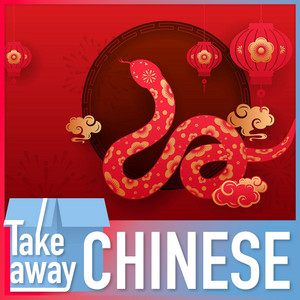
Take away Chinese, where you can take some Chinese away and experience progress day by day Take away Chinese.
We will promise you a difference Hi, welcome to take away Chinese.
I'm Ye Hong Lian with Steve Hatherly in the studio.
Hello Steve. Hello there Hello.
Hello. Hello. I want to ask you a personal question And I don't even know you yourself.
Know the answer. The question is, What is your Chinese Zodiac animal rabbit?
Oh, you know. Yeah, cool.
1975. So that's the year.
Well, one of the years, not the only year, one of the years of the rabbit.
So, yeah, I, yeah, I do know the answer to that.
I do know and I think you understand the concept of Chinese Zodiac Year.
Well I know that there are 12 different animals, and those different animals represent different things.
I know that there is the Year of the Ox, the Year of the Rabbit, the Year of the Mouse, I believe?
The snake? Is there a dragon in there?
Yes. Somewhere. And then that's about it.
And I also don't know what each of the animals is meant to represent.
I think all of them represent really good things.
Every year a lot of people are born.
There's not like 11 good ones and then just one terrible one.
No, it doesn't work like that.
That's good news. Yes.
But I think you know a lot about it already.
And it's always a big thing because it's kind of like the theme animal of the year, each year, especially during the spring festival period of time when we're celebrating the coming of the year, definitely you would also celebrate the animal of the year, the Chinese zodiac animal of the year, and it's also a big deal for those born in that zodiac year.
Because that means they're going to have a lot of luck in that year.
It's going to be a great year for them because that's their year.
Yes, that's their year.
And it holds definitely a lot of cultural significance.
And, you know, for my parents' generation as well as my grandparents' generation, they can even calculate your age based on your zodiac animal.
Well, because in that period of time China was much more of a society that holds a lot of value in your neighbors, in people living in the same village of yours, in people in the same community.
In the sense, not only are people contributing a lot to the development of the community, people actually know each other in the community, in a bigger community.
Oh, sure. Yes and that is why it's kind of like not that personal or not respecting boundaries when they ask your age, when they ask how you doing, did you get a boyfriend, are you getting married, these now considered personal questions that are not that polite were used to be very common and also it used to be a sign that this person cares about your life and they want the best for you.
So it with different atmosphere for sure how seriously do people take the year of the dragon or the year of the mouse or that how seriously do people take the zodiac signs what I mean is I'm a Libra that's my sign so I can look up on the internet what a Libra means it's for people born you know between September something in October something and I can look up on the internet and find the definition of that but I don't tend to take it that seriously in the West people tend not to take that seriously you can find your daily horoscope in the newspaper or something but people I should say most people
just read it for fun some people I guess do take it super seriously but the majority of people don't so here in China same here oh it's the same yes okay same idea same kind of meaning or signs you can find and same interpretation and some people take it seriously in the sense that when they're looking for not friends, but significant other, not even for themselves, for their kids, they would think about to the Zodiac, but mostly it's for fun.
Okay, that's good. Still it can be something as a theme that you, for example, decorate around.
It can be something that you chit -chat, especially when it comes to, for example, a party with people that you don't know that much about, We can talk about these things.
It's the same I guess you know according to those signs there's some sort of romance connection there like Libra's and Pisces don't match that well together or do match that well together, or some, I don't know any of that stuff.
But yeah, sure, people can use it for conversation.
For sure. For sure, and that is why this keyword, I hope everyone would be able to know a bit, so at least you can recognize it in Chinese conversations.
and the keyword here is Sheng Xiao.
Yes. So Sheng Xiao would be the Chinese Zodiac.
And if you're asking people, for example, which Zodiac year it will be, for example, for 2025 you can say Sheng Xiao Nian, literally Zodiac year.
Yes. So Sheng Xiao is the key word here.
That's the Zodiac. And you can also ask people their Zodiac.
You can ask about the zodiac year, and a lot of conversations can be around this idea.
And for our dear listeners, if you're interested in Chinese culture and you want to get a grip on the Chinese language, then this is the show for you.
Stick with us for 30 minutes and you'll soon see the rewards.
And for more fun Chinese learning, follow our Facebook page Learn Chinese to watch many fun videos and livestreams.
But now, let's provide you with some free Chinese for takeaway.
Let's allow that sentence to be the Chinese you take away.
So, Ma. Yes. So Nizhi Dao means, you know, or do you know in this sense, mìn gìn next year.
shi is shu mì what.
xìn xiào nian. zìn xiào diaq year.
mì whether or not. So, whether or not you know next year is what, zìn xiào diaq year.
OK. So, ni ji dao mìn gìn xiào shiào mì.
and then xìn xiào xiào nyàn mì.
ni ji dao mìn giào xiào nyào mì.
Okay, let me try that.
Okay, this is about to be my longest Chinese sentence I have ever attempted.
Drum roll. I feel like I'm at the Olympics.
Perfect, you're doing a really good job!
And the gold medal for Chinese.
Yes, I think it's a good sentence.
Wait, what did I ask?
What was that question I forgot already?
It means do you know which Zodiac Year it will be next year?
A sentence you can use to tease your foreign friend a little bit, because I think most Chinese people would know.
But for someone who is fresh off the boat starting their life in China, they might not know about the Zodiac Year.
And you can use that sentence to start a conversation with them about all the culture behind it.
Right. Right. So in that long question I'm asking if the person knows what is the year, the following year?
Yes. But if I want to ask the question, do you know your animal associated?
I mean I think most people probably...
Is that fair? Everybody knows?
Everybody knows. Everybody knows.
Okay, wait. So that's like asking someone, hey, do you know when your birthday is?
Yeah. a little bit.
That's a stupid question.
But you can say, you can ask, when is their birthday?
In the sense that you can ask, what is their zodiac animal?
I understand. So you can ask, faster what you can also say something say it easier because there is another name for Sheng Xiang another way of saying it whereas So shu is like belong to so ni shu shema you belong to which SOTY accountable ni shu shema No, ni shu shema.
Yes. so ni shu shema is a shorter sentence and make sure you ask a Chinese person because I feel like a new shu shema is too short a sentence for a Someone with not efficient Chinese language skill to understand but if you ask a Chinese person you shu shema they'll know you're asking about their Chinese zodiac animal.
Okay cool, what's yours by the way?
Mine is closely related to the coming year because wǒ shu shu.
Mine is snake. Wǒ shu...
Mine is shu. Shu is snake?
Yes, so my zodiac animal is snake, shu.
And next year happens to be shù nyè.
Shù nyè? Yes, the year of the snake.
the year of the snake so I don't know but I'm thinking well I would guess that the snake and the rabbit would not get along very well together because the rabbit could very easily be lunch for the snake we also have tiger dragon um they might not get along with the rabbit and also we have chicken, monkey, horse they might not get along with the snake so you cannot really think that way.
If you think that way a lot of people won't get along.
That's fair, that's true, yeah.
Okay, so you're the snake, I'm the rabbit and now we know how to ask someone what their symbol is.
Yes, and there are two ways.
Knee de sheng xiao shi shemah, what is your Chinese Zodiac, what is your symbol?
Or just simply knee shu shemah.
Got it, both of them or okay.
Although you said the second one, the shorter one, a Chinese person or a Chinese speaker would be able to understand very clearly, but if somebody's language ability isn't that good, maybe they wouldn't know.
Because for instance, if you are standing standing on the street, counting the bicycles.
How many bicycles are there alongside the pedestrian?
People can also ask you, ni shu sha ma, what are you counting?
Because shu, same pronunciation, different character.
The thing about the shorter relatively shorter Chinese sentences is that we only have X amount of sounds in the Chinese language.
And if the sentence is not long enough, the context might not be enough for people to understand, why would I be on the street counting bikes?
No, I'm just saying, just trying to come up with a character with a similar pronunciation who's going to come and ask me what I'm counting.
You're right, you're right.
But yeah, you know what I'm saying.
I get what you're saying.
High -context kind of language.
I'm teasing you. But yeah, new shoes are what are counting or what is your zodiac animal?
Shoe shoes? Yeah. Should we learn the word for bicycle right now just in case?
No, I think what we can do is to talk a bit more about the zodiac animal, especially the animal for 295 the snake.
You're listening to Takeaway Chinese with myself, Neal Hongli and Steve, we would love to hear from you.
Send us your thoughts via email to learnchinese at cri .com .cn.
Coming up next, like we promised, we'll talk more about the zodiac animal, snake.
The Animal, The Zodiac, for the coming 2025.
Don't go away, so you will take some Chinese away.
Welcome back to Take Away Chinese.
I'm Yeo -Hong Yin with Steve Hatherly here in the studio.
We are going to tell you all about The Zodiac for the coming year.
The Zodiac for the coming year would be… The Snake.
We didn't talk about it yet, though.
Just the Chinese zodiac system and the story behind why it is what it is.
Yes, because when it comes to the Chinese zodiac we know there are 12 ones and hence a 12 year cycle, so that every 13 years you would see the second time of one of the zodiac animal.
Yeah that's why it's such a big deal when your year comes around because it doesn't come that often, right?
Yes, exactly. There are so many different versions about the order of these 12 zodiac.
Though it's a cycle, it doesn't really matter which one is the first one.
Yeah, when you try to remember them, there is a first one and the first one is Rhett.
Mouse or Rhett is the first zodiac animal.
Is there any particular reason?
Maybe this will go...
This is not easy to answer, maybe because the answer could be too long.
But is there any reason why that's the first animal?
Well, I don't think it's a reason.
It's more like stories explaining the order or explaining how come tiny little rat, the very small animal can be the first one.
Because if you think about it, rat is the first one.
Niho. Oks. Huu. Tiger.
Tuu. Rabbit. Long. Dragon.
Shi. Snake. Ma. Horse.
Yang. Goat. Hou. Monkey.
Ji. Chicken. Gou. Dog.
Zhu. Pig. If you think about them, the first several ones are relatively major mighty huge animals, even though rabbit was there.
well as a tiny animal in the middle of all those big ones.
And the letter half are relatively smaller, smarter animals and swifty animals.
Yet mouse or rat is the very first one.
By the way in the Chinese language, both mouse and rat are shu, lao shu.
So there's no such significant.
There's no distinction.
No distinction. So Legend has it that the reason the order is as such was because one specific god, by the way in the Chinese mythology system there are a lot of different gods responsible for different things there are gods in the land governing the territory there are gods in the river safeguarding the animals in the river There are gods in the forest.
There are gods in the kitchen The kitchen God is also very important by the way, so there are gods for a lot of different things There's a kitchen god.
Yes. There's a kitchen god.
I did not know that Oh and also there's a God for good fortune for wealth So a lot of different cuts though Once upon a time in order to find out different Zodiac signs for different year this one God decided to hold a race, a running race from one side of the forest to the other.
And every animal was invited to sign up and join the contest.
And, um, uh, back then, I think Cat and Rat were really good friends.
And the Cat asked the red to wake him up to join the contest.
yet what the rat did was to ditch his friend and join the contest to buy themselves.
So what he did, because it's a tiny little rat, it doesn't, it can't really run that fast.
So it hide on the back of a mighty ox and wait for the ox to almost cross the line.
And then jump ahead.
Jump ahead. So if you think about the speed of all these animals, it kind of makes sense that it's the rat, the ox and the tiger.
The rabbit also runs really, really fast.
So that's kind of the order.
And that also explains how come cat is not in the zodiac animal.
And also it explains how nowadays cats chases after rats all the time.
I see. What about the snake in since this is the year of the snake, does the snake does it have a large cultural significance here in China?
Well, to start with, I'm not really sure if you know dragon is considered something really, really positive in the Chinese culture.
We would even want to separate the Chinese loan from the Western evil, catching a princesses and hide the princess with a lot of gold kind of dragon in Western mythology.
So Chinese long is something mighty.
It's the signature where it signifies the royal family.
And Shux Snake is considered a minor loan, to start with, from a positive point of view.
Okay. And Snake is definitely something very mysterious, something that has a lot of secrets and can be smart in both a positive way and a negative way.
because i have to admit most cases snakes are not considered that positive it can be a bit evil depending on the story depending on the story depending on the context if we're talking to someone who's zodiac animal is snake maybe do not call her i mean myself evil that's just going to be good for your relationship yes yes yes so that's sure and there are a lot of different legends when When it comes to snake, one very, very important and a very famous one would be the story of the white snake, Bai shu.
Bai shu. Yes, there is a very common and popular Chinese story about this white long lo - I don't think it's a snake, I think it's a python, a huge snake.
after so many years, thousands of years of self -cultivation, absorbing the spirit and positive energy of the heaven and the earth, the snake finally transformed herself into a lovely lady.
And when the snake was just a tiny little snake instead of a huge python, a gentleman used to be really nice to her and saved her life.
And when she finally got into the shape of a human, she wanted to return the favor by marrying the man and by taking care of him.
So there was this huge love story related to this somehow monster, a little bit like a, Did he know she was the same snake that he was nice to before?
to start with it's already thousand years after she get all the power to transform to a human being so this person was not the previous person.
He was reincarnated already and second of all he doesn't know this snake or this lovely beautiful lady is a snake to start with.
Yeah. It was after the marriage that he started to see no, she's got to tell him that before.
You can't enter into a relationship.
Listen, if you were a snake before, you have to tell your partner it's just responsible.
Oh I know. That's rude.
I'm sorry. That is a fun point.
And the thing is in the relationship there are also a lot of things about helping local people because she's magical like a witch, in a way, so she can help a lot of people.
And her husband was a doctor.
So he helps a lot of people, a lot of local people.
And of course in the story, there is this seemed to be villain, but actually not that bad, just a bit too strict and too serious kind of monk.
This monk recognized that she is a snake, and the monk does not believe that a snake would be kind to people.
Did he tell the husband?
He did a lot more than telling the husband.
He tried to capture her and put her in a cage under a huge pagoda so there's a lot of hate and love and dream and giving back to the community and also Threatening the supposed to be good monk with the lives of local people but only threatening not really doing anything too evil And also did it have a happy ending.
It has a happy ending what happened the son of this lovely couple because at the end they had a baby they had a baby And she made a mistake hurting people in the community and she was very remorse.
Did she bite them? She's magical.
She was able to... Again, it was a mistake, but she basically flooded the entire village.
And she was very much regretted.
So she turned herself in, got into the cage in the pagoda and spent her life, not her entire life because she's thousands of years old, but she spent the most lifetime of her husbands and also wasted the time of their baby growing older, growing up.
Yet, the baby turned out to be a very decent gentleman.
He entered the imperial examination and he got the first in the ranking, so he was very successful.
and he decided well when he realized that his mom was in the pagoda the entire time, he tried to rescue her and yeah that was the happy ending wow what happened in season 2, it's really a long story and I have to say there are so many different versions there are versions that the snake was purely evil and she hurt the people in the village on purpose but there are also versions that more people would enjoy like myself because it was transformed into a Chinese TV series.
I was just about to say that sounds like a really entertaining TV series.
It is and the snake was played by a really beautiful lady and everybody likes the snake.
The snake lady and everybody believes that the monk was the bad guy, the super villain.
So yeah. Oh, that's fun.
And with that story people with the Zodiac of a snake got a little bit better We because she was pretty yes, she was pretty and she was nice and kind it helped the image But like you said the idea of Zodiac was more for people to talk about a little bit chat to have a fun conversation Instead of truly believing it we just had a fun conversation about it, didn't we?
Yes. Since we've talked about this year being the year of the snake, it's the Xu 'uanian.
Actually a lot of events, a lot of decorations would be revolved around the snake.
Oh, so if you go out and you're around town, then you're likely to see some snake decorations and that's why?
Yes. And those snakes are mostly cute and cuddly and even chubby a little bit.
And if you're a fan of the Chinese New Year or Spring festival Yves Gala every year, then you would see that the mascot for this year would be this chubby lovely snake.
No fun and cute too.
Yes. All right, so I think that is the key message for this episode.
Shall we do a little reveal of the words we've learned?
Let's do it. Yes, so for the very first sentence, if you want to ask someone, do they know which Zodiac year, it will be next year," you can say, nǐ zhì dào mǪn nìn shì sha mā, shùng shiǎo nìn mā.
nǐ zhì nǐ mǪn nǐ nǐ nǐ shi sha mā, shìng shiǎo nǐ mā.
How about if you want to ask someone their Zodiac sign, nǐ zhì shèng shiǎo...
shiǎo jàmā? Yes, nǐ dà shìng shiǎo shì shpā, or the shorter version.
I forget the shorter version.
nǐ shǔ shà mā. nǐ shǔ shè mā.
Yes! Shou Shema. And you can say that's mine.
Yeah, mine is the snake.
Yes. And for Steve, you can say, Yes!
Yours is the rabbit.
And if it comes to your ear, remember red is a very lucky color in the Chinese context.
So what you can do is to wear a lot of red.
but you can wear a red sweater, a red hat, just, you know, include a little bit red hong shi in your dress code.
And we should say as well that if you are the year of the snake?
Well, then congratulations to you.
This is your year and hopefully, you can have a wonderful and prosperous year.
And that brings us to the end of today's Seiko Way Chinese.
I'm Nihong Lin with Steve here in the studio.
For more episodes of the show, you can visit our website at www .radio .cgtn .com and go to the Colon podcast.
You can also listen to the show and read the script there.
Find us wherever you listen to your favorite podcasts.
Just search for Take Away Chinese.
Don't forget to leave your questions, comments and a five -star rating, and maybe this time, tell us your Zodiac sign.
Ciao, Ciao, thank you very much.
See you next time.