You're tuned in to Roundtable.
I'm Steve Hatherly today with Yushun and Yushan.
Coming up, can a river double its economic power and save the planet at the same time?
The Yangtze River isn't just moving cargo.
It's moving mountains, linking China's heartland to the world and backing high-tech industrial giants.
In a time of global trade uncertainty.
Find out why this waterway might just be the stabilizer the world's economy needs.
After that, a factory defect was supposed to be a mistake.
Instead, it turned out to be genius because it created a phenomenon.
Meet the Cry Cry Horse. a sad looking toy that's becoming the year's hottest collectible.
We'll unpack how a simple stitching error galloped into viral fame and what it reveals about the lightning speed of modern trends.
Our podcast listeners can find us at Roundtable China on Apple Podcasts.
Don't forget, we love to hear your voice.
So send your voice notes our way with any of the things that you might be thinking on, any of the things that we discuss here on the program.
Here's how you do it.
Roundtable podcast at QQ dot com.
Once again, roundtable podcast at QQ dot com.
And now imagine a single waterway moving a mind blowing four point two billion tons of cargo in just 12 months time.
That is the current reality of the Yangtze River, which remains the world's busiest inland waterway by cargo throughput.
In this second episode of our series exploring the past decade of the Yangtze River Economic Belt, or YREB, the focus shifts to the Golden Waterway and its role as a high-efficiency, low-cost logistics powerhouse.
Beyond just moving goods, the river has evolved into a comprehensive transport corridor linking the western parts of the country to global markets, enhancing supply chain resilience and also supporting massive industrial clusters.
This waterway does it all.
But how does it actually manage to double its economic output while leading a green revolution?
I love Roundtable for many reasons, but one of the things I love it for is that I get to learn so much about China through so many different lenses every single day.
And this is the second installment in our three-part series on the Yangtze River.
And starting yesterday, I knew very little.
But after we get through today, I'm learning even more and more and more.
I kind of have like special emotion towards this river because we have a newspaper.
It's called Yangtze Night.
That's like news daily of Yangzi.
Yangzi evening news.
Yes, Yangzi evening news.
So, and we, in Chinese, we also even call it Yangzi Jiang.
It's just directly, or the English directly translated from the Chinese version.
But Now we know that it has another name.
It's called Changjiang.
That's directly translated to Lawn River.
Of course, it is lawn, so it's easier to understand.
But anyway, I feel that when we're referring to that name Yangtze, I just have some kind of special emotion with it.
Yeah, because Yushun is from Jiangsu Province.
And Jiangsu Province is one of the provinces that's encompassed by the Yangtze River Economic Belt, which was launched 10 years ago back in early 2016.
And this one.
It covers 11 provincial-level regions, specifically nine provinces and two municipalities.
It covers approximately 205 million square kilometers, which represents about one-fifth of China's total land area.
And most significantly, this region is also the home to more than 40% of the national population.
So it's really a what we said yesterday steve, the belt of the rooster that we call china.
So since 2016, the region has already undergone a historic shift in management philosophy, moving away from rapid industrial expansion to allow the principle of big protection, not big development.
So the the priority is already here, back then 10 years ago, that we want preservation instead of massive, massive industrial development over the Yangtze River Economic Belt region.
And this approach kind of mandated that restoring the river's ecological environment is prioritized.
But in the meantime, the belt is also an indispensable engine that produces nearly half of China's total gross domestic product.
That's according to the latest press conference held by the State Council Information Office in early January this year.
So that's a lot of information about this YREB, Yangtze River Economic Belt.
And we were talking about quite a bit about the river and the fish ban yesterday.
And today we're going to talk about the economic influence and its value as one of China's major powerhouse driving the country's development.
Yeah, official data also suggests that over the last decade, the Yangtze River economic belt's contribution to the national economy has grown from 422 to 473.
That is an increase and especially for some of the regions, they have special policies and i remember where my hometown is.
That's also there's another region is called yangtze river delta.
That's that's an area like it's forming as a triangle around the shanghai area shanghai Jiangsu, Zhejiang and Anhui.
So it is like the whole area, even the Yangtze River area.
It is boosting the whole economy along the river.
The cargo growth, yes.
And again, as Yushan mentioned, yesterday was the first installment in our series and we talked about the fishing ban, the 10-year fishing ban, and its impact on the ecology of of the river itself.
We talked about the fact that the dolphins, the cute little smiling dolphins, were making a comeback, and we talked about the fishermen too.
But today we look at more on the business side.
The cargo.
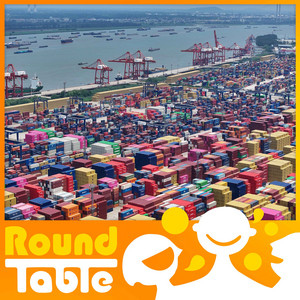
The annual cargo throughput at the ports along the river's trunk line has surged by an impressive 71 to 42 billion tons.
I mentioned this in the opening and this has happened over the past decade.
So this volume is supported by the fact that there are a number of regional ports handling over 100 million tons annually, and it's gone up to 18 the number of those ports.
So, before we get to some specifics on the ports, what exactly?
You know?
It's such a long river, thousands of kilometers long.
It kind of cuts China into two pieces, a larger top and a smaller bottom, heading from west to east or east to west the river.
But what exactly is being shipped where and why is it so important for transport?
I learned about this just this morning that in 2025, shipments over the Yangtze River for goods such as new energy vehicles, lithium batteries and photovoltaic products These three has become the new three major products along the mainstream of the Yangtze River.
That's gone rapidly throughout 2025.
And also in recent years.
You mentioned earlier the Yangtze River Economic Delta, which is a major region where they produce a lot of the EV and the technologies and the electronic parts.
And that's where those kind of smart technology and their products get shipped throughout China to the western side, where some agricultural products and also raw materials such as grain, fertilizers and even citrons from the Sichuan province get loaded onto the ships and join the Yangtze River busy waterways and get shipped to the eastern side.
That's something really interesting.
That's something that we can all relate to as people who likes citrons, who buys NEVs perhaps.
Yeah, that connection, I didn't expect that to come.
But anyway, a lot of raw materials has been transported along the river and metal ores and such as iron ore, which leading freight volume, and followed by coal mining, construction materials and hazardous chemicals in second, third and also fourth places respectively.
These goods fall under the category of industrial raw materials and are essential for supporting industrial production in the regions along the river.
And also inland river shipping, handles more than 80 of the iron ore and coal transportation for enterprises along the Yangtze River, playing a very critical role in ensuring the supply of energy and also raw materials.
Yeah, so it's like a superhighway made of water, essentially, right?
The average tonnage of the cargo vessels on the river has increased as well by 67%.
Since 2015, it now exceeds 2300 tons, and that's important because it allows for the movement of more goods per trip.
Yes, and to make it clearer, here is an example that I found very vivid to describe, as a picture for you to understand just how much is being delivered nowadays.
So imagine a cargo ship like a giant trunk.
And instead of carrying just a few goods, it's carrying really heavy items like bags of rice.
If one bag of rice weighs 50 kilograms, that's about 110 pounds.
Then to carry 2300 tons per ship, then that ship would be carrying around 46000 bags of rice which ideally could feed over 6300 families for a whole year if each family consumes one kilogram of rice per day.
And that's even a conservative estimation, because one kilogram of raw rice can expand to two to three kilograms if you cook them.
So yeah, here's your picture of just how much these cargo ships are carrying and how much it means for us.
Sending more to more people.
There was another key development too, one involving the rail system.
The Yanzi Express, I believe, is what it's called.
Can you tell us about that a little bit?
Yeah, the Yanzi Express is something that's part of a high-efficiency inland water system and also kind of stabilized the global value chains.
Mm-hmm.
And, for example, the rail water intermodal transportation model has become a key driver recently, and that's in 2024.
The construction of the rail freight system along the Yangtze River saw significant results.
So, for example, take Sichuan Province, for example, in southwest China.
The citruses.
Yeah, they launched 1925 Yangtze Express trains and that's helping to replace part of the shipment from the waterway to the inland way and helping to shorten delivery times by 5 to 10 days.
Yeah, so it's not exactly replace, but it's kind of complement.
Yeah, it's combination, borrowing each other's advantages.
And what is good, that they can export some of these specialty agricultural products through these ways, because what I saw is also by using these kind of innovative shipping routes, such as also in that region it's in Chongqing Fengjian Orange Route they have that special name for that route.
The land to water transportation model was implemented.
And in 2025, the total freight volume of these oranges specialty oranges reached 185 million tons.
And that is supporting the whole development of their local agriculture industry.
We talked about fishermen yesterday, remember?
And the fishermen, many of the fishermen former fishermen, that should be more specific that used to go fishing on the Yangtze River In the Sichuan province in southwest China.
They also become Sichuan growers.
Oh, yeah.
Helping to solidify the soil along the banks.
Yeah, we didn't get into the details, but we said that farming was one of the things that the former fishermen would do.
I wanted to talk about the ports a little bit, because there are some important developments along the river.
And, by the way, I want to mention this as well because, for many of our listeners, when you hear the word river, you might think something rather narrow.
The Yangtze is sometimes up to plus three kilometers wide, I was reading.
So yeah, 1.6, I think, to 3.2, depending on where you are along the river.
This is huge.
And this is what's allowing ships of this size to to transport goods through the area and through the river.
Yeah, the ports themselves have developed too in many different ways, and there's a couple of good examples.
One is in Wuhan, the Yangluo Port.
The Yangluo Port in Wuhan in central China's Hubei province, yes.
It's a key hub port in the central Yangtze region.
It's very important.
And it has also transformed from just simply an inland port, like it used to, to an outlet to the sea, a major, bigger one.
Because 10 years ago it was hard for people who work in the Yangluo port to imagine seeing a 10000 ton cargo ship just parking at their inland port just like that.
But that was because they had limited minimum dredging depths of the waterway.
But nowadays, with the systematic improvement of the Yangtze navigation channels, things have changed dramatically for them.
Today, 10,000-ton cargo ships are regular visitors to the Yangluo port.
And this shift also reflects through the smart technology part, in how they operate within the port.
So at the Yangluo Port's remote-controlled gantry crane operation room, You can see crane operators controlling cranes that are hundreds of meters away from them simply by clicking on their mouse.
When you look at images of this port, you see ports of huge stature next to an ocean or next to the sea.
This is in a river, but it looks like the same size of port.
It's really, really impressive.
All right.
So let's talk international trade for just a minute.
So how does the Yangtze River Economic Belt's connectivity and what they're doing now in terms of shipping help with international trade routes or relationships, economically speaking, with other countries?
Yeah, we kind of also mentioned earlier, the YREB actively promotes the high quality development of the China-Europe relationship freight train services in the new international land-sea trade corridor by linking the Yangtze's inland trunk line with these cross-border rail networks and also coastal ports.
The region creates a seamless bridge between the western part of the world and global markets, and this integration allows inland cities to bypass traditional geographic constraints and also participate directly in international trade.
Beyond marine time links, the Yangtze River also expands border economic corridors and improving physical and digital links with neighboring countries.
And this outward facing connectivity helps the region play a more active role in regional and also global development, positioning it as a kind of stabilizer, as we mentioned, for international logistics.
Yeah, many of the inland provinces, such as Yunnan province in the far south.
You might think it has less to do with the Yangtze River than those who are right next to its bank.
But provinces like this.
During the fourth five years plan, like a few years ago, they already incorporated combining their own local opening up and development project with the Yangtze River Economic Belt General Initiative and how they can borrow that to help themselves to be seen by a wider side of the world.
For Yunnan, it was because It sits at China's gateway to South Asia and Southeast Asia and also the Indian Ocean region.
So by borrowing that connectivity through the waterway and inland freight train, as we mentioned, goods are just being transported to outside of China more conveniently.
That was the second episode of the Yangtze River special that we're having three episodes this week.
Just a quick teaser.
What's tomorrow's episode about?
That one is about the scientific, the tech-savvy point that Yushun is going to love.
We'll also give two very specific examples on how that's being developed.
Make sure you join us for that, too.
Coming up next on Roundtable, forget cute mascots.
The toy everyone wants looks like it's having its worst day ever.
Then tune in to Roundtable, where East meets West and understanding is the goal.
Recently, this...
A stuffed horse is really, really popular.
It came with an unexpected flaw.
Its mouth had been stitched upside down.
Instead of a cheerful smile, the little horse looked unmistakably gloomy, quickly earning its nickname as Cry Cry Horse, because it looks like it's crying.
But initially, it's supposed to be a smiley horse, right?
And that mixed up, turned out to be a good laugh, and a replacement for was offered by the seller right away.
And since it is getting really, really popular, people are deliberately asking for that crying or sad horse.
They don't want the replacement.
They don't want the smiling horse.
Yeah.
And this little plushie is about 20 centimeters tall and is now already priced around 25 yuan and has already have orders lined up till March 2026, because too many people want it.
It's the new Labubu.
Kind of.
Yeah, sort of.
And also this It's a product from Yiwu, which is known as the world supermarket in China.
It's a county, but it just went viral in such unexpected ways that people from outside of China even heard about it.
Mm-hmm, I think that is the power of social media, right when people are posting something that is really funny.
And that specific point just triggered the the, the passion of netizens.
So, and and some sometimes you know, we saw some, maybe we talked about it ugly cute thing yes yeah, and the things that just not like normally cute but people just love them and that kind of a special sensation created and just got, I think, just randomly popular.
Yeah, and that's why people love it, I think.
It's because maybe it's a reminder that it's okay to not be smiling all the time.
We're constantly put under pressure at work and at home to put a smile on our face.
So maybe this little horse with its frown makes us feel something special on the inside.
Yeah, that's also the power of accidental marketing, which is when something unexpected happens that makes people notice a brand, a product or a business.
It's like the best mistake ever.
There are other examples of this as well.
Plenty, I think, actually.
There was something involving a GoPro and a bear.
That refers to viral videos, several videos in different years of bears interacting with GoPro cameras, and it resulted in kind of this unique footage of the bears showing their mouths or showing their curiosity.
And this turned out to be a really successful kind of campaign for GoPro.
But again, that's not something you can plan for.
And I'm sure that the Cry Cry Horse company didn't plan for this mistake either.
No, they didn't.
It was a lady, I think, who made it and discovered that.
Oops, and eventually it turns to an oh my, oh my gosh instead of just an oops.
And people love it because they want to share it, that when something unexpected happened, it's something worth sharing with your friends and get a bit of joy out of it as well.
And also remember that these wrongly printed or with some mistake stamps are especially valuable among these collectors.
Right, so people will just deliberately collect these wrongly printed ones, is it?
I mean, can you find them around now?
Are they completely sold out everywhere?
I haven't seen any just yet or any shops that are selling them.
I think you can get some online.
That's the most convenient way I can think of.
It might make for a fun little gift during Spring Festival or something.
Yeah, they're very unhappy to be at your service.
Cute story indeed.
Is it the new Lububu?
I don't know.
Maybe we'll have to wait a few weeks to find out if people in London are fighting over these in the streets as they did with that little plush toy.
Anyway, that will do it for Roundtable for this particular episode.
Thank you very much, as always, for sharing your time with us today.
I'm Steve.
On behalf of Yushan and Yushan, we say goodbye and we hope you come back again next time.